
When I arrived in Los Angeles, I was drawn to Boyle Heights, a Latino community that had once been the home of Los Angeles Jewish radical life.
It wasn’t that I was looking for Eastside, left-wing Jewish roots. I didn’t have any. When my grandparents lived in Los Angeles before moving north, they had a grocery store in Eagle Rock and later one near Bunker Hill. My mother commuted to UCLA by bus and streetcar to attend the first classes on the Westwood campus.
But from my first visit, I saw a great American story in Boyle Heights. From the 1920s through part of the 1950s, Jews, Latinos, Asians and non-Jewish Russian immigrants had lived together there and in other Eastside neighborhoods, sharing the same poverty, same hopes, same mixed feelings of estrangement and belonging.
The bond was visible on Roosevelt High’s football teams and in the political arena. East Los Angeles immigrant families gave birth to Los Angeles’ first interethnic political coalitions. Eastside left-wingers worked for the defense of young Latinos falsely accused of murder in the infamous Sleepy Lagoon case, and Jewish and Latino activists elected Ed Roybal to the Los Angeles City Council.
As the Eastside political sage, Richard Alatorre, likes to say, “That was then; this is now.” Now we heap contempt on immigrants for not speaking English or voting, forgetting that our grandparents and great-grandparents were just as poor, alienated and non-English speaking.
But while those with a sense of history recall the old days, Jewish and Latino leaders now struggle painfully toward forming a coalition. The subject was part of the discussion last month at a conference on immigration at the Milken Institute in Santa Monica.
Some of the participants remembered Los Angeles’ earlier ethnic coalition, the union of young, progressive blacks, Latinos and Jews, which elected Tom Bradley, an African American, as mayor in 1973 and dominated City Hall and city politics for several years afterward.
It was a great coalition based on the civil rights movement, and it extended deep into the everyday lives of blacks and Jews.
For example, retired Superior Court Judge Jack Tenner, who is Jewish, waged guerrilla warfare against the restrictive covenants that barred blacks from buying homes outside a narrow stretch of South Los Angeles.
He became a dummy purchaser for black lawyers, judges and others wanting to move to bigger and better houses. He bought one on behalf of Tom Bradley and another for the great baseball player Frank Robinson, who moved into a house in Baldwin Hills.
Tenner recalled in an interview how some residents went door-to-door trying to collect signatures against Robinson. But “kids in the neighborhood found out it was Frank Robinson. So they went to his house, asked him to come out and play ball with them. Which he did; he spent a day or two teaching them how to hold a bat, to throw a ball. And the whole fight dissolved,” Tenner said.
Politics were hot then. Now, “it seems culturally unacceptable to vote,” said professor Raphael J. Sonenshein, author of “Politics in Black and White: Race and Power in Los Angeles.” Louis DeSipio of UC Irvine said that Latino immigrants are voting at a lower rate than U.S.-born Latinos. “Numbers are not yet adding up to political influence,” he said
That was clear in the last mayoral election, when Antonio Villaraigosa lost to James Hahn in an election in which Latino voting was higher than in the past but not enough to propel Villaraigosa to victory.
Still, four of the 15 council members are Latino, and Eric Garcetti’s ethnic background, as rich as Los Angeles’, includes Mexican roots. As Matea Gold reported in Tuesday’s Los Angeles Times, more than half of the City Council is African American or Latino.
There’s a new game in town, and Jews shouldn’t remain on the sidelines.
Jews, numbering 600,000 in the greater Los Angeles area, remain a huge force in the cultural and economic life of the city. They are consumers of city services, ranging from police protection to street cleaning. And despite defections in the last 30 years, many Jewish families send their kids to the Los Angeles Unified District’s schools.
That is why some Jewish community activists, believing in coalition politics, are looking for inspiration in the glory days of Boyle Heights.
Such projects as restoration of the Breed Street Shul are bringing Latinos and Jews together. “It’s a real opportunity to connect the Eastside with the Westside,” Villaraigosa said.
Their efforts remind us that the lives of our forebears were not too different than those of today’s immigrants. Contrary to cherished family myths, great grandpa did not step off the boat carrying a copy of the Declaration of Independence, ready to jump into the melting pot.
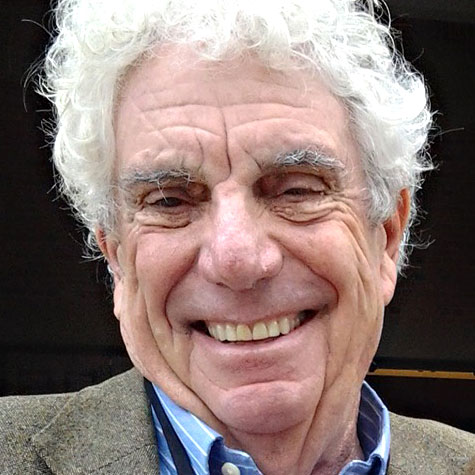
Bill Boyarsky’s column on Jews and civic life appears on the first Friday of
each month. Until leaving the Los Angeles Times in 2001, Boyarsky worked as a
political correspondent, a metro columnist for nine years and as city editor for
three years. You can reach him at bw.boyarsky@verizon.net.

































