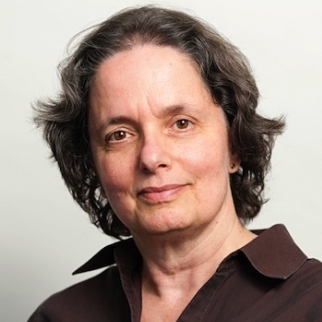
I joined the staff of the Jewish Journal in mid-November 2005, a seasoned journalist. I quickly found I’d entered something new, the world of Jewish journalism, which has its own language, structure and, to some degree, its own set of rules. The news story under discussion on my first day was about a much-loved local rabbi who’d died a few days earlier in a solo car crash. There was suspicion that the accident actually had been intentional, and the editors — my new colleagues — were trying to figure out how and what to report without doing damage to the rabbi’s congregation.
What struck me first was that this was a different kind of newsroom conversation, a kinder one: the congregation’s loss felt like our own. And we worried about how its telling might come across to our readers — at that time, the Journal’s reach was mostly local, the web audience very small. By the end of the day we’d decided to tell the full story, which we’d confirmed. I immediately loved the menschy-ness of the process. Our audience, I quickly learned, are our neighbors. We see them in shul, at events, at the store, at the theater. They are stakeholders who will write to tell us what they think — with searing honesty. Knowing our readers is the challenge and the blessing of working here.
I’ve been an editor at the Journal for nearly 11 years, and I can tell you that if that same delicate story were to arise today, we would again have that same conversation. But our published voice, now amplified by the internet and social media, would today be much louder and our reach much quicker. Even the discussion would be done in shorthand, under more pressure. The advent of Twitter, click-bait media, much more competition, plus a general lowering of civility in the world all influence consideration of how a story affects real life. But we still try to get it right, and we still care.
I’ve loved working at the Jewish Journal; I’ve loved being able to call upon brilliant rabbis, academics, political scientists, communal professionals, attorneys and artists to write for us. I’ve loved that we’re small and scrappy but find ways to get our stories into people’s hands, to grab their imagination, to make them think. I’ve loved editing Dennis Prager one week and Marty Kaplan the next, even if the only thing the two share is love of their common religious faith — and a willingness to send us their copy. I’ve loved prodding Rob Eshman and David Suissa as their editor and colleague. I’ve also loved wandering into their offices to hear them talk amicably about the latest Israel news, despite political differences.
I’ve loved encouraging you, the readers, to share your stories with us — in blogs, personal columns, and analyses; to share news and celebrations and even obituaries for loved ones. When war (or “operations”) broke out in Israel — four times in my years here — our coverage moved quickly beyond traditional reporting to share your on-the-ground feedback: a college kid on Birthright telling of hearing sirens go off while in the shower in a Jerusalem hotel; a rabbi describing a dinner conversation in Tel Aviv the night before; an American mother fearing for a lone-soldier daughter serving in the IDF.
And I’ve loved our editorial meetings with the dignitaries who come through the Journal’s offices — most recently Israel’s newest consul general, Sam Grundwerg. And the joy of seeing so many young writers grow from novice to pro, perhaps most dramatically Danielle Berrin, who’s matured from Calendar Girl to astute feminist columnist. Plus it has been my great honor to goad our most senior contributor, Tom Tugend, to share nibbles of his extraordinary journey from the Shoah to Sherman Oaks. But, as you can likely tell from my tone here, I’m leaving. This is not just a retrospective Rosh Hashanah column, it’s a fond farewell.
And a hello.
After decades in journalism, I’m ready to move from being an objective arbiter of what is or isn’t news. I want to use my voice for a cause I feel deeply about. In October, I will become the new executive director of Jewish World Watch.
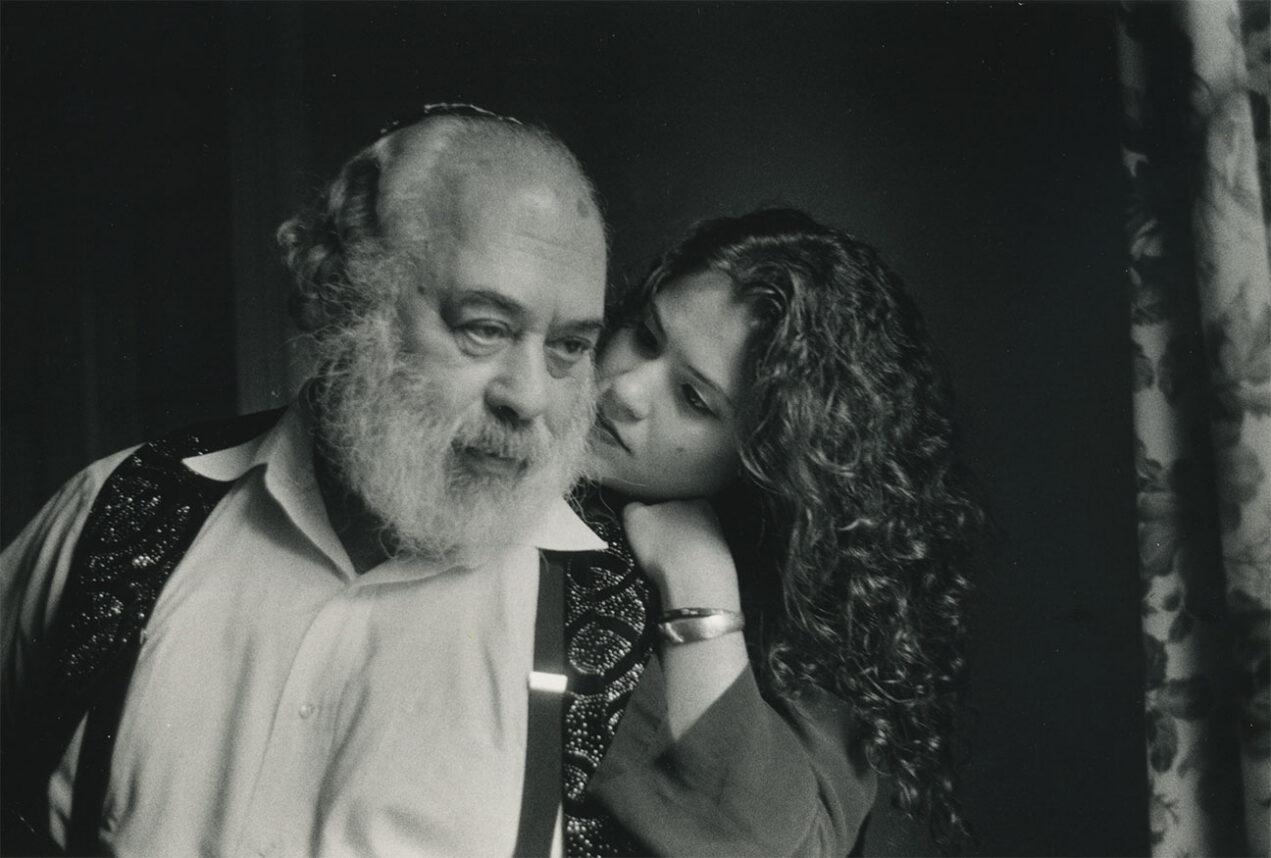
I’ve been following this organization almost since its inception, in 2004, when Rabbi Harold M. Schulweis in his Rosh Hashanah sermon at Valley Beth Shalom told his congregation: “The singular biblical verse which resonates throughout Judaism and world history is the verse in Genesis: Chapter 1, verse 26: God created every human being — man, woman, child — in God’s image. Whatever color, whatever race, whatever ethnicity. God created every human being with Divine potentiality.”
And yet, Schulweis noted, genocide continues in the world, and as Jews, we cannot stand idly by. When I read them later, his words touched me deeply, as they did so many others. With that sermon, Rabbi Schulweis established a new Jewish voice to advocate for the most vulnerable peoples: Jewish World Watch. And he named a co-founder, Janice Kamenir- Reznik, who continues to help sustain what is now a thriving nonprofit with a board, staff and a host of volunteers answering the now-deceased rabbi’s call to educate the public about mass human atrocities in the world today, to advocate among government officials for concrete policies to help the victims and to effect real change on their behalf. Jewish World Watch also raises money to fund relief and education projects for the afflicted — currently in Sudan, South Sudan and the Democratic Republic of Congo, but with plans to expand to help the Syrian refugees.
As the organization has grown, so has my interest — from the sidelines until recently, when I was offered the opportunity to step in and help Jewish World Watch stride forward. From here on I will be working alongside the board and staff, seeking your support and hoping to involve you in fulfilling our mission. At Jewish World Watch, we will continue to raise our voice on behalf of God’s children, even if they live a world away.
This was Rabbi Schulweis’ vision, and I am proud to assume this portion of his great mantle.
Shanah tovah. May this be a sweet and peaceful year for us all.
Susan Freudenheim is executive editor of the Jewish Journal.