The most powerful idea in the American project is the idea of progress. Take away that word, that idea, that ideal, and there is no America.
The ideal of progress is what helped a poor kid from the backwoods, Abraham Lincoln, to become president and keep the country united and end the shameful scourge of slavery.
The ideal of progress is what drove President Barack Obama to say that “our Founding Fathers, faced with perils that we can scarcely imagine, drafted a charter to assure the rule of law and the rights of man — a charter expanded by the blood of generations. Those ideals still light the world, and we will not give them up for expedience sake.”
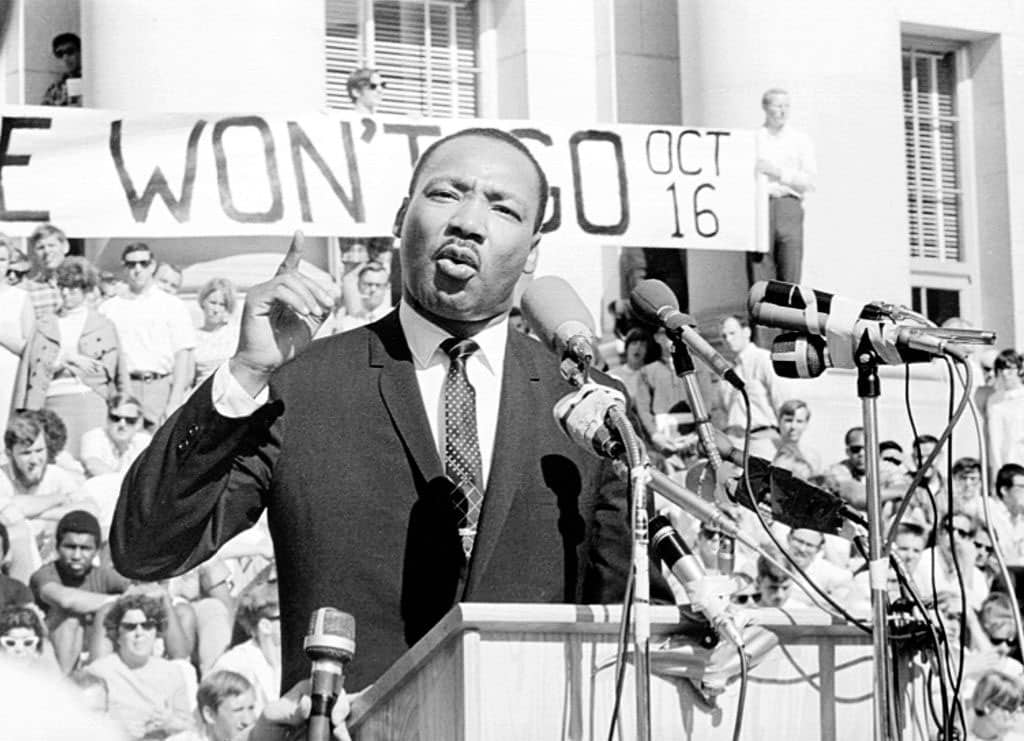
The ideal of progress is what fueled Martin Luther King’s dream “that my four little children will one day live in a nation where they will not be judged by the color of their skin but by the content of their character.”
Since today is MLK Day, it’s worth reflecting on his legacy of progress. A good place to start is with Project 21, a black leadership network that has been a leading voice of black conservatives for over 30 years and is sponsored by the National Center for Public Policy Research.
On its website today, it argues that “while there have been tremendous leaps forward, the progressive drive for Diversity, Equity and Inclusion (DEI) policies threatens that progress. The push for DEI in so many of our institutions and corporate entities shines a bright light on the fallacy of such policies, and reminds us that they are the antithesis of Dr. King’s dream of a colorblind society.”
Whether you agree with Project 21 or not, it’s worth paying attention for the simple reason that you’ll never read about them in the mainstream media. That’s because they represent a more conservative viewpoint that doesn’t fit the progressive winds of the day. But regardless of which side of the ideological fence we’re on, it’s worth putting on our curiosity hats to hear what they have to say.
Here are a few voices they featured today from Project 21 members, in honor of King’s holiday:
DawnMarie Alexander Boursiquot:
“Leaders fought for years to have a national holiday to celebrate the work Martin Luther King did for black people in America to become recognized as viable members of American society. After all the positive achievements of black Americans in this country, many are still stuck, trapped in a mindset of inferiority. This is evident with the recent scandal of Professor Gay, not to mention accusations of racism when one does not agree with liberal thoughts.
“As we approach this day of remembrance, it’s important to remember that success comes through believing in the talents and abilities a person is born with and developing them, not blaming others or external factors. MLK’s life work was for equality, not sympathy and handouts. We are not marginalized if we are not preparing ourselves professionally to have a seat at the table. We must do better.”
Demetrius Minor:
“Honoring MLK’s legacy can’t just be an annual tradition of recitations, and it certainly can’t be a declaration of victory against racism. We can truly honor King’s legacy by building upon the foundations he and countless others have laid. We do this by remaining vigilant against injustices; by promoting solutions that foster safety, healing and accountability that make the American Dream attainable by all; and by opposing the perverse application of DEI policies that only further division.”
Richard Holt:
“Dr. King advocated for a society so united that color wasn’t even a factor. His vision was the driving force of civil rights for a generation. Today we are quickly dissolving into two societies: those of a moral society living under the kingdom of heaven in unity, and those of a degenerate anarchy working to abandon all unity for a collective victimization. I wonder if these can be reconciled, or if the latter should simply be moved to New York and California so they can leave the rest of us alone.”
Madeline Brame:
“My favorite quote from Dr. King is: ‘I have a dream that my four little children will one day live in a nation where they will not be judged by the color of their skin but by their character.’ Unfortunately, what Dr. King intended when he made this statement has been conveniently taken out of context. In today’s society, a person is judged solely on the color of their skin, which is then used to enact the progressive political agendas of diversity, equity and inclusion.
“Character, integrity, morals, values, law & order — all of the things Dr. King stood for and meant when he made that statement — are nonexistent today. Every time we think we have finally made some progress in reaching the top of the mountain to see the ‘promised land,’ we set ourselves right back to the foot of the mountain to continue marching around at the bottom for another 60 years.”
These Black voices make a compelling case that our society should take a hard look at whether our new obsession with race and DEI is creating regress rather than progress. The mere asking of that question is itself a sign of progress and would honor Dr King’s legacy.