
Four years ago, when my son Alexander was 5, an Aryan-looking 7-year-old told him: “I don’t like Jews.” The remark was astonishing not just because it was made in New York City and not just because the boy was 7. It was the offhand manner in which he said it, not taking his eyes off of the video they were watching; he could have easily replaced “Jews” with “vanilla.”
I knew something was awry — my entire life I have never encountered direct anti-Semitism. But like most of us, I couldn’t quite put all of the pieces together.
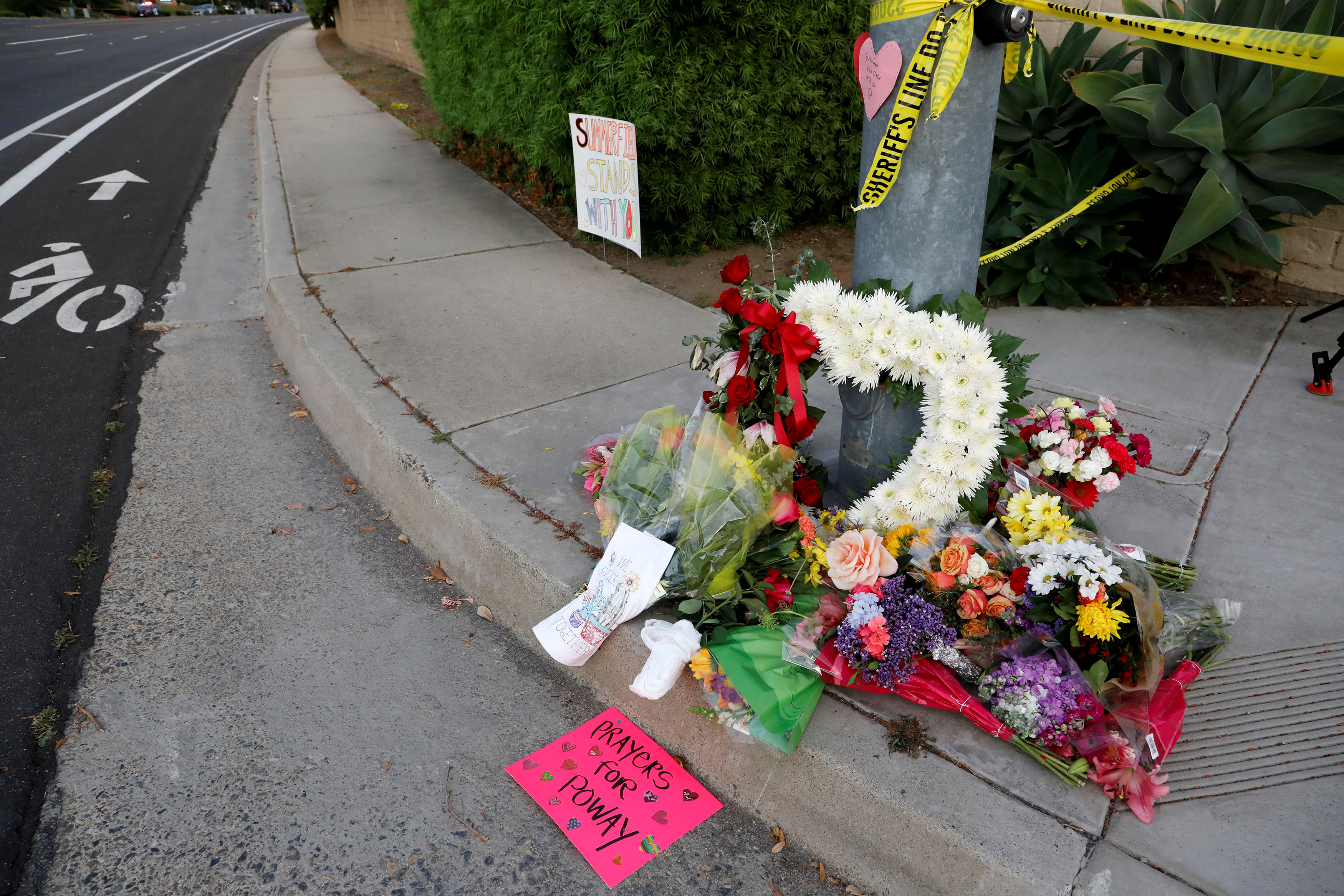
I think after the horrific events of the past week, we can finally start to put the pieces together. An environment has been created where people feel free to publicly blame Jews for everything, and where those with violent tendencies are kicking baby carriages and beating up the Orthodox in Brooklyn and shooting up synagogues in Pittsburgh and Poway.
Anti-Semitism is being mainstreamed in America. I shudder at the thought that our honeymoon with this great country may be ending.
Who is responsible for this normalization? Sorry, it’s too easy to scream, “Trump!” If anything, it’s becoming increasingly clear that the alt-right hates Trump as much as the alt-left, with the common bond being his embrace of Jews and Israel.
The truth is, this new atmosphere kicked into high gear during the Barack Obama years, when the hard left publicly launched its anti-Israel Kool-Aid machine. Spout a lie about Israel in a classroom, in an op-ed, on MSNBC, and wait for the nonreaction. Then spout more!
The culmination of this anti-Israel hatefest came two days before the Poway attack, when an editor at The New York Times International Edition saw no reason why a grotesquely anti-Semitic cartoon shouldn’t be published. And really, why think otherwise? The Times regularly prints lies about Israel; even its own columnist Bret Stephens calls the Times’ coverage of Israel “intensely adversarial.”
The new Kool-Aid intersects the mainstreaming of leftist anti-Semitism with the dark, conspiracy-laden world of the alt-right internet. Leftist anti-Semitism has infected a far larger swath of Americans, but — and this is a very big but — the alt-right is enthralled with guns, and shows no shyness in using them.
This thought plagued me through the first 24 hours after the Poway attack, when we thought there had been an armed guard outside the synagogue. Most synagogues in New York City have had top-notch security since 9/11. I couldn’t stop thinking: If they now can get through security, how do I drop off my son at Hebrew school?
Online hate and incitement need to finally be taken seriously, but so do guns. How did a 19-year-old have access to an assault rifle?
As I write this, the Times — despite two apologies — still hasn’t fired the editor who published the Nazi-worthy cartoon, who may or may not be the same editor who published a second offensive cartoon on the day of the Poway attack. I wonder if the top brass realize they even have a problem. I know what the paper was like 10-15 years ago: I did short stints as an editor and wrote for the Book Review regularly. Its Israel coverage was clearly biased, but that hadn’t yet spread. Now it has.
How to tackle leftist anti-Semitism? Maybe we can start with our own: Leftist Jews who support the boycott, divestment and sanctions movement. It doesn’t matter if you’re a rabbi or professor: You don’t get to use our people as hostages to boost your self-esteem; you don’t get to put our lives at risk to further your social standing. Criticism of Israeli policies is fair game; providing fodder for the anti-Semitic movement to delegitimize the only Jewish state is not.
Rabbi Yisroel Goldstein has instructed each of us to bring more light into the world — an exquisitely beautiful message that only someone deeply spiritual can utter after a personal tragedy. But light begins with truth. Leftist Jews need to use this past week to do some soul searching.
Meanwhile, after I picked up Alexander from Hebrew school today, he kept his
kippah on for our walk home. He often keeps it on because he forgets to take it off, but today he wore it with purpose, somewhat defiantly. I felt the light of truth; I’m pretty sure he did, too.
Karen Lehrman Bloch is an author and cultural critic living in New York City.