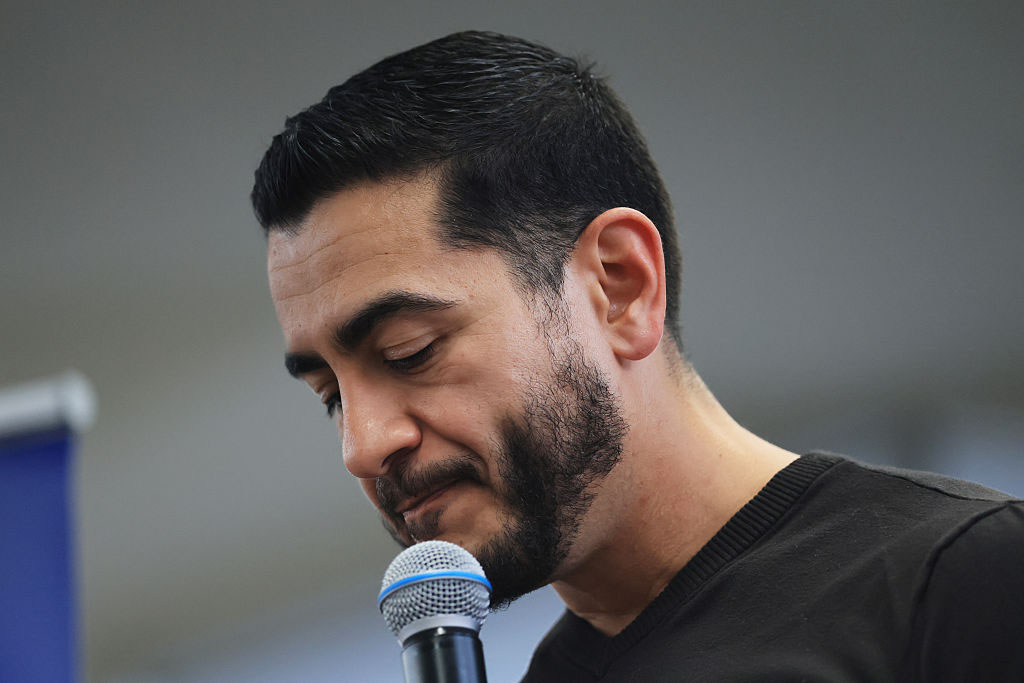
Former U.S. Rep. Mel Levine has been tapped as chair of the Jewish Community Relations Committee (JCRC), a move that some observers said they hoped would restore the luster of the embattled agency.
Levine, a Democrat who served in the House of Representatives for 10 years and in the state Assembly for five, said his political experience will help him reach out to leaders in Washington and Sacramento to win their support for local Jewish agencies. He also said his background has taught him the importance of coalition building with other groups, a skill that should serve him well in his new position.
"I do bring one broad presumption to the position," he said. "It’s that the Jewish community has a stake in the broader community, and it is important to forge and maintain credible and enduring relationships with leaders of other ethnic groups in Southern California."
As for specifics, the still boyish-looking 60-year-old Levine said he would hold off on setting priorities until after conferring with JCRC and other community leaders.
JCRC executive board member Barbara Yaroslavsky said she thought Levine’s appointment would inject energy into the agency. His leadership should "restore JCRC’s position at the local, state and national political scene," she said.
Carol Koransky, who’s temporarily heading JCRC, said she expected Levine’s high-profile involvement to generate excitement in the community and attract new volunteers.
Founded 60 years ago, the JCRC, an agency of The Jewish Federation of Greater Los Angeles, seeks to serve as the voice of the local Jewish community, speaking out on governmental policy and advocating for Israel and world Jewry. It also seeks to deepen ties with different ethnic and religious groups in the broader Los Angeles community.
Levine’s appointment comes at a time when the JCRC continues to reel from the unexpected layoff of Michael Hirschfeld as executive director and The Federation’s decision to eliminate his position as a full-time, stand-alone job. During his 24 years with the agency, Hirschfeld won plaudits for his work, including co-founding KOREH L.A., a literacy program for children.
Federation President John Fishel has said he took the move solely because of budget considerations and that JCRC remained a priority. However, several critics said they thought Fishel’s action reflected a diminished emphasis on community relations. Koransky, also The Federation’s senior vice president of policy, planning and community development, has assumed Hirschfeld’s duties.
Nationally, JCRCs have seen their influence wane as organizations like the Anti-Defamation League, the Simon Wiesenthal Center and other groups have increasingly promoted tolerance and interethnic cooperation. Federations’ relatively flat fundraising has added to the woes of JCRCs, which have found themselves competing for a shrinking pool of dollars.
Jay Tcath, chair of the National Association of JCRC Directors, said he thinks Levine’s selection as local JCRC chair is a welcome sign of the L.A. Federation’s newfound commitment to community relations. "It is my understanding that the intention of The Federation is to strengthen the JCRC, and this seems to be one very positive sign of moving in that direction," he said.
Among the country’s 120 JCRCs, Levine appears to be the only former congressman serving as agency chair, Tcath added.
Levine said he joined the JCRC at the behest of new Federation Chair Harriet Hochman, who told him the agency would play a central role in her administration. Although Levine has not been active in Federation activities for years, he said he is no stranger to JCRC. Levine said he wanted the chance "to carry on a family commitment."
His father, Sid, served as a permanent vice chair of JCRC and brought Levine to JCRC meetings during his college days at UC Berkeley. As a graduate student at Princeton and later a law school student at Harvard, Levine met frequently with former JCRC Director Joe Roos when visiting home. Roos influenced him greatly, teaching him the importance of building relationships with other ethnic communities and of pursuing a focused political agenda, Levine said.
Levine, who ran unsuccessfully in 1992 for the U.S. Senate, said he has not ruled out running for elective office in the future. As JCRC chair, he said he would work to ensure that the agency remains nonpartisan, although he plans to continue to provide advice to his friends in politics when they seek it.
Hirschfeld, the former JCRC executive director, said Levine’s stature, contacts and track record should make him effective at raising money for The Federation and its agencies and at reaching out to other communities in Los Angeles.
"He’s an absolute perfect choice," Hirschfeld said.