

Two established Conservative synagogues in the West Valley, Temple Aliyah and Shomrei Torah Synagogue, have joined to form a single community, HaMakom (The Place).
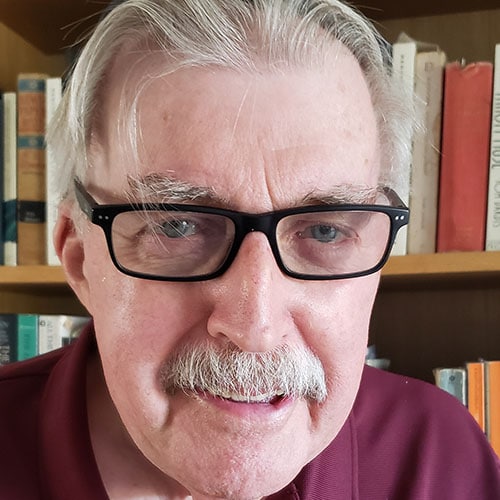
The rabbis for the two temples, Shomrei Torah’s Richard Camras and Stewart Vogel at Aliyah, talked to the Journal, explaining why the two communities located a mile-and-a-half from each other on Valley Circle Boulevard are merging, and their way forward. “Rabbi Vogel and I have talked for years about the wonderful synergy we create by being neighbors,” Camras said.
Until July 2024, the combined congregation will meet at Temple Aliyah, now called the South Campus. Shomrei Torah will be renovated and become the permanent home of the new, combined congregation. A decision will be made about the future of the Temple Aliyah property — whether to sell, develop or do something else.
Both rabbis emphasized that the merger was a joining of equals. “Mergers usually are takeovers, senior and junior partners,” Rabbi Vogel said. “Not here. We are equal partners. Our community sees us that way, too. A lot is predicated on the relationship Rabbi Camras and I have – one of mutual respect, trust, affection.” Vogel and Camras will be equal partners, and they will serve as co-senior rabbis.
Both rabbis emphasized that the merger was a joining of equals. “Mergers usually are takeovers, senior and junior partners,” Rabbi Vogel said. “Not here. We are equal partners. Our community sees us that way, too. A lot is predicated on the relationship Rabbi Camras and I have – one of mutual respect, trust, affection.”
“We recognize the importance of re-envisioning synagogue life,” Rabbi Camras said. “To sustain any institution today, especially within the religious world, it is very complicated. The Jewish community today does not look like the Jewish communities of the 1960s and ‘70s. Declining membership is only a part of the picture. There’s social media, mobility, and people have less discretionary time to spend.”
Rabbi Vogel observed that affiliation with traditional religious communities is declining in general. Change is inevitable, he maintained. “The synagogue is the same model it was more than 100 years ago,” he said. “So we always talked about how there has to be another way to address the changing needs, as Rabbi Camras said, of the American Jewish community. What other organization/business runs the same way it did 100 years ago?”
While the declining attendance at synagogues was one of the reasons for the two communities to join — and both congregations are competing for the same, limited audience —Camras said it’s “unfair to look at declining numbers as the primary motivation for what we want to do.”
People connect to spirit, meaning God, community and Torah, in different ways, Camras said. “Rabbi Vogel often talks about how we live in an unbundled generation. I don’t have to have cable because I can get Hulu or Amazon Prime. You can go very niche, and purchase what you want. Synagogues were one-place shopping. We were The Bundle for everything. Times have changed. You can’t do that anymore.”
“We moved away from the ‘M’ word, merger, because we wanted to build something new,” Camras explained. “When you build something new,” Vogel added, “you create community by focusing on the future rather than on what you are losing.”
You can acknowledge the change in two ways, Rabbi Vogel said. “One is to re-envision the synagogue, and the other is to re-envision the Jewish community. We translated it. A new iteration would be HaMakom —The Place. The Place for what?” As if on cue, Camras jumped in, saying “it’s the Place for communal gatherings, The Place for praying, The Place for study, The Place for eating, The Place for social interaction, The Place for finding meaning,” Camras explained. “The Place to elevate from the ordinary to the extraordinary,” he said.
“The Place” was also chosen as the name “because we wanted to show it was time for a new synagogue vision, and for the name to reflect the need to change synagogue life,” Camras said. “It is aspirational in nature, for sure. We know the work ahead for us is complicated. We know people are used to what they know.”
In the wake of the extended disruption caused by the COVID lockdowns, which accelerated existing trends of declining synagogue attendance across the country, this merger of two congregations is a sign of the times.

































