With impeachment hearings and the tension between the executive and legislative branches taking up most of the news bandwidth, it’s easy to forget there’s a third co-equal branch of constitutional government: the judicial branch.
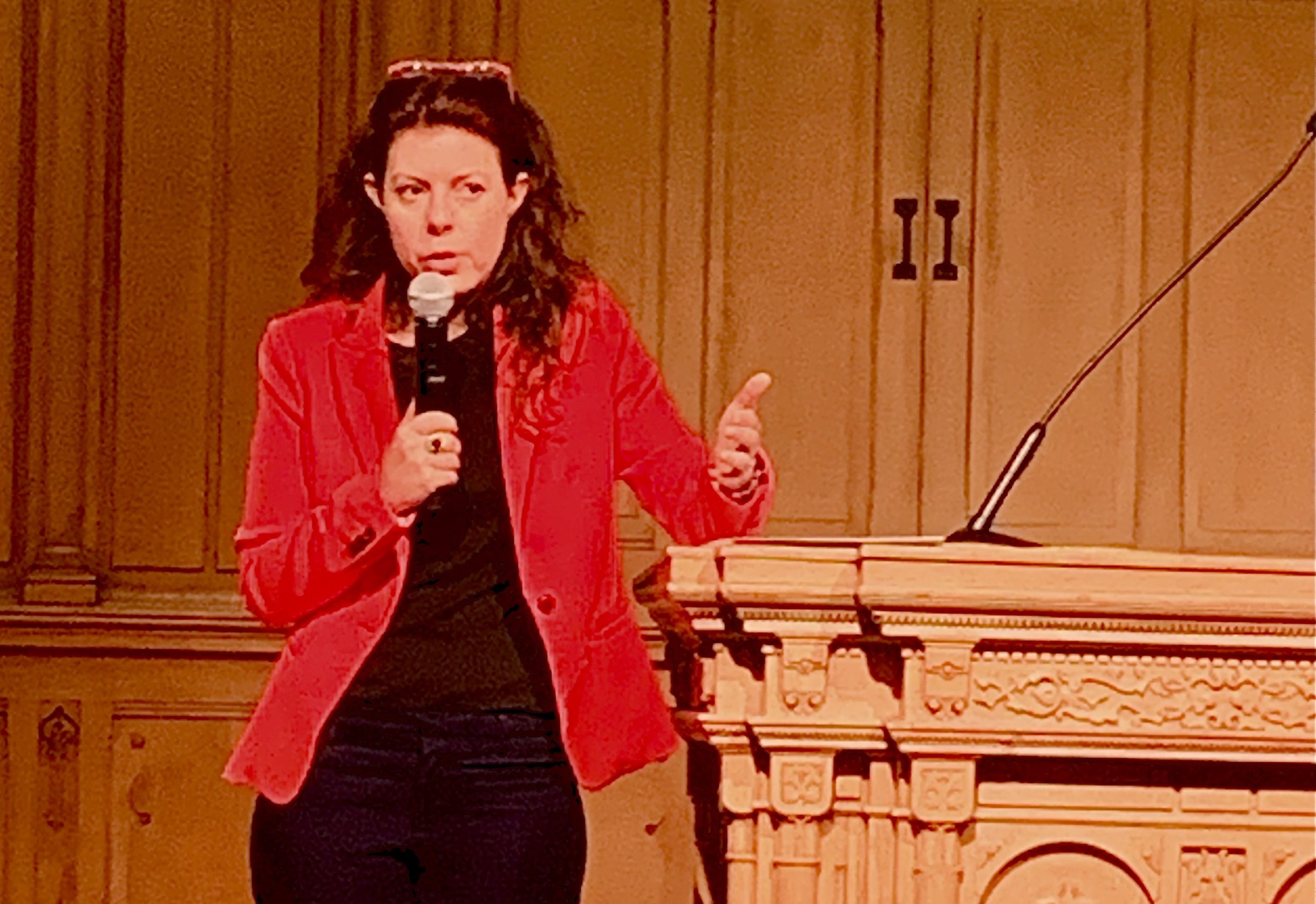
On Nov. 19, Wilshire Boulevard Temple hosted Loyola law professor Jessica Levinson at its westside Irmas campus on West Olympic Boulevard. Levinson spoke on “Update on the Supreme Court: Cases on the Docket and What’s at Stake.”
Around 50 people turned out to hear Levinson, known for her regular appearances on KCRW’s “Press Play.” She spoke about the way a case makes its way before the court; what kind of cases the court hears; and how the justices reach their decisions and decide who writes the opinions.
She also dropped in telling details, such as the differing styles of the justices, from Clarence Thomas’ mute disinterest to Sonia Sotomayor’s rapid-fire questioning; and why even the liberal justices have “forgiven” newest Justice Brett Kavanaugh.
“They have to work with him for the next 40 some-odd years,” Levinson said. “You might want his vote in the future, and you won’t get it if you can’t even stand to look at him.”
She then highlighted some of the cases appearing before the court this term (from October to the end of June 2020). There are three LGTBQ discrimination cases. Levinson boiled down all three, explaining they are over the definition of the word “sex” as written into the 1964 Civil Rights Act.
Conservatives, Levinson said, argue that in 1964 no one would have believed the word covered sexual orientation or gender identity. Liberals, on the other hand, are arguing, “Don’t look at the context, just look at the word. Based on other opinions, it should be read broadly.”
“[Chief Justice John Roberts] is not a moderate jurist by any stretch of the imagination, but he is the ideological center of the court.” — Jessica Levinson
She went on to say the court is divided on the issue and the decision will come down to Chief Justice John Roberts, noting, “He is not a moderate jurist by any stretch of the imagination, but he is the ideological center of the court.”
Also before the court is the Deferred Action for Childhood Arrivals (DACA): President Barack Obama’s decision in November 2014 to grant undocumented immigrants who arrived as children before 2007 the right to stay in the country under certain conditions.
Levinson said President Donald Trump can repeal the program but the question is whether the court can get involved and if so, did the administration follow the proper procedures outlined in the Federal Administrative Procedure Act?
The DACA discussion took up so much time, Levinson was forced to rush through cases on gun control and freedom of religion, so that the audience could ask questions about impeachment.
With Trump continuing to insist that a sitting president not only can’t be indicted but can’t even be investigated, Levinson said, “This would essentially take the legs out from under Congress’ oversight authority. It’s an argument so broad in scope it’s not likely to be upheld.”
She believes the court will take the long view, something she said she also advises her students. “Don’t think about whether you want President Trump to be able to do this — think if you want another president to do this,” she said. However, she worries that the framers of the Constitution never envisioned a man like Donald Trump in the Oval Office.
After the talk, attendee Jackie Bogin told the Journal she found Levinson “very articulate and had the facts down pat, and didn’t hesitate to answer questions.”
Wilshire Boulevard Temple’s Rabbi Susan Nanus, who organized the evening, said Levinson “answered everything I wanted to know. And I liked the cases she chose.”
Speaking with the Journal at the end of the evening, Levinson said she was impressed by the audience’s questions and hoped the impeachment inquiry would increase the public’s interest in and understanding of the law. “Think of all the words we now know,” she said. “Like ‘emoluments.’ In some ways, it’s been an enormously educational moment.”