Dr. Morgan Hakimi has a variety of roles — psychologist, Jewish activist, wife and full-time mother. But it’s her position as president of the Nessah Educational and Cultural Center in Beverly Hills that has captured the attention of the L.A. Persian Jewish community.
In this Persian Orthodox culture, where leadership is traditionally dominated by men, opposition followed Hakimi after she was first elected president in 2004. However, Hakimi’s recent reelection has inspired her to step up her challenge to other women to get involved.
“I have always felt that Nessah could be an incredible bridge for more women to participate in our community, for younger American Jews of Iranian descent to connect with her heritage and for American Jews to become more familiar with us,” she said.
Skepticism from critics has died down since her initiatives have led to a substantial increase in membership within the last two years. People are packing Nessah’s two sanctuaries during Shabbat services, and crowds of previously disenfranchised women — both younger Persian Jews and non-Persian Jews — are participating in greater numbers in center programming Hakimi developed.
She credits outreach to and inclusion of the larger Jewish community for the synagogue’s growth. Hakimi has turned to a more American model of running a synagogue — setting up a membership system, establishing support groups for single parents and adding more events for its younger congregants.
“My greatest asset is having a diverse staff of Iranians, Americans, Hispanics and African Americans that are not afraid to work together,” Hakimi said. “We purposefully chose a new executive director in Michael Sklarewitz and new program director in Robin Federman, who are American, in order to better serve our community and bring us closer to the greater American Jewish community.”
Nessah’s Rabbi David Shofet praised Hakimi’s outreach efforts to younger Iranian Jews and said he has noticed more women at the center since she took office.
“In my eyes, women are more important because they are the mothers of the next generation,” he said. “If they are committed to Judaism and are affiliated, they can hand it on to the next generation. Otherwise there will not be a continuity of Judaism.”
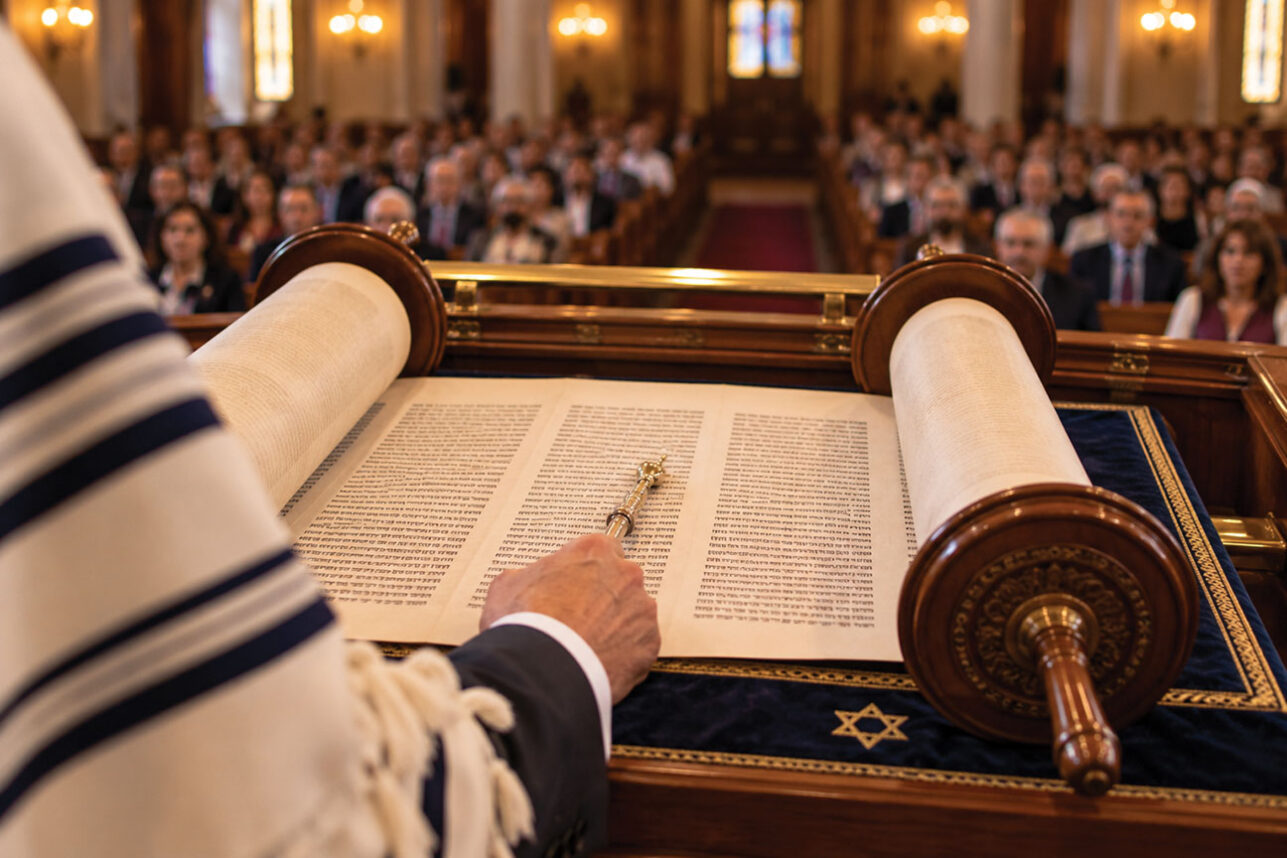
After Hakimi’s election two years ago, participation of women in religious services became a lightning-rod issue on both sides of the mechitza in the Orthodox congregation. Traditionalists sought to keep women out, and more liberated women demanded greater involvement. Hakimi has approached such situations with diplomacy in mind, talking with both sides to find acceptable common ground.
“I am not here to create a revolution. I’m here to bring awareness and understanding about a lot of issues in our community, including those involving women,” Hakimi said. “I was raised in an egalitarian family, so I’m not bitter toward men, and I don’t have an attitude of fighting when I approach the rabbis or men. That’s why they are welcoming of my suggestions to include everyone in our programs.”
Hakimi’s election as president set a precedent at Nessah, which she continues to build on slowly. Eight women now sit on the center’s board of directors, with more women serving in committee and staff positions. At the congregational level, young women are now welcome to celebrate a bat mitzvah by giving a d’var Torah during the daytime Shabbat service.
Nahid Pirnazar, a member of the Los Angeles-based Iranian Jewish Women’s Organization, said that Nessah could stand to have greater inclusion of women in religious services.
“But Dr. Hakimi has certainly helped [us] take a lot of positive steps toward greater participation of women,” she said.
Pirnazar, a UCLA professor of Judeo-Persian history, said Hakimi is the first from her generation to achieve a leadership role in the local Iranian Jewish community, and that she shares good company with Jewish women in Iran who took leadership positions in the early 20th century.
Hakimi is also encouraging young women to develop their own programs at Nessah and to make their voices heard.”Dr. Hakimi has been an incredible mentor in my life in demonstrating to me the unique qualities women in leadership can bring,” said Rona Ram, a 22-year-old Nessah volunteer. “What we, as young females, have noticed is the overriding respect and appreciation the entire congregation gives her as she speaks.”
Hakimi said that when issues of change come up, she anticipates resistance. But she says her aim is to slowly press for greater involvement of women in community activities.
“The Iranian Jewish woman has a quiet strength that is only now coming to the surface. I’m here to say they can have it all, but it will take time _ it will not happen overnight, and they must show a desire and commitment to taking part in leadership roles,” Hakimi said.
For more information about the Nessah Educational and Cultural Center, visit www.nessah.org or call (310) 273-2400.