
The victims of Bernard L. Madoff’s fraud includes no small number of boldface names and institutional investors.
There are Hollywood moguls Steven Spielberg and Jeffrey Katzenberg, financiers Fred Wilpon and Henry Kaufman, and actors Kevin Bacon and Kyra Sedgwick.
Then there were banks like HSBC and Banco Santander, and nonprofit groups including Yeshiva University and the Robert I. Lappin Charitable Foundation.
But a number of average-Joe investors have discovered that they, too, had money invested with Madoff. Their retirement funds, family trusts, and other savings usually found its way to Madoff through “feeder” funds, some of which were run by friends, acquaintances, or financial advisers.
Since they were not direct investors with Madoff, their status in recovering any money is uncertain. But there is no doubt that they, too, are victims of what appears to be the greatest Ponzi scheme in history.
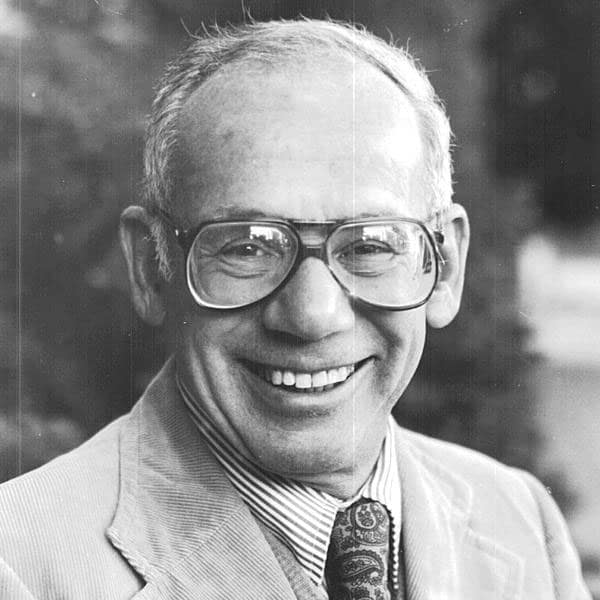
Here’s my story:
In 1992, when I was 67 years old, I unexpectedly found myself with some extra cash on hand. During the preceding half century, I had served in three wars, earned a master’s degree, married, bought and paid off a house, and put three daughters through college.
I had started my fulltime working life in 1950 as a copyboy and later reporter on the San Francisco Chronicle and then, for over 30 years, was simultaneously a science writer at UCLA and a freelance journalist. My wife, Rachel, had worked full or part-time during much of that period.
We had bought a hillside house in suburban Los Angeles in 1968 and were close to paying off our mortgage.
Our two older daughters had married, were working and raising their own families, and our youngest child was independent, and likely to marry in the near future.
As a family, we were always quite disciplined about the household budget. As a matter of principle, we never got into debt and we paid off our credit card balances in full every month.
I wasn’t exactly a tightwad, we traveled frequently overseas, but, as my daughters like to remind me, when they were kids and scrawled drawings, I made them use BOTH sides of a blank sheet.
So in 1992, Rachel and I found ourselves with an extra $25,000 in the bank and decided to invest it, but knew enough to know that we knew nothing about the market.
So we turned to a trusted friend, whom we shall call Phil, who was our sometime lawyer and a fellow volunteer in local political campaigns. Phil had many years of successful investment experience, and although $25,000 was pretty small potatoes in his league, we insisted that we wanted into the game.
Thus I became one of some 99 limited partners in Caroline Investment Co. Phil told me that the partnership had consistently returned 15 percent to 16 percent a year, sometimes as much as 20 percent, and added that he had millions of his own money in the fund.
But he warned me that even he, with decades of experience, had no idea how the partnership managed to generate such high and steady returns.
Phil sent me a 73-page document, which I never read closely until after I learned about my link to Bernard Madoff. In the papers, I have learned that Caroline was a limited partner in the Lambeth Fund, operated entirely by Beverly Hills investor and arbitrage maven Stanley Chais, whom Phil had known for many years.
Chais, in turn, passed on the funds in Lambeth, Caroline and other partnerships to an unnamed brokerage and investment firm in New York. That firm, we learned since, was Madoff Investments; Chais had known Bernie Madoff for decades, but the name never appeared in any papers and was unknown to Phil.
For years, this opacity didn’t matter. Like most small-time amateur investors, with a full work and family life, I had happily watched as my stake steadily grew. Even with 25 percent of the profits going to Chais and 5 percent to Phil for their administrative work, I averaged an annual net return of 10 percent to 14 percent.
This compounded rapidly, since I didn’t need the income to make ends meet. Since my investment was in the form of an I.R.A. account, I didn’t have to withdraw money until I was 70½ years old and started receiving mandatory minimum distributions.
I had about $150,000 accumulated in Caroline on Dec. 11, when I received an e-mail from Phil, which started, “I have some terrible news for us.”
The shocking news, of course, was that Madoff had been arrested for fraud and that the many millions Phil and his daughter, a successful Los Angeles restaurateur, had been wiped out, as had Chais’ Lambeth Co.—and my $150,000.
Sure the loss hurts, and with the simultaneous devaluation of our house, we have dropped plans to move into an upscale retirement community.
On the upside, our mortgage is paid off, I still earn money as a journalist, and I get Social Security. Although my retirement-savings plan with the University of California is sinking like a stone, I’m pretty confident that my wife and I will not go hungry.
I take some irrational satisfaction from the thought that, for the first time in my life, I’m in the company of so many millionaires and billionaires, and we are all going down together on the same financial Titanic.
The real losers, I’m afraid, will be the families of my three daughters, and my eight grandchildren, to whom I will now leave a rather meager monetary inheritance.
This report was initially published on Portfolio.com, the Web site of Conde Nast Portfolio Magazine

































