Before Isaac promised young Esau his benison
he asked him to hunt and prepare him some venison,
punning in English, which Moses then spoke,
his Hebrew translation no joke, and not woke.
This wordplay in English reflected the aims
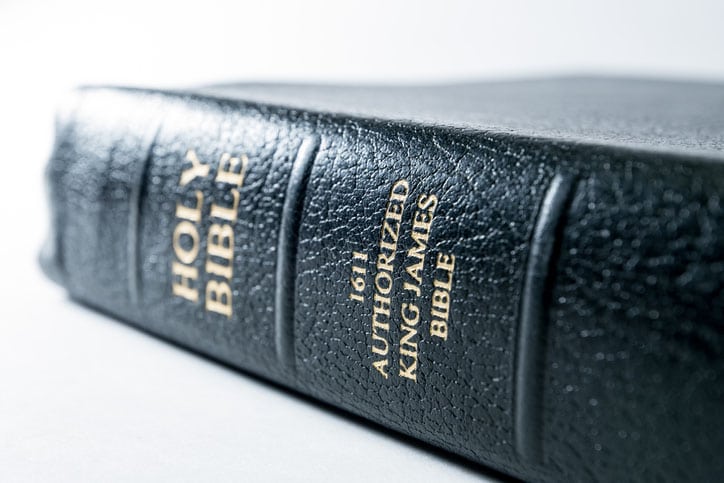
of Isaac, which proves that the tongue of King James
was the Bible’s original. Isaac was asking
for venison-benison, pun-multitasking.
Angels can’t speak Aramaic, I’ve heard;
except sahadutha they don’t know a word
of what for the Jews was the Hebrew vernacular––
their Britspeak confusion therefore is spectacular.
All speak fluent Hebrew and no other speech
is by them understood, and is far out of reach
to most who aren’t Jews, whom Hashem (thank You!) chose
to worship in Hebrew, His tongue, they suppose.
Though Mordecai spoke many tongues, it is said,
for Moses pure Hebrew was as foreign as bread
made of rye is for people who eat watermelon.
Egyptian he spoke until forced as felon
to spend forty years as a fugitive––pidgin
was all that he learned from Zipporah in Midian,
a black lass, they say, and I find this ironic––
what she may have taught him was ancient Ebonic,
since there was no ulpan in Midian for learning
Ivrit. When he saw a strange bush brightly burning,
but, unharmed, alive, he was terribly puzzled,
but couldn’t address it, linguistically muzzled,
refusing commands of a God called “I Am,”
dismissing its content as spurious spam,
which leaves me quite baffled––how could he have written
the Bible which I’ve proved King James wrote in Britain!
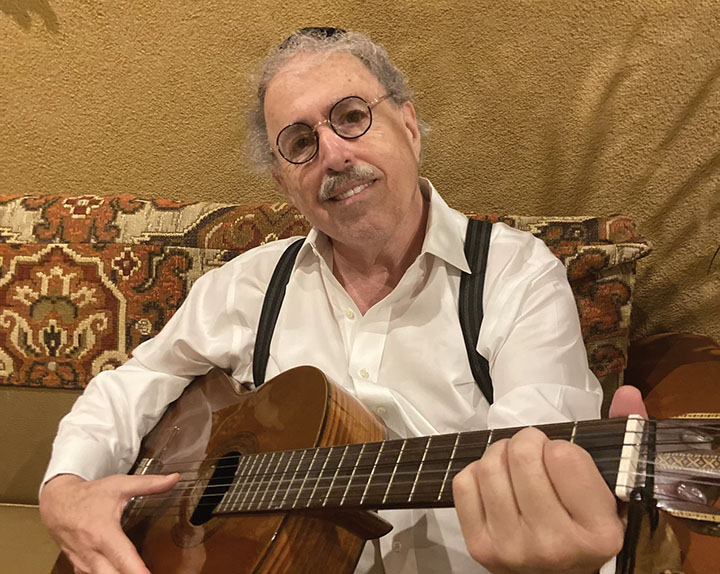
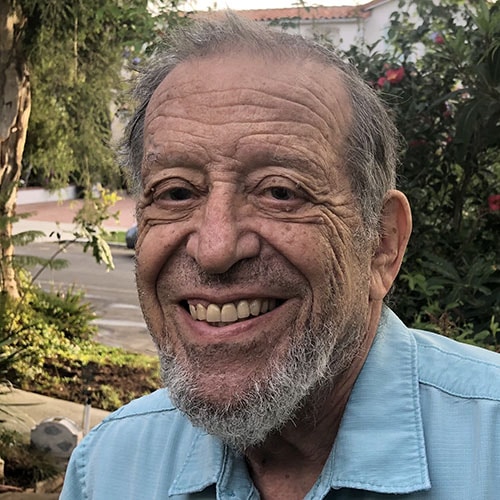
Gershon Hepner is a poet who has written over 25,000 poems on subjects ranging from music to literature, politics to Torah. He grew up in England and moved to Los Angeles in 1976. Using his varied interests and experiences, he has authored dozens of papers in medical and academic journals, and authored “Legal Friction: Law, Narrative, and Identity Politics in Biblical Israel.” He can be reached at gershonhepner@gmail.com.