fbpx

The Havana Jewish Social Club

My husband and I arrived in Havana in the early hours of Sunday morning; we had flown to Cuba via Tijuana to spend a week exploring and, hopefully, to find someone in the Jewish community to speak with.
[additional-authors]
September 2, 1999

My husband and I arrived in Havana in the early hours of Sunday morning; we had flown to Cuba via Tijuana to spend a week exploring and, hopefully, to find someone in the Jewish community to speak with. Although the majority of Cuban Jews had fled to the United States and Israel after the 1959 revolution, I wanted to find a typical family that had remained, and to hear about their life now that Castro had opened the way for religious freedom.

As we left customs, we caught a taxi to our hotel. Speeding down the main artery into Havana, we passed large billboards with revolutionary slogans, crowds of people waiting for the bus. The pace seemed immediately different: Lovers strolled in slow motion, bicycles meandered down the street. We arrived at our hotel in tree-lined Vedado at 3:30 a.m., too excited to sleep.

The next day, we set out to find the Casa de la Comunidad Hebrea de Cuba, or Patronato, as it is known, located near our hotel. After a half hour of walking in circles, we finally found it. A once-prosperous Conservative synagogue and community center built in the 1950s, the Patronato is still a grand building, taking up the entire corner of Calle I and 13.

Inside, an attractive woman in her early 60s emerged from the office and greeted us. She introduced herself as Adela Dworin, the vice president and librarian of the Patronato. (Her English was impeccable.) She was wearing a spiffy black outfit, studded with Jewish stars, and her light-colored hair and complexion reminded me, uncannily, of the women in my own family.

I told her what I wanted to do, and she smiled. “That might be difficult,” she said. There was a long silence, and I feared all might be lost when Adela offered: “But you could interview me. I am your typical Jewish family.”

And so she was. Due to a system of quotas that limited U.S. immigration in the 1920s, Adela’s mother and father followed the path of many Eastern Europeans out of an economically deprived Europe, into the lush waters of the Caribbean, to make Cuba their home.

Adela Dworin’s father came to Cuba from Pinsk in 1924, her mother in 1930. Back then, a young man’s dream was to come to Cuba for a few short years, make enough money and then re-emigrate to the States. “They used to call Cuba ‘Hotel Cuba,’ ” Adela said.


Did you enjoy this article?
You'll love our roundtable.

Editor's Picks

Latest Articles

Who’s Really the Victim?

Those who would revel in Israel’s demise are claiming victimhood on every front and denying attacks on us in the same breath.

Biblical Deterrence

After Oct. 7, the sentiment in Israel toward the Iranian leadership was unequivocal: You went medieval — so we will go biblical.

How Sukkot Makes Us Whole

This year, I bless us that we open our eyes to truly see the beauty and the holiness of the world, and of the person before us at each and every moment, and to see the godliness of their aspirations and their fears.

The New Ushpizot

Ushpizin invite us to “welcome in our ancestral constellation and dwell amongst them.” This year, it’s Ushpizot, for the women. It’s the year of the Feminist Visitation.

Macklemore, Or Less

In between his songs, he proclaimed, “Free Palestine,” which is fine, asserted that opposing Israeli military actions is not antisemitic, which is accurate, and accused Israel of apartheid and genocide, which is offensive, untrue and hateful.

The Rokeach’s Remarkable Sukkah

To Rabbi Eleazar ben Judah of Worms (1176-1238), the medieval German pietist known as the Rokeach, the sukkah symbolized Jewish military might.

The Sukkah and the Power of Endurance

They can destroy our Temples, demonize us in social media, shower us with hate, but they can’t destroy a spirit that never stops building. That enduring spirit is the power of the sukkah.

NY Mag’s Habibi City

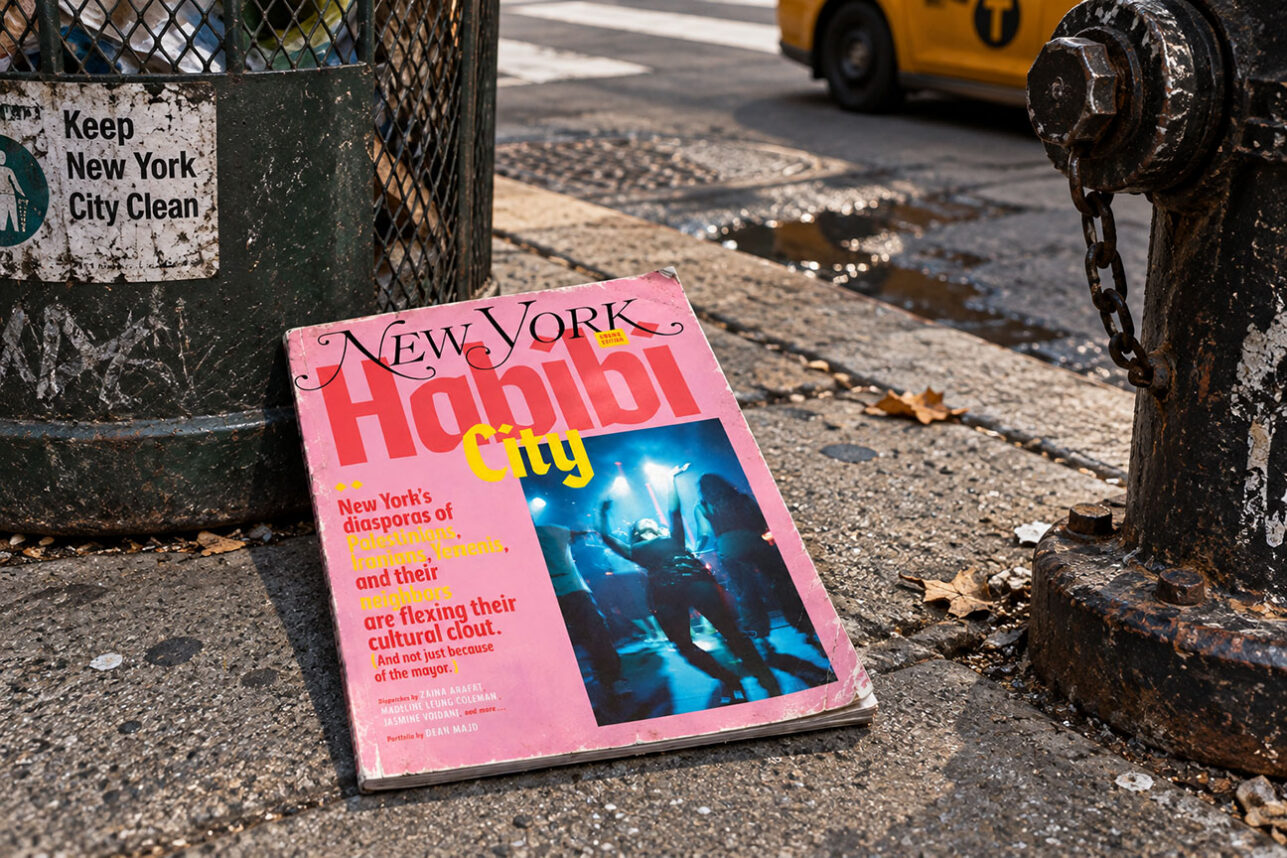
A satirical response to Zaina Arafat’s erasure of Jews in her New York Magazine article “Habibi City,” written as Zaina Arafat.

The ‘Fauda’ Enigma

In many of the nations that believe Israel has no right to exist and routinely root for terrorists to slaughter Jews, a TV show that depicts Israeli covert operatives outsmarting and dispatching Arabs has an inexplicably loyal global audience.

Jewish Democrats Cave to Anti-Semites

Those of us who are not of the Democrat politic party have believed that the Democrats have done little to stop the disease of Jew hatred from infiltrating their party.

More news and opinions than at a Shabbat dinner, right in your inbox.