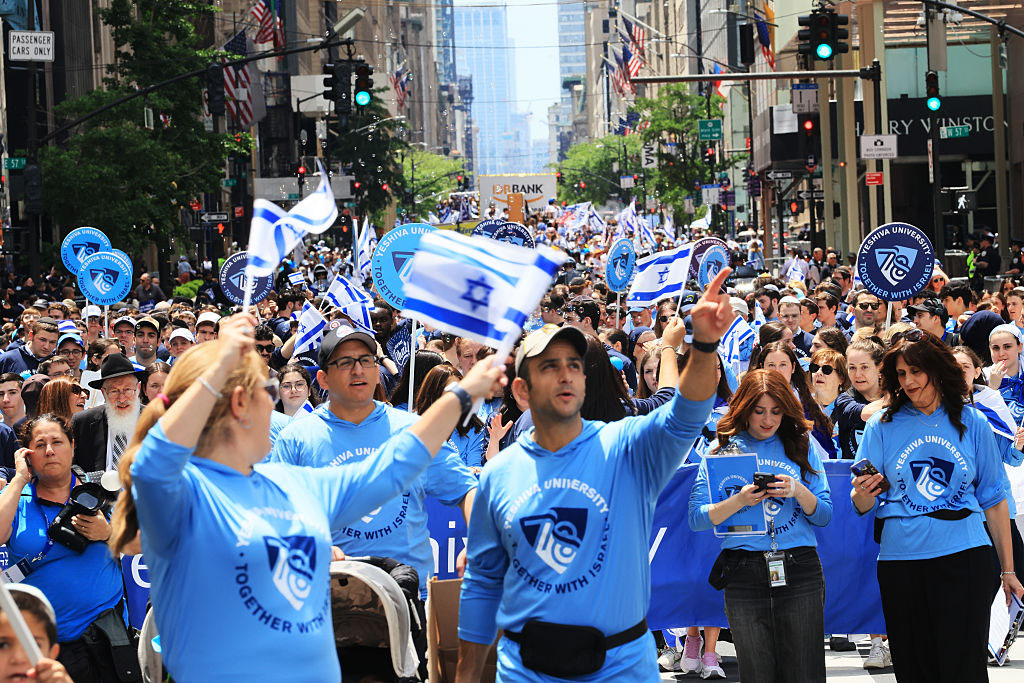
Standing with the crowd in Netanya where, hours before, a Palestinian suicide bomber had killed three Israelis and himself, local carpenter Ya’acov Ohayon was asked if he thought the public — the home front — was ready for more of the same, or worse.
“Are they ready?” he replied. “Everybody says they want to go to war to put an end to all this. Would a war be any worse than what we’ve got?” In any war, high morale at home — an ability to withstand constant fear and loss of life, and to maintain determination to fight — is considered absolutely vital. The morale of the Israeli home front is now being tested. Palestinian terror has jumped the Green Line and entered the Israeli heartland — killer bus drivers in Holon, exploding bus passengers in the Galilee, detonating pedestrians in Netanya.
Despite the army’s all-out effort to close off the country to incoming Palestinians, the sense is that terrorists are entering Israel one by one, nearly every day, and succeeding in their missions. Meanwhile in the West Bank and Gaza, the shooting at soldiers and settlers goes on. It’s not just Hamas and Islamic Jihad, as in earlier years; now it’s the Palestinian Authority itself, Israel’s “partner.”
All assessments are that the violence shows no sign of subsiding; if anything, it will get worse. Prime Minister-elect Ariel Sharon and his allies speak of finding new, no-nonsense ways of putting down the intifada, and while they haven’t been long on specifics, widespread speculation is that the next steps may be 1) to target the higher-ups in the intifada, including Arafat’s top lieutenants, and 2) to bring the fight onto the P.A.’s turf — into the cities, villages and refugee camps of Gaza and the West Bank.
This could have severe repercussions, the most greatly feared of all being that other Arab forces, such as Hezbollah on the northern border or Syria, as well as other Arab states, could join the fight against Israel. At the very least, an escalation of the fighting would mean more tension, fear and death for Israelis to live with.
Are they up for this? Or would they crack under the pressure and, in essence, sue for peace with the Arabs? Prof. Ehud Sprinzak, an expert on terror at Herzliya’s Interdisciplinary Center, said Israeli society, like all bourgeois societies, is “soft.” While the Palestinians are enraged and even encouraged with the death of each new shaheed (martyr), Israelis “fall apart,” he noted.
“But this doesn’t mean the Israeli public is going to collapse,” Sprinzak stressed. In the short term, at least, Israelis will stand fast, he predicts, not least because the previous government of Ehud Barak went such a long distance for peace.
Barak said repeatedly that it was important for the morale of the public and the army for them to know that its government had done everything possible for peace. Thus, if they were forced to go to war, it was because of the other side’s intransigence — it was truly a “war of no choice.”
“If Barak achieved any successes in his term of office, that was it,” Sprinzak said.
Dr. Reuven Gal, former chief Israeli army psychologist and now director of the Carmel Institute for Social Studies, agreed that the political context of the current fighting made all the difference in the public’s morale.
While the Palestinians achieved their aim in the first intifada by getting Israel to negotiate with the PLO, and while Hezbollah achieved its aim by forcing Israel’s withdrawal from Lebanon, the current intifada can’t push Israelis to make any more concessions because they’ve already made about as many as they can, Gal said.
“If anything, the terror is producing a political backlash to the right,” he noted. He senses a healthy “resilience” in the public to the violence. Among soldiers, he sees an upsurge in morale because they’re not acting as policemen against stone-throwers, as in the first intifada, but rather like soldiers fighting gunmen. “The attitude now is, ‘We’re finished with all that pussy-footing — war is war.'”
The way it’s beginning to look, the Israeli home front is likely prepared for a lot more than Yasser Arafat and the fighters of the Al-Aqsa intifada might have imagined.