fbpx

Supreme Court Upholds Trump’s Travel Ban

[additional-authors]
June 26, 2018
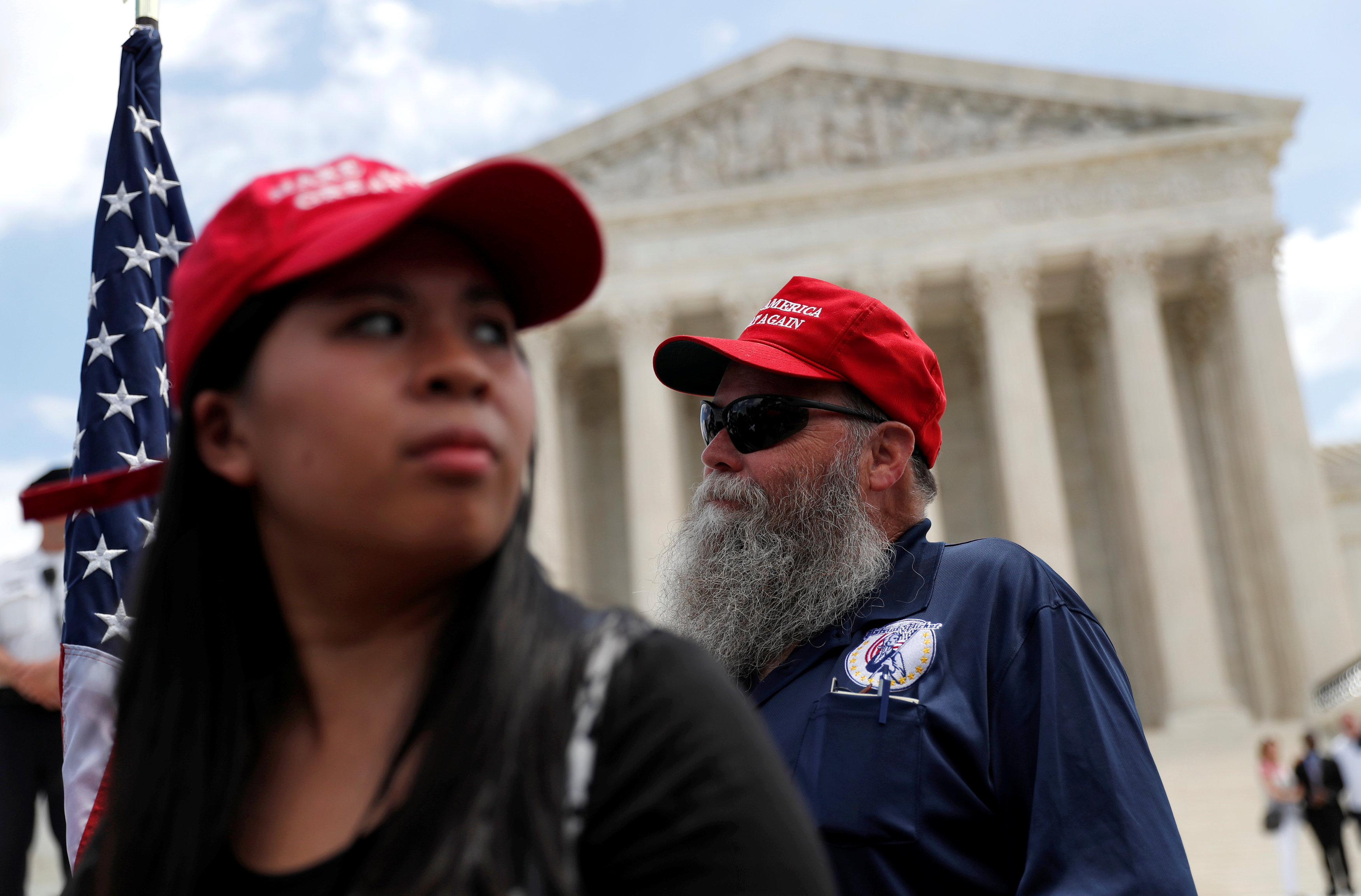
REUTERS/Leah Millis

The Supreme Court upheld President Trump’s travel ban of people from a handful countries by a margin of 5-4.

Under the ban, immigration from Iran, Libya, North Korea, Somalia, Syria and Yemen are restricted. The Trump administration has claimed that the ban is necessary for national security purposes, and the Supreme Court agreed.

Chief Justice John Roberts wrote in the majority opinion that federal law “exudes deference to the president” when it comes to setting limits on immigration, adding that the president just has to prove that doing so is in “the interests of the United States.”

“The proclamation is expressly premised on legitimate purposes: preventing entry of nationals who cannot be adequately vetted and inducing other nations to improve their practices,” Roberts wrote.

In the dissent, Justice Sonia Sotomayor claimed that the travel ban “was motivated by anti-Muslim animus” based on Trump’s past statements on Muslims and that the ban has resulted in “pain and suffering” on “countless families and individuals, many of whom are United States citizens.”

Trump hailed the ruling as a “profound vindication” in a White House statement.

“As long as I am President, I will defend the sovereignty, safety, and security of the American People, and fight for an immigration system that serves the national interests of the United States and its citizens,” Trump said.


Did you enjoy this article?
You'll love our roundtable.

Editor's Picks

Latest Articles

Post-Passover Pasta and Pizza

What carbs do you miss the most during Passover? Do you go for the sweet stuff, like cookies and cakes, or heartier items like breads and pasta?

Freedom, This Year

There is something deeply cyclical about Judaism and our holidays. We return to the same story—the same words, the same questions—but we are not the same people telling it. And that changes everything.

A Diary Amidst Division and the Fight for Freedom

Emma’s diary represents testimony of an America, and an American Jewish community, torn asunder during America’s strenuous effort to manifest its founding ideal of the equality of all people who were created in the image of God.

More than Names

On Yom HaShoah, we speak of six million who were murdered. But I also remember the nine million who lived. Nine million Jews who got up every morning, took their children to school, and strove every day to survive, because they believed in life.

Gratitude

Gratitude is greatly emphasized in much of Jewish observance, from blessings before and after meals, the celebration of holidays such as Passover, a festival that celebrates liberation from slavery, and in the psalms.

Freedom’s Unfinished Journey

The seder table itself is a model of radical welcome: we are told explicitly to invite the stranger, to make room for those who ask questions and for those who do not yet know how to ask.

Thoughts on Security

For students at Jewish schools, armed guards, security gates, and ID checks are now woven into the rhythm of daily life.

Can Playgrounds Defeat Antisemitism?

The playground in Jerusalem didn’t stop antisemitism, and renovating playgrounds in New York City is not likely to stop it there, either — because antisemitism in America today is not rooted in a lack of slides or swings.

More news and opinions than at a Shabbat dinner, right in your inbox.