Along with Passover, Chanukah has come to symbolize the current status of American Jews. As these holidays contain a universal message, they contribute to the broader religious spirit and cultural pluralism that defines this society.
The transference of Chanukah from a marginal Jewish observance to a national centerpiece occurred over time. The seeds of the reinvention of Chanukah in this country are tied to the 19th century. In its early stages, Reform Judaism rejected Chanukah as a national holiday antithetical to modern times and to the core notion of Judaism as a distinctively religious expression; other movements and institutions, however, attempted to introduce this holiday into the framework of contemporary American life. In the 1870s, with the establishment of the YMHA of New York, its founders placed special emphasis on creating a “grand revival of the Jewish National Holiday of Chanucka,” according to American historian Jonathan Sarna. The intent of this pageantry and focus on this “lost holiday” was centered on competing with the allure of Christmas and in countering the rise of Christian evangelical initiatives designed to capture “Jewish souls.”
In the post-World War II era, the focus around Brotherhood Week and other interfaith symbols introduced the idea of a shared American religious culture. The tripartite representation of “Protestant, Catholic and Jew” would dominate the framework of interfaith relations for several decades, leading to the further engagement of Chanukah with Christmas.
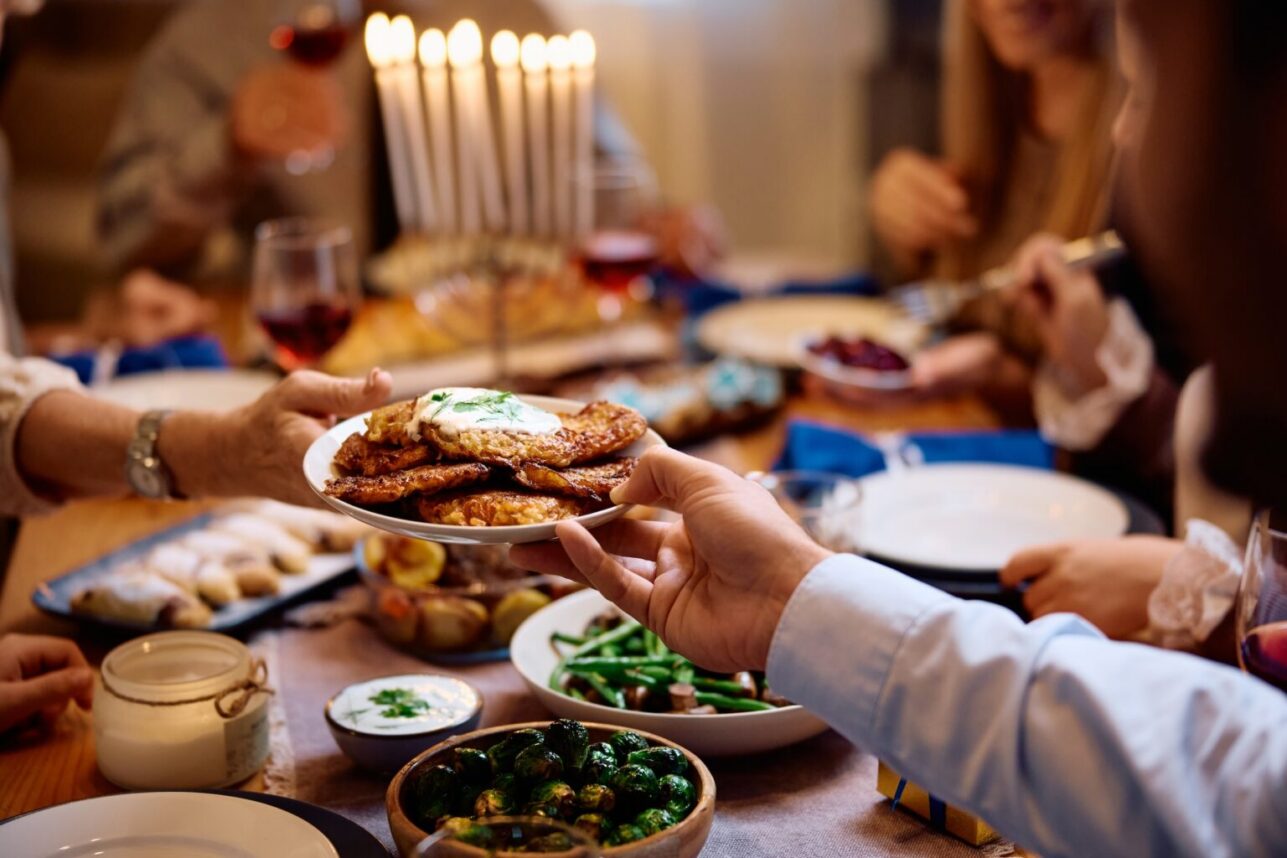
The binding together of religious themes with secular culture is reflected today in the music, literature and language of a society that tends to blend religious and cultural differences into some type of commercially uniform religious “product.” The idea of “happy holidays,” for example, has replaced the specific focus on Christmas as the cornerstone for winter celebrations, in part symbolizing this shift from separatism to inclusion. Such practices as gift giving and the public lighting of menorahs reflect the blending of Jewish practices with more general social patterns of linking together the winter customs and practices of the various faith traditions. Even the designs associated with the crafting of menorahs and other holiday objects tend to blend traditional religious concepts with contemporary themes and expressions. Such notions as a “Green Chanukah” have aligned this holiday with appropriate environmental messages.
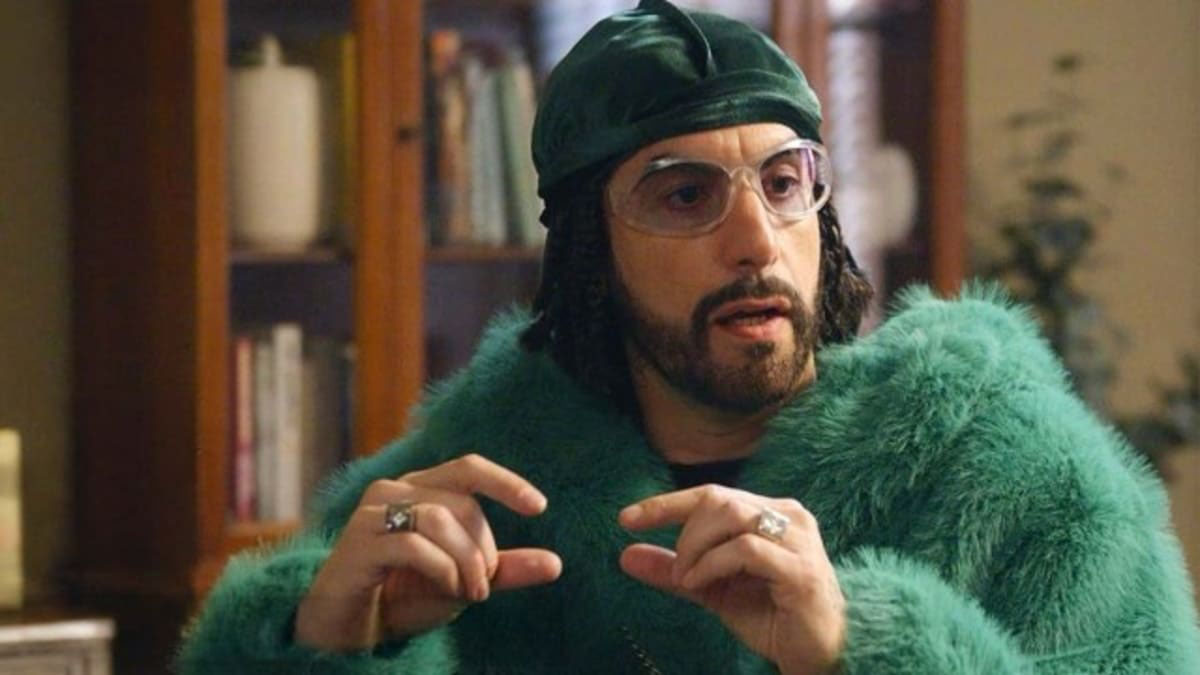
Adam Sandler’s popular “Chanukah Song” series and similar efforts, such as Sandler’s 2002 film “Eight Crazy Nights” and The Klezmatics’ 2006 album, “Woody Guthrie’s Happy Joyous Hanukkah,” provide a framework both for reasserting Judaism’s distinctiveness and for making the world at large appear to be some type of Jewish playing field where all types of personalities have some degree of Jewish pedigree or connection, affirming Judaism as being genuinely American.
Sociologist Sylvia Barack Fishman suggests that American Jews see little distinction today between what is “Jewish” and what is considered “American.” Where once Jews compartmentalized these two value systems, such distinctions are no longer present, and this cross-cultural phenomenon is leading to the revitalization of Jewish life. Contemporary messages are now attached to the storyline of Chanukah, as its message of religious freedom and national liberation are transposed onto the political agendas of other peoples and causes. Similar to Passover’s appeal as being related to slavery and freedom, the observance of Chanukah affords Jewish organizations an opportunity to introduce interreligious and intergroup programs embracing such shared messages. For some Christians, the observance of traditional Jewish rituals and festivals, in particular Passover and Chanukah, provides them with a greater sense of connectedness to the roots and historical basis of their own tradition as they seek to explore their Jewish roots.
For certain, a counterrevolution is underway, designed to “take back” Chanukah and to ensure its own unique, though limited, place within Jewish tradition. The menorah, it is argued, symbolizes the rebirth of the Jewish state and the Jewish nationalist expression. At its core, some would suggest, Chanukah is an expression of Jewish pride, challenging the notions of assimilation as demonstrated in some of its contemporary forms. The story of the Maccabees is seen as the assertion and celebration of Jewish identity. The holiday’s internal message remains centered on preserving and building upon the Jewish experience.
Steven Windmueller is dean of Hebrew Union College-Jewish Institute of Religion in Los Angeles.