The story of creation begins again this week in synagogues around the world. The Jewish people make a global reset and roll back our Torah scrolls. Fresh and new, our world is set in motion with organic divine harmony, only to be disrupted by human folly.
This annual cosmic rewind and the rereading of Genesis gives us all a chance to deepen our thinking about the stories we heard as children about the dangers of snakes and fruit trees, about curiosity and sibling rivalry. The sages enjoined us to reread the Torah and look at it with fresh eyes in every generation, freeing us to be creative while demanding our direct engagement with the text.
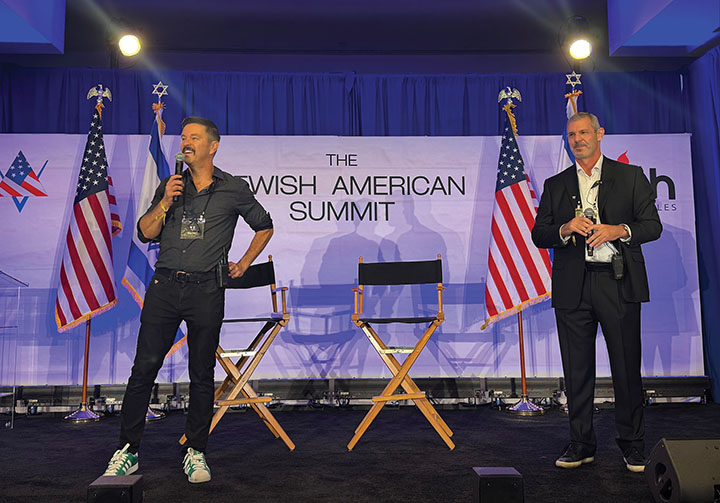
This year, what comes to my mind after a successful and inspiring Jewlicious Rosh Hashanah and Yom Kippur Days of Awesome experience is how much those involved with the Jewish community, and those on the periphery, want to connect to something enduring in the face of an uncertain economic future. I see young Jews more willing to revisit ageless questions about the meaning of life, and less satisfied with traditional ways of experiencing our highest holy days.
With this in mind, I opened the Torah to reflect upon the connection of Genesis with a new year, the Arab Spring, European summer and the growing season of discontent branded an American autumn. What I found in this fresh reading of Genesis is the far-reaching effects of personal and collective responsibility.
When confronted with the result of our actions in Eden, and even afterward, humanity quickly began pointing fingers. No one wanted to accept responsibility for breaking the matrix that kept the world in a state of harmony. Not Adam. Not Eve. Not Cain. No one would own up to his or her lust for personal gain — even at the expense of others.
Instead, we are introduced to how humanity upset God’s perfect world with dishonesty, withholding information, jealousy and accusations.
Jewish tradition teaches that God created the world to infuse it with goodness. However, this stands in contrast to the world we see. Even with the rose-colored glasses of privilege and faith in humankind, we have to admit that the world is full of misery and suffering. Finding God in this mess becomes difficult, if not impossible, for many of us.
The Jewish mission of repairing the world, tikkun olam, uncovers the goodness God uses to sustain the world. Healing wrongs and promoting justice, equality and sustainability becomes a process of repairing creation. Tikkun olam taps into a deep-seated yearning for a revealed world of goodness, a return to Eden, and explains why so many of my tribe are drawn to movements for social change.
These latest movements for vast social change on the left and right can learn an important lesson from this week’s portion. They can learn that a critical mistake for which humanity was expelled from Eden in the first place, and one of the ills that affects our collective future, is a failure to accept personal responsibility for our actions.
What I see in the latest activist movement, Occupy Wall Street, is in some way a manifestation of a primal yearning for a world in balance that we see at the start of Genesis. The economic disparity and disillusionment that seems to be at the heart of this social upheaval led by young people has myriad causes — some contradictory and some difficult to ascertain. Yet, at the core is a yearning for an “Edenic” world, a world that is healed and at peace. It’s a beautiful mission that hearkens back to our yearning for redemption. Therefore, I hesitate to dismiss the eruption of protests across the United States and now in Europe as a pointless exercise in anarchy, hypocrisy or a new call to eat the rich.
Occupy Wall Street understands that this millennial generation is not responsible for the mess we are in. This generation knows they are not responsible for setting up the systems that are broken. Yet, they feel compelled to do something about it.
I also hear the message from some Occupy folks as recognizing that, like most of us, they are marked by the faults of this generation — that they, too, have been complicit in the errors of this generation, such as vanity, apathy, materialism and a lack of acceptance of responsibility.
Genesis falls on the heels of Rosh Hashanah and Yom Kippur. These Days of Awe are a process of owning up to our communal shortcomings and asking God’s assistance in helping fix them. It requires us to accept responsibility for our own mistakes, the mistakes of our entire community and the world. Only then can we begin to start over.