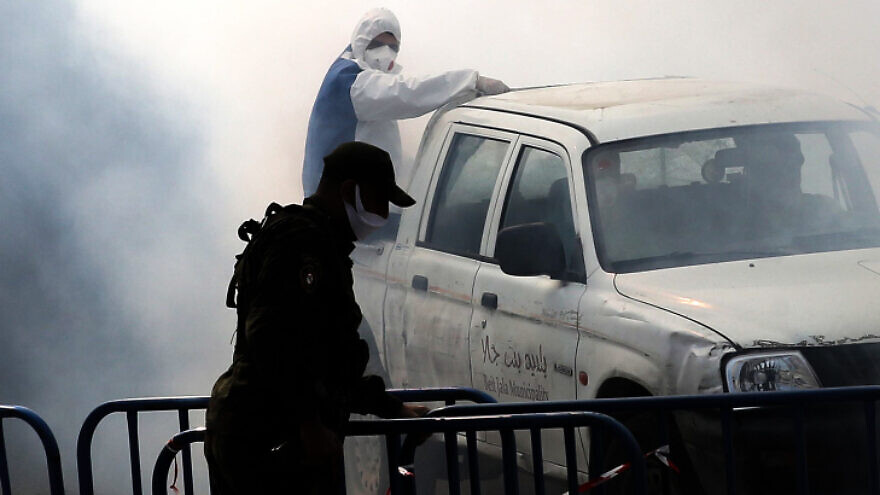
The United Arab Emirates this week provided medical supplies and other assistance worth hundreds of thousands of dollars to Palestinians, including those in East Jerusalem, something the Israeli government views as an illegal act in its capital.
Ibrahim Rashid, head of the UAE International Humanitarian and Charity Organization for Palestine, met with Palestinian officials and prominent Jerusalem figures on Monday to brief them on a series of humanitarian programs and interventions for the city. These come in addition to the charity’s ongoing $500,000+ project to help 650 Palestinian orphans via the Zakat Committee for East Jerusalem.
Fleur Hassan-Nahoum, deputy mayor of Jerusalem, says that more than one player has been trying to further its political agenda by interfering in the eastern part of the city.
“We are fully aware of illegal donations in East Jerusalem,” she told The Media Line. “We are also aware that the Turkish government is involved with several organizations there.”
“We are fully aware of illegal donations in East Jerusalem,” she told The Media Line. “We are also aware that the Turkish government is involved with several organizations there.”
Hassan-Nahoum stressed that the only legitimate authority on the ground in East Jerusalem was the Jerusalem Municipality.
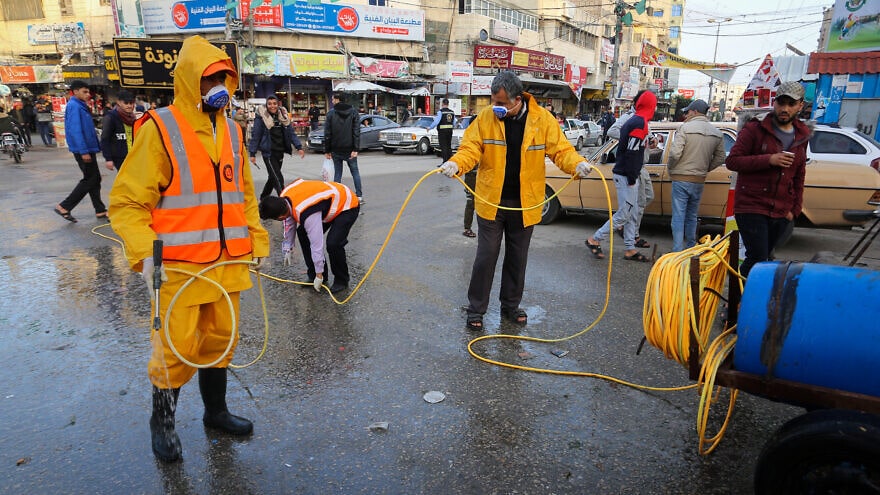
“Many try, but we are the official authority to serve the citizens there,” she said. “Last Thursday, we started work in East Jerusalem to face the coronavirus. We have hospitals for quarantine, and residents will be tested.”
The Palestinian leadership is adamant that East Jerusalem will be the capital of an independent Palestinian state when a political solution is reached with Israel. To this end, using civic and humanitarian organizations, they implement programs and activities to serve the population and bolster the Palestinian Authority’s position in the city, saying that Israel purposely marginalizes the area.
Fadi al-Hadmi, the PA’s Jerusalem affairs minister, declined to comment when reached by The Media Line. The Israeli authorities have arrested and released him four times – the latest coming this past weekend – for his activities, which Israel says violate the Oslo Accords.
Ahmad Majdalani, the PA’s minister of social affairs, told The Media Line that the ministry utilized NGOs to distribute about NIS 700,000 (about $200,000) worth of food packages to families in the city, the same as it does for Palestinian families in Ramallah and Bethlehem.
“The coordination is conducted through humanitarian organizations in East Jerusalem, not the Israeli government. We are committed to serving our people in a parallel and fair manner,” he said.
“The UAE International Humanitarian and Charity Organization distributed about 2,000 packages in Hebron. This comes as part of our continuing work with the organization to help Palestinians in all Palestinian governorates,” he explained.
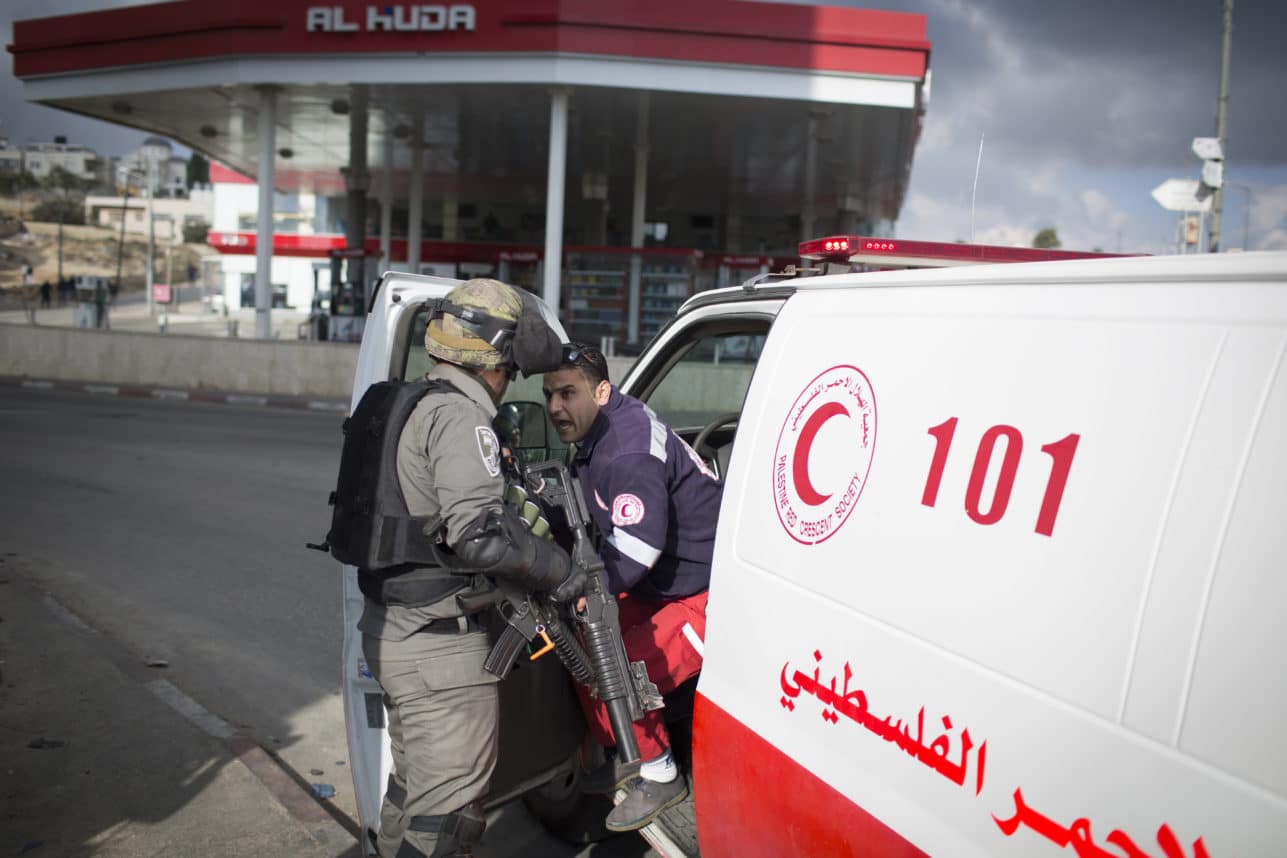
Rashid’s briefing on Monday took place at the headquarters of the PA’s Jerusalem Governorate in Dahiyat al-Barid, a suburb just outside the city’s municipal boundaries. Attending were Jerusalem Grand Mufti Mohammed Hussein; Adnan al-Husseini, a member of the PLO Executive Committee; Muatasem Taim, head of the Jerusalem unit in the Palestinian president’s office; and Issa Darwish, chairman of the East Jerusalem Zakat Committee.
Darwish was handed a check for NIS 787,994 (about $221,000) for the orphans.
Moshe Marzouk, an Israeli analyst and research fellow at the International Institute for Counter-Terrorism in Herzliya, told The Media Line that in light of the coronavirus pandemic, all aid was welcome, including for East Jerusalem and orphans, regardless of politics.
“We are now in a situation where all help is a blessing,” he said.