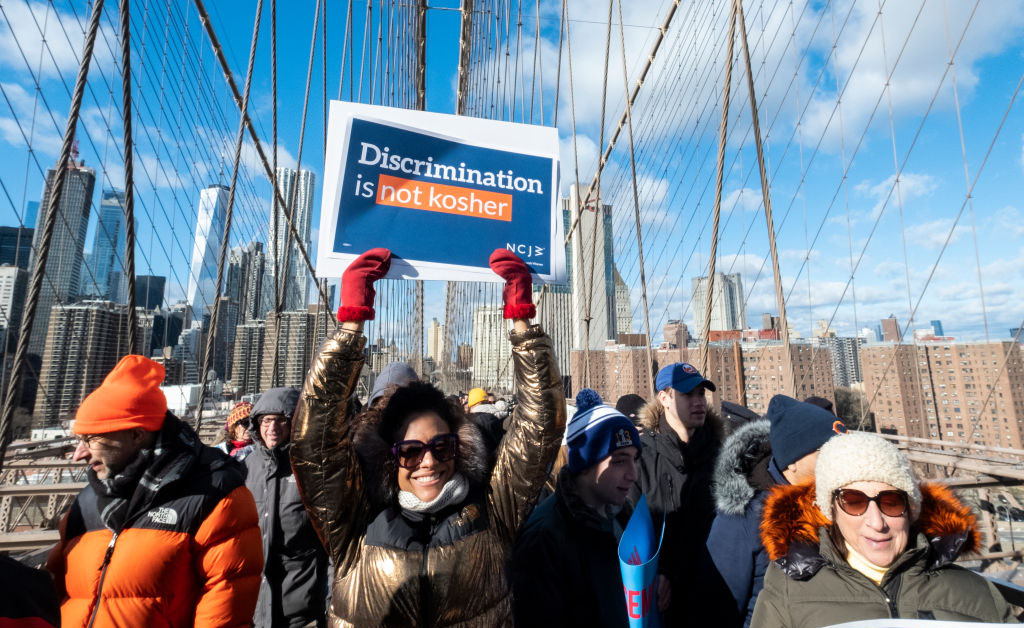
Approximately fifty Beit Shemesh residents came out early Wednesday morning, the day after the terrorist massacre in the shul in Har Nof, to protest the lack of police presence at the Resido building intersection, where Arabs routinely wait to be picked up for day labor jobs.
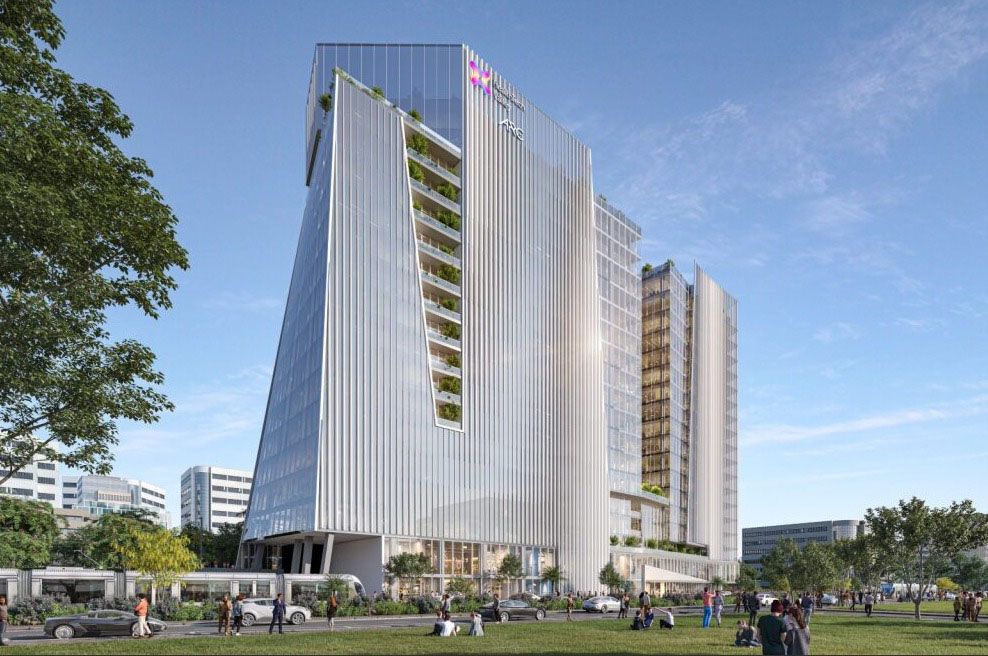
The Resido building (a large unoccupied complex, unfinished due to conflicts regarding its opening several years ago) sits across the intersection from the Orot Girls School, where tensions ran high as the new elementary school building opened three years ago. At that time residents protested near this same intersection, demanding more police protection for the girls attending the school, and rallying against the opposition to the school’s opening from some members of the haredi community. The incident of a haredi “zealot” spitting on one of the schoolgirls took place here.
Now, the residents are asking the police again to increase their presence in Beit Shemesh. The Resido intersection was targeted, as this is where Arab and other foreign workers typically wait to be picked up for day labor jobs.
“Since the Resido building is vacant, Arabs working in construction just moved in a bunch of mattresses, and started sleeping there,” explains Sara, a Beit Shemesh resident attending the demonstration. “Then the ‘vaad ha–tsniyut’ (the modesty committee) that was against populating Resido in the first place (since who knows what could go on at a mall) took action and threw out all the mattresses. Now Arabs are not allowed to sleep there, but I wouldn’t be surprised if some still do.”
“I’m not comfortable seeing them here,” says Chaya, a Beit Shemesh resident who came out to the rally. “We feel threatened having Arabs on our streets. Our safety is being compromised. Listen, if an Arab who worked at a makolet in Jerusalem could butcher the people he saw every day, then how can we feel safe around these workers who are transients, who don’t even have any connection to us? I’d be happier if they weren’t here at all. Let them get picked up on Route 10, away from a populated neighborhood.”
A woman from the nearby Kiriyah Ha-charedit neighborhood walked past the demonstration pushing her stroller, but she did not stop to participate. “We won’t come out to demonstrate,” she said. “But I personally have called the police many times about the Arab workers walking around in our neighborhood.”
One of the organizers of the rally is Barak Schechter, originally from West Orange, New Jersey, now in Ramat Beit Shemesh. Schachter stated, “We want to have a unified voice to tell the police force that we need more police presence in the streets of Beit Shemesh to act as a deterrent to prevent any violence or burglaries. We need more protection! In just the past two weeks we’ve had one apartment that was emptied (by Arabs) and two incidents of door knobs being violently shaken by would-be intruders.
Yissachar Ruas, co-organizer of the rally, is originally from the Lower East Side, and now resides in the Sheinfeld neighborhood of Beit Shemesh, adjacent to Resido. He wants to keep up the momentum. “We want to do these demonstrations once a week, to get the police presence up,” Rus stated. “There are at least a hundred Arabs, on both sides of the street, every morning. I see them when I drive my kids to school. And I see lots of school kids walking right past where those Arabs are waiting, and those kids and their parents are petrified. The Beit Shemesh police station sits outside of Beit Shemesh on the highway, and we need them close by – in case G-d forbid anything would happen. We saw what happened in Jerusalem yesterday. If something would happen here, chas v’shalom, the victims would be much younger and much more vulnerable. We don’t like to remember the case of Lipaz Chimi, and eight-year-old girls who was raped and murdered by an Arab construction worker who didn’t have a work permit in 2006. We don’t want anything like to ever happen again. We believe that having a strong police presence will really make a difference.”