fbpx

May 13, 2026

AIPAC and Israel Are Good for America

Israel is under siege.

I can’t recall a time when the reputation of the world’s only Jewish state has taken such a beating. Recent polls show that for the first time, young people are more sympathetic to the Palestinian cause than to Israel.

It’s now normal, even cool, to bash Israel. It’s even good for your career.

This has made things ever more challenging for a lobby group like the American Israel Public Affairs Committee (AIPAC), whose very mission is to strengthen the U.S.—Israeli relationship. The genius of AIPAC has always been its ferocious focus on making support for Israel a nonpartisan issue.

But with the Democratic party moving sharply to the left, and Israel’s image in the dumps, more Democrats than ever are flaunting their opposition to Israel, and that includes opposition to AIPAC.

“A growing number of Democratic primary challengers are making opposition to the American Israel Public Affairs Committee a campaign issue as they seek to unseat party incumbents backed by the influential pro-Israel advocacy group,” Reuters recently reported. “The trend reflects divisions over U.S. policy toward Israel as the wars in Gaza and Iran deepen intraparty tensions ahead of November’s midterm election.”

AIPAC is a savvy group that knows how to make the best of tough situations. But what they could use right now is a boost to Israel’s image, and the pro-Israel community can help.

We’ve allowed Israel’s image to deteriorate to the point where words like “genocide” and “apartheid” are routinely velcroed to the Jewish state.

As if that weren’t enough, the false narrative that Israel has coaxed America into the war with Iran means that every time someone fills up their gas tank, guess who they’re likely to blame for the sticker shock?

To counteract this precipitous decline, it’s not enough to play defense and “correct the lies.” We must aim higher.

If people think that Israel is bad for America, the only remedy is to show that the very opposite is true.

Fortunately, the truth is on Israel’s side: Israel is indeed very good for America.

A good starting point is this message on AIPAC’s home page:

“Israel is a strong, self-reliant nation that shares [America’s] democratic values and advances our strategic interests — an innovation powerhouse that helps strengthen our military, bolster our economy, and promote peace and stability in an unstable region.

“The Jewish state — a capable and determined ally that embodies our values of freedom, democracy, equality and pluralism — is on the front lines defending Western values against dangerous groups and nations that are committed to destroying both it and the United States.”

There’s plenty more where that came from. If we hope to persuade people that Israel is synonymous with America’s interests, we must inject credible evidence into the media ecosystem and blanket every platform and social media channel with that message.

Emphasizing Israel’s value to America must become a community-wide effort. From the ADL to the AJC to the Federation system to Hillel and every pro-Israel group in the country, the collective priority must be to strengthen the U.S.—Israeli relationship.

Israel’s enemies have invested enormous time and resources smearing Israel as an evil force that is bad for both America and the world. If we don’t counteract that canard with a case of our own, Israel’s image will become the Titanic after it hit the iceberg. We’re close to that status already.

Yes, we should denounce the alarming turn against Israel, from both the left and the right. Too many Democrats are shamefully silent when antizionism comes from their side, just as too many Republicans shut down when Israel-hatred comes from their “America First” wing.

The only truth that can cut through those libels is that “pro-Israel” and “pro-America” are virtually one and the same. When AIPAC says it strengthens the Israel-U.S. relationship, it is also saying it strengthens America.

In short, to rescue Israel’s image from the clutches of Jew-haters, we must show America that American Jews are also America first.

That is why they’re pro-Israel.

AIPAC and Israel Are Good for America Read More »
Jews Who Make a Difference

There are times when we feel surrounded. When it seems like the most powerful forces in the country, in the world, and in our own communities are lining up against us. Every day, there are more headlines and video clips of growing and spreading antizionism and casual and cruel antisemitism.

But this isn’t new for us.

As we look beyond our unsettled present to an uncertain future, we must remind ourselves that we are a people of improbable heroes.

Esther and Mordecai. Mattathias and Judas Maccabee. Nachshon and David and Ruth the Moabite. Even Moses’ deeply ingrained self-doubts are an integral part of our lore.

The same dynamic holds as true in the modern era as in biblical times. David Ben-Gurion and Benjamin Disraeli were outsiders who lacked traditional credentials and who found unlikely paths to power. Mickey Marcus was a Brooklyn-born U.S. Army colonel who became modern Israel’s first general. Golda Meir defied the United Nations, stared down the Soviet Union and defeated Egypt to win the Yom Kippur War.

We are not structured, as a religion or as a culture, to look to other humans to show us the path to follow. We have no Pope or Dalai Lama or Grand Mufti. We are a non-hierarchical, decentralized faith that relies on study, debate and individual responsibility. We lead ourselves and set examples of courage and determination and perseverance for each other.

When the walls feel like they’re closing in, it’s tempting to shrink away, to hide or to assimilate. But instead, let’s learn from those among us, ordinary people who do extraordinary things.

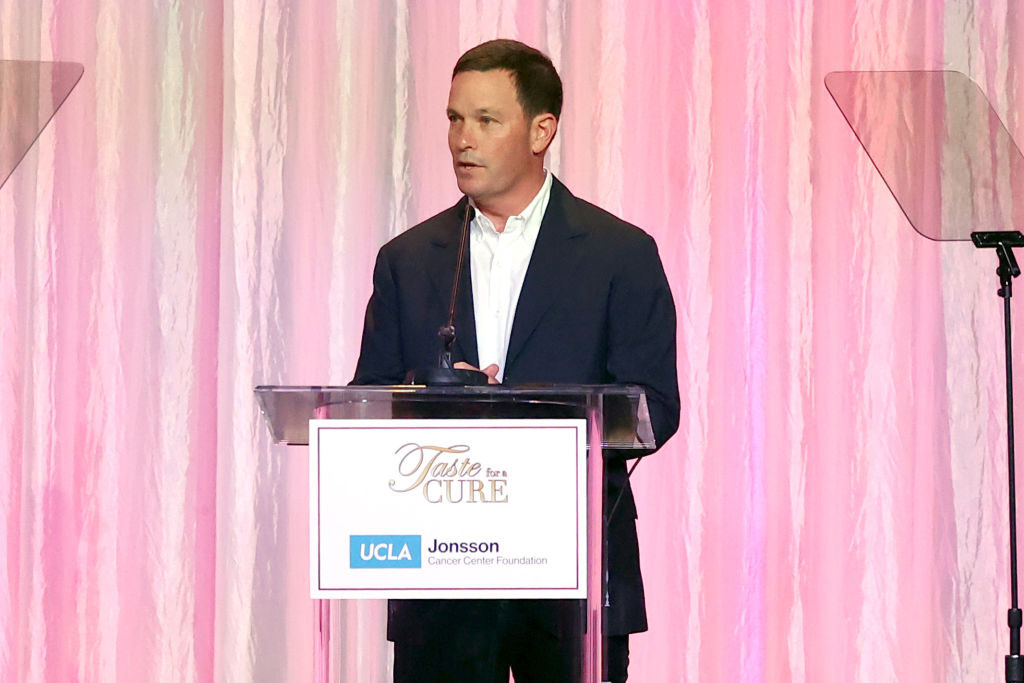
Let’s learn from Jay Sures, the entertainment executive who used his platform as a University of California Regent to condemn UCLA student government leaders for opposing an on-campus event featuring former Israeli hostage Omer Shem Tov. Sures, whose home has been vandalized in the past as a result of his pro-Israel advocacy, said that he was “disgusted and appalled” by the hostility toward Shem Tov’s visit to campus.

“You claim you want balance in programming and more than ‘a single narrative’ from speakers at UCLA. Balance, by definition, inherently involves equal consideration of more than one point of view. By condemning this speaker’s public appearance on our campus, your words and actions make clear you have no interest in balance at all,” he wrote. “That is the biggest double standard of all.”

In reaction to Sures’ pushback, both the UCLA administration and the student body president expressed regret for the provocation and promised investigations into the approval and release of the opponents’ statement. While this will not eliminate antisemitism on college campuses, Sures’ courage sends an important message to UCLA’s Jewish students that they are not alone.

Let’s also learn from activist Noa Tishby and Los Angeles School Board member Nick Melvoin. Upon finding out that L.A. Unified did not recognize Jewish American Heritage Month and undeterred by a local teachers union that has long taken ardent anti-Israel stances, Tishby and Melvoin not only successfully convinced the district to commemorate the month but to implement a video-based curriculum focusing on Israel, Judaism and the Holocaust.

“There is a profound gap in how Jewish history and identity are taught, or not taught, in American schools,” Tishby told The Jewish Journal last week. “… When kids show up on college campuses, it doesn’t come out of nowhere that they get radicalized. It happens before – ideas are already in the system, often without parents even realizing it.”

And finally, let us learn from our just-departed hero Abe Foxman, who began his career at what was then the Anti-Defamation League as a legal assistant and rose to become one of the world’s most admired and most effective crusaders against antisemitism. Much has been written about his immeasurable legacy elsewhere and does not need to be repeated here. But Foxman, like Sures, Tishby and Melvoin, reminds us that every one of us has a vital role to play as we work toward our ultimate victories.

So has it always been. So can it continue to be, if we are still willing.


Dan Schnur is the U.S. Politics Editor for the Jewish Journal. He teaches courses in politics, communications, and leadership at UC Berkeley, USC and Pepperdine. He hosts the monthly webinar “The Dan Schnur Political Report” for the Los Angeles World Affairs Council & Town Hall. Follow Dan’s work at www.danschnurpolitics.com.

Jews Who Make a Difference Read More »

Are Americans Finally Ready to Denounce Violence — Left, Right and Jihadist?

Political violence is like pollution – no matter what the source, it threatens everyone. Rav Joseph Soloveitchik, the great 20th-century sage, explained that Jews still fast, mourning the assassination of Gedaliah ben Ahikam in 586 B.C.E., because “the enemy was not from without but from within… It serves as a reminder that we are our own worst enemy when we allow internal strife to eclipse our shared identity.” Nevertheless, this third assassination attempt against President Donald Trump triggered another round of hypocritical attacks blasting political violence – from the other side.

On CNN, Dana Bash asked Congressman Jamie Raskin (D-Md.), who has called Trump a “fascist,” a “tyrant” and a “gangster” guilty of “murder”: “You have, as many of your fellow Democrats, have, used some heated rhetoric against the president. And do you think twice about that when something like this happens?” Raskin stunned everyone by sounding stunned, asking: “What rhetoric do you have in mind?” Similarly, Trump’s press secretary blamed the assault on the Democrats’ “systemic demonization” of Trump amid a “left-wing cult of hatred.”

This is not the pathway to healing. Sanctimonious calls for unity in between partisan rants only backfire. Speaking out of one side of your mouth won’t stop this scourge. All must condemn left-wing, right-wing and Jihadi terrorism consistently. Today’s scorching political rhetoric fuels this exhibitionist violence, as indoctrination eclipses inquiry, certainty banishes uncertainty, and demonization discourages debate – online, on the air and even in too many classrooms.

Increasingly, with only one in four attending religious services weekly, Americans are replacing their grandparents’ overriding faith in religion with political orthodoxy. Many fill the God-sized holes in their hearts with simplistic slogans shortcircuiting their brains – and curdling their souls. More and more seek out romantic partners who agree with them politically, while avoiding conversations with those who dare to disagree.

This polarized environment has even colored how people view the violent acts that recently wracked the nation. Three-quarters of Democrats deemed the 2020 George Floyd protests peaceful – despite rioting that caused over a billion dollars of damage and killed dozens – while 54% of Republicans deemed the protests violent. Yet, 81% of Democrats called the January 6, 2021 Capitol Hill riot an “insurrection,” with 74% of Republicans disagreeing.

Partisans keep confusing ends and means. Believing in your cause doesn’t require justifying violence carried out in its name. Actually, the most fervent believers carry special responsibility – they have the street cred among their comrades to discourage violence.

Instead, while pro-Palestinian groups have been most identified with the dishonorable, nihilistic, antidemocratic (and antisemitic) cry “by any means necessary,” it’s become an all-purpose rationale whenever your allies overreach. We need the opposite. We need Palestinian and Muslim activists condemning anti-Zionist and anti-Western Jihadi terrorism, socialists decrying the December 2024 murder of the UnitedHealthcare CEO, liberals mourning Charlie Kirk and conservatives condemning attacks targeting Democrats ranging from Nancy Pelosi’s husband Paul Pelosi to Pennsylvania’s Governor Josh Shapiro.

Instead, too many political leaders and influencers are so angry, they forget that their political rivals are fellow citizens too. In November, President Trump condemned six Democratic lawmakers for “SEDITIOUS BEHAVIOR, punishable by DEATH!” Even all the Washington “swamp” talk is rabble-rousing – swamps are toxic and must be drained.

Similarly, Senator Elissa Slotkin (D-Mich.) shouldn’t have called the duly-elected President of the United States an “existential threat to democracy,” while her Michigan congressional colleague Rashida Tlaib (D) shouldn’t have branded him a “war criminal.” And anyone romanticizing the murderer of Brian Thompson, the United Healthcare CEO, or, like the influencer Hasan Piker, invoking “social murder” to “explain” it, is part of the problem.

Amid so much media noise, with social media creating Algorithmic Radicals, spiraling deeper and deeper into violence-inducing echo chambers, many believe the shriller the better. But words matter – and tone matters too. It’s no better to have Candace Owens calling Democrats “demonic” than for Bill Clinton’s Secretary of Labor, Professor Robert Reich, to say “Donald Trump poses a threat to civilization.”

In “The Nature of Prejudice” (1954), Harvard’s legendary social psychologist, Gordon Allport, studied racism to show how words can kill. His five-point scale built from “verbal violence” – trash-talking – to snubbing, discriminating, wounding then killing. With so many angry, lost, broken Americans today, the overheated rhetoric creates armies of rageoholics ready to fight on the street – or hunt down political enemies.

Long before the Internet monetized today’s aggression-attention economy, America seemed addicted to political violence – roused by waves of barn-burners. Historians have long speculated about what causes this bloody red-white-and-blue affliction. It’s resulted in four martyred presidents, Civil War, and so many riots – against immigrants in the 1850s and by immigrants resisting the draft in the 1860s; by antiwar forces and pro-war forces a century later; and by racists against Blacks, and by Blacks against racism, among other manifestations. The violence may come from America’s wild, rollicking, frontier origins; many demagogues’ need to rally around some enemy; the alienation people feel in such a diverse, rootless, mobile, society; or the anxiety they feel amid America’s dynamic but chaotic economy.

Often, like today, high-stakes clashes over complicated challenges leave even reasonable people worried that their political opponents pose unreasonable threats.

Fortunately, America also has a rich history of leaders who stirred what Abraham Lincoln called “the better angels of our nature.” George Washington faced down a potential mutiny with his Newburgh Address in 1783, warning that “the flood Gates of Civil discord” would only “deluge our rising Empire in Blood.” By simply fumbling with his spectacles, the aging general broadcast a sense of humility and patriotism that calmed the furies.

In 1838, Abraham Lincoln’s “Lyceum Address” offered a “simple” answer to the great threat that most feared America faced –  collective suicide through internal dissension: “Let every American, every lover of liberty, every well-wisher to his posterity, swear by the blood of the Revolution, never to violate in the least particular, the laws of the country; and never to tolerate their violation by others.”

And in 1968, still mourning his beloved brother John’s 1963 assassination, Robert Kennedy soothed angry mourners in Indianapolis minutes after Martin Luther King’s murder. RFK proclaimed: “What we need in the United States is not division; what we need in the United States is not hatred; what we need in the United States is not violence or lawlessness; but love and wisdom, and compassion toward one another….”

If our leaders, our social media influencers, our Facebook “friends” cannot model such behavior – these historical voices must resonate throughout the land. The White House Correspondents’ Dinner was filled with Trump Administration officials – and critics. But bullets, like pollutants, threaten everyone, whether they’re on the wrong side or not.

Americans need not bury the hatchet – but we must lower the rhetorical temperature. Jews have long appreciated the power of machloket, constructive, even if impassioned, debate. The Progressive educator John Dewey was right: “Democracy begins in conversation.” But democracy only survives when watered with self-doubt, open-mindedness, and respect for our fellow-citizens – especially when they exasperate us.


The writer is an American presidential historian and a senior fellow in Zionist thought at the Jewish People Policy Institute in Jerusalem. Last year he published “To Resist the Academic Intifada: Letters to My Students on Defending the Zionist Dream” and  “The Essential Guide to October 7th and its Aftermath.” His latest E-book, “The Essential Guide to Zionism, Anti-Zionism, Antisemitism and Jew-hatred,” was just published and can be downloaded on the website of JPPI  – the Jewish People Policy Institute.

Are Americans Finally Ready to Denounce Violence — Left, Right and Jihadist? Read More »

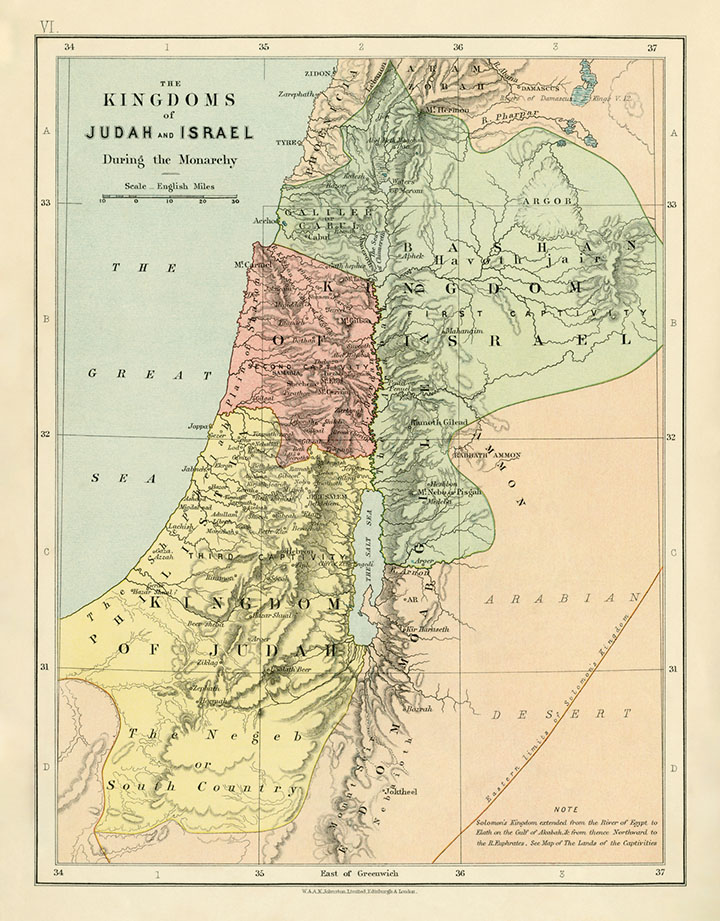
The Only People on Earth Being Told Their History Expired

“Even if you had a kingdom there 2,000 years ago…”

I hear versions of that line constantly now – usually from anti-Israel activists in places like Ireland, Canada, Britain and the United States insisting Jews are not really a people at all, but merely adherents of a religion who arrived from Europe and displaced an “indigenous” population with no meaningful prior Jewish connection to the land.

The argument sounds pseudo-sophisticated only until one pauses long enough to consider what it is really saying.

It is saying conquest erases indigeneity. It is saying exile voids peoplehood. It is saying a nation can lose its connection to its homeland through enough centuries of persecution, statelessness and dispersion.

And somehow this principle applies uniquely to Jews.

No one says to Greeks, “Well, maybe Athens mattered 2,500 years ago.” No one says to Native Americans that centuries of forcible removal erased their connection to ancestral lands.

Only Jews are routinely told that indigeneity comes with a statute of limitations.

The problem with this argument is not merely moral. It is historical.

The Jews did not disappear from Judea after Rome crushed the Bar Kokhba revolt in 135 CE – a revolt in which Jewish rebels minted coins in Hebrew proclaiming “Freedom for Zion.”

Yes, Rome destroyed Jewish sovereignty. Yes, it renamed Judea “Syria Palaestina” in part to sever the Jewish connection to the land. Yes, many Jews were killed, enslaved or dispersed throughout the empire.

But Jews were never fully expelled from the land of Israel.

Jewish communities remained continuously in places like the Galilee, Tiberias, Hebron and elsewhere. Within roughly two centuries of the Bar Kokhba revolt, Jews were again living openly in Jerusalem despite repeated Roman and Byzantine restrictions.

Nor did Jews ever stop attempting to restore autonomy or national life there.

The Bar Kokhba revolt itself was an attempt to reestablish Jewish sovereignty after Roman occupation. Later came additional Jewish revolts against Byzantine rule, including the Gallus revolt in the fourth century.

In the seventh century, Jews allied with the Persians against Byzantium and briefly helped restore Jewish control in Jerusalem before the Byzantines retook the city.

That was roughly 500 years after the destruction of the Second Temple – and Jews were still fighting over Jerusalem because they still viewed it as the heart of their national homeland.

That matters.

It destroys the caricature that Zionism was some random European colonial movement invented in the late 19th century by people with no prior connection to the land.

The Jewish connection to the land was continuous and multifaceted – geographic, liturgical, legal, demographic, civilizational and spanning millennia.

For over 2,000 years Jews in dispersion prayed facing Jerusalem three times a day and prayed for a return to a rebuilt Jerusalem.

For roughly 1,500 years Jews have concluded Passover and Yom Kippur with the words: “Next year in Jerusalem.”

Hundreds of mitzvot in Jewish law apply only in the Land of Israel, shaping agriculture, economic life and religious practice – from the Sabbatical year to first fruits and cultivation laws.

The Hebrew calendar anchors Jewish holidays to the seasons of the Land of Israel, linking sacred time to the land’s agricultural cycle – from spring to fall.

Hebrew itself – now spoken daily by millions – is indigenous to the land. Contrary to the endlessly repeated myth that Hebrew was “dead,” Jews never stopped praying, studying, writing legal texts or corresponding in Hebrew. Eliezer Ben-Yehuda modernized spoken Hebrew; he did not resurrect a vanished language.

And throughout the medieval and early modern periods, Jews kept returning.

In the 12th century, David Alroy, a Kurdish Jewish messianic figure from Mesopotamia, attempted to organize a movement aimed at restoring Jewish sovereignty in Jerusalem.

In the 13th century, Nachmanides immigrated to Jerusalem after being expelled from Christian Spain and helped rebuild Jewish communal life there.

In the 16th century, Safed became one of the great centers of Jewish law and mysticism under figures like Rabbi Yosef Karo and the Arizal.

Long before political Zionism, Jews from Yemen, North Africa, Persia and elsewhere continued returning to the land. Yemenite Jews began significant migration waves in the 19th century decades before the Holocaust or Israeli statehood.

By the mid-1800s, Jews had already become the largest population group in Jerusalem.

Modern Zionism did not create Jewish attachment to the Land of Israel.

It translated an ancient and continuous national aspiration into modern political language during an era when numerous peoples were yearning for sovereignty after centuries under imperial rule.

And contrary to today’s anti-Israel slogans, early Zionism advanced primarily through legal immigration and land purchases under Ottoman and later British rule.

Jews bought land – often at inflated prices – frequently from absentee Arab and Turkish landowners. They drained malarial swamps, built farms and established universities, hospitals and civic institutions.

Then came partition.

By the late 1940s, after years of Arab-Jewish violence – much of it incited by Haj Amin al-Husseini – the Nazi-collaborating Grand Mufti of Jerusalem and leader of the Arab Higher Committee – the British concluded the Mandate had become unmanageable.

In 1947, the United Nations proposed partitioning what remained west of the Jordan River into one Jewish state and one Arab state.

That detail matters because roughly 78% of the original Mandate territory had already been separated earlier by Britain to create Transjordan – today’s Jordan.

The proposed Jewish state itself was geographically fractured, strategically vulnerable and included mainly stretches of the arid Negev desert.

The Jews accepted partition anyway.

The Arab Higher Committee rejected it.

Then five Arab armies invaded after Israel declared independence.

The resulting war created many Palestinian Arab refugees – a genuine human tragedy.

But it also coincided with the destruction of ancient Jewish communities across the Arab world.

Within little more than a decade, roughly 900,000 Jews were expelled, dispossessed or driven from Arab countries stretching from Iraq and Egypt to Yemen, Libya and Morocco – communities whose roots in many cases predated the Arab Islamic conquests themselves.

This was not a wartime displacement.

Unrelated to any battle or war, it was the near-total eradication of ancient Jewish diasporas across much of the Middle East and North Africa.

That part tends to disappear from modern conversations.

But a larger point remains unavoidable:

Had the Arab world accepted partition in 1947, there would have been both an Arab state and a Jewish state west of the Jordan River nearly eight decades ago.

No invasion. No refugee crisis. No generations of bloodshed.

What many “anti-Zionists” object to today is not a particular Israeli policy or border.

It is what Haj Amin al-Husseini objected to from Berlin in the 1940s: Jewish sovereignty itself.

The idea that Jews – alone among the nations of the world – are not entitled to self-determination in any part of the land where their civilization, language, calendar, faith and national identity were born.

And because the historical case against Jewish indigeneity is so weak, the argument increasingly descends into absurdity – from amateur genetic theories to bizarre claims that today’s Palestinian Arabs are the direct and exclusive heirs of the ancient Canaanites.

But no Palestinian Arab community today speaks a Canaanite language, practices a Canaanite faith, or follows a Canaanite calendar. Hebrew is the only Canaanite language that has survived into the modern era.

The surviving indigenous civilization continuously rooted in Jerusalem, Zion and the Land of Israel for over three millennia is Jewish civilization.

That is why Jews are treated so uniquely by anti-Zionists.

Because acknowledging Jewish indigeneity does not merely complicate the anti-Zionist narrative. It exposes it.


Micha Danzig served in the Israeli Army and is a former police officer with the NYPD. He is currently an attorney and is very active with numerous Jewish and pro-Israel organizations, including Stand With Us and the FIDF, and is a national board member of Herut North America.

The Only People on Earth Being Told Their History Expired Read More »