fbpx

March 27, 2026

Why Is Moses Not Mentioned in the Haggadah?

Why is Moses not mentioned in the Haggadah? When I was younger, I would wrinkle my nose at this question and dismiss it as a “klutz kasha,” a meaningless query that betrays an ignorance of how the Haggadah was edited. There is no author who “excluded” Moses from the Haggadah; the Haggadah is a collection of texts that accumulated over centuries. The omission of Moses is simply a coincidence.

Now I see this question differently. We can find profound truths in “drash,” poetic interpretations that reveal what is hidden between the lines. Unconscious realities can lie within what appears to be a random coincidence, and so it is with Moses’s absence from the Haggadah.

The desire to write our name begins in elementary school, when we instinctively scribble it everywhere, haltingly written in pencil. It is a short jump from the scribbles of elementary school to the plaques that announce adult successes. From the very beginning of our lives, we hope that something bearing our name will endure into the future. We build physical monuments to ourselves, hoping to achieve a small measure of immortality.

Ancient Egyptians were famous for building monuments. The Colossi of Memnon are two enormous 60-foot-tall statues of Pharaoh Amenhotep III; they are estimated to weigh 720 tons each. The bust of Ramesses II at the British Museum weighs over seven tons. In 2017, the statue of Psamtik was discovered at the Souq Al-Khamis archaeological site; it is 30 feet tall, and the torso alone weighs three tons.

Jews have had a very different attitude toward monuments. The second of the Ten Commandments is “You shall not make for yourselves any graven image.” The primary focus of this prohibition is idol worship, but the Talmud says it also includes a universal prohibition against creating a full-body statue of a human being.

This steadfast opposition to monuments can create conflict. In Central Park, near 90th Street and Fifth Avenue, sits the statue of Fred Lebow, the founder of the New York Marathon. Lebow was born in Romania to a very observant family; his given name was Fischel Lebowitz. When the statue was about to be unveiled in 1994, Lebow’s brother objected on halakhic grounds. As The New York Times described it: “the night before the statue’s dedication in Central Park … Mr. Mitrovich (who commissioned the statue) and a rabbi ducked under the blanket covering the statue. The rabbi used a metal file to chip the statue between Fred Lebow’s left thumb and forefinger.” This small gesture may seem petty from a reporter’s perspective, but it reflects a deep-seated Jewish discomfort with monuments.

In 1860, a controversy raged among American Jewry regarding a proposed statue. The philanthropist Judah Touro had recently passed away, and the New Orleans Jewish community wanted to erect a statue of Touro to honor his philanthropy. Several community members objected, stating that the prohibition of making graven images prevented it. Eventually, a query was put to four prominent European rabbis: Zacharias Frankel, Nathan Marcus Adler, Shlomo Yehuda Rapoport, and Samson Raphael Hirsch. All four rejected the proposed statue as inappropriate.

Rabbi Samson Raphael Hirsch’s reply is particularly interesting. He argues that all honorary monuments are contrary to Jewish custom, and Jewish history has virtually no record of them. The only exception is Absalom, who is a rebel and a failure: an exception that proves the rule. Hirsch also cites the Talmud (Shekalim), which teaches that we do not place a monument at the burial places of the pious. The best way to honor the righteous and to continue their good name is through performing good deeds. Hirsch recommended that instead of spending money on a statue, the community of New Orleans should establish a charity in Touro’s memory.

Immortality is never carved in stone. The ancient Egyptian monuments now look a bit absurd; they ironically highlight the transience of the pharaohs and how ephemeral their accomplishments were. When the bust of Ramesses II arrived at the British Museum, Percy Shelley wrote the poem “Ozymandias,” which at its end mocks the Pharaoh’s pretensions:

And on the pedestal, these words appear:
My name is Ozymandias, King of Kings;
Look on my Works, ye Mighty, and despair!
Nothing beside remains. Round the decay
Of that colossal wreck, boundless and bare
The lone and level sands stretch far away.

Centuries later, Ramesses II seems pathetic, grasping at a power that is long gone, his dreams of immortality reduced to a collapsed statue in the middle of a barren desert.

There can be no greater contrast to this than the way Jews memorialize Moses. The Torah tells us that the location of Moses’s burial place is unknown. Moses does not even have the simplest marker on his grave, let alone a monument depicting his greatness. And yet Moses has truly achieved immortality. Every day, billions of people around the world recall Moses’s teachings.

This is why it is particularly fitting that Moses’s name is omitted from the Haggadah. First of all, his absence speaks louder than words: The fact that everyone wonders why Moses’s name is missing is in itself a powerful tribute to his memory. Beyond that, Moses’s life is woven into every moment of the Seder; none of this would have happened without him. Every day of Jewish history carries Moses’s legacy. Moses is “Moshe Rabbeinu,” Moses our teacher. It is his teachings on which we meditate day and night.

An enormous piece of carved stone is not the path to immortality. But we can grasp eternity when we live a life of values, love and goodness. In doing so, we build a spiritual legacy for the future.

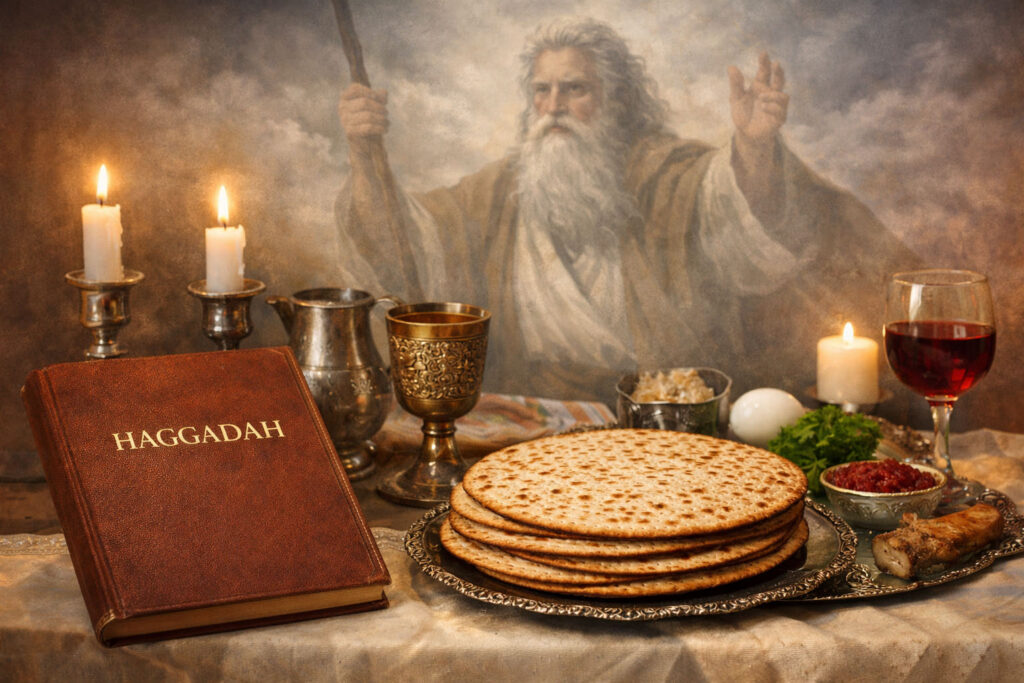
What lives on are spiritual legacies, and we carry those with us into the Seder. When we sit down to read the Haggadah, we don’t sit alone. Joining us are the tunes of our parents and grandparents, and the insights of teachers and rabbis. We join together with all of our ancestors at the Seder. And of course, Moses is at the head of the table, quietly leading us to a better future.

The Seder, which tells the remarkable story of the Jewish people, is their legacy, and that is far greater than any monument.


Rabbi Chaim Steinmetz is the Senior Rabbi of Congregation Kehilath Jeshurun in New York.  

Why Is Moses Not Mentioned in the Haggadah? Read More »
JBBBSLA’s ‘Big Event’; AJU Taps ‘Culture Architect’ for 2050 Institute; J Los Angeles’ Program Director

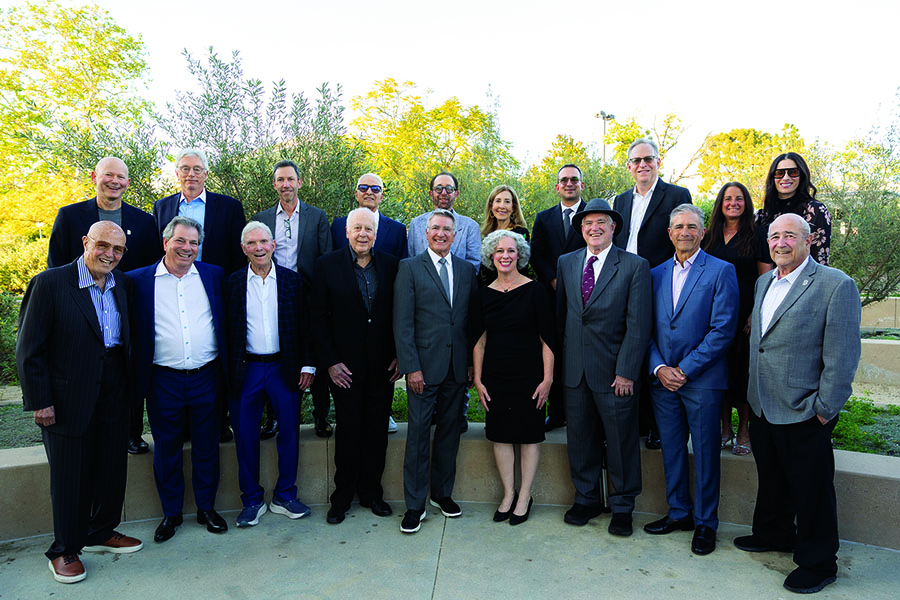
On March 11, Jewish Big Brothers Big Sisters of Los Angeles (JBBBSLA) welcomed supporters and community leaders to The Big Event, an evening celebrating the organization’s impact and honoring three champions of mentorship and community: Sandy Sigal, Susan Kushner and Ethan Stern.

Held at Stephen Wise Temple, the annual gathering raised more than $900,000 and brought together hundreds of guests for an evening of connection and philanthropy in support of JBBBSLA programs serving children, teens and families across Los Angeles.

During the evening, Sigal was presented with the Sydney Rosenberg Lifetime Achievement Award in recognition of his leadership, philanthropy and longstanding commitment to the mission of JBBBSLA and Camp Bob Waldorf.

A UCLA graduate, Sigal is the founder, chairman, CEO and president of NewMark Merrill Companies, where he has built one of the fastest-rising private retail development and ownership firms operating in California, Colorado and Illinois. A former Camp Bob Waldorf camper, Sigal has long been deeply connected to JBBBSLA’s mission. He has served in leadership roles within the organization and continues to support Camp Bob Waldorf.

Reflecting on the organization’s lasting impact, Sigal shared, “There’s a proverb I love: ‘A society grows great when old men plant trees whose shade they know they shall never sit in.’ That’s what this dinner is all about — planting trees that will grow and shade another 50,000 youth, just as JBBBSLA has already done for our community.”

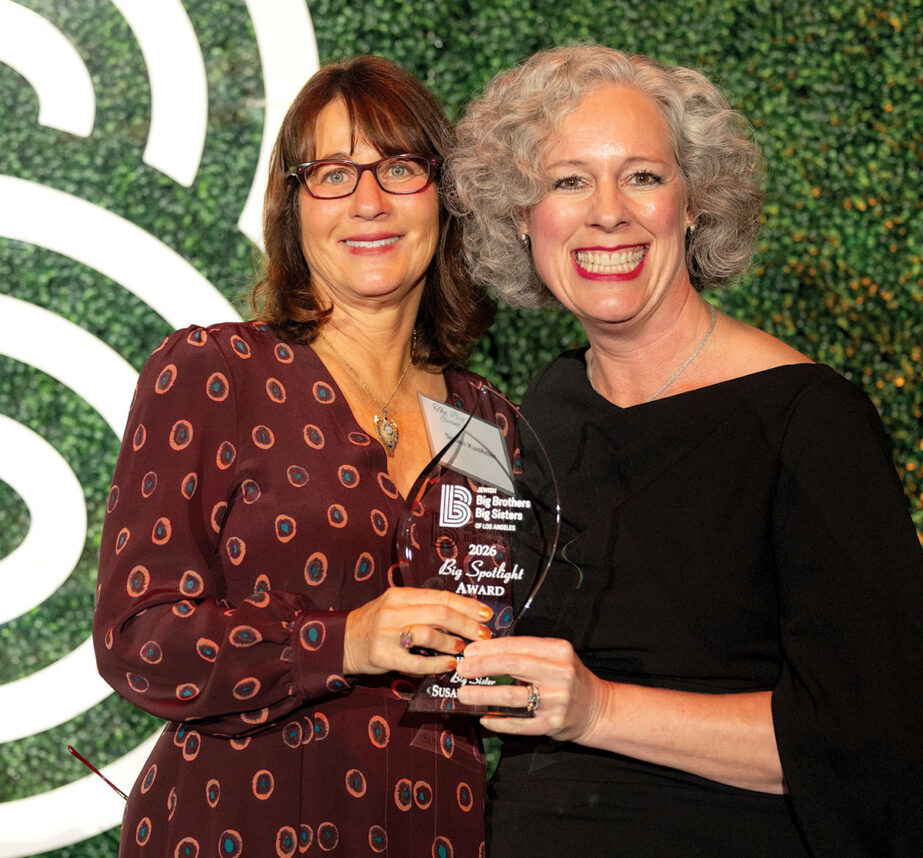
JBBBSLA honoree Susan Kushner and JBBBSLA CEO Cari Uslan Courtesy of JBBBSLA

JBBBSLA also presented The Big Spotlight Award to Kushner, whose connection to the organization is both personal and meaningful. Her father served for many years as both a Big Brother and board member, instilling in her a belief in mentorship and service. In 2023, Kushner continued that legacy by becoming a Big Sister, forming an impactful relationship with her mentee, Clay.

The evening also recognized Stern, who received The Big Spotlight Award for his dedicated mentorship and longstanding involvement with JBBBSLA. Stern became a Big Brother in 2015 and has mentored his Little Brother, Isaac, for nearly a decade.

For more than a century, JBBBSLA has helped young people build confidence, resilience and a sense of belonging through meaningful relationships and supportive programs. Funds raised through The Big Event support the organization’s core initiatives, including one-to-one mentoring, Camp Bob Waldorf, and college access and success programs serving youth throughout Los Angeles.


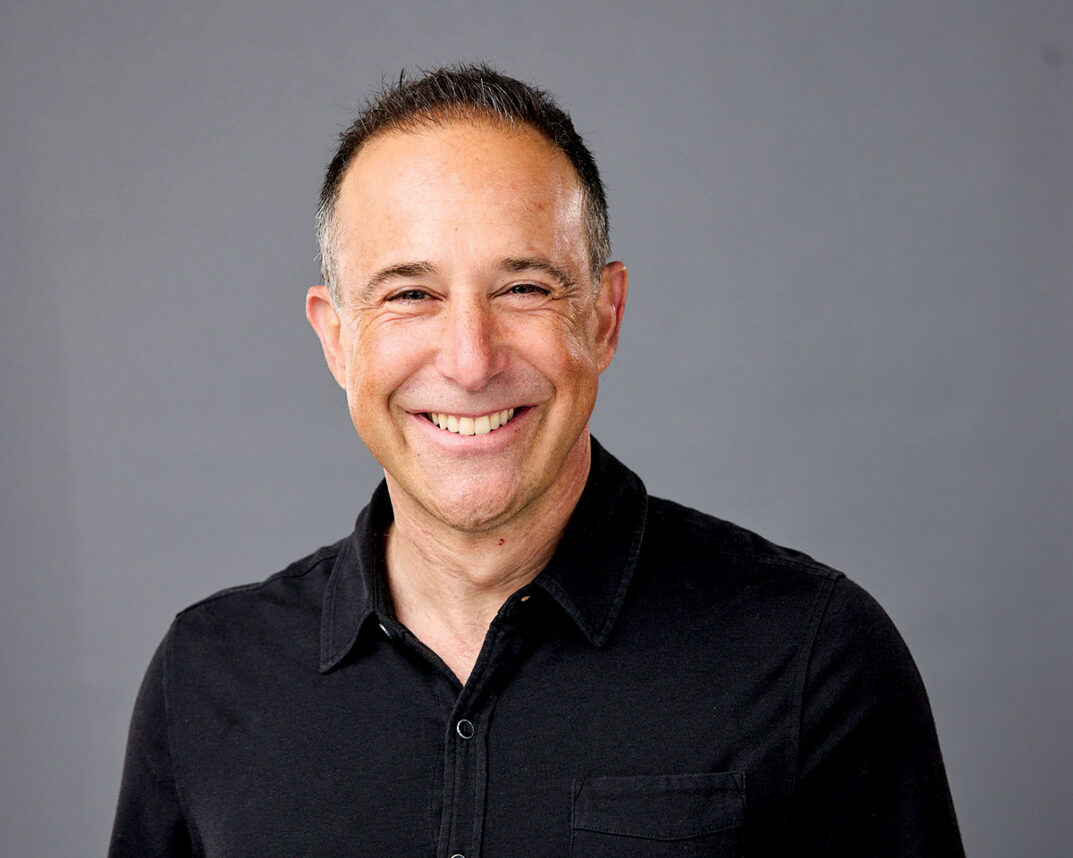
Robert Richman Courtesy of American Jewish University

Robert Richman, a globally recognized culture architect, author and speaker, has joined American Jewish University (AJU), where he will help shape a bold new vision for the future of Jewish life through the university’s recently established 2050 Institute.

Richman, best known for his work as a former culture strategist at Zappos and co-creator of Zappos Insights, has spent his career helping organizations rethink how people connect, collaborate and build meaningful cultures. At AJU, he will bring that expertise to one of the Jewish community’s challenges: reimagining Jewish identity, engagement and community for the next generation.

“Robert Richman joins American Jewish University at a pivotal moment,” AJU President Jay Sanderson said. “He brings a combination of creativity, strategic thinking and cultural insight that will help us challenge assumptions, ask better questions and imagine new possibilities for Jewish life. His voice and leadership will be important as we build the 2050 Institute and explore what the Jewish future can become.”

Richman is widely regarded as an authority on organizational culture. As the author of “The Culture Blueprint: The Guide to the High-Performance Workplace,” he has worked with companies including Google, Toyota, Salesforce and Eli Lilly to build environments that prioritize purpose, engagement and innovation.

His work emphasizes self-organization, creativity and what he calls “culture hacking” — principles he now aims to bring into the Jewish communal space. “Jewish life has always been rooted in big questions, bold ideas and continuous reinvention,” Richman said. “This is a moment to rethink not just how we do things, but why we do them—and to invite more people into shaping what comes next.”

Richman joins AJU as part of the 2050 Institute, a wide-ranging initiative spearheaded by Sanderson to reimagine and reshape the next generations of Jewish life in North America. In this role, Richman will host and produce “The Jewish Tomorrow,” a new podcast and web series focused on identity, purpose and the future of Jewish life. The podcast invites listeners into conversations that explore what Jewish life could — and should — look like in the decades ahead.

“We’ve spent a lot of time asking familiar questions in familiar rooms,” Richman said. “What happens if we change both?”

In addition to his work in organizational culture, Richman is a keynote speaker who has addressed audiences worldwide. A graduate of Northwestern University and Georgetown University’s Leadership Coaching Program, he’s also a guest lecturer at Harvard University. He lives in San Diego, California.


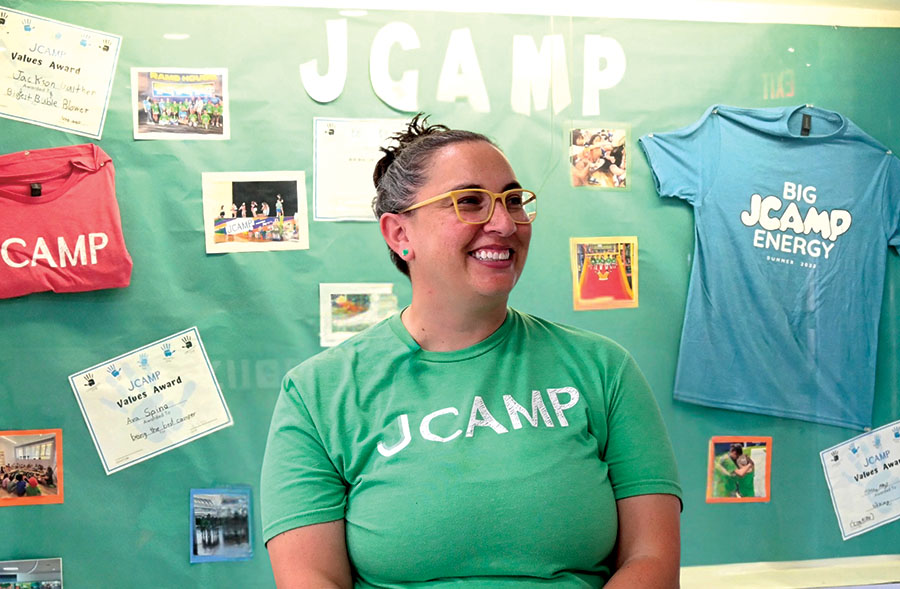
J Los Angeles’ Edana Appel Courtesy of J Los Angeles

J Los Angeles, formerly Westside JCC, has named Edana Appel its senior director of programs, a newly created strategic leadership role overseeing J Los Angeles’ full programmatic ecosystem, including camps, sports and wellness, teen engagement, family programming, membership experience, Jewish life and learning and inclusion and community care.

Appel has been with the organization since 2015 and has been a driving force behind the growth of the community center’s key programming.

“Edana has demonstrated extraordinary leadership, vision, and care for our community,” J Los Angeles CEO David Siegel said. “This promotion reflects both her remarkable contributions and our commitment to building a programmatic ecosystem that invites people into Jewish life in meaningful ways. At a time when so many are seeking connection, the J is investing in leadership that can convene, inspire, and help our community thrive.”

JBBBSLA’s ‘Big Event’; AJU Taps ‘Culture Architect’ for 2050 Institute; J Los Angeles’ Program Director Read More »