

fbpx

December 15, 2025

JIMENA Study Shows Gaps – and Progress – in Sephardi and Mizrahi Inclusion in Jewish Schools and Camps

Increasingly, Sephardi and Mizrahi children are enrolling in Jewish day schools and camps in Los Angeles and New York. As a new study commissioned by the nonprofit JIMENA, Jews Indigenous to the Middle East and North Africa, shows, these institutions are responding with inclusive programs – but there are still improvements to be made.

According to the study, 79% of educators report feeling comfortable teaching about other cultures, but only 31% feel confident in their knowledge of both Sephardi and Mizrahi culture and history. Even though 71% say they want to learn more, only 17% report that their schools provide training or the opportunities to make it happen.

Executive Director of JIMENA Sarah Levin said that they decided to commission the study because, “We wanted a deeper, more nuanced understanding of what’s working in Los Angeles and what still needs improvement when it comes to including Sephardic and Mizrahi families in Jewish day schools, camps, and religious schools. Our goal was to identify real needs, challenges, and opportunities so JIMENA can design interventions that are data-driven and as impactful as possible.”

The New York assessment was funded by UJA Federation of New York and received IRB approval through Yeshiva University. It was authored by Elana Riback Rand, PhD, and Rosov Consulting. The LA assessment was funded by the Los Angeles Jewish Federation and authored by Sarah Bunin Benor, PhD.

“With this new data, along with findings from the larger demographic study, we’re now able to partner directly with schools, synagogues, camps, and other institutions on integrating the recommendations found in the reports,” said Levin. “We want to help them better understand and serve Sephardic and Mizrahi community members. Our hope is that these recommendations translate into meaningful change on the ground.”

In LA specifically, the study revealed that most of the Sephardi/Mizrahi families that choose day schools are Persian and Israeli, with smaller representation of Jews who have ancestry in Morocco, Iraq, and elsewhere in North Africa and the Middle East. Often at the initiation of Sephardi students, prayer and Torah reading are major areas where Sephardi content is infused into the education. Some schools host Persian and Moroccan clubs and offer travel experiences to Jewish communities around the globe.

However, the study also showed that Sephardi and Mizrahi parents feel less understood by school administrators – and they are less comfortable giving feedback and sharing their concerns. Many also reported that their children learn little about Sephardi or Mizrahi customs, history, and laws compared to higher scores for general “diverse cultures” content.

“There is a large gap between the percentage of students and the percentage of teachers who are Sephardi or Mizrahi,” said Benor. “I hope schools will hire more Sephardi/Mizrahi teachers and administrators. I hope tefillah and bnai mitzvah training will combine Ashkenazi and Sephardi nusach. And I hope the curricula at schools and camps will incorporate more content about the past and present of Jewish communities around the world.”

This study is very personal for Levin, who grew up in the early ‘90s in a very Ashkenazi community in Chicago.

“It wasn’t until I went to overnight camp and participated in Israel programs that I met other Sephardic friends, which, honestly, was probably an anomaly at the time,” she said. “Even though we were a minority, even in camp settings, it felt great to finally be in a more diverse Jewish environment. The best counselors at my camp were Persian brothers who everyone adored.”

According to the executive director, having leaders from Middle Eastern backgrounds enriched the camp experience for her, and likely, for everyone. Additionally, there was a small group of French Jews with North African roots, along with Sephardi Israelis, who came to her camp.

“My hope is that every school, camp, and youth program creates similar opportunities for Sephardic and Mizrahi kids.”

“It was the first time I wasn’t the only one with this identity, and it filled me with pride, especially when the Sephardi kids were reading from the Torah and naturally stepping into leadership roles,” she said. “Looking back, I can see how those experiences helped me understand how special my identity is and, probably subconsciously, motivated me to pursue this work. My hope is that every school, camp, and youth program creates similar opportunities for Sephardic and Mizrahi kids, spaces where they feel a deep sense of belonging while remaining fully integrated into the broader Ashkenazi community.”
JIMENA Study Shows Gaps – and Progress – in Sephardi and Mizrahi Inclusion in Jewish Schools and Camps Read More »

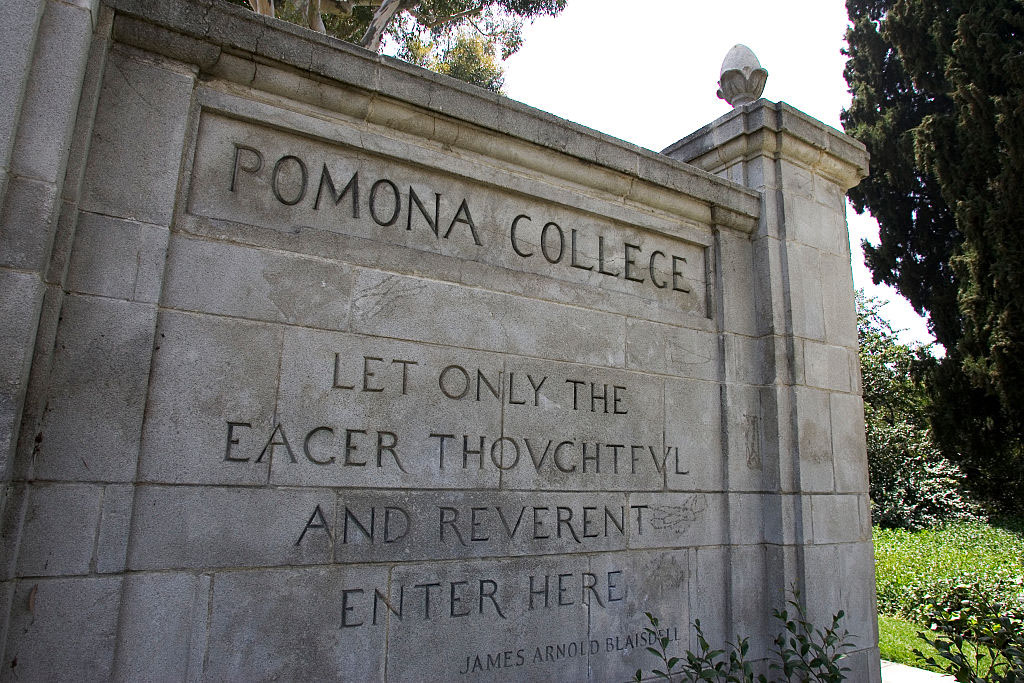
Pomona College Reaches Resolution Agreement on Antisemitism Lawsuit

Pomona College has reached a voluntary resolution agreement with the Anti-Defamation League (ADL), the Louis D. Brandeis Center for Human Rights Under Law (Brandeis Center), and Hillel International following allegations of antisemitism. In April of 2024, the Brandeis Center, Hillel International, and the ADL filed the federal complaint to the U.S. Department of Education, accusing the college of “permitting severe discrimination and harassment of Jewish students in violation of Title VI of the Civil Rights Act of 1964.”

In a statement, G. Gabrielle Starr, president of Pomona College, said, “Many Jewish students experience anti-Zionism as an attack on their Jewish identity, ethnicity, religion and/or ancestry, which means these students experience anti-Zionism as antisemitism. It is my hope that the steps we are committing to will also enhance our ability to effectively identify and address other kinds of shared ancestry discrimination. Hatred takes many forms, and understanding its complexities is key to confronting it.”

“Hatred takes many forms, and understanding its complexities is key to confronting it.” G. Gabrielle Starr

Before the complaint was filed, Pomona College took steps to improve the situation on campus, most of which have now been formalized in the resolution agreement. These measures include adding shared ancestry as a category in the College’s harassment policies; updating time, place, and manner policies to be consistent with Pomona’s educational mission; developing College-sponsored programming to promote dialogue across difference, as well as a better understanding of the history, challenges and experiences of those who trace their ancestry to the Middle East; and publicly advocating for deeper engagement with Israeli educational institutions, and when they are able, with Palestinian educational institutions as well.

“Antisemitism has persisted for thousands of years, and this settlement is not a one-size-fits-all toolkit,” Starr stated. “It’ll be up to our community to put it in place—and to live it.”

According to the ADL, after the October 7 massacre in Israel, members of the faculty and student groups loudly supported Hamas’ attacks, blaming the victims in Israel, and making a shrine that honored the Hamas terrorists.

After filing the lawsuit in 2024, Kenneth L. Marcus, founder and chairman of the Brandeis Center and the former U.S. Assistant Secretary of Education for Civil Rights, said that Jewish students at Pomona, along with Occidental College in California, were “hiding in their dorms and avoiding their own campus rather than risk verbal and physical attacks… Pomona and Occidental know full well this is happening.  But instead of enforcing the law and their own policies, they are caving to the anti-Semitic mob and letting them bully, harass, and intimidate Jewish students.  Antisemitism left unaddressed will not go away.  It will only snowball and escalate until the problem is faced head on as the law requires.”

The ADL’s website stated that at first, Pomona’s administration did very little to remedy these issues. “But as the situation deteriorated, President G. Gabrielle Starr eventually began to respond.  But despite her laudable, albeit belated efforts to address growing antisemitism and anti-Israel sentiment on campus, Pomona failed to eliminate the hostile environment, in part, because the opposition from pro-Hamas students and faculty had already grown too strong.”

A Jewish sophomore at Pitzer College, which is under the Claremont Colleges umbrella with Pomona said, “From my perspective as a Jewish student leader, the Title VI settlement signals progress toward a healthier campus culture.”

Josh Marx, a sophomore at Pomona, welcomes the resolution agreement.

“This new settlement is a huge positive for Pomona College and all of its students,” he said. “It creates space for more constructive dialogue by creating a baseline of Antisemitism education for all and required identification at protests. It will create a structure to mitigate the effects on antisemitism on Jewish students, without infringing on any student’s rights.”

In a statement on the Brandeis Center website, Deena Margolies, a staff attorney for the organization, said, “What makes this agreement so important and so strong is that they have agreed to adopt a comprehensive set of reforms to address not only the anti-Semitism on their campus but the anti-Zionism and enhance protections for Jewish and Israeli students on their campus.”

She continued, “At the same time, they also address free speech, academic freedom, and the distinction between protected expression and prohibited discriminatory conduct. So, it will give a lot of guidance to the campus community.”

Pomona College Reaches Resolution Agreement on Antisemitism Lawsuit Read More »

Rob Reiner, Wife Michele, Found Dead in Brentwood Home

Rob Reiner, the American filmmaker, actor, producer and political activist whose work helped shape American film and television from the 1970s through the 1990s, was found dead Sunday at his home in the Brentwood. He was 78. His wife, photographer and producer Michele Singer Reiner, was also found dead in the home.

Los Angeles authorities are investigating the deaths as a homicide. The Los Angeles Fire Department responded to a medical aid call around 3:30 p.m. Dec. 14 and found both inside the residence with “injuries consistent with stabbing.” Police said there were no signs of forced entry. One of the couple’s children discovered the bodies, according to sources familiar with the investigation.

Their younger son, Nick Reiner, 32, was taken into custody late on Dec. 14 and booked on suspicion of murder the next morning. Bail was set at $4 million. As of press time, prosecutors had not yet filed formal charges. The LAPD Robbery-Homicide Division is leading the investigation. Nick Reiner has spoken publicly in the past about long struggles with addiction, including cycling in and out of rehab centers and experiencing periods of homelessness beginning in his teens. He became sober by 2015 and later co-wrote the semi-autobiographical film “Being Charlie” with his father, which touched on addiction and a strained father-son relationship. The Los Angeles Times reported that Rob Reiner and his son argued the night before the deaths at a party at Conan O’Brien’s home, where multiple attendees noticed Nick “acting strangely.”

Hours after the Reiners were discovered, actors Billy Crystal and Larry David were both spotted inside the police-barricaded zone around the Reiner house —TMZ reported that both appeared “emotional” and were wiping away tears.

The deaths stunned many prominent figures throughout Hollywood and politics who were connected with Reiner at some point in his more than five decades in entertainment.

Born Robert Reiner on March 6, 1947, in the Bronx, New York, he was the son of the legendary writer, director and comedian Carl Reiner, and Estelle Reiner, a singer and actor. After attending Beverly Hills High School, he studied film at UCLA and began working as a writer and actor. Reiner first became widely known as an actor playing Mike “Meathead” Stivic on Norman Lear’s CBS sitcom “All in the Family,” which ran from 1971 to 1979. His liberal character often clashed on the show with his conservative father-in-law Archie Bunker. The role as Meathead earned Reiner two Primetime Emmy Awards for Outstanding Supporting Actor in a Comedy Series, along with multiple nominations.

In 1984, Reiner made his feature directing debut with “This Is Spinal Tap,” a “mockumentary” co-created with Christopher Guest, Michael McKean and Harry Shearer.

“Rob was a friend and collaborator through much of my life,” Shearer wrote on Instagram. “He was funny, he was smart, he was a mensch. When he came to see the comedy act I was in, and, later, the musical comedy I had co-written, his laugh was uproarious and audible around the block. He was a great collaborator, and when the four of us proposed ideas for the films, he was the one who wrote them on 3×5 cards, and organized them into a movie.”

Reiner followed “Spinal Tap” by directing major hits including “The Princess Bride” (1987) and “When Harry Met Sally…” (1989). His courtroom drama in “A Few Good Men” (1992) earned Reiner an Academy Award nomination for Best Picture. Reiner co-founded Castle Rock Entertainment in 1987, which produced acclaimed films such as “City Slickers” (1991) and “The American President” (1995). Reiner also directed adaptations of Stephen King’s work, including “Stand by Me” (1986) and “Misery” (1990).

“I’m horrified and saddened by the death of Rob Reiner and Michele. Wonderful friend, political ally and brilliant filmmaker,” King wrote on X. “Rest in peace, Rob. You always stood by me.”

This year, Reiner directed the long-awaited sequel “Spinal Tap II: The End Continues.” “Spinal Tap at Stonehenge: The Final Finale,” is scheduled for release in 2026.

Reiner married Michele Singer in 1989 after meeting her while directing “When Harry Met Sally …” The couple had three children together: Jake, Nick and Romy. Reiner had previously been married to actor and director Penny Marshall, and he adopted her daughter, Tracy Reiner.

In later years, Reiner became as much known for his political activism as for his filmography. He emerged as a prominent Democratic donor and advocate focusing on causes such as early childhood education and tobacco regulation. He chaired California’s First 5 Children and Families Commission beginning in 1999.

Tributes poured in from across film, comedy and politics.

California Gov. Gavin Newsom called Reiner “a big-hearted genius” who “made California a better place through his good works.”

Former President Barack Obama said “beneath all of the stories [Reiner] produced was a deep belief in the goodness of people — and a lifelong commitment to putting that belief into action. Together, he and his wife lived lives defined by purpose.”

President Donald Trump, someone who Reiner was a frequent critic, threw verbal jabs at Reiner in a statement on Truth Social:

“Rob Reiner, a tortured and struggling, but once very talented movie director and comedy star, has passed away, together with his wife, Michele, reportedly due to the anger he caused others through his massive, unyielding, and incurable affliction with a mind crippling disease known as TRUMP DERANGEMENT SYNDROME,” the President said.

Meanwhile, actor Jerry O’Connell shared a photo with Reiner taken on the set of the director’s 1987 movie “Stand By Me” on Instagram, where he wrote, “Love you, Rob. Sincerely.”

“Rob Reiner is one of the most significant figures in the history of film and television,” Sean Astin, president of SAG-AFTRA, said. “The impact he made on American culture simply can’t be overstated.”

Actor Paul Walter Hauser said “grieving the loss of my favorite director of all-time,” adding “‘A Few Good Men’ is THE reason I became an actor, and Rob’s filmography behind the camera is THE reason I wanted to direct and still do.”

“Monty Python” actor Eric Idle said that he talked to Reiner for “over an hour” the night before his death.

“He was telling me about filming at Stonehenge and his thoughts for the future,” Idle continued. “This is so awful. I shall miss him. A clever, talented and very thoughtful man.”

Rob Reiner, Wife Michele, Found Dead in Brentwood Home Read More »

Hanukkah Meets Bondi

Rock of Ages, let our song, praise Thy saving power;
Thou, amidst the raging foes, wast our sheltering tower.

“Rock of Ages” has always been my favorite Jewish holiday song (edging out “Dayenu”, “Avinu Malkenu” and Adam Sandler’s “Hanukkah Song”). But after the slaughter at Bondi Beach, this year the words of that holiday hymn resonate much differently than they have before.

What we sing at Hanukkah is an excerpt from “Maoz Tzur”, a medieval Hebrew liturgical poem set to German folk music. It was written to give thanks to God for protecting the Jewish people through numerous challenges, but we sing it as a joyous celebration of our survival as well as our gratitude. Given the cold-blooded murder of fifteen innocents at a Chabad festival in Australia on the first day of the holiday, most of us are not in the mood for joyous celebration right now. But this year, let’s instead sing this as a song about persistence, determination and perseverance. Let’s use it as a reminder of our tenacity, resolve and stubbornness, even in the face of daunting and sometimes discouraging adversity.

Furious they assailed us, but Thine arm availed us,
And Thy Word broke their sword, when our own strength failed us.

The phrase “when our own strength failed us” suggests that the children of Israel relied on God to rescue us when we were unable to defeat our enemies. But the lesson of the Maccabees is not about resigning ourselves to our fate and hoping that God will protect us. It is about remaining stalwart no matter the challenges we confront.

There may have been divine intervention for Judah and his brothers, but they certainly did not wait for God to defeat their foes for them. They fought for their own beliefs and for our future. They suffered casualties along the way. But they endured and they ultimately reclaimed the Temple and regained the ability to worship as they chose.

Children of the martyr race, whether free or fettered,
Wake the echoes of the songs where ye may be scattered.

Some contemporary versions of “Rock of Ages” change the first words of this stanza to “Children of the wanderers”, which is both more accurate and more optimistic. The term “martyr race” suggests suffering for no purpose other than sympathy and perhaps pity. But we endure to achieve much greater goals, as the Maccabees demonstrated in their victories. And as wanderers, we remind ourselves that even as we still face anger and hatred from so many quarters we will continue to seek those places where we are welcome.

Yours the message cheering that the time is nearing
Which will see, all men free, tyrants disappearing.

In the face of tragedies such as Poway and Pittsburgh and now Sydney, it’s easy to feel that such a time is impossibly far away. But the Hanukah story reminds us that an outnumbered and seemingly marginalized Jewish people have overcome such obstacles many times in our history. The original “Moaz Tzur” poem recounts our victories over Pharoah, Nebuchadnezzar and Haman in addition to Antiochus. Those victories were made possible by God, but each required fierceness and fortitude from the Jewish people of those eras. Those Jews were not passive recipients of divine largess: they were resilient and resourceful protagonists committed to shaping their own stories.

The true miracle of Hanukkah is not the Maccabees’ victory, but how one single day’s allotment of oil somehow kept the eternal flame burning for eight days. After the Bondi Beach massacre, we must again sustain ourselves through what seems like a long and unfriendly night. It feels like we have only a small amount of fuel to get us through until dawn. Our job is to make that oil last until the sun shines on us again. Our Hanukah miracle has been and will continue to be our ability to persevere.

There is a lesson for us to learn from Bondi Beach. It’s that once again we must continue on our path, so we can write a better ending for this Hanukkah story too.


Dan Schnur is the U.S. Politics Editor for the Jewish Journal. He teaches courses in politics, communications, and leadership at UC Berkeley, USC and Pepperdine. He hosts the monthly webinar “The Dan Schnur Political Report” for the Los Angeles World Affairs Council & Town Hall. Follow Dan’s work at www.danschnurpolitics.com.

Hanukkah Meets Bondi Read More »