fbpx

September 19, 2025

The Jewish Case for Hope Amid History’s Darkness

It is hard to be an optimist these days.

Wars rage without resolution, terrorism strikes without warning, political discourse grows increasingly toxic, and natural disasters remind us of our fragility. In such a climate, hope can feel like naïve denial, and faith in a better future can seem more like wishful thinking than rational conviction. Yet for thousands of years, Judaism has offered the world precisely this paradoxical gift: the courage to hope amid despair, the vision to see purpose within chaos, and the faith that history is moving toward redemption rather than destruction.

Judaism has always been known for a singular gift to civilization: the belief that history is not condemned to endless cycles of suffering, that evil is temporary, and that human destiny bends toward redemption. Against the backdrop of Greek and Roman thought—which saw history as repeating itself in an unending circle, a kind of eternal return in which nothing truly changes—Judaism introduced a revolutionary alternative: linear time. From Creation to Revelation to Redemption, the Jewish vision insists that history has direction, purpose, and a divinely assured end.

This was nothing less than a world-changing optimism. It shaped Western religion and philosophy, inspiring even secular notions of progress, utopia, and human perfectibility. When modern political theorists speak of the “arc of history bending toward justice,” they are unknowingly echoing a profoundly Jewish belief: that time is not random or meaningless, but infused with divine intentionality. To put it plainly, Judaism is the original source of the messianic hope—the idea that the human story will conclude not in despair but in fulfillment.

Recent months, culminating in the horrifying events of the past week and the shocking assassination of Charlie Kirk, make it painfully difficult to hold fast to that belief. His murder was not only a personal tragedy but also a symbol of the moral decline and poisonous atmosphere that increasingly defines our age. When even public figures are struck down in acts of political or ideological hatred, it feels as though society itself is fraying at the seams. Each headline brings new reminders of hatred, violence, and injustice. For many, the very notion of redemption feels almost cruelly out of reach. And yet, Jewish teaching offers an insight that allows us to reconcile our despair with our hope.

The Talmud records a striking remark by one of its great sages: “Let him [the Messiah] come, but may I not see him.” At first glance, it is shocking. How could a rabbi—whose life was devoted to Torah, faith, and hope—admit that he did not wish to witness the arrival of humanity’s ultimate redeemer?

The explanation is profound. The rabbi longed for the Messiah as much as anyone. But he also knew the prophets’ warning: that the age immediately preceding redemption would be marked by chaos, upheaval, and moral collapse. These “birth pangs of the Messiah” would bring untold suffering before yielding salvation. His prayer was paradoxical—affirming both the certainty of redemption and the unbearable cost of the days that will precede it. Without collective spiritual commitment, we condemn ourselves; only by reminding ourselves globally that we were created in the image of God can we earn divine blessing.

That paradox is our reality. We cling to hope, yet we watch the tragedies mount. We continue to believe in divine purpose, even as we endure horrors that seem to defy it. Perhaps, though, this is precisely the point: a world stripped of God-awareness and moral responsibility inevitably destroys itself. The assassination of a prominent leader, carried out with chilling disregard for human life, is not random—it is part of the pattern the prophets foresaw. If our times feel like they are unraveling, maybe that unraveling itself is part of the divine lesson. The prophets did not promise a painless march toward redemption; they warned that humanity would first taste the bitterness of its own arrogance and forgetfulness.

And yet, Judaism refuses to let despair be the final chapter. The messianic hope is not naïve optimism but an act of spiritual defiance. To proclaim that history has meaning in the face of apparent meaninglessness is a form of courage. To insist that suffering, however great, is only the prelude to fulfillment, is not to deny the pain but to place it within a larger horizon of hope.

Living with that hope is not easy. It demands resilience, faith, and the discipline to see beyond the present darkness. But abandoning hope is even harder, for it would mean surrendering to chaos and conceding that human existence has no purpose. Judaism teaches that to live without hope is to betray the very essence of what it means to be human—and to forget that we are partners with God in shaping history toward its ultimate redemption.

In this way, Judaism does more than offer comfort; it provides a mandate. The messianic vision is not a passive waiting for divine intervention but an urgent call to moral action. Each mitzvah, each act of kindness, each moment of justice brings the world one step closer to its intended destiny.

Judaism insists that the story is not over, that despair is not the last word. The messianic hope endures as both promise and challenge: a reminder that even in the darkest hours, light is not extinguished but hidden, waiting to emerge. To live with that hope is difficult. To abandon it is impossible.


Rabbi Benjamin Blech is Professor of Talmud at Yeshiva University.

The Jewish Case for Hope Amid History’s Darkness Read More »

The ‘Jewish Nose’ Insult Is Back Again in D.C.

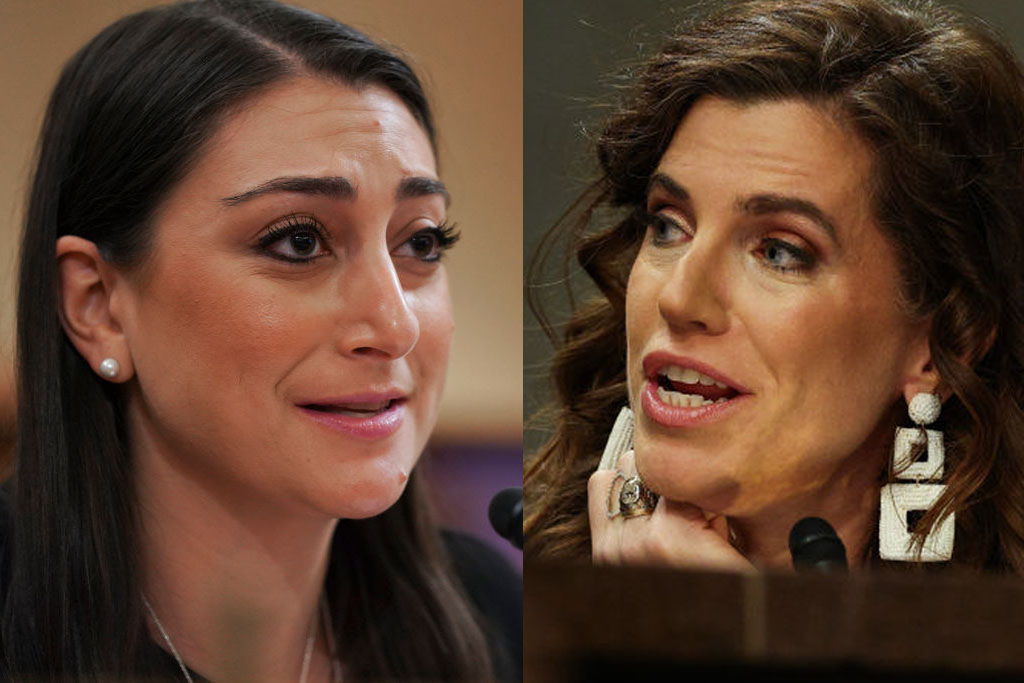
Nancy Mace, a congresswoman from South Carolina, recently said to Sara Jacobs, her fellow congresswoman from California, who is Jewish, “I have a good surgeon if you ever want to get your nose done.”

Jacobs answered, “I didn’t say anything about your body but thanks for confirming! And going with the Jewish nose joke…very creative (and also very antisemitic).”

Jacobs is right: Jokes about Jewish noses are not funny and they are clearly antisemitic.

The last time hurtful remarks about Jewish noses generated news in D.C., it was from a very surprising place: the United States Holocaust Memorial Museum.

Dr. Rebecca Erbelding, a staff historian at the Holocaust Museum, tweeted in 2019: “At a talk today, asked about my personal background. I confessed that I’m not Jewish, but with a Hebrew first name, German last name, and my nose and hair, I ‘pass.’”

So far Mace has not apologized. Erbelding has never apologized at all. In fact, she hasn’t even acknowledged the public’s legitimate concerns about what she wrote.

The producers of the game show Jeopardy! were right in 2021 to oust Mike Richards after it was revealed that he had made a joke about a Jewish woman’s nose. That sent a message to the public that antisemitism can’t be washed away with an apology. Richards apologized — but he was fired from Jeopardy! anyway. Dr. Erbelding’s refusal to address the controversy, much less apologize, was an insult to the public which pays her salary. For a government-funded institution to have on its staff somebody who jokes about “Jewish noses” is an embarrassment. For a Holocaust museum — which is devoted to teaching about the horrific consequences of antisemitism — it was positively shameful.

For a government-funded institution to have on its staff somebody who jokes about “Jewish noses” is an embarrassment. For a Holocaust museum — which is devoted to teaching about the horrific consequences of antisemitism — it was positively shameful.

Neither the GOP nor the Republican Jewish Coalition seem interested in Mace’s bigoted remark.

The danger of the “Jewish nose” stereotype should not be underestimated. The notion that there is a distinctive “Jewish nose” is one of the oldest anti-Jewish myths. Jew-haters invented it in the 12th century as a way to single out Jews for contempt.

The danger of the “Jewish nose” stereotype should not be underestimated. The notion that there is a distinctive “Jewish nose” is one of the oldest anti-Jewish myths. Jew-haters invented it in the 12th century as a way to single out Jews for contempt.

Government propagandists in Nazi Germany often used the “Jewish nose” stereotype in their hate-mongering. A notorious Nazi film in 1940, called “The Eternal Jew,” which claimed to expose the “real” Jew, focused again and again on “Jewish faces,” zooming in on their noses to make Jews seem repulsive.

Images of big-nosed Jews appeared frequently in the Hitler regime’s news media, cultural publications, and children’s books. “Der Giftpilz,” an anti-Jewish children’s book published by Julius Streicher (who was also the publisher of the Nazi newspaper Der Sturmer), featured a section called “How To Tell A Jew.” It showed a 7th grade boys’ class, in which “Karl Schulz, a small lad in the front row,” stepped to the chalkboard and proclaimed: “One can most easily tell a Jew by his nose. The Jewish nose is bent at its point. It looks like the number six. We call it the ‘Jewish six.’”

In much of the Muslim world since the October 7 Hamas-led terrorist attacks, caricatures of Jews with stereotypical noses have regularly appeared in viciously anti-Zionist and anti-Israel editorial cartoons.

Perpetuating stereotypes such as the “Jewish nose” is not just offensive. It can have real-life consequences. Professor Jonathan Kaplan of the University of Technology-Sydney has pointed out that the perpetrator of the Pittsburgh synagogue massacre, Robert Bowers, echoed classic anti-Jewish stereotypes in his online ravings. “How we speak about and depict others in the media and social discourse perpetuates long-held stereotypes and ultimately emboldens hate-filled individuals,” according to professor Kaplan.

Whether told by a co-worker at the water cooler, a schoolyard bully, an elected politician, a TV celebrity, or a museum historian, jokes about “Jewish noses” deserve the public’s scorn — and there must be consequences.

The GOP can and must do better the next time a remark like Mace’s is made.

On October 6, 2024 the United States Holocaust Memorial Museum stated in a news release: “Since the attack, an unprecedented wave of antisemitism, Holocaust distortion, and Holocaust denial has swept the globe.” Let’s hope the Museum does better the next time one of its staffers uses an antisemitic trope.


Moshe Phillips is national chairman of Americans For A Safe Israel (www.AFSI.org), a leading pro-Israel advocacy and education organization.

The ‘Jewish Nose’ Insult Is Back Again in D.C. Read More »

Arbitariness – Thoughts on Torah Portion Nitzavim 2025


Arbitrariness

Shabbat Thought Nitzavim 2025 (adapted from previous versions)

This week’s Torah portion, Nitzavim (“Stand up and be counted”), contains stark language. Choose – life or death, blessing or curse. In my words, choose the laws of the moral and spiritual order or flout them. Blessing if you align yourself, catastrophe if you don’t. Who wouldn’t listen?

One type of person is described in Deuteronomy 29:18. Here is my paraphrase:

When a scofflaw hears this teaching, he blesses himself in his heart and says to himself, “I will be fine, and I will do whatever I want!” leading himself to destruction everywhere he goes.

The Hebrew term for “stubbornly doing whatever you want” is shrirut lev, a stubborn heart.” Shrirut lev (shrirut is from the same Hebrew root as shrir – muscle) has the sense of flouting the law because you can, a kind of nonchalance. “Nothing bad will happen to me.”

I am sorry to say that often people do bad things and do get away with it, for one reason or another. The foundational reason people act badly is because, in their mind at least, they can; there won’t be consequences. Gladly, I’ve lived long enough to see some of these people proven wrong, but not enough.

How about the word “lev”, heart?  Here we have another example that the biblical metaphor of lev, heart, is quite different from “heart” in English. (I should say that the biblical meaning of lev gives way over time to a meaning closer to how we use it in English – our moral and spiritual center).

We are told in English, “follow your heart.”  In the Torah, however, we are told in Numbers 15:39, “Don’t follow your heart.”

This admonishment not to follow your heart is found in the Torah because in biblical lHebrew, lev/heart means something more like the “ego self.” The ego self is the realm of thoughts, feelings, emotions, drive, impulses, imagination, sensations and intuitions that are not guided by the values of the higher self. The ego self does not care much about objectivity, rationality or truth. The lev/ego self must be guided by the spirit/higher self. The will of the ego self must be bridled to the soul.

In modern Hebrew, the term shriruti is translated as “arbitrary” – doing something without apparent reason or thought, ultimately because you have the power to do so. Of course, “arbitrary” just means that we are not aware of the calculations of the ego self. Nothing we do or say is truly arbitrary. The fact that we can’t explain ourselves to ourselves and others does not mean that there are not motivations and goals hidden from us.

In fact, the word “arbitrary” comes from the same word root “arbitration” – settling an issue in the presence of a judge. Somehow, this word root in English came to mean “acting as your own judge”, or better put, letting your ego self be the judge.

In essence, when the ego self is the judge, we first say or do what we feel like, and then come up with the reasons, or no reason at all. How do we transform from being driven by the ego-self to being guided by our values?

I’ve often spoken about several realms of reflection. The first realm is “I must be right.”  We often misremember events, change words, and think in a confused way so that we remain right in our own eyes.

The second realm is “I made a mistake, but I have reasons.”  In other words, we automatically justify ourselves.

The deeper realm is authenticity and truth. We are able to see the hidden realms, under our deeper motivations, unconscious goals. We don’t jump immediately to “I am right” (though you might actually be right), or “I have an excuse” (even though you actually have a valid excuse). A person of truth at least pauses and asks, “what is really going on inside of me?”

The “shrirut lev”, the powerful grip of the ego self, is weakened when we develop the habit of entering the realm of truth.

We go from being “arbitrary” to becoming our own “arbiter” – a wise judge of our inner lives, trying to find the just, the true and good.

Arbitariness – Thoughts on Torah Portion Nitzavim 2025 Read More »

Points of Return – Teshuvah as Working Things Through with Others – Thought on the Shabbat Before Rosh Ha-Shanah 2025

Photo by Getty Images

Points of Return – Working Through with Others – Thoughts on the Shabbat Before Rosh HaShanah


Every moment in time is a point of no return, no turning back the clock. And every moment in time is a time of teshuvah, a time of return. Teshuvah, turning, return, is a core theme of our Days of Awe, and carries several different meanings. Teshuvah can mean trying to repair harm done to others. Teshuvah can mean turning our life’s path to a path of truth and goodness. Teshuvah can mean repairing the harm we have done to our own souls. Each of these meanings is crucial for our spiritual growth. In these brief words for the Shabbat before Rosh HaShanah, I would like to focus on the first meaning of Teshuvah .


Teshuvah, at its most simple and perhaps most difficult level, means working through harm we have done to other people. In the default position of many people, they don’t know what they have done, they won’t admit what they have done, or they don’t take seriously what they have done. Many people have reasons and justifications for hurting others.


If we caused harm to another, including emotional harm, we must apologize. First, we have to discuss with the other person what happened. You (or they) might not remember, or might not agree on the facts. We have to work toward setting out what happened.


We must say what we did and not offer excuses. We can ask if the other person wants an explanation (not an excuse). They might not want it. We ask how we can repair. Usually an apology is enough.


Your apologizing does not mean that things necessarily go back to how they were. The other person might want to avoid you or to downgrade the relationship. The acceptance of an apology does not mean the hurt is gone.


In the case of someone who does not know they have needlessly caused harm, we are duty bound to inform them, and not allow ourselves to bear resentment and grudges. In Jewish law, the aggrieved party is morally obligated to admonish those who have hurt us. If we don’t admonish them, we are complicit in their wrongdoing.  We are ethically obligated to give others the opportunity to apologize and try to repair the harm.


The process of admonishing includes going over the facts of what happened. One often discovers that people don’t agree on what happened. Admonishing someone for something they don’t agree they did, will probably only lead to an argument. If the facts are not agreed upon, further discussion if futile. With enough work and training, people can learn how to, over time, create relationships where a factual basis can be formed.


The basic agreement on the facts includes what exactly the wrong was. Never, ever say “I’m sorry you feel that way.”  We do not apologize for the feelings of other people.  We apologize for what we did.


We are further obligated to admonish people, when necessary, in a way that allows them to feel remorse and apologize. We must not admonish with anger and condemnation. We are called on to reason carefully with others.


It often happens that when we prepare ourselves to reason with others, or in the course of that reasoning with others, we discover our part in whatever went wrong. Reasoned admonishing can be an act of discovery. In the course of admonishing another person, when we are working through establishing what exactly happened, we will hear their side, their experience of us. We might find that we, the aggrieved person, had our own part in what happened. I believe that one hidden reason we are morally obligated to admonish others is that we find out we might have trouble admitting what we have done. We tend to blame others in order to avoid looking at ourselves. In giving another person the opportunity to do teshuvah, we discover our own obligation to do our own teshuvah.


Shared responsibility does not divide up the moral obligation. Every person is 100% responsible for their part.


Once we realize that we have committed a wrong, we must confess in our hearts as truthfully as possible. One of the deepest parts of the Days of Awe is the process of confession, a conscious, sincere, and deliberate process of being morally accountable. We often find various ways to avoid sincerity.  Defending ourselves by saying “I know I’m no angel” and “I’m not saying I’m perfect” are ways to avoid saying, simply, “I did something wrong.” Confessing wrongdoing obliterates the stiff defensiveness of the ego-self.


To engage truly in the process of teshuvah, unrelenting, courageous, and honest insight into the inner self is required. In Chasidic thought, there is special attention on hidden motivations. The patterns in the unconscious ego-self seem to conspire to create lives of inauthenticity.


I think if we do teshuvah correctly, we can feel distinctly uncomfortable in our own skins for a period of time. Achieving anything worthwhile always involves some suffering. Our goal during these Days of Awe is to inflict upon ourselves a kind of spiritual pain, labor pains, if you will, that gives birth to a truer version of ourselves.


To put this in terms of Chasidic thought, we aim to break through the husk of inauthenticity, of not being morally accountable, of not courageously gaining insight into ourselves. We break through that husk in order to release a spark of truth and life. The sparks accumulate to repair the vessels of the Divine Heart. As the Chasidic tradition teaches, as we repair ourselves, we repair God.


The teshuvah of working to repair things between us and others is the first and constant step.

Points of Return – Teshuvah as Working Things Through with Others – Thought on the Shabbat Before Rosh Ha-Shanah 2025 Read More »

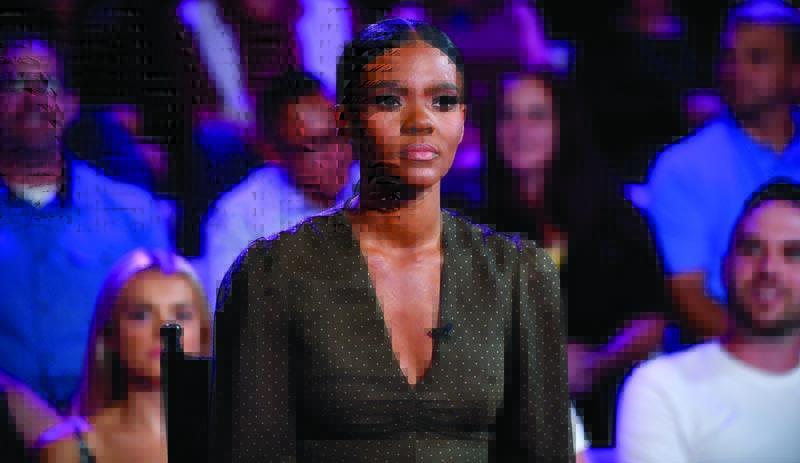
A Plea to Pope Leo: Condemn the Antisemitism of Candace Owens

Your Holiness Pope Leo XIV,

You are the Bishop of Rome, the successor of Peter, and the spiritual father of over a billion Catholics worldwide. But you are also something new in the long history of the papacy: an American Pope. That fact carries immense symbolic weight, and with it an immense moral obligation and a spiritual calling of global significance.

America, more than any nation, bore the burden of defeating fascism in the Western European theater. American soldiers stormed the beaches of Normandy, liberated the death camps of Dachau and Buchenwald, and in June 1944 liberated Rome itself, securing the Vatican from the shadow of the swastika. Without America, the Eternal City might have fallen under Nazi domination, and the independence of the Holy See itself extinguished.¹

Because you are an American, respectfully, Holy Father, history demands more of you. America gave blood to defeat Hitler. America tore down the fascist menace that once stalked your very city. And now, as antisemitism rises again — and as figures who claim Catholic identity, like Candace Owens, trivialize Hitler and vilify Jews — it is incumbent upon you to speak with moral thunder.

The Legacy of Catholic Silence

We must be honest, Your Holiness. The Catholic Church has not always met this test. During the Holocaust, while Jews were deported from Rome’s ghetto just yards from the Vatican walls, Pope Pius XII remained largely silent.² Trains departed for Auschwitz. Men, women, and children were led to slaughter. More than 1300 Roman Jews were incarcerated at a military camp for two days in October, 1943 just two blocks from the Vatican. Pope Pius summoned the German Ambassador Ernst von Weizsäcker and demanded the release, not of the 1000 Jews but only of the 250 who had been baptized into Catholicism. The rest were sent by cattle car to Auschwitz in an eight-day Germany where nearly all were immediately gassed. Some eight Jews survived. 

And though he surely knew, the Pope’s voice never rang out with the clarity that history demanded.

This silence is remembered not as neutrality but as complicity. To this day, it stains Catholic-Jewish relations. For the Jewish people, the lesson is searing: if the papacy could remain silent even as Jews were murdered in its own backyard, then silence must be understood as assent.

The stain was not only in Rome. In the United States, Father Charles Coughlin, the “radio priest,” disgraced the Church by broadcasting antisemitic venom to tens of millions.³ He railed against Jewish bankers, peddled Nazi propaganda, and scapegoated Jews for America’s woes. Coughlin was eventually silenced under political pressure, but the Vatican never condemned him by name. He died a priest in good standing.

That silence was an affront to decency and the moral stature of the Church. Here are just some of the raving Priest’s fulminations against Jews to an audience of tens of millions on American radio:

On “atheistic Jews” imposing their code he said, “We are opposed, however, to having atheistic Jews impose their code of life upon our political structure, our economic structure and our national structure.” Berman Archive+3Berman Archive+3Wikipedia+3 This claims that a group of Jews (atheists among them) are seeking control/influence over society; a classic conspiracy trope.

In attributing Jewish responsibility for communism, Coughlin blamed Jews for Bolshevism and communist revolutions (e.g. Lenin, Trotsky). He lied and said that the Soviet Russia was excessively influenced by Jewish elements, even as Lenin and Stalin were not only non-Jews but Stalin was one of the worst antisemites in all human history. Wikipedia+3Wesleyan Digital Collections+3Wikiquote+3

In Defending antisemitic violence and justifying persecution against Jews, Coughlin was vitriolic. After Kristallnacht, Coughlin defended Nazi antisemitic violence, arguing it was justified as a retaliation for how he claimed Jews had treated Christians under Soviet persecution. US Holocaust Memorial Museum Newspapers+1

Thus, the Catholic Church twice failed: in Rome with silence during genocide, and in America with silence before the most notorious Catholic antisemite of his era.

Candace Owens: Today’s Father Coughlin

Today, Your Holiness, we face another moment of truth. The voice is no longer Coughlin’s. It is Candace Owens. In America we derisively call her Klandace Ovens. Klandace, because her hatred and repeated libels against the black community, amid being black herself, comes straight from the worst racism of the KKK. And Ovens because that’s where she wants to send the Jews.

Owens is one of America’s most visible and vile media personalities. She claims Catholic identity — proudly and repeatedly. She has described herself as “a proud Catholic” in interviews, insisted she is speaking from a “Catholic worldview,” and has even told critics, “You cannot cancel me — I stand with the Church.”⁴ On podcasts and public appearances, she invokes Catholicism as the foundation of her values, presenting her rhetoric as authentically Catholic.

This is what makes her venom doubly dangerous. She does not speak merely as a commentator. She speaks as a Catholic. Every time she minimizes Hitler, every time she casts doubt on the Holocaust, every time she rails against Jews or Israel, she does so under the mantle of Catholic identity. To millions of listeners, the message is clear: this is what Catholics believe.

Consider her most infamous statements. In December 2018, at a Turning Point USA event – ironic, as the late and courageous Charlie Kirk was a passionate supporter of Israel – she said: “If Hitler just wanted to make Germany great and have things run well — O.K., fine. The problem is that he wanted, he had dreams outside of Germany. He wanted to globalize. He wanted everybody to be German. Everybody to be speaking German. Everybody to look a different way. To me, that’s not nationalism.

Hitler would have been “fine,” she suggested, if only he had confined his ambitions to Germany. The mass murder of Jews was not the problem; globalism was.

When criticized, she attempted a half-hearted clarification:

“He was a homicidal, psychopathic, maniac that killed his own people … There is no excuse or defense ever for… everything that [Hitler] did.”

But by then the poison had already spread and her antisemitism had taken flight. The normalization of Hitler as a nationalist, and the echo of antisemitic conspiracy theories about “globalists,” had been unleashed under a Catholic banner.

In July 2024, she went further still, questioning the Holocaust itself. She dismissed Nazi atrocities — specifically the medical experiments of Josef Mengele — as “propaganda”: “Some of these stories just sound completely absurd. I mean, come on. Do you really believe that kind of thing happened? This has been bizarre propaganda.

This is Holocaust denial — plain and simple

She also traffics in the worst, most reptilian conspiracies about Jews as a people: “They weaponize identity. You can’t criticize them, because they’re Jewish. That’s how they protect themselves.”

This is the age-old libel: that Jews use identity to shield illegitimate power.

On Israel, she has repeatedly questioned U.S. support, delegitimized the Jewish state, and echoed propaganda of Israel’s enemies. She has claimed the Jews killed JFK, that Theodore Herzl was a child molester and that he set up the State of Israel as a haven for Jewish pedophiles.

It is no wonder, then, that the watchdog group StopAntisemitism named her “Antisemite of the Year” in December 2024.

Why the Pope Must Speak

The danger here, Your Holiness, is not abstract. Owens does not speak as a lone radical. She speaks as a Catholic. She tells her millions of followers: this is Catholic truth.

And that is why you, as Pope, must respond. If you do not repudiate her, then her claim to Catholic identity stands. If the Vatican remains silent, then millions will conclude that antisemitism and Catholicism are not in conflict.

The lesson of history is clear. Pius XII never condemned antisemitism and never condemned Hitler by name. He made the most vague statements about “people” being persecuted for their ethnicity. The result: his words rang hollow and he lives in infamy till this day. Even the Church itself cannot beatify or canonize him, knowing that the wrath of the world will descend the Church for whitewashing a leader whom the Churchill and FDR saw as a moral coward. Father Coughlin was never named by the Vatican. The result: Catholics believed his hatred could coexist with faith.

Today, unless you name Candace Owens, the result, I fear, might be the same.

The American Pope’s Duty

Your Holiness, you are the first American Pope. That gives you a special responsibility.

It was American soldiers who liberated Rome in June 1944. The U.S. Fifth Army, under General Mark Clark, marched into the Eternal City, greeted by a populace relieved to be freed from fascist occupation.¹⁰ The Vatican itself was spared because American soldiers — Jews, Catholics, Protestants alike — gave their lives on Italian soil.

America saved Rome. America saved the Vatican. America preserved the papacy.

Now, an American Pope must honor that legacy. He must make clear that the Catholic Church will never again harbor silence in the face of antisemitism. He must tell the world that Catholicism cannot be twisted into a banner for Jew-hatred.

And because Candace Owens speaks in the name of Catholicism, it is you, Pope Leo XIV, who must repudiate her. No one else holds that authority. And no one else carries so immense a moral responsibility. Only the Pope can declare that Catholic identity cannot coexist with antisemitism.

A Call to Courage

Your Holiness, the Catholic Church has traveled far since Nostra Aetate. John XXIII opened the door to reconciliation. John Paul II prayed at the Western Wall, visited the Synagogue in Rome, and called Jews the elder brothers of Christians. Benedict XVI and Francis both decried antisemitism, visited Israel, and prayed at the Great Synagogue of Rome. That’s why John Paul II is already a saint while Pius XII’s memory languishes in ignominy, even as certain Jews, who feign friendship to the Church but who mostly seek access to photo ops with you eminence, like Ben Shapiro, are destroying their own credibility by advocating for Pius.

But none have faced a challenge quite like yours: an American Catholic figure, Candace Owens, with millions of followers, who invokes Catholic identity while praising Hitler, denying the Holocaust, and vilifying Jews. Not since Father Coughlin have we seen this kind of hatred from a public American Catholic and I fear that Candace Owens psychotic obsession with Jews actually lead directly to the murder of Jews, God forbid.

You must meet this moment. Be not like Pius XII, whose silence is remembered as complicity. Be like the American soldiers who liberated Rome. Be like John Paul II, but go further: name Candace Owens, and make clear that Catholicism and antisemitism are irreconcilable.

History, Holy Father, will judge your papacy not by interfaith gestures alone, but by whether you defended the Jewish people against those who desecrate your Church by claiming its name for their hatred.

America liberated Rome. Now you, an American Pope, must liberate the Catholic Church from the poison of antisemitism.

With urgency and hope, love, infinite respect, and appreciation,

Rabbi Shmuley Boteach

Endnotes

  1. On the liberation of Rome: “Rome Liberated by Fifth Army,” New York Times, June 5, 1944.
  2. Susan Zuccotti, Under His Very Windows: The Vatican and the Holocaust in Italy (Yale University Press, 2000).
  3. Donald Warren, Radio Priest: Charles Coughlin, The Father of Hate Radio (Free Press, 1996).
  4. Owens self-identifying as Catholic: interviews and public statements documented in Wikipedia entry.
  5. Owens quote on Hitler, Turning Point USA event, Dec. 2018, reported in New Yorker, Feb. 2019.
  6. Owens’ clarification, 2019, cited in New York Times, Feb. 2019.
  7. Owens’ Holocaust minimization remarks, July 2024, documented by StopAntisemitism and Wikipedia.
  8. Owens’ comments on “weaponizing identity,” cited in her public media appearances, 2023–2024.
  9. “Candace Owens Named Antisemite of the Year,” New York Post, Dec. 15, 2024.
  10. On the U.S. Fifth Army’s liberation of Rome, see Rick Atkinson, The Day of Battle: The War in Sicily and Italy, 1943–1944 (Henry Holt, 2007).




Rabbi Shmuley Boteach is the author of “Kosher Hate” and “Judaism for Everyone.” Follow him on Instagram and X @RabbiShmuley.

A Plea to Pope Leo: Condemn the Antisemitism of Candace Owens Read More »

Silence Is Complicity: The Rot at the Heart of Jinsta Influence

The Jewish people are under assault — not only by mobs who march against us in the streets, but by silence and complicity within our own house. What good is an advocate who cannot tell the truth? What good is an influencer who monetizes on Oct. 7 but will not confront corruption? Their silence is not protection. It is betrayal. We live in an age when antisemitism metastasizes daily — across campuses, Hollywood, politics, and social media. We live in the shadow of Oct. 7, a day of slaughter that should have demanded honesty and reverence. Instead, we see corruption and exploitation. Nonprofits twist trauma into fundraising fodder. False survivor stories are weaponized to extract donations. And the influencers who built their platforms as the “voices” of the Jewish people? Silent. Complicit. Applauding from the sidelines as tragedy is monetized.

The most shocking part is not even the corruption itself. It is the absence of accountability. Not a word of condemnation. Not a whisper of truth. Not a single ounce of courage. No one dares call it out. No one risks their brand. No one jeopardizes their gala invitations or donor streams. Instead, the machine hums on: the influencer posts, the nonprofit fundraises, the gala celebrates and the community is told to clap politely while being betrayed. We have built a culture where shining light on rot is treated as treason, when the true betrayal is leaving the rot unchecked. We reward failure with more stages, more donors, more visibility.

Meanwhile, those who dare demand honesty are branded as troublemakers. This is not leadership. This is cowardice dressed in couture.

Let us speak plainly: many of these influencers are not advocates. They are actors. They cry on cue, curate their grief, and sell Jewish tragedy as content. They master the algorithm, not the fight. They brand themselves as “the Jewish voice” for the moment, but advocacy is not about being seen — it is about making Jews safer.

 When survival itself becomes a backdrop for content, when Oct. 7 becomes a prop in a branding campaign, we no longer have defenders. We have opportunists dressed in borrowed courage. And our people pay the price.

Nothing reveals the bankruptcy of this culture more clearly than Oct. 7. On that day, Jews were butchered in their beds, raped in front of their children, and burned alive in their homes. It was a day that should have summoned honesty and reverence, a day when Jewish advocacy should have spoken with one voice: unflinching, unsparing, uncorrupted. Instead, we saw opportunism. Fabricated survivor stories circulated and were used to raise millions.

Influencers amplified them, knowing or not, and then refused to issue corrections. Nonprofits spun massacre into marketing. And the community, desperate for direction, was fed a spectacle rather than the truth. This is desecration — a betrayal of the dead, a mockery of the survivors, and a sin against the living. To remain silent in the face of such exploitation is not neutrality. It is complicity.

The price of silence is trust. When leaders and influencers refuse to condemn dishonesty, they normalize it. They teach a generation that deceit is permissible if it comes wrapped in the right hashtags. They send our enemies a clear message: Jews will not even hold themselves accountable. And they deepen the cynicism of young Jews, who see through the spectacle and walk away. After Oct. 7, the Jewish people needed leaders who were unflinching and spoke the truth without fear. Instead, we got actors — silent, complicit, protecting their brands while the ground burned beneath us.

This culture reflects the worst deficiencies of our community. We celebrate those who perform and ignore those who protect. We excuse dishonesty if it comes with charisma. We mistake a viral reel for real resilience. What does it say about us when we protect personalities at the expense of principles? It says that we have abandoned substance for spectacle. It says that we cannot distinguish between those who defend us and those who exploit us. It suggests that we are not living in an era of leadership, but rather one of hollow performance.

Enough. The time has come to demand courage. To demand accountability. To demand leaders who can speak uncomfortable truths even if it costs them invitations and applause.

It is not betrayal to call out dishonesty in our ranks. It is loyalty of the highest order — loyalty to truth, to justice, to survival. A people who cannot police their own house cannot hope to defend themselves against hatred outside. If influencers cannot find the courage to speak, then they are not leaders. They are enablers. And history will remember them not as advocates, but as accomplices.

But critique is not enough. We must build something better. Institutions rooted in transparency, not vanity. Leaders who measure themselves by impact, not by likes. A culture that celebrates integrity, not performance. Most of all, we must remember that advocacy is not about the self — it is about the nation. It is about ensuring that Jewish children on campuses, in classrooms, and on sidewalks do not feel alone. It is about defending a people whose covenant and destiny demand courage.

We stand at a crossroads. One path leads to spectacle, vanity, betrayal. The other to dignity, truth and survival. If we choose the first, then history will write that the Jewish people fell not only to their enemies, but to their own silence. If we choose the second, we may yet redeem ourselves. But make no mistake: silence has always been complicity. And those who cannot break it will be remembered not as defenders of the Jewish people, but as the architects of its failure.


Adam Scott Bellos is the Founder and CEO of The Israel Innovation Fund (TIIF). His forthcoming book, “Never Again Is Not Enough: Why Hebraization Is the Only Way to Save the Diaspora,” argues for a radical renewal of Jewish identity through Hebrew language, culture and strength.

Silence Is Complicity: The Rot at the Heart of Jinsta Influence Read More »

Rabbis of LA | 40 Years Down and Many to Go for Rabbi Muskin

In his 40th year as senior rabbi of Young Israel of Century City, Elazar Muskin pronounced himself “happy.”  The shul, he said is “booming, and I am working full-time.”

It’s a far cry from 1985, when Rabbi Muskin and his new bride arrived in LA. They found “very little.” In terms of Pico-Robertson, there was Beth Jacob, and it “was the empire. Basically, that was it,” he explained. “There were fewer than 50 families in the shul.”

However, there was immediate proof the community had chosen the right person. “I had a vision,” the Cleveland native whose father and grandfather were Orthodox rabbis said. “I just felt Pico-Robertson was ripe to develop into a thriving Jewish community, in particular the Orthodox community. Thank God.”

The neighborhood, he said is “perfectly located” near Century City and not far from Downtown. “It had all of the elements for growth. That is exactly what happened.” In the early days, “everybody said that you knew everybody who lived here. When you would walk on Shabbos, you knew everybody… It was ripe for development. And it did. It boomed.”

How did the rabbi and community meet? On his honeymoon, someone mentioned to him that a new Orthodox shul was beginning. “Somebody pursued, they met me — and the rest is history.”

A sunny, prosperous history it has been. There were fewer than 50 families comprising the Young Israel of Century City in 1985. Today, the figure approaches 10 times that number. How has his rabbinate evolved? He paused for a moment, calling this a “hard” question. “We all hope we mature and develop,” he said. “And we get a sensitivity for what is necessary. Have I made mistakes? A hundred percent. No question about it. But, thank God, hopefully you learn from your mistakes.”

Looking back, Muskin said he “never was aggressive about recruiting. We ran internally. The vision was to build the shul internally, from programming that would resonate into the community. That is what we became famous for. And that is what has happened.” That’s not a boast, just reporting, he said. “We became famous for our programming.  People felt Young Israel of Century City was an inclusive congregation, offering the community programs that were very attractive and exciting.” He started building the shul’s programming in his second year at YICC.  “We were a very little congregation” 40 years ago, he said. “We had to put ourselves on the map. How were we going to be different?” The concept of Young Israel, he explained, was that it was “a full-service shul. We would take care of our members in every way they needed.”

The rabbi and David Suissa, publisher and editor-in-chief of The Journal, were friends before his Journal days. “I asked David for a tagline to define our shul,” said the rabbi. “We were just developing a new logo. “One night we were at a community event across the street at The Mark. David said he had been to many shuls, and the sense he got at Young Israel was that ‘community happens here. You are so focused on community.’ That’s why our tagline is ‘Where Community Happens.’” he said. 

 Being focused on community “means it’s not just about Young Israel,” he added.  “It’s about the whole community. We just had a Tisha b’Av program with the shuls in the neighborhood getting together. We have been doing this for years. That started here. I turned to my colleagues. There were colleagues who turned me down. I said ‘Why should we have Tisha b’Av at Beth Jacob, at B’nai David. Let’s, in the morning, get all of the rabbis together, get all of the shuls together, and teach kinot [a dirge or an elegy]together. Let’s have a community event. That has been going on now for 20-plus years. It started here at Young Israel of Century City.  It was our idea.” Whenever there is a communal issue, Rabbi Muskin said, “our concept is, ‘let’s try doing it as a community.’ Not just Young Israel. Young Israel is one piece of it.”

It’s a strategy that’s been successful. “We were the first shul to support the eruv,” he recalled. “It was a communal issue. We put it as part of our membership dues. Anything communal. The mikveh is being developed. Overwhelmingly, the leadership is from Young Israel of Century City.”

And the leadership of the community quite often comes from Young Israel of Century City, Muskin noted. That’s “because there was a focus on much more than just ‘what’s good for Young Israel?’ That’s not my perspective. My perspective was and is much larger. We have to help the community.  It resonated with my colleagues.”

When it came to Israel, the rabbi said, “right after Oct. 7, I led five different missions, one after another, to support the state of Israel. I have a responsive community, Thank God. You ask them, they respond.”

Is retirement on the horizon? “As long as you have the strength,” Rabbi Muskin said, “you keep going — as long as God gives you the ability to see things thrive, 100%.” 


Fast Takes with Rabbi Muskin 

Jewish Journal: Your favorite childhood memory?

Rabbi Muskin: Walking with my father, a rabbi, to shul and back, about a mile away.

J.J.: What do you do on your day off?

R.M.: I don’t have a day off. And the shul knows it.

J.J.: Your favorite Jewish food?

R.M.: I like it all.

Rabbis of LA | 40 Years Down and Many to Go for Rabbi Muskin Read More »