fbpx

September 5, 2025

Bruce Weinstein: “Cold Canning,” Cooking with Bruce and Mark and Blackberry Conserve

Bruce Weinstein’s eating philosophy is simple: cook, share food, enjoy.

“Eat real ingredients. … It’ll make you feel better,” Weinstein told the Journal. “[You’ll be] easy to get along with and people will like you.”

Weinstein is a food writer and author of 40 books, 38 of which are cookbooks. His latest, written with husband and frequent collaborator Mark Scarbrough, is “Cold Canning: The Easy Way to Preserve the Seasons Without Hot Water Processing.”
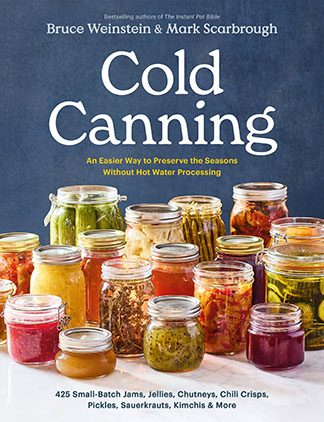
“Cold Canning” offers a primer on easy, safe, budget-friendly preservation. The book has 425 recipes for small-batch jams, jellies, chili crisps, pickles, krauts, kimchis, and more that will safely keep for months to years in the refrigerator or – with the exception of pickle-like foods – in the freezer.

“One of the things that I love about doing this small batch and no processing is that I can use less sugar because I’m not trying to make it shelf stable,” Weinstein explains. “You don’t need to have eight cups of sugar to seven cups of berries; you can get away with three cups of sugar to five cups of berries”

That’s a huge difference in taste and in health.

“Do I think that we should all take all the sugar out of our diet? No, because then life would not be enjoyable at all,” he continues. “Everything in moderation; and, no, I should not be eating a pint of ice cream every day, and I shouldn’t eat cake every day, and I don’t want to sit down to an entire jar of jam, but I do want a nice, thick spread of jam on my toast.”

Weinstein and Scarbrough are also the bestselling authors of the “Instant Pot Bible” series of cookbooks, owners of MediaEats, a culinary production company, the longest-serving columnists on WeightWatchers.com and regular contributors to the “Washington Post,” “Fine Cooking,” and “Cooking Light.”

The duo had other careers before diving into the food space. Weinstein went to culinary school and then worked in advertising for 20 years before becoming a food writer. Scarbrough was an English professor; he still teaches literature.

As an aside: over the summer they posted a video on their social media platforms with Scarbrough explaining the proper way to make toast.

“We’ve watched people make toast; they spread the tiniest half a teaspoon of jelly on a piece of bread,” Weinstein explains. “No, you put a big dollop and you spread it and you get the flavor and enjoy it.”

Don’t do that every hour on the hour. But you can do it every day!

“There’s a lot less sugar in that toast and jam than there is in a slice of cheesecake,” he says.

Bruce Weinstein shares what led to his love of cooking, his professional journey, and his favorite Jewish foods. He also talks about the joy and ease of cold canning, some of his early cookbooks his two non-cookbooks and his recipe for blackberry conserve. The recipe is below.

Learn more at CookingwithBruceandMark.com. Follow @CookingwithBruceandMark on Facebook, Instagram and TikTok, and @CookingWithBruceMark on YouTube.

For the full conversation, listen to the podcast:

Watch the interview:

Blackberry Conserve

MAKES: about 4 cups (960 ml)

FRIDGE: up to 3 weeks

FREEZER: up to 1 year

May be traditionally canned.

A great conserve involves a layering of flavors: caramelized sugar (yet not as much as in most jams), earthy notes from nuts, and bright pops from whatever fruit is at the base, plus a few aromatics to round things out. This particular conserve may well be our favorite, the one we make time and again, especially when we find blackberries on sale. Although it’s terrific with cream cheese or Brie, and great on charcuterie boards, we even like it on buttered toast, a less-sweet treat with our morning coffee.

1 1/3 pounds (605 g) fresh blackberries or thawed frozen blackberries (about 4 cups for either)

2½ cups (500 g) granulated white sugar

3 tablespoons (36 g) chopped crystallized ginger

2 tablespoons (30 ml) lemon juice

¼ cup (30 g) chopped walnuts

1/8 teaspoon grated nutmeg

  1. Put the blackberries in a medium saucepan. Use a potato masher or the back of a wooden spoon to lightly crush them against the inside and bottom of the pan. There should be some pieces visible. Don’t make a puree.
  1. Set the pan over medium-high heat and add the remaining ingredients. Stir constantly to dissolve the sugar. Bring to a boil, stirring often.
  1. Reduce the heat to low and simmer, stirring more and more often to avoid scorching, until thickened and jam-like, about 12 minutes.
  1. Turn off the heat, remove the pan from the burner, and set aside for 1–2 minutes. Skim any foamy impurities with a tablespoon.
  1. Transfer to four clean ½ pint (236 ml) jars or other containers, leaving about ½ inch (1 cm) headspace in each. Cover or seal. Cool at room temperature for no more than 1 hour, then refrigerate or freeze.
  1. Stir everything together in a very large saucepan. Set the pan over low heat and bring to a simmer, stirring quite often.

More

For the walnuts, you can substitute an equivalent amount by weight of any chopped, shelled nut: skinned hazelnuts, pecans, pine nuts, or pistachios. (Do not use salted nuts.)

Excerpted from COLD CANNING by Bruce Weinstein and Mark Scarbrough. Copyright © 2025 by Bruce Weinstein and Mark Scarbrough. Photograph by Eric Medsker. Used with permission of Voracious, an imprint of Little, Brown and Company. New York, NY. All rights reserved.


Debra Eckerling is a writer for the Jewish Journal and the host of “Taste Buds with Deb.Subscribe on YouTube or your favorite podcast platform. Email Debra: tastebuds@jewishjournal.com.

Bruce Weinstein: “Cold Canning,” Cooking with Bruce and Mark and Blackberry Conserve Read More »

A Sting Lyric for the High Holy Days

I’m not sure why a song by Sting, sent to me by my beloved Youtube algorithm, hit me so hard.

It’s this lyric in particular:

“I had to say it, I hate to say it, but it’s probably me.”

It could be the long tradition of Jewish guilt, or the more noble virtue of accepting responsibility, but when I heard “it’s probably me,” all I could think of was “it’s probably my fault.”

Upon reflection, though, maybe it’s not a coincidence that those words are hitting me right now, during the last Jewish calendar month of Elul.

Most Jews wait until the High Holy Days of Rosh Hashanah and Yom Kippur to get down to the serious business of repentance.

But the spiritual preparation for these holy moments begins during the month of Elul, with rituals that include blowing the shofar, reciting special Psalms and prayers, and, most importantly, reflecting on the past year through cheshbon hanefesh, or “accounting of the soul.”

In my case, it also included an unlikely encounter with one of my favorite artists, Sting.

As a friend mentioned, it’s the word “probably” that really stood out. “Probably” recognizes how difficult it is to admit when something is our fault, when it’s “probably me.”

The culminating work of the High Holy Days cannot happen without those three words– “it’s my fault.” We can’t do any self-accounting, any self-reflection, any true repentance without the courage to admit when we have messed up.

Maybe that’s why we start the process so early, during Elul. Elul is the month of “probably,” when we gently ease into the painful realization that we may have hurt or wronged some people during this past year.

Elul is when we recognize how much we “hate to say it,” which enables us to enter Rosh Hashanah and Yom Kippur with the realization that we “have to say it.”

Shabbat shalom.

A Sting Lyric for the High Holy Days Read More »

A Teacher, A Friend, A Balancing Act – Thoughts Before Rosh HaShanah

A Teacher, A Friend, A Balancing Act – Thoughts Before Rosh HaShanah


We have a simple, but wonderful tradition on the Sabbaths between Passover and the Days of Awe – the study of Pirkei Avot, “The Sayings of the Fathers,” one chapter per week. As I study Pirkei Avot at this time of the year, the Days of Awe hover in the background.


In Pirkei Avot 1:6, we find:


Aseh l’khha rav, k’neh l’kha chaver, ve-hevei dan et kol ha-adam l’chaf z’chut. These words are difficult to translate into sensible English, but here is a rather literal attempt:


“Make for yourself a rav, create for yourself a friend, and judge each person favorably” meaning, toward the balance pan (the little cups on a balancing scale) of innocence.


What does this have to with the Days of Awe?  Make for yourself a rav (a rabbi, a moral and spiritual authority) can mean turn the Days of Awe into a rabbi, a special kind of moral and spiritual authority in your life. Rosh Ha-Shana contains the theme of a moral law – always present but often ignored. Would our lapses in morality and character be less frequent if we were acutely aware of a moral law hovering over us?  Perhaps, but even if not, I am reminded of a teaching I heard in my youth:  Even if you transgress, at least admit it to yourself. Admit weakness, but don’t pretend that moral and spiritual laws don’t exist. Sometimes feeling the guilt of wrongdoing won’t change us right away, but even guilt is a kind of knowledge – the knowledge that the moral law exists.


“Acquiring a friend” is a very complex idea, when understood as a spiritual psychological idea. Many spiritual traditions (for example, in the poetry of Rumi) have the idea of an inner friend, a constant companion that teaches us, guides us, consoles us and functions as a touchstone for our spiritual core. Our Friend must be coaxed and evoked. More on this when I teach about Rosh Ha-Shanah.


“Judging others favorably” is a difficult practice, but sometimes life changing. Maintaining the moral high ground of resentment of having been wronged is a profound temptation. Our tradition requires us to consider at least two things. First, we might be wrong. That assumption is the basis of the procedure of holding another to account. First, get the “police report,” their side of the story before you judge. Presume innocence. Judge others favorably unless you have evidence of wrongdoing beyond any reasonable doubt. Admittedly, this practice is very difficult. Inner resistance prefers that we be judgmental over cultivating good moral judgment.


The second aspect of judging others favorably is even more difficult, perhaps only achievable if we strive for moral and spiritual excellence. Even if we were wronged, it is likely that the other person was suffering from inner life stresses that either made us their toxic object, or perhaps we were just on the stage of their life when they were in a particularly bad place. Empathetically understanding another person does not excuse them – they still need to apologize and make good – but empathetic understanding does help us profoundly in working through resentment, our own inner toxicity. Of course, we need excellent skills in dealing with others who wrong us, but these are skills that can raise the value of our character.


Let the Days of Awe be your moral authority, cultivate the inner voice that can ground you in your spiritual center, and work toward emphatic understanding of those who wrong us.


Our life story will begin to feature a moral hero.


(I will talk about these ideas at our Shabbat evening gathering).

A Teacher, A Friend, A Balancing Act – Thoughts Before Rosh HaShanah Read More »

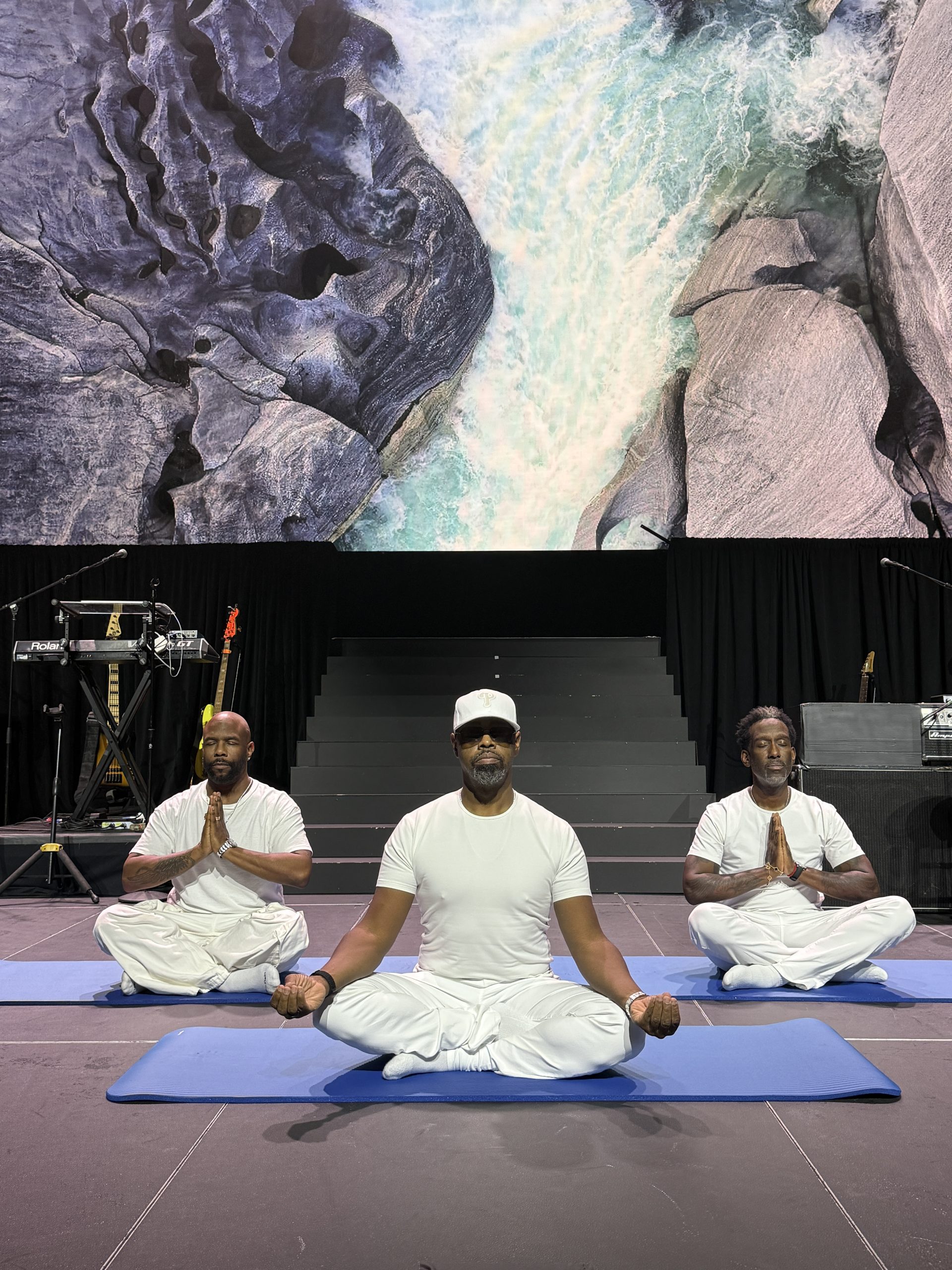
Boyz II Zen: When R&B Nostalgia Meets Wellness in the Florida Keys

What happens when you mix R&B nostalgia with a wellness retreat? When I heard that Booking.com had teamed up with Boyz II Men—one of the best-selling R&B groups of all time—for a first-of-its-kind experience in the Florida Keys, I immediately thought: Now that’s the ultimate “boyz trip:” Boyz II Zen: A Wellness Escape.
For just $19.85—a clever wink to the year they were formed—one lucky fan and five friends will swap the “Motownphilly” dance floor for a soulful sanctuary by the sea. And this isn’t just another vacation. It’s four nights of slow jams, self-care, and a private performance from the very voices that carried so many of us through first crushes, heartbreaks, weddings, and prom nights.
I grew up with Boyz II Men. Their harmonies were the soundtrack of the ’90s—songs like I’ll Make Love to You and End of the Road became instant classics, while One Sweet Day, their duet with Mariah Carey, broke records that lasted for decades. They’ve sold over 60 million albums, earned four Grammys, and left us with ballads that still make the hair on your arms stand up. I even saw them live at my favorite Los Angeles venue, the Hollywood Bowl, last summer. When the first notes of End of the Road floated into the night sky and thousands of voices sang along, it was proof that their music is timeless. Now, they’re bringing that same harmony to travel—and I can’t think of a better mash-up than R&B and R&R. Boyz II Men at the Hollywood Bowl:
The setting? A luxury oceanfront home in the Florida Keys with panoramic views, a private beach, and the kind of dock that begs for smooth-sailing afternoons. Guests begin with a private meet-and-greet and an intimate a cappella set. Imagine those harmonies drifting into a Florida sunset, cocktail in hand. Just like that, you’re whispering Let’s Chill. The days unfold in rhythm. Yoga at sunrise, a sound bath pulsing with their music, massages that melt away End of the Road tension. One afternoon brings a beachside barbecue with a local chef; another, a round of golf where the focus is more zen than scorecard. There’s a smooth-sailing boat day, the kind of escape where you want to stay “on bended knee” just to soak in the breeze a little longer. Meals keep the nostalgia flowing: a “Boyz II Brunch” to kick things off, and dinners at some of the Keys’ best restaurants, each one a little love song to local flavor. This collaboration isn’t just clever branding—it taps into a real cultural shift. Booking.com’s 2025 Travel Predictions show that men are swapping the old clichés of “bro trips” for wellness escapes. Thirty percent are seeking rest and rejuvenation, 29% want to unplug from everyday stress, and a whopping 65% of Gen Z men plan to take wellness-centered trips this year. Boyz II Men understand that pull. As they put it: “After decades on the road, we’ve learned that sometimes the most powerful harmony comes from slowing down and experiencing all that travel has to offer.”
The stay will be available to book on a first-come, first-served basis beginning September 18, 2025, at 10 a.m. ET, for travel September 27 to October 1. The price tag—just $19.85—makes it clear this is about access, not extravagance.
Vacations rarely come with a built-in soundtrack, and even more rarely with one that defined an entire era of love and loss. Whoever books this trip will leave with more than memories—they’ll leave with harmony stitched into every moment. And when checkout day finally comes, I have a feeling it’ll be, well, so hard to say goodbye.

Find this stay on Booking.com at Boyz II Zen: A Wellness Escape.

  See the offer on FACEBOOK:
https://twitter.com/BoyzIIMen/status/1963253086111121751
 

Boyz II Zen: When R&B Nostalgia Meets Wellness in the Florida Keys Read More »