fbpx

September 3, 2025

How Jeff Ross Went from a Nice Jewish Boy to a Shtick-Up Artist

Comedian Jeff Ross lost his parents by the age of 19, lost his hair after making his mark in Hollywood and might have lost his life, had he not listened to a friend who encouraged him to get a colonoscopy last summer.
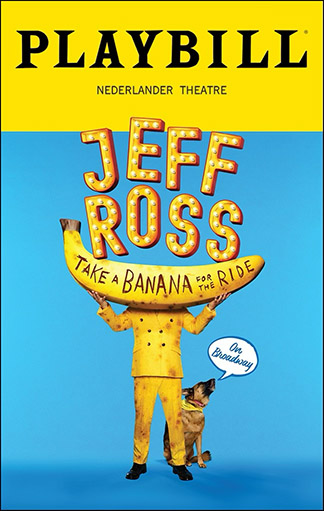
Ross (whose real last name is Lifschultz) is currently on Broadway in his solo show “Take a Banana For The Ride” at the Nederlander Theater. It got its title as his grandfather, Jack, used to give him the yellow fruit as he drove from New Jersey to comedy clubs in Manhattan.

Trial By Fire

Ross said he would get grilled by his uncle he dubbed “Mean Murray” but later realized it was out of love. In school, a guy named Joe went around hitting boys in the midsection, but when Ross was a victim, he mocked the guy and realized the power of the insult. In the show, he discusses the heartache of both his mother dying and father passing away dying he turned 20. While some might have sunk into depression or used drugs, Ross said he felt he had to be positive and find his path in life.

“My dad accidentally OD’d on cocaine, so I think I took the warning sign that it’s a great way to waste your life and money and I saw it as a roadblock to success,” Ross told The Journal. “I have more of a high going on stage and making people happy. Oddly enough, had I not suffered that loss as a young man, I might not have been so funny. It made me understand you have to laugh at all the dark things to get through it.”

The Colonoscopy That Saved His Life and Why He Got Back On Stage Quickly

Shortly after “The Roast of Tom Brady” on Netflix last May, a friend urged Ross and others to get routine coloscopies. Ross took the advice and was told he had a tumor in his colon, and it was surgically removed. He said he knows many who beat cancer would take a year or more off, but that’s not his style.

“It fills me up with joy to be on stage and that was part of the healing,” Ross said. “If I thought I’ll just get better and sit around on vacation, I would not have been as motivated.”

Did Ross Write a Song In Response To Hamas?

“Take a Banana For The Ride” includes a few memorable songs, including “Don’t F— With The Jews.” It’s understandable those who attend the show would think he wrote this in response to a hated terrorist group, but he penned it before the horrific attack.

“I wrote it as a cultural tribute to my family,” Ross said. “It was a cultural pride thing going on long before Oct. 7. This was my mantra-being a tough Jew, a world-beater as my grandfather used to say.”

Letterman and The First Roast of Steven Seagal

Ross became friends with numerous comedians, including Sarah Silverman and Dave Chapelle. He said a huge catalyst for his success came on April 13, 1995, when he made his late-night debut on “The Late Show With Dave Letterman.” His energetic performance, which included jokes about Angela Lansbury and how he thought the stench in New Jersey smelled like Belgian waffles, earned him acclaim.

“I was sort of struggling to get on cable shows,” Ross said. “Somebody cancelled. I got my chance to show who I was, and it was life changing.”

Ross, who earned a black belt before turning 13, even did a kick in his set. Now known as the Roastmaster General, the first time Ross did performed on a celebrity roast was for Steven Seagal. Could the Jewish comedian beat Seagal in karate today?

“He remains undefeated,” Ross said. “The only thing that’s beating him is his cholesterol.”

Ross once did a roast in a prison and seeing the man had a swastika tattoo, told him he should get six million years in jail for every Jew that died in the Holocaust.

Milton Berle, Buddy Hackett and Gilbert Gottfried

Ross learned from such Jewish comedic legends as Milton Berle, who said he should edit stuff down as the crown only wants home runs, and Buddy Hackett, who was a mentor to him.

“Milton taught me how to smoke cigars and figure out if they were really Cuban,” Ross said. “He was very old showbusiness. He put on make-up to go out to lunch. I loved his sense pf showmanship, and he used to love to sit around and tell old stories.(Ross stood next to Berle at a urinal, and says the legend of his endowment was true.)

 Buddy Hackett was almost like a brother to me. He taught me about a lot of things besides comedy. He taught me about politics, romance, he knew a lot about alcohol, transmissions. You could call Buddy for anything.”

In the show, he also mentions his great friendship with Jewish comedians Gilbert Gottfried, Bob Saget and comedian Norm Macdonald, who’ve all passed away in the last few years. He said Gottfried taught him to be irreverent in his comedy.

Trump, Brady and a Flava Flav Kiddush Cup

Most of the roasts Ross took part in can be seen on Paramount +, including “The Roast of Donald Trump” that aired on Comedy Central in 2011.

“He was always a good sport,” Ross said of Trump, “I thought his rebuttal was funny. He worked hard on it with the writers and performed well.”

When Ross roasted future Hall of Fame quarterback Tom Brady and joked about his ex-wife, some worried that Brady’s feelings were hurt.

“Brady was fine,” Ross said. “He took the hits better than anyone in history. That might have been the most brutal roast in history that I’ve been to. Once someone volunteers to be roasted, I go all in, and I don’t worry too much about hurting people’s feelings. When I write jokes, I don’t want to just break the skin, I want to scratch it.”

For his roast of the rapper Flavor Flav of Public Enemy, Ross placed a diamond encrusted Kiddush cup he had made on the podium. While some consider Ross a germ freak, he said he was happy that both he and the guest of honor drank from the kiddush cup.

“I’m happy to get whatever he has,” Ross said.

The Surprise of Alopecia and Ross Reacted to Oscar Slap

Growing up, Ross had an impressive Jewfro,  and was stunned when it fell out and he was diagnosed with alopecia. It was frustrating at first — he looked much different bald — but he knew his comedic prowess would win people over. He said he was disappointed by Jada Pinkett Smith’s response when Chris Rock made a joke about her at the Oscars and was slapped by her husband, actorWill Smith, in 2022.

“I was hurt as someone with alopecia, Ross said. “If Jada laughed, she could have normalized the condition for all the kids out there who may not feel beautiful. Had she laughed, I think that might have done a lot to erase the stigma.”

Twist at the ending

Ross act includes crowd work, resulting in heartfelt discussions of the obstacles members of the audience faced.

“I felt like the audience was emotional during the show and going through a catharsis, as was I, talking about loss, resilience and bouncing back,” Ross said. “I thought instead of talking to people outside, I can do this at the end while it’s still going on. It’s kind of like fireworks at the end. People can earn their banana by taking a joke. “I hope they leave with a doggie bag of emotional utilities.”

Asked his favorite kosher food, Ross replies: “I’m eating an onion bagel with egg salad now. I would eat on stage if I could.”

Ross said he loves knishes and Schnipper’s, a midtown diner run by a Jewish family, named theirbanana milkshake after him.

He said working hard and long hours at his family’s kosher catering hall, Clinton Manor in New Jersey, not only gave him the discipline of hard work, but the experience of interacting with people of all ethnicities, races and nations.

A Unique Ending and Who Would Roast Him?

Ross who would like to host either the Oscars, Grammys or “Saturday Night Live,” turns 60 later this month. Who would he want to roast him? Trump? Snoop Dogg?

“We might have to do a series,” he said. “There’s probably 100 comics who want revenge.”

How Jeff Ross Went from a Nice Jewish Boy to a Shtick-Up Artist Read More »
Blessed are the Jews when Unhubristic

Mismatch between expectations and partisan
unfortunate realities
makes electoral shit inevitably hit the fan
like ballots with ballotic ease.

Blessed more than are the meek, are sadly unimpressive
candidates in primaries elected,
promoted hopefully as pure because progressive,
then demoted, at long last rejected.

More sad than these are Jews whose altruistic
support of their own enemies has turned democ-
racy into a weapon that is anti-Hebrewistic,
killing Jewish shophtim, shotrim, with an electoral shock,

encouraging the rejection of candidates
for office that Deuteronomy demands,
by opening the electoral gates
to antisemitism in these voters’ lands.

Jewish people need to be just as united
as the United States which was inspired
by Torah laws when it invited
the Jews whose laws it always has admired.


Deut. 16:18 endorses legally appointed shophtim and shotrim, judges and officials:

שֹׁפְטִ֣ים וְשֹֽׁטְרִ֗ים תִּֽתֶּן־לְךָ֙ בְּכׇל־שְׁעָרֶ֔יךָ אֲשֶׁ֨ר אֱלֹהֶ֛יךָ נֹתֵ֥ן לְךָ֖ לִשְׁבָטֶ֑יךָ וְשָׁפְט֥וּ אֶת־הָעָ֖ם מִשְׁפַּט־צֶֽדֶק׃
You shall appoint shophtim, judges, and shotrim, officials, for your tribes, in all the settlements that your God YHWH is giving you, and they shall govern the people with due justice.

I composed most of this poem on 8/29/25 after reading “The Ballot Box Is the Key to Preserving — or Losing — Our Current System,” Algemeiner, 8/29/25, in which Rabbi Pini Dunner writes:

https://www.algemeiner.com/2025/08/29/the-ballot-box-is-the-key-to-preserving-or-losing-our-current-system/
In 1856, Abraham Lincoln, that master of the pithy aphorism, noted that “the ballot is stronger than the bullet.” So sharply observed, and it is one of those deceptively simple truths that history has confirmed time and again.
In Britain’s recent election, a record-breaking 25 Muslim MPs were voted into the House of Commons — up from 19 in 2019. It may be a tiny fraction of seats overall, but it’s enough to mark a turning point. Most were Labour, although a handful came from across the political spectrum, including independents who campaigned almost exclusively on the issue of Gaza……
In Canada, the 2025 federal election brought another milestone. Thirteen Muslim MPs entered parliament, up from eleven. The electoral success wasn’t accidental. Muslim advocacy groups coordinated nationally, launching websites and endorsements, rallying communities around a shared platform: “Free Palestine.”….
In France, it’s the same story. Nineteen Muslim MPs were elected in 2024, mainly through alliances with left-wing parties determined to block Marine Le Pen’s far-right surge. France prides itself on strict secularism, but demography speaks louder than ideology — and particularly when Muslim candidates use their Islamic faith as their number one selling point.
With Muslim voters already 10 percent of the French population, their influence is set to grow — and politics is re-calibrating to reflect that reality. It’s not for nothing that France, along with Canada and the UK, is set to recognize “Palestine” — the tail is wagging the national political dog.


Gershon Hepner is a poet who has written over 25,000 poems on subjects ranging from music to literature, politics to Torah. He grew up in England and moved to Los Angeles in 1976. Using his varied interests and experiences, he has authored dozens of papers in medical and academic journals, and authored “Legal Friction: Law, Narrative, and Identity Politics in Biblical Israel.” He can be reached at gershonhepner@gmail.com.

Blessed are the Jews when Unhubristic Read More »

The Moderating Voice of Those Who Moved

A few months after making aliyah a few years ago, I was tapped on the shoulder at the local grocery by a life-long Israeli in his late fifties who had paused the conversation he was having on his phone in order to get my attention. I was in the middle of reaching for a pack of Diet Coke on the shelf when he grabbed me. With an “I’m trying to help you” look on his face, the man said, in Hebrew, “You know, that is NOT Coke Zero!”

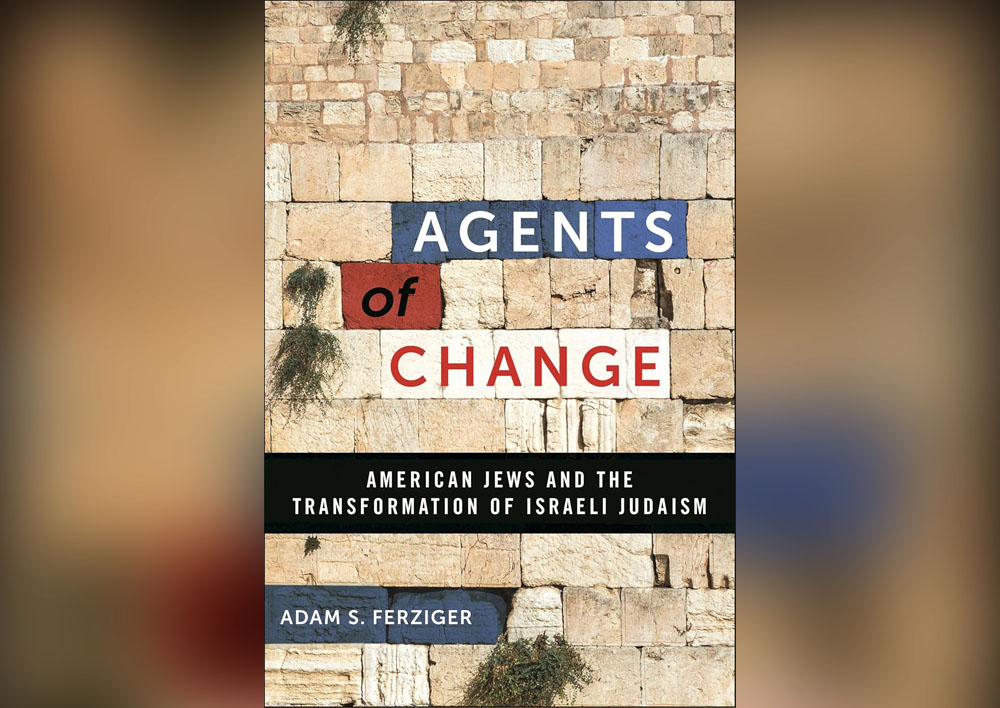
American Jews don’t only show up in Israel with slight but significant Coke preferences than those of the natives. As Adam S. Ferziger argues in his new book, “Agents of Change: American Jews and the Transformation of Israeli Judaism,” those who move from the U.S. to the Holy Land have changed the very nature of religion in the Jewish state itself.

In the volume, Ferziger, who holds the Rabbi Samson Raphael Hirsch Chair in Jewish History and Contemporary Jewry in Israel’s Bar Ilan University, profiles major American Modern Orthodox leaders, many of whom were students of the late 20th century Yeshiva University rabbinic leader Rabbi Joseph Soloveitchik, who made aliyah and, by mixing their American Jewish mindset with their newfound Israeliness, created what Ferziger terms “Israeli Moderate Orthodoxy.” The heroes of the book include Rabbi Aharon Lichtenstein, a son-in-law of Rabbi Soloveitchik who founded and served as the spiritual leader of Yeshivat Har Etzion and its sister institution Migdal Oz for many decades; Rabbi Shlomo Riskin, who founded the city of Efrat and the Ohr Torah Stone network of schools after emigrating from the Upper West Side of Manhattan; and Rabbanit Chana Henkin, who built the women’s learning center Nishmat and its flagship program to train female experts of Jewish family purity laws.

Together, this wave of institution-builders offered a new style of Judaism in the Israeli scene. It shares the passionate Zionism of the already-existent Religious Zionism segment of society, the belief that the modern State of Israel possessed spiritual significance – a perspective that is not shared by the Ultra-Orthodox, either in Israel or the US. It also has a more pluralistic outlook, colored by the American multi-denominational scene from which it came. Thus, for example, contra the seminal Religious Zionist thinker Rabbi Abraham Kook’s claim that secular Zionist Jews had subconscious religious motivations they simply were unaware of, these Modern Orthodox American expats took the self-described irreligious at their word. Yet, they were to be counted and valued as members of the Jewish community nonetheless.

The expat Americans additionally believe, unlike the Ultra-Orthodox, that serving in the IDF is a religious duty. This emerging formerly-American-now-Israeli Moderate Orthodox community values higher education more than the Religious Zionist community, and demonstrates a comfort with academic Bible study and a willingness to learn from other faiths (Rabbi Lichtenstein had a PhD from Harvard, with a dissertation on the 17th century Christian theologian Henry More). It also advocates for an increased role for women in the realms of Torah learning, scholarship and institutional leadership.

Though of course he was not American, the late British Chief Rabbi Lord Jonathan Sacks, particularly after his passing, has found countless new students of his teachings in Israel in recent years. Ferziger credits the rising wave of interest in his writings, which are now included in many Israeli schools and syndicated in its newspapers and magazines, to the more moderate path that the founders of this new movement paved. A few decades of institutional leaders emphasizing the positive possibilities of what Rabbi Sacks called “Torah and Chochma,” i.e. “Jewish learning and General Wisdom” readied the intellectual and spiritual marketplace for the plethora of books, videos and curricula that draw from the Western canon in an accessible, centrist, and inspiring manner that characterized Rabbi Sacks’ work.

Ferziger notes that the highway between American Judaism and the now influential denomination of Israeli Moderate Orthodoxy goes two ways. Multiple American cities house centers of adult Jewish learning, known as kollels, staffed by faculty who were educated and trained by the institutions the Moderate Orthodoxy leaders founded. These young teachers are now serving in America out of a sense of mission to spread their intellectual and spiritual style back in the soil from which it originally sprung. Books written by Israeli Moderate Orthodox thinkers in Hebrew are being translated into English and sold in American Judaica stores.

The story of Israeli Moderate Orthodoxy continues to be written. It is, as Ferziger puts it, a “transnational process in which fresh ideas that came from abroad were refined and reformulated by a second generation in ways that could resonate with the local environment.” Having existed for a few decades now, it has a “bidirectional quality,” in which “key religious trends that first percolated within Israel but have subsequently gained entrée into American Jewish religious life.”


Rabbi Dr. Stuart Halpern is Senior Adviser to the Provost of Yeshiva University and Deputy Director of Y.U.’s Straus Center for Torah and Western Thought. His books include “The Promise of Liberty: A Passover Haggada,” which examines the Exodus story’s impact on the United States, “Esther in America,” “Gleanings: Reflections on Ruth” and “Proclaim Liberty Throughout the Land: The Hebrew Bible in the United States.”

The Moderating Voice of Those Who Moved Read More »