One of the biggest missed opportunities for American Jewry over the past several decades has been in Holocaust education. We’ve focused so much on the Holocaust we’ve overlooked the aftermath.
Yes, it’s crucial for the world to know that six million Jews got murdered by a madman and his Nazi killing machine because they were Jews. We must never stop reminding the world so that it “never again” happens.
I get that.
But I also get something else: What happened after the Holocaust says a lot more about the Jews than what happened during the Holocaust.
The Jews were generally helpless and powerless during the Holocaust. After that singular nightmare, they could have wallowed in victimhood indefinitely and been paralyzed by the collective trauma.
The trauma may have lingered, but it didn’t paralyze. Instead, the Jews took responsibility for their fate and gained the success and influence that can’t happen without hard work.
With the birth of Israel, they went from the people of the book to the people of the hands and made a desert bloom, building a thriving and vibrant society that has led much of the world in innovation. Oh, and they did all that while defending themselves against enemies sworn to their destruction.
In America, after the Holocaust the Jews worked harder than ever, overcoming lingering antisemitism to build influence across all pillars of society, from cultural to academic to political.
Jews worked hard in Israel, and they worked hard in America. The point is, wherever Jews found themselves, they got to work.
As we prepare to commemorate Labor Day, a day that recognizes the value of work and the people who do the work, I’ve been thinking about that virtue in the context of the Jews. It’s hard to overstate how much hard work has been an integral part of the Jewish story.
So yes, let’s remember how Jews died during the Holocaust, but let’s also remember how Jews responded by getting down to work. They killed us because we were Jews, and we rebounded because we were Jews.
Let’s remember how Jews died during the Holocaust, but let’s also remember how Jews responded by getting down to work. They killed us because we were Jews, and we rebounded because we were Jews.
You can’t recount the tragedy without recounting the response. The response completes the story. It tells the world who the Jews really are. We’re not Auschwitz, we’re Tel Aviv.
Just as the March of the Living takes students from concentration camps to Israel, Holocaust museums, exhibits and classes would do well to include a section on “how the Jews bounced back.”
Indeed that may be the deepest lesson of the Holocaust we can share with the world: No matter what kind of nightmare may strike us, what defines us in the end is how we respond.
The Jews responded to the biggest calamity of their history with hard work that changed the world. That ought to be integral to our Holocaust education.
It was an awful week for agitators who can’t resist setting everything aflame—you know, people who find themselves unable to speak unless it involves scorching the Earth.
President Trump unveiled yet another slew of whiplashing Executive Orders. One, in particular, will trouble even those who are not political arsonists. We call such people free speech absolutists. You find them on both sides of the political spectrum. Trust me when I tell you that they have already set their hair on fire in opposition to the President’s strong message that flag-burning will no longer be tolerated as free speech. They recoil at the mere suggestion of such secular blasphemy laws.
Trump is once more talking tough with MAGA dog whistles. The American flag deserves at least as much respect as Uncle Herschel in the Cracker Barrel logo. Legally, however, he’s not on solid ground. Like so many of his other experiments with executive authority, if challenged, the flag-burning Executive Order will doubtlessly be found unconstitutional.
For one thing, in our system of government, it is Congress and state legislatures that make laws and establish penalties for breaking those laws—and not presidents.
But even more importantly, the Supreme Court has long held that torching the American flag as an expression of political speech—specifically, in opposition to American policies—is safeguarded under the First Amendment. The sight of the Stars and Stripes ablaze and trampled upon might be upsetting to many—and at least one legal scholar believes it should be criminal—but we protect the rights of hateful bigots and raving lunatics to express themselves in nearly any manner they choose over the human dignity of those who are forced to listen.
Desecrating the American flag—or the Israeli flag, for that matter—is a vulgar act. But in a landmark 1989 decision, a divided 5-4 Supreme Court ruled that burning the American flag is permissible political speech.
George Washington would have been surprised. Before he became the Commander-in-Chief of the United States, he actually commanded the Colonial Army against the British in the Revolutionary War. He naturally knew that soldiers lose their lives and have their legs blown off defending this flag. Betsy Ross wasn’t wasting her time. The flag still has, and should absolutely have profound symbolic meaning—although that is regrettably less true on “elite” college campuses and among appallingly unpatriotic coastal elites.
Betsy Ross wasn’t wasting her time. The flag still has, and should absolutely have profound symbolic meaning—although that is regrettably less true on “elite” college campuses and among appallingly unpatriotic coastal elites.
Among Western democracies, the United States has always been more permissive when it comes to free speech. Neo-Nazis in the United States were defended by the ACLU back in the late 1970s when the residents of Skokie, Illinois, many of whom were Holocaust survivors, unsuccessfully tried to ban them from marching on the village green. The same motley crew of goose-steppers get marched straight to prison in Germany and Austria. There is a similar line of Supreme Court cases defending the rights of the KKK to burn crosses on the lawns of African-Americans!
Among Western democracies, the United States has always been more permissive when it comes to free speech.
Not very PC or DEI, if you ask me.
Similarly, European nations do not honor flag-burners with special free speech protections. Citizens in France, Germany, Italy, Latvia, Lithuania, Estonia and Poland know that turning a national flag to ash is a criminal act. Russians spend a year in jail for such desecrations of nationhood.
Always a showman, Trump’s latest spectacle is well timed. After all, burning things to the ground has been booming business as of late. The alt-right, seething with “replacement” grievances, descended on Charlottesville with tiki torches. Black Lives Matter protests often featured fireworks—not in the sky but on city streets, primarily with bonfires made of police cars and police precincts. And no pro-Hamas rally would be complete without desecrating American and Israeli flags—the new pistols at dawn for antisemites.
Actually, it’s these many hellish infernos that the Executive Order primarily has in mind. Yes, President Trump is wrapping himself in the American flag as a flame retardant, but he may be onto something, as well. He might not appreciate the legal hurdles he is facing, but those in his administration who drafted the Executive Order apparently do.
Yes, President Trump is wrapping himself in the American flag as a flame retardant, but he may be onto something, as well.
The order merely prioritizes enforcing laws that arise from flag-burning that are unrelated to expressive speech. The most obvious is arson, but also violent acts that threaten public safety, like “hate crimes, illegal discrimination against American citizens, or other violations of Americans’ civil rights; and crimes against property and the peace.”
What may really be on the president’s mind here are the widespread campus unrests and public upheavals in support of Hamas. Non-citizens standing anywhere near a burning flag will and should have their visas and immigration benefits revoked.
Moreover, if the burning of a flag contributes to or accompanies the “incitement of imminent lawlessness,” “true threats,” or “fighting words”—none of which are protected under the First Amendment—then prosecutors should have a greater incentive to punish because flag-burning was also afoot.
The language of the Executive Order notes correctly that “flag burning is also used by groups of foreign nationals as a calculated act to intimidate and threaten violence against Americans because of their nationality and place of birth.”
That means if you are burning a flag while shouting “Globalize the Intifada!”, free speech guarantees will not save you. We know exactly what you mean, and therefore jailtime for arson, incitement, hate crimes, violent criminal mischief, disturbing the peace—and for foreign nationals, deportation—is in your immediate future.
In the Supreme Court’s flag-burning case, Chief Justice William Rehnquist wrote in dissent, “flag burning is the equivalent of an inarticulate grunt or roar that, it seems fair to say, is most likely to be indulged in not to express any particular idea, but to antagonize others.”
Those who demand the right to burn the American flag are essentially saying: We have no interest penning a biting op-ed in the local paper. Engaging in civilized, mutually respectful debate is similarly out of the question. We come from the gutter where a thesaurus is impractical. We speak only through violent acts, hostile gestures, riled-up mobs, and maximal threats and intimidation. That’s how we convey our ideas.
With any luck the Supreme Court will take another look and conclude, not anymore.
Thane Rosenbaumis a novelist, essayist, law professor and Distinguished University Professor at Touro University, where he directs the Forum on Life, Culture & Society. He is the legal analyst for CBS News Radio. His most recent book is titled, “Beyond Proportionality: Israel’s Just War in Gaza.”
As summer comes to a close, I’m reflecting on a season filled with speaking, travel, milestones, and—most importantly—gratitude.
I had the honor of speaking at the Torrance Library about Living Brave-ishly and sharing stories of courage and resilience. At Lake Arrowhead, I joined Nissan as their featured travel speaker—what an unforgettable drive up the mountain and an inspiring event. I was also featured in CarBuzz for my talk there, as well as in Women’s World for my thoughts on travel. And to top it off, I attended a special evening with Qantas to celebrate the new Dreamliner route from Los Angeles to Brisbane, a reminder that adventure is always waiting across the Pacific.
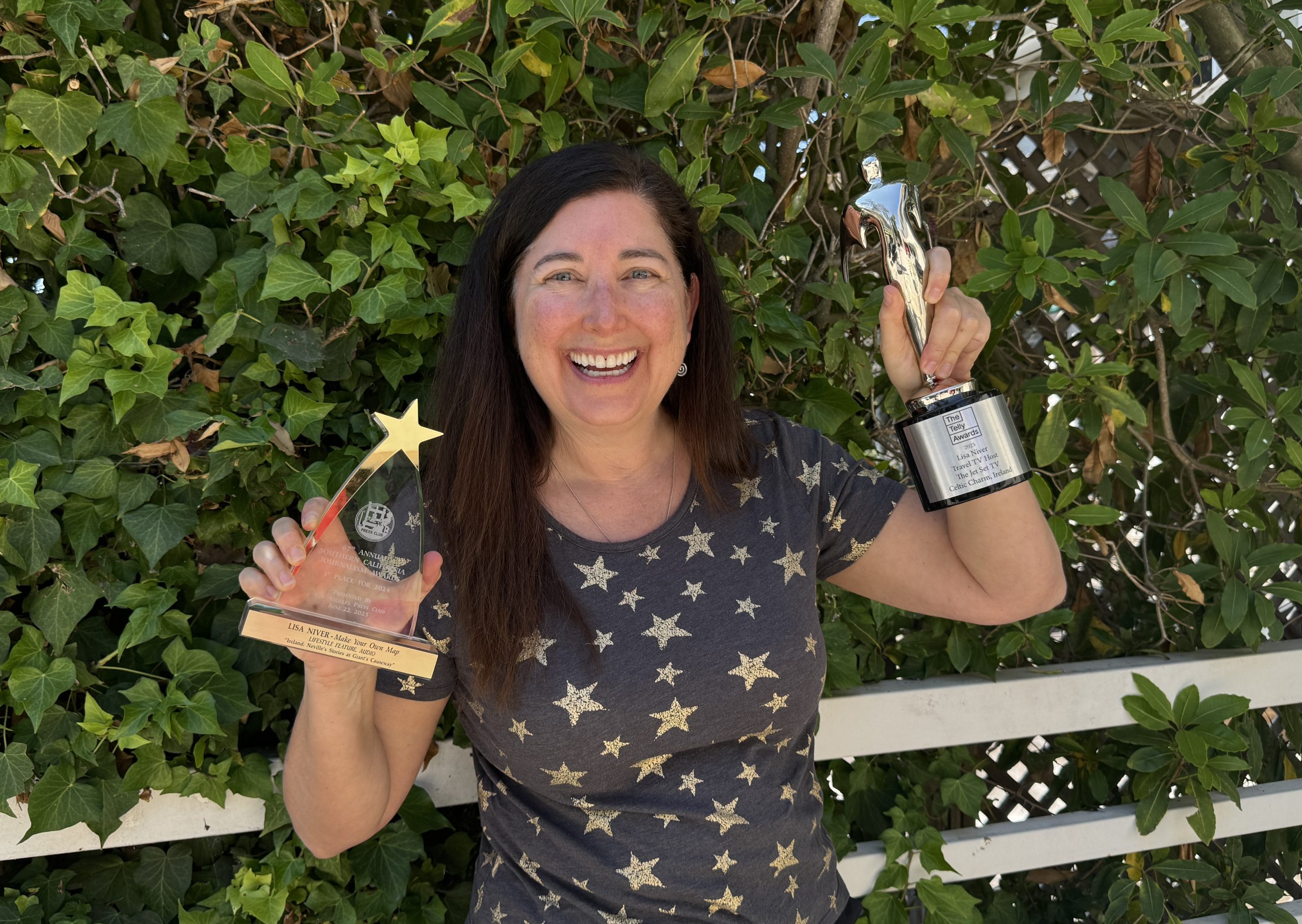
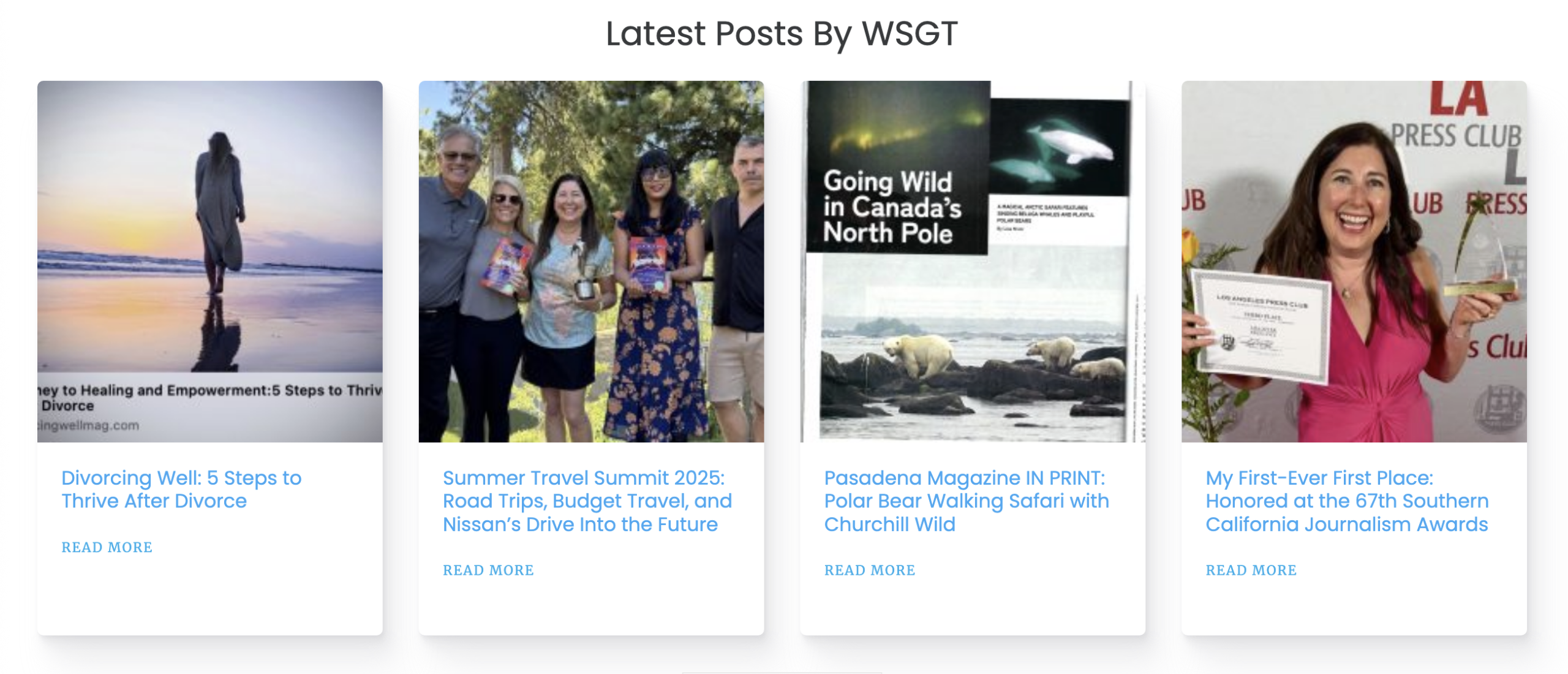
Two of my proudest summer moments were carrying my Telly Award to Lake Arrowhead and celebrating my 1st Place Press Club win with a photo shoot and lunch at the historic Langham Pasadena. A glamorous Beverly Hills lunch rounded out those celebrations—reminders to pause and savor accomplishments.
Media and culture also filled my calendar: I toured KCAL CBS studios to learn about the future of news, experienced Muse/ique’s Like It Like Harlem performance, and returned to the Hollywood Bowl, one of my favorite things about Los Angeles, for a magical night of Jurassic Park under the stars.
Not every month was easy—July was a time to focus solely on family, as my mom spent two weeks at Keck USC Hospital. I didn’t share news then, but I was grateful to put everything else on hold. Health and family come first, and I am thankful she is better now.
By August, I was back on the trail—literally—spending a week hiking in Utah. Photos are coming soon!
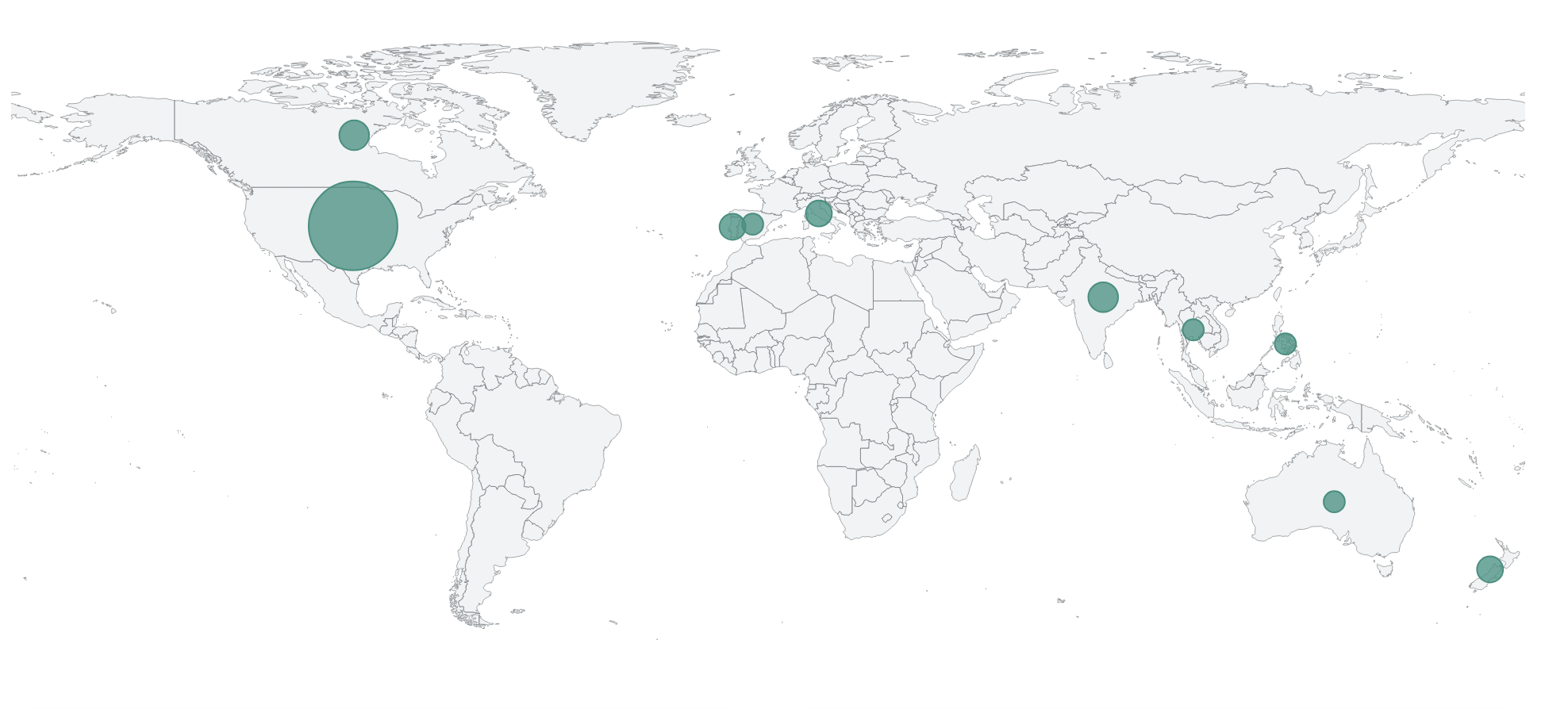
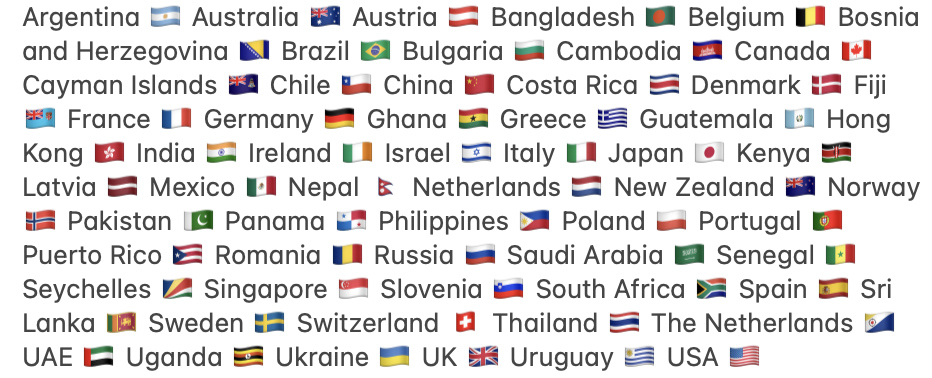
Another highlight: my Make Your Own Map podcast is now reaching listeners in 60 countries across all 7 continents! I’ve also had the joy of being a guest on other shows, including the newest episode of Sideline Sisters—thank you, Jenny, for the great conversation. On my own podcast, you can now listen to my interview with Angela Tuell and hear my talk at the Torrance Library.
But even in moments of joy and travel, I carry a heavy heart. For nearly two years now, 695 days since Oct 7, 2023, hostages have remained in Gaza. On August 19, we marked the yahrzeit of the six beautiful souls who were murdered by Hamas terrorists after surviving nearly a year of horrific conditions in captivity: Or Danino, Carmel Gat, Hersh Goldberg-Polin, Alex Lubanov, Almog Sarusi, and Eden Yerushalmi. The loss of these precious lives is felt deeply across Israel and the Jewish world.
Reflecting on their grief, Hersh’s family invited others to honor this first yahrzeit by taking action “to make our complicated world better… It can be something big or small, quiet or loud, private or public. Do it in memory of the Beautiful Six, including our Hersh. May his memory be a revolution… for goodness.”
Their words are a reminder to live bravely, act with compassion, and choose kindness whenever possible.
Looking ahead, next month marks the second birthday of my book Brave-ish—a milestone I can hardly believe has arrived. I am deeply grateful for your continued support, for the recognition of my work with a Telly Award and Press Club win, for the growth of my podcast, and above all, for health, family, and the ability to keep traveling and sharing stories.
In this sacred month of Elul, as the shofar calls us to awaken and prepare for the Days of Awe, I find myself reflecting deeply on the year that has passed. At the close of 5785, we look back with gratitude for blessings, with humility for challenges faced, and with heartbreak for lives lost and hostages still waiting for freedom. As Rosh Hashanah approaches, we are invited to begin again, to renew our commitments, and to step into the new year with intention.
May this season inspire us to carry forward resilience, curiosity, and joy, while also holding space for memory, justice, and the work of making the world better.
Media & Podcast Highlights This summer has been full of milestones I’m grateful for:
✨ My Make Your Own Map podcast is now listened to in 60 countries across all 7 continents!
I have events nearly every month–hope to see you at a live event soon–and you can invite me to speak at your conference, library, bookstore, book club live or on ZOOM!
I have students in 10 countries so far: Australia, Canada, India, Italy, New Zealand, Philippines, Portugal, Spain, Thailand, USA! Join us on the adventure of travel writing!
THANK YOU for watching my award-winning podcast, Make Your Own Map: Are YOU ready to be BRAVE? It has now been seen and heard in 60 countries on 7 continents.
Here is the link to my video channel on YouTube where I now have nearly 2.5 Million views on YouTube! (now at: 2,472,185).
Thank you for your support! Are you one of my 4,645 subscribers? I hope you will join me and subscribe! For more We Said Go Travel articles, TV segments, videos and social media: CLICK HERE
People always ask me where is it best to buy my book. I recommend you go into or call your favorite local book store and ask them to order it for you and pick it up IN THE STORE! You never know what other treasures you will find. Any bookstore can order my book because my publisher is Post Hill Press and it is distributed by Simon and Schuster. My book is now in the library on Quark Ultramarine and in the store at Dubray bookstore on Grafton in Dublin, Ireland! Brave-ish is available all over the globe!