fbpx

May 16, 2025

The Divided Jewish Calendar

In his introduction to the Shemirat Shabbat Kehilchatah, Rabbi Yehoshua Neuwirth writes about his experiences as a teenager during World War II, when he and his family hid inside a cramped attic in Amsterdam. He writes that:

…we also had no calendar by which we could know the dates of the holidays. Through a Kitzur Shulchan Aruch (which I received from my older brother Simcha Elazar, of blessed memory, who was deported along with his Yeshiva in France in 1942 and murdered in Auschwitz), I managed to learn how to calculate the Hebrew calendar. Based on that, I created a calendar for the years we stayed in hiding. This calendar included the dates of Sabbaths, holidays, and fast days, providing a Hebrew date for every day of the war.….The Jewish underground heard about this calendar and copied it, and ensured it was available for the Jewish refugees in hiding. After the war, the halachic calculation I used was found to be accurate. (I still have that calendar in my possession today).

A fifteen-year-old boy being hunted by the Nazis uses the few scraps of paper he has to write out a painstakingly researched Jewish calendar. What motivated him to do this?

The calendar stands at the very heart of Judaism. Sacred time organizes the entirety of the year with mathematical precision. Shabbat is the seventh day. The major festivals, Pesach and Sukkot, have seven days. (Sukkot has an additional eighth day, Shmini Atzeret, as well.) There are seven weeks of seven days in the Omer count. Within the holidays, as the Vilna Gaon points out, the number of days when work is mostly prohibited are six; with a seventh holiday, Yom Kippur, having a total prohibition of work, just like Shabbat. Sacred time is embedded into God’s creation, the equation for a spiritual life.

Sacred time allows us to experience, as Rabbi Joseph B. Soloveitchik described it, “time as grounded in the realm of eternity.” Time is not merely a physical measure, a straight line moving from one point to another. The present is always in dialogue with the past and the future. Historical events are the basis of the Jewish holidays. By remembering them, we connect to a “unitive time consciousness”; what once occurred can be reexperienced again, and transform our present.

Young Yehoshua Neuwirth understood this; he realized that a Jewish calendar could offer a taste of transcendence and raise him high above the dark attic he was trapped in.

The Jewish calendar has many inspirational holidays. But what is unclear is how, or even whether, the various holidays of the year integrate together.

Kabbalists have interpreted the various holidays as reflecting different aspects of the sephirot, the divine connection to this world; together, the holidays bring an integrated system of divine influence into the temporal world.

Rabbi Samson Raphael Hirsch offers a fascinating explanation of this question in Horeb. He explains that the holidays are meant as ongoing reminders to reconnect to our mission, and that “The common factor of all these days is that they all interrupt our active life … to contemplate the truths lying at the foundation of our existence.”

Hirsch outlines each holiday’s message; these ideas are found in three pairs. Shabbat, the day of creation, teaches us about the “consecration of life.” Pesach, the day of the Exodus, represents the “physical creation of the nation.” Shavuot, when the Torah was given, represents the “spiritual creation of the nation.” Sukkot represents the “physical survival of the nation,” while Shemini Atzeret reminds us of the “spiritual survival of the nation.” Finally, Rosh Hashanah and Yom Kippur reinforce the lessons of Shabbat and teach us to embrace the continued “examination of life.”

Together, these holidays create a unified, harmonious calendar. The holidays are scheduled maintenance for the soul, lessons that must be regularly reviewed.

Parshat Emor divides the calendar into two halves, with 44 verses in this section (Vayikra 23). The first 22 verses focus on the Shabbat, and the holidays in, or connected to, the month of Nissan: Pesach, the Omer, and Shavuot. The second 22 verses are about the holidays of Tishrei: Rosh Hashanah, Yom Kippur and Sukkot. Elchanan Samet has demonstrated the multiple linguistic parallels between the two halves; they stand apart, yet mirror each other.

The division of the holidays in Vayikra 23 into two equal sections offers a provocative possibility: Perhaps the Jewish calendar is divided into competing halves.

This competition becomes apparent in a debate in the Talmud. Although we generally refer to Rosh Hashanah as the day of creation, it is actually a matter of dispute. Rabbi Eliezer says the world was created in Tishrei, and Rabbi Yehoshua says it was created in Nissan.

This debate is not merely about creation. It is about which month is the primary month of the Jewish calendar. Rabbi Eliezer says that the future Messianic redemption will occur in Tishrei, while Rabbi Yehoshua says it will occur during Nissan, just as it did during the Exodus.

Unlike Rabbi Yehoshua, Rabbi Eliezer considers Tishrei to be the most important month, when the future redemption will occur.

But what provokes this debate between Rabbi Eliezer and Rabbi Yehoshua? What defines the difference between Tishrei and Nissan?

Nissan is a time of miracles. God himself redeems man from Egypt; and just 50 days later, he appears to the Jewish people on Mount Sinai. Rabbi Yehoshua sees this miraculous month as exactly where the beginning of the world and the end of history should take place.

In Tishrei, man is the protagonist. On Rosh Hashanah, man stands before God, praying, repenting, and working on developing the best version of himself. On Sukkot, we remember a story of human resilience, how the Jews survived the desert in rickety huts they built themselves.

This is why Rabbi Eliezer sees Tishrei as the central month; in his view, the future redemption is not automatic. It will only occur if the Jews repent. The ultimate fate of God’s creation is in the hands of man.

Vayikra 23 recognizes the difference between the two types of holidays by dividing them into two sections.  God is the protagonist in Shabbat, Pesach, and Shavuot; man takes the lead in Rosh Hashanah, Yom Kippur, and Sukkot. But the sections are of equal length, a clear indication that they contain equal value.

Rabbi Yehoshua and Rabbi Eliezer may debate whether God or man play the starring role in the holidays; but the Torah wants us to hold on to both views, to embrace a dual calendar divided in two.

This dual Jewish calendar is not harmonious; but it offers a 3-D vision of life, where we must both have faith and take responsibility.

Life brings moments when God seems distant, and we must work furiously to do what we can on our own. And then there are moments when we are powerless, and all we have left is faith.

The dual Jewish calendar reminds us that when all seems lost, sometimes God will step in, and sometimes man will step up.

And it is in those in-between moments that miracles will happen.


Rabbi Chaim Steinmetz is the Senior Rabbi of Congregation Kehilath Jeshurun in New York.

The Divided Jewish Calendar Read More »
The Quiet Threat of Foreign Influence is the Poisoning of Student Minds

Nearly forty years ago, Professor Allan Bloom of the University of Chicago wrote one of these seminal books that end up becoming a permanent fixture of the cultural discourse, a la George Orwell’s “1984.”

Bloom’s book was titled “The Closing of the American Mind,” and one reason for its lasting impact is that it has become more and more true with the passage of time. If Bloom was railing against a shrinking appreciation for the search for truth in American academia, what would he say now when politically-driven propaganda often substitutes for truth?

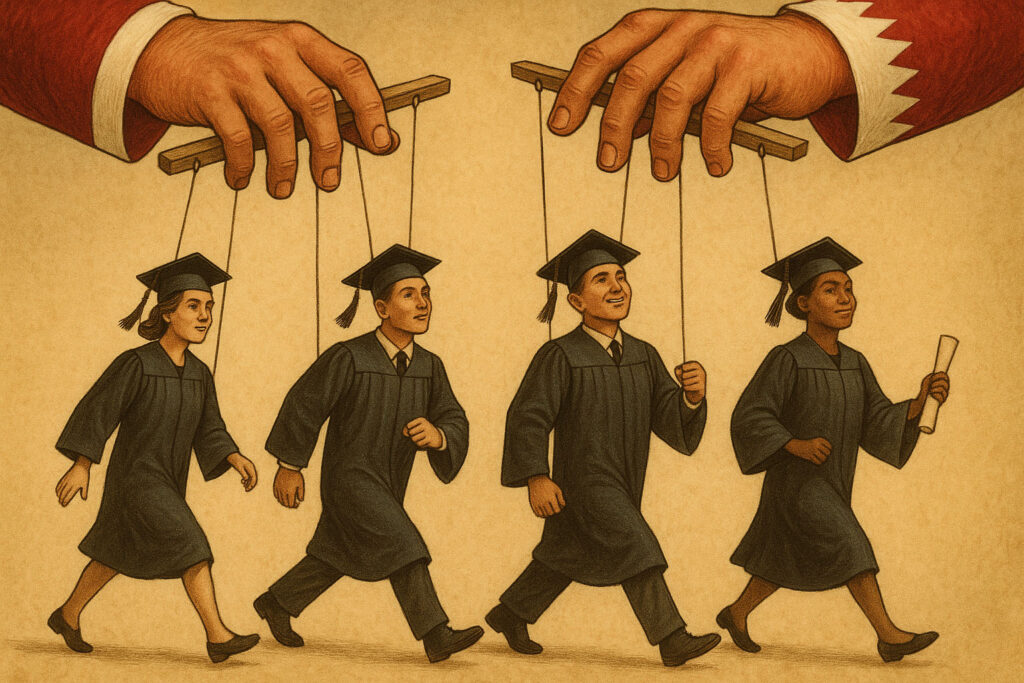
We hear a lot about the billions thrown around by foreign players to buy influence, which is a serious concern. But equally serious is the quiet spread of propaganda in college classrooms that poisons the minds of our future leaders.

Exhibit A in this propaganda machine is the undermining of Jews and Israel.

Put yourself in the shoes of the typical American college student whose knowledge of Israel revolves around words like genocide and apartheid, and whose knowledge of Palestinians revolves around one singular identity: helpless victims of big bad Israel.

Imagine how vulnerable these students become when they enter classrooms and are confronted with propaganda that reinforces the anti-Israel cliches they hear on the street. Far from the bright lights of the loud protests that get all the attention, these classrooms are the real crime scenes, and the perpetrators are the faculty who camouflage their anti-Israel bias with innocent-sounding titles like “Mideast Studies” or Cultural Studies.”

But who’s monitoring these propaganda labs? Certainly not the universities themselves.

At least one watchdog group has been digging into it. A 2024 report by the Amcha Initiative exposed a group called the Faculty for Justice in Palestine (FJP), a national network with over 160 chapters established after Hamas’ October 7 attack.

According to the study, “The primary mission of FJP chapters is to use their members’ academic positions and departmental resources to actively promote the academic boycott of Israel (academic BDS) by engaging in actions to purge their campuses of Zionism and Zionists.”

The report added that “FJPs are colluding with and encouraging anti-Israel student and departmental activity: Nearly 70% cosponsored anti-Israel events and/or co-authored statements with one or more anti-Zionist student organizations and more than one-quarter co-authored anti-Israel statements and/or cosponsored events with official university academic departments.”

In sum, the report concluded that “FJP chapters played a pivotal role in the explosion of antisemitic violence, anti-Israel protests and BDS activity” we saw in the wake of Oct. 7.

Remember, we’re talking about faculty here—not activists. Of course, when one sees their nefarious work, it’s hard not to conclude that many of them are activists disguised as faculty.

Who’s pouring the most foreign money into our campuses? According to a report by the Middle East Forum (MEF), since 2012 “Qatar has granted $6.25 billion dollars to U.S. higher education institutions, making it the single largest foreign donor to American higher education, through which it yields significant (and dangerous) influence.”

That big money comes with brazen chutzpah. According to the MEF, “As public scrutiny intensified in the aftermath of October 7 over Qatar’s role in promoting anti-American and antisemitic attitudes on college campuses, the emirate’s grants to universities only increased, with a record $980 million in contributions to U.S. schools between January 2023 and October 2024.”

In the old days, donors to universities were expected to share some common values. If they didn’t believe, for example, in the basic principles and ideals on which America was founded, their money was tainted and not worth accepting.

Evidently, on U.S. campuses today, money talks more than ever, even money that comes from bad actors. That foreign influence is bad enough, but when it starts to poison the minds of America’s future leaders, not just against Jews and Israel but against America and the West, the money itself become poisoned.

Universities have an obligation to open student minds to the complicated search for truth. Whether propaganda is driven by foreign money or otherwise, whether it has to do with Jews or Israel or others, propaganda is indoctrination– the very opposite of truth. Allan Bloom warned us many years ago that the real poisoning of the mind is when it becomes closed off to that search for truth. That has never been more true.

It’s time universities open their minds and listen.

The Quiet Threat of Foreign Influence is the Poisoning of Student Minds Read More »

No, Hannah. Blaming Israel for Abortion Access Is Propaganda—Not Progress

Scrolling through Instagram, I have learned to steel myself against the flood of anti-Jewish and anti-Israel disinformation and Hamas propaganda. But there’s one thing that left me cold and disappointed.

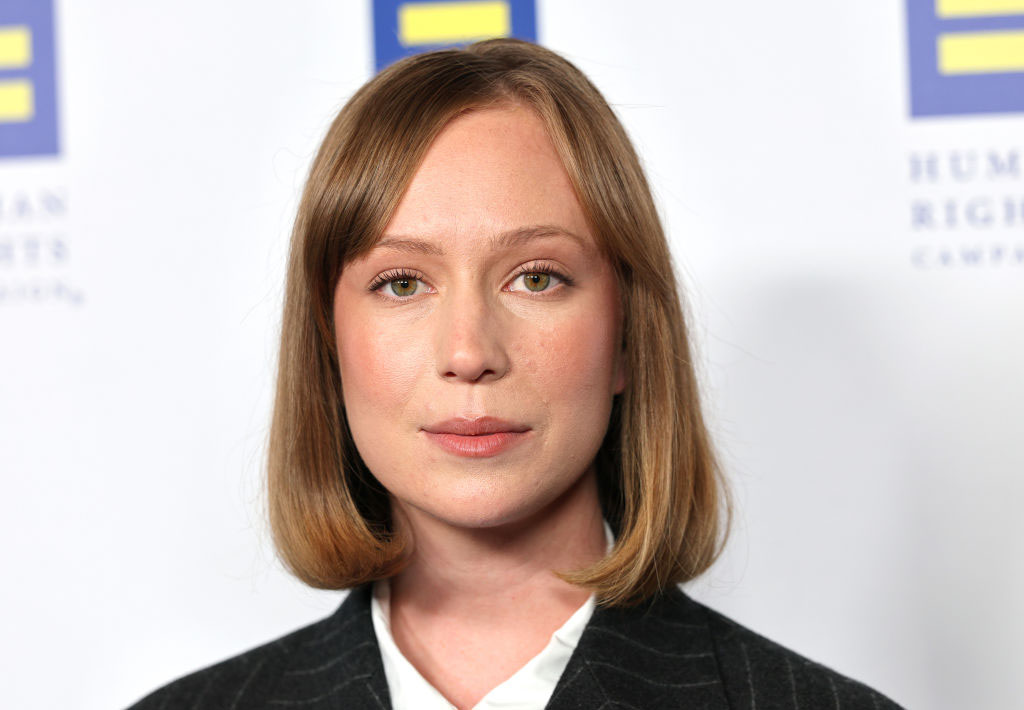
Actress Hannah Einbinder recently posted an Instagram photo wearing a keffiyeh stylized into an inverted triangle—a symbol of Hamas—alongside a shirt that read, “Fund Abortion … Not War.” Her message? That American support for Israel is somehow responsible for defunding abortion access in America.

This is not just misinformed; it is factually incorrect. Her words and actions are morally obscene. And she speaks in the name of her Jewish identity, thereby betraying each community she is part of by conflating issues. This is propaganda, not progress.

Let’s start with the keffiyeh. While originally a beautiful traditional Arab garment, it has long been co-opted as the symbol of violent Palestinian nationalism. Yasser Arafat weaponized it politically. Hamas has claimed it culturally. Today, it’s worn by militants chanting “Death to Jews,” waving swastikas, and burning Israeli flags, both in Gaza and across the globe. Her keffiyeh-as-triangle design directly mimics the Hamas insignia, showcasing her support for a terrorist organization responsible for raping women, beheading civilians, and holding children hostage. Does Hannah even know what happened on Oct. 7th? Does Hannah actually pay attention to what the Palestinian Islamist groups are saying and doing and how they use these same symbols?

This isn’t solidarity. Rather, it’s complicity in Hamas’s war against humanity.

Hannah’s suggestion that Israel is to blame for America’s abortion policy collapses under even the slightest scrutiny. Military aid to Israel is separate from domestic healthcare spending. It’s designed to ensure our key ally’s survival in a region dominated by Iranian-backed militias and Islamist regimes, and it protects American interests, too.

If Hannah genuinely cared about reproductive rights, she wouldn’t be targeting Israel, which is the only country in the Middle East where abortion is legal under broad conditions. She’d be condemning Hamas and the Palestinian Authority, which enforce one of the most extreme anti-abortion regimes on earth. In Gaza, abortion is criminalized except when the woman’s life is at risk. Even then, a woman often needs permission from her husband and male physicians. There are no exceptions for rape. Not even incest. And when women seek help? They’re often driven to unsafe, underground methods, risking their lives for lack of basic autonomy.

Where’s Hannah’s post about that? Why is she so obsessed with Israel, standing against her own people as they are engaged in a fight for their survival?

For years, women in Gaza have been barred from walking alone in public. They’re forced to be covered head to toe and must often be accompanied by a male guardian. In Hamas-controlled areas, LGBTQ+ people are routinely persecuted, imprisoned, or worse. Yet Hannah Einbinder, like many Hollywood progressives, stays silent. Worse, she wears the colors and shapes of the regime enforcing this oppression.

This isn’t activism. Her actions border on what kapos did in World War II: turning against their own while enabling their oppressors. Her fashion statement is a slap in the face, not only to Jews across the world still reeling from Oct. 7, but to Palestinians in Gaza who do not support Hamas and suffer daily under its brutal rule. She has not posted once about Palestinians bravely rising up in Gaza to protest against Hamas to end the war.

She has not posted once about Palestinians bravely rising up in Gaza to protest against Hamas to end the war.

And this isn’t her first offense. During a recent speech for the Human Rights Campaign, Hannah blamed Israel for the rise of global antisemitism.

Newsflash, Hannah: antisemitism has existed for thousands of years. Long before the State of Israel existed, Jews were blamed, persecuted, exiled and slaughtered across every continent. Your privileged take is not just tone-deaf; it’s deeply offensive to every Jew who knows our history.

And let’s be clear: By blaming Israel, Hannah is giving Hamas exactly what it wants—distraction, deflection, and cover. Her silence on the hostages is damning. While she posts slogans, 59 hostages remain trapped in Gaza. Every time public pressure shifts away from Hamas, they delay another deal. Her rhetoric helps prolong the war, not end it.

So here’s my message to Hannah: If you actually care about women’s rights, if you care about abortion access, LGBTQ+ safety, or stopping this war, stop parroting propaganda and have a real conversation. I invite you to sit down with me, one-on-one, and learn about what’s actually happening in Gaza, in Israel, and across the Jewish world.

But until then, take off the scarf. You’re not making a statement of peace. You are cloaking yourself in the imagery of the terrorists who would silence, rape or kill you simply for who you are along with every woman and LGBTQ+ person in your orbit.

You think you are standing for justice and human rights, but you are standing for the exact opposite and on the wrong side of history.


Yuval David is a Jewish and LGBTQ+ advocate, Emmy Award and multiple film festival winning journalist, actor and filmmaker.

No, Hannah. Blaming Israel for Abortion Access Is Propaganda—Not Progress Read More »

CSUN Panel Screens Oct. 7 Documentary ‘Screams Before Silence’ — Claims Israeli Women Have Been ‘Dismissed’

Around 80 people attended a panel at CSU Northridge (CSUN) on April 30 featuring trauma expert Dr. Miri Bar Halpern and Pakistan-American civil rights activist Anila Ali discussing trauma and the Oct. 7, 2023 massacre.

The panel was held in the Jake & Florence Presentation Room of the CSUN Library and began following a screening of the documentary “Screams Before Silence” by Israeli filmmaker Anat Stalinsky. The film features Sheryl Sandberg interviewing witnesses and survivors of Oct. 7 who recall the Hamas rapes that day. Before the screening, Shira Brown, a lecturer at CSUN Women’s Research and Resource Center, told attendees that the event focuses on a question that should never be asked: “When did we stop believing women?” Brown acknowledged that while the allegations of sexual assault on Oct 7 “are still being investigated, documented and understood,” they’ve been “dismissed” or “outright denied. …

This room is big enough for nuance,” she said, as well as “grief,” “anger” and “respectful disagreement.”

Halpern, a Harvard Medical School lecturer and director of Trauma Training at Parents 4 Peace, spoke about the issue of traumatic invalidation, meaning that someone tells you the trauma is your fault or that it didn’t happen, “can lead to emotional neglect, ignoring, denial of truth” as well as self-harm, anxiety and depression. She warned that traumatic invalidation from the global community could “lead to the belief that I don’t matter.” Halpern contended that if the rapes and sexual assault on Oct. 7 occurred to any other community “we would see a different reaction” and “people would be acknowledging that.” But because the victims were Jews and Israelis, “people are still questioning it. This is traumatic invalidation and antisemitism at the same time.”

Ali said that “if you’re a woman, you need to see this” and recalled how on Oct. 7, she spoke to a distinguished lawyer she had worked with who said, “but don’t you think these women deserved it?” Ali, a Muslim, realized that she was going to see her community’s anger and hatred against the Jewish community/Israelis and turn into denial and blaming it on the Jews and Israel.

She claimed that the board members of her organization, the American Muslim & Multifaith Women’s Empowerment Council, were telling her they needed to issue a statement supporting the Palestinians after Oct. 7. She replied that Hamas started Oct. 7 and that “this is the time for us to tell the truth … as Muslims, as citizens of the world, and as women.

Our trauma is very deep … we just don’t have to worry about what the global community is going to say we’re worried about what people are going to say in our community when things like that happen.”

The civil rights activist added that some of the members of her board were told they couldn’t enter mosques unless they resigned from the organization and that her children have been targeted and ostracized.

“This is about terrorists using Allah’s words … and killing and raping people,” Ali said, adding that those who deny the Oct. 7 rapes also deny that 9/11 happened “so there’s a connection.”

“This is about terrorists using Allah’s words … and killing and raping people,” – Anila Ali

Ali said that she and her organization plan on asking members of the Muslim community if they’ve been to the Gaza Strip and the kibbutzim that were attacked on Oct. 7, as they have. “And that’s what we did,” she said.

Amit Soussana, an Israeli women who was taken hostage by Hamas and said she was raped while in captivity, told Ali and her organization to “tell our story, don’t let it die.” And Ali said that “her story is the story of Muslim women too” who have been raped and victims of domestic violence. “If we’re not going to do that as women, then shame on us.”.

On the issue of “whataboutism” regarding the Palestinians, Halpern said that her dialectic work as a therapist has caused her to understand the importance of two truths. “Of course I’m holding pain for the Palestinians,” she said, adding that the “us vs. them” mentality is “polarizing society.”

She heard that there were concerns that there might be protesting at the event and asked why Jewish pain doesn’t matter— “When we start using nationality and religion and identity as the hierarchy of empathy, then we’re losing humanity.”

Ali remembered hearing a story of a Gaza man visiting one of the attacked kibbutzim on Oct. 7 with his wife and baby and how Hamas shot his wife, a Muslim woman, 32 times from her neck down to her toes. The man hid in the closet behind where the Hamas terrorists were hiding when the Israel Defense Force (IDF) surrounded the house and told everyone inside to  leave; he tried to warn the IDF that Hamas terrorists were inside but they didn’t hear him. He escaped with his baby.

She also said that when she has told some of her fellow Muslims that Hamas terrorists shouted “Allahu Akbar” while cutting off the breasts of women, they simply didn’t want to hear about it anymore. Ali knows of instances of imams in the United States who have called to “annihilate the Jews and their helpers” and referred to Jews as “apes and pigs,” prompting Ali to retort “then so are we because we are an Abrahamic people.”

Ali went on to claim that she spoke to a PBS journalist for a documentary but ended up not happening after the journalist allegedly claimed “they make everything up do you think that happened … did you see them cutting the breasts off that woman.” Ali cut off all contact with her because journalists are supposed to “take an oath of truth” and that the last thing she told her was that she went to Israel to bear witness and told the journalist she should too. “That’s what we are facing right now,” Ali said.

Asked by the moderator, CSUN English Professor Audrey Thacker, on how to handle selective believing of women, Halpern stressed the importance of “moral consistency,” especially from organizations that claim to be focused on human rights and feminism. Halpern said that one of her clients, an Israeli woman, “keeps having flashbacks” to her trauma as a result of seeing women in the news not being believed, because “the message we’re getting is we’re not being believed.”

 Halpern called on journalists “to do your job the right way“ and that selectively amplifying voices is a problem. She encouraged attendees to speak out after the event and “challenge people around you,” as silence on this matter “is a sin.” “This is not just about Oct. 7 this is about the next war that’s going to happen out somewhere else in the world.”

Ali lauded CSUN for allowing for diverse viewpoints, saying that as a society we’ve lost the ability to talk to people with differing views. “It’s so important to hear people.” She claimed that various mosques have “silenced” the Muslim women from her organization because “we were fiercely fighting Islamism.” She said that her father is one of the founding fathers of Pakistan, and he taught her to speak out. And Ali stressed that she speaks out for all women.

Halpern said that survivors can’t truly move on and heal “until they’re being seen. See them … speak out about their pain.”  She added she didn’t know how any women’s organizations that failed to speak out about this issue could continue if they don’t acknowledge being wrong to ignore this. As a trauma expert, Halpern said she wouldn’t let her husband touch her for a while after hearing the Oct. 7 rape stories.

Ali said that the events of Oct. 7 give her nightmares and that it’s hard for her to think about being in a relationship or getting married again. She said the battle is “personal” to her. “When someone hurts a woman and rapes her in front of her family that is a message to a nation that we are going to bring your people down,” said Ali.  Halpern said that Ali is someone who gives her hope.

During the audience Q&A, someone asked how “Screams Before Silence” can be squared with the fact that NGOs have claimed that Israeli soldiers have raped Palestinians in prisons. Halpern pointed out that Palestinians were not mentioned in the movie and asked if the person who asked the question would say the same thing if the movie was about any other community. She called the question a form of traumatic invalidation and asked the questioner to check their “hidden biases.” Halpern did acknowledge that the current war in Gaza is awful and that she condemns any instances of Israeli soldiers raping Palestinians, but the film is not about that.

Ali said that the crux of the conflict is that one side wants peace and the other side thinks they have to kill in order to live. “That’s not going to work,” she said. She contended that the best friends the Palestinians have had were the peaceniks in the kibbutzim who were killed on Oct. 7; one friend of hers was burned alive.

She asked why voices are being silenced, especially on campuses. “This is about coming together and saying there is a way out.”

After the event, Thacker told The Journal that they “had a little pushback when it was out on Instagram but that’s also part of people speaking their piece.” Ultimately, there were no protests at the event. “What we had was people talking and listening,” she said. “Part of the problem in our society now … Is that people don’t want to listen, they just want to talk. And it looked like people were really listening.”

The event was hosted by the Academic Engagement Network, Faculty Against Antisemitism Movement, Matadors Against Antisemitism, CSUN College of Humanities, CSUN Undergraduate Studies and CSUN’s Women Research and Resources Center.

CSUN Panel Screens Oct. 7 Documentary ‘Screams Before Silence’ — Claims Israeli Women Have Been ‘Dismissed’ Read More »

Trump’s Middle East Strategy Is Bold—And It’s Working

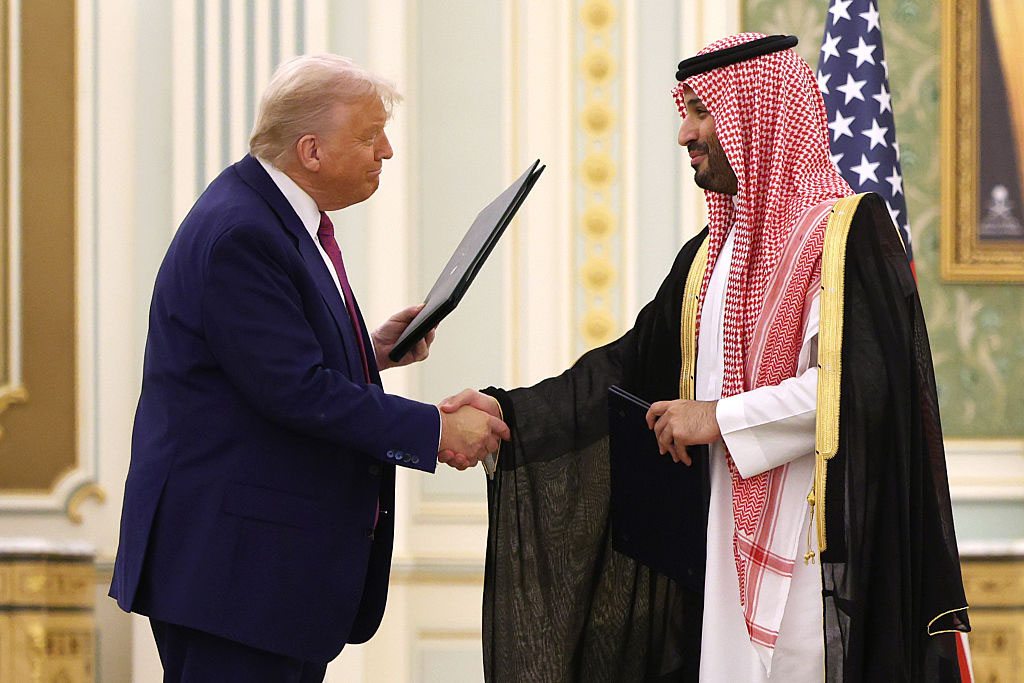
At a time when many American leaders are struggling to articulate a coherent vision for the Middle East, President Donald Trump is charging ahead with one. To critics, including many in the Jewish community, his recent moves—from lifting sanctions on Syria to making overtures to Qatar and proposing a redevelopment of Gaza—appear impulsive and potentially dangerous. But these arguments are short-sighted, failing to consider the complicated realities and power games of the Middle East, which the president intuitively grasps much better than his inept predecessors.

In reality, Trump’s moves in the Middle East are strategic maneuvers on a much broader chessboard, following a strategy that prioritizes American leverage, redefines regional alliances, and unapologetically advances peace through strength.

Take the president’s approach to Syria, for example. In a move that shocked many onlookers, Trump became the first American president in decades to meet with a Syrian head of state, Ahmed al-Sharaa. The U.S. subsequently announced the end of longstanding economic sanctions on Syria—prompting predictable outrage from the usual corners. But what those critics won’t tell you is that the sanctions had long ceased to be effective. Instead of crippling the regime, they weakened and punished average people suffering under Assad’s brutality—and simply pushed the leader into the open arms of Iran, deepening the deadly circle of terror around Israel.

By scaling the sanctions back in exchange for new conditions, including a demand that Syria expel Iran-aligned foreign militants and assist in dismantling the remnants of ISIS, Trump is simply acknowledging the reality that familiar moves from the usual geopolitical playbook have not yielded meaningful results. Instead, through reengaging with Syria, Trump is using a different form of negotiation to isolate Iranian influence in the Levant—and hopefully fracture the well-funded Shi’a crescent wreaking havoc in the region.

Speaking of state sponsors of terror, some of the fiercest criticisms of Trump’s regional strategy are directed at his recent economic overtures toward Qatar. During his recent visit to Doha, Trump finalized a $200 billion Boeing aircraft deal, which is one of the largest defense and commercial aviation orders in recent history. He has also floated the idea of joint infrastructure projects with Qatar across the Middle East, especially in areas like Gaza that have been destroyed by conflict—and are in desperate need of bold new visions for redevelopment after decades and decades of cyclical failure.

It’s easy to flinch at these headlines—after all, Qatar’s ties to Hamas and other terror groups are well-documented. But it’s important to understand these negotiations as part of the same bold new diplomatic strategy—walking into the fire, shaking hands, and making deals. Economic alignment with Qatar, whether it be for buying American jets or rebuilding Gaza, is not a blanket evil. In fact, under the right conditions, it can create a partnership that pressures the wealthy Arab nation to use its money towards aims that further American values and interests.

If Qatar is economically entangled with the United States—and when they’re investing in rebuilding the Middle East, not burning it—suddenly their behavior changes. Suddenly, they have more to lose. That’s not appeasement. That’s accountability. It just requires the appropriate strength and resoluteness from Trump to ensure that the money is not used to further hostile foreign interests—but the president has shown every sign of being able to deal with these nations with a backbone and an iron fist.

That is why the angry mobs baying that the president’s moves will endanger Israel should hold their fire. All these moves are designed to reinstate the “maximum pressure” campaign on Iran—Israel’s greatest and truest enemy in that region—by isolating them diplomatically and economically and using American power to drive wedges between them and their formerly reliable allies.

Lifting sanctions in exchange for Syria cutting ties with Iran, brokering deals with Qatar that demands them to become stakeholders in regional peace, and maintaining an uncompromising posture that Iran compromises with nuclear deals? These are all steps towards cutting back the Islamic Republic’s influence in the region and resetting the chessboard, and even if it might feel scary to watch a new strategy unfold, these steps are absolutely good for Israel’s future regional security.

While critics tweet angrily and suggest the same failed strategies, Trump is building a new map of the Middle East. He’s using a framework based on leverage, trade, and influence—not lectures from Washington and billion-dollar aid packages to terrorists. If you want to shift a region that’s been stuck in cycles of bloodshed for 75 years, you don’t do it by boycotting the bad actors. You do it by forcing them to choose: investment or isolation. Growth or violence. Partnership or pariah status. His pivot may be uncomfortable, but it’s rooted in outcomes, not optics.

And maybe that’s just what this region needs.


Dr. Sheila Nazarian is a MMM Board Certified Plastic Surgeon and Assistant Professor, USC.

Trump’s Middle East Strategy Is Bold—And It’s Working Read More »

What Dave Portnoy’s Valid Complaint Can Teach Us

While I suspect the average American Jewish community member is unfamiliar with Barstool Sports founder and social media influencer Dave Portnoy, that should change. Portnoy may be a controversial figure—he is raw, direct, and has been the center of controversy for years—but his recent social media posts amount to a masterclass in how to deal with antisemitism. He is showing the Jewish community how to respond to antisemitism in the post-Oct. 7 world.

On May 3, 2025 his bar in Philadelphia, Barstool Sansom Street, was the site of a deranged, antisemitic incident where patrons assisted by the staff of the bar displayed a large, white sign reading “F—k the Jews” while ordering bottle service. Video footage of the event showed the patrons in the bar laughing, dancing and singing along to music, all while spewing hate. It appears that one of the patrons in the bar—a Temple University student named Mo Kahn—made the personal decision to post on social media and share the sign. Kahn did not denounce the sign; instead, he amplified the message, and things blew up from there.

Portnoy was furious. Instead of waiting for a public relations firm to engage or for a leader of a Jewish traditional organization like the Anti-Defamation League to speak up and denounce the behavior, he stepped in and took action. Portnoy and his Philadelphia establishment investigated the incident and released a statement within hours indicating that employees who engaged in this hateful behavior had been fired and had acted “outside the scope of their duties.”

The bar and Portnoy also shared that they were “saddened, embarrassed, and frustrated by the deplorable actions of a customer and misguided staff … which resulted in anti-Semitic hate speech.” They also declared that, “We take all forms of discrimination incredibly seriously, and are particularly upset by actions taken against our Jewish patrons, colleagues, partners, and friends.” The bar continued, “We deeply apologize for the role we played in allowing hate speech to transpire,” and intend to improve protocols going forward.

After the investigation, Portnoy contacted Kahn directly to discuss the events, intending to use this incident of hate as a teachable moment; Portnoy reported that Kahn expressed apologies and that the two student offenders “had agreed to take an educational trip to better understand the gravity of their actions.” Portnoy explained that, “the more I thought about it, it’s like, these are young …. morons who did this. They were drunk. It’s like, do you really want to ruin somebody’s life?” He continued by saying that he wanted to educate the two men: “Let’s try to turn a hideous incident into a learning experience—it’s cliche and very unlike me—but I talked to both the culprits who I know are super involved in it, talked to the families, I’m sending these kids to Auschwitz. They’ve agreed to go.”

Unsurprisingly, Portnoy subsequently revealed that Khan and his friend “admitted to the incident during a phone call but later lawyered up after talking to his family.” Portnoy then revoked his offer to educate the offenders as they predictably denied involvement despite posting the video and backtracked on the apology, claiming that they were merely “citizen journalists” documenting the event. Kahn has a public history of hatred toward Jews and cried victimhood, happily appearing on an extremist podcast asking for support where the host unflinchingly used the term “Jewish supremacy” and referred to Portnoy as a “disgusting Jew.” Kahn never pushed back on those words or sentiments.

While it is hard to predict where this mess will end up, what is clear is that Portnoy acted quickly with moral clarity and fortitude and spoke the truth. He held people accountable for their actions. “Whatever ramifications come his way, he 100% earned and deserved,” Portnoy wrote on Instagram.

Portnoy also pushed back on media attempts to reframe the incident where a reporter from ABC News tried to blame the antisemitism on him as part of an ambush interview. “They say that Barstool Sports creates a culture of harassment, and that basically I’m responsible for this happening at my own bar. I’ve never heard of the quote.” ABC never aired the interview, but Portnoy recorded the entire event, and it is available on social media channels. Portnoy’s skills in staying on message and managing a corrupt media machine are commendable and something the Jewish community would benefit from learning.

Despite the raw response and vulgar language used by Portnoy in managing this awful situation, he demonstrated something that the Jewish community must learn and has sometimes failed to do since Oct. 7: holding people accountable and sharing the truth. When antisemitism surfaces, as it is daily, it must be called out and immediately addressed with strength and conviction. This is not an easy task, but those spewing the hate are not anticipating a strong response. They don’t expect to be held accountable; they expect fear and little resistance.

The Jewish community can no longer be weak, timid, fearful of pushback, or wait for coalitions to build and then express outrage; we must demand immediate and real accountability and show the world when someone expresses hate toward us. As Oct. 7 has taught us and shown the world, those people who the Jewish community supported, advocated for, and marched with for decades are not coming to our assistance, and the rhetoric of equality and universal peoplehood is not an ideal to which all Americans subscribe. The Jewish community can no longer be so passive. Portnoy showed agency and morality in standing up for both the Jewish community and American ideals. We need more of that.

The Jewish community can no longer be weak, timid, fearful of pushback, or wait for coalitions to build and then express outrage…

After a deeply troubling act of hate, Portnoy condemned the behavior and proudly held his ground against the media; he acted quickly and unflinchingly and modeled how hate should be handled because it was simply the right thing to do. Sadly, Portnoy’s  immediate, strong and principled pushback is far too rare.

American Jews should look toward Portnoy’s actions with appreciation and admiration. Imagine if antisemitism was called out regularly, swiftly, and powerfully in schools and the public sphere. The hate wouldn’t outright disappear, but the message would be sent that antisemitism cannot go unchecked; hate cannot be left to grow while the recipients hide, hoping that someone will protect them. Portnoy took a stand and direct action that should inspire leaders in the Jewish world. Those in the Jewish community who have the ability to hold the line and call out antisemitism should do this as powerfully and frequently as possible. The Jewish community needs leaders who can have a real impact in this current moment of existential threat. Portnoy is an inspiration to us all.


Samuel J. Abrams is a professor of politics at Sarah Lawrence College and a senior fellow at the American Enterprise Institute.

What Dave Portnoy’s Valid Complaint Can Teach Us Read More »