fbpx

September 2, 2024

How Bibi Can Still Declare Victory

Since the massacre of Oct. 7 and the abduction of more than 250 hostages by Hamas terrorists, it has been excruciating to follow the news. There are moments, however, when even the most nerve-wracking of news stories reaches a kind of breaking point– when people rise up and say, “Enough is enough, something has to give.”

Israel reached that breaking point on Sunday.

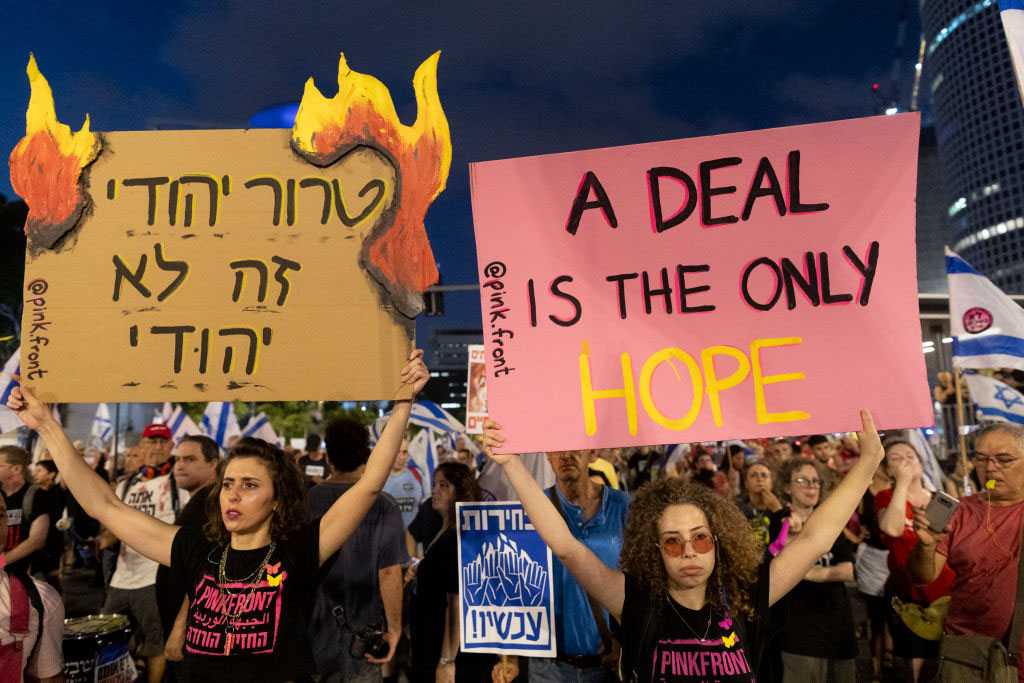
After the bodies of six hostages were found in a Gaza tunnel, murdered by Hamas, the country erupted. Mass protests and nationwide strikes threatened to shut the economy down. Protesters blocked roads and marched on government buildings to express their fury at the continued lack of progress in the release of the remaining hostages.

As the news of the protests was breaking, I was at the Nova exhibit in Culver City to attend a vigil for the hostages who perished. I confess that after watching heart-wrenching testimonies of parents whose children are still being held captive, I got weak: “We must do everything in our power to get them out,” I thought. “Everything.”

Of course it’s not that simple. Israel is dealing with terrorists who don’t much care for human life, their own people included.

I have a sneaking suspicion, however, that one Hamas leader would like to stay alive: Yahya Sinwar, the Oct. 7 mastermind with the power to make a deal. These merchants of evil don’t operate from the “goodness of their heart.” They react only to force. The more they fear for their lives, the more likely they are to make a deal.

And God knows they’ve seen force: Since it entered Gaza more than 10 months ago, Israel has punished Hamas with a ferocity rarely seen even for a country that has been drenched in warfare since its very birth.

Should Bibi’s government now cash in on that military accomplishment and work to free the hostages? Or should it continue to play hardball and put a war of attrition ahead of the hostages?

With much of the country up in arms, it will be difficult for Netanyahu to buy more time, as he often likes to do. As the U.S. bears down on all the parties to make a deal, a moment of truth is approaching. For now, Bibi seems to be digging in and overriding his own defense establishment, which doesn’t augur well for the hostages.

Perhaps the biggest tragedy in a story full of tragedies is that it didn’t have to go this far.

The smartest take I’ve read on this comes from Graham Allison and Amos Yadlin, who argue in Foreign Affairs that “a cease-fire now would be a victory for Israel.” They even include a victory speech for Netanyahu, which is worth quoting in full:

“Israel has proven its strength and righteousness. I am leading the nation on the path to victory. Hamas in Gaza is defeated and has paid a very heavy price for the crimes of October 7. The heads of its terror armies and Hezbollah’s have been eliminated, once again proving that there is no hiding place beyond our watchful eye and no place too far for our long arm. After ten months, the goals of the war have been realized. Hamas has been dismantled as an organized military arm and functioning government and cannot repeat October 7. Therefore, we are signing a hostage deal that will bring our captives home and our fallen to a proper burial in Israel.

“This is the end of the war, but not the end of the campaign. I have reached an agreement with the United States that any rearmament of Hamas will be a recognized justification for Israel to renew the fighting in Gaza. I hope that the cessation of the war in Gaza will stop the fighting in the north, but we will not shy away from war if it is forced upon us by a significant response or ongoing attacks from Hezbollah and Iran. Now we are giving diplomacy a chance—to implement UN Security Council Resolution 1701, pushing Hezbollah north of the Litani River. Here too, I agreed with the United States that if the resolution is not implemented, we will receive full support for deploying the IDF to push the Shiite terrorist organization away from the northern border and to weaken its capabilities threatening Israel.

“At the same time, I am advancing a historic agreement with Saudi Arabia that will come into effect immediately after the U.S. elections with bipartisan support from Democrats and Republicans. Together, we will focus on the main goal I have been speaking about for 20 years: stopping Iran’s nuclear armament and weakening the terrorist arms of Tehran and its proxies in the Middle East.’’

Does Bibi have that speech in him? Will he declare victory now or will he continue to pursue his elusive “total” victory?

I have a feeling I know exactly which victory the families of the remaining hostages are praying for.

How Bibi Can Still Declare Victory Read More »

From Resilience to Triumph: What I’ve Learned About Parenting Since October 7

If you’re Jewish and you care about Israel, everything has been a little more difficult since October 7. Even parenting has become more challenging. Many of us are on edge because we constantly have the hostages and the war in Gaza in the back of our minds, and that can affect how we parent and how we deal with challenges our kids may face in school or with friends.

Not that it’s ever easy, but something about the last ten months has made it even harder. This fall, my son is starting his second year of middle school—the most notoriously difficult time of many people’s lives. I don’t know one person who has good memories of that time period. I certainly don’t, except for the year I had a pair of red suede boots with a matching red suede jacket. I still remember the thrill of walking across the cafeteria in that ensemble, almost but not entirely oblivious to the giggles coming from one table of my peers.

Being on the other side of the middle school experience, as a parent, has been surreal. These kids are in the trenches, and one of the hardest decisions we make as parents is when to get into the trenches with them and when to look them in the eye and say, “You’ve got this. You can handle this on your own.”

Last year school was a real emotional warzone. A few children taunted my son with anti-Israel slogans or told him that October 7 is a hoax; others made blatantly anti-Jewish statements. One child, who I’ll call the rumor mill, regularly makes up stories about other kids that spread like wild fire and are never fully extinguished. He’s like a less murderous version of Little Finger in “Game of Thrones,” planting stories in different groups and trying to appear helpful but leaving flames in his wake. It was only a matter of time before my son got to star in one of these fictional stories. And then there are the most painful challenges: betrayals by friends. Most of us remember the sting of being betrayed by a friend at this age. It’s just a really disappointing time.

And then there are the difficult conversations (or non-conversations) with other parents—sometimes those are worse than whatever incident with your child prompted the conversation. Add to all this the group WhatsApp or other messaging threads, video game and TikTok obsessions, and social media flirtations and it’s the perfect storm. It goes without saying that for many of us, the summer break was a necessary escape from many of these challenges. But as summer is winding down and many schools are already back in session, it’s important to revisit the struggles of the last school year and think about how we can move from what I call “the year of resilience” to the “year of triumph.”

Learn How to Own Up to Your Mistakes

Kids are going to make mistakes over and over again, even the “good” kids, and especially in middle school, which means it’s early enough that we have a lot of opportunities to teach and guide them. One big mistake I’ve seen kids make repeatedly is sending messages with inappropriate text, images, or sounds. I’ve heard of more than one instance where a child sends a sexually explicit message, audio recording, or image to another child. Some parents blame the influence of other kids or dismiss the behavior because the kids are still young and don’t intend to act on anything; other parents argue that the kids don’t really know what it means so it’s not a big deal. “It’s not like they’re 16 years old,” I heard one parent say.

But, as one of my friends recently pointed out, this is exactly why it’s so important that parents treat these instances very seriously. Kids need to understand that while it may not seem like a big deal at this age, sending explicit messages as an older teenager (or as an 18-year-old to a 17-year-old) can bring life-changing repercussions. Now is the time to help children become accountable for the messages and content they put into the world—not just because there are repercussions, but also because, especially as Jews, we value the idea of responsibility. At a moment when Jews everywhere are dealing with elevated antisemitism, we want to teach our children to put things that are meaningful into the world.

Most parents are invested in their child’s success and happiness. I’ve observed that it can be hard for a parent to admit when their child isn’t being a good friend or is making bad choices. But these acknowledgments are extremely important at the middle school age because once kids hit high school they are more inclined to model their behavior on the actions of their friends than their parents. Accepting that your child has made a mistake and showing them what it looks like to take responsibility is modeling the kind of behavior that you want them to take into personal and professional relationships in the future.

When your child makes a mistake, own it. I can’t think of anything more important when it comes to setting up your child up for success. It also goes for dealing with difficult parents. Always ask yourself: Am I contributing to the problem or is there something I could have done differently to experience a more positive outcome? Teach your kids to do the same. And at the end of the day, don’t hold grudges. Teach your children to work toward repair rather than revenge when it comes to friendships. Everyone is deserving of kindness.

It’s Okay to Create a Few Boundaries

Working toward repair is always ideal, but not every friendship needs to last. Sometimes a friendship can’t be fully repaired, but making a gesture toward repair will go a long way. And if your gesture is spurned, you know you’ve done your best. Every once in a while you will encounter someone with toxic behavior. Teach your children that it is healthy to create boundaries between themselves and these people. But also teach them that even once a boundary is created, kids may change for the better and come back around. It’s okay for kids to give former friends who may have hurt them another chance. After all, they’re still growing and learning and changing. This, too, is part of understanding how to establish healthy boundaries. Cutting friends off when they make a mistake, especially if there is an apology, is not always the best course of action.

Don’t Be Afraid to Meddle

When my son started a new school last year, one student was antagonistic for no reason. We talked about it at home, and my husband and I did our best to arm our son with strategies to get through it. The trick was helping him to find the balance between not allowing others to treat him disrespectfully and not turning into a jerk himself. There were many times I wanted to call the school or reach out to the parents. But I didn’t. I knew in my gut that this was something he was going to have to work through himself. “There are jerks everywhere you go in life,” I said, “and this is the year you figure out how to deal with them.”

It took a while, but by the end of the year the two had become friendly. One day the other child was blown away by my son’s 21-second 3×3 cube solve and that opened the door to a friendship. Had I gotten involved or requested that my son be moved from classes with this child, I don’t know that it would’ve ended as well. Learning that people can change for the better is important. And knowing that someone who seemed unkind at first can end up turning things around and becoming a friend is even more important.

We should teach kids that it’s imperative to stand up for themselves, but it’s equally critical to help them understand that sometimes it’s okay to give a little grace. We don’t know what every child is going through. It goes for parents as well. Sometimes people are going through difficult times that make it hard for them to parent in the way they should, much to our frustration. But understanding and identifying this will help us manage our own expectations and feel less frustrated with parents who aren’t dealing appropriately with their children’s behavior.

But not every negative interaction between children can be solved without parent intervention. Sometimes you have to meddle a bit. In one instance last year we were forced to intervene by reaching out to a parent because our son received a pornographic audio message from another child. This was after months of unkind behavior, and when we realized our son was in constant distress because of this, we reached out to the other parents. It was important that our son see how seriously we take inappropriate behavior online. It was important that he understand that it won’t be tolerated by us and that he shouldn’t tolerate it either. Another parent suggested that we were “meddling,” and that we should stay out of it, but when it comes to this kind of behavior at this age, you have to get involved.

Hard Parenting

Don’t be afraid to parent hard, and don’t be afraid to take screens away from kids. In his new book “The Anxious Generation” Jonathan Haidt shows us how drastic the effects of smartphone and social media usage on children’s mental health have been. Add to this the fact that much of the school bullying now takes place on messaging threads and the threat is real. And kids who play Fortnite—which is a lot of middle school age kids, especially boys—have demonstrated extremely troubling behavior as a result of the game. We limited screen time for our son quite a bit this year and the difference was profound. He even began to notice the negative effects on some of his friends who spend a lot of time online, on smartphones, or playing Fortnite. As he observed this, he articulated on his own that he doesn’t want to be like that and has consequently learned how to limit some of these activities on his own. Unfortunately, he also learned that especially since October 7 the amount of antisemitism on threads, social media, and gaming spaces has grown exponentially. So limiting screen time may also mean limiting exposure to antisemitism.

Most of the lessons I’ve learned have nothing to do with being Jewish. They apply to everyone. But everything has been heightened the past ten months because we are in a constant state of urgency. It feels like fight-or-flight on steroids. So when my son tells me that someone at school said something horrible to him I feel a rage creep up inside me that isn’t connected entirely to what he’s telling me. It’s connected to the pain and fear and anger that I have felt every day since October 7. I’m not Israeli. I don’t live in Israel. But my heart is there every second of every day. I can’t help but think of a group of family members of hostages who recently went to the border of Gaza to scream their loved ones’ names over a loudspeaker. I listen to mothers Shira Elbag, whose daughter Liri is still held hostage in Gaza, and Rachel Goldberg-Polin, whose son Hersh, a hostage who was murdered by Hamas, scream their children’s names. “It’s Mama, Hersh,” says Goldberg-Polin. We now know that Hersh was likely alive at this time, only to be brutally executed shortly after: The pain of longing and not knowing if your child is alive or hungry or being tortured becomes the pain of loss, the knowledge that you will now carry the heavy stone of his absence forever. I listen to the pain in these voices; I see the agony on their faces. Whatever challenges my son faces in middle school pale in comparison to what these mothers are going through, and what their children have gone through.

We share in the pain of the parents whose days are measured in moments of wondering if their children are alive and if they are suffering, of wondering when they will see them again. We also share in the suffering of parents whose children have been tortured and murdered. We are angry on their behalf, but also because we know that the same people who brutalized and stole these children would do the same to ours if they had the chance. National borders and boundaries mean little when the hatred of Jews is what drives their murderous impulses. I am angry. I am in mourning. And yet I feel guilty because, just this morning, I had the gift of sending my smiling Jewish son off to his first day of seventh grade.

We should be angry. We should grieve and mourn. But we must also remember that we have an imperative to live. Unlike the terrorists that try to torture, torment, and kill us, we value life. As a people, Jews value responsibility, and we have a responsibility to put good into the world even as we acknowledge and fight back against the darkness. This, too, is a lesson I have learned in the past ten months. And it’s a lesson we must also teach our children. We can’t shield our older children from the horrors of the past year. All we can do is help them understand that this violence is both useless and senseless, but that it is our burden to bear. This, too, is what it means to be Jewish. And perhaps by guiding them through the darkness, they will be better equipped to see the light.

This fall, we—both parents and children—carry an immense burden with us into the school year. I don’t want to lead with that anger when it comes to parenting my son. I want to lead with compassion and grace rather than being defensive and angry, always ready for a fight. When we do this, we bring love and light into a world that is very dark right now. Our children feel this darkness and this stress. But if we can try to counter it with strength and love, we can be a light unto the nations. This school year may still require a bit of resilience building, but if we can temper it in this way, we can make it a year of triumph.


Monica Osborne is a former professor of literature, critical theory, and Jewish studies. She is Editor at Large at The Jewish Journal and is author of “The Midrashic Impulse.” X @DrMonicaOsborne

From Resilience to Triumph: What I’ve Learned About Parenting Since October 7 Read More »

Camelot’s Palestinian Problem

The descendants of Camelot surely have not lived up to their dynastic potential as America’s first political family. The halcyon days of John Kennedy’s glamorous presidency, and Robert Kennedy’s inspiring campaign for the White House five years after his older brother’s assassination, and a younger brother, Ted’s decades-long public service as a United States Senator, is the closest America has come—aside from perhaps John and John Quincy Adams, and George H.W. and George W. Bush—to political royalty.

Camelot came to an end when the many children and grandchildren of these men never could quite revive the Kennedy mystique as office-holders themselves. Few entered public life, and those that did plateaued in less lofty positions, none of which lasted very long. Far too many faced scandal, drug use, criminal charges, and premature death.

Ironically, the most interesting and accomplished of the clan might be the children of Arnold Schwarzenegger, the Austrian bodybuilding, movie-star former governor of California, who married Maria Shriver, a niece of the iconic Kennedy men and a former news anchor herself. Sometimes all you need is the drive and ambition of a European immigrant who entered America legally—and not southern border-crossing terrorists and Latin American gang members.

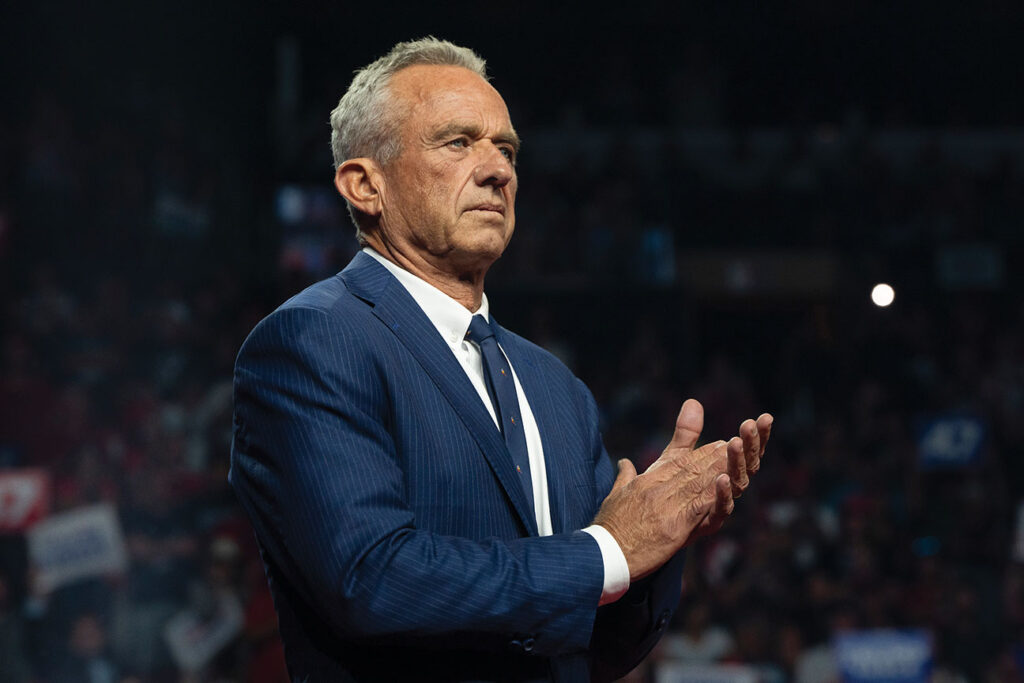
But now there is the matter of Robert F. Kennedy Jr., who just suspended his campaign for the presidency as an independent party candidate. Almost immediately thereafter, he endorsed Donald Trump, a Republican. The Kennedys are so widely identified as Democrats, some of RFK Jr.’s own siblings, not to mention some of his nephews and nieces, have publicly denounced him.

Camelot has, apparently, devolved into a large underachieving family that nowadays just bickers a lot.

How important is party loyalty to these Hyannis Port people anyway? You would think that the Kennedy men—scions who happen to be menaces to women— would recognize some commonalities with the former Republican president.

After all, there is an unconscious bond among men who graduated from tony prep-schools and the elite social clubs of the Ivy League. Raised in an atmosphere where the ordinary rules of gentlemanly behavior are largely ignored, these patricians often exist in an alternate reality marked by silver-spoon privileges, overlooked lawlessness, and winking sexual deviancy.

Is there any doubt that Trump would have put the moves on Marilyn Monroe, too?

Who knows whether RFK Jr.’s endorsement was more than just some cynical ploy to jumpstart a Cabinet Secretary appointment in the Trump administration. The two men probably have a lot to talk about. After all, their last names adorn New York City landmarks—like Trump Tower and the Robert F. Kennedy Bridge. And they share the same secret handshakes and flirtations with the degenerate dark arts.

Many have speculated that RFK Jr.’s own dissolute life of school expulsions, drug use, marital difficulties, and philandering, along with his association with conspiracy theories, are the reasons why he never considered entering public life until now. Perhaps he sees Trump as a mentor who ran in the same social circles and paved the way for men just like him to receive absolution from a more forgiving electorate.

Or maybe RFK Jr.’s embrace of Trump runs much deeper, and is morally motivated—involving the Jewish State of Israel. After all, his namesake, New York’s former United States senator and presidential candidate, was assassinated in a Los Angeles hotel moments after being declared the winner of California’s Democratic primary in June 1968. RFK Jr. was then a mere 14-year-old. The assassin, Sirhan Sirhan, who remains in prison to this day, is a Palestinian who, one year after the Six-Day War, wanted to punish Kennedy for his support of Israel.

RFK Jr. was rendered fatherless by a Palestinian who hated Jews. The United States was deprived of a transformational figure in American politics because as a Democratic United States senator, Bobby Kennedy supported sending armaments to Israel.

Today, the Democratic Party, on several occasions, has held up those arms shipments, and threatened Israel that it must fight terrorism with “restraint” and “de-escalation.” Kamala Harris, like Joe Biden, is politically beholden, and emotionally sympathetic, to the progressive wing of the party—a wing that refuses to blame and punish Hamas for all that has happened in Gaza and southern Israel.

Bobby Kennedy Sr. was himself a progressive, but he absolutely would have rejected the critical race, anti-white, anti-free speech, pro-criminal, antisemitic “progressive” leaders of today.

Actually, today’s Democratic Party would be unrecognizable to JFK, RFK and MLK (Martin Luther King Jr.). They would be stunned that so-called progressivism has any affinity at all for terrorists who kill Jews in Israel, and campus radicals who make life miserable for Jews in America. Did the massacre on October 7, and the subsequent signage, chants, and bullying on campus, in any way resemble MLK’s passive nonviolent resistance?

Today’s Democratic Party would be unrecognizable to JFK, RFK and MLK (Martin Luther King Jr.) They would be stunned that so-called progressivism has any affinity at all for terrorists who kill Jews in Israel, and campus radicals who make life miserable for Jews in America.

These legendary leaders would be in utter disbelief that foreign policy for the Democratic Party is being dictated by the members of the Squad and the antisemitic voters of Dearborn, Michigan. Minnesota’s favorite son, Hubert Humphrey, would be equally appalled by the tolerance of crime in his state, and that a lightweight like Tim Walz actually believes he is qualified to assume the position that Humphrey himself once held, as vice president.

RFK Jr. obviously knows something that his dimwitted siblings can’t seem to comprehend: Kamala Harris is no Kennedy. This is a very different and diminished Democratic Party, and its descent is crystallized by the absurdity that Harris could possibly be its standard-bearer. Their uncle was a virtual god at the lectern at press conferences. Harris is a complete no-show. She can’t even survive a scripted twenty-minute interview without her equally unfit running mate by her side.

Party loyalty? How about fatherly loyalty? Respect your father and honor his memory.

Maybe, just maybe, RFK Jr. remembers something that most Americans have forgotten or never knew: his father was assassinated by a Palestinian solely for supporting Israel.

“I think if my dad were alive today, the real Robert Kennedy would have detested almost everything Donald Trump represents,” Kerry Kennedy, RFK Jr.’s younger sister, said. Maybe, but he would still be supporting Israel in ways that the Democratic Party no longer is. And it would still be obvious to him that Israel’s allyship is a moral and political imperative, while the Palestinians of Gaza, and the Islamists that support them, offer nothing but misery.

RFK Jr.’s younger brother, Max, speaking for the family, has made it known that he hated that Bobby has endorsed a Republican. “It is worse than disappointment. We are in mourning.”

So very typical of our cancellation culture. Need I remind them that their brother is still alive? Their father’s life, however, was cut tragically short by a terrorist.


Thane Rosenbaum is a novelist, essayist, law professor and Distinguished University Professor at Touro University, where he directs the Forum on Life, Culture & Society. He is the legal analyst for CBS News Radio. His most recent book is titled “Saving Free Speech … From Itself,” and his forthcoming book is titled, “Beyond Proportionality: Is Israel Fighting a Just War in Gaza?”

Camelot’s Palestinian Problem Read More »