fbpx

February 6, 2024

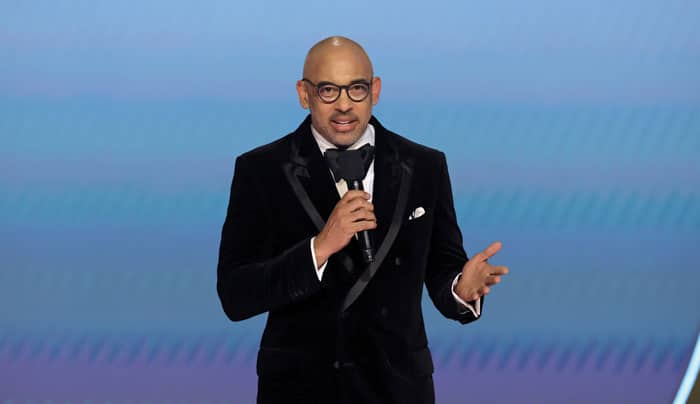
Montana Tucker, Annie Lennox, Recording Academy CEO Make Israel Statements at the 2024 Grammys

The Jewish community had a lot to process following the 66th Annual Grammys on Sunday night. There were moments to cheer, and moments to cringe. 

In his remarks, Recording Academy CEO Harvey Mason, Jr. gave a three-minute speech about the uniting capabilities of music. Halfway through, he called out the horrific examples of terror attacks perpetrated deliberately on music fans around the world—including those of the October 7th attacks in Israel. 

“Every one of us, no matter where we’re from, is united by the shared experience of music,” Mason, Jr. said. “It brings us together like nothing else can, and that’s why music must always be our safe space. When that’s violated, it strikes at the very core of who we are. We felt that at the Bataclan Concert Hall in Paris. We felt that at the Manchester Arena in England. We felt that at the Route 91 Harvest Music Festival in Las Vegas. And on October 7th, we felt that again when we heard the tragic news from the Supernova Music Festival for love, that over 360 music fans lost their lives, and another 40 were kidnapped. That day, and all the tragic days that have followed, have been awful for the world to bear as we mourn the loss of all innocent lives.” 

Video clips of Mason’s words have been shared across social media by some of the most active defenders of Israel. Still, some people were irked that Mason called out the Paris, England, and Las Vegas terror attacks geographically, but neglected to say the word “Israel” when calling out the Supernova Music Festival.

Still, Mason continued about music and unity, as a string quartet played a somber tune. 

“We live in a world divided by so much, and maybe music can’t solve everything. But let us all agree: Music must remain the common ground upon which we all stand together in peace and harmony. Because music has always been one of humanity’s greatest connectors. Think about it. Every song that we’re honoring or hearing tonight moved someone, no matter where they were from or what they believed, that connected them to others who are moved in the same way.”  

Take the string quartet as individuals, Mason continued. “They sound really good. But together, they achieve something beautiful they could never do apart. These musicians of Palestinian, Israeli, and Arab descent are here playing together.” The crowd at the Crypto.com Arena erupted in applause. As of press time, the identities of the string quartet members were not readily available. 

“Now is the time for us, for humanity to play together, to come together with empathy and with Love,” Mason concluded. 

In 2021, Mason was honored as an Ambassador of Peace by the entertainment industry-focused pro-Israel nonprofit, Creative Community for Peace. 

Montana Tucker
Frazer Harrison/Getty Images

As the program continued, photos circulated of TikTok star Montana Tucker on the red carpet wearing a giant yellow ribbon affixed to her dress with the words “Bring Them Home” across the top. Yellow ribbons are to create awareness and support for the 132 hostages held captive in Gaza by terror group Hamas for the past 120 days. Tucker’s dress was made by Israeli fashion designer Ortal Mizrahi’s MadeByILA.

Tucker has been one of the most (if not the most) active pro-Israel influencers for the under-30 crowd. 

Tucker has been one of the most (if not the most) active pro-Israel influencers for the under-30 crowd. In 2022, she put her singing and dancing content on pause for several weeks as she posted a ten-part TikTok documentary about retracing her grandmother’s Auschwitz concentration camp survival story.

Also on the red carpet were pro-Palestinian fashion statements by several Grammy nominees. The three members of the band boygenius — Julien Baker, Phoebe Bridgers and Lucy Dacus — wore “Artists4Ceasefire” pins on their suits. Poet Aja Monet came to the event with a watermelon-adorned clutch purse. The watermelon is a symbol of Palestine as its red, green and black are stand-ins for brandishing a Palestinian flag. Bassist and singer Esperanza Spalding wore a traditional Palestinian keffiyeh to the ceremony. 

Annie Lennox
Kevin Winter/Getty Images for The Recording Academy

Later in the Grammys broadcast, singer Annie Lennox drew ire for shouting “artists for ceasefire” after singing a tearful rendition of “Nothing Compares 2 U” in honor of the late singer/songwriter, Sinéad O’Connor. Still, Hamas rejected a hostage and ceasefire deal with Israel yet again over the weekend.

At the end of the evening, there were several Jewish Grammy winners:

Jack Antonoff
Frazer Harrison/Getty Images

Producer of the Year, Non-Classical
Jack Antonoff
“Being Funny in a Foreign Language” by The 1975
“Did You Know That There’s a Tunnel Under Ocean Blvd” by Lana del Rey
“Midnights” by Taylor Swift

Best Musical Theater Album
Marc Shaiman – “Some Like It Hot” co-producer, composer & lyricist
Charlie Rosen – “Some Like It Hot” co-producer

Best Compilation Soundtrack for Visual Media
Mark Ronson – “Barbie the Album” co-producer

Best Engineered Album, Classical
David Frost – “Contemporary American Composers,” co-engineer

Best Classical Instrumental Solo
Teddy Abrams – “The American Project” – conductor of the Louisville Orchestra

Dr. Dre Global Impact Award
Lenny Kravitz, co-recipient
Montana Tucker, Annie Lennox, Recording Academy CEO Make Israel Statements at the 2024 Grammys Read More »

Bibi’s Legacy

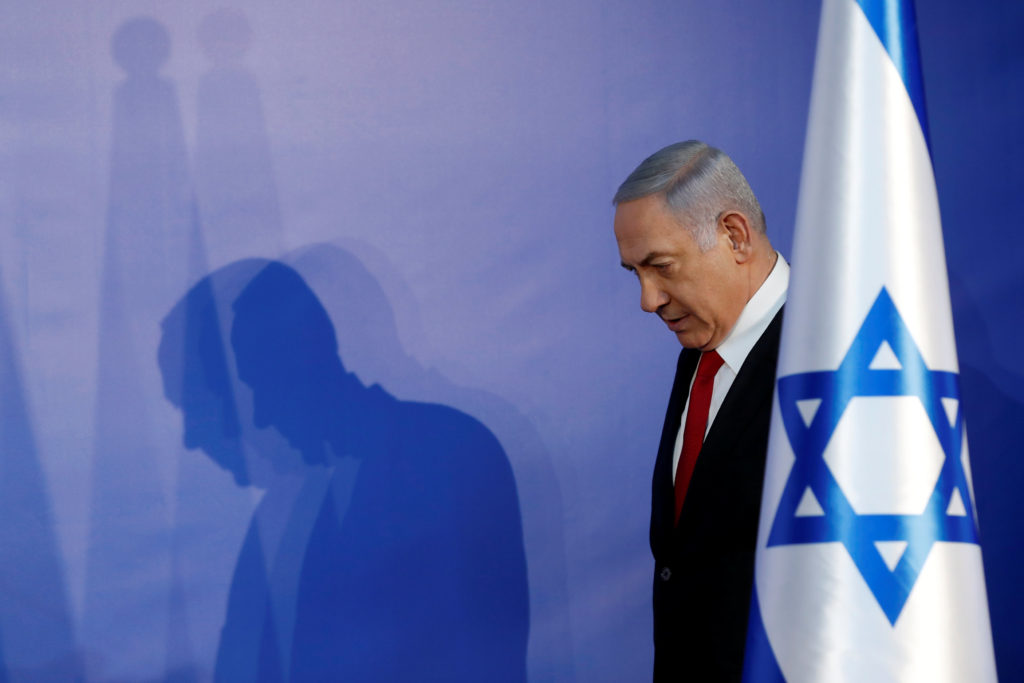
Even before Oct. 7, Benjamin Netanyahu’s legacy as Israel’s longest-serving leader was highly complicated. While his most recent term in the nation’s highest office has been marred by no shortage of divisiveness and acrimony, Netanyahu himself would probably have been satisfied with a tradeoff allowing him to be remembered as a leader whose combative approach may have provoked domestic controversy and political polarization but ultimately provided for the Jewish state’s security and economic well-being.

But that possibility evaporated in the early morning hours of Simchat Torah. While Netanyahu’s most urgent goals have become achieving a conclusive victory in Gaza, eliminating (or at least compromising) Hamas and freeing the hostages, he knows that even the successful accomplishment of these objectives is not going to give him back the legacy he had been building for the previous three decades. He was in charge on Oct. 7, and that is never going away.

The question for Netanyahu is whether he can write a final chapter for his remarkable career that would allow him to be defined as something other than the prime minister who was on watch when Hamas attacked. 

The question for Netanyahu is whether he can write a final chapter for his remarkable career that would allow him to be defined as something other than the prime minister who was on watch when Hamas attacked. Winning the Gaza war and eliminating the Hamas threat would be an impressive coda to his extensive record of public service, but it is becoming clear that victory will take an exceedingly long time to complete and that neither his constituents nor international allies have nearly enough patience to allow him to continue the fight to such a definitive conclusion. So he’s going to need to come up with another final act.

Joe Biden thinks he has the perfect solution, one that could stabilize the Middle East and neutralize the Iranian threat, in addition to solidifying Netanyahu’s legacy and boosting Biden’s own reelection prospects. Biden still sees the potential for a grand accord between Israel and Saudi Arabia and believes that such an agreement would fundamentally remake the Middle East. Netanyahu was talking openly of a similar goal before Oct. 7, but the Saudi price for a deal has risen dramatically since then. And the establishment of a Palestinian state might be more than Netanyahu is willing to pay.

But the outlines of Biden’s efforts to lay the groundwork for such an ambitious goal are beginning to come into view. The U.S. State Department leaked last week that they have begun a policy review for options regarding a two-state solution. Top British diplomat David Cameron, that nation’s former prime minister, has also publicly floated the possibility. Both American and British sources went to great lengths to point out that a Palestinian state no longer needed to be the final step of the peace process, an assumption which has always kept that possibility out of reach in the past. Both also went out of their way to note that Netanyahu had frequently voiced support for a demilitarized Palestinian state as recently as 2015, unsubtly hinting that Bibi could justify such an extraordinary step if the Palestinians’ security needs were handled by a reliable multinational oversight entity.

It’s tempting to summarily dismiss the possibility of Netanyahu even considering such a proposal. But first consider a few potentially relevant factors to keep him from rushing to a decision. Constructive negotiations along these lines could hasten the end of the war, which would not only benefit the safety and security of the Israeli people, but also allow their flagging economy to rebound. It also seems like the most plausible path for a release of the remaining hostages, whose time in captivity could otherwise continue indefinitely. Both would accrue mightily to Netanyahu’s immediate political benefit. But a Saudi deal would also lay the groundwork for his grand finale, allowing him to leave the stage as the leader who brought long-awaited peace to Israel. All the ugliness of the last few years would become barely-mentioned footnotes, and Netanyahu would get to tell his story the way he believes it should be told.

Selling a Palestinian state to a war-scarred Israeli public will not be easy. But his other exit routes are just as painful and difficult.


Dan Schnur is the U.S. Politics Editor for the Jewish Journal. He teaches courses in politics, communications, and leadership at UC Berkeley, USC and Pepperdine. He hosts the monthly webinar “The Dan Schnur Political Report” for the Los Angeles World Affairs Council & Town Hall. Follow Dan’s work at www.danschnurpolitics.com.

Bibi’s Legacy Read More »

Houses Hopelessly Divided

I’ve heard of a house divided, but the chasm in consensus nowadays is downright unlivable. Rifts are so great, differences of opinion so irreconcilable, the house should be condemned. What we have is long division being played out as Realpolitik. Civil war, minus civility.

Let’s start with the United States. Is America pro-Israel, or pro-Hamas? Depends on where you look. Americans who were overjoyed by the orgy of barbarism on Oct. 7 tend to be progressives and Muslims. Progressives who see Israel as pasty-faced Brooklynites passing themselves off as indigenous to a land they stole from dark-skinned Arabs. Muslims will never forgive Israel for its successes, and far too many are shamelessly not squeamish over the spilling of Jewish blood. Islam, after all, is the one religion where its Prophet moonlights as a warrior.

This antisemitic alliance also has a penchant for noise. Making their presence known with rowdy chants of “Intifada!” and “From the River to the Sea!” is a great way to project strength and signal intentions. If you look on campus, mainstream media, or occasionally at Times Square — Israel-bashing is drawing a critical mass of unfriendly fire reminiscent of the Arab Street at its most menacing.

Some of the clash of agendas is explained by schizophrenia within the Democratic Party — a mental illness brought on by too much exposure to identity politics. This is no joke. Obsessions with “systemic racism,” “white supremacy,” “gender fluidity,” mandated equity, and simplified hierarchies of oppression may cost President Joe Biden a second term. 

America elected a moderate Democrat in Biden, but he was beholden, even before his inauguration, to the progressive wing of his party. That faction, comprised of Senators Bernie Sanders and Elizabeth Warren, the Congressional Black Caucus, and the members of the Squad, have little patience for centrists, and no love lost for Israel. 

That’s why Biden’s recent reprisals against Hezbollah, the Houthis, and Syrian insurgents for their attacks against American military bases in the region and commercial shipping in the Red Sea, are unlikely to intensify into a full-blown war. Retaliating against Persian proxies has its limits. After all, Democratic Socialists eschew American Exceptionalism. The anti-American, anti-Zionist jet set never takes kindly to airstrikes against Muslim targets — no matter what Islamists and jihadists may have done to deserve it.

President Biden has so far shown consistent support for America’s democratic ally in the Middle East. But as the election draws near, Israel’s Gaza campaign will grow as a political liability. Will the death toll of Palestinian women and children compel Biden to scold Israel and demand restraint? 

Michigan, for instance, an indispensable battleground state and Democratic stronghold, is a granite reminder of the schism in American politics the president faces. A recent Wall Street Journal op-ed referred to the Muslim enclave of Dearborn — Squad member Rashida Tlaib’s congressional district—as “America’s Jihad Capital.” 

More than half the city is Muslim, and local imams have openly celebrated the murder, rape and kidnapping of Israelis on Oct. 7. The city has historically honored terrorists in their mosques and Islamic Centers. One cleric even proclaimed his fidelity to the Ayatollah of Iran. A jihadi sheikh who lives in Dearborn and is believed to have been the mastermind behind the London Bridge terrorist attack has called upon Muslims everywhere to normalize jihad and join a holy war to wrest Israel from the “apes and swine.”

The Wall Street Journal is now being charged with spreading Islamophobia for essentially quoting the words of Muslim clerics. This should come as no surprise. The downfall of former Harvard president Claudine Gay and Fulton County District Attorney Fani Willis are instantly attributed to racism. In our censorious culture of woke sensitivities, calling attention to the failings of persons of color is strictly forbidden—even if the statements are true.

But it’s not as if the Islamic world is immune from its own ideological divisions. Ever since the 1979 Islamic Revolution in Iran a civil war has been raging among Muslims: between bloodthirsty extremists, and ordinary people who simply wish to live their lives in peace and raise, rather than martyr, their families. 

Unfortunately, the Western world has far too often come into contact with jihadists who vow to murder infidels and apostates, stone women who violate Sharia law, toss homosexuals from rooftops, and, of course, wipe Israel from the map. Muslims who don’t read the Quran with the same allegiance to violence are largely kept quiet. 

How many of the world’s two billion Muslims share these attitudes is unknown, but Europeans have been forced to contend with home-grown Islamists who inalterably reject the premises of liberal democracies. Hamas’ victory on Oct. 7, apparently, has suddenly introduced America to the lunatic fringe of political Islam. Once-friendly Muslim neighbors may soon be perceived, rightly or wrongly, as potential sleeper cells. What 9/11 didn’t do to American public opinion, Hamas, and its apologists, may have now tragically accomplished.

Unlike Judaism, with its endless arguments with God and its Reform and Reconstructionist denominations, and Catholicism’s revisions to Church doctrines at Vatican II, which made Christianity more accommodating to the modern world, Islam, which literally translates to “submission,” has never undergone any reform at all. 

Instead of updating the Quran, Muslims imported their unresolved religious disagreements to secular nations practicing liberalism and democracy, nations whose citizens believed that medievalist mindsets were a thing of the past. 

That doesn’t mean that Dearborn is a hotbed of terrorist activity. But neither is it necessarily Islamophobic to express concern when local Muslim clerics are invoking the same death chants as the Muslim Brotherhood in Gaza and the Ayatollahs of Iran.

Sectarian tensions exist among Jews, too.

Faced with skyrocketing antisemitic hate crimes in major cities, and calls for the genocide of Jews on college campuses, where Ivy Leaguers have shown themselves to be the equal of those without high school diplomas, Jewish-Americans are, inexplicably, engaged in a civil war of silence. Many hope that all this sanctioned antisemitism will simply pass before Passover.

Open antisemitism and Jewish self-hatred are, apparently, signs of virtue. Cowardice comes with no consequence. 

Jews with real clout are reticent to speak up. Too timid to demand better leadership. Afraid to lose friends. Shamelessly showboating their spinelessness by blaming Israel for the rising body count of dead Gazans rather than the terrorist tactics of Hamas. Open antisemitism and Jewish self-hatred are, apparently, signs of virtue. Cowardice comes with no consequence. 

Meanwhile, defenders of the Jewish state howl at the moon on a planet that has never protected the Chosen People. 

All these internal divisions within Democrats, Muslims, and Jews are leading to disasters because the wrong factions of each seem to have the upper hand, and louder voice.


Thane Rosenbaum is a novelist, essayist, law professor and Distinguished University Professor at Touro University, where he directs the Forum on Life, Culture & Society. He is the legal analyst for CBS News Radio. His most recent book is titled “Saving Free Speech … From Itself.” 

Houses Hopelessly Divided Read More »

Oscar Nominated Film’s Subplot Is a Jewish-Korean Marriage

In “Past Lives,” nominated for Academy Awards for Best Picture and Best Original Screenplay, Nora (an excellent Greta Lee playing a character with much less sass than her performance on Apple TV’s “The Morning Show”) and Hae Sung (Teo Yoo) meet up after not seeing each other for more than 20 years. They had crushes on each other when they were young but she and her family were leaving Korea for Canada.

A decade later, Nora has moved to New York, and they reconnect online, but Nora breaks things off, worried that Skype-ing with Hae Sung is keeping her from committing to her American life. Twenty years later, Nora is married to Arthur Zaturansky, played by John Magaro, while Hae Sung — still in Korea, living with his parents — flies to New York to see Nora. At first, Arthur is not threatened by the prospect of her childhood crush visiting. But then he asks if she thinks Hae Sung is attractive and she says he is, but not to her, then she says she doesn’t know.

Later that night, in bed, he makes his concern concrete.

“Is this what you pictured for yourself?,” he asks, “lying in bed in some tiny East Village apartment with some Jewish guy who writes books?”

Is that what her parents wanted for her.

In a lesser film, that would be when Nora professes her love or says maybe she made a mistake and she’s not sure what she wants.

Is she happy, he asks. Answering very calmly and evenly, Nora tells him “This is where we ended up. This is where I’m supposed to be.”

At first glance, one might think Arthur is belittling his Jewishness. But he is simply noticing their differences. Nora is surprised by how Korean Sae Hung is. Arthur says he can’t compete with the story of a reconciliation after many years.

Song doesn’t simply plant a seed of doubt in the head of the audience. She plants a forest. Arthur tries to imagine how their life would be told in a book: “In the story, I would be the evil white American husband standing in the way of destiny.”

Nora insists she and Hae Sung are not meant for each other, with no explanation why. Nostalgia is one thing, but is harping on such a belief healthy? What about the risks of a fantasy becoming a nightmare?

Hae Sung is a bit of a contradiction. He is polite to an absurd degree but has no problem having a long and sensitive conversation with Nora at a bar in Korean, while Arthur sits right next to them and has no idea what they are saying. It’s almost as though Arthur calculates that if he appears cool and not worried, nothing will happen between them even though he can see they look at each other with lust, love, or some combination of both, ignoring him.

Whereas films like “The Zone of Interest” and “Anatomy of a Fall” use silly gimmicks in a feeble attempt to seem profound (we see the outside of Auschwitz but don’t see the carnage of many Jews murdered, though we hear some cries and gunshots; in “Fall” we don’t see the fall or a crucial argument between spouses but only hear a recording) “Past Lives” uses a simple technique of setting the viewers up to wish for a certain outcome, waiting to see if it will be granted or our bubble will burst. Though there is little razzle dazzle and not much of a plot, “Past Lives” has a purity and provocativeness with unpolished dialogue and big questions. The film opens with a people- watching scene of the three and we hear voices wondering if they are tourists or the woman is married to one of the guys, with a woman asking: “What do you think they are to each other?”

In the final scene there is a great degree of sexual tension between Hae Sung and Nora. It seems that they want each other.

Perhaps there is a couple you see at a restaurant that looks unhappy, but they really love each other and things are fine. Or perhaps you see a couple that are holding hands and kissing, but they are in turmoil and want to be rid of each other. The adage is that it is better to have loved and lost than to never have loved at all. Arthur never asks if Nora loves him or if she loves Hae Sung but she says they were never physical. I did not recall the word “love” being used even once.

Yeo is extremely effective as a man who can barely allow himself to accept a hug from the woman he wants, and while likely lamenting he never acted on his attraction, and wonders if there could still be a chance to do so.

The film gets its title from the notion that there are other lives where relationships may have been different as well as the time when they were young and thought they might be on track to be together. “Past Lives” walks an emotional tightrope but never loses its balance due to strong writing and performances.

Oscar Nominated Film’s Subplot Is a Jewish-Korean Marriage Read More »

Pro-Israel Students, We Applaud You for Standing Strong

Right after the horrific attacks in Israel on October 7, Reuters/Ipsos conducted a poll of Americans ages 18-39, and what they found was troubling, to say the least. Only 34% of these young adults believed that Hamas was responsible for the conflict, compared to nearly 60% of Americans ages 40 and up. A Harvard CAPS/Harris poll, taken in December, revealed that American support for Israel was strong among every age group – except for 18- to 24-year-olds. A majority replied in the affirmative when they were asked if Israel should be ended and given to Hamas and the Palestinians.

One of the places where students learn this radical hate is on college campuses, where they are indoctrinated against the Jewish state and the Jewish people.

To say that college campuses have been hostile towards Jewish and pro-Israel students over these past three-and-a-half months would be a vast understatement. Before Israel even started defending itself following October 7, students on college campuses protested against it. They chanted the genocidal slogan, “From the river to the sea, Palestine will be free,” tore down posters of the kidnapped hostages, burned Israeli flags and posted antisemitic threats to online message boards.

October 7 was the worst massacre of Jewish people since the Holocaust. Jewish students have not only been dealing with the pain of this reality, but also with the fact that so many of their peers are dismissing their feelings of fear and anguish and actively engaging in antisemitic rhetoric and actions. They heard justifications for rape, as well as calls for Jewish genocide – which the now dismissed presidents of Harvard and Penn told a congressional committee in December would not be a violation of university policy “depending on the context.”

One of the biggest contributing factors to this antisemitism and anti-Israel sentiment is TikTok, where Jew hate is allowed to run rampant – and Jewish employees describe antisemitism proliferating in their workplace. This is the same platform where dozens of young Americans expressed their sympathy and support for Osama bin Laden, and where Jewish creators face hate every single day. If you dare reveal you’re a Jew on TikTok, be prepared for an onslaught of “Free Palestine!” comments.

It’s so critical to support and uplift Jewish and pro-Israel students during these troubling times when they are surrounded by negativity and resentment. At the start of the new year, we had the privilege of talking with 60 exceptional pro-Israel student activists attending the Israel on Campus Coalition’s Geller Fellowship Retreat in New York City.

We both talked about how love is stronger than hate. We were all wearing the dog tags in support of the hostages that Abbey Onn, the tireless advocate who had five relatives either brutally murdered or taken hostage that day, brought to the gathering. In English, they say: “Bring Them Home.” In Hebrew, perhaps more poignantly, they say: “Our Hearts are Captive in Gaza.”

At the retreat, we discussed the importance of having allies who are not Jewish. The Boycott, Divestment and Sanctions (BDS) and Students for Justice in Palestine (SJP) groups across the U.S. have been allying with other minority organizations on campus and erroneously comparing their causes to that of the Palestinians, framing Israelis and Jews as white oppressors. It’s time to take back that narrative and to build our own coalitions with pro-Israel students of all different backgrounds and stand strong together.

We also urged students not to stoop to using the tactics of the other side, who hide behind masks while destroying property and shouting hateful rhetoric. Instead, we must always respect our surroundings and stick to the truth. It’s what has protected us from others who tried to destroy our people throughout history.

What’s going on on college campuses is called “progressivism,” when truly it is regressive. To us, being progressive means welcoming in and protecting people from different backgrounds – including Israelis and Jews. It means promoting free speech while swiftly shutting down hateful rhetoric, like what’s been heard on college campuses well before October 7. It means giving those who were historically discriminated against the tools and resources to move up and become more equal members of society, a social justice cause that Jews have led time and time again in America, in Israel, and around the world.

The college campus is the first place we must take back progressivism and stay true to its values. Otherwise, in 10 years, when these college graduates are making their way up in the workforce and government, we are going to have a much more serious problem on our hands. By starting with the pro-Israel students and giving them the words and strength they need to fight back, we can potentially save the entire country from this twisted ideology.

We know our campus leaders can do it. We were so inspired by their resolve; they were not afraid to stand against the hatred and lies coming their way. In the face of terrible trauma and tragedy, they have united with their clear-thinking peers and rejected campus groupthink and distorted narratives. They are not afraid to have a different opinion than many of the other students on their campuses and fight for what’s right.

These passionate leaders will continue to be a beacon to their generation on campus, through social media and beyond until the day Hamas is defeated, every last innocent captive returns home and we come out victorious – just like we’ve done over and over throughout history – once again.


Messing is an American actress most well-known for her role in NBC’s Will & Grace. Mazzig runs the Tel Aviv Institute, a non-profit that combats online antisemitism. 

Pro-Israel Students, We Applaud You for Standing Strong Read More »

Arab Accountability is Missing. But What About the Israeli One?

The farce at the International Court of Justice in Hague, where Israel, defending itself against a murderous jihadist massacre, is being accused of genocide, turns the term accountability on its head. However, while I don’t expect much from South Africa and its Israel-bashing partners, I am more worried about the impact this shameful spectacle might have on our Arab neighbors, with whom we are destined to live, hopefully in peace. If they are encouraged to never take responsibility for their actions, then the future is bleak indeed.

Last November, BBC correspondent Frank Gardner reported from Riyadh, Saudi Arabia, on the Joint Arab Islamic Extraordinary Summit. Among the attendees was Syria’s president, Bashar al-Assad, no longer a pariah in this crowd, although he had managed to kill some half a million of his own people. The Arab leaders were unanimous in blaming Israel and its Western allies for the current plight of the Gazans, and to Gardner’s surprise, “(n)o-one criticised Hamas for its 7 October raid into southern Israel that killed 1,200 people and saw some 240 taken hostage, triggering the massive military retaliation.” It was Israel, according to the Secretary General of the Arab League, who had committed criminal acts.

For an Israeli with a long memory like myself, the Secretary General of the Arab League rings a bell. I was only one year old then, but later I found out that in October 1947, the first Secretary General, Abdul Rahman Azzam Pasha, in an interview to a Lebanese newspaper, promised the Jews of Palestine genocide: “This will be a war of extermination and momentous massacre which will be spoken of like the Mongol massacre or the Crusader wars.” Azzan visited Amman in May 1948, just days before the regular Arab armies invaded the newborn State of Israel, and was asked by British diplomat Alec Kirkbride whether the Arabs were not concerned about the strength of the Jewish forces. “He waved his hands,” wrote Kirkbride in his memoirs, “and said: ‘It does not matter how many there are. We will sweep them into the sea’.” We know what happened instead: The Arabs were defeated, they lost a big chunk of the land allocated to them by the UN and 650,000 of them had to leave Palestine forever.

On that meeting in Amman, by the way, Azzam proposed that the British General John Bagot Glubb, who commanded the Jordanian Arab Legion, would be appointed Commander-in-Chief of the invading Arab armies, but “we suspected that the hidden idea behind the proposal was to provide a ready-made scapegoat for any future failures,” wrote the wise Brit. Which reminds me of that little anecdote from the First Gulf War, when Saudi General Khalid bin Sultan, after being kicked out by the Iraqi forces from Khafji in northeast Saudi Arabia, requested a letter from General Norman Schwarzkopf, stating it was the U.S. general who had ordered an evacuation from the Saudi town.

Arab scholars from the Paris-based think tank Arab Reform Initiative (ARI), lamented the factthat “(t)he term ‘accountability’ does not have a clear single equivalent in Arabic.” Others, on the other hand, might invoke the famous case of Egyptian President Gamal Abdel Nasser, who, on June 9, 1967, took responsibility for Egypt’s humiliating defeat in the Six Day War and resigned. Masses of protestors who took to the streets, calling upon him to stay, made him change his mind. With a grain of nastiness, though, one may quote Arab scholars who analyzed Nasser’s resignation speech and remarked that he had meticulously called a stunning defeat “Naksa” (setback) only, and that he had devoted much of his speech to put the blame on the United States and others, because allegedly, Israel couldn’t have done it alone.

Pointing fingers at others only, though, is wrong. Let’s not forget that Nasser’s knee-jerk reaction was to take responsibility and resign, something Israeli Prime Minister Benjamin Netanyahu isn’t even thinking about, although under his watch Israel suffered the worst disaster ever. Like Nasser, he might probably try to lean on his rhetoric to save him, and like Nasser again, when the war will be over, or even earlier, hundreds of thousands of people will take to the streets, calling his name. Except that in the Israeli case, they will be demanding his resignation, and they will not give up until he finally goes home.


Uri Dromi was the spokesman of the Rabin and Peres governments (1992-96).

Arab Accountability is Missing. But What About the Israeli One? Read More »