fbpx

February 2, 2024

ADL, FIRE Praise Princeton for Changing No Contact Orders Policy

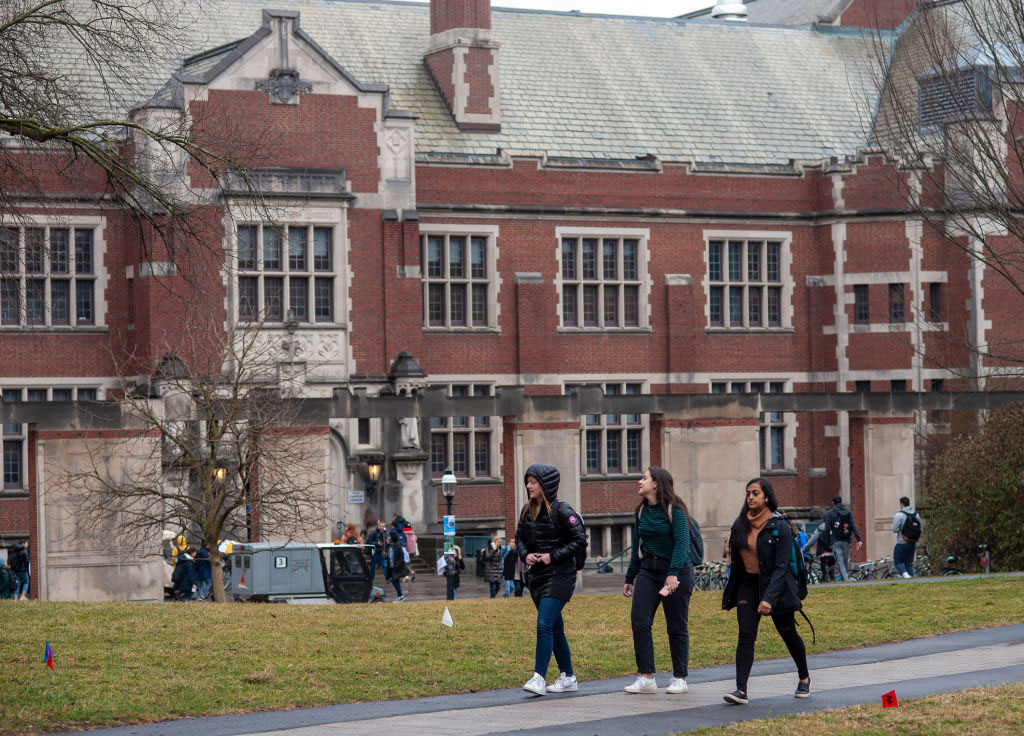
The Anti-Defamation League (ADL) and the Foundation for Individual Rights and Expression (FIRE) praised Princeton University for modifying their no-contact orders (NCO) policy after raising concerns that NCOs were “improperly” used to censor pro-Israel journalists.

The ADL and FIRE had sent a joint letter on Jan. 25 to Princeton President Christopher Eisgruber on the matter. “While no-contact protocols are important tools to keep students safe from properly defined discriminatory harassment, and threatening, intimidating, or assaultive conduct, Princeton appears to be granting these orders for any student who requests one, so long as minimal procedural prerequisites are satisfied,” the letter stated. “These orders are being issued by administrators with disciplinary authority, under threat of punishment, without a modicum of due process, and—most unconscionably — where the student-speaker is not even alleged to have violated any university policy.”

As an example, the letter pointed to Princeton Tory reporter Danielle Shapiro in January 2023 covering a Princeton Committee on Palestine event protesting the Center for Jewish Life’s Israel Summer Programs Fair. “Shapiro did no more than report on this event and follow up with a source, a fellow student who was a leader of the Princeton Committee on Palestine,” the letter stated. “By all accounts, Shapiro conducted her newsgathering in a professional manner, consistent with journalistic best practices. Yet simply because the source apparently disliked the coverage and requested a no-communication order, Princeton immediately granted one — without any process whatsoever for Shapiro — significantly hampering her ability to cover the campus group for The Tory.”

Princeton told Shapiro that their Title IX sexual assault policy allows students to seek a no-contact order for “interpersonal conflicts”; Shapiro wrote about her experience in The Wall Street Journal, causing Princeton to modify their policy requiring the person be contacted before issuing a no-contact order against them.

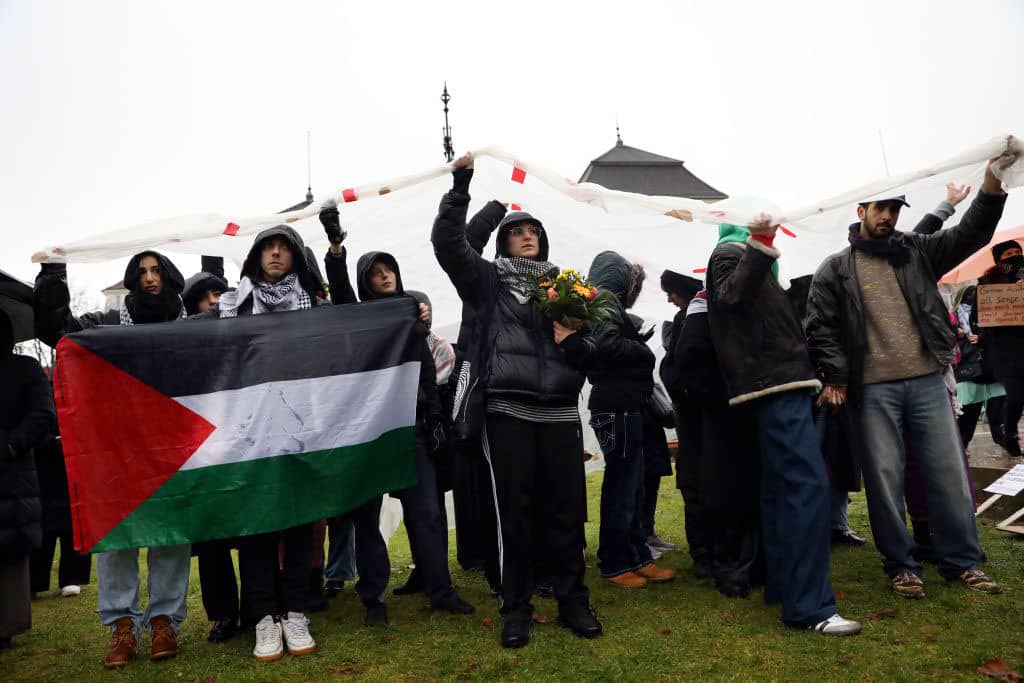
More recently, another Tory journalist was blocked by a graduate student from filming a Nov. 9 pro-Palestinian protest on campus. “The graduate student followed the journalist, and remained in close physical proximity to her, despite the journalist voicing her discomfort,” the letter alleges. “When the journalist reported this to an on-duty Public Safety officer, the officer informed the journalist that she was ‘inciting something.’ Following the officer’s inaction, the graduate student continued to attempt to physically obstruct the journalist from filming, eventually pushing her and stepping on her foot.”

Afterwards, the graduate student requested — and was granted — the no-contact order against the Tory journalist, even though the graduate student did not inform the journalist that they were pursuing a no-contact order against her. The journalist was told that by the university mentioning the graduate student’s name in articles about the protest could potentially violate the order.

“To be clear, when properly utilized, no-contact orders are an important tool to ensure the safety of victims of physical violence, sexual misconduct, true threats, or discriminatory harassment,” the letter states toward the end. “But Princeton is allowing students with ideological disagreements to transform no-contact orders into cudgels to silence the ‘lively and fearless freedom of debate and deliberation’ that Princeton promises all students.  This is at least the second time in the last two years that a Tory student journalist has been silenced by a no-contact order at the behest of community members offended by his or her pro-Israel journalism. This systematic weaponization of no-contact orders to silence pro-Israel journalism — or any journalism — cannot stand.”

Michael Hotchkiss, Princeton’s assistant vice president for communications, said in a statement to the Journal, “The University reviewed its process for No Contact and No Communication orders in the summer of 2022 and December 2023, in response to concerns expressed by community members. As a result, the University has narrowed the circumstances under which such orders can be issued. Those situations are outlined here, and additional information is available in these FAQs.” The link provided by Hotchkiss goes to the “Conflict Resolution” section on Princeton’s website that states that such orders only issued “in an emergent situation such as where there has been a significant interpersonal conflict or altercation” — in which case it’s temporary — or when “an individual has been found responsible for a disciplinary infraction.”

“It is important to note that No Communication and No Contact orders at Princeton do not curtail journalistic activity,” Hotchkiss continued. “Even if one is subject to such an order, referring to or reporting about someone in a journalistic forum would not generally be prohibited. The University’s narrowing of its No Contact and No Communication order policies does not in any way alter its other policies, including its Policy on Discrimination and/or Harassment and Acceptable Use Policy.”

Both the ADL and FIRE lauded Princeton’s changes. “We commend @Princeton
and President Eisgruber for quickly addressing the problems in its No Contact Order Policy after receiving our letter,” the ADL posted on X. “These changes will help ensure that NCOs can no longer be used to censure their Jewish student journalists – or any student journalists.”

Jessie Appleby, the programs officer on FIRE’s Campus Rights Team, wrote on the organization’s website that Princeton’s changes are a “victory” because the new policy “appropriately limits the circumstances in which no-contact orders will issue.” “President Eisgruber recently wrote that ‘[f]ree speech and academic freedom are the lifeblood of any great university and any healthy democracy,’ re-committing Princeton to provide students and faculty ‘with the broadest possible latitude to speak, write, listen, challenge, and learn,’” wrote Appleby. “The no-contact order policy change is a good first step to fulfilling that promise.”

However, Alexandra Orbuch, publisher of the Tory, told the Journal in an email that despite the changes to the NCO policy, “my order remains in place even though it’s procedurally invalid and plainly substantively invalid in light of the new policies. Though I am relieved that future students will not be forced to go through what I went through, I remain a victim of my own University.” She explained to the Journal that “an NCO was granted against me after I reported at a rally and faced harassment.”

“While Princeton did finally inform me that the order does not prevent me from reporting on this rally and the harassment, this only occurred after two months had passed and lawyers from national nonprofits got involved,” Orbuch continued. “Even so, the administration still has not lifted the order.  It is saddening that Princeton students must decide between ensuring their physical security and safeguarding the future of their academic careers and fulfilling their roles as reporters. This is not a choice that anyone in a free society should have to make.”

Orbuch also told the Journal that “since our writers have faced harassment and NCOs because of their reporting, I and other Tory leaders have been more hesitant to send reporters to anti-Israel rallies on campus given safety and disciplinary concerns. I feel a deep responsibility for the safety of my writing staff and do not want to put them in harm’s way or a situation where they may face an NCO.”

Hotchkiss did not respond to the Journal’s request for comment regarding the status of the NCO against Orbuch.

ADL, FIRE Praise Princeton for Changing No Contact Orders Policy Read More »

Calls Grow for Revoking UNRWA USA’s Tax-Deductible Status

As scrutiny intensifies on the United Nations Relief and Works Agency for Palestine (UNRWA) following allegations that multiple staffers were involved in the Oct. 7 massacre, there are some growing calls to revoke the tax-deductible status of UNRWA USA, which describes itself as “an independent 501(c)(3) nonprofit that supports the work of UNRWA through fundraising, education, and advocacy in the United States.”

Sen. Tom Cotton (R-Ark.) posted to X, “The IRS needs to immediately revoke UNRWA’s tax-deductible status. It is an organization that employs terrorists who participated in the Oct. 7 massacre.” Cotton, along with Sen. Ted Cruz (R-TX), proposed legislation that would rescind UNRWA-USA’s tax exempt status and bar funding to UNRWA.

Rep. Brian Mast (R-Fla.), who led Tuesday’s House Foreign Affairs Committee hearing on UNRWA, told the Journal via email on if he agrees that UNRWA’s tax deductible status should be revoked: “Revoked yes, but I want it totally eliminated as an organization.” Rep. Joe Wilson (R-SC) told The Washington Free Beacon regarding the tax-deductible status, “That is a pressure point that absolutely should be considered and looked into.”

A letter was sent to Internal Revenue Service (IRS) Commissioner Daniel Werfel on Tuesday by International Legal Forum CEO Arsen Ostrovsky, attorney David Schoen, and National Jewish Advocacy Center Director Mark Goldfeder and senior counsel Ben Schlager urging that the IRS revoke UNRWA USA’s tax-deductible status.

“This week a new intelligence report has brought to light the details of how members of UNRWA were actually among the terrorists who massacred 1,200 people on Oct. 7th, in the deadliest assault on Jews since the Holocaust,” the letter, which was obtained by the Journal, states. “Other UNRWA staffers helped coordinate logistics for the assault (including procuring weapons), and still others held innocent people hostage for weeks and months on end. Per the Wall Street Journal, ‘Intelligence estimates shared with the U.S. conclude that around 1,200 of UNRWA’s roughly 12,000 employees in Gaza have links to Hamas or Palestinian Islamic Jihad,’ both of which are designated foreign terrorist organizations.” The letter also cited a report from U.N. Watch about how 3,000 UNRWA teachers in a Telegram chat “cheered and celebrated” the Oct. 7 massacre.

“It is no longer debatable; UNRWA is Hamas,” the letter states. “Nor is it merely a ‘few rotten apples’ as some politicians and pundits have tried to suggest. The entire organization is a systematic incubator of hate, incitement and terror. That the people of Gaza need assistance is not in dispute, but UNRWA is part of the problem, not the solution. There are ample other vehicles and credible organizations through which aid can be provided, organizations that are not themselves facilitators of terror.”

The letter proceeds to cite IRS rules barring 501(c)(3)s from being “illegal, contrary to a clearly defined and established public policy, or in conflict with express statutory restrictions” as well as Supreme Court precedent that a 501(c)(3)’s tax-exempt status will be rescinded if “there is no doubt that the organization’s activities violate fundamental public policy.”

“Providing support for an organization that incites and commits murderous violence while harboring members of U.S. designated terrorist groups that specialize in killing Jews and that call for Jewish genocide is obviously against both the law and public policy,” the letter concludes. “UNRWA does all of those things, and UNRWA USA supports them. We hereby demand that the exempt tax status of UNRWA USA be immediately suspended, pending an investigation, and then revoked.”

UNRWA USA did not immediately respond to the Journal’s request for comment.

As previously reported by the Journal, the United States is one of 19 countries that suspended funding to UNRWA in light of the allegations that multiple UNRWA staffers were involved in the Oct. 7 massacre. Some Republicans in the House of Representatives have also introduced legislation to permanently defund UNRWA altogether.

White House National Security Council spokesperson John Kirby told reporters on Monday, Jan. 29, “Let’s not impugn the good work of a whole agency because of the potential bad actions here by a small number,” pointing out that UNRWA has 13,000 employees in Gaza that only 13 so far were allegedly involved in Oct. 7. A few Republican Senators wrote in a letter to Senate Majority Leader Charles Schumer (D-N.Y.) and Senate Minority Leader Mitch McConnell (R-Ky.) that they disagree with Kirby, as in their view the allegations against the UNRWA staffers are “emblematic of an organization where no investigation or corrective measures will be enough to cure the rot that is so clearly endemic to their mission.”

Calls Grow for Revoking UNRWA USA’s Tax-Deductible Status Read More »

This Costco-Loving Couple Unveiled Its Fascinating Jewish History in New Book

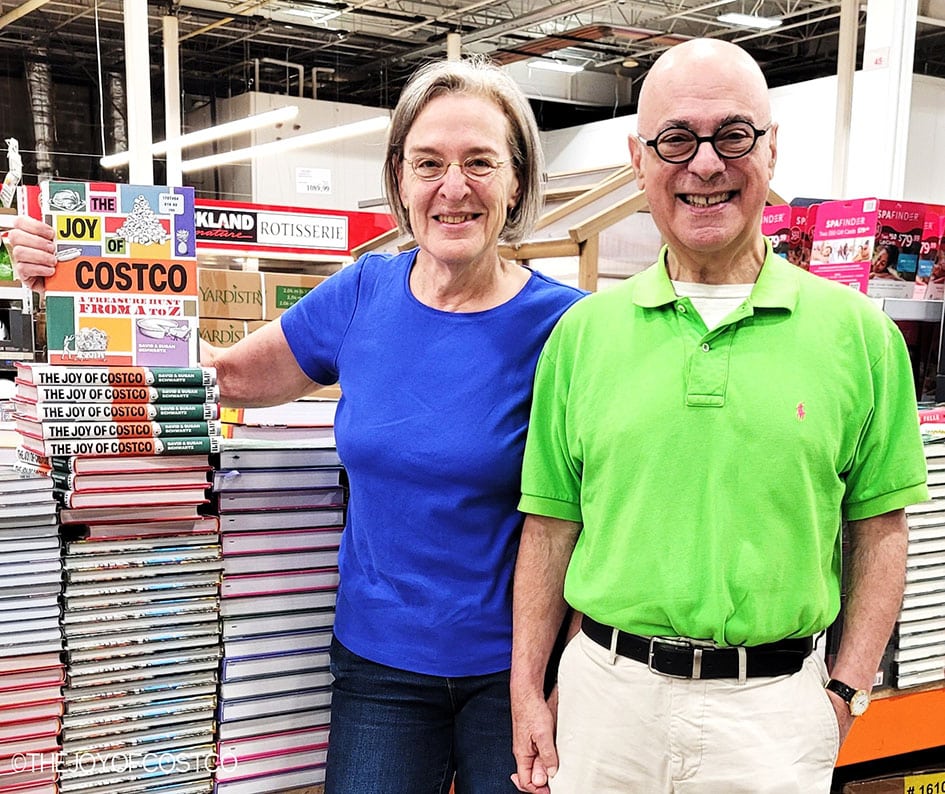
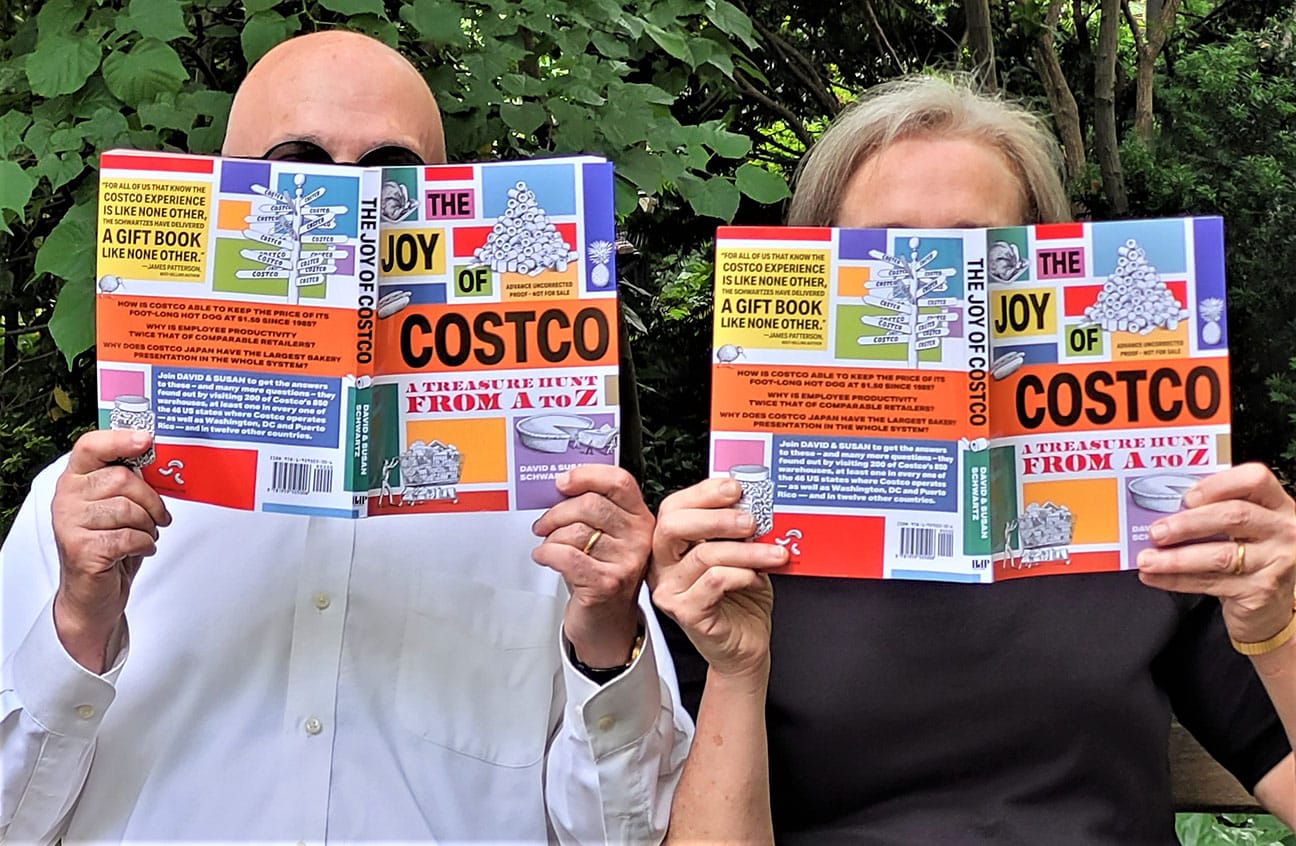
David and Susan Schwartz, a married couple and die-hard Costco fans, one day decided to write a book about their favorite store called “The Joy of Costco: A Treasure Hunt from A to Z.” Susan came up with the idea, telling David, “We can travel the world and find out how they operate.”

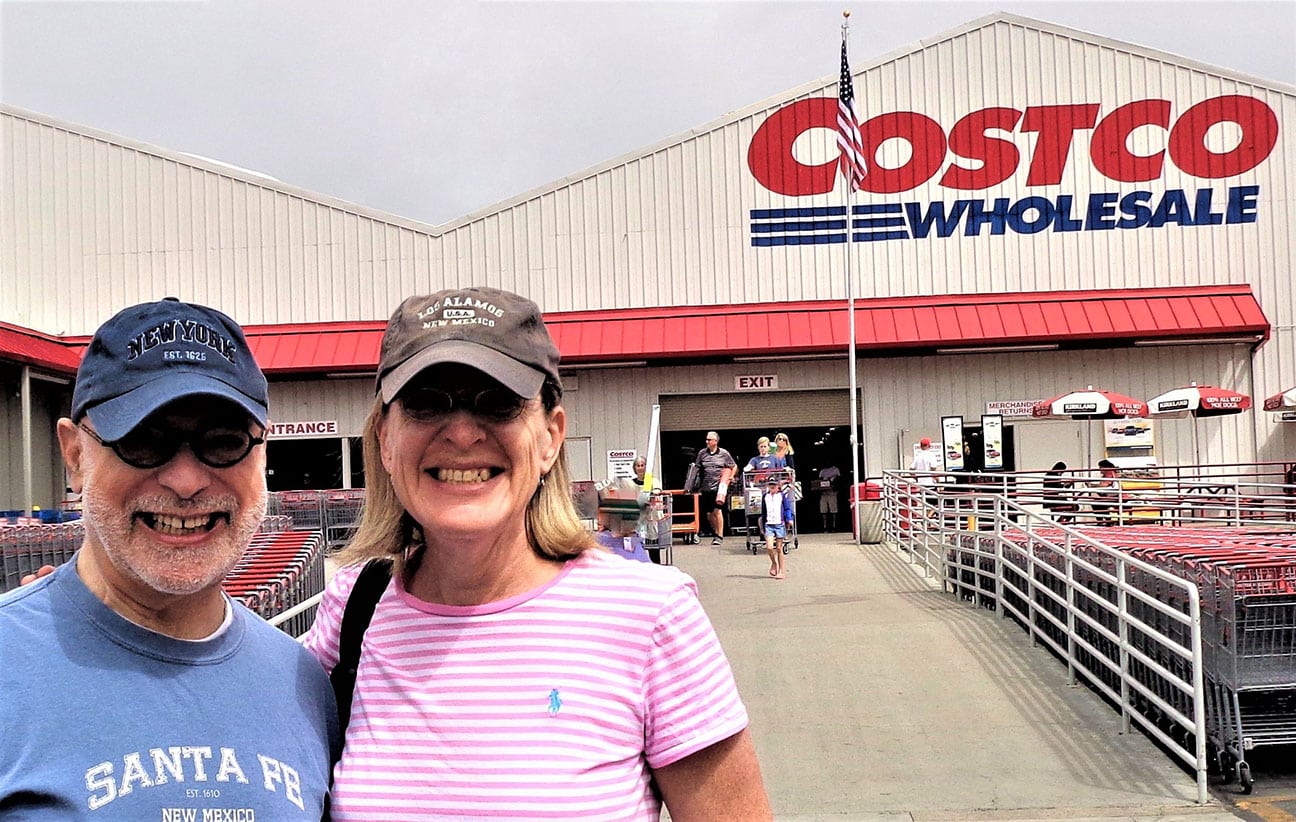
The two set off on a journey that would end up taking seven years; during that time, they’d travel to 250 Costcos around the world, racking up 220,000 miles. And for much of it, they’d be working on a book that was not in any way approved or authorized by the company.

“It took us two years to meet Jim Sinegal, the co-founder of Costco,” Susan said. “He spent six hours with us and we floated home after the meeting.”

However, they then received the news that Costco didn’t want a book written about the store.

“We were very modest and we plowed on,” Susan said. “We updated Jim by email and told him, ‘This is what we’re doing and here’s how it’s going.’”

The couple thoroughly researched Costco’s history and how they operate in different states in the U.S. as well as countries around the world, discovering all the quirky products in each of the stores.

“It was a treasure hunt,” Susan said. 

David was born into a Jewish family in New York but grew up in San Francisco, where he first discovered Costco.

“I was going to the store with my parents, but way back when, it was called Price Club,” he said.

Price Club was started by Sol Price, who was born in 1916 to Jewish-Russian immigrants in New York City. Like David, he then relocated with his parents to California, where he attended San Diego State University and got a law degree from the University of Southern California.

After working as a business lawyer for 12 years, he decided to become an entrepreneur instead, opening up FedMart, a wholesale bulk store with high-quality products and low prices that would later inspire the creation of Walmart. The membership cost only $2, and Price was an innovator; he was the first person to sell gas to consumers at a wholesale price. By 1974, there were 45 FedMarts raking in $300 million in sales.

Price sold FedMart to a German company and opened Price Club, which quickly expanded and went public in 1980. A competitor called Costco, co-founded by attorney Jeffrey Brotman – who was also Jewish – opened, and eventually, the two stores merged.

Behind the scenes, Price and Brotman were highly philanthropic; the former’s Price Philanthropies donated $50 million to his alma mater to open the USC Sol Price School of Public Policy. Brotman contributed generously to the Jewish Federation of Greater Seattle and his synagogue, Temple Beth El in Tacoma, so they could build a new daycare and preschool.

In the book, David and Susan, who grew up going to Costco on the east coast, highlight Costco’s philanthropy and dedication to the wellbeing of its workers.

“Jeffrey was raised in a very generous and charitable family,” David said. “His father Bernie was a retailer who owed a clothing store. One day, he caught someone shoplifting a pair of pants and threw the guy out of the store. He then threw the pants at him. Jeffrey asked Bernie, ‘Why did you do that?’ And Bernie said, ‘Obviously he needs the pants!’”

As for Sol, when he established Price Club in California and then Arizona, he paid the workers in Arizona the same rate, even though the cost of living was much lower.

“When they opened in Seattle in 1983, Jim Sinegal and Jeff Brotman invited the teamsters to see if the workers wanted to unionize,” Susan said. “The teamsters said no one was interested because Costco paid so well.”

Brotman and Price have both passed away, but their legacy lives on through the practices continuing today. How Costco treats its workers made Susan and David fall in love with the store even more; half the workers are full-time and half are part-time, and the company aims to make all the part-time workers full-time. Both kinds of workers can get benefits once they reach a certain threshold, and they receive above minimum wage salaries when starting out. If they’re in college, they may get funding for their education, too.

Susan said, “The employees are really happy, and the retention rate for employees after 1 year is 95%, which is really rare.”

Even though Susan and David didn’t have Costco’s stamp of approval, they enjoyed their seven-year journey visiting the hundreds of stores in places like the U.S., Australia, Canada, China, France, Iceland, Japan, Mexico, New Zealand, Spain and the UK. They looked at products, covering them in A to Z fashion in their book on their “treasure hunt.”

For the letter C, they wrote about cashews after discovering that Costco sells more than half of the world’s cashews. For H, they had to write about the famous hotdogs, which are sold at the stores for $1.50 – the same price they were when the store opened. Additionally, Costco sells more hot dogs than all the baseball stadiums in the U.S. combined. The couple self-published the book under the name “Hot Dog Press” as a nod to them.

The Schwartzes also wrote about the delicious Costco pumpkin pie.

“We learned the secret in the recipe,” Susan said. “We’re going to take that secret to the grave.”

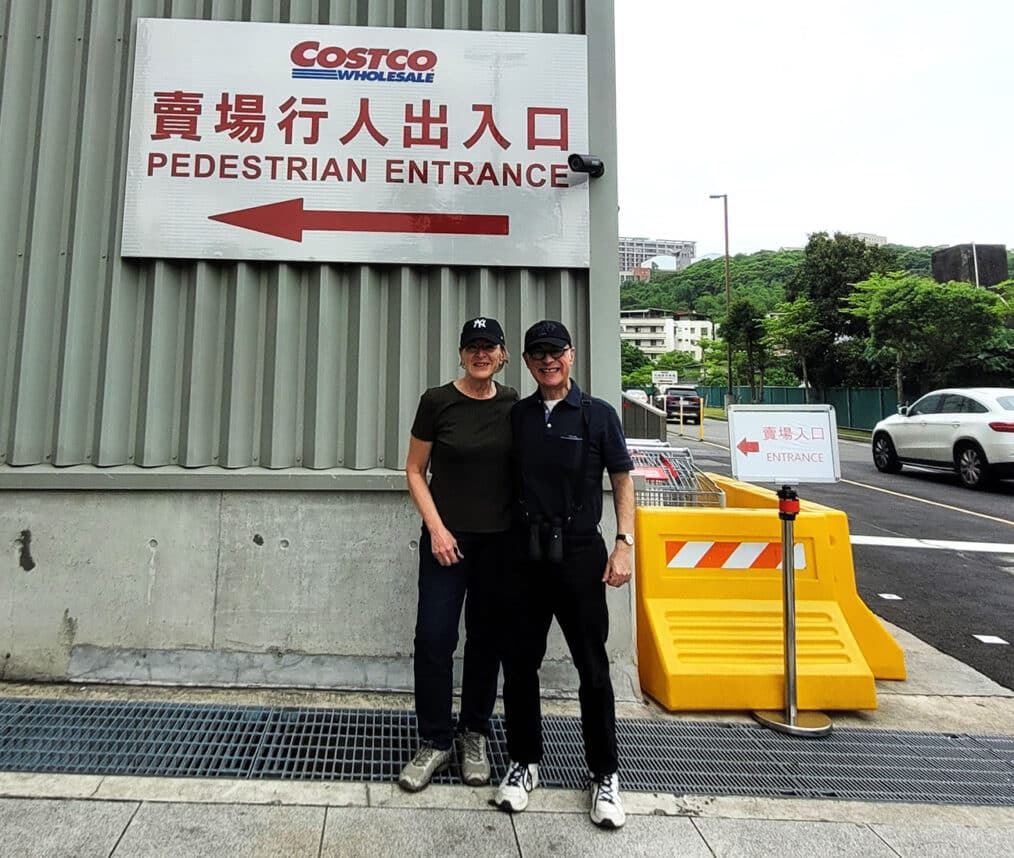
In Juneau, Alaska, they shopped in the world’s smallest Costco, and in Taiwan, they saw that rotisserie chickens are sold with their heads on, in line with cultural customs. David noted how Costco gives back to communities they’re in.

“In Santa Fe, Mexico, there was a Costco built in 2022, and on its roof there is a soccer field, paddleball court, skateboard park and a contemplative garden, which are all open to the public,” he said. “They did it as a thank you to the community for allowing them to build this glorious site.”

Susan added, “Costco does a lot of good deeds and charitable work, and in keeping with our Jewish values, very modestly. They feel they are a part of each of these communities.”

“Costco does a lot of good deeds and charitable work, and in keeping with our Jewish values, very modestly. They feel they are a part of each of these communities.” – Susan Schwartz

Susan enjoys the dill-pickle flavored cashews at her local Costco in Manhattan, and she is impressed by the hearing aids she got there, too.

“When I bought them, I could hear crystal clear,” she said. “I went to High Holiday services and thought it was so noisy when everyone was turning the pages.”

Susan and David live in a 450-square-foot apartment in Manhattan, and they rent out a small storage space to keep all their Costco goods in.

“We take the subway up town, and then a bus across town to get to Costco,” Susan said. “In the summer, we’ll walk the 6 miles to get there. Or we rent a car to go to the one in New Jersey. We’ll make a whole day of it. Costco doesn’t offer professional help, but we’re going to get some.”

As Susan and David kept working on the book, they received a surprise call in April of 2021. It was Jim Sinegal.

“He told us he wanted the book to be accurate,” Susan said.

Susan and David went down to Washington, D.C. to meet with Jim and his team.

“Jim fully appreciated the fact that we published the book ourselves,” she said. “We offered him full review and approval of the manuscript. We never had to sign an NDA even though we sat in on lots of meetings.”

Photo by Lisa Pavlova

In the end, Costco enjoyed the book so much that they ended up carrying it in their stores.

“We’ve done a lot of exciting things, like getting married, having grandkids and going to the White House,” Susan said. “Seeing our book in Costco was in that realm.”

The two are continuing to explore Costcos and having fun every step of the way.

“We are not shilling for them,” Susan said. “We simply have a passion for Costco that got a little out of hand.”

She continued, “This is the adventure of a lifetime, and we love going on it together.”

This Costco-Loving Couple Unveiled Its Fascinating Jewish History in New Book Read More »

The Ground Still Trembles

No moment in the Bible is more magnificent, no event more central. At the revelation on Mount Sinai, the veil between the mundane and the divine was torn away, and all assembled could see God directly.

The encounter at Mount Sinai carries great theological significance. Nachmanides says there is a daily commandment to never forget the encounter at Mount Sinai; Yehuda Halevi explains that this nationwide revelation is the foundation of the Torah. All of Judaism is a footnote to that day, an ongoing exploration of this intense spiritual singularity.

Words fail to describe that day. The Torah, in Parshat Yitro, describes something akin to a simultaneous hurricane and volcanic eruption, in which “…there were thunderings and lightning, and a thick cloud on the mountain; and the sound of the Shofar was very loud, so that all the people who were in the camp trembled…Mount Sinai was completely in smoke, ..Its smoke ascended like the smoke of a furnace, and the whole mountain quaked greatly.” (Exodus 19:16-18.)

Midrashim further dramatize this depiction. Rabbi Akiva says that the Jews saw the voice that spoke on Mount Sinai, something that is otherwise physically impossible. Other Midrashim say that all those who were blind and deaf were healed that day, and able to take part in the revelation. Another Midrash says that the call of Sinai was heard throughout the world, and all of humanity, in a sense, stood at the foot of Mount Sinai.

Taken together, these texts emphasize that the encounter at Mount Sinai was unparalleled and transcendent, an event that will never be repeated or equaled.

So where does that leave those of us who were born too late to stand at Mount Sinai? This question is particularly difficult for those with deeply religious souls. They search for God and long to hear His voice. They wait patiently for a divine calling. But sadly, there are no new Mount Sinais available, no casual daily revelations.

Most people of faith find ways to accommodate this gaping lack of inspiration. Sometimes, even an occasional glimpse of transcendence can satisfy years of spiritual cravings. But at times, we need to turn in a different direction to discover the divine.

Rav Simcha Bunim of Przysucha can help direct us. Rav Simcha Bunim was the “Un-Rebbe,” a radical Hassidic leader who diminished the importance of his own position, and urged his followers to find their own path. He would illustrate his view of the Rebbe’s role with the following parable:

Isaac from Krakow was a poor tailor, who was plagued by a recurring dream. In the dream, he had a vision of a large bounty of gold which was hidden under a bridge outside the imperial palace in Prague.  Night after night, this dream would repeat itself, until finally, Isaac decided he had to make the ten-day journey to Prague to find this treasure. He explained to his wife why he had to go, and started his journey.

In Prague, Isaac arrived and found the bridge just as it appeared in his dream. But he couldn’t dig for the treasure, because it was always under heavy guard; the bridge was right outside the palace, after all. For three nights, Isaac studied the guards’ rotations, hoping to find a pause long enough to allow him to start his search. On the third night, one of the guards grabbed him and arrested him. The guard shouted at Isaac, “You spy, I recognize you! You’ve been here three nights in a row, plotting against the king”. Isaac, in shock, began to sputter how he was an innocent man who was there because he had had a dream about some gold hidden under the bridge. Recognizing the simple sincerity of Isaac’s words, the guard released Isaac, and with a laugh, said: “You fool, you stood there for three nights straight just because of a dream! Last night I had a dream that there’s a treasure buried in the backyard of Isaac the tailor in Krakow. Do you think I’m going to travel all the way to Krakow just because of a silly dream?”

Isaac immediately returned home. When he entered his house, his wife asked him: “Where’s the treasure?”

Isaac responded: “Give me a shovel and I’ll show you.”

Isaac went outside and dug up the gold. The Prague treasure had been hidden right in his backyard all along.

Rav Simcha Bunim used this tale as a parable about spirituality and wisdom.  People chase spiritual gurus and great Rabbis in the hope of achieving spiritual heights. But in the end, what we are looking for is hiding in our own backyard, buried under a lot of nonsense.

For those in search of great revelations, Rav Simcha Bunim’s parable reminds us that before looking elsewhere, we need to turn inward and find the treasures buried in our own hearts.

This is true of the encounter at Sinai as well. The Talmud (Niddah 30b) relates that every child is instructed the entire Torah in their mother’s womb, only to have an angel force the child to forget what they learned at birth. This text is a bit of a riddle; why teach the fetus Torah, if it is meant to ultimately forget it a few weeks later?

Rav Simcha Bunim’s parable explains this text well. What makes revelation compelling is that our hearts are already attuned to what is being said. There are debates among philosophers as to whether all of the commandments can be understood intellectually; but they are certainly understood by the soul, which immediately attaches itself to the divine. And that a priori appreciation of revelation, that knowledge before knowledge, is a treasure we carry in our own hearts. Even when we stand far away from Sinai, there is another source of inspiration, right at our side.

Since October 7th, I have heard story after story of ordinary people who have done extraordinary things. When they tell others about what happened, they share one refrain: “I never imagined that I could have done this.” Yet in a time of crisis, these heroes found remarkable inner strength. Ordinary Israelis took on the battle from day one, rushing to the front lines before being called up. A soldier sacrificed his own life by falling on a grenade to save his comrades’ lives. Rescuers entered the Nova Festival under heavy fire and saved the lives of hundreds of participants. Dedicated parents, brothers, sisters, and children, have traveled everywhere demanding that the world bring the relatives home from captivity. A young mom built a large distribution center for evacuees in just a few days. Academicians have become ad hoc military suppliers, providing much-needed protective gear to soldiers. Bereaved parents have spoken to group after group, offering strength and comfort to others even while their own hearts are broken. Amidst all the darkness and destruction, these accidental heroes heard a small, still voice of inspiration, and answered the call.

For years, I wondered if I could ever experience something like the encounter at Sinai; when would I feel the ground tremble with divine inspiration?

Now I have an answer. We stand at Sinai once again when we meet one of these heroes. They are spiritual treasures, right here in our own backyard. Listen to them, listen to their stories. It is amazing what they have done.

And the world trembles before their greatness.


Rabbi Chaim Steinmetz is the Senior Rabbi of Congregation Kehilath Jeshurun in New York.

The Ground Still Trembles Read More »

Should Students Be Allowed to Yell “Kill the Jews”? Yes, “Hate Expert” Says

Should college students have a right to shout Kill the Jews” on campus? The director of a prominent Center for the Study of Hate thinks so.

Kenneth Stern, director of Bard Colleges hate studies center, explained his controversial position during a January 31 webinar sponsored by the University of Londons Birkbeck Institute for the Study of Antisemitism.

If a student merely expresses something, like I think all Jews should be killed,it should be condemned, but to say you cant say it,is a problem on many levels,” Stern asserted. In his view, universities should have rules only about harassment, intimidation, and bullying, not political statements about Israel.” He also argued that Theres a difference between saying it with a bunch of folks with baseball bats next to you, or just expressing it.”

There are three serious problems with Sterns position.

The first is that he implicitly puts slogans about killing Jews or Zionists” in the category of political statements about Israel.” But in the real world, chanting in support more Intifadas” means calling for more suicide bombings, shootings, and stabbings of Jews. Chanting in support of liberating all of Palestine” means urging the destruction of the State of Israel and the mass murder of Israeli Jews.  October 7 has demonstrated that beyond any doubt. Such rhetoric is not political.” Its anti-Jewish hate.

The second problem is that Stern seems to think a hater needs to be flanked by comrades who are armed with deadly weapons in order for his hateful expressions to constitute a threat. That underestimates the danger posed by lone wolf haters.

The third problem with Sterns formulation is that he is speaking in the abstract, instead of recognizing the reality at many universities today. He depicts those who are mouthing anti-Jewish hatred on campuses as isolated individuals, when in fact they often are part of mobs that are marching, threatening, and besieging Jewish students.

From a legal standpoint, Stern portrays this as a free speech issue, but its not. Every university has a code of conduct to which students must adhere. All such codes require students to refrain from taking actions that make other students feel threatened. Thus a university administration does not even have to regard Kill the Jews” (or More Intifadas!” Or From the River to the Sea!”) as antisemitic in order to penalize students for yelling it—its sufficient that the slogan makes Jewish students feel threatened.

The broader problem with Sterns perspective on Kill the Jews” rhetoric is that he does not believe Jewish college students in America today are facing any serious or imminent danger.

He said in the webinar that incidents of Jewish college students being physically assaulted are not ubiquitous, although one is too many.” They may or may not be ubiquitous, depending on how many attacks it takes to qualify for that designation. But Sterns choice of words, and his overall tone, created the impression that the number of such incidents is not significant. In reality, there have been many reported attacks, and undoubtedly others that have not been reported.

Pro-Hamas students at Ohio State University spat upon Jewish students  (Oct.18), threw pennies at Jewish students (Oct.20), assaulted two Jewish students while calling them kike Zionists” (Nov. 10), and hurled bottles at a Jewish fraternity house while shouting antisemitic slogans (Dec. 3). Hamas supporters surrounded and pushed a Jewish student outside the Harvard Business School (Oct. 18) and beat up three Jewish students near the Tulane University campus (Oct. 26). They wrecked a hostages information table at the City College of New York, seizing its pamphlets and destroying its posters (Nov.2).

At the University of Massachusetts-Amherst on November 3, a Jewish student was setting up a symbolic Shabbat table at a vigil to call attention to the Israeli hostages. A pro-Hamas student in a nearby building began shouting vulgarities at him. Then he charged out of the building and punched me in the head several times,” the Jewish student recounted.I put my hands up to protect my face and he grabbed the flag and kicked me in the chest several times and shoved me.” The attacker then took out a foot-long knife, and kept stabbing the Israeli flag until it was completely destroyed.”

In Manhattan, pro-Hamas students physically trapped Jewish students in a room at the Cooper Union library, and surrounded and taunted a Jewish student at the New School. They blocked a library entrance at the City College of New York  and shoved a cell phone into the face of a Jewish student passing by, to record her against her protests. At Rutgers, Hamas supporters disrupted classes, study sessions, and meals, and at the University of California at Berkeley, they grabbed a Jewish student by the neck and tried to steal his Israeli flag. At a George Mason University fraternity house, they assaulted a Jewish student, ripping his Star of David necklace from his neck.

The list goes on and on—and all of these incidents go far beyond expressions.” They are physical manifestations of the Kill the Jews” sentiment that Stern believes all colleges universities should permit.

Numerous universities are now under investigation by the Biden administration because of the spread of antisemitism on their campuses. Regardless of their findings, it is clear that yelling Kill the Jews,” or slogans which in practice mean the same thing, such as More Intifadas!” and From the River to the Sea!,” violate campus codes of conduct. The real-world impact of hate speech matters.


Dr. Medoff is founding director of The David S. Wyman Institute for Holocaust Studies and author of more than 20 books about Jewish history and the Holocaust. His latest is Whistleblowers: Four Who Fought to Expose the Holocaust to America, a nonfiction graphic novel with artist Dean Motter, to be published by Dark Horse in February 2024.

Should Students Be Allowed to Yell “Kill the Jews”? Yes, “Hate Expert” Says Read More »

DTALE Can Replace DEI

The calls to end DEI have never been louder than over the past few months. The long-overdue opposition makes a morally clear case that DEI is nothing more than a hypocritical progressive tyranny that showed its true colors in the pathetic progressive response to October 7th. Their response to the opposition’s campaign is a familiar one—they charge that DEI’s opponents do not appreciate or respect the value of diversity, and that anyone calling for the end of the DEI regime is simply a racist aiming to marginalize “oppressed peoples” from spaces and keep them from sharing their perspectives.

But this characterization is a childishly reductive strawman argument, which seeks to drown out any concerns about DEI’s destructive tyranny by dismissing even the most reasonable objectors as bigots. Since it apparently needs saying, it is both possible and eminently reasonable to both harbor suspicions about the damaging consequences of DEI and sincerely believe in the value of diverse perspectives in schools, workplaces, and beyond. Many of DEI’s most vocal critics, including myself, make these arguments precisely because we understand the enriching effect of diversity—but diversity in its true form, as a mosaic of varied and unique personal histories from all walks of life, not the DEI form, which diminishes diversity to an “Oppression Olympics” judged only through race and progressive politics.

Let’s call this form of diversity DTALE—short for Diversity of Thought And Life Experience. DTALE is the precise opposite of DEI because it treats people as complex individuals who draw important insights from life experiences, rather than representatives of progressive-determined categories whose opinions must be evaluated according to their proximity to whiteness. It is also the precise opposite of DEI because it emphasizes the value of a wide spectrum of opinions and political persuasions, rather than dictatorially enforcing the value of a single strain of progressive thought and discarding any dissenting beliefs.

In the DTALE framework, everyone is given a fair chance to advocate for their opinions and share how those positions are informed by their relevant life experiences—and this certainly includes the people who don’t look, act, or vote like you. In fact, DTALE is based on the premise that those people might have the most useful things to say, if you’ll only have the humility and openness to let them speak. This is a belief close to my heart—as a brown, Persian Jew whose family was smuggled out of Iran, I have always understood just how important it is to listen to voices you might not agree with and representatives of communities you might not understand.

When I was six years old, I fled Iran in the back of a pickup truck along with my mother and sister, hiding under bushels of corn as we crossed the border into Pakistan. The only reason we made it out of the country alive is because my father, a doctor, received a secret tip from a patient he had treated that he was on a list of government targets and should flee immediately, before our family was killed. By the time we fled what was once our sophisticated, culturally rich homeland, the ayatollahs had already turned it into a repressive theocracy. Decades later, this dystopian regime not only persists, but Iran has also built and funded a powerful empire of jihadist, terrorist militias stretching throughout the Middle East—including the terrorist group that just committed the deadliest attack on Jews since the Holocaust.

Along with many in my own community of Middle Eastern Jews, I warned of the dangers of this form of Islamist terror for years. But my cries often fell on deaf ears, discarded by people who had never experienced life in the Middle East and knew nothing of its dangers. It is sad that it took a brutal massacre of Jews for these people to start seeing reality clearly—to understand that diverse, unexpected voices often have something important to say, and to listen when we say it.

This is also why I believe in the DTALE model. We’ve seen what happens when society prizes rote, categorical “diversity and inclusion”; we’ve watched how our institutions, workplaces, and schools suffered when we surrender them to unchecked progressivism; and we’ve missed out on a host of opportunities to learn vital lessons that might have made us wiser. Prizing rich life experience and a kaleidoscope of perspectives as a key form of evaluation will help remove some of the hollow oppression narratives, propensity for victimhood, and blatantly hypocritical racism that DEI has injected into our institutions—and it will make us stronger, more politically reasonable, and ultimately safer at a time when safety and reason run in unprecedently short supply.


Dr. Sheila Nazarian is a Los Angeles physician whose family escaped to America from Iran. She stars in the Emmy-nominated Netflix series “Skin Decision: Before and After. “

DTALE Can Replace DEI Read More »