fbpx

December 28, 2023

SB_logo2

From Fashion to Jewish Passion ft. Lizzy Savetsky

Read More

This week the Schmuckgirls bring you a special episode with the one and only Lizzy Savetsky. She shares about her Jewish identity and growing up as on one of the only Jews in her town in Texas. Lizzy also discusses her family’s recent trip to Israel which took place over October 7th and how she handles parenting young Jewish children during these difficult times. She shares how she turned her social media from a fashion influencer page to Jewish activism and how it became clear that that was her priority. She also tells the girls about how she met her husband and how they ended up on the same religious level even though they started in different places. The three discuss the fight over social media and how it’s been to deal with the silence from friends and organizations, especially from women’s groups.


You can follow Schmuckboys on Instagram @schmuckboysofficial and Lizzy Savetsky @lizzysavetsky. 


From Fashion to Jewish Passion ft. Lizzy Savetsky Read More »

Planning for the End – A poem for Parsha Vayechi

And he commanded them and said to them, “I will be brought in to my people; bury me with my fathers, in the cave that is in the field of Ephron the Hittite, in the cave that is in the field of Machpelah… ~Genesis 49:29-30

I got COVID last week and despite the stigmatism
that comes along with the name and the ominous

black line on the at-home test that convinced me
I must have Super COVID, and despite the fact that

we had to cancel an annual trip to Florida (despite
the fact that visiting Florida isn’t really on my bucket

list anymore because, well, read the news) and despite
the fact that we’d passed the point of the plane tickets and

hotel room being refundable, it actually wasn’t that bad.
Though, I thought it was an excellent opportunity to

begin planning my own funeral. I got some of my
closest friends involved. They had plenty of ideas.

One of them thought it should be open casket and
there should be snacks inside. (I think he forgot I was

Jewish and we don’t do that. [that is, we don’t have
open caskets. We for sure have snacks.]) I wanted to

make sure there was lots of laughter. I’ve never been
to a funeral that didn’t have laughter and I’ll be dead

and gone before we start with mine. Another person
suggested there be air holes in the coffin. I’m not sure

why, but I didn’t say anything. I started to divide up
all my stuff too. My son can have all my cables and

dongles…he’s always asking for one, so he might as well
have the lot. Pretty sure my wife wants to turn my

office into a nicer sitting area. That’s fine. The only real
requirement is they continue to feed the cats multiple

times a day. And, oh, like Jacob, please bury me at home.
I’m not sure what that means yet. Jacob had no doubt.

His grandfather had already bought the cave. His last words
reminded Joseph to lay him to rest there. Before I take

my last breath, may I speak with the confidence of Jacob.
May I know my answer to forever.


Rick Lupert, a poet, songleader and graphic designer, is the author of 27 books including “God Wrestler: A Poem for Every Torah Portion.” Find him online at www.JewishPoetry.net

Planning for the End – A poem for Parsha Vayechi Read More »

Porcupines and Peacemakers

Crowding together porcupines

are pricked by one another’s quills,

their potential as landmines

thus prevented.  No porc kills

another with his quills, since all

maintain sufficient social distance

to stay alive, their death’s close call

provided by it great resistance.


Distance that’s been labeled “middle”

preserved a lot of lives, like mine

in the pandemic.  More than a little

I was like a porcupine,

middle-distanced Schopenhauer,

preventing danger when my breath

was poisonous, less like a flower

than like an angel causing death.


Like Judah meeting Tamar I’m

now favoring “0nly connect,”

E. M. Forster paradigm,

Morally not more, correct

than “Only separate,” a rule

imposed in Genesis’s first chapter

five times, a useful  social tool

that sometimes may indeed be apter.


It is the reason we perform

a ritual.  Sabbath is erased

with havdallah, ritual reform,

 “Connect!” by “Separate!” replaced,

and from the Sabbath disconnected —

ritual its illumination

with a candle we’ve selected

celebrating separation.,

like, separated from his roots,

Wittgenstein,  uprooted dude

whose philosophical pursuits

did not Jewish thoughts include,

distanced as I was from quills,

immune  to spikes like porcupines’

in covid viruses from ills,

though with less wit that Wittgenstein’s,

though always very glad to amble

in the world of Abrabram,

as in the Threshing Floor called Bramble

where peace was the unprickly program.


Wikipedia explains the etymology of “porcupine” thus:

The word “porcupine” comes from the Latin porcus pig + spina spine, quill, via Italian (Italian “porcospino“, thorn-pig)….‎

In “The Space Between: Vayigash,” Jonathan Sacks writes:

What do porcupines do in winter?” asked Schopenhauer. “How can they stay warm?” If they come too close to one another, they will injure each other. If they stay too far apart, they will freeze. Life, for porcupines, is a delicate balance between closeness and distance. It is hard to get it right, and dangerous to get it wrong. And so it is for us.

That is the force of the word that gives our parsha its name: Vayigash. “And he came close.”

Then Judah came close to him and said: “Pardon your servant, my lord, let me speak a word to my lord. Do not be angry with your servant, though you are equal to Pharaoh himself” (Gen. 44:18).

For perhaps the first time in his life, Judah came close to his brother Joseph. The irony is, of course, that he did not know it was Joseph. But that one act of coming close melted all of Joseph’s reserve, all of his defenses, and as if unable to stop himself, he finally disclosed his identity.

Reviewing On Wittgenstein: A Life by Brian McGuinness in “The philosophical porcupine,” The New Criterion, December 1988, Roger Kimball writes:

The essential thing to grasp about Wittgenstein’s character is his peculiar combination of tenacity and touchiness. Both are evident in all aspects of his life: intellectual, social, emotional. Craving affection, he nonetheless could not bear prolonged intimacy. This is the point of his fondness for Schopenhauer’s parable of the porcupines, to which Mr. McGuinness frequently adverts: crowding together for warmth on a winter’s day, a group of porcupines are pricked by one another’s quills; so they move back and forth until they find a middle distance—a place midway between isolation and intimacy—that they can comfortably endure.

Havdallah is the ritual with which we end the Sabbath, lighting a candle and saying:

בָּרוּךְ אַתָּה יי אֱלֹהֵינוּ מֶלֶךְ הָעוֹלָם, הַמַּבְדִּיל בֵּין קֹדֶשׁ לְחוֹל, בֵּין אוֹר לְחֹשֶׁךְ, בֵּין יִשְׂרָאֵל לָעַמִּים, בֵּין יוֹם הַשְּׁבִיעִי לְשֵׁשֶׁת יְמֵי הַמַּעֲשֶׂה, בָּרוּךְ אַתָּה יי, הַמַּבְדִּיל בֵּין קֹדֶשׁ לְחוֹל:

Blessed are You, Lord our God, King of the universe, who creates the light of the fire. Blessed are You, Lord our God, King of the universe, who distinguishes between the holy and the profane, between light and darkness, between Israel and the nations, between the seventh day and the six working days. Blessed are You, O Lord, who distinguishes between the holy and the profane.

Jonathan Sacks in his Commentary to Vayigash, writes:

Then Joseph said to his brothers, “I am Joseph! Is my father still alive?” (Gen. 45:3)…

…How then do we make and sustain relationships, if the balance is so fine and it is so easy to get it wrong? The Torah’s answer – already there in the first chapter of the Torah – is: first separate, then join. The verb lehavdil, “to separate,” appears five times in the first chapter of Bereishit. God separates light from darkness, the upper and lower waters, sea and dry land. Separation is at the heart of Jewish law – between holy and profane, pure and impure, permitted and forbidden.

In Judaism kadosh, holy, means separation. To sanctify is to separate. Why? Because when we separate, we create order. We defeat chaos. We give everything and everyone their space. I am I and not you. You are you and not I. Once we respect our difference and distance, then we can join without doing damage to one another.

Describing the mourning that occurred during the funeral of Jacob Gen 50:11 states:

יא  וַיַּרְא יוֹשֵׁב הָאָרֶץ הַכְּנַעֲנִי אֶת-הָאֵבֶל, בְּגֹרֶן הָאָטָד, וַיֹּאמְרוּ, אֵבֶל-כָּבֵד זֶה לְמִצְרָיִם; עַל-כֵּן קָרָא שְׁמָהּ, אָבֵל מִצְרַיִם, אֲשֶׁר, בְּעֵבֶר הַיַּרְדֵּן.      11 And when the inhabitants of the land, the Canaanites, saw the mourning in the Threshing Floor of Atad, Bramble,  they said: ‘This is a grievous mourning to the Egyptians.’ Wherefore the name of it was called Abel-mizraim, which is beyond the Jordan.

In “Where Was Jacob Buried?” (thetorah.com), David Ben-Gad Hacohen explains the problematic name of the place where Gen. 50:11 tells us people mourned for Jacob  when his body was being transported from Egypt, to be buried in Canaan, “ בְּגֹ֙רֶן֙ הָֽאָטָ֔ד, in the Goren Ha-Atad, the Threshing Floor of the  Atad, Bramble.”  The Jerusalem Talmud suggests in JSotah 1:10 that the prickly bramble to which the name of the Threshing Floor alludes implies that it was a place where the mourners, who included the sons of Esau, Ishmael and Keturah—Jacob’s cousins—removed their (pointy) crowns.

The Babylonian Talmud explains in BSotah 13a:

Does a bramble have a threshing floor?! Rabbi Samuel bar Nachman said: “We have looked throughout scripture and we did not find a place called Atad.” So what is Atad? This refers to the Canaanites who were fit to have been crushed like a bramble. What merit did they have that saved them? The merit of (Gen 50:11) “The Canaanite inhabitants of the land saw the mourning at Goren ha-Atad…”

David Ben-Gad Hacohen points out the  Babylonian Talmud’s statement implies that the prickly bramble alludes to the fact when the sons of Esau, Ishmael, and Keturah—Jacob’s cousins—came to the funeral they removed their (pointy) crowns Sotah 13a states:

Does a bramble really get a threshing floor? Rabbi Abahu said: “This teaches that they surrounded Jacob’s casket with crowns, like any given threshing floor may be surrounded  by brambles” — for the sons of Esau, the sons of Ishmael, and the sons of Keturah all came.

It was taught: All of them originally came to make war, but when they saw Joseph’s crown hanging upon Jacob’s casket, they took off their crowns and hung them on Jacob’s casket.

My poem suggests that the name of the place, “Threshing Floor of the Bramble,” implies that the mourners behaved as porcupines do when they want to connect with other porcupines rather than being separated from one another by their sharp quills, It surely was not just a place where all Abrahamic descendants mourned the death of Jacob, whose name was also Israel. Far more importantly it also was a place where all Abrahamic former enemies of Israel made peace with Israel by connecting closely with this family while they mourned together.


Gershon Hepner is a poet who has written over 25,000 poems on subjects ranging from music to literature, politics to Torah. He grew up in England and moved to Los Angeles in 1976. Using his varied interests and experiences, he has authored dozens of papers in medical and academic journals, and authored “Legal Friction: Law, Narrative, and Identity Politics in Biblical Israel.” He can be reached at gershonhepner@gmail.com.


Porcupines and Peacemakers Read More »

A Bisl Torah – A Bisl New Year

The heaviness of the year feels palpable.

We continue to pray for the release of the hostages, experience waves of Jew hatred, and mull over what already existed pre-Covid: loneliness, isolation and indifference.

And yet, I have seen and experienced so much hope: hundreds of people coming together to celebrate Shabbat and holidays, people of various faiths reaching out to offer comfort and strength, and beautiful acts of kindness exchanged between strangers and friends.

The world feels confusing. But we have the power within our hands to direct our future. A future filled with endless potential and opportunities. A future filled with advocacy and support. A future that includes our voice and our heart.

Rabbi Noah Weinberg once said, “People often avoid making decisions out of fear of making a mistake. Actually the failure to make decisions is one of life’s biggest mistakes.” May 2024 be a year of wise decision making, taking risks, living with optimism and fierce determination. Let us walk into this new year both grateful for what we have and what we will continue to bring to the world.

Happy New Year and Shabbat Shalom


Rabbi Nicole Guzik is senior rabbi at Sinai Temple. She can be reached at her Facebook page at Rabbi Nicole Guzik or on Instagram @rabbiguzik. For more writings, visit Rabbi Guzik’s blog section from Sinai Temple’s website.

A Bisl Torah – A Bisl New Year Read More »

A Moment in Time: “In 2024, What Will it Mean to be a Jew?”

Dear all,

I was thinking back to our Temple Akiba trip to Israel last summer. As I look at this whimsical photo we took at the Israel Museum in Jerusalem, I realize that the Jewish family of 2023 is certainly different than the Jewish family of 1948 (when Modern Israel was established). And while those 75 years have witnessed incredible changes, there are still religious, cultural, and familial values that continue to embrace us.

What will it mean to be a Jew in 2024?

What will in mean in the face of a complicated world?

How will we cultivate our garden of opportunity?

I want to pose seven questions that the Reform Movement of Judaism has historically suggested we ask all who are seeking to become Jews through conversion. I believe it’s important that Jews by birth take these questions to heart as well:

  1. Do you choose to enter the eternal covenant between God and the people Israel and to become a Jew of your own free will?
  2. Do you commit yourself to the pursuit of Torah and Jewish knowledge?
  3. Do you promise to establish a Jewish home, and to participate actively in the life of the synagogue and of the Jewish community?
  4. If you should be blessed with (more} children, do you promise to raise them as Jews?
  5. Do you commit to building a meaningful relationship with the State of Israel and its people?
  6. Do you accept Judaism to the exclusion of all other religious faiths and practices?
  7. Do you pledge your loyalty to Judaism and to the Jewish people under all circumstances?

What questions might you add?

What questions might your change?

What questions might you omit?

What questions might uplift you?

What questions might disturb you?

To be a Jew in 2024 will have new demands on our resilience, our commitments, and our engagement. To be a Jew in 2024 will open doors to conversations we never before imagined and to opportunities we never before considered.

To be a Jew in 2024 will allow ancient wisdom to weave into contemporary resolve.

To be a Jew in 2024 will demand that we take a stand.

Yes, Judaism has changed (and that’s a good thing). But Judaism also honors a long and proud history. And so, this is our moment in time to live with hope, determination, and unwavering spirit.

Ron, Eli, Maya, and I all wish you a happy and healthy 2024!

With love and shalom,

Rabbi Zach Shapiro

A Moment in Time: “In 2024, What Will it Mean to be a Jew?” Read More »

Open Letter to Jewish Students

Dear Jewish Students,

I know many of you just experienced your worst semester, ever.  Beyond the shared anguish of every Jew, and every moral human being, following Hamas’s October 7th savagery, you’ve endured the added agony of betrayal. You’ve seen roommates, classmates, professors, and university presidents cower before evil – or, worse, collaborate with it by celebrating it — depending on the context, of course.  This, therefore, may have been your most illuminating semester too. You discovered who your friends are — and aren’t. You saw what happens when people, even intellectuals, get swept up in an ideological mania demanding total loyalty, tolerating no disagreement, no nuance, no complexity, no doubt. You had to think independently. You saw what moral clarity looks like and experienced what it feels like.  And, most important, you unlearned much of what you and your parents foolishly pay up to $77,000-a-year to swallow.

It’s true, our super-heroic Israeli soldiers have shown remarkable bravery – and modeled extraordinary values. But, remember, wherever they go in Israel, they get “feergun,” that wonderful Hebrew word describing “attaboys” conveyed with slaps on the back and high-fives.  By contrast, you students need tremendous spiritual courage to embrace Israel and Zionism on campus. The fact that you get the opposite – cold shoulders, social ostracism, online hostility, even harassment – increasingly requires physical courage, too.

Let’s return to October 7th. The campus ethical dynamics would have differed had more students and professors stopped, on hearing about the massacre, and felt your pain. Had more said, “I dislike Israel, but this sadistic violence, rape and kidnapping is inexcusable,” you wouldn’t have felt so victimized once these Palestinian apologists started denouncing Israel’s bombing in Gaza.

Israel faces difficult military dilemmas and healthy debates are always welcome. But the way so many academics and students denied what Hamas did, or justified Hamas’s evil, is inexcusable – shattering the bond of trust real education and genuine community require.

Similarly, as Israel’s military campaign advanced, if some Bash-Israel-Firsters had acknowledged that Hamas was wrong to hide armaments or terrorists in Hamospitals, Hamosques and Killergardens, you could discuss issues reasonably. Had any of these Isra-critics credited Israel for some restraint, for trying to minimize civilian deaths, you could have a productive conversation about “do”s and “don’t”s. Had anyone proposed a better solution to the problem of Hamas turning Gaza into a ticking time bomb that already caused so much death and destruction, we all might have learned something.

Instead libelous cries of “genocide” – demonizing Israel, romanticizing Hamas – muddied the campus conversation. Meanwhile, the masked Pro-Palestinian protesters’ sheer thuggishness has further shut down conversation. Where are all those overpaid administrators who call for “safe spaces,” censoriously monitoring students’ and professors’ glances and words, when hooligans menace you aggressively?

Let’s be clear. Every death in Gaza since October 7th is on Hamas – they started it. And every death near Lebanon is on Hezbollah. Note how Hamas, Hezbollah and the Houthis attack Israel simply because Israel exists. To these haters, just having Israel around is a “causus belli” – why does the world accept that?

Now, here’s your chance to join the crowd. Let’s shout: “CEASEFIRE NOW!!!!” Demand a ceasefire from Hezbollah, from the Houthis, from Iran, and from Hamas — free the hostages, surrender the October 7th war criminals, then we can have peace!

Taking a breath, let’s think. How did Hamas control Gaza with an iron fist, yet still convince academics and students that Israel occupied Gaza? And how did Hamas smuggle in tons of weapons, including over 30,000 explosive devices, and build hundreds of miles of tunnels, yet still convince academics and students that Israel blockaded Gaza and starved the Palestinians?

Did any of your former friends consider what Hamas could have built instead of its fortifications? Finally, why would feminists ally with rapists, gays support homophobes, and liberals support dictators? It takes a lot for intelligent people who see themselves as human rights activists to ignore so many facts. Only people gripped by an ideological mania, swept up by some cultish fad, could be so fanatically embrace such horrific friends, such an embarrassing cause.

Admittedly, even if Hamas exaggerates, Palestinians’ civilian death toll is heartbreaking. As the father of soldiers, attending too many funerals these days, I don’t need to be told how ugly this war is — all Israelis, alas, understand. We wish it would end. But it’s hard to believe that these fashionable radicals really care about suffering Palestinian suffering. Campuses were silent as the war in Yemen killed over 377,000 and the Syrian civil war killed over 600,000 – many of them Palestinians too.

Three factors fuel this anti-Israel pile-on. First, the De-colonizing Grievance Junkies have made Israel the ultimate oppressor, reflecting every Western flaw, while treating Palestinians as the ultimate, Christ-like innocents, forever innocent, no matter how sadistic and violent they are. Second, the anti-Western Guilt-mongers caricature Jews and Israelis as the avatars of “white privilege,” even though we’re not all rich, we’re not all white, and people should judge our character and behavior by what we do and say not what we look like or how much we earn. And, alas, the Jews stand out so prominently in this new demonology because we have been starring in different people’s darkest dystopic fantasies and conspiracies theories for millennia.

I don’t claim that Israel is beyond reproach on this issue or others. But, the fanaticism, the orthodoxy, the viciousness, the conversation’s total all-or-nothingness is distorting.

I hope this semester of slaughter taught you a few essential life-lessons:

First, never cower – the enemy smells fear. Stand up for yourself, your friends, your people. Don’t be like so many sniveling professors these days: if you spend your life swivel-headed, forever looking over your shoulder, your neck will always hurt. Don’t avoid Jewish spaces because of threats – invite non-Jews for free steaks or beers to join you there. This too will clarify who your friends are – and aren’t.

Second, sift, clarify, and find allies. I believe a Silenced Majority of Americans, even on campus, abhors rapists, maimers, murderers, Hamasian despots, Palestinian terrorists, and the Iranian mullahs- let alone goons who deface America’s national monuments and harass Christmas shoppers. Find them. Befriend them. And invite them over too.

Third, stop anguishing. The late New York Senator and Harvard Professor, Daniel Patrick Moynihan, didn’t ask “what’s wrong with the accused,” he asked “what’s wrong with the accuser?”  Review the facts, from Israel’s full Disengagement out of Gaza in 2005 through October 7. And ask the question Amos Oz asked in 2014 about Hamas attacks from Gaza then: if your neighbor attacked, hiding behind kids, “what would you do” – knowing how America fights terrorists who hide behind the West’s civilized niceties.

Fourth, use this trauma as a moment of liberation. Free yourselves from orthodoxies, from rigidities, from fanaticism – on all sides. Beware extremists. Weigh, question, doubt, and find the middle path.

Finally, use this crisis to think about your personal Jew-jitsu. How do you transform all this negative energy into something positive? Maybe it’s a new approach to your studies or a new career-path. Maybe it’s a renewed connection to Judaism or Zionism.

Don’t just focus on the bad, the anger, the betrayal. Start dreaming of a better tomorrow, and what you can do, both to make it happen – and enjoy it.


Professor Gil Troy, a Senior Fellow in Zionist Thought at the JPPI, the Global Think Tank of the Jewish People, is an American presidential historian, and, most recently, the editor of the three-volume set, Theodor Herzl: Zionist Writings, the inaugural publication of The Library of the Jewish People.

Open Letter to Jewish Students Read More »

The Hamas Winter is Coming

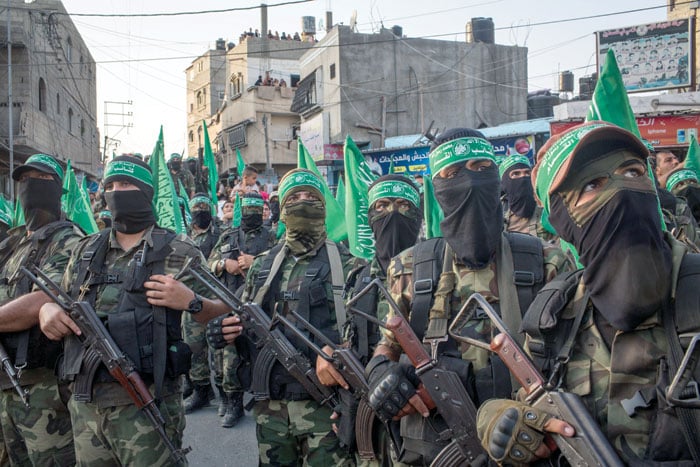
The year is coming to an end, but the fighting in Gaza will not. With nearly 20,000 Gazans (a great number of whom are Hamas terrorists) and nearly 500 (154 since the ground invasion) Israeli soldiers and 1,200 Israeli civilians killed in this deadly game of drones, winter is coming.

Those numbers are ugly, but they are not the only numbers.

It promises to be a longer winter than expected. Gaining operational control in the south has been more challenging than it was in the north. On-the-ground combat has intensified. The lives of IDF soldiers are at greater risk. It should have reduced the number of civilian casualties had Hamas not continued to use its people as couriers, decoys, and human shields.

More tunnels are being discovered and destroyed. The search for the remaining 113 living hostages goes on. The top commanders of Hamas are still alive, and Israel’s War Cabinet does not wish to leave them, intact tunnels, and stockpiled weapons behind.

This has inevitably led to more global criticism of the humanitarian crisis evolving in Gaza. Western powers that unreservedly support Israel’s right to defend itself are nonetheless sending contradictory messages about ceasefires. Even the Pope, normally ambivalent about Israel, has urged an end to the conflict.

Meanwhile, Hamas has vowed to wage another October 7 “again and again.” That public statement, combined with, “We are called a nation of martyrs and are proud to sacrifice martyrs,” pretty much gives Israel a green light to raze Gaza above and below ground.

You will continue to hear how 20,000 Palestinian deaths violates the law of proportionality. I am a longtime law professor and Middle East analyst who is writing a book about what proportionality means and how it works. Don’t believe what you are being told.

Given the gruesomeness of what occurred on October 7, and Hamas’ pride and promise of a repeat performance, Israel is under no legal or humanitarian obligation to restrain itself as long as their targets have credible and important military significance—regardless of the presence of civilians who chose to support Hamas rather than heed Israel’s warning.

It is Hamas that is legally responsible for the death of their civilian population by inhumanely keeping them in harm’s way. You won’t hear many “international lawyers” render such an opinion. Ignore them. Their law degrees are licenses to hate Jews.

Still, Israel is going to have to address mounting diplomatic pressure. Egypt has offered a ceasefire proposal that includes an Israeli hostage and Palestinian prisoner swap. The U.N. General Assembly overwhelmingly approved an immediate ceasefire resolution on December 12; the Security Council would have done the same had not the United States exercised its veto power. A new resolution is apparently on the table.

Meanwhile, there are voices in the Biden administration’s State Department, influenced by the progressive wing of the Democratic Party, calling for a reduction in military aid to Israel and an end to this lopsided war. The fact that Hamas is still launching rockets doesn’t seem to alter their foreign policy recommendation.

The good news is that their boss, Secretary of State Anthony Blinken, unexpectedly given his outsized role in the Iran Deal, has steadfastly understood the existential, military, and moral equities in Israel’s favor.

But polling in America (especially among young people) and Gaza are very disturbing. According to the Economist, 65% of Americans support a ceasefire. A Quinnipiac poll revealed that 45% of registered voters supported sending military aid to Israel, but it was at 54% the month before. Although Republicans are much more likely to side with Israel, support among both has diminished.

A Harris Poll revealed that among respondents ages 18-24, 51% believed that Israel’s existence should simply be brought to an end. Yes, you read that right. Apparently, those who chant, “From the River to the Sea,” know exactly what it means for Israelis. Indeed, 76% of them believe that Hamas actually committed mass raping and beheadings on October 7. That knowledge didn’t change their opinion about the elimination of the Jewish state.

Most Americans saw October 7 as an unjustified genocidal terrorist attack. Among young people, 60% believe such genocidal terrorism was justified. Here’s a paradox: slightly less than 80% of young Americans believe that Israel has the right to defend itself through airstrikes into densely populated areas, provided that civilian warnings are issued.

Huh? These kids today. Go figure.

The good news is that these numbers change dramatically with older respondents. The vast majority of Americans, 80%, believe that Hamas deploys human shields, and 75% hold Hamas, not Israel, responsible for endangering civilian lives. Go tell that to the Squad. Among young people, however, a slight majority blame Israel.

And as for Gazans, themselves, despite their land now reduced to rubble, humanitarian aid hijacked by terrorists, and lives sacrificed and displaced, support for Hamas is rising—in Gaza, and especially in the West Bank. Nearly 75% believe that Hamas was correct in launching the attack and massacre on October 7.

So much for captive civilians forced into serving as accomplices in war crimes. Only 10% believe that Hamas even committed war crimes.

As for all those young Americans and their knowledge gap about the Israel- Palestinian conflict, unless there is some massive infusion of basic civics and moral clarity, support for Israel will wither away. No one will realize that there is only one democracy in the Middle East, and America has nothing in common with Sharia-obsessed Muslims who behead infants, torch homosexuals, and lash women and wives.

We knew the day would come when Israel would be forced to ignore world condemnation and proceed with Operation Swords of Iron deliberatively and purposefully. Honest people understand that the plight of the Palestinians is merely a false flag in making antisemitism fashionable.

Armies throughout history did not fight wars on a clock. And Palestinians cannot be the only people somehow exempt from collateral damage. A nation either has a right to respond to a never-ending existential threat, or they don’t.

Legal and moral responsibility lies with terrorists who started the war and are still holding hostages. But Israel is cursed with a rare adversary. Palestinians deploy a secret weapon that can’t be defended without moral compromise and noise cancellation: “We don’t care about life—yours or ours.” Such monstrous bloodthirstiness leaves Israel with very few diplomatic options.

The Hamas Winter is Coming Read More »