fbpx

December 14, 2023

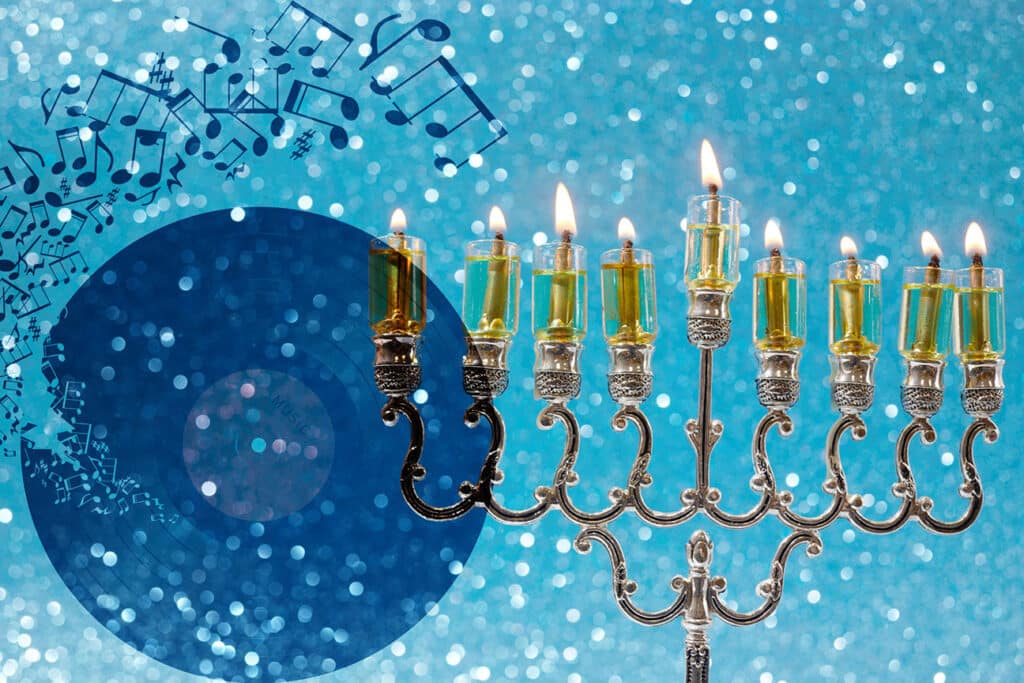
18 Under-the-Radar Hanukkah Songs to Add To Your Playlists

While Adam Sandler and the late Debbie Friedman are in a class by themselves with Hanukkah hits, the Journal has made a list of 18 more songs that are great not just for Hanukkah, but also for the 357 other nights of the year.

So in no particular order …

1)  “Hanukkah Song” –  Shira (Shiragirl)

A fun party anthem from punk singer Shira Yevin’s early days on the East Coast. These days, she fronts her eponymous band, Shiragirl, and runs Gritty in Pink, a female-led organization that empowers and connects diverse women in all aspects of the music business, from the artists to the recording engineers to the sales people at the merch stand.

LISTEN: https://open.spotify.com/track/1PE66srnRYqt3lIUHjnbW1?si=e3179bc3fe4b4f24

2)  “Eight Days of Hanukkah” – Artikal Sound System

A reggae jam from this South Florida group that takes you from each day of the Festival of Lights.

LISTEN: https://open.spotify.com/track/0XWcU0zXpAjC0bTD2jXBy1?si=a7969841b5d64825

3)  “Hanukkah Is Here” –  Zusha

It opens with the lyrics, “It’s dark outside but it’s light in here,” and flies from there. Zusha, a Hasidic funk band from New York City, headlined two different concerts in Los Angeles during Hanukkah in 2023.

LISTEN: https://open.spotify.com/track/3If2QbwCUPRE6z2WLT7Lnu?si=25b32715723142f0

4) “We’re Still Here (Am Yisrael Chai)” – Maccabeats

The Maccabeats all met at Yeshiva University 16 years ago, and now they’re one of the most well-known Jewish bands in the world today. While not exclusively a Hanukkah song, this is an anthem for the turbulent times preceding and following Hanukkah in 2023.

LISTEN: https://open.spotify.com/track/2Q4JyYiglprIuu1wOCasCR?si=7c84bf4fe8734202

5) “Hanukkah Honey” – Laya Frankel

In a world full of cheery Christmas songs, Layla Frankel’s sound would fit at any concert covered in mistletoe. “It’s the best eight days of the year,” she says.

LISTEN: https://open.spotify.com/track/79BZMfKWKv1vPXLm8RLBoa?si=9a3b068284084ad1

6) “Hanukkah” – Static & Ben El Tavori

Just a pure fun tune from the Israeli pop duo of Static & Ben El Tavori.

LISTEN: https://open.spotify.com/track/4VDrcf17m0AE6CMekgvCAA?si=b975be35da4b4fc8

7) “Happy Chinooka” – Gangstagrass featuring Kosha Dillz

Gangstagrass is a bluegrass and hiphop fusion band from Brooklyn. In 2022, they recorded this song with rapper Kosha Dillz. This past week, Dillz had thousands of fans bouncing with him at The Village Synagogue’s annual Hanukkah party this year at Pan Pacific Park. “Happy Chinooka”—It’s fun to say too.

LISTEN: https://open.spotify.com/track/3h7I35P4b62cF3Q22H6P2M?si=745d699c0dd74f74

8) “Aish” – Yaakov Shwekey

It plays like a song you’d hear during a timeout of an NFL game. It has tension and a beat that crescendo with an energetic chorus. Yaakov Shwekey’s a belter.

LISTEN: https://open.spotify.com/track/2ipeQ33o1VphoYPkTFZggw?si=2f330c28771a4ad2

9) “Ocho Kandelikas” – Idina Menzel

There have been many covers of this 1983 Judeo-Spanish tango song, with Idina Menzel’s rendition being superb.

LISTEN: https://open.spotify.com/track/6YIgAkok2YBMlyheciDhS6?si=a21732daba544911

10)  “Eight Days and Nights” – Adam Chester

It sounds like a song Elton John would write. Fittingly, pianist/vocalist/songwriter Adam Chester has performed in Sir Elton John’s rehearsal band since 2005 as Elton’s only “stand-in” on the piano and vocals.

LISTEN: https://open.spotify.com/track/63x35a931jg5IBryfynwN9?si=1d3499a26bf547b4

11) “You Can Light With Me – A Taylor Swift Hanukkah” – Y-Studs

Swiftes will recognize quite a bit of influence in this “story of Hanukkah” song from this New York-based acapella group.

LISTEN: https://open.spotify.com/track/2dkvmhtDruqoeJCtjsAK4X?si=0d0fc8e8d18a40a4

12) “I See Fire” – Pinny Schachter

Even if this song wasn’t titled “I See Fire,” the sound is the exact kind of tune that gets concert crowds to lift up their lighters. Schachter is a Cantor at Beth T’filoh Congregation in Baltimore.

LISTEN: https://open.spotify.com/track/1DNNWvFU4nlGCD0gcUYjFu?si=1e2baf3ad2114457

13) “Spin It Up” – Erran Baron Cohen featuring Jules Brookes

Another catchy reggae song that will have you bouncing to Cohen’s song. The extended instrumental crescendos with a the simple “Spin it up, spin it up, I want to rise to the top.” He’s also the big brother to Sacha Baron Cohen and produces the music for his films.

LISTEN: https://open.spotify.com/track/2EAYGeBne31SqjQ1tqB7k3?si=4f0e5cb76a334f15

14)  “Oseh shalom” – R E L Music

Los Angeles-based R E L (Arielle) released this song on Night Six of Hanukkah this year, as a gift to Jewish music-lovers with a taste for a fresh, cinematic-sounding take on “Oseh Shalom.”

LISTEN: https://open.spotify.com/track/6hNy341DQcxdNuexF3OP6d?si=db6ff33c055d44e9

15) “Daughters of Israel” – Sara Mann

Mann’s song “Daughters of Israel” teeters on the fine line between heartbreaking and inspiring. Do your first listen while watching the music video. This Los Angeles-native session singer has been on numerous soundtracks and television shows, including “Frozen 2,” and “La La Land.” She has also been a featured singer for Miley Cyrus, Harry Belafonte and Leonard Cohen, among many other superstars.

https://open.spotify.com/track/15dH0RVs7FSFkmFGwXRGJH?si=cea54ac68ace4820


View this post on Instagram


A post shared by Sara Mann (@sara_mann)

16) “Illuminate” – Debbie Gibson

In 1987, Gibson set the Guinness World Record at 16 as the youngest artist ever to have written, produced and performed a Billboard #1 single, for the song “Foolish Beat.” She still holds that record. Even though she isn’t Jewish, she wrote an original Hanukkah song, which inspired the Journal’s Jonathan Fong to interview Gibson in 2022 and find out the story.

LISTEN: https://open.spotify.com/track/71Zn0VPKbgSTVJi4euIFub?si=8f082b627e0b452e

17) “Hanukkah Song 3.0” – Nissim Black and Kosha Dillz

A sampling of Adam Sandler’s eternal three-chord melody, with a fresh hip-hop remix by Nissim Black—one of the biggest names in hip-hop today. Black was on the cover of the Jewish Journal in 2023 where he shared his story from hip-hop gangsta rapper, to “Bible-thumping Christian” to Hasidic hip hop superstar.

LISTEN: https://open.spotify.com/track/2gArcdJWVGk6KYvGqELG84?si=819af762d2314a6b

18) “Dear Hanukkah” – Polly Wolly

Polly Wolly has gone viral several times this past fall with her hysterical comedy-hip hop performance at a Los Angeles retirement home. For those videos, check out her Instagram. “Dear Hanukkah” is one of her first songs in the genre, released over six years ago. She’s Philadelphia-raised and Los Angeles-based, and is cornering the comedic side of being a young Jewish professional in the 2020s. WARNING: Explicit lyrics.

LISTEN: https://open.spotify.com/track/2JIpkb8ApRslR2l1mpGvZh?si=2b6fa535b1854eb9

Five More Recommendations…Happy Hanukkah

“Happy Hanukkah”  – Matisyahu

https://open.spotify.com/track/0BSBzobfETKbKYe5ZJWkFj?si=b132b6944c2948c1

“My Eight Favorite Nights” – Distant Cousins

LISTEN: https://open.spotify.com/track/0FXj1nYG54kmlOQBNVRSmV?si=1b758840f8c34ce1

“Ner Li” – Benny Friedman

LISTEN: https://open.spotify.com/track/5Bb6DuJCdElbeFTUUbtIHI?si=5c5fdd15881b43b2

“Hanukkah Honey” – Rachel Bloom, from her full album “Suck It, Christmas!!! A HanukkahAlbum)

LISTEN: https://music.apple.com/us/album/suck-it-christmas-a-Hanukkah-album/753057099

Adam Sandler’s Four Magnum Opuses

LISTEN: https://open.spotify.com/playlist/0fdltelmWov4fNZOOlHcbf?si=3795830c85af42db

18 Under-the-Radar Hanukkah Songs to Add To Your Playlists Read More »

LAJHealth Opens Second Brandman Center for Senior Care on Westside

The Brandman Centers for Senior Care (BCSC), a PACE program of Los Angeles Jewish Health (LAJH), has opened a new location at 9800 Pico Blvd., at the corner of Roxbury Drive. It is the second LAJH PACE program, with the first located on its Reseda campus.

PACE (Program for All Inclusive Care for the Elderly) is a joint program of the Centers for Medicare and Medicare Services (CMS), the state and individual PACE organizations. The program provides and coordinates all needed preventative, primary and acute long-term health services for those 55 years or older in a centralized location. The objective of a PACE program is to allow those who require nursing home care to instead live independently in their own homes while receiving a myriad of health services at the PACE center. Participants must reside in a designated PACE service area and be eligible for nursing home care. LAJH estimates the center will serve approximately 450 to 500 persons.

At grand opening ceremonies held recently at the center, Susie Fishenfeld, BCSC vice president said: “(This) has been a dream, a long time in the making as we worked to find the perfect location that will benefit the most seniors from the local community. Our PACE centers empower seniors to continue living independently at home while receiving vital services at thriving activity centers located near them.”

Program participants receive medical care onsite from doctors, dentists, nurses, and therapists whose specialties include primary and specialty care; medications; nutritional counseling, state-of-the-art medical equipment and supplies; optometry, hearing aids, podiatry and mental health counseling. It also provides transportation to and from the PACE center for medical appointments, with emergency and urgent care available 24 hours a day, seven days a week. The program accepts Medicare, Medi-Cal and private pay.

“Today is a very special day for all of us at Los Angeles Jewish Health,” Dale Surowitz, LAJH chief executive officer said at the event which included a ribbon cutting ceremony and open house. “We are immensely grateful to Joyce Brandman and the Saul and Joyce Brandman Foundation for funding this second Brandman Center for Senior Care PACE location.”

The new BCSC location will cover those who reside from the Pacific Ocean to downtown Los Angeles and through Inglewood. Valley residents are covered by the Reseda BCSC location. LAJH will continue to serve all cultures and ethnicities and projects it will increase its number of Farsi speaking and Jewish patients due to the Westside location.

Los Angeles Jewish Health, a non-profit health system formerly known as the Los Angeles Jewish Home, cares for approximately 4,000 seniors each year.

Community members gather for grand opening ceremonies

LAJHealth Opens Second Brandman Center for Senior Care on Westside Read More »

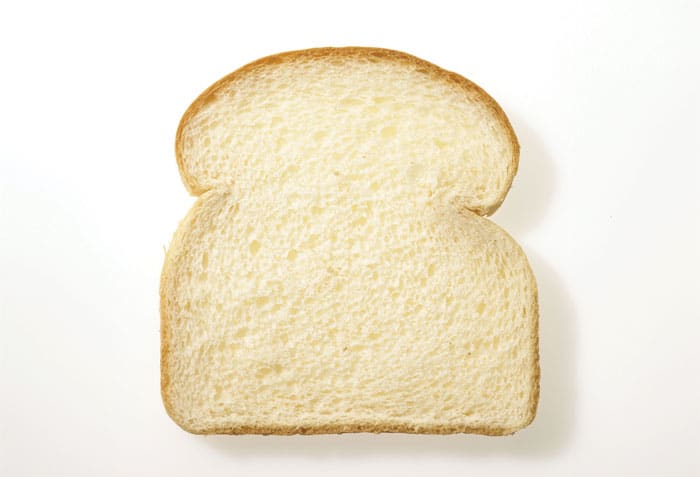
They Heard There’d Be Bread: A poem for Parsha Miketz

[When] Joseph saw Benjamin with them, he said to the overseer of his house, “Bring the men into the house and [give orders] to slaughter an animal and to prepare, for the men will eat with me at lunch.” – Genesis 43:16

In the time of Joseph, in the nation of Egypt
lunch was the first meal of the day.
It sounds counterintuitive as all the rest of

our sacred learning teaches us that
breakfast is the most important.
But Joseph’s brothers, at his insistence

and without knowing they shared his blood
agreed to come because they heard
there would be bread there and that’s

the whole reason they came to town.
Bread was scarce in Canaan and you
can’t base a neighborhood on a location

where there’s nothing to eat. They grovel
and prostrate, which is often how I am
when I’m hungry, but it’s never really

the emergency it was for them.
I’m lucky like that. I’ve got so many loaves
of bread, the breadbox demanded more money.

But I know it’s not like that for everyone.
And it sometimes feels like it’s held together
by a fragile thread. Anything could break it.

I might have to wander to the next town
to grovel for my lunch. Present their Joseph
with whatever they ask for just so my stomach

stops rumbling. This is the fire that keeps my
fingers moving. This is my portion of wheat.
This is my luck in life.


Rick Lupert, a poet, songleader and graphic designer, is the author of 27 books including “God Wrestler: A Poem for Every Torah Portion.” Find him online at www.JewishPoetry.net

They Heard There’d Be Bread: A poem for Parsha Miketz Read More »

A Bisl Torah – Extinguish or Ignite

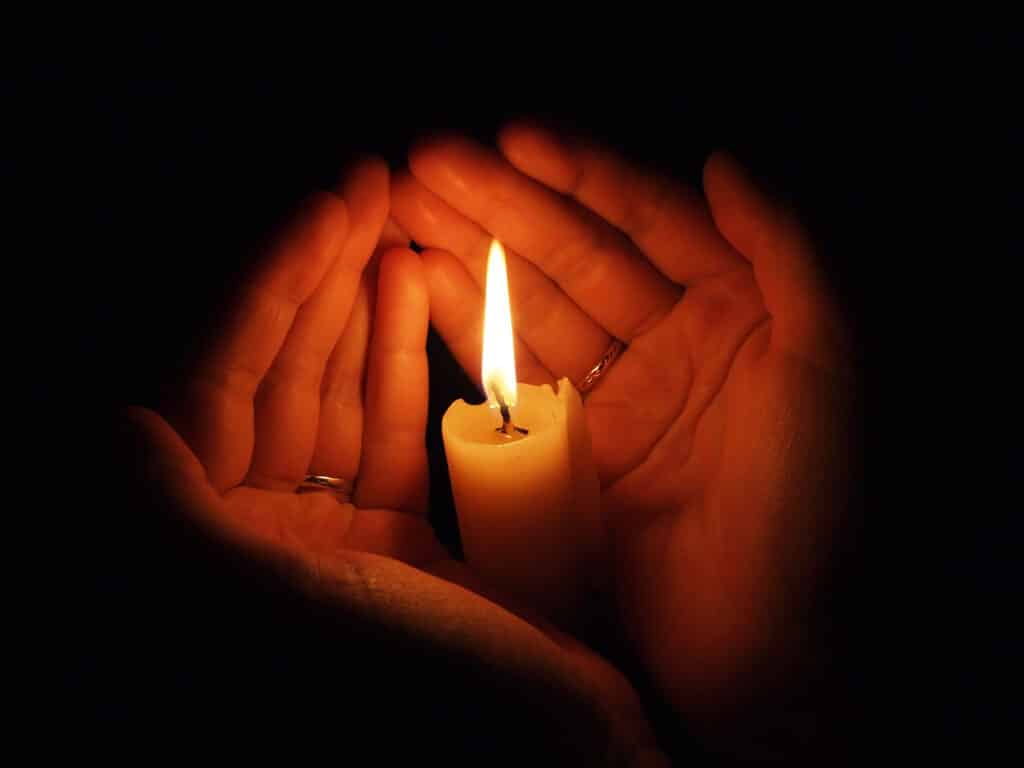
It is easy to extinguish one’s flame. Think of how many times we experienced an uplifting day only to be quashed by one person’s negative words or insults. In receiving a job evaluation, we tend to focus only on suggested improvements instead of words of praise. Our tendency is to allow our light to go out. Be it from comments or mood, we allow someone else to determine how bright our light will shine. And yet, our tradition encourages the nourishment of one’s own inner spirit. We control whether someone else dims our spark. Instead, we can choose to ignite the flames within.

Rav Kook teaches, “Every person must know and understand that deep within them a candle burns, and their candle is unlike the candle of any other. There is no person without a candle. Every person must know and understand that it is upon them to toil and reveal the light of their candle for others. They must kindle them into a great torch that will illuminate the entire world.”

It is on us whether our light will be revealed. We cede too much power to others. The choice is ours: extinguish or ignite?

May this be the year in which your spark is brighter than ever. We need your light.

Happy Hannukah and Shabbat Shalom


Rabbi Nicole Guzik is senior rabbi at Sinai Temple. She can be reached at her Facebook page at Rabbi Nicole Guzik or on Instagram @rabbiguzik. For more writings, visit Rabbi Guzik’s blog section from Sinai Temple’s website.

A Bisl Torah – Extinguish or Ignite Read More »

A Moment in Time: “The Soulprint of our Lives”

Dear all,

Maya and Eli spent time over this past weekend painting. As I gazed at their (not so little anymore) handprints, I thought about all the incredible things their hands will do over the course of their lives.

Just as the works of our hands impact the world, we also have a profound opportunity to transform the world through the kindnesses of our souls.

I call this our “soulprint.”

How will your soul, your time on earth, touch others?

What words will you use, what love will you share, what spirit will you nurture?

Though our moment in time on earth is limited, our soulprint has eternal possibilities.

What difference is your soulprint making today that will reshape tomorrow?

Maya and Eli’s hands created quite the mess. But soap and water made it disappear. But the memory we created is imprinted in my soul forever!

With love and Shalom,

Rabbi Zach Shapiro

A Moment in Time: “The Soulprint of our Lives” Read More »

Lisa Brown, Illustrator of Lemony Snicket’s “The Latke Who Couldn’t Stop Screaming”

The Latke Who Couldn’t Stop Screaming: A Christmas Story” by Lemony Snicket is back in print.

The beloved tale, first released in 2007, is about an angry latke (hence, the screaming), who jumps out of a pan of hot oil and runs away. On his journey, the misunderstood potato pancake encounters various symbols of Christmas: colored lights, a candy cane and a pine tree.

It’s a light-hearted, slightly off-kilter, educational tale.

“Basically it was my husband (Daniel Handler aka Lemony Snicket) writing me a story,” Lisa Brown, the book’s illustrator, told the Journal. “That’s me on Hanukkah, as a Jewish person in a mostly Christian nation.”

Brown, a New York Times bestselling illustrator, author and cartoonist, doesn’t remember exactly how the book came about, but she did share their creative process.

“What often happens is my husband will show me something he has doodled out, and we decide to go with it,” she said. “We’re both Jewish, we both love latkes and we both feel that Hanukkah is a bit misunderstood.”

The story is about feeling out of sorts, outside of a major holiday, and finding common ground.

“Everyone feels excluded sometimes, and everyone feels angry sometimes, and makes a big fuss, like the latke,” she said. “But then, eventually, we hope to find our own place in the world.”

While Brown’s husband is the main chef in their home, Brown says she “cooks-ish.” She is the sous chef.

“I love [to make and eat] pizza more than anything else, except for perhaps cookies,” she said. “I guess it’s all about the round and flat things for me.”

She also makes pancakes, fried eggs and latkes.

“Oddly I’m the only one who’s made latkes in our nuclear family,” Brown said. “My mother-in-law is the main latke maker in the family, and I try to replicate her amazing recipe.” That latke recipe is below.

Brown’s favorite Hanukkah tradition is eating. “I am very partial to things fried in oil,” she said. “Potatoes fried in oil. Donuts are pretty magical.”

Her favorite Christmas tradition: Chinese food and a movie. Also fitting, her dog is named Eggroll.

“He was a stray and his shelter name was Eggnog because he was found in December,” she said. “My husband and I said, ‘We’re Jews. We can’t have a dog named Eggnog, and I’m not partial to Eggnog myself. So we thought, well, what did Jews have on Christmas? Eggrolls.”

So what is the connection between food and community? Brown said it’s universal; it’s cross cultural.

“A lot of it is about just sitting down and doing one thing together,” she said. “Hopefully you’re not on your phones or watching television or whatever, but you’re all doing the same thing and interacting with your plate and interacting with each other.”

Brown and her husband enjoy hosting dinner parties. Their dessert course is always a cheese plate that they pass around.

“There’s all sorts of good things on it, [like] chocolates, and it encourages everyone to linger,” she said. “So not so much food, but a meal is what brings people together.”

The same thing can be said about picture books about children’s books.

“Often you’re reading them in tandem with another person; an adult is often reading it to a child,” she said. “I always say that it is an interactive medium because you’re sharing the experience with someone else. You’re not reading alone, necessarily.”

Brown says they had no idea their book would become so popular and that the latke would be so beloved.

“It was actually made into a musical, which I have never seen because it was performed in London a number of years ago, around Christmas time,” she said.

And she loves being part of Hanukkah/Christmas iconary.

“I’m much less grumpy than I was when I was younger about Christmas,” she said. “I just love that people can get together and celebrate winter in whatever way they do.”

In fact, Brown says her favorite character in the book is the tree.

“The latke says, ‘Christmas is a totally different thing. … this is Hanukkah, it has nothing to do with you,’” she said. “And the tree says, ‘Sometimes different things can come together to make something new.”

For more from Lisa Brown, go to AmericanChickens.com.

For more about the book, go to McSweeneys.net

For the full conversation, listen to the podcast:

Watch the interview:

Lisa’s Mother-in-Law’s Latkes

4 russet potatoes

½ cup onion, grated

a handful of fresh parsley, chopped

~ 1 cup breadcrumbs

2 eggs, beaten

salt and pepper to taste

oil for frying

Peel and grate 4 russet potatoes. Keep in a bowl of cold water until you finish grating. When you are ready to use, drain liquid and use a towel to remove excess moisture from the potatoes.

In a bowl, combine potatoes, onion and parsley. Add enough breadcrumbs to hold potatoes together. Stir.

Add eggs and salt and pepper to taste. Stir to combine.

Take a handful of the mixture and squeeze out excess moisture. Flatten into a disc.

Heat oil in a shallow pan.

Fry the latkes a few at a time; you do not want to crowd the pan. Cook time is approximately 2 to 3 minutes per side; be sure to turn them halfway.

Serve hot and enjoy.


Debra Eckerling is a writer for the Jewish Journal and the host of “Taste Buds with Deb.Subscribe on YouTube or your favorite podcast platform. Email Debra: tastebuds@jewishjournal.com.

Lisa Brown, Illustrator of Lemony Snicket’s “The Latke Who Couldn’t Stop Screaming” Read More »

A Festival of Light Amid the Fire

A few weeks before Hanukkah, my wife and I traveled with our child and her middle school toWashington, D.C. for an Israel solidarity rally. Surrounded by thousands of fellow Jews I felt comfortable in my religious heritage. But once we returned home to New York the bullish facade lifted, leaving me searching for cheer in a holiday season marked by anxiety.

Growing up in a mostly secular household, I found relief in the eight nights of Hanukkah. Its tradition of gift-giving, jelly donuts, candle lighting and dreidel games was a way for me to be Jewish without the heaviness of synagogue services conducted in a language I did not understand. The festival of lights also allowed me to participate in the Christmas season’s celebratory vibe, lessening the awkwardness I felt navigating a Christian-centric world.

After getting married and becoming a father, I became more focused on religious engagement. Along with my wife and child I attended synagogue every Shabbat and celebrated all the Jewish holidays.

We also visited Israel often to see my wife’s family. These trips have made us feel a deep connection to the Jewish State.

I was thankful to be raising a family in a country with low levels of anti-Semitism, and to see Israel grow into an economic and military power. When I placed our lit Hanukkah menorah in our window, I did so as an expression of our good fortune to be living in a “Jewish golden age.”

Even though we have Israeli nieces and nephews in military uniforms, my household will emphasize Hanukkah’s escapist aspects. After two months of cycling through anger, fear, and sadness, we need the holiday’s lightness.

When it was originally added to Judaism’s religious calendar, Hanukkah was all about the Maccabees. They won a war against the Seleucids, who had desecrated the temple and outlawed Jewish worship.

Centuries later, rabbis added the legend about the small container of oil used to light the menorah during the temple’s rededication miraculously lasting eight days. Judaic scholars believe that the oil story was added to draw attention from the military victory, in which God played no role, and highlight a miracle that could only involve the hand of providence. The oil story also distracts from the fanatical Maccabees–who slaughtered fellow Jews they deemed insufficiently religious.

In celebrating Hanukkah, Israelis focus more on the military victory than do American Jews. They relate the Maccabees’ triumph to their own wars of survival, with Prime Minister Netanyahu fondly calling the I.D.F. “the new Maccabees.”

While a militaristic mindset may have opened Israeli eyes to the war behind the oil legend, a cousin told me that his country’s glorification of the Maccabees reflected a dangerous triumphalism — an overconfidence that encouraged his fellow citizens to dismiss the impracticality of ruling over millions of Palestinians.

I had my own blind spot. Before 10/7 I was primarily concerned with white supremacy and downplayed anti-Semitism on America’s political left.

Lulled by multiculturalism’s facade of tolerance, I was startled by protestors chanting “From the river to the sea” and pro-Hamas sentiment on campus. Meanwhile the alt-right is writing a new chapter on anti-Semitism through the “white replacement theory” being peddled by Elon Musk and Tucker Carlson. Jew-hate is trending on both sides of the political spectrum.

I imagine that in many Jewish households the military victory that Hanukkah celebrates will get equal billing with gift-giving and jelly donuts. Tales of heroism can provide comfort in times of vulnerability.

Nonetheless the current crisis has not dismantled all the guardrails protecting Jewish life. Most Americans roundly reject the alt-right’s hateful ideology, and the Jewish State has bipartisan political support. America is still good for the Jews.

Meanwhile, Israel is still far stronger than her enemies. The Jewish State will not be dislodged anytime soon.

But over the past two months my comfort with my Jewish-American identity has morphed into wariness. Similarly, it is unclear what type of country I will be visiting the next time I see my Israeli relatives. All I know is that it will be a less confident, more uncertain place.

Over the past two months my comfort with my Jewish-American identity has morphed into wariness. Similarly, it is unclear what type of country I will be visiting the next time I see my Israeli relatives. All I know is that it will be a less confident, more uncertain place.

No matter the fallout from 10/7, the Jewish calendar continues to turn and Hanukkah is nearly here. Even though we have Israeli nieces and nephews in military uniforms, my household will emphasize Hanukkah’s escapist aspects. After two months of cycling through anger, fear, and sadness, we need the holiday’s lightness.

One of our family traditions is to wear three-dimensional eyeglasses that distort our candle flames into funny shapes. Yet this year, while placing our menorah by our window, I will be sure to remain clear-eyed while looking at the fire raging outside.


Ben Krull’s work has appeared in The New York Times, Washington Post, New York Daily News and other publications.


A Festival of Light Amid the Fire Read More »

Lawsuit: Jewish Student Faced Antisemitic Discrimination from Carnegie Mellon Profs

The Lawfare Project announced on Wednesday that they have filed a lawsuit against Carnegie Mellon University for failing to act against antisemitism that a student (who graduated in 2023) had been facing from her professors.

The complaint focuses on allegations that the student, Yael Canaan (who is Jewish and of Israeli descent), had with one of her professors, Mary-Lou Arscott, who became the Associate Head for Design Fundamentals for the School of Architecture in 2021. The complaint alleges that Arscott denied Canaan’s request for an extension on a homework assignment in 2018 so she could attend a memorial service for those who were murdered in the Tree of Life synagogue shooting. A more recent allegation is that in May 2022, Canaan — an architecture student — was working on a model of New York City that converted “a public space into a private space through an eruv,” which the complaint defines as “a small wire boundary that symbolically extends the private domain of devoutly religious Jewish households into public areas, permitting activities within it that are normally forbidden in public on the Sabbath.”

Arscott, the complaint alleges, accused Canaan’s model of resembling “the wall Israelis use to barricade Palestinians out of Israel. This shocked Canaan, who then tried to regain her composure and finish her presentation. But when Canaan finished, Arscott said only that Canaan’s time would have been better spent if she had instead explored ‘what Jews do to make themselves such a hated group.’

“Canaan immediately approached her studio professor at the time to report the incident, but the professor simply told her not to worry because Arscott would not be grading her.” The complaint claims that “Canaan left class demoralized, shaken, and afraid.”

The complaint proceeds to state that Canaan reported the incident to the architecture school’s Diversity, Equity and Inclusion (DEI) Director Erica Cochran Hameen, who allegedly said she was “shocked and appalled” by the incident and pledged she would talk to Arscott, but she never did, according to the complaint.

Canaan eventually discussed the incident with Gina Casalegno, the university’s dean of students, the following month; Casalegno said that she would go on a “casual walk” with Arscott to discuss the matter and that she would follow up with Canaan after the walk. Two months later, Casalegno told Canaan that she had a “thoughtful conversation” with Arscott and that a meeting would be arranged between Canaan and Arscott. Canaan was under the impression that Arscott would be apologizing in that meeting; however, when the Zoom meeting between the two occurred the following November, “Arscott refused to apologize and expressed no remorse for her conduct,” the complaint alleges. “She stated to Canaan only, ‘I’m sorry you felt that way.’ Canaan realized that the DEI Office had done nothing to ‘facilitate’ or prepare Arscott in any way, or even to inform Arscott about what Canaan reported.”

Shortly thereafter, Arscott sent Canaan an article from a website called The Funambulist; the complaint describes the website as promulgates “antisemitic and anti-Israel articles, including articles that promote pictures of terrorist organizations throwing Molotov cocktails at Jewish people and that decry the ‘Judaization’ of a region of Israel. It is filled with article titles that refer to ‘Israeli Apartheid’ and ‘Israeli Police: The Daily Practice of Collective Punishment Against Palestinians.’ A sample passage in a Funambulist article states: ‘[Y]ou never make concessions to the oppressor. If you’re going to get punished, and you might, if you piss off Zionists, it’s always a possibility, right, then stare the oppressor in the face, and take whatever punishment is coming. Don’t concede, don’t start apologizing … The Palestinians aren’t backing down, nor should we … [we] do not make concessions to the oppressor.’” Arscott referred to the Funambulist article as being “insightful” and encouraged Canaan to read it.

Canaan reported the matter to Casalegno and Wanda Heading-Grant, the university’s chief diversity officer and vice provost of DEI. Heading-Grant, who the complaint says was copied on Arscott’s email, apologized to Canaan, but claimed that she couldn’t do anything to address the matter and referred her instead to the university’s Office for Institutional Equality and Title IX. But when Canaan met with Title IX Coordinator and Assistant Vice Provost for DEI Elizabeth Rosemeyer, she was “aggressively discouraged” against filing a complaint, as Rosemeyer contended that it “would take too long and would require extensive work on both of their parts” and would not be completed when Canaan graduated the following year.

The complaint further alleges that in the 2022-23 academic year, Canaan had two professors who are “beholden” to Arscott and engaged in retaliatory behavior against Canaan for reporting her. One professor, Theodossis Issaias, invited his students to a party at Arscott’s house after Canaan told him about her interactions with Arscott.  “When Canaan mentioned how disturbed she was that Issaias would choose Arscott’s home as a venue for a class party, Issaais told Canaan that ‘breaking bread is a process of reconciliation’ and that Canaan needed to stop ‘acting like a victim’ and that he was ‘not there to fight her battles for her,’” the complaint states. “He complained that Canaan was ‘calling all of us antisemites,’ and stated that he ‘cannot be an advocate for the Jews.’”

From thereon out, Issaias refused to provide Canaan with “one-on-one” guidance that he gave other students, publicly humiliated her in front of other students and gave her “a lower grade than her classmates in the same group for a group project.” Canaan was also allegedly the only student to be excluded from Issaias’ booklet of students’ work “distributed to students, professors, and community members to help market the students’ skills in hopes of developing their portfolios and job prospects.” Canaan received a “C” grade in the class semester despite receiving “A” grades in all her other classes, which she attributed to retaliatory behavior from Issaias.

The following semester, Canaan was enrolled in one of Professor Priyanka Bista’s classes. In Bista’s class, Arscott would come in-person for a studio review every other week. Canaan informed Bista about her incident with Arscott, but Bista claimed that she was unable to change her arrangement with Arscott since she owed her employment to Arscott. Bista eventually came up with a “compromise” in which Canaan could leave class whenever Arscott was scheduled to show up in person. “This ‘compromise’ meant that Canaan could only stay for a small portion of a four-hour studio class, the most important class for any architecture student … Canaan never knew when Arscott would join the class — she could and did come in at any time, without warning. The resulting anxiety triggered the migraine headaches and other physical symptoms. Canaan therefore missed most of the class that semester.” Consequently, “Canaan became lonely, depressed, and her grades suffered.”

The complaint alleges that Canaan kept searching for someone in the university administration to help her, to no avail. Further, the complaint alleges that the university’s inability to remedy the situation was intentional, arguing that the university received $591,571,726 from Qatar from 2004-19 and that Arscott herself “has spent professional time in Qatar — which shelters and protects antisemitic, anti-Jewish and anti-Israel terrorist organizations.”

“A November 2023 study found that ‘[f]rom 2015-2020, Institutions that accepted money from Middle Eastern donors, had, on average, 300% more antisemitic incidents than those institutions that did not,’” the complaint states. “By accepting outsized ‘donations’ from Qatar, [CMU] officials were incented not to address antisemitic and anti-Israel incidents, like the treatment of Canaan, so as not to jeopardize its lucrative relationship with Qatar.”

By failing to ameliorate the situation, Carnegie Mellon did not enforce its policies and is in violation of Title VI of the Civil Rights Act, the complaint alleges.

“The pervasively toxic environment found on college campuses across the country, which, in many instances, has been funded by Qatar, has resulted in the illegal discrimination against Jewish students,” The Lawfare Project Executive Director Brooke Goldstein said in a statement. “We are proud to be representing a brave student willing to stand up for Jewish civil rights and we will make every effort to ensure that justice is achieved.”

A university spokesperson said in a statement to the Journal, “We are steadfast in our commitment to create and nurture a welcoming, inclusive and supportive environment where all students can reach their potential and thrive. We take any allegations of mistreatment or harassment seriously. We have just received notice of this lawsuit and we will evaluate and respond to it.”

Arscott, Issaias, Rosemeyer and Casalegno did not respond to the Journal’s requests for comment. The Office of the Vice Provost for Diversity, Equity and Inclusion and Chief Diversity Officer for the university as well as KTK-BELT, which Bista co-founded, also did not respond to the Journal’s requests for comment.

Lawsuit: Jewish Student Faced Antisemitic Discrimination from Carnegie Mellon Profs Read More »

WINNER: Diversity in TV/Streaming at NAEJ 2023 Awards

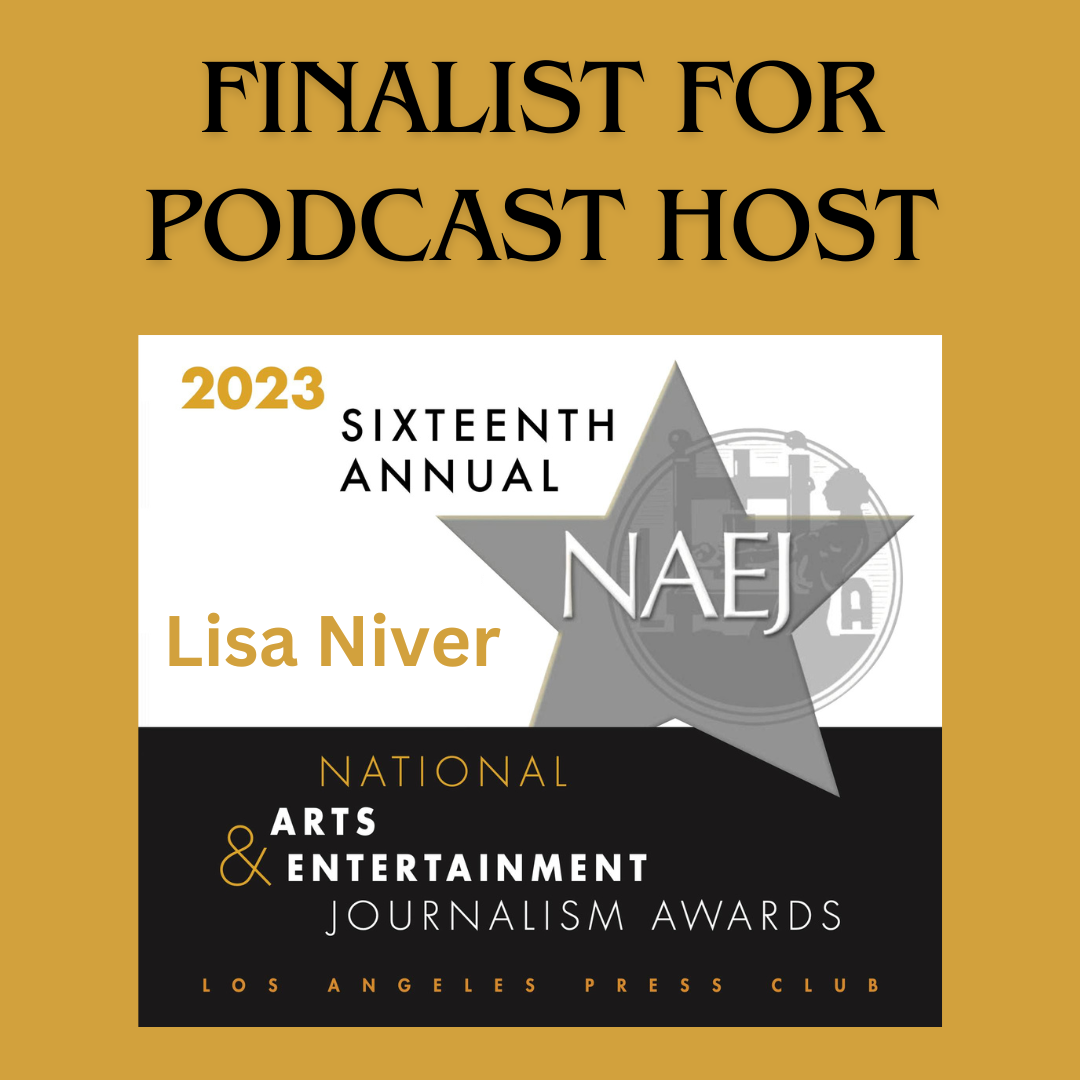
Thank you to the 16th annual National Arts and Entertainment Journalism Awards 2023! I won 2nd place for Diversity in Entertainment and was a finalist for both Podcast host and Personality Profile.

K6. Diversity in the TV/Streaming Industry

2nd place: Lisa Niver, We Said Go Travel, “Unveiling the Uncharted: Jeff Jenkins on Embracing Life Beyond Comfort Zones

Lisa Niver and Jeff Jenkins filming in Miami November 2023 with ReachTV network!

https://youtube.com/shorts/06AHespkD1s

J1. Radio/Podcast Anchor/Host FINALIST

* Lisa Niver, PODCAST: Make Your Own Map, “Lisa Niver HOST of Make Your Own Map

K10B. Personality Profile, TV Personalities

Lisa Niver, Jewish Journal, “Walking with Andrew McCarthy

From the Los Angeles Press Club: “For the 16th National A&E Journalism Awards, our judges carefully reviewed more than 1,600 entries, and you came out on top with the best A&E reporting in the nation.”

Thank you to Jeff Jenkins of Never Say Never and Andrew McCarthy of Walking with Sam for the interviews that led to these nominations. Thank you to ALL of my podcast guests and listeners from 41 countries on 6 continents. YAY!

USA 🇺🇸  India 🇮🇳 Canada 🇨🇦  Ireland 🇮🇪Puerto Rico 🇵🇷  UK 🇬🇧   Italy 🇮🇹  Australia 🇦🇺 Philippines 🇵🇭 Singapore 🇸🇬  New Zealand 🇳🇿 Portugal 🇵🇹 Saudi Arabia 🇸🇦 Switzerland 🇨🇭 Hong Kong 🇭🇰   Mexico 🇲🇽  Japan 🇯🇵  Fiji 🇫🇯 Seychelles 🇸🇨 France 🇫🇷 Latvia 🇱🇻  Netherlands 🇳🇱  Kenya 🇰🇪  UAE 🇦🇪 Cambodia 🇰🇭 Israel 🇮🇱Guatemala 🇬🇹 Germany 🇩🇪 Uruguay 🇺🇾 Bangladesh 🇧🇩 Spain 🇪🇸 Panama 🇵🇦 Thailand 🇹🇭 Uganda 🇺🇬   Greece 🇬🇷  South Africa 🇿🇦 Costa Rica 🇨🇷 Bosnia and Herzegovina 🇧🇦  Sri Lanka🇱🇰Romania 🇷🇴   Pakistan 🇵🇰

Thank you to the Los Angeles Press Club and Diana Ljungaeus, Executive Director! At the Gala on December 3, 2023,

OUR HONOREES FOR THE GALA: Barbara Eden will be honored with the Legend Award. Henry Louis Gates, Jr., host/producer/writer of PBS’ “Finding Your Roots” will receive the Luminary Award for Career Achievement. Legendary actor and educator LeVar Burton will be honored with the second Distinguished Storyteller Award for his Literacy Impact and director/writer/producer Ava DuVernay will accept the Visionary Award for Humanitarian Work. Iconic writer, director and producer Roger Corman is set to accept Los Angeles Press Club’s Distinguished Storyteller Award for filmmaking.

This year’s National A&E Journalism Awards Gala is dedicated to the memory of Bob Barker, the very first Legend Awardee and a cherished friend of the LA Press Club.


Lisa Niver has won many awards! From 2017 to 2023, in the Southern California Journalism Awards and National Arts and Entertainment Journalism Awards, she has won six times and been a finalist twenty-five times for a variety of broadcast, print, podcast and digital categories.

More about Lisa Niver: https://lisaniver.com/awards/

LOS ANGELES, CALIFORNIA – OCTOBER 16: BJ Korros and guest attend the Los Angeles Press Club’s 63rd Annual Journalism Awards Dinner at Millennium Biltmore Hotel Los Angeles on October 16, 2021 in Los Angeles, California. (Photo by Robin L Marshall/Getty Images)
Jewish Journal Wins Two LA Press Club Awards and Several Other Honors

WINNER: Diversity in TV/Streaming at NAEJ 2023 Awards Read More »

Print Issue: Poison Ivy League | Dec 15, 2023

CLICK HERE FOR FULLSCREEN VERSION

Print Issue: Poison Ivy League | Dec 15, 2023 Read More »