fbpx

November 21, 2023

There Is Plenty for American Jews to Be Thankful For

As Americans prepare for our annual 96-hour bonanza of turkey, stuffing, football and shopping, Jews in America have plenty to be thankful for.

Yes, the whole October 7th massacre was a downer. Anti-Jewish genocide remains a buzzkill. No, Dr. Pangloss did not create a child with Pollyanna to rewrite history. By any honest measure, being Jewish in America remains an overwhelmingly positive experience.

The terrorist attacks were evil, and decent Jews everywhere pray the hostages return home safely. Yet while we feel emotional pain, we do so from the luxury of our comfortable American safe havens. While the loss of even one Jew is a tragedy, most of us do not know the hostages personally. For the most part, our own families in America are safe and sound.

There are still many reasons why American Jews can make 2023 the best Thanksgiving until the next one.

American Jews can have kosher Turkeys delivered to our homes from any number of kosher marketplaces by any number of delivery services. For those who are struggling financially, there are volunteer organizations ready and willing to stand in line to feed complete strangers.

In major cities, forget the shul you attend and the shul you refuse to attend. In Los Angeles you have tons of shuls you can refuse to attend because they are not your preferred shul. Where else but America can one walk down the street and see a Yemenite shul, an LGBTQ synagogue, and the Lubavitcher Rebbe’s furry bearded Hassids dancing the Hora on the same block?

Police departments throughout the nation are overstretched, but synagogues now have the best private security organizations determined to keep us safe. Thank you, Magen Am.

America’s Second Amendment gives Jews the absolute right to justifiable self-defense. More Jews than ever are purchasing guns. Your sweet rebbetzin who bakes the Shabbos challah is armed and knows how to use it. Bubbe and Zayde will not shoot you, but they will shoot anyone who tries to harm you.

American universities are a cesspool, but now they are finally being fumigated. In the same way the Israeli Defense Forces have to go through Gaza block by block, American Jews have to go through each university professor by professor. This takes time, but professors are being fired. Jewish donors are standing up. Universities are backing down. Students for Justice in Palestine has been kicked off of more than one campus.

Corporations are standing up. Jewish CEOs are making sure that the worst antisemitic student agitators are identified so they do not get hired. Companies are overwhelmingly rejecting the Boycott, Divest and Sanctions movement for reasons that are sometimes noble and frequently bottom line driven. Wall Street has thoroughly rejected antisemitism.

Americans are not being asked to pick up a rifle and move to Israel. By sending money and gift baskets, Americans have flooded the Friends of the IDF with financial and emotional love. Some American non-Jewish country hosses actually put on their cowboy hats and belt buckles and traveled to Israel to kick some antisemitic rumps.

Yes, there are serious concerns. The killing of Paul Kessler just North of Los Angeles was horrific. Yet the Islamist professor who cruelly took his life has been arrested. Justice is being done.

Most American Jews are even temporarily tolerating each other. Outside of the far fringe groups, most politically liberal and politically conservative Jews are united in wanting to crush Hamas. Even members of Congress who agree on nothing else agree on aid to Israel.

True, the Squad is hostile to Israel. Yet they are on the run. Congresswoman Rashida Tlaib was just censured on the House floor. The American Israeli Public Affairs Committee is prepared to spend 100 million dollars on primary challenges to the Squad. AIPAC is used to uniting Jews against AIPAC. Not this time. Minimized are liberal Jews accusing AIPAC of being too bellicose and conservative Republican Jews labeling AIPAC weak and ineffectual. Jews across the political spectrum are by and large supporting AIPAC’s election actions.

Americans and Jews have faced big challenges before and repeatedly overcome them. Jews have existed for several thousand years. The most blessed people in the world live in the greatest experiment in human freedom the world has ever known.

This Thanksgiving, there is plenty to be thankful for. Hashem has given every Jew at the Thanksgiving table the gift of life for another Thanksgiving.

Make the most of it. Get to the airport and the supermarket very early. If your relatives start babbling at the dinner table that Black Friday is racist and colonist, hand them a giant helping of kosher stuffing. Happy Thanksgiving.


Eric Golub is a retired stockbrokerage and oil professional living in Los Angeles.

There Is Plenty for American Jews to Be Thankful For Read More »

Reflections on the March for Israel in Washington D.C.

Hastily planned out of painful necessity, the March for Israel was, simply put, amazing. The logistics were daunting: Planning was fast and furious, rumors swirling, updates forwarded across WhatsApp groups, angst bubbling about wristbands, and the list goes on. And yet. Nearly 300,000 Jews from across the religious and political spectrum converged on Washington, DC’s National Mall November 14 to proclaim our most basic and primal cry as a nation: Am Yisrael Chai. 

We arrived as a group with one purpose: To raise our voices and show up for our people. We made our way to the gates (with the wristbands — don’t worry!) and then to the stage. We wore our “Shalhevet Stands with Israel” sweatshirts with pride, representing our families, friends and colleagues in L.A. as we blended into the beautiful blue-and-white sea of schools, shuls and communities from across the country.  And for the next six hours we listened together, prayed together, cried together, and danced and sang together.

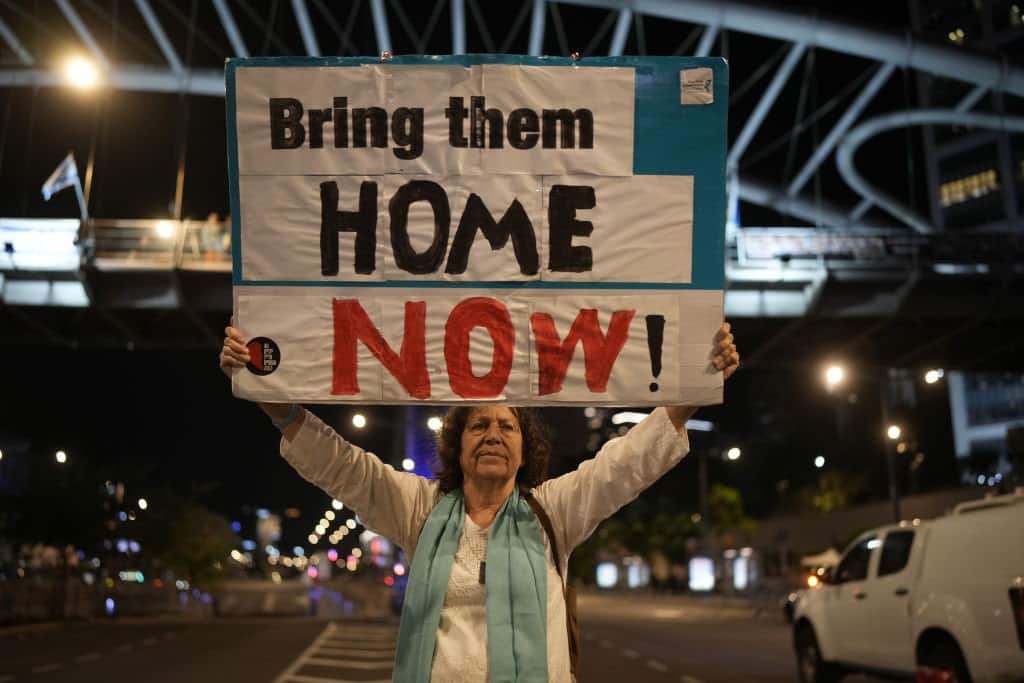
The speeches were long and many, and the schedule ran late — but the electricity of the crowd was so palpable, the occasion so moving, that we forgot about our tired feet and let ourselves feel the moment, so in tune with Klal Yisrael and all its diverse members.  We chanted endlessly — “Never Again,” “No Ceasefire,” “Bring them Home Now,” “We Support Israel.” We stood shoulder to shoulder with Jews of all ages from across this great land to speak up and show up to support Israel, to bring the hostages home and to fight against vitriolic anti-semitism rising around the world and in our own backyards. 

As we heard from our political leaders, we felt the support of, and pride in, our nation. Wrapped in an Israeli flag to lead us in Hatikvah, Omer Adam gave us heavy emotion and connection to our homeland. Hollywood actors bearing the mantle defending the Jewish people gave us encouragement to continue in our holy work of fighting antisemitism and advocating for Israel in person and online. Matisyahu led the crowd in his anthem of hope that we will one day live without war and bloodshed, and he gave us a future to believe in. Families of hostages shared heart-wrenching stories and made us feel the collective anger and fury that the world has ignored our brothers and sisters in captivity, alongside a tremendous love for our larger Jewish family as we prayed as one for their safe return. 

It is hard to pinpoint one piece of the March as the most moving or impactful, but it just may have been when Ishay Ribo and Omer Adam sang “Halev Sheli” with members of Zaka — the volunteer organization tasked with finding human remains to ensure that Jewish victims of terror receive proper and respectful Jewish burials. This song, from the Pesach Haggadah, recounts the story of the Jewish people, our survival despite the enemies that try to destroy us in every generation.  And in every generation and with every enemy, G-d saves us and keeps us alive as a nation. We are resilient, we are survivors of so much in our past, and we are here — showing up and speaking out together with hundreds of thousands of our brothers and sisters.

Fiercely and passionately, listening and praying, screaming and chanting, singing and dancing — they took their place as the next generation of strong and proud Jews standing up for our people in Israel and the Diaspora. 

We brought 18 high school seniors with us — in the midst of their college application season, trying to wrap their heads around the new world order that seems to have descended upon us since the horrific October 7. These teens, whom we have raised and educated to believe that they can — and should — do anything, and that they can — and will — accomplish everything, now must reckon with a new reality where it feels the world of college campuses is against them.  And oh, did they show up on Tuesday.  Fiercely and passionately, listening and praying, screaming and chanting, singing and dancing — they took their place as the next generation of strong and proud Jews standing up for our people in Israel and the Diaspora. I was proud to be there and privileged to be there with them. 

It’s been a very long 41 days.  As a people, across the world, we have raised extraordinary amounts of money, launched countless chesed initiatives, brought the plight of fellow Jews into our daily lives, prayed for peace and taken on many mitzvot in the merit of those we have lost and those whom we are missing. May we continue to feel an absolute connection with all our fellow Jews, with no hesitation or concern for differing opinions or practices. May we continue to pray together as one, to bring joy to God that His children are united. May we find the light in this month of Kislev and may we see the safe return of our soldiers doing their holy work in Gaza and the safe and speedy return of our hostages.  To quote Ishay Ribo on Tuesday — May we merit to be unified as one with one heart forever.


Sarah Emerson is the Chief Operating Officer at Shalhevet High School.  She lives in L.A. with her husband and four children. 

Reflections on the March for Israel in Washington D.C. Read More »

Rockin’ My Kippah

Someone once asked how my skullcap stays put on my head. I jokingly replied, “Peer pressure.” Wearing a yarmulke, otherwise known as a skullcap or kippah, 24/7 is something I said I would never do. At that point in my life I had no interest in being identified as a Jew everywhere I went. While I was proud to divulge my Jewish identity, to be singled out or even targeted before someone even knew my name … no way! 

All that changed when I discovered a community in L.A. where I could celebrate Judaism on a full-time basis. Upon moving to Pico-Robertson, our incredible shtetl in the middle of town, I was surrounded by skullcap-festooned men of all stripes. Not that I took on the custom to fit in; now I had living examples of guys who were proud of their heritage and ready to take on whatever challenges the rabbis sent their way. I was learning to perceive the world through spiritual lenses and for the first time, I discerned the “Yids with the lids” were the real players.

A kippah serves as a constant reminder that we are in a battle to make good choices, with our internal qualities matching our outside appearances. We have to maintain “balance” to keep it on our head, literally and figuratively.

Wearing this six-inch circle on my head has fringe benefits. It serves as a unique conversation starter. I can’t go long without someone approaching me and “outing” himself as a member of the tribe, often telling me about every Jewish experience since childhood. I patiently field rounds of “20 questions” by Jew-loving gentiles. I get grabbed for a minyan in places like the airport, Disneyland and movie theaters. Germans have apologized for their people’s actions during the Holocaust. Just after October 7 a tall African-American stranger said, “I’m guessing you could use a hug.” Some folks are reverent; some stare. Most importantly, a yarmulke forces full-time menschy behavior. God forbid someone see a Jew cut in line, utter a curse word or order treif food. I even drive more nicely now. Tempting as it may be, I can’t flip someone off and risk desecrating God’s name when it’s obvious I’m Jewish. A kippah serves as a constant reminder that we are in a battle to make good choices, with our internal qualities matching our outside appearances. We have to maintain “balance” to keep it on our head, literally and figuratively. Just like we put on a sharp suit for an interview and feel like a million bucks, a kippah can make us feel like God’s most trusted teammate.

The origins of the kippah are ancient and convoluted. I remember learning that Jews adopted the custom from Roman slaves because they, too, were demonstrating servitude to a Master. According to Rambam, one must wear a head covering when praying, but he doesn’t mention a full-time requirement. By the 17th century, it became halachically mandated as a way to distinguish Jews from non-Jews and to serve as a Kiddush Hashem, bringing honor to God’s name. Americans may be armchair quarterbacks during this Mideast disaster, but in the spiritual realm, small gestures like a wearing a kippah get us on the playing field.

In the past, I’ve never pushed wearing a kippah on anyone but my children. These days, I’m becoming more vocal in my advocacy. According to David Suissa, “October 7th is a day that shattered nuance.” There is no more hiding, no playing both sides, no blending in. Over the past decades, world Jewry has been increasingly vilified both on the right and the left. Most of us choose the middle ground, playing it safe both online and off. Now the raw emotions generated by this massacre have made advocates of even those whose primary observance is eating lox and bagels. As long as we’re being outed by society at large, why not go big? Being conspicuous defuses the situation and creates connections with both Jews and gentiles. It’s harder to hate when one has personal interaction with the hated. There are plenty of ways to show your pride: Jewish stars or Chai jewelry, Jewish-themed t-shirts, Tzitzit — all good. 

When our local Israel Consul General, Israel Bachar, was asked if it’s a good idea to hide our necklaces and take down mezuzot, he responded, “It’s the opposite. Jews are not running from anyone anymore. We’re not hiding; we’re fighting. We’re not apologizing, we’re celebrating who we are.”

Our daily prayers remind us that we were miraculously redeemed from Egypt and are still awaiting the final redemption. Our sages tell us that this redemption is contingent upon our unity. We haven’t been this united in decades; let’s seize the day! I wonder about the present state of the Jewish People: Do we merit delivery from our extended sojourn in the Diaspora? Do we deserve to be rescued from worldwide terrorism, from the renewed threat from the Persian Empire, from a vicious antisemitism that refuses to slumber? How long will we live in comfort in the US when nearly as many of our brightest collegiate youth support Hamas as they do Israel? The Midrash answers this question: We were saved from Egypt for several reasons, namely, we didn’t completely assimilate into their hedonistic culture and maintained our Hebrew names, language and clothing. With this in mind, I have appointed a few friends to call me Shmuel to keep my soul name alive. I work on my Hebrew, both Biblical and Modern, so I can navigate our texts in the original tongue and attempt conversations with Israelis. Lastly, wherever I wander, I fly my kippah and tzitzit proudly for all to see. Am Yisrael Chai!
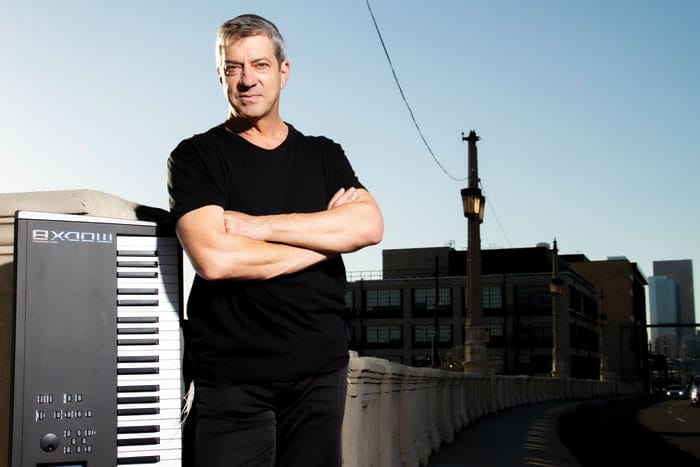
Sam Glaser is a performer, composer, producer and author in Los Angeles. His 26 bestselling Jewish albums include: “The Songs We Sing,” “The Promise,” “Hineni,”  “A Day in the Life,”  “Across the River” and “Kol Bamidbar.” Visit him online at www.samglaser.com.

Rockin’ My Kippah Read More »

Antisemitism’s New Converts

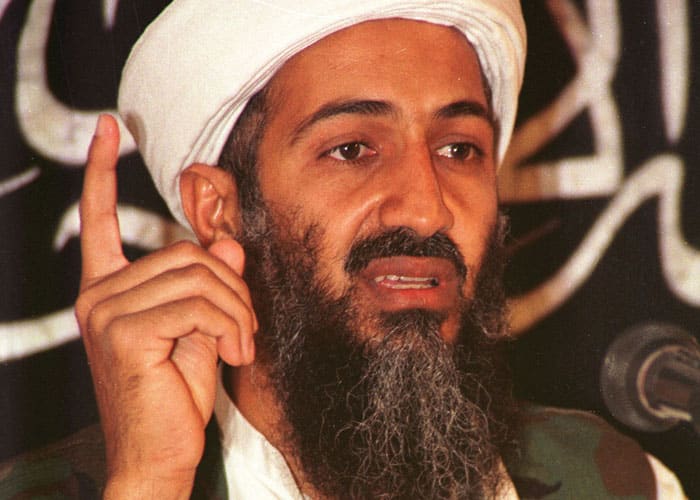
A year after the attacks on September 11, 2001, Osama bin Laden, the late leader of Al-Qaida, sent a message to his victims purporting to explain his motives. Two decades later, his message is going viral on TikTok as stunned young people gawp at the camera and recommend the letter to their thousands of followers.

“Everyone should read it,” reports one user.

“I will never look at life the same,” says another.

“He was right,” says a third. 

There are a few lessons we should draw from this trend.

Number One: it is increasingly impossible to state that the internet has done anything good for us as a society — at least not anything good enough to offset the tremendous harm it has wrought on our culture, our mental health, our politics, and our families. Osama bin Laden becoming a folk hero on a Chinese spy app that is systematically melting American brains should be all the confirmation we need of this fact. 

Number Two: Anti-Zionism and Anti-Americanism are intimately connected, both in the minds of American progressives and within terrorist organizations themselves. That said, anti-Zionism will always be more dangerous to Jews than anti-Americanism is to Americans, because no one in the West is seriously calling for the dismantling of America the way people call for the dismantling and the destruction of Israel.

Moreover, while America is obviously the mightier and the more influential country, Israel draws disproportionate ire. Bin Laden’s letter, despite being addressed “to America” displays an obsession with Israel and the Jews, which is no doubt the reason why American progressives, who are equally obsessed with hating Israel, have embraced it. 

“Why are we fighting and opposing you?” bin Laden asks. “Because you attacked us and continue to attack us. You attacked us in Palestine … It brings us both laughter and tears to see that you have not yet tired of repeating your fabricated lies that the Jews have a historical right to Palestine, as it was promised to them in the Torah. Anyone who disputes with them on this alleged fact is accused of anti-semitism. This is one of the most fallacious, widely-circulated fabrications in history.”

The letter goes on: “the Jews have taken control of your economy, through which they have then taken control of your media, and now control all aspects of your life making you their servants and achieving their aims at your expense; precisely what Benjamin Franklin warned you against.”

Take a minute to let this sink in. This antisemitic screed is the very thing “opening the eyes” of seemingly normal young people on TikTok. They report crying and a sense of disorientation. They have woken up into a new world defined by a new truth. It is almost like a conversion narrative—but what exactly are they converting to? 

In the past month, an entire generation of Americans has been exposed to a wave of slander against Israel in particular and Jews in general. Israel has been accused of genocide for the crime of trying to defend itself against a jihadist terror organization. Israel has been accused of settler colonialism in the very land where Jewish history began. Israel has been demonized as a terror state in the wake of being hit by the third deadliest terror attack worldwide in the past 50 years. 

The rhetoric of the past month has primed countless Americans to accept bin Laden’s worldview, which is that “the creation of Israel is a crime which must be erased” and that “each and every person whose hands have become polluted in the contribution towards this crime must pay its price, and pay for it heavily.”

Antisemitism is both a hatred and a conspiracy theory. Because of this, the conversion moment takes the form of a sudden stroke of insight. 

Antisemitism is both a hatred and a conspiracy theory. Because of this, the conversion moment takes the form of a sudden stroke of insight. The new acolyte is convinced that they have peered behind the curtain. Now, all the pieces fall together, and all the various strands of world history converge on a single culprit: The Jew. 

We see this conspiratorial trope in Alice Walker’s infamous poem: “It Is Our (Frightful) Duty To Study The Talmud.” In the poem, Walker plays the role of a detective. She is confused by the cruelty of the Jews towards the Palestinians and so, eager for answers, she peers into the Talmud.

There she finds a vile manual for oppressing goyim and she realizes, with horror, that this story is much bigger than the Palestinians, who are only one “cruel example of what may be done with impunity, and without conscience, by a Chosen people.” Rather, there is “an ancient history of oppression.”

The people on TikTok are in the throes of a similar revelation. They are realizing that the problem with the Jews is bigger and more all-encompassing than they ever imagined.

Once seen, they believe, it cannot be unseen.

It is the same ancient hate that has chased us around the globe for millenia. 

Look into their faces. There is an exhilaration — the kind that comes from making a new and fascinating discovery. Of course, we Jews know that there is nothing new about it. It is the same ancient hate that has chased us around the globe for millenia. 

We also know where such thinking inevitably leads.


Matthew Schultz is a Jewish Journal columnist and rabbinical student at Hebrew College. He is the author of the essay collection “What Came Before” (Tupelo, 2020) and lives in Boston and Jerusalem.  

Antisemitism’s New Converts Read More »

The Debate on “From the River to the Sea” Exposes the Hypocrisy of Wokeness

For the past month, ever since the terrorist group Hamas unleashed a barbaric attack on the State of Israel, debates have been raging in the press, on college campuses, even in the U.S. Congress, about whether the phrase “from the river to the sea, Palestine will be free” should or should not always be considered a call for the extermination of Israel and the murder of all the Jews who live there—in other words, the way Hamas uses it.

The fact that we are even debating this question at all is entirely antisemitic.

Regardless of what the phrase from the river to the sea did or could mean, to various different groups at various different times, at this point it is clear that it is, at the very least, also a slogan of the U.S. designated terrorist group Hamas, and that the terrorist group and its supporters use the phrase as a genocidal call to antisemitic violence. If there was any other chant that was readily understood by many to be calling for the wholesale slaughter of any other minority group, would anyone in their right mind have the audacity to say it is fine to use as long as that is not how it was intended? Dream on.

Antisemites like Rep. Rashida Tlaib claim that when they use the phrase, they have their own special, well-thought-out interpretation: After she was censured by Congress, Tlaib tweeted that “From the river to the sea is an aspirational call for freedom, human rights, and peaceful coexistence, not death, destruction, or hate.” Which begs the question: If that was actually true, and that is what she meant, then why not just say that? Even if she was, absurdly, just calling for Israel to peacefully coexist with an entity that openly wants to kill every man, woman and child of Jewish descent, why would she do so using a phrase that can also clearly be understood as a call for Jewish genocide?

Tlaib and her Squad friends are very quick to label what they consider anti-Muslim or anti-black “dog-whistles” when they hear them, and to pretend that every legitimate criticism of their behavior is somehow really racist or sexist, but they have no problem making use of a phrase that clearly also means, and has long meant, “let’s kill all the Jews.”

Even if we assume that the people who are chanting the Hamas-used phrase—and who are chanting it while Israel is fighting a war against Hamas—do not “intend” to use it the way that Hamas does, and even ignoring the fact that at least some of them, like Students for Justice in Palestine, openly do intend it that way, out of curiosity, how many of the pundits and “scholars” defending its use thought it was alright, at the height of the #MeToo movement, for powerful men to make arguably sexist comments if they didn’t intend for them to be considered sexist, or if taken out of context there might be other, less offensive, interpretations of their words? That’s right, no one.

It is especially telling to see self-righteous hypocrites like Ibram X. Kendi, author of “How to Be An Antiracist,” repost videos defending Tlaib and the use of that phrase. Kendi once wrote that “What makes a term racist is rarely the term’s literal meaning, and almost always the historical and political context in which the term is being used.” He wrote that to explain why such innocuous-sounding phrases like “legal vote” or “personal responsibility” are functionally racist and should always be avoided. I wonder how Kendi would feel if there was a phrase that had been adopted by say, the KKK, and that the vast majority of black people understood to be a racist call for their genocide? One has to assume he would not defend its use at rallies, especially if the “historical and political context” of said use was the immediate aftermath of a terrorist attack by the vey group that had made it its slogan.

Of course, Tlaib’s use of the phrase is not really that surprising. She is a rabid antisemite who still has an actual blood libel posted on her public social media. Kendi’s defense is similarly unsurprising. Last week Kendi also posted support for Ahed Tamimi, a Palestinian “activist” who was detained for inciting violence when, in the wake of the Hamas attacks, she posted the message “Come on settlers, we will slaughter you. What Hitler did to you was a joke. We will drink your blood and eat your skulls. We are waiting for you.” Kendi is what might best be described as “anti-racist for thee, but not for me.”

The bottom line is that there are countless words and phrases and idioms that at any one point may have been innocuous, but have developed clear and well-known offensive or unacceptable connotations. In our current society, we have taken this idea to the extreme, with universities adopting micro-aggression-and-bias-free language guides, and ensuring that faculty learn each student’s pronouns to make sure that no one is excluded even accidentally, intentions be damned. That’s all well and good, as long as we are consistent. But it is difficult to accept that these same faculty members have no problem with students claiming they are expressing a “political idea”—even taking that claim at face value—in terms that are also readily understood to be antisemitic and genocidal.

The bottom line is that there are countless words and phrases and idioms that at any one point may have been innocuous, but have developed clear and well-known offensive or unacceptable connotations.

And so I ask again: If there was a chant that was accepted by many to be calling for the wholesale slaughter of any other minority group, would anyone have the audacity to say it is fine as long as that is not how it was intended?

Of course not. That is a classic antisemitic double-standard, and anyone who pretends it isn’t is lying.


Dr. Mark Goldfeder is Director of the National Jewish Advocacy Center.

The Debate on “From the River to the Sea” Exposes the Hypocrisy of Wokeness Read More »

Israel’s Bipartisan Challenge

There was what seemed to be a stirring sight at last week’s March for Israel in Washington, where hundreds of thousands of American Jews and supporters of Israel gathered to show their backing for the Jewish state in its war against Hamas. As Senate Majority Leader Chuck Schumer  (D-N.Y.) spoke to the crowd, he was flanked by a bipartisan assemblage of congressional leaders, proclaiming support for Israel across the American political spectrum. At a time when both Israel and Jews in this country are under siege, this highly visible public backing from the nation’s political leaders was a welcome sign of reassurance.

But if we look at that scene more closely, it’s clear that this bipartisan unity was not nearly as strong as that photo opportunity would suggest. Because even as Schumer and Democratic House leader Hakeem Jeffries (N.Y.) appeared on stage with two senior Republicans, the cracks in the alliance between Congress and Israel have become more noticeable. While the parties’ respective establishments continue to stand with the Jewish state even in the face of growing domestic and international criticism, troubles among the most left-leaning Democrats and most conservative Republicans are now impossible to ignore.

Israel’s challenge from progressive members is no longer limited to the antisemitic utterings of Rashida Talib (D-Mich.) and Ilhan Omar (D-Minn.). As Schumer and Jeffries spoke to the pro-Israel rally, their fellow Democrats were becoming increasingly vocal in their support for a ceasefire. Dozens of congressional Democrats are now pressuring Biden to back off from his support of Israel and many are calling for attaching conditions to U.S. aid. The situation is even worse at the grassroots: Party gatherings in both Washington and California last week were shut down by anti-Israel protestors promising political retribution if Biden does not reverse course.

Public opinion polls show the strongest opposition to Israel comes from young people, voters from minority communities and other progressives — the same voters Biden has already been struggling to motivate to turn out for him next year. As the president’s generation prepares to pass the baton, the most likely future for the Democratic Party appears to be one in which anti-Zionist and antisemitic voices continue to grow in prominence and influence.

The Jewish community’s challenges with Republicans are just as daunting. We have seen in places like Charlottesville, Poway and Pittsburgh how the far right’s nativism has oozed into equally dangerous antisemitism. And while that type of overt hatred is not heard from the GOP’s congressional leaders, the two Republicans on stage at the March represented other unsettling areas of concern for Jews and for Israel. 

Newly-elected House Speaker Mike Johnson’s (R-La.) evangelical roots have made him an outspoken Zionist throughout his career. But his first act as speaker was to doom legislation to fund Israel’s war effort by attaching it to an unrelated measure to reduce funding for the Internal Revenue Service. Johnson’s willingness to use critical aid to Israel as a bargaining chip for an unrelated conservative domestic spending goal suggests a lack of depth in his commitment to Israel which should greatly unnerve Jewish Americans as other tests for our country’s Middle East policy emerge in the coming months.

Johnson was joined on the platform not by Senate GOP leader Mitch McConnell (Ky.) or by one of McConnell’s top lieutenants, but by Iowa Senator Joni Ernst, a respected but relatively junior member of the Republican leadership team. We shouldn’t make too much of McConnell’s absence. As Biden’s generational contemporary, his support for Israel is beyond question. But the fact that none of the three Senators vying to replace him as caucus leader saw an incentive to attend was telling: None of them believed that joining a high-profile pro-Israel event would be the unalloyed political benefit that it would have been in the past.

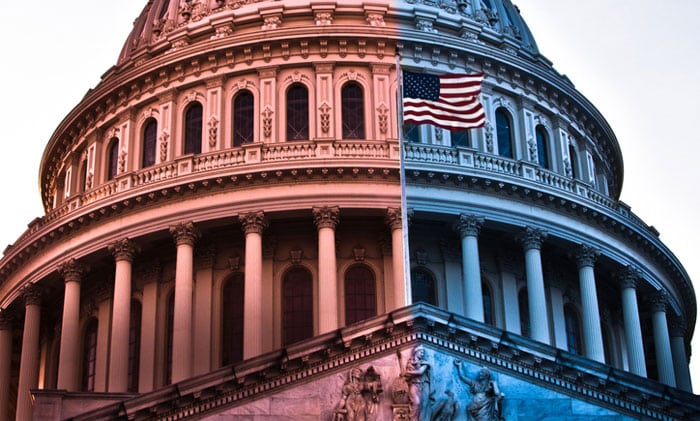
Both parties are now sending mixed signals. Neither Democrats nor Republicans offer much reassurance for our community as we seek a political home in which we can feel welcome.

Both parties are now sending mixed signals. Antisemitism and overt bigotry are alarming. Deprioritization and disregard are worrisome. But neither Democrats nor Republicans offer much reassurance for our community as we seek a political home in which we can feel welcome. We’ll talk about our options next week.


Dan Schnur is the U.S. Politics Editor for the Jewish Journal. He teaches courses in politics, communications, and leadership at UC Berkeley, USC and Pepperdine. He hosts the monthly webinar “The Dan Schnur Political Report” for the Los Angeles World Affairs Council & Town Hall. Follow Dan’s work at www.danschnurpolitics.com.

Israel’s Bipartisan Challenge Read More »

Israel Approves Hostages-for-Ceasefire Deal with Hamas

The Israeli Cabinet approved a deal in the wee hours of the morning on Wednesday, according to reports in multiple media outlets. The deal reportedly calls for Hamas terrorists to release 50 of the estimated 240 hostages it holds in the Gaza Strip in exchange for a multi-day ceasefire.

The first batch of hostages is expected to be released as early as Thursday, with Hamas reportedly having agreed to release 12 to 13 hostages each day of the four-day truce.

“After the hostage deal is implemented, we will continue dismantling Hamas while respecting humanitarian law on the ground,” wrote Jonathan Conricus, Israel Defense Forces spokesman, a little after 3 a.m. in Israel. “We will remain vigilant during the pause and use the time to prepare for future operations.”

Israel’s Channel 12 News reported that the deal will see the release of 30 children, eight mothers and 12 women held by Hamas. The terror group claimed that it could not immediately locate 10 additional children taken from southern Israel on Oct. 7.

As part of the agreement, Hamas will allow the International Committee of the Red Cross to visit the remaining hostages in Gaza and provide medical assistance to those who need it, said Israeli Prime Minister Benjamin Netanyahu.

In return, Israel will release 150 to 300 female and teenage Palestinian prisoners “with no blood on their hands.” They will reportedly be allowed to return to their homes in eastern Jerusalem, Judea and Samaria.

CNN reported earlier on Tuesday that Israel has agreed to refrain from using surveillance drones in Gaza for six hours a day during the ceasefire.

Jerusalem will also reportedly allow fuel to enter Gaza during the ceasefire and dramatically increase the amount of goods permitted into the Strip.

‘No factors left that threaten Israel’

The official announcement followed consecutive meetings on Tuesday evening of the War Cabinet, the broader Political-Security Cabinet and the entire Cabinet.

In remarks ahead of the Cabinet meeting, Netanyahu made it clear that the Jewish state “is at war and will continue to be at war until we achieve all of our goals.”

He vowed “to eliminate Hamas, to return all of our hostages and to ensure that there will be no factors left in Gaza that threaten Israel.”

Some 240 hostages captured during Hamas’s Oct. 7 cross-border massacre of 1,200 Israelis are currently being held in Gaza.

The captives include 25 Thai nationals, 21 Argentinians, 18 Germans, 10 Americans, seven French, seven Russians, four Hungarians, three Poles, three Portuguese, two Brits, two Filipinos and two Romanians.

The terror group is also holding hostage nationals of Austria, Brazil, China, South Africa, Denmark, Ireland, Lithuania, Mexico, Nepal, the Netherlands, Serbia, Tanzania, Ukraine and Uruguay.

Hamas previously released four hostages for what it called “humanitarian reasons.” Judith Raanan, 59, and her 17-year-old daughter, Natalie, were freed on Oct. 20. Nurit Cooper, 79, and Yocheved Lifshitz, 85, were let go three days later.

Moreover, IDF special forces late last month rescued Pvt. Ori Megidish from Gaza.

Last week, Israel Defense Forces soldiers operating in the vicinity of Shifa Hospital in Gaza City recovered the bodies of Cpl. Noa Marciano, 19, and Yehudit Weiss, 65. Both women were murdered during their captivity, according to the military.

Two more hostages from Nepal and Thailand were hidden at Shifa Hospital in the immediate aftermath of the Oct. 7 massacre, IDF Spokesman Rear Adm. Daniel Hagari revealed on Sunday, presenting video footage of the captives.

“We have not yet located these hostages and have not rescued them,” Hagari noted, adding: “The world must remember: Hamas is holding hostage the elderly, men, women, children and babies.”

As the Cabinet convened in Tel Aviv on Tuesday night, Palestinian Islamic Jihad announced that one of the Israeli hostages had died in captivity. Hannah Katzir, 77, from Kibbutz Nir Oz, previously appeared in a hostage video released by the Iranian-backed terror group.

Israel Approves Hostages-for-Ceasefire Deal with Hamas Read More »

Trust the Science: Parshat Vayeitzei

Science has never been my strong suit. To fulfill my requirement for the subject in college, I took Geology 101, “Rocks for Jocks,” though I lack any semblance of athletic ability. Nonetheless, I am fairly certain that the sun is not human, a stone is not an evil spirit, and the metallic elements do not form children.

The ancient rabbis, however, disagreed.

In the collection of traditions known as Bereshit Rabbah, the Jewish sages offered a radical reading of the patriarch Jacob’s starry night. In it they sensed the scientific formula for nothing less than Jewish survival.

Fleeing the wrath of his brother Esau, whose blessing of the firstborn he had absconded with, Genesis’s twenty-eighth chapter tells us that Jacob “came upon a certain place and stopped there for the night, for the sun had set. Taking one of the stones of that place, he put it under his head and lay down in that place.” As Jacob dreams, he sees a stairway to heaven, with angels ascending and descending its steps.

“The Lord is in this place and I did not know,” Jacob exclaims upon waking. Emboldened by the promise of God’s protection, he proceeds to a nearby town. There, he encounters some shepherds waiting for the flocks to gather around the local well. Per their practice, “they would roll the stone from the well’s mouth, and water the sheep, and return the stone onto the well’s mouth in its place.” Seeing a dashing young maiden named Rachel approaching with her sheep, Jacob, with only his own might, heaves the heavy rock blocking the well, feeds Rachel’s flock, and a few wives and twelve tribes later, the rest is history.

For the rabbis writing in Bereshit Rabbah, the sun didn’t set on Jacob that fateful evening. The sun was Jacob.

Rabbi Pinḥas said in the name of Rabbi Ḥanin of Tzippori: He [Jacob] heard the voices of the ministering angels saying: ‘The sun has arrived, the sun has arrived.’ When Joseph said: “Behold, the sun and the moon” (Genesis 37:9), Jacob said: ‘Who revealed to him that my name is “sun”?’

Citing as a prooftext Jacob’s son’s dream, a few chapters ahead in the story, in which the young Joseph dreams that the sun, moon and stars bow down to him – with the sun symbolizing Jacob, the moon Rachel, and the stars Joseph’s brothers – the rabbis presume Jacob has always had a solar secret identity. Though he would eventually be known predominantly as “Israel,” a name reflective of having wrestling with challenges, per Genesis 32:29’s “for you have striven, [sarita in Hebrew], with beings divine and human, and have prevailed,” Jacob would always possess a brightness shining through the rocky surface of life’s hardships.

As the next component in the rabbinic calculation, Jacob’s sleep that night equaled study.

“Jacob awoke from his sleep [mishenato]” – Rabbi Yoḥanan said: From his studies [mimishnato].

What enabled divine protection amidst his travels, came the theory, was Jacob’s commitment to abiding by the rules of the covenant. Though the Torah wouldn’t be given to his descendants for centuries, the rabbis envisioned Jacob intuiting its principles, diligently studying the strictures that would come to define the daily life of a halakha-abiding Jew.

How would these practices be preserved despite the travails to come?

Well, the rabbis had an answer for that, too.

Rabbi Shmuel bar Naḥman began: “A song of ascents. I lift my eyes to the mountains [heharim]” – I lift my eyes to the parents [hahorim], to my teachers, and to those who raised me. “From where will my help come?” (Psalms 121:1)

Meditating on a mountain on the meaning of his destiny, Jacob understood that to truly flourish as a founding father, his offspring would need to get by with more than just a little help from their friends. It would be parents and teachers committed to the covenant that would ensure its eternal fulfillment. As the late Rabbi Jonathan Sacks noted,

“Judaism became the religion whose heroes were teachers and whose passion was study and the life of the mind. The Mesopotamians built ziggurats. The Egyptians built pyramids. The Greeks built the Parthenon. The Romans built the Coliseum. Jews built schools.”

Bereshit Rabbah’s equation then continues. The shepherds’ watering spot to which Jacob arrived? “That is no well,” the rabbis proclaimed. “It is a synagogue.” What seemed like an agricultural exchange among herders was actually a paean to the power of prayer.

“He saw, and behold, a well in the field” – this is the synagogue;

“behold, three flocks of sheep” – these are the three called to the Torah [on Mondays and Thursdays for the public Torah reading];

“since from that well…” – as from there, they would hear the Torah;

“and the great stone” – this is the evil inclination.

“All the flocks would gather there” – this is the congregation;

“they would roll the stone”– as from there, they would hear the Torah…

It would be houses of worship, Jacob understood, that would supply the spiritual fortitude to defeat the evil inclination, the force of wickedness in this world. Through prayer, the people of Israel could possess the strength to heave away the oh-so-heavy elements that would seek our defeat.

The conclusion arrived at after all these calculations is… a metal crest. “The crown of elders is grandchildren,” the rabbis state, citing Proverbs 17:6. Jacob’s sunny optimism despite hardship, his commitment to studying God’s law, and his belief in the power of prayer, not only ensured the Jewish future, it preserved its past.

Rewinding the tape to the adventures of Jacob’s zeide Abraham, Bereshit Rabbah credits Jacob as a life-saver. Thrown into a fiery furnace of the tyrannical King Nimrod because of Abraham’s faith in the one true God, the first Jew ever was going to be burned. But:

The Holy One blessed be He foresaw that Jacob was destined to emerge from him. He said: ‘Abraham is worthy of being spared due to the merit of Jacob.’

It was, the rabbis’ realized, the children of one’s children that would be the crowning achievement, proof positive that the formula works, from our founder to ensuring our future.

Stay bright even when things are bleak, Jacob taught us.

Seek solace in the law.

Pray for evil’s defeat.

Trust the science.


Rabbi Dr. Stuart Halpern is the Senior Advisor to the Provost and Senior Program Officer of the Straus Center for Torah and Western Thought at Yeshiva University, and the editor of “Esther in America” (Maggid Books).

Trust the Science: Parshat Vayeitzei Read More »

Unmasking Campus Antisemitism: A Call to Action Against Students for Justice in Palestine

On college campuses all over America, Jewish students are being harassed, threatened and attacked. This is not legitimate support for Palestinians but an explosion of violent mob rage. 

Last week, I appeared before the Ways and Means Committee of Congress to expose that this assault on Jewish students has not happened overnight or by accident. It has instead been planned, engineered, and incubated for decades by well-funded, well-organized groups with documented track records of support for U.S. designated terrorist organizations, including Hamas, Islamic Jihad and the PFLP.  

One of the main perpetrators of campus Jew-hatred is Students for Justice in Palestine (SJP). SJP was set up and is supported by groups and individuals with well documented records supporting and fundraising for terrorist organizations. Individuals like Hatem Bazien, who founded SJP and is also the founder of American Muslims for Palestine (AMP). 

Terrorist sympathizers figured out decades ago that instead of sending money to jihadist organizations, they could get more bang for their buck by warping the hearts and minds of the young and naïve, sometimes well-meaning American students. 

They use progressive buzz words like “justice” and “freedom”, but their goal is destroying the world’s only Jewish state by any means possible. And after October 7, we have seen that anything goes: Beheading babies and raping women is just fine, if it’s done to the Jews. 

For decades, these groups have lied to young Americans and convinced them that Israel is the ultimate evil, demonizing and dehumanizing Israelis. When Hamas terrorists carried out these barbaric attacks, it’s no surprise that hordes of young, educated Americans would minimize, justify and even celebrate them. 

SJP is a hate group and it is grooming American college students – grooming your children – to hate Israel, hate Jews and hate America. For years, universities have stood by and watched this brainwashing and incitement take place while doing absolutely nothing.  

SJP glorifies terrorists like notorious Palestinian plane hijacker Leila Khaled, putting her face on their t-shirts. And they hijack any campus where they operates. They have no interest in peace and you just need to listen to what they chant at rallies. 

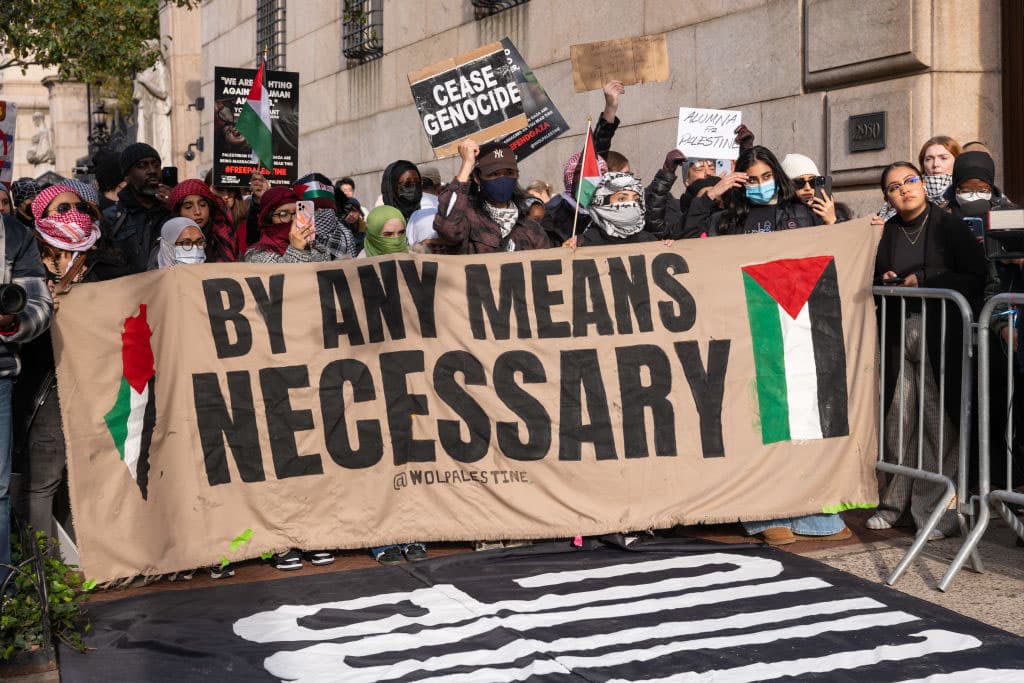
“There is only one solution; intifada, revolution,” they chant. Those with bad intent prey on those with bad knowledge. Because we know what intifada means: it means blowing up hundreds of Jews on buses, in shopping malls or pizza parlors, or stabbing us, shooting us or running us down. Or, as on October 7th, slaughtering as many Jews as they possibly can.

What is the impact of campus hate groups like SJP? Jewish students barricading themselves in libraries to hide from an angry, brainwashed mob.  

Universities have let down their Jewish students and now we need action. The first step is to kick SJP off campus as Columbia University has done. It is disgraceful that college fees and tax dollars are funding hate groups that cheer on the burning alive of Jewish families. Every college in this country should permanently ban SJP. We wouldn’t pay the mafia to teach business on campus. We shouldn’t pay terrorist supporters to teach political activism to our kids. We should treat SJP just as we would the KKK.

Universities that fail to kick SJP off campus, and therefore make their campuses safe spaces for antisemites but not for Jews, should be defunded themselves.  

The next step would be to launch criminal investigations against the ringleaders of the campus antisemitism pandemic. There is sufficient evidence linking SJP and AMP members with support and financing of terrorist groups including Hamas, that both state police and the FBI should investigate them immediately. We cannot any longer give free passes to supporters of organizations committed to global Jihad that currently hold over 200 Israeli, American, and other dozens of other nationals hostage in Gaza. 

Lastly, we need to stop rolling out the red carpet in Congress for hate filled groups with terrorist links. Last month, not even three weeks after Hamas were decapitating Jewish babies and raping young Jewish women and girls, AMP was lobbying Congress during their annual “Palestine Advocacy Day.” It is appalling that there are members of congress who have taken donations from this group. Given past evidence of their links to terrorists, we must ask whether there are a fringe group of congressional representatives being funded from the same pot as murderous and proscribed terror groups.  

What happens on our campuses will shape the future of the US. This organized campaign of hate is therefore not just a Jewish issue but an American one. There is a direct line between brainwashed extremists who rip down posters of kidnapped Jewish children, and those who ripped down the American flag ahead of Veterans Day in the middle of New York City. 

We must act now to stop this coordinated assault on Jewish students, on American values and on the future of the American dream before it’s too late.


Noa Tishby is the former Special Envoy for Combating Antisemitism and Delegitimization of Israel.

Unmasking Campus Antisemitism: A Call to Action Against Students for Justice in Palestine Read More »

LA Times Bars Reporters Who Signed Anti-Israel Letter from Covering Israel-Hamas War, Report Says

The news website Semafor published a scoop on Thursday stating that The Los Angeles Times has barred reporters who signed onto an anti-Israel letter from covering the Israel-Hamas war for at least three months.

The letter in question, which was published on November 9, accuses Israel of slaughtering “our colleagues and their families” and called for “an end to violence against journalists in Gaza” as well as “Western newsroom leaders to be clear-eyed in coverage of Israel’s repeated atrocities against Palestinians.” The letter also urged “journalists to tell the full truth without fear or favor. To use precise terms that are well-defined by international human rights organizations, including ‘apartheid,’ ‘ethnic cleansing’ and ‘genocide.’”

Semafor reported that “nearly a dozen” Times staffers signed the letter, and that the Times has blocked them all from covering the war for at least the next three months, citing two sources who were familiar with the situation. Semafor also reported that Kevin Merida, the Times’ executive editor, sent an email to Times employees on Thursday stating that the paper’s readers “should not be able to discern the private opinions of those who contributed to that coverage, or to infer that the organization is promoting any agenda.” Merida added that “we must maintain the integrity of that journalism, which is core to our reputation.”

The reported move from the Times received some praise on X, formerly known as Twitter.

“More of this!” the HonestReporting watchdog posted.

“This is how you maintain journalistic integrity,” the Israel War Room account posted.

The Times did not respond to the Journal’s request for comment.

On Friday, the Times’ editorial board called for a ceasefire in the Israel-Hamas war, urging President Joe Biden to strongarm Israeli Prime Minister Benjamin Netanyahu “to stop the mass, indiscriminate killing.” The Times editorial argued that “Hamas’ atrocities do not justify atrocities in kind.”

LA Times Bars Reporters Who Signed Anti-Israel Letter from Covering Israel-Hamas War, Report Says Read More »