fbpx

October 19, 2023

Evidence on Display at Israel’s Forensic Pathology Center Confirms Hamas’ Atrocities

Stifling the urge to retch became a difficult task as I walked through the lower levels of Israel’s National Center of Forensic Medicine (Abu Kabir) in Tel Aviv. The smell of rotting human remains, much of which was completely unrecognizable as human due to the brutality of the attack, was at times too much to bear.

In light of the growing international interest in (and denials of) the Palestinian terror group Hamas’ October 7 massacre in southern Israel, representatives of the global press were invited to see the horrors for themselves.

Forensic pathologists, including Israeli staffers as well as volunteers from abroad, were visibly disturbed by the evidence before them. Despite every effort to remain objective and detached—as called for by the profession—many broke down into tears throughout the day.

During the initial press conference, the forensics team showed images from their investigations. Among the images were those of charred hands with marks that revealed where the victims’ hands were bound behind their backs with metal wire before being burned alive.

Perhaps the most disturbing image in the slideshow was a completely charred mass of flesh, which at first glance could not be seen as ever having belonged to a human. It was only after a CT scan was done that experts could see the inhumanity of the image.

Two spinal cords—one belonging to an adult, one to someone young—a parent and child bound together by metal wires in a final embrace before being set alight.

“When you do this job downstairs, you get detached,” Dr. Chen Kugel, the head of Abu Kabir, told The Media Line. “But then you learn the stories and connect to the people. It’s hard not to feel the tragedy. It’s so big. And when I go to the Shura camp [where deceased bodies in Israel are first collected] and see containers like you’d see at the port—but they’re all full of bodies… And you hear the stories—that behind their charred bodies, something terrible happened—it’s very difficult. I’ve seen many things in my 31-year career, but the magnitude and the cruelty [here] is terrible,” Kugel added.

“The proportion of bodies we’ve received who are charred is high,” Kugel explained. “Many have gunshot wounds in their hands, showing they put their hands up to their faces in defense. Many were burned alive in their homes. … We know they were burned alive because there is soot in their trachea, their throats—meaning they were still breathing when set on fire.”

The single mercy, Kugel said—if there is one to be found—is that the burned victims likely died from carbon dioxide and soot inhalation before the fire killed them.

Kugel also explained that the age range of the victims spans from 3 months to 80 or 90 years old. Many bodies, including those of babies, are without heads.

Asked if they were decapitated, Kugel answered yes. Although he admits that, given the circumstances, it’s difficult to ascertain whether they were decapitated before or after death, as well as how they were beheaded, “whether cut off by knife or blown off by RPG,” he explained.

Kugel was far from the only one who got emotional when discussing the evident travesty. “We disassociate because we need to work, but from time to time it gets to you,” Dr. Nurit Bublil, head of Abu Kabir’s DNA laboratory, told The Media Line.

“Yesterday, I opened evidence from a house in a southern kibbutz, and there was a popular recipe book covered in blood. … I have this same book, and it makes you take a moment and think, it could have been my kitchen, my children, my parents, me. You can’t avoid it,” she said.

Additionally, Israel’s small population gives rise to the fact that no one is far removed from the wake of the massacre. “My sister has a close friend of hers who is still missing,” said Bublil, as she stood beside a blood-stained mattress from a baby’s crib. The DNA from the mattress will be used to try and identify a brutally disfigured and unaccounted-for infant.

“I got the message today from my neighbor,” Bublil continued. “She asked if I could help because her good friend’s husband, father, two nephews, and father-in-law’s wife were all murdered too and have yet to be identified.”

This is the crux of the forensic pathology center’s current mission in which roughly 200 experts are participating. Forensic pathologists, anthropologists, radiologists, and more from Israel as well as from the US, Switzerland, New Zealand, and elsewhere around the world have come not simply to determine the victims’ causes of death but to identify the bodies for burial.

Fighting back tears, Israeli forensic pathologist Dr. Hagar Mizrahi explained that “as you know, the Jewish people must bury their dead as soon as possible.” But as of this writing, nearly two weeks have passed since the massacre, and some 350 bodies remain unidentified. “So, the people here at Abu Kabir are doing their best to help and identify the most severe cases that arrive.”

Four places around the country are currently working to identify and release bodies for burial.

The Israel Police headquarters in Jerusalem is handling all the antemortem samples and personal items for DNA comparisons. The Israel Defense Forces is working on 1-1 DNA comparisons using their data on soldiers, including fingerprints, dental records, and DNA. In addition, Abu Kabir is working to collect DNA samples and identification for the most severe cases. It’s also where all the DNA samples from other locations come for additional testing. And the Shura camp near Ramla, in central Israel, is where all the deceased are initially collected. Shura currently has some 950 body bags in its possession.

The word “bags” is written here instead of “bodies” because it’s not clear how many victims there are within them.

“More than one person’s remains may be in a single bag,” Kugel explained, “and one person’s remains may be in multiple bags.” When looking at remains, he added, “We know there are multiple people because we see double. For example, if you see two bones from the left maxilla, then it couldn’t be from the same person.”

And in many cases, bones without so much as a speck of extractable DNA are all that’s left. For that reason, Kugel said that some victims’ families would be right to fear the worst.

“We hope that with CT and biopsies, we can bring the unidentified down to less than 200. But some people, we will never find. We will never identify them. And people need to be prepared for this.”

Speaking personally, Bublil said that she wants the world to know that “generally, Hamas enjoyed the killing.”

According to Bublil, “This was not combat, or a military conflict, or a state conflict, or a political conflict. [Hamas] enjoyed the murders so much that they did everything they could do to celebrate the killing. They celebrated burning houses with civilians inside who didn’t do anything to them. They enjoyed grabbing an 18-year-old girl from a party, a festival, dragging her to a car, and taking her to Gaza. And who knows what happened [to her] in between. They enjoyed and celebrated the death. … These are monsters. They’re not human… They weren’t merciful to anyone. No one who was alive and encountered them remained alive. No one.”

Evidence on Display at Israel’s Forensic Pathology Center Confirms Hamas’ Atrocities Read More »
What Happened When Israel Didn’t Occupy Gaza

Palestinian Arab terrorists from Gaza slipped into the Israeli village and approached the synagogue, which they saw was crowded with children. One of the terrorists cut the electricity wires, plunging the rooms into darkness. His comrades kicked in the main door and unleashed a torrent of gunfire. Five boys and a teacher were slaughtered, and five more were wounded.

“The children who had died and a number of others who had been wounded seriously, mostly in the upper parts of their bodies, were lying in one huge pool of blood when rescuers arrived,” according to a news account. “The blood stained their clothing, their [yarmulkes] and the prayer books they had been reading.”

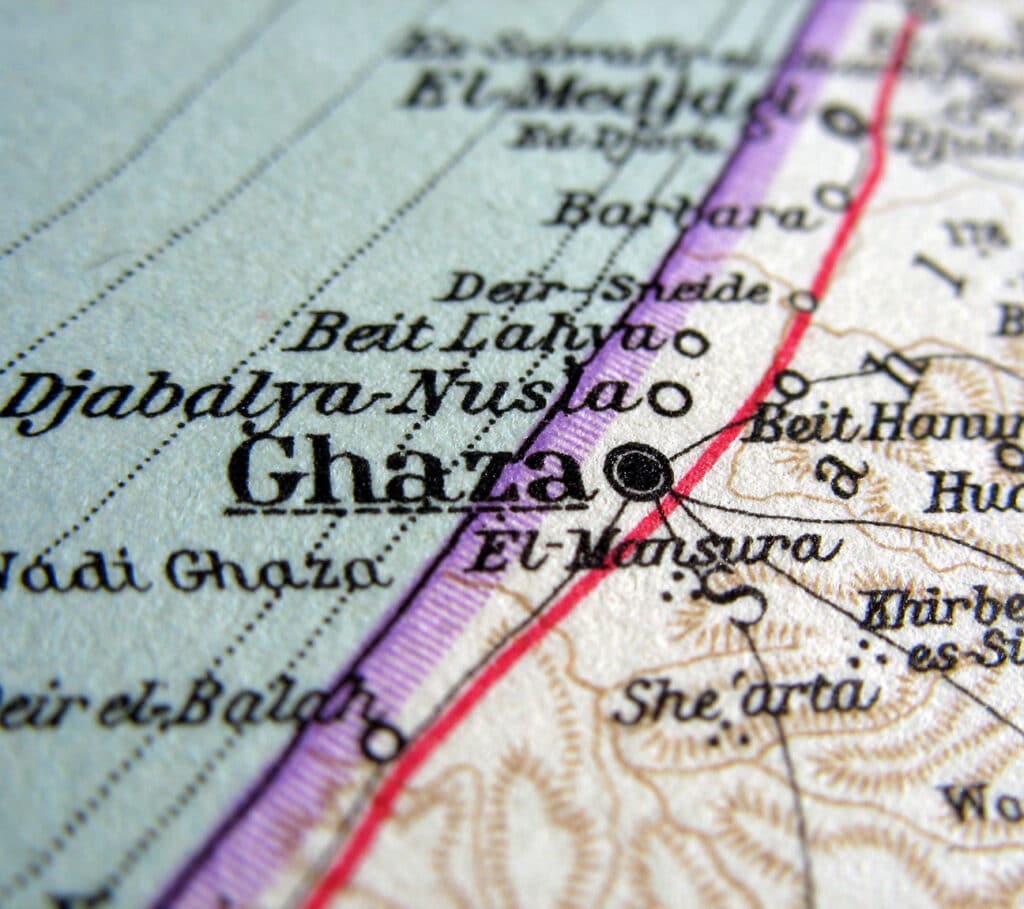
From this description, one might have thought that the attack on the synagogue in Kfar Chabad took place last week. Indeed, the attackers were part of a force of 200 terrorists who divided up into small groups and fanned out across southern Israel, invading numerous small towns for the purpose of murdering and pillaging. But that invasion actually took place back in April 1956—during the first years that Israel did not occupy Gaza.

What happened during those years offers some insight as to what to expect if Gaza returns to self-rule after this war.

When Israel’s 1948 War of Independence ended, Egypt was occupied the Gaza Strip. In the years that followed, the Egyptians financed thousands of attacks on Israel by Gaza-based Palestinian Arab terrorists, known as the fedayeen. There were fourteen separate terrorist training ce centers in the Gaza Strip.

“Egypt has decided to dispatch her heroes, the disciples of Pharaoh and the sons of Islam, and they will clean the land of Palestine,” the government declared. In addition, there were some terrorist groups in Gaza sponsored by the Muslim Brotherhood and the exiled Mutfi of Jerusalem, Haj Amin el-Husseini.

The Gaza-based terrorists “came in and out of Israel every day on their missions of murder and plunder,” Israeli ambassador Abba Eban complained at the United Nations. Jews were “subjected to savage and relentless hostility,” and southern Israel had become “an inferno of insecurity and danger.”

In his book Israel’s Border Wars, Benny Morris described how Jews living near Gaza “suffered persistently and often grievously from the infiltrators. For months on end, [the Jews] lived in fear, shut in their homes after dusk, a constant prey to theft and sabotage.” The terror was so overwhelming that six Israeli towns “emptied completely,” as the residents fled, and “many others were partially abandoned.”

Morris noted that there were “a dozen or more infiltrator gangs” operating out of Gaza. Some of the gangs were “chiefly ‘political’, and mainly interested in killing and raping Jews.” Others were “economic gangs,” which “specialized in stealing farm animals [or] irrigation pipes and motors.” But they, too, “would carry out sabotage and the occasional murder on the side.”

Of the thousands of attacks from Gaza, several stood out for their exceptional brutality.

There was the Scorpions Pass massacre, in March 1954, when terrorists from Gaza boarded an Israeli passenger bus and slaughtered eleven passengers. (A twelfth lingered, paralyzed and partly-conscious, for 32 years before dying.)

There was the mass attack in August 1955, when twelve squads of fedayeen from Gaza invaded numerous Israeli towns simultaneously. With automatic rifles, mines, and grenades, they murdered twelve Israelis and wounded 14 in ten different towns. A senior UN official in the region, General E. L.M. Burns, compared the terrorists’ savagery to that of the Nazis.

There was another mass assault in April 1956. Two hundred fedayeen, in groups of four to seven, attacked Israeli communities with guns, explosives, mines, and grenades. Over the course of five days, they murdered eleven Israelis and wounded 49. The aforementioned Kfar Chabad synagogue was one of the targets.

Statistics for casualties inflicted by Gaza terrorists during that period are less than precise, but historians estimate that several hundred Jews were murdered, and as many as 1,000 wounded.

In addition, Morris wrote, “property worth hundreds of  thousands of US dollars was stolen or destroyed by infiltrators each year,” and additional hardships were caused by the terrorists sabotaging Israeli water supplies, cutting telephone wires, and planting mines in farmers’ fields.

A senior Egyptian official said bluntly: “There is no reason why the faithful fedayeen, hating their enemy, should not penetrate into Israel and transform the lives of its citizens into a hell.” And that is exactly what they did, week after week, year after year, until the autumn of 1956, when Israel finally sent in its troops to crush the fedayeen during its Sinai Campaign.

It’s noteworthy that in the 1950s, there were no issues of “settlements” or “occupied territories.” This was Israel within the pre-1967 lines. There were no alleged “provocations,” such as Israelis visiting the Temple Mount, because that part of Jerusalem was under Arab occupation, and no Jews were allowed to step foot there. The Jews were guilty of only one offense, Ambassador Eban said: “Israel had committed the dark sin of survival.”

Does this history of Gaza-based terrorism mean that Israel should re-occupy the territory? That’s for the Israelis to decide. But certainly it’s important to remember what history shows will happen when Gaza is left in the hands of terrorists and their supporters.


Dr. Medoff is founding director of The David S. Wyman Institute for Holocaust Studies and author of more than 20 books about Jewish history and the Holocaust. His latest is America and the Holocaust: A Documentary History, published by the Jewish Publication Society & University of Nebraska Press.

What Happened When Israel Didn’t Occupy Gaza Read More »

Akiva Gersh Organizes Vegan Food for Soldiers

Akiva Gersh, known as the Vegan Rabbi, is spearheading an initiative to distribute fresh, healthy, kosher vegan meals for IDF soldiers on the front lines.

“During times of war, especially in the first days of either war itself or preparation for war, many soldiers are called up; in this case over 300,000 soldiers,” Gersh told the Journal. ”There is a large need to feed them.”

Plenty of food is provided, and, Gersh says, the nation comes out like a family to help.

“As much food is getting sent to the soldiers, and there’s a lot, there are many vegans who are … eating out of cans,” Gersh said. “Why shouldn’t they have great, amazing food, or at least diversity of food.”

Gersh is working with Yogalach, a local vegan bakery and cafe, in Pardes Hanna, where Gersh lives.

“I’m doing the fundraising, and they’re doing the cooking,” Gersh said. “We’ve become a great team.”

Gersh says Yogalach’s meals are the same as someone would have on their family’s dinner or Shabbat table.

“Yogev Dror, who runs the bakery and cafe is Iraqi, and he knows how to just cook with spice and taste and color,” Gersh said. “The first time I walked into the kitchen, the first day we were doing this together, I was blown away.”

Gersh and others distribute the food around Israel. Every day, hundreds of fully prepared meals, as well as snacks, are going out to soldiers at their bases and on the front lines.

Photo by Akiva Gersh

“We’re also getting vegan meals to non-vegan soldiers, because they’re probably some of the best meals that are being served right now,” Gersh said.

Gersh, who started his @VeganRabbi pages about two and a half, three years ago, gets tagged on social media and sent messages via Whatsapp, letting him know of vegan soldiers who need food.

For instance, ‘There’s a vegan soldier in a base in the North, and he’s got barely anything to eat. Can you get him some food?’ Or ‘My son is going to his base tomorrow, and he’s vegan, and he’s worried about what he’s going to eat. Is there any way you can get him some food?’

“Just yesterday someone sent me a screenshot of an Instagram story where a woman put out to the public: ‘My husband’s vegan. He’s a soldier on a base and he needs more vegan food. Can anyone help him?’” Gersh said.

The response, from those giving and receiving, has been tremendous.

“It’s happening in a very grassroots, word-of-mouth kind of way,” Gersh said. “It’s also important to highlight the fact that every single shekel or dime that gets raised is going straight … into this effort to get more food to the soldiers.”

Photo by Akiva Gersh

Gersh said he feels humbled, proud and honored to be the point person for vegan meals for soldiers.

The Journal asked Gersh how this effort came about.

“I was a bit shell-shocked on Sunday and into Monday,” Gersh said. “For about a day and a half I was glued to my phone and just ingesting stories and updates and videos; it was really intense.”

Then, Gersh said, something just clicked.

“I ingested enough and now … I need to spring into action,” he said.

Gersh was trying to figure out how to help when, “it felt like an idea from the [came] sky right into my head,” he said.

He put up his first couple of posts – one on Facebook, one Instagram – and people started giving immediately.

“I called upon those who follow my pages to pitch in and support – what they can, how they can, this effort of getting Vegan meals to Vegan soldiers,” Gersh said. “And it just keeps going.”

He adds, “It’s really amazing to see people’s love and generosity.”

If you want to help out, you can send donations via PayPal or Zelle to akivagersh@yahoo.com. Those in Israel can donate via Bit or Paybox to 052-327-0723.

And if you are or know a soldier in need of vegan meals, connect with @VeganRabbi on Instagram or Facebook.

Akiva Gersh Organizes Vegan Food for Soldiers Read More »

OneTable and the Power of Community

There’s a power in gathering as a community for Shabbat. These days, people need Shabbat more than ever.

“Sometimes it feels like the only thing people can do is come together,” OneTable founding president and CEO Aliza Kline told the Journal. “Shabbat is this reminder [that] even once a week, we can and should come together, take a breath, check in on ourselves and check in on people we love.”

She adds, “And then turn the news back on afterward.”

OneTable, which is like an Airbnb for Shabbat, connects hosts with guests and vice versa. They also provide financial support and educational resources for hosts. Over the last week or so, OneTable has been stepping up their offerings.

“It’s not business as usual,” Kline said. “We are working hard to make sure that Jewish young adults have a safe place to gather together, to find community and to better understand what’s happening.“

OneTable began extending timelines for people to post and RSVP to dinners to Thursday at midnight, creating online spaces to gather for emotional support and educating their staff on current events and best practices. They have also enhanced their standard cybersecurity, added opportunities for those who want to hear from an Israel expert and shared where people can contribute to humanitarian efforts, as well as provided resources, such as Together at the Table, to ensure respectful, inclusive gatherings.

“We know that for some of our participants, OneTable is really their primary sense of connection to the Jewish community,” Kline said. “We’re really focusing on how to make sure that their table is a place where they can have safe and open conversation.”

More than 7,000 people signed up to participate in OneTable gatherings on October 13, more than ever before. Kline feels like this trend will continue.

“I think gathering now is so important,” LA host Mickey told the Journal. “It’s hard to describe the feeling, but when I went to the rally for Israel the other night I just felt this sense of love and kinship.”

Mickey continues, “There’s so much hate in the world and so much anti semitism, and by gathering together and proving we’re not scared it shows the world that we’re united. It’s important to mourn, but it’s also important to celebrate life together and take advantage of the time we have. Friday nights are always special to me but this one feels extra special.”

Even those who do not regularly participate in Shabbat activities, like LA host Jordy, are feeling the urge to connect with their Jewish community.

“I reached out to some friends to plan a Shabbat, when experiencing an overwhelming amount of devastation,” Jordy told the Journal. “In these moments of helplessness, it feels healing and powerful to practice Jewish tradition, even if it’s not something I typically do on a weekly basis, almost in a way to say we will persevere and make it through this. My Jewish pride feels stronger than it ever has before.”

LA host Tal says, “My fiancé and I decided to host Shabbat this week because that’s the essence of Judaism—community, gathering, home, being together, kodesh.”

Tal continues, “It was kind of instinctual, like no questions asked: a massacre happened, okay let’s organize a Shabbat dinner. And with Judaism and our fellow Jews being so barbarically attacked this week, what better way to overcome that and fight back than by participating in the essence of Judaism.”

Jews everywhere are responding to this trauma, whether or not they live in Israel.

‘[We’re all] thinking about how we fill our oxygen,” Kline said. “How do you make sure that you are actually breathing, so that you can be there for others?”

She adds, “We think that Shabbat for some can offer that sense of restoration, rebalancing, even if it’s temporary. so that people have the resilience to re-engage the rest of the week.”

To learn more or to sign up, go to OneTable.org.

OneTable and the Power of Community Read More »

Author Mitch Albom: Philanthropy, the Power of Food and Water Ice

Author Mitch Albom loves to have lunch in business situations, as well as with people he meets for the first time.

“There’s something that’s very formal about sitting at a table without anything between you,” Albom, author of “Tuesdays with Morrie” and the upcoming “The Little Liar,” told the Journal. “The minute you put food in the middle, there’s something that becomes very human about it.“

He adds, “Before you know it, you know you’re talking as friends, as opposed to business people.”

Albom’s favorite memories growing up revolved around the dinner table.

“I can’t say if we were talking first, and eating second, or eating first and talking second,” he said. “To this day my favorite thing is a long dessert with long coffee that adds an hour onto the meal.”

You’re eating, drinking and socializing. “It’s very humanizing,” he said.

A journalist, broadcaster, and author of numerous fiction and non-fiction books, Albom spends most of his time on philanthropic endeavors. He operates the Have Faith Haiti orphanage in Port au Prince and also runs SAY Detroit, which provides paths to success for Detroiters in need. Two food businesses – Detroit Water Ice Factory and Brown Bag Popcorn – help raise funds for his Michigan charity.

Albom’s food businesses came about, because, after a certain number of years in Detroit, people would see him coming and run the other way. He was always asking people to support his charities.

Albom said to a friend, “There’s got to be a way that we can sell something [and] take the money that we make from it, and put [it] towards the charities.’”

The solution? Water ice.

Albom grew up in the South Jersey-Philadelphia area, where water ice was a staple. Water ice is like Italian ice, except the flavoring is mixed throughout. Albom found a mom and pop water ice shop in New Jersey, and asked the owners if they ever thought about doing something for charity. The woman replied that she was praying for a sign to see if she should do something to help others.

The couple came to Detroit and showed Albom and his team everything they needed to know about making water ice.

“I now know how to make not just one flavor of water ice, but about 32 flavors of water ice,” he said.

He can also make gourmet popcorn, and has come up with a bunch of flavors, as well. That is the other food shop.

“To the outside you’d never know that they weren’t just … cool dessert places,” Albom said. “We give every penny that we make away to our charities; that’s how we help fund them.”

Although Albom is a healthy eater most of the time, he goes on a junk-food binge once a year for his birthday.

“I invite a bunch of my friends and family, and we always pick a different city,” he said.  “And we just eat junk in that city all day long; nothing healthy, just the best fudge, the best ice cream, the best pizza, the best fried chicken, the best pasta, the best [or] all the things.”

By the end of the day, Albom can’t eat another bite, and is good for the next 364 days. Recovery takes about two and a half days, he said.

When asked what ways people can help others food-wise, Albom suggested delivering meals to the homebound, which is something he does through another of his charities.

“No matter where you live … there are people in your community who are homebound, who need help with food, who can’t get out to go shopping,” he said. “Usually they’re elderly, sometimes they’re infirm or they’ve got an illness or they’re wheelchair bound.”

You can volunteer at your local version of Meals on Wheels or find another way to provide food for those who do not have it. For instance, help plant an urban garden or donate food.

There’s a huge food insecurity problem, Albom explains. People in poorer communities don’t necessarily have access to markets or grocery stores.

“There’s a lot of liquor stores and convenience stores, where you can pick up potato chips or pork rinds or things like that,” Albom said. “That’s what a lot of people in our community are eating … and people wrongfully assume that [they] want to eat that food. In many cases they don’t have a choice.”

You can also support international organizations that distribute food. Non-profits, like Albom’s orphanage in Haiti, rely on these donations.

“We have to feed 100 people a day,” he said. “So that’s a lot of rice and beans and bulgar and other things that we get en masse.”

Albom knows the impact of malnutrition, firsthand. He and his wife are raising a baby that came to them at 6 months old, weighing 6 pounds.

“She had had nothing to eat but sugar water for the first 6 months of her life,” he said. “She couldn’t open her eyes, she couldn’t walk and we had to put her on a nutrition program to get her brain developed.”

After being with them for 15 months, she is “brilliant” he says and very talkative. “She can speak three different languages, and she’s not even two years old,” Albom said. “We’ve watched how the food has nourished her.”

Watch for my interview with Mitch Albom on “The Little Liar” next month.

Learn more at MitchAlbom.com.

For the full conversation, listen to the podcast:

Watch the interview:


Debra Eckerling is a writer for the Jewish Journal and the host of “Taste Buds with Deb.Subscribe on YouTube or your favorite podcast platform. Email Debra: tastebuds@jewishjournal.com.

Author Mitch Albom: Philanthropy, the Power of Food and Water Ice Read More »

A Bisl Torah – We Will Do and We are Listening

When the Torah was given at Mount Sinai, the Jews famously said, “Naaseh v’Nishmah.” We will do and we will listen.

Sforno, the Italian Torah commentator explains that the response indicates that the Jews were ready to accept the Torah without any reward. Acceptance of Jewish living was already ingrained in the Jewish soul. Rav Kook reveals that in saying these words, the Jews discovered their true inner essence.

Who are we? In the last week, I have seen who we are. In our rawest, purest form, Jews have revealed our essence.

Naaseh: We do.

We are spiritual warriors. Faced with terrorists determined to wipe us off the earth, we continue to pray, celebrate Shabbat, study our tradition and pass on Jewish values to our children.

We are beacons of light. Faced with those who are unable to understand this week as an attack against humanity, we wake up each morning praising God for the ability to mend a broken world.

We are protectors of faith. Faced with suffering in each generation, weary, tired, and heartbroken, we do not let misery define us. We get back up and greet another day with resolve and determination.

Nishmah: We’re listening.

We can see those that post messages indiscriminately, blaming Israel without care or understanding. We pay attention to those who are silent, unwilling to offer compassion or solace to Jews who are deeply mourning. We notice those who speak up and stand by us in this struggle against evil.

The essence of the Jewish people is to do. We will not let terror eradicate our spirit. We never have.

And we listen. Paying attention to those that build with us, creating glimmers of hope through this shadow of darkness.

Jews around the world: Naaseh v’ Nishmah. Let our faith fuel you. It always has. And listen. Seek out those who lift up goodness.

Together, we will find a path forward. A path of hope. A path of peace.

Shabbat Shalom


Rabbi Nicole Guzik is senior rabbi at Sinai Temple. She can be reached at her Facebook page at Rabbi Nicole Guzik or on Instagram @rabbiguzik. For more writings, visit Rabbi Guzik’s blog section from Sinai Temple’s website.

A Bisl Torah – We Will Do and We are Listening Read More »

This Is Where We Forgot – A poem for Parsha Noach

From these, the islands of the nations separated in their lands, each one to his language, according to their families, in their nations. ~ Genesis 10:5

This is where the one family
forgets they’re related and
the seeds of all wars are sown.

This is where our tongues began
to say the same things but
with different words.

This is where the idea of
needing a passport to move from
one plot of dirt to another began.

This is where we forgot the
pain of our enemies’ funerals
is the same as ours.

This is where people moved
away from each other
instead of closer.

This is probably where Someone
decided we didn’t deserve to
live for hundreds of years.

This is still the beginning
and it felt like the end.
So many babies came along

and it became impossible to
know them all. So we forgot to try.
This is where we forgot there

ever was a garden.


Rick Lupert, a poet, songleader and graphic designer, is the author of 27 books including “God Wrestler: A Poem for Every Torah Portion.

This Is Where We Forgot – A poem for Parsha Noach Read More »

The Flood and the Meaning of Hamas

The hedgehog cannot see beyond its nose

and lives contented within crooked timbers;

above tall trees the fox, more curious, knows

vast vistas lie concealed by darkest nimbus.


From crooked timbers Noah built an Ark

but man needs stronger, straighter ones to soar

towards the sky, departing from the dark,

the deluge and detritus of the ocean floor.


The fact that mankind is more curious

than hedgehogs, leads all humans to be less

like hedgehogs than like foxes, who when furious

destructively cause undivine distress.


The Flood, we’re told in Genesis six eleven,

was caused by just such violence, termed hamas,

displeasing not just righteous men but heaven,

with differences between them that still damn us.


Hamas attacked us on a festival when, joyous,

by us the Torah should have been enjoyed.

However much, though, murderers annoy us,

our rights to Israel cannot be destroyed.

In Genesis 6:11 – the story of the Flood – we’re told:


יא  וַתִּשָּׁחֵת הָאָרֶץ, לִפְנֵי הָאֱלֹהִים; וַתִּמָּלֵא הָאָרֶץ, חָמָס.         11 And the earth was corrupt before God, and the earth was filled with hamas. violence.


Gershon Hepner is a poet who has written over 25,000 poems on subjects ranging from music to literature, politics to Torah. He grew up in England and moved to Los Angeles in 1976. Using his varied interests and experiences, he has authored dozens of papers in medical and academic journals, and authored “Legal Friction: Law, Narrative, and Identity Politics in Biblical Israel.” He can be reached at gershonhepner@gmail.com.

The Flood and the Meaning of Hamas Read More »

Rainbow Recipes for Parshat Noach

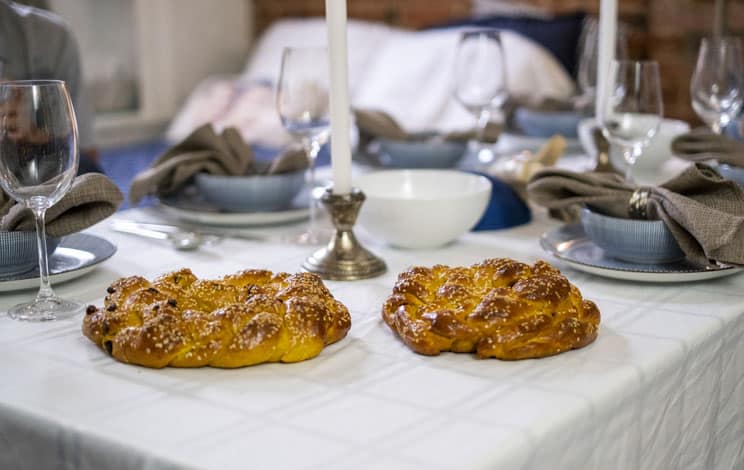
This year’s reading of Parshat Noah is on October 21. The tradition is to celebrate by baking and enjoying rainbow treats.

“I love the rainbow monkey bread babka because not only is it unique, gorgeous and delicious, it does not require you to dye the dough,” Mandy Silverman, founder of Mandylicious, told the Journal.

While Silverman’s recipe below is with babka dough, you can also use challah dough to make it.

“This cake batter filling in this is way easier to color and is out-of-control delicious.” – Mandy Silverman

“Traditional rainbow Parshat Noach challahs and babkas are so beautiful, but dying the dough can require quite a bit of kneading time and food coloring,” she said. “This cake batter filling in this is way easier to color and is out-of-control delicious.”

Mandylicious Rainbow Babka Monkey Bread

Ingredients:

Babka Dough:

¾ cup water

1 ¼  teaspoon salt

1 large egg

1 egg yolk

¾ cup margarine or butter, melted

1 tablespoons vanilla

1/3 cup sugar

3 ½ cups bread flour

2 tablespoons instant bread machine yeast

Extra water and flour as needed for consistency

Cake Batter Filling:

1 cup white cake mix

6 oz softened cream cheese or vegan cream cheese

2 tablespoons powdered sugar

3 tablespoons melted butter

1 teaspoon clear vanilla extract

1/4 teaspoon salt

Food coloring

Cake Batter Frosting:

3 tablespoons melted butter or vegan butter

1/3 cup milk or water

3/4 cup white cake mix

1/3 cup powdered sugar (plus more if you would like it thicker)

1/4 teaspoon salt

Instructions:

For the Dough:

Combine all the ingredients in a large bowl and knead well for 5-7 minutes. Be sure to check that the dough is the right consistency adding flour or water, one tablespoon at a time as necessary.

Allow to rise in a large bowl covered with a towel (or in a dark place covered with plastic wrap) for 1 ½ hours.

For the Filling:

Mix cake mix, cream cheese, powdered sugar, melted butter and vanilla extract together until smooth,

Divide into 6 small bowls and add a different color of food coloring gel to each as desired. Mix together until the filling in each bowl is completely saturated

For the Frosting:

Mix all ingredients together until smooth.

Putting it Together:

Photo by Mandylicious

Roll dough into a 16×18 rectangle.

On top, spread the filling colors in stripes, going the long way.

From the 18” side, slice into 1/2-3/4” wide slices and roll up into a spiral. This way, all the colors will be incorporated in each roll.

Tip: Alternate which side you are rolling up from to be sure all colors of your rainbow have a chance to stand out!

Place rolls in a well greased bundt pan.

Cover and rise for 30 minutes.

Bake at 350 for 30 minutes.

Cool slightly before flipping onto a plate.

Once cooled, frost as desired. Top with rainbow sprinkles.

Photo by Mandylicious

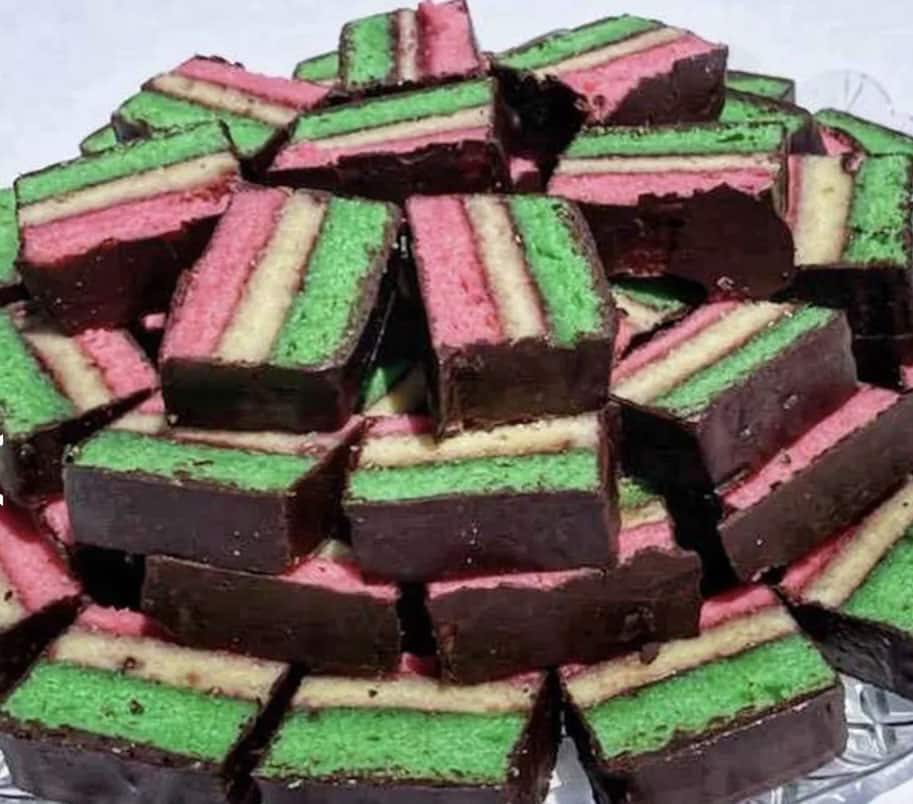
A staple on most cookie platters — and in Jewish delis and bakeries — Italian Rainbow cookies are actually more of an almond-flavored sponge cake.

“The original version of Rainbow Cookies has layers of red, green and white, representing the Italian flag,” Lenny Rosenberg of Bea’s Bakery told the Journal. “Over the years, Jewish bakeries have adopted and adapted the recipe.”

While this recipe has a layer of yellow cake instead of white, you can customize the colors however you would like.

Photo by Bea’s Bakery

Italian Rainbow Cookies


Ingredients:

1 cup sugar

8 oz almond paste

3 sticks of sweet butter, softened (1 ½ cups)

3 whole large eggs, separated

¼ cup whole milk

2 teaspoons almond extract

2 cups all-purpose flour

¼ teaspoon red food coloring

¼ teaspoon green food coloring

½ cup raspberry jam

1½ cups semisweet chocolate chips, melted

Directions:

Preheat the oven to 325 F, and grease three 9-by-13-inch quarter sheet pans with cooking spray, then line each with parchment.

In a stand mixer, fitted with the paddle attachment, combine the sugar, almond paste, and 1 stick of the butter. Mix until smooth and lump free, being sure to break down the almond paste as best you can. Add the remaining 2 sticks of butter and continue to mix until smooth, scraping down the sides of the bowl as needed.

Gradually add the egg yolks, followed by the milk and almond extract. Mix until combined. Add the flour and slowly mix until combined, scraping down the sides of the bowl as needed. Once the flour is combined, set aside.

In a separate bowl, whip the egg whites until they form stiff, fluffy peaks. Fold the whipped egg whites into the flour mixture to form a smooth batter, then divide equally between 3 bowls.

Stir the red food coloring into the first bowl of batter until evenly pink colored. Then, stir the green color into the second bowl of batter until evenly green colored. Leave the third bowl untouched.

Keeping the batters separate, evenly spread each of them into a greased and parchment-lined quarter sheet pans. Bake, rotating halfway through, until set; 10 to 12 minutes. Then let cool completely.

Once cooled, spread half of the jam to cover the surface of the green cake and place the undyed layer, making sure the parchment is discarded, directly on top, sandwiching the jam. Repeat this step by spreading the remaining jam on top of the undyed layer and placing the pink layer directly on top of it, discarding the parchment.

Cover the cake with plastic wrap and top with another sheet pan. Weigh down the layers with heavy plates or cans, and refrigerate for at least 4 hours, or overnight.

Remove the weights and plastic wrap. Spread half of the melted chocolate over the top of the cake and refrigerate until set; 30 minutes.

Once solid, flip the cake onto a cutting board, discarding the bottom layer of parchment, and spread the remaining melted chocolate in an even layer over the surface.

Return to the refrigerator and chill until set, 30 minutes.

Once set, trim the cake into a 7½-by-10½-inch rectangle, reserving all trim for snacking. Cut the cake into 1½-inch squares, then serve.

Rainbow Recipes for Parshat Noach Read More »

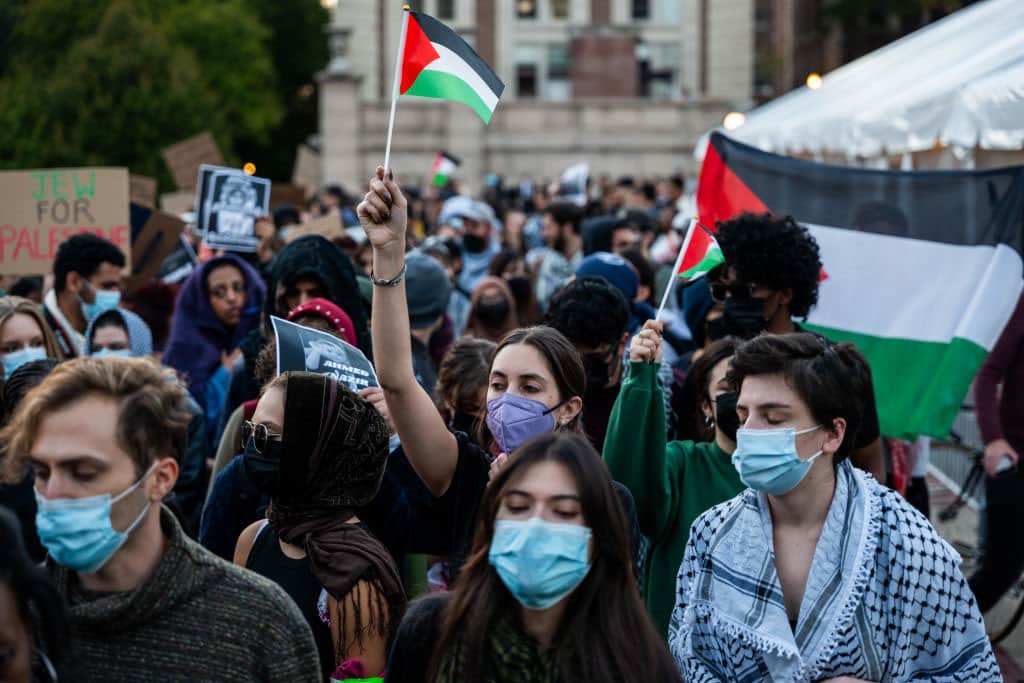
The Trauma of Jewish College Students: Losing 1400 of their Own and Still Feeling Like the Bad Guys

It’s no secret that college campuses in recent years have been hotbeds of antisemitism. What is stunning, however, is that this antisemitism has actually exploded since 1400 Jews were massacred by Hamas on October 7. Even before Israel began its campaign to eliminate Hamas, activist groups accelerated their bullying, anti-Israel venom.

Let that sink in: 1400 Jews are massacred and it’s the Jewish students who are under attack.

What is behind this venom? Among other things, a fear of losing a narrative.

The murder of 1400 Jews by Palestinian terrorists turned the progressive narrative upside down. This narrative– Jews are the oppressors and Palestinians the oppressed– is hardwired and must never be shaken.

So, while Jews were mourning the atrocities of October 7, progressive Jew haters were panicking at the potential loss of their foundational narrative.

That’s why they doubled down on their Jew hatred and immediately blamed Israel. They had to put Jewish students back in their place: “We don’t care about 1400 dead Jews. Remember that you’ll always be the oppressors and Palestinians will always be the victims.”

Jews have traditionally assumed that if more Jews died, the world would have more sympathy. If only Israelis would stop running into bomb shelters while Hamas rockets rain on them, and allow themselves to be slaughtered, perhaps the progressive narrative would be more balanced.

This argument has been blown up by October 7. It doesn’t matter how many Jews die.  There was no shelter for the 1400 peaceful Jews who perished near the Gaza border, and yet, this hardly made a dent in the world’s anti-Jewish, anti-Zionist machinery. The Jew-hatred is as alive and kicking as ever.

Jewish college students are feeling that hatred probably more than anyone. Instead of seeing sympathy for their pain, what they’re seeing, above all, is renewed aggression.

Whether it was the coalition of Harvard student groups that issued a letter holding Israel “entirely responsible” for Hamas murdering Israelis, or the wishy-washy statements—or even silence—from university leaders and progressive groups reluctant to name and call out Hamas’ terrorism, Jewish students are feeling both isolated and betrayed.

More importantly, they’re feeling unsafe.

They see a Cornell professor calling the Hamas massacres “exhilarating,” or an Israeli student attacked at Columbia, or a Stanford lecturer allegedly putting Jewish students in a corner, or Jew haters tearing down posters of Jewish hostages at NYU.

Jewish students who believe in social justice see posters like “Queers for Palestine” (the equivalent of “Blacks for KKK”), and wonder: Is there room for us here?

A few days after the October 7 massacres, Jewish students saw Students for Justice in Palestine (SJP) launch a “National day of Resistance,” which offered this rallying cry to their various chapters:

 “Today, we witness a historic win for the Palestinian resistance: across land, air, and sea, our people have broken down the artificial barriers of the Zionist entity, taking with it the facade of an impenetrable settler colony and reminding each of us that total return and liberation to Palestine is near.”

Meanwhile, while many Jewish students are terrified by this bullying and aggression, universities have suddenly discovered “free speech.” All these Jew haters are free to express themselves! These are the same universities who bend over backwards to protect minority students from any number of “microaggressions.” Jews can’t even get protection from macroaggressions.

These are the same universities who bend over backwards to protect minority students from any number of “microaggressions.” Jews can’t even get protection from macroaggressions.

Maybe Jews are seen as too successful, too powerful, too privileged to merit any protection, even in an extreme case when they lose 1400 of their own and are expected to withstand a shocking storm of animosity.

Well, maybe.

But there is a silver lining to all this: Jews now know what they’re up against. The aggressive activist movement they naively thought was “pro-Palestinian” is, first and foremost, anti-Jewish and anti-Israel. Palestinian agitators and their fellow travelers hate the Jewish occupation of Tel Aviv and Haifa as much as they hate the Jewish occupation of Judea and Samaria.

We saw another sign of this anti-Israel reflex when much of the world, including the legacy media, jumped on the narrative that Israel bombed a Gaza hospital and killed 500 Palestinians. The New York Times, before they could verify anything, swallowed the Palestinian line in its headline: “Israeli Strike Kills Hundreds in Hospital.” Never mind that this rush to judgement (which was speculative at best) endangered Jewish lives. It provided a quick, convenient return to the progressive narrative of Jews as the oppressors.

But this chronic and insidious bias against Israel, which looks even worse in the wake of October 7, has led to another silver lining: A furious backlash from many corners of the Jewish community. Their message to Jewish college students is that they’re not alone.

Many Jewish groups on campuses have been valuable centers of Jewish sustenance. Zionist activists have been fighting back with the truth, in person and on social media. Among the heroes are the mega donors to universities who have said “enough is enough” and are turning their influence into power. From the Wexner Foundation to Marc Rowan to Jon Huntsman to Bill Ackman to Ronald Lauder and many others, they are putting their alma maters on notice that the failure to protect Jewish students will come at a price.

The darkest Jewish moment since the Shoah has shed new light on the darkest corners of Jew hatred. Now, the best of the Jews are fighting back, knowing exactly what they’re up against.

The Trauma of Jewish College Students: Losing 1400 of their Own and Still Feeling Like the Bad Guys Read More »