Because he was religious was the explanation
that Kafka tried to avoid religion, according to Professor Ritchie Robertson,
somewhat like the reason many of the Jewish nation
believe there is no Lord whom they can base all their habitual acts, hobnobbing just like hobbits, on.
Judaism is less concerned with “whence,”
preoccupied with “how,’ extremely practical,
unobsessed by trying to make sense
of God, Jews’ habits’ reason tactical.
Although like Hebrew hobbits, we’re a nation
whose religious expertise is not
based metaphysically on explanation,
our reverence not rationalized by rot,
which is prevented prophylactically by
our concentration on how to behave,
like Kafka characters, little knowing why
God’s castle is as silent as the grave.
In “They capture The Castle: The husband and wife who translated Kafka and other German masters,” TLS, 8/11/23, Ritchie Robertson, reviewing Edwin and Willa Muir: a literary marriage, by Margery Palmer McCulloch and The Usurpers: A novel, by Willa Muir, writes:
Having spent nearly forty years thinking about Kafka, I would say that his novels are indeed concerned with religious or metaphysical matters. …..Josef K. in The Trial falls victim to a cruel cat-and-mouse game played by the unseen authorities. In The Castle, written eight years later, the officials stand in for a vanished divinity and hold the villagers in their thrall; K. is torn between an obsession with the Castle, where he hopes for metaphysical validation, and the demands and rewards of everyday life, which can and should be lived without reference to higher authority. His tragedy is that he sacrifices a human relationship without gaining the (illusory) confirmation he hoped for. If Kafka is a religious writer, he is one who seeks to escape from religion…..
Willa tells us in Belonging: “Edwin was more excited by the ‘whence’ and I by the ‘how’. That is to say, Edwin tried to divine and follow up the metaphysics of Kafka’s vision of the universe, while I stayed lost in admiration of the sureness with which he embodied in concrete situations the emotional predicaments he wanted to convey”.
Meir Soloveichik, in “Tolkien’s Biblical Epic: The long-lasting popularity of ‘The Lord of the Rings’ shows that in a secular age, readers still respond to Judeo-Christian teachings about morality, providence and power,” WSJ, 9/2/23, andperhaps explains why Tolkien should be at least as sacrosanct as Kafka.
.….Faithful Jews and Christians believe, in different ways, in the ultimate “return of the king.” But we also believe that we are called to live courageously in a world where that has not yet occurred. In one of the best-known scenes from the book and the film, Frodo ruefully wishes that he lived in a time before the ring was rediscovered, before evil made itself so profoundly manifest. “So do I,” Gandalf replies, “and so do all who live to see such times. But that is not for them to decide. All we have to decide is what to do with the time that is given us.”
This advice given by a wizard to a hobbit offers a succinct summation of what the Bible communicates to humanity and what has sustained men and women of faith in some of the darkest of times. Fifty years after Tolkien’s passing, the series that helped create the fantasy genre endures because of its realism.
Gershon Hepner is a poet who has written over 25,000 poems on subjects ranging from music to literature, politics to Torah. He grew up in England and moved to Los Angeles in 1976. Using his varied interests and experiences, he has authored dozens of papers in medical and academic journals, and authored “Legal Friction: Law, Narrative, and Identity Politics in Biblical Israel.” He can be reached at gershonhepner@gmail.com.
Maya and Eli turned four this week! FOUR!!! We planned well in advance to make the day special, and their anticipation was huge!
I love imbuing our kids with this enthusiasm. It also makes me think…. Do adults create meaningful opportunities when we honor life moments?
Certainly, many milestones are built into our Jewish calendar:
Baby naming/ bris
Birthday
B. Mitzvah
Confirmation
Wedding
Yahrzeit
But what about the stuff in between? Imagine the rituals we can create when we move, when we change jobs, when we retire. Imagine the joy we can experience with each personal accomplishment!
(Look … I feel accomplished when I change a light bulb!)
Rosh HaShanah is coming up. We honor this New Year as a people. So now is a good moment in time to take our your calendars and find three dates over that next year that you want to celebrate.
What is the occasion?
How will you honor it?
And who will be surrounding us (in body and in spirit) when we do?
On the 24th of Elul, 5713 (September 4, 1953) – a week before Rosh Hashana -a light was extinguished in Israel: Rabbi Benzion Meir Hai Uziel passed away. September 10, 2023 – the 24th of Elul, 5783 – marks Rav Uziel’s 70th anio (Ladino term for “yahrzeit”).
Born in the Old City of Jerusalem in 1880, Rav Uziel was the 20th century’s outstanding embodiment of the classic Sephardic tradition.
Rav Uziel was a leader. He was the Haham Bashi (Ottoman-appointed Chief Rabbi) of Tel Aviv (1911-1920, 1922-1939) and Chief Rabbi of Salonica (1920-1922). He was unanimously appointed Rishon L’Zion/Sephardic Chief Rabbi of the pre-state of Israel (1939-1947), and of the State of Israel (1948-1953). That’s three political administrations – Ottoman, British and Zionist – plus a stint in the diaspora. A Zionist leader, he worked in harmony with secularists, and with his Ashkenazi rabbinical colleagues – Rav Kook and Rav Herzog amongst them. He also issued multiple calls for peaceful relations with Muslims.
Rav Uziel was a halakhic scholar. He authored Mishpetei Uziel, nine volumes of groundbreaking Halakhic Responsa on primarily contemporary issues, including conversion, electricity, abortion and the aguna crisis. His responsa are creative halakhic innovations born out of an ongoing interface between tradition and modernity.
Rav Uziel was a thinker. He authored Hegyonei Uziel, a two-volume work of Jewish philosophy and theology that put him in conversation with his classic Sephardic predecessors – Yehuda Halevi, Bahya ibn Pakuda and Maimonides.
Rav Uziel had a dream: the unity of the Jewish people. In his inaugural address in 1911, he said: “It is my tremendous desire to unify all of the divisions that the diaspora tore us into, separate communities of Sephardim, Ashkenazim, Temanim, etc. These divisions are not natural, and were created due to our dispersion throughout the diaspora. As we now return to our natural homeland, there is absolutely no reason to continue living by these divisions imported from the diaspora. Let us be one unified community.”
Rav Uziel never stopped dreaming: two weeks before his death in 1953, he issued his “Spiritual Will to the Jewish People” where he said: “Disputes and divisions are our most dangerous enemies. By contrast, peace and unity are the eternal foundations for the national sustenance of the House of Israel. Remove all causes of division and dispute from our state, replacing them with factors that will lead to peace and unity amongst us.”
This coming Rosh Hashana, as we repeatedly pray “V’Ye’asu Kulam Aguda Ahat” – “May we become one unified body” – it’s upon all Jews to rekindle Rav Uziel’s light and keep his unifying dream alive.
Shabbat Shalom
Rabbi Daniel Bouskila is the director of the Sephardic Educational Center and the rabbi of the Westwood Village Synagogue.
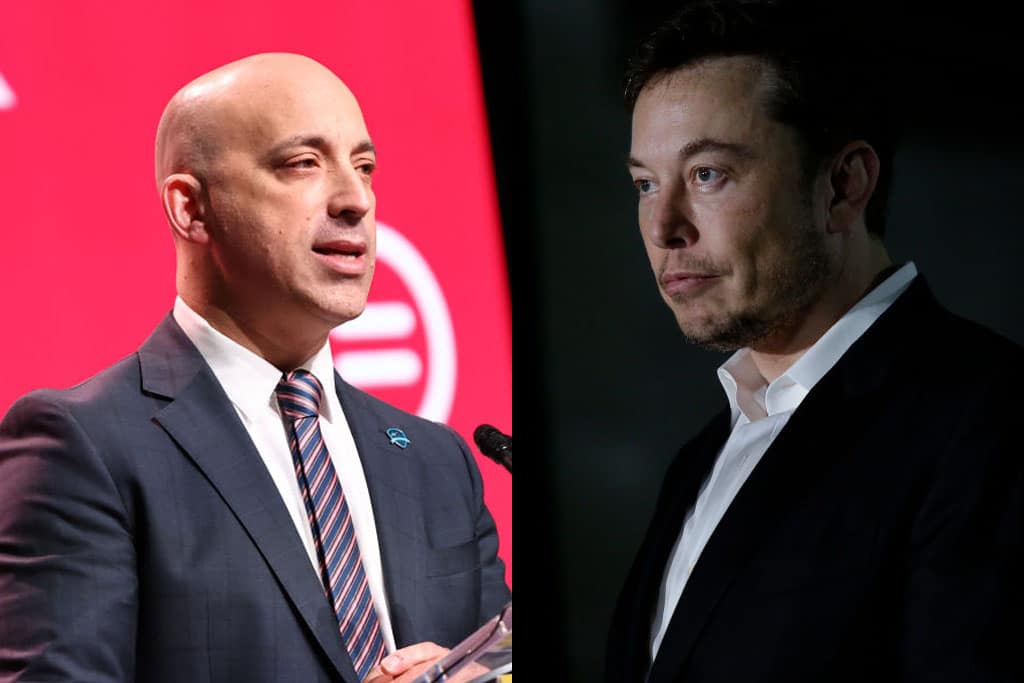
Anti-Defamation League (ADL) CEO Jonathan Greenblatt said in a statement on Tuesday that Elon Musk’s recent posts on X, formerly known as Twitter, targeting the ADL are “profoundly disturbing.”
Jewish Telegraphic Agency (JTA) reported that Musk, who owns X, posted at least 25 times about the ADL over the last several days, which included liking a post from Irish white nationalist Keith Woods, who has reportedly referred to himself as a “raging antisemite” in a deleted 2019 tweet, including the hashtag “#BanTheADL.” Musk also accused the ADL of being “responsible for most of our revenue loss.” “To clear our platform’s name on the matter of antisemitism, it looks like we have no choice but to file a defamation lawsuit against the Anti-Defamation League … oh the irony!” Musk posted on X. He also wrote on the platform that he’s “pro free speech, but against antisemitism of any kind” and that he would not ban the ADL from X “unless they break the law.” Additionally, Musk claimed in a post on X that “the ADL, because they are so aggressive in their demands to ban social media accounts for even minor infractions, are ironically the biggest generators of anti-Semitism on this platform!”
To clear our platform’s name on the matter of anti-Semitism, it looks like we have no choice but to file a defamation lawsuit against the Anti-Defamation League … oh the irony!
Based on what we’ve heard from advertisers, ADL seems to be responsible for most of our revenue loss.
Giving them maximum benefit of the doubt, I don’t see any scenario where they’re responsible for less than 10% of the value destruction, so ~$4 billion.
The ADL, because they are so aggressive in their demands to ban social media accounts for even minor infractions, are ironically the biggest generators of anti-Semitism on this platform!
In a statement posted on the ADL’s website, Greenblatt said “It is profoundly disturbing that Elon Musk spent the weekend engaging with a highly toxic, antisemitic campaign on his platform — a campaign started by an unrepentant bigot that then was heavily promoted by individuals such as white supremacist Nick Fuentes, Christian nationalist Andrew Torba, conspiracy theorist Alex Jones and others. Finally, we saw the campaign manifest in the real world when masked men marched in Florida on Saturday brazenly waving flags adorned with swastikas and chanting ‘Ban the ADL.’” Greenblatt argued the real issue isn’t the ADL or “the threat of a frivolous lawsuit” but “the safety of the Jewish people in the face of increasing, intensifying antisemitism.
“Musk is engaging with and elevating these antisemites at a time when ADL is tracking a surge of bomb threats and swatting attacks of synagogues and Jewish institutions, dramatic levels of antisemitic propaganda being littered throughout Jewish and non-Jewish residential communities, and extremists marching openly through the streets in Nazi gear,” Greenblatt continued. “All of this is happening in a context of the highest number of antisemitic incidents that ADL has tracked in more than 40 years — and just two weeks away from the Jewish holidays of Rosh Hashanah and Yom Kippur. And so, this behavior is not just alarming nor reckless. It is flat out dangerous and deeply irresponsible. We need responsible leaders to lead, to stop inflaming hatred and to step back from the brink before it’s too late.”
Greenblatt also appeared on CNBC’s “Squawk Box” on Wednesday, explaining that the #BanTheADL started after Greenblatt’s August 30 post on X about his meeting with X CEO Linda Yaccarino. “We’re used to this at the ADL. We regularly get attacked by the right and the left,” Greenblatt said. “But this campaign went viral very quickly, with white supremacists, hardened antisemites and other people spreading it across the service. It literally was a trending topic over the course of the weekend.” Greenblatt proceeded to say that he doesn’t think Musk is antisemitic, nor does he think that X is an antisemitic platform. “Hate speech is the price of free speech,” Greenblatt said. “But let’s acknowledge that when Elon Musk and the platform bring people — hardened antisemites — back on, when they validate their rantings, when they algorithmically amplify them and allow it to spread … I have to deal with, as head of the ADL, real world consequences.”
He proceeded to point out the “historic rise” of antisemitism over the past few years and the recent incidents of swatting synagogues and bomb threats against Jewish institutions, as well as the neo-Nazis openly marching in Florida. “Our community is vulnerable,” Greenblatt said. “People are on edge. And when Elon Musk is amplifying these people, it’s very problematic.”
Greenblatt then denied that the ADL was talking to advertisers. “We did call for a pause back in November after the acquisition, and since that initial statement, what we are doing is engaging with the management of the company [X], trying to make it better,” he said.
Separately, Musk shared a screenshot on X of an ADL tweet in November stating that the organization was “joining dozens of other groups to ask advertisers to pause Twitter spending because we are profoundly concerned about antisemitism and hate on the platform.” “Jonathan at ADL kicked off a massive Twitter boycott campaign less than a week after the acquisition closed,” Musk posted on Wednesday. “Literally nothing had changed about the site. Our US revenue is still 60% down from that campaign, but slowly improving.”
Jonathan at ADL kicked off a massive Twitter boycott campaign less than a week after the acquisition closed.
Some are defending the ADL in their public feud with Musk. “Like @ADL, [the American Jewish Committee] and the global Jewish community have been fighting rising antisemitism online and in the public square, a goal all social media companies should share,” American Jewish Committee (AJC) CEO Ted Deutch posted on X. “Online platforms must realize that pronouncements against antisemitism by senior executives, in this case Elon Musk, aren’t enough to prevent its spread — not when 69% of U.S. Jews experienced antisemitism online in the past year.” He added that “creating a reporting mechanism to specifically identify antisemitism will help build a welcoming — and safe — virtual town square. Pointing out the rampant antisemitism on X is not “controlling” anyone or threatening X’s business. Platforming bigotry is.”
Like @ADL, AJC and the global Jewish community have been fighting rising antisemitism online and in the public square, a goal all social media companies should share.
Online platforms must realize that pronouncements against antisemitism by senior executives, in this case Elon… pic.twitter.com/0vmYxXxavk
— Ted Deutch, CEO of American Jewish Committee (@AJCCEO) September 5, 2023
The Simon Wiesenthal Center (SWC) said in a statement, “From the moment that Elon Musk acquired Twitter, the Simon Wiesenthal Center, a trailblazer in combating Online Hate and Terrorism, asked to meet with him to detail our concerns about the leveraging of Twitter by anti-Semites and violent anti-Israel groups and individuals. Our efforts, and those of scores of other Jewish organizations focused on these issues, were met with virtual silence. The failure to adopt a robust policy in this area left the social media platform open to Kanye West’s relentless hateful rants against the Jewish people that impacted on tens of millions of users. Now, amidst surging antisemitic hate crimes in the US fueled by relentless Jew-hatred on social media, Musk chooses to threaten to launch a lawsuit, not against antisemites, but against the ADL.” They added: “Mr. Musk — this isn’t leadership, it’s a display of arrogance for which our community loses— whatever the outcome. The SWC reiterates its call for X to meet and begin the long overdue process of degrading, not upgrading, the use of X by anti-Semites and haters.”
International Legal Forum CEO Arsen Ostrovsky posted on X, “Twitter has long been a cesspool of antisemitism. But the campaign targeting #ADL now, has unleashed an unprecedented torrent of Jew hatred. Though white supremacists might be driving this, responsibility rests with #ElonMusk for opening — and amplifying — this floodgate of hate!”
Twitter has long been a cesspool of antisemitism. But the campaign targeting #ADL now, has unleashed an unprecedented torrent of Jew hatred. Though white supremacists might be driving this, responsibility rests with #ElonMusk for opening – and amplifying – this floodgate of hate! pic.twitter.com/DQWRyCsasd
Zionist Organization of America (ZOA) National President Morton A. Klein, on the other hand, told Breitbart News that he is supportive of Musk’s “concerns” about the ADL. “The ADL almost never condemns left-wing antisemites yet has defended radical left-wing Israel-hater and ADL-funder George Soros and praised Jew-hating Israel-basher Rep. Ilhan Omar (D-MN) for ‘her commitment to a more just world.’”
Others were critical of both Musk and the ADL. Karys Rhea, fellow at the Jewish Leadership Project, told One America News, “Elon himself sometimes responds approvingly to people who are known antisemites. This hashtag #BanTheADL is not something that Elon Musk as a free speech advocate should be promoting, and it’s a campaign that’s been taken up both by anti-Zionists on the left as well as white supremacists.” But Rhea argued that the criticism against the ADL is “well deserved, not because the ADL is a Jewish organization but precisely because they’ve abandoned their mission as a Jewish organization. They no longer are committed to protecting Jews, they’ve become a partisan racket and mouthpiece of the Democratic Party.” She later claimed in the segment that “the ADL has decided that Musk is their enemy — not the other way around — and so I don’t think we should expect Elon Musk to not comment on that.”
Seth Mandel, executive editor of The Washington Examiner, posted on X, “The groypers tweeting ‘ban the ADL’ are bad people with bad intentions and bad designs. Don’t be fooled, don’t ‘consider their argument,’ they are ghouls who hate you. No nuance.” The ADL defines the term “groyper” as being “a loose network of alt-right figures who are vocal supporters of white supremacist and ‘America First’ podcaster Nick Fuentes.”
“I have written more than anyone on the problems of the new ADL under Greenblatt from a Jewish communal perspective, and most [people] here know about the ADL’s campaign against me,” Mandel added on X. “But the ADL and I are arguing over how to keep Jews alive. The groypers want us all gone.” He later wrote in the same thread on X, “Did the ADL make a huge mistake in joining the call for advertising boycott before Musk even had a chance to get his land legs? Unquestionably. Was ADL *responsible* for the boycott or for what became of twitter under Musk? No. So we agree the one Jewish org is being scapegoated.”
It appears I missed some drama regarding the ADL this weekend. I'll say this as clearly as I can:
The groypers tweeting 'ban the ADL' are bad people with bad intentions and bad designs. Don't be fooled, don't "consider their argument," they are ghouls who hate you. No nuance.
I have written more than anyone on the problems of the new ADL under Greenblatt from a Jewish communal perspective, and most ppl here know about the ADL's campaign against me. But the ADL and I are arguing over how to keep Jews alive. The groypers want us all gone. תזכר את החבל.
Did the ADL make a huge mistake in joining the call for advertising boycott before Musk even had a chance to get his land legs? Unquestionably. Was ADL *responsible* for the boycott or for what became of twitter under Musk? No. So we agree the one Jewish org is being scapegoated.
The High Holy Days and Sukkot are a time when many Jews are out walking in their neighborhoods, often late at night after services and meals, and are more vulnerable to crime. Right now, both general crime in Los Angeles and antisemitic hate crimes are on the rise, meaning that Jews have to be much more vigilant during the holidays this year.
While all this is happening, the LAPD is short-staffed; currently, it has 9,000 officers, the lowest level since Mayor Richard Riordan’s administration in the 1990s. “They are having a hard time retaining officers, and between now and February, there will be forced retirements,” said Rabbi Yossi Eilfort, founder of Magen Am USA, a nonprofit organization that trains and empowers members of the Jewish community. “Things will get worse before they get better, and we’re working with the city as best we can since LAPD can’t be everywhere right now.”
Eilfort’s Magen Am provides volunteers and security professionals to protect synagogues and Jewish schools and organizations.
Eilfort’s Magen Am provides volunteers and security professionals to protect synagogues and Jewish schools and organizations. It operates in the Jewish communities around L.A. and gives classes on situational awareness, self-defense and responsible firearm ownership. Ivan Wolkind, formerly of the Jewish Federation and a reserve police officer of the LAPD, runs Magen Am and was recently hired as its CEO.
In anticipation of the High Holy Days, Eilfort is offering tips to the Jewish community to stay safe when crime is growing. Sticking to the basics, he said that when walking anywhere, try to go in groups, stay on main streets and, if it’s dark outside, go to the most well-lit place. It’s also important to plan out your route and get to know your neighbors.“If something does happen to you, then you’ll be able to go to a neighbor’s door and knock on it,” he said.
If you leave your house for any amount of time, lock your doors. “Make sure your doors are locked, even when going out for a quick meal and it’s inconvenient to have to lock the door,” Eilfort said. “There are people watching. They know the schedule and that they can get in when you’re out.”
If you are in a situation where someone approaches you on the street, Eilfort encourages you to follow your gut feeling. “If something makes you feel uncomfortable, don’t be afraid to say something or be afraid of offending them,” he said. Carrying pepper spray — if you can responsibly use it — as well as strong flashlights can also ward off any would-be attackers. “Take classes in situational awareness and make sure you aren’t walking into something dangerous,” he said.
While Magen Am plans to patrol the community around La Brea Boulevard during the High Holy Days and Sukkot, they may expand into Pico-Robertson as well. If Jewish organizations need protection, they can call 1 (844) MAGEN-AM (624-3626). You can fill out a form on Magen Am’s website to learn more about upcoming classes and events so you can stay safe during the holidays and beyond.
For now, Magen Am is going to keep on pushing for more protection in the community to combat the rise in both antisemitism and crime. “We’ll continue to make the Jewish community as prepared as possible,” Eilfort said.
Da Lifnei Mi Atah Omed – Know Before Whom You Stand.Of all the words inscribed on the doors of the Ark, these are my favorite.
While I feel that I am standing before G-d when I am in synagogue, I also feel that I am standing before others. The Amidah makes that clear when it lists the patriarchs, Abraham, Isaac and Jacob and, at many services, the matriarchs, Sarah, Rebecca, Rachel and Leah. It is wonderful to be reminded of the biblical icons whose legacies continue to affect us deeply.But we all have those who have influenced us more directly.
Sir Isaac Newton once wrote that “If I have seen further (than others), it is by standing on the shoulders of giants.”
One of my giants is my maternal grandfather.At the age of 20, he left his home in Tabaczdwa, a village in Austria-Hungary (now located in southern Poland), outside the city of Nowy Sacz.My youngest daughter did some research and discovered that my grandfather came to the U.S. in steerage class on a ship called the USS President Grant, which sailed from Hamburg, Germany in June of 1913.We have no idea if there was anyone to meet him when he arrived in New York, but we do know that six years later he married my grandmother, also from Tabaczdwa, who had emigrated a few years after her future husband.
While my grandfather spoke Yiddish, Polish, Hungarian and, I think, Hebrew, I am embarrassed to recall that when he used to read me stories from a children’s book, I became frustrated with how he would stumble over words in English. Despite having to learn a new language, he worked his way up from being a laborer until he bought a bar in Newark — Klafter’s Tavern.I have fond childhood memories of playing with the elaborate cash register.
My mother told me that in the mid-1930s, my grandfather, well aware of the darkening shadow hanging over Eastern European Jewry, returned to the old country to try to convince his family to join him in the States.After several months he came back empty handed.His family refused to abandon their home, so he gave them the money that was supposed to pay for their travel with the hope that they would eventually change their minds.
When my grandparents left the Nowy Sacz area, the regional Jewish community numbered around 25,000.A quarter century later, in September of 1939, Nazi troops invaded, forcing most of the area’s Jews into a ghetto before deporting them to the Belzec death camp in August of 1942. By the time the Russian army liberated the city in January of 1945, nearly the entire Jewish population had been wiped out.
My grandfather once asked me to look up his hometown in an atlas I was given when I became a bar mitzvah in 1966.The atlas claimed to list every city in the world.Tabaczdwa wasn’t there. When I told him that, he shrugged and said that he wasn’t surprised to learn that it was no more.
After the Shoah, my grandfather searched for surviving relatives but never found anyone. There was supposedly a distant relative in Philadelphia, but my sister and I don’t remember ever meeting him.As far as we knew, his family was gone.
The first and only time my grandparents flew on a plane was to pay homage to his murdered family. They traveled to Israel in April of 1961 to be in the room when Eichmann was condemned to death. As an eight-year-old, I watched the trial on our small black-and-white television after coming home from elementary school, trying to catch a glimpse of my grandparents in the background of the courtroom.
Every Shabbat I think not only of G-d, the patriarchs and matriarchs, but also of Ike Klafter, who was born 130 years ago.I thank him for providing me with the strongest of all shoulders on which to stand.
As we reflect on the year that passed and anticipate 5784, ask yourself: Who are the giants you have had in your own life?
As we reflect on the year that passed and anticipate 5784, ask yourself:Who are the giants you have had in your own life?
Morton Schapiro is the former President of Williams College and Northwestern University.His most recent book (with Gary Saul Morson) is “Minds Wide Shut: How the New Fundamentalisms Divide Us.”
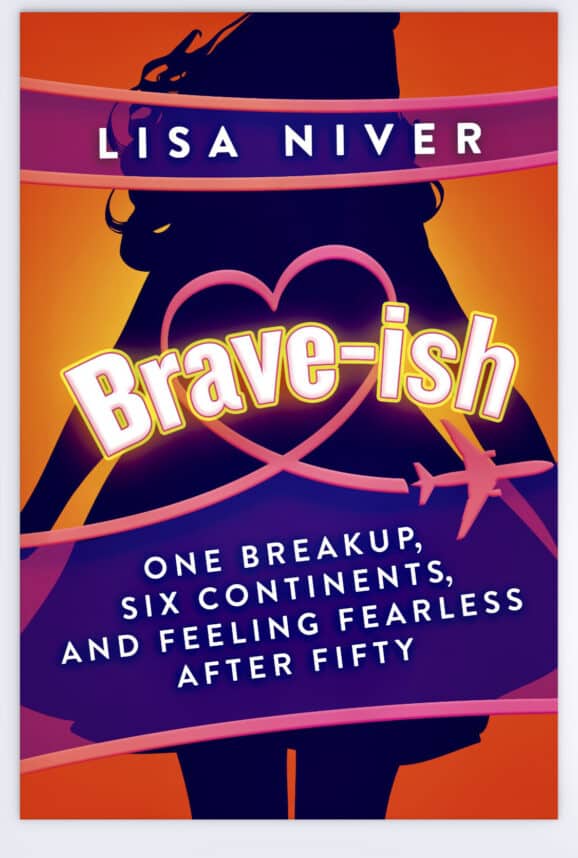
Did you ever read that book? Wild? By the woman who went on the P C T all by herself while she was solving her psychological problems or Eat, Pray, Love, whenshe ate her way around the world and prayed and came back with a love. I’m sure you did. Well, my guest on the show has written a very similar book. Her name is Lisa Niver. She’s named a number three travel influencer this year. And she talks travel on K T L A in Los Angeles, plus her YouTube channel. She’s all over social media. Her new book is called Brave-ish, One Breakup, Six Continents, and Feeling Fearless After Fifty. So what I didn’t know about Lisa Niver is that all her travel blogging began after breakup. It all had to do with relationships.
Dr. Wendy Walsh:
I mean, she ate sushi for the very first time despite having already traveled to Asia a bunch of times. That she sat on the bottom of an ocean in Mexico and learned how to identify different species of sharks, especially the aggressive ones. She raced BMWs in the rain in California. She zoomed on a Lamborghini in Vegas, On a border crossing between Tanzania and Kenya, she fixed a toilet <laugh> for people who’d never done a bucket flush. She took the plunge to skydive as her 50th challenge! Welcome Lisa Niver. You look fearless.
Lisa Niver:
Thank you. I’m so honored to be here with you.
Dr. Wendy Walsh:
So why did you decide to write this creative memoir?
Lisa Niver:
I’d say one of the main reasons I worked on this book was I remember when I was getting divorced. I felt like such a failure and I felt really alone. And I’ve spoken with a lot of other women and men who also felt like failures. And in actual fact, as you probably tell your listeners, for me, it would’ve been a failure to stay in that marriage.
Dr. Wendy Walsh:
Exactly. You know, this week in my psychology class I was teaching students about various cognitive biases we have. And one of them is called the sunk cost bias. And that is the more time and the more money you’ve invested in something, the more likely you are gonna stick to it, even if it’s awful because we have this bias to staying loyal. Right. So you gotta know when to hold them and know when to fold them.
Lisa Niver:
Yes. And so I folded them and then I was so upset and I was so sad. And I ended up working on my eyes. I had a vision problem. And then I started the 50 challenges before I was 50. And doing the 50 challenges eventually became this book.
Imagine a “Miguel,” whose family comes from Brazil, is a sophomore at an American university. In high school, Miguel was part of a youth movement called “Stand with Brazil” where he and his peers learned all about the history of his people and the legal right for his country to exist. In college, he is part of a pro-Brazil student group called Students Supporting Brazil. Here, Miguel is often seen tabling at the student union, handing out fliers explaining Brazil’s right to exist as a sovereign country. He has been at the forefront of bringing pro-Brazilian speakers to his campus.
Of course, there is no such Miguel.
There is, however, such a Micah, and a Rachel, and a Max, and a Shira, and a Daniel and a David … you get the point. There is no such Miguel because no other people, no other country is forced to provide a legitimacy slip as often as Israel, the only Jewish country.
We can, of course, blame our detractors, the massive history of Jew-hatred, but how much are we complicit in this delegitimization campaign? Put differently, how has the past 20 or so years of “pro-Israel” campaigning helped to sustain our dignity? Was it not René Descartes who in 1637 wrote “I think therefore I am” thus solidifying a bond between self-awareness and existence? We exist, therefore we are. Should that not be enough? And yet, much to my chagrin, we participate in our own invalidation when we produce our legitimacy papers at every opportunity for acceptance.
Let us start with the most basic tool of self-awareness: language. From the Hebraic tradition we learn that God spoke, and the world came to be, thus establishing a relationship between words and reality: The Hebrew words for “thing” (davar) and “speak” (daver) share the same root. Perception of reality is dependent on language. George Berkeley, the 17th century philosopher, understood this well, believing that we do not simply use words to represent the world, but use them to shape it. Later, Ferdinand Saussure, who in the 20th century laid the foundations in the development of linguistics, described language as a “social phenomenon,” a structural organism we participate in through a system of signs. We participate in this social phenomenon through a non-verbal contract in which we agree that objects (the “signified”) and their mental symbols (“signifiers”) coexist as anchors of our personal experiences in a shared language. For example, when we say “tree,” to varying degrees we all envision a “tree” in our minds.
Now, let us apply this thinking to the term “pro-Israel.” What are we signifying when we employ this term?
I first encountered the term “pro-Israel” around 2002 when I was an undergraduate at UC Santa Cruz and co-founded the student group, “Students for Peace in the Middle East,” to combat anti-Zionism — what many Jewish professionals at that time erroneously told me was simply a political disagreement and would most likely “blow over.”
Salute to Israel Parade march on May 31, 2009 in New York City. (Photo by Hiroko Masuike/Getty Images)
On campus, I began to hear that “America had it coming for all those years of supporting Israel and meddling in the Middle East.” The chants “from the river to the sea/Palestine will be free” as well as “hey hey, ho ho, Zionism has got to go” began to multiply. The American Jewish world was entirely unprepared and, as in the case of Jewish professionals on my university campus, chose to ignore or deny the rise of anti-Zionism. How wrong they were. Today, UC Santa Cruz is the home of the recently launched Institute for the Critical Study of Zionism, an academic initiative whose entire aim is to undermine the Jewish state.
Two major grassroots Israel advocacy groups — StandWithUs and Hasbara Fellowships — formed in 2001, a watershed year for the proliferation of this “new antisemitism” in the wake of three major global events: 9/11, the Second Intifada and the Durban Conference on Racism in South Africa, which galvanized anti-Zionism on the American campuses. Seemingly disparate events, separated by vast oceans and lingual barriers, a common enemy surfaced: the West and Israel.
It must be noted that anti-Zionism, what many American Jewish scholars and journalists dubbed the “new antisemitism,” was not new at all. In fact, its first victims were Soviet Jews as the Soviet Union constructed a massive propaganda campaign against Israel and Zionism after the 1967 Six Day War. Slogans heard on American and European campuses such as “Zionism is racism” or equating Israel with Nazism were carefully crafted by Soviet propagandists. When the Soviet Union collapsed in 1991, the anti-Zionist propaganda campaign seemed to fall with it. Of course, the respite would turn out to be temporary.
Unlike American Jews, Soviet Jews did not have any political power to fight the state. Those deemed Zionists or who applied for visas to immigrate to Israel were marked for opprobrium, losing their jobs or being thrown into prison. The most notable case is that of Natan Sharansky, who was sentenced to 13 years of forced labor for the crime of Zionism.
Four years later, anti-Zionism was further energized in the United States by a highly efficient tool of delegitimization: The Boycott, Divestment and Sanction movement (BDS), founded in 2005. When BDS arrived on college campuses, Jewish students were ill-equipped. Going back to their drawing boards, the Jewish “pro-Israel” nonprofit world redirected their efforts on empowering Jewish students on campus to be strong Jewish voices, able to withstand the tide of BDS, Israel Apartheid Week, and professors who in their courses referred to Israel as a settler-colonial state. From there, came the birth of the term “Israel advocacy,” thus signaling to Jewish students that their job as Jews was to stand up for Israel and against the massive anti-Israel campaign.
Inevitably, the label “pro-Israel” became the individual and collective calling card of this new advocacy.
It is remarkable, if not remarkably ridiculous, that the Jewish people are compelled to form “pro-Israel” advocacy groups for a foreign country thousands of miles away. It’s less ridiculous when you understand that Jewish identity is inextricably linked to the Land of Israel. This connection becomes an invitation for Jew haters to do their thing. There are no China, Russia or Iran advocacy groups, for example, because no Chinese, Russian or Iranian student on campus has to prepare for an annual bashing-of-their-country week (i.e. Apartheid Week) or prepare for the annual all-night BDS hearing where votes are cast against the Jewish state.
If we zoom out and consider the totality of Jewish history, we observe our survival in the era of the “Jewish Question” to only find ourselves living in the time of the “Israel Question.”Two-thousand years of living as guests in host countries produced the Jewish Question: What to do with these Jews who are at once individuals and part of a collective nation? Answers varied, both within the Jewish world and the non-Jewish world. One of the most frightening responses occurred less than 100 years ago: The “Final Solution,” the extermination of the Jewish people led by the Nazis and their collaborators. And now, in the 21st century, we are witnesses to the “Israel Question”: The obsession at the United Nations and throughout much of the world over what to do with Israel. Answers are, likewise, diverse, and once again, some have genocidal aims, as in the case of Iran, whose government overtly states its goal to destroy Israel.
In the era of the “Israel Question” we have produced several strategies but have underestimated the power of language as a tool of either liberation or oppression. “Language is the armory of the human mind,” Samuel Coleridge wrote, “and at once contains the trophies of its past and the weapons of its future conquests.” How, then, will we strengthen our reality with linguistic trophies of our past and linguistic weapons of our future?
It crystalized for me a few months ago when I attended a Students for Justice in Palestine (SJP) event at UCLA during Israel Apartheid Week. Advertised as a “History of Palestine through pictures,” it was led by a third-year undergraduate student who came with a PowerPoint presentation and — to be completely honest — a well-prepared talk. Although I was livid, I could not help but be in complete awe of the young student’s tenacity. She did not give up — not once — on language. She only referred to Israel as Palestine or Occupied Palestine, called the IDF the Israel Occupation Forces (IOF), called Judea and Samaria the “West Bank,” referred to the War of 1948 only as ‘the Nakba,’ and never once mentioned Jews in relation to the history of the land. There she was, standing tall and proud, employing the armory of words to conquer the narrative. And conquer she did.
Louisville Students for Justice in Palestine (Photo by Jon Cherry/Getty Images)
I remember thinking, how singularly incredible it would be if a Jewish student stood up and formed a fortress from words such as “Israel, Judea and Samaria, Palestinian Arabs, the First Arab-Israeli War, Jerusalem, and the Arab-Israeli conflict” during one such presentation on Israel and the Jewish people. And then I thought of the Israel Advocacy world repeatedly using terms such as “Israeli-Palestinian conflict, West Bank, disputed territories, Palestinians, and East Jerusalem.”
Let us use language as a tool of liberation—our liberation.Conversely, let us take heed of the words that unwittingly contribute to our oppression, one of which is the term “pro-Israel.”
Let us then use language as a tool of liberation—our liberation.Conversely, let us take heed of the words that unwittingly contribute to our oppression, one of which is the term “pro-Israel.”
In 2002, we were proudly pro-Israel and used this language to emphasize our position. But in doing so, we also undermined, unintentionally, the consequences of calling our movement to fight antisemitism “pro-Israel.” How so?
When we say “pro-Israel” we imply that there is a “con” to Israel’s legitimacy. Take the case of abortion and women’s rights. If I walk by a protest and see “pro-life” signage, I immediately seek to understand the other side, that is the side of pro-abortion advocates. Second, when we couch our fight against antisemitism by using the term “pro-Israel,” we distance ourselves from the beleaguered history of Jew-hatred. How so?
Any serious student of Jewish history will tell you that anti-Jewish animus is an age-old virus that mutates. As French Jewish philosopher Bernard-Henry Lévi wrote, “Antisemitism is a very special form of madness, one of the features of which has always been, at every step in its history, choosing the right words to make its madness look reasonable.” Keywords here are “the right words.” Yes, the antisemite is a wily creature who markets this age-old hatred in such a fashion as to offer the civilized world a reasonable cause to hate the Jews.
A vivid example is that of failed German politician Wilhelm Marr who, in 1872 coined the term “antisemitism” precisely to distance himself from the benighted term, Judenhass (Judeophobia), which was rooted in Medieval Christian tenets. A man of reason and science, Marr proudly proclaimed that he does not harbor hatred of Jews for their religion or character, but rather for their racial type. Popularizing the term “antisemitism,” salons around Western Europe proudly used the sophisticated term. Sound familiar? How many times have we heard from the pulpit, “I would like to make it clear: I am not an antisemite and vehemently denounce all forms of bigotry and racism. I am an anti-Zionist because I care about human rights.” Anti-Zionism, thus, is a linguistic camouflage for the most enduring and oldest hatred: Jew-hatred.
Equally detrimental in our struggle to combat Jew-hatred is the statement “anti-Israel,” which becomes an effective fig leaf for Jew-haters who would recoil from overt, classical antisemitism. How easily, then,we let them off the hook when we, ourselves, do not resolutely state that being against the existence Jewish state is not simply being “anti-Israel,” but anti-Jewish.
Understanding the shapeshifting profile of Jew-hatred, we identify three distinct historic eras: the era of Judeophobia, antisemitism, and anti-Zionism. In the era of “Judeophobia” the Jew was hated for his religious character; in the era of “antisemitism” he was loathed for his racial impurity; today, and in the era of “anti-Zionism,” the Jew is hated for violating human rights.
For the past 20 years, we have been doing mental acrobatics, trying to prove to the world that anti-Zionism is antisemitism. They say, anti-Zionism is merely criticism of Israeli policy. But that sounds just about as reasonable as stating that antisemitism, in the 19th century, was a way to criticize Jewish intermarriage rates. Whether you believe in a God that bestowed upon His people the Land of Israel is an irrelevant point; in this era of anti-Zionism, Jewish identity is being tried. Are we a religion, a race, a nation? If we are a nation, we originate from a place.The sooner we all agree and embrace our Jewish nationalism, the faster and more efficient we will be in uniting around the basic idea that anti-Zionism is antisemitism.
Imagine for a moment if someone said to a Jewish student on campus, “have you heard about the anti-Israel event next week?” and the Jewish student responds, “you mean the anti-Jewish event?” The rhetorical move is simple, but the impact is significant.
To take back our dignity, we must grasp the power of language and look inward; that is, at our role in creating an optimal reality.
To take back our dignity, we must grasp the power of language and look inward; that is, at our role in creating an optimal reality. We cannot solely blame our detractors for using terms such as “settler-colonialism,” “West Bank,” “Palestine,” “Occupied Territories,” or the “Israeli-Palestinian conflict.” In fact, it is precisely because we have capitulated to that narrative and those words that we have found ourselves in the defensive position; in fact, it is precisely because we have allowed the liars and propagandists to continue their anti-Jewish campaigns we find ourselves having to defend our very identity.
Perhaps a useful place to look at is the conflict itself. For far too long, many treated the conflict as one having to do with land. Israelis themselves were willing to give up land in exchange for peace. And what did Israel get in return? Terror. No, it was not reciprocated in kind; in fact, it further emboldened the radical Arab Palestinians. And now, Jews in the Diaspora, who find ourselves besieged on the battlefield of ideas, when we give up on language and narrative, naively think that our efforts will be reciprocated in kind.
To regain the initiative, enterprising Zionist activists would be wise to start with language and gather experts in the field. We dare not call them pro-Israel.
Naya Lekht received her PhD in Russian Literature and wrote her dissertation on Holocaust literature in the Soviet Union. Naya is currently the Education Editor for White Rose Magazine and a Research Fellow for the Institute for Institute for the Study of Global Antisemitism and Policy.
The possibility of a grand bargain between Saudi Arabia, the United States and Israel continues to grow. While the odds are still against such an agreement, the result would transform the politics of Israel, the geopolitics of the Middle East and international relations from one end of the planet to the other. And it’s becoming clear how much at least some of the stakeholders involved want a deal.
We learned last week how much the Saudis covet a diplomatic relationship with Israel, when the Wall Street Journal reported that the Saudis had proposed the resumption of their financial support to the Palestinian Authority.They had first reduced and then suspended the aid years ago due to allegations of incompetence and corruption, but their proposal to restore it underscores their need for a stronger military presence against potential Iranian aggression in the years ahead. Despite a nominal peace treaty that they signed with Iran last spring, the Saudis are still understandably suspicious and therefore see the need to protect themselves against a possible confrontation with the region’s other Muslim military power.
A treaty between Saudi Arabia and the United States would require massive U.S. weapons transfers, an enhanced mutual security agreement, and American support for a civilian nuclear program. As an incentive to tempt a reluctant Biden Administration to sign off on the nuclear plan, the Saudis have let it be known that they will move forward in a similar partnership with China if the U.S. does not sign on. While there are many leaders of both parties in Washington who are skeptical of providing Saudi Arabia with even non-military nuclear capability, watching the Chinese enter a similar arrangement would be even more objectionable.
Many of Biden’s fellow Democrats harbor deep resentment toward the Saudis for numerous human rights abuses – most notably the murder of Washington Post columnist Jamal Khashoggi in 2018. (For that matter, so does Biden himself.) But the steady stream of White House and State Department officials to Riyadh and Jerusalem over the last few months demonstrates how motivated our country’s leaders are to finalize an agreement too. In addition to lowering tensions throughout the Middle East to a level never before seen in the modern era, the U.S. and its allies would be able to redirect diplomatic and military attention from that region to the Pacific Rim to provide a stronger bulwark against China. (Not to mention the abundant political benefits that Biden would achieve heading into a closely contested re-election campaign.)
We are now at a point where both Saudi Arabia and the United States are notably and publicly enthusiastic about the possibilities of this type of treaty. Which means that the most significant outstanding question is whether Israel is equally invested in making this happen.It seems self-evident that expanding the Abraham Accords to include Saudi Arabia could lessen the possibility of state-sponsored violence against the Jewish state to a level that has never before existed. While absolute peace can never be guaranteed as long as the Iranian mullahs remain in control of their country, it’s clear that full diplomatic relations with the Saudis would provide an unprecedented level of security and safety for Israel and its people.
But Saudi Arabia is offering money to the Palestinians because they recognize the importance of the Palestinian Authority signing off on any deal. So does the U.S. While the prospect of a Palestinian state in the West Bank and Gaza is still a non-starter (and will be for the foreseeable future), Israel will almost certainly be required to pull back dramatically on settlement activity and make other comprehensive territorial concessions as their part of the agreement. Benjamin Netanyahu’s current majority coalition would oppose such a pullback, which would therefore require Netanyahu to fashion a more centrist government. But there’s no guarantee that a less extreme Knesset majority would take these extraordinary steps either.
Israel has been quiet as to what is sees as a path to achieving this type of breakthrough. But at some point soon, they are going to have to start talking publicly too.
Dan Schnur is the U.S. Politics Editor for the Jewish Journal. He teaches courses in politics, communications, and leadership at UC Berkeley, USC and Pepperdine. He hosts the monthly webinar “The Dan Schnur Political Report” for the Los Angeles World Affairs Council & Town Hall. Follow Dan’s work at www.danschnurpolitics.com
In May 2022, after learning that three fathers were stabbed to death by a Palestinian terrorist in Elad, Israel, I was so heartbroken I wrote a column titled “How are Jews Supposed to Respond to Terrorist Attacks?” In it, I asked both a psychotherapist and a rabbi about how we are meant to process and respond to what seems like a constant stream of terrible news.
These days, I still feel the need to keep up with heartbreaking news of terrorist attacks abroad and mass shootings in the United States, but as an Angeleno, I’m also thinking a lot about crime.
I’ve spoken with many local Jewish residents, especially women and mothers who had expressed anxiety over the increase in local crime in the last few years. By their own admission, several of them told me that they used to feel happier and safer, whether in or out of their homes, but now, they feel constantly anxious. Some of them are more observant Jewish women who have signs outside their homes that declare, “Protected by Ribono Shel Olam Security Systems,” referring to G-d, or more precisely, the “Master of the World.” But these days, these women can’t escape a certain anxiety that renders them afraid of the world itself.
They’re particularly afraid of robberies, and described how thieves have broken into their neighbors’ homes in broad daylight, or ran past them in the mall carrying stolen designer handbags while they and their families were shopping. One woman described how her neighbor was followed home in his car at sunset, then held at gunpoint and robbed as soon as he parked outside his driveway.
Given that the High Holy Days are just around the corner (cue even stronger security protocols), I believe it’s time to ask how Jews should respond to crime. And not just crime, but the nerve-wracking and seemingly never-ending alerts and news about crime. I immediately knew whom I needed to contact for matters related to Judaism and safety: Rabbi Yossi Eilfort, president and founder of Magen Am.
Magen Am is the only Jewish, nonprofit organization “licensed to provide physical, armed security services on the West Coast,” according to its website (it currently operates in Los Angeles and Phoenix).
I asked Eilfort if Jews are meant to believe that there is deeper meaning to be found in distressing news, including news about crime. “Everything we see is supposed to be a lesson to us,” he said.
When I asked Eilfort how Jews should respond to crime and robberies, he first described what he perceived as growing lawlessness in the United States: “In the last decade,” he said, “the attitude in this country hasn’t been pro-law enforcement. So there’s a lack of respect for the law, and in some cases, it’s outright oppositional. Now, people feel like they’re entitled to break the law and get away with it.”
Judaism has a built-in response to this shift in attitude, said Eilfort. In Pirkei Avot (Ethics of our Fathers) 3:2, Rabbi Chanina is famously credited with saying, “Pray for the welfare of the government; for were it not for the fear of its authority, a man would swallow his neighbor alive.” Something tells me the thug who robbed a man at gunpoint in the late afternoon outside his home didn’t fear much.
Eilfort repeatedly stressed that from a Jewish perspective, we need to be respectful of law and order. Long before the Ten Commandments, one of the seven Noahide Laws obligated humans to establish courts, in order to honor the rule of law and justice. He then offered two lenses with which Jews should respond to crime — one personal, and the other practical.
“As a Chabadnik and Hasid (a follower of Hassidism), I believe that we should not walk around afraid,” Eilfort said. “It’s not good for you, your health or your spirituality.” He described placing a Post-It note on his computer with one simple word: bitachon, traditionally translated as “trust.” But he pointed to the Hebrew translation of Israel’s Ministry of Defense, “Misrad HaBitachon.” While many Jews believe that bitachon means trust in G-d, Eilfort stressed that bitachon actually means “security,” hence Israel’s Ministry of Defense/Security.
“It’s no coincidence that trust in G-d and security are the same word,” said Eilfort. “I trust G-d to take care of my security, and I will do my own part to take care of my security, so I don’t need to fear people.” In contemplating this, Eilfort was reminded of two insights that the father of the Baal Shem Tov, the 18th-century founder of Hasidic Judaism, taught his son: First, love every Jew, and second, fear nothing but G-d.
But trust must exist alongside action. In addition to a spiritual lens, Eilfort also offered practical advice about responding to crime. “We’re not supposed to be afraid,” said Eilfort. “And from a security standpoint, if we’re constantly afraid, we’re not doing it [security] right. We should be prepared, including having the right kind of training” (Magen Am offers various community training courses, including how to operate firearms, as well as classes on situational awareness and conflict resolution). “I’ve got my gear and my training,” he said. “I’m confident that nothing is going to happen to me. That’s 99% of the battle.” Eilfort also urged the importance of locking doors and installing lights and cameras outside. “Be responsible with your safety,” he said.
I asked Eilfort if Jews are meant to believe that there is deeper meaning to be found in distressing news, including news about crime. “Everything we see is supposed to be a lesson to us,” he said. But, according to Eilfort, there are two approaches to dealing with problems: The first consists of mere complaining, but the second attempts to solve the problem. “What can I do to try to make this better?” he asked. “Our mission in Magen Am isn’t simply to tell people there’s antisemitism, but to prepare Jews for it. We can’t control if they [antisemites] want to hurt us, but if they want to hurt us, we have to make it hard for them.”
The Jewish High Holy Days are perfectly designed to help us identify areas in our lives that need extra care and attention, and to be solution-oriented. Complaining about our lives isn’t enough.
Eilfort offered me an important reminder: We can still complain about crime, if our complaints are paired with action. I didn’t know how much I needed this reminder, whether with regards to crimes committed by others, or on a gentler level, mistakes I have made with my own actions in the past year. The Jewish High Holy Days are perfectly designed to help us identify areas in our lives that need extra care and attention, and to be solution-oriented. Complaining about our lives isn’t enough.
This Rosh Hashanah and Yom Kippur, I hope to stand in a synagogue pew and, perhaps for the first time, breathe a sigh of relief in knowing that bitachon in G-d includes more than trust, because its literal definition is “security.” And I know I’ll be grateful for both the divine bitachon that emanates from above, as well as the tireless security guards and well-planned safety measures that aim to protect us here on earth.
But since I also know myself better than anyone, you can bet that despite standing in that synagogue pew next week and expressing real gratitude, I’ll also be sure to add a few temporary bouts of complaining.
For more information about Magen Am, visit magenam.com
Tabby Refael is an award-winning writer, speaker and weekly columnist for The Jewish Journal of Greater Los Angeles. Follow her on X and Instagram @tabbyrefael.com