fbpx

August 9, 2023

“Providence and Power”: Rabbi Soloveichik’s Insightful History of Jewish Leadership

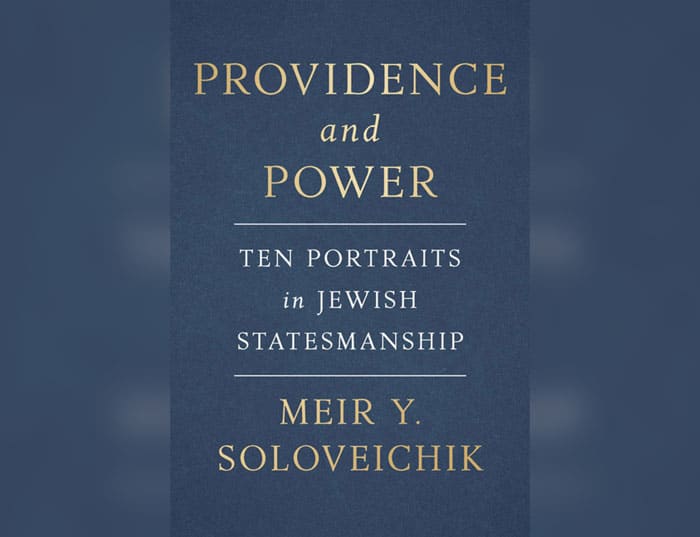
Near the Old City of Jerusalem there is a street named Rehov Shlomtsion Hamalkah, honoring Queen Shlomtsion, who ruled in the Second Temple era. It’s unlikely that the patrons who frequent the street’s trendy restaurants and bars know anything about this remarkable woman for whom the street is named. Who was she, and why did she rate to be included in Meir Y. Soloveichik’s new book, “Providence and Power: Ten Portraits in Jewish Statesmanship”? 

Rabbi Soloveichik is one of the Jewish world’s leading lights, a prolific and engaging writer, speaker, and theologian. He is Director of Yeshiva University’s Strauss Center for Torah and Western Thought and Rabbi of Congregation Shearith Israel in New York — the oldest synagogue in the United States. His dizzying intellectual output also includes the podcasts “Bible 365” and “Jerusalem 365.” 

“Providence and Power,” just published by Encounter Books, presents insightful profiles of the most colorful and consequential Jewish political leaders over the past 3,000 years, from King David and Queen Esther through the 20th century’s Benjamin Disraeli, Louis B. Brandeis, David Ben-Gurion and Menachem Begin. Books about political statecraft in general and biographies of individual political leaders are legion. Few focus on Jewish political leaders per se, and how their understanding of statecraft served — and often saved — the Jewish people. 

Soloveichik writes that without national independence or national power for close to 2,000 years, “it was often precisely the challenges of life in dispersion and subjugation that gave rise to some of the most compelling embodiments of Jewish statesmanship on the part of figures who refused to give up on the Jews as a people and who acted in the political realm to safeguard their posterity.”   

Queen Esther, Judaism’s most famous and beloved Jewish queen, is revealed here beyond her renown as a woman of piety, courage, and bravery to one who understood the political moment of her time. She did not follow Mordechai’s advice on how to approach King Achashverosh to save the Jews from a decree of annihilation but seized on a cunning strategy of her own. Playing to the king’s deep insecurities, Esther’s inclusion of Haman at two otherwise intimate parties with the king plants the idea that Haman isn’t only after the crown, but after Esther herself. 

The only other female Jewish leader discussed is Shlomtzion, who ascended the throne in Judea in 76 B.C.E., during the Second Temple period. She was twice widowed from two Hasmonean brothers, each a cruel and murderous tyrant. Judea was under Jewish control at the time but was “a religious tinderbox on the brink of explosion,” with violent conflicts raging over religious and political leadership.    

What little is known about Shlomtzion attests to her greatness. She opposed her husbands’ brutality not only privately but publicly, earning the love and support of an oppressed citizenry. As queen, she fired everyone in government whose actions were contrary to Jewish law. “In an age ruled by brutal men, she alone was truly royal,” Soloveichik writes. She ruled during the last nine years of Jewish independence before the Romans seized power, eventually destroying Jerusalem all over again. 

She also seemingly worked with the leader of the religious court (Sanhedrin), which introduced two revolutionary advancements. One was the ketubah, civilization’s first prenuptial agreement. The second was the establishment of a network of schools for children. Anticipating ongoing wars, she bulked up the armed forces by nearly 50%. While she could not prevent looming disaster, the Roman empire is long gone but Shlomtzion’s most significant achievements remain.  

In the 15th century, Don Isaac Abravanel became an extraordinary Torah scholar as well as “a leader of his people, one who would be tasked, at a terror-ridden juncture in Jewish history, with sustaining his people’s faith.” Abravanel’s grandfather had converted to Christianity in Spain, amassing a great fortune and forging close connections in the king’s financial service. Much of the family assimilated into Christian Spain, but Don Isaac’s father, Judah, moved to Portugal and served the monarchy there. 

Don Isaac was an influential and wealthy man who not only advised kings and dukes but could liaise between the court and the Jewish community. Yet Abravanel’s closeness with Portugal’s royals actually intensified his danger when a new king, John II, took the throne in 1483, ushering in new cruelties against the Jews. Abravanel fled to Spain, leaving everything behind. “I had not a speck remaining,” he wrote.    

He considered his fall a punishment from God for having failed to teach the Torah he knew so well, and began writing brilliant commentaries from a political perspective. He rebuilt his wealth and status, serving Spain’s King Ferdinand and Queen Isabella, seemingly ignoring the gathering political storm. The royal edict expelling the Jews from Spain, announced in March 1492, caught him unawares. The king and queen offered Abravanel continued protection and riches if he stayed and converted. He adamantly refused, referencing the Book of Esther. The Jews were an eternal people, he chastised them, and anyone who tried to destroy them would “invite upon themselves divine punishment and disaster.”   

Other significant leaders, including Benjamin Disraeli (a baptized Christian), Theodor Herzl, and Louis D. Brandeis (both completely secular) each became motivated to publicly defend the rights of Jews to practice openly in the nations where they lived. More famously, they campaigned for the rights of Jews to a national homeland. Brandeis had been so thoroughly assimilated that he disdained the idea of any “hyphenated” ethnic or religious status in the United States as disloyal. Yet he was heavily influenced by his mother’s brother, Lewis Dembitz, a Shabbat-observant attorney, even changing his middle name from David to Dembitz. Some years after his uncle’s passing, Brandeis, then a US Supreme Court Justice, engaged in soul searching that led him to work behind the scenes, earning President Wilson’s support on behalf of the Balfour Declaration. 

Jewish leaders, at their best, manage to balance majesty and humility, rising in greatness even from the depths of exile.

In these portraits, Soloveitchik masterfully connects interwoven themes of true Jewish leadership: “Jewish leaders, at their best, draw on the spirit of the people they lead, the generations whose legacy they inherit and inhabit.” Jewish leaders, at their best, manage to balance majesty and humility, rising in greatness even from the depths of exile. They help keep the dream alive of a restored Jewish nation state while “eloquently expressing pride in the resonant teachings of the Jewish faith.” 

Brilliant leadership sometimes emerges from unexpected corners. This outstanding book by one of today’s most important Jewish thinkers will delight students of Jewish history and of the art of leadership.


Judy Gruen’s most recent book is “The Skeptic and the Rabbi: Falling in Love With Faith.” Her forthcoming memoir, “Bylines and Blessings,” will be published in February 2024. 

“Providence and Power”: Rabbi Soloveichik’s Insightful History of Jewish Leadership Read More »

Raising Responsible Generations

My son and his family recently visited us for two weeks. They live in Jerusalem, so the trip was significant. Two adults and three kids, aged 6, 10, and 13, took up residence in our modest home and we all had a blast. 

During their visit, I was reminded of what it feels like to have a busy household. Dishes were piled up in the sink, Legos were strewn on the floor, and dirty towels were everywhere. But this time, there was a difference: My son and his wife helped out. The kids even helped. Dirty dishes were transformed into clean ones. Messy floors were cleared of debris. This, I thought, was a sign of success: My husband and I had raised a son whose family members largely cleaned up after themselves.

What goes into raising responsible children? Was there a magic moment when we, as parents, portentously told our kids, “You must clean up after yourselves,” and that was it? Far from it.

What goes into raising responsible children? Was there a magic moment when we, as parents, portentously told our kids, “You must clean up after yourselves,” and that was it? Far from it. That message was repeated countless times in word and deed. Even if we did not order our kids to tidy up, we emphasized the need to respect the space of the people around them. We didn’t see the fruits until our kids were launched and started, amazingly, keeping neat, clean homes of their own. 

Similarly, what did it take to raise children who take Jewish life seriously? Sure, there was Jewish day school, for which we stretched ourselves financially to and beyond our limits. But there are families that send their kids to day school and the kids seem to have absorbed almost nothing about living a Jewish life. Every day, the school would weave Jewish ideas into the children’s minds, and every evening, their father or mother would methodically tear the stitches out, mocking, scoffing, doubting, and casting aspersions on the school. Is it any wonder they didn’t take Judaism seriously? 

No, school is not enough. It is important, but transmitting the desire to live a Jewish life and make a Jewish home takes more than teachers giving lessons. It takes the model of parents walking the walk, avoiding all the nearby non-kosher takeout joints, and driving across town for kosher pizza. Stopping work on an important project on Friday afternoon because Shabbat was coming. Not going to shul with a baby if there was no eruv. Waiting in endless carpool lines after driving for 30 or 40 minutes when there was a public school within walking distance. Making the sacrifices that showed our children that living a Jewish life mattered to us. We also showed them the joy of hosting Shabbat meals, singing songs, making Purim baskets, enjoying Pesach Seders, and countless other positive moments. And because it mattered to us, it mattered to them. 

Of course, even a Jewishly committed home can raise children who shun religious observance. Why this happens is beyond my pay grade. Perhaps it is related to the influence of secular culture, perhaps a lack in the school, perhaps an inconsistency in the parents’ commitment. Or perhaps, as a rabbi wisely said to me when one of my own children gave up the religious lifestyle, “Orthodox Judaism is not for everyone.” Even if a child is not religious in the same way their parents were, their childhood experiences leave an imprint. The person raised in a religious home may be more likely to give to charity, host strangers in their home, or bring a meal to a sick friend. Despite the agnosticism they claim, they might even feel a flicker of faith.

I now see my grandchildren and watch their parents, my children, making their own sacrifices for the sake of passing on the tradition.  Will their kids clean up after themselves when they become adults? I pray that I live to find out.


Elizabeth Danziger is the author of four books, including Get to the Point, 2nd edition, which was originally published by Random House. She lives in Venice, California.

Raising Responsible Generations Read More »

Magen David Adom Ambulance, WIZO Honors Councilman, Rabbi Sacks Legacy Workshop

American Friends of Magen David Adom (AFMDA) provided a community tour of a Magen David Adom life support ambulance, on July 31 and Aug. 1.

Nearly 400 children from several Los Angeles synagogues and summer camps—including Gindi Maimonides Academy, Temple Beth Am’s Camp Keshet, Temple Isaiah and Sephardic Temple Tifereth Israel — learned about Magen David Adom’s emergency response and had the unique opportunity to see the ambulance. The important lesson of tzedakah was highlighted to the children since these ambulances are sponsored through philanthropy. 

The ambulance on display was donated by Miriam Wagmesiter, 97, as a tribute to her beloved late parents, brothers, son and husband. 

Magen David Adom, Israel’s national emergency response service, has 1,300 ambulances in service, all of which were made possible through philanthropy. Due to increased threats and anticipation of further escalations in Israel, Magen David Adom is seeking 300 new ambulances in the coming year, three times what is typically requested annually.


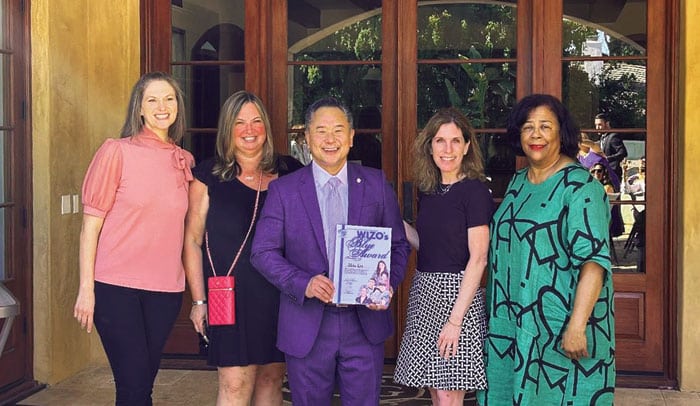
L.A. City Councilmember John Lee (center) is recognized by WIZO California.

On Aug. 3, WIZO California held an advocacy breakfast honoring Los Angeles City Councilmember John Lee with the WIZO California Blue Award, recognizing his unwavering support of Israel and the Jewish community at home.

WIZO, the Women’s International Zionist Organization, is an apolitical international movement dedicated to the advancement of the status of women, welfare for all sectors of Israeli society and encouragement of Jewish education of Israel and the diaspora.


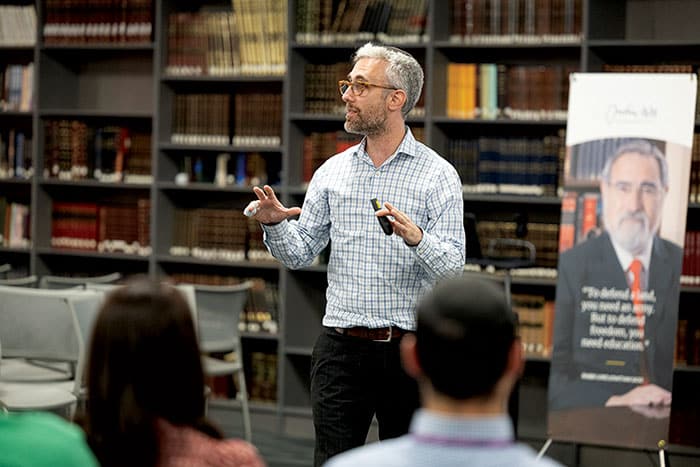
Shalhevet High School’s Rabbi David Stein participates in The Rabbi Sacks Legacy’s professional development workshop in New Jersey.

Shalhevet High School’s Judaic Studies Principal Rabbi David Stein served on the team of senior educators and curriculum designers on behalf of The Rabbi Sacks Legacy’s “Torah V’Chochmah” program. 

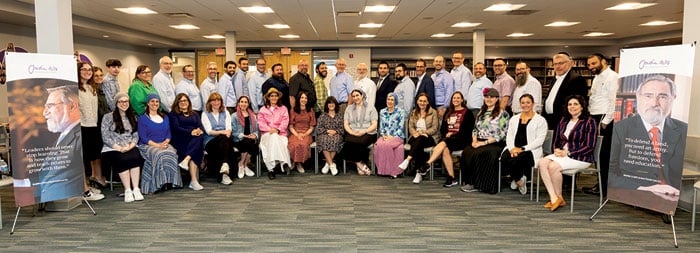
The professional development workshop, which took place at the Ma’ayanot Yeshiva High School for Girls in Teaneck, New Jersey July 9-13, convened educators from 18 Jewish day schools throughout the United States, Canada and Mexico to develop curricula based on the thoughts and values of Rabbi Sacks, the late and internationally respected religious leader, philosopher and author. 

The “Torah V’Chochmah” program drew educators from 18 Jewish day schools across North America.

The “Torah V’Chochmah” program — which derives its name from Sacks’ belief that Jewish educators ought to draw from both Torah (sacred texts) and chochmah (worldly wisdom)—is an immersive program designed to help participants incorporate Sacks’ teachings into their classrooms to help inspire the next generation of students to lead meaningfully Jewish lives. 

Stein, who also serves as co-founder and managing director of the LaHaV Curriculum Project, was instrumental in the program’s success.

North American Jewish day schools represented at the conference included Shalhevet High School and Irvine Hebrew Day School. There were more than one dozen experiential education sessions led by some of the most innovative thought leaders in Jewish education globally. Sessions focused on “Introduction to Curriculum Design” and “Crafting Essential Questions.”

“Rabbi Sacks made profound contributions to Jewish learning and education. By infusing the Jewish day school curricula with his wisdom, his legacy will continue to inspire students of today, and future generations, broadening their understanding of Jewish values and their application to everyday life,” The Rabbi Sacks Legacy Chief Executive Joanna Benarroch said. “By engaging in Torah V’Chochmah, educators are afforded a truly exceptional opportunity to combine their teaching practices with Rabbi Sacks’ inspirational wisdom and enrich the educational experiences of their students. This initiative seeks to build a deeper understanding and appreciation of Judaic texts, promoting a vibrant and engaging learning environment within day schools across the region.”

Established after Sacks’ untimely death in 2020, The Rabbi Sacks Legacy aims to perpetuate his work, ideas and teachings.

Magen David Adom Ambulance, WIZO Honors Councilman, Rabbi Sacks Legacy Workshop Read More »

Kanye’s Back But Will The Public Forgive Him?

A child who misbehaves can be told to sit in a corner for a while, and come back after apologizing. But in a world with 15 million Jews, how should they react to a rapper with 31 million Twitter followers, who says he likes Hitler, loves Nazis and posted he would go “death con 3” on the Jewish people? How should the world react now that a friend has brought him back after a hiatus?

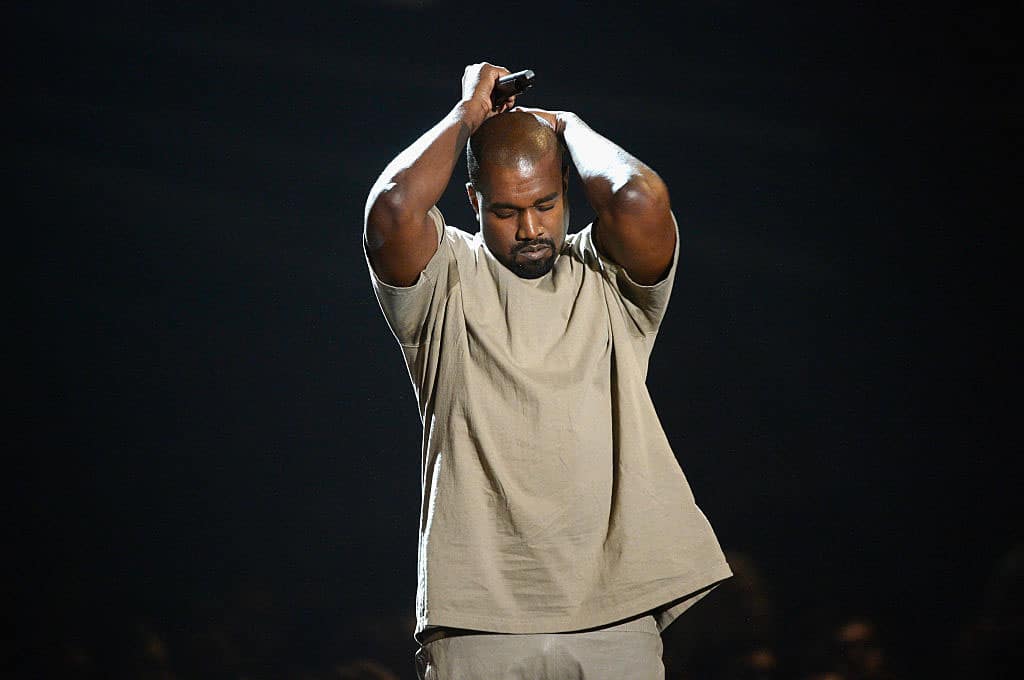
On Monday night in Rome, Italy, Travis Scott welcomed Kanye West, who goes by the name of Ye, to the stage, in his first performance since an antisemitic tirade caused him to lose his Adidas contract and made people think he needed to go away for a while.

There’s no close comparison for a major artist who has so openly spewed Jew hatred. Video showed Scott telling the crowd “there is no Travis Scott without Kanye West.”

A risky move for Scott? Maybe not. He’s promoting his new album “Utopia,” released on July 28. Ye, addicted to the drug of attention, had puzzling podcast performances earlier this year that culminated in his wearing an mask during an interview with conspiracy theorist Alex Jones in which he said he liked Hitler. In an infamous “Drink Champs” interview, he railed against the seemingly all-powerful “Jewish media” a phrased he used about 20 times.

America is a free country. Ku Klux Klan members are allowed to march. People are allowed to hate. But venues do not have to agree to contracts with musical artists they don’t feel will be good for business. Ye was one of the most popular performers on the planet. Is he still? How many of his followers care if he says hateful things?

This performance could give cover in two different ways. Other artists may feel free to bring Ye on stage, rationalizing that Scott did it and there were no repercussions. It seems unlikely that a major venue in America would give Ye the chance to have his own show right now, but it could happen in the future. I wouldn’t be surprised. When there is a flurry of inertia and people pile on, people like to act like they care and are doing the right thing. But when the fury dies down, we see what people really think.

The scary thing is we don’t really know what’s in people’s hearts. Could Ye fill Madison Square Garden or Cryto.com Arena in a week? Probably. Would the venues have any moral qualms, or would there be threats of boycotts? It’s hard to answer that.

We should not be stupid. Someone whose main thrill in life is to cause a circus is not likely to run out of tricks. There is no rational explanation for Ye’s anti-Jewish vitriol.. There is no excuse for his absurd and disgusting behavior. But our society rewards controversy and forgives many transgressions if a person has talent.

There will no doubt be a “sha-shtil” campaign by Jewish groups. The logic is as follows: The public will accept Ye back anyway, so why make a fuss?  Be quiet and all the problems will go away if we don’t make trouble.

This would be the wrong approach. Ye pushed the envelope to the edge of the table before he pushed it off. Should we pull out the chair for him and offer a cushion?

Perhaps there are those who feel if only he apologized, all would be well. I went to one of his concerts in Manhattan about seven years ago. He put on a great performance. Needless to say, I would never even go to any arena that hosts him now, in any capacity. We should not forget, and we should not forgive. When we reward fake apologies, we lose our own credibility.

In a drunk tirade 17 years ago Mel Gibson told a Los Angeles police officer that the Jews were “responsible for all the wars in the world” and also used an expletive regarding Jews.

Though Gibson’s “The Passion of the Christ” drew criticism from Jewish leaders, Gibson’s comment to the officer is nowhere near as bad as Ye’s prolonged monstrous campaign. How sad it is that 78 years after the Holocaust and World War II, a man with many millions of followers can say he likes Hitler and still be seen by young people as a hero.

America is the land of the free and the home of the brave…but is also the land of some cowards.

Those who display antisemitism, racism, homophobia, Islamophobia, or show hatred to any minority group do so because of an emptiness inside, to garner attention, or both.

Veahavta lerecha kamocha,” or “Love Thy Neighbor as Thyself” is something many are unable to follow. What is the lesson that the youth of America see from Ye? You can say hateful things, and you may have to sit in a corner for a while, but if you can gather a crowd, you’ll still get a chance to get loud.

Is it a coincidence that Ye was recently allowed back on Twitter, which is now called X? Perhaps we should not trust people who can’t even agree on their own name or that of their company.  On a battlefield of words, lies and hate can sometimes pierce a shield of truth and love.

I am generally not a fan of cancelling anyone as we would hope that better ideas prevail in the marketplace and on an individual level, people can vote with their feet and their dollars. That’s what freedom of speech is all about. The hope is that people don’t reward hate. But what do we do when the reality is that they do? If someone tells you they have the answer to that question, you need not hook them up to a lie detector test.

Kanye’s Back But Will The Public Forgive Him? Read More »

Jewish Studies Scholars’ Recent Statement Targets the Wrong Elephant

In May 2021, at the height of the most recent Israeli-Gaza war, over 250 Jewish studies scholars signed a statement placing all blame on Israel for the ongoing ethno-national conflict, using language that presents Israel as little more than a racially supremacist project produced by European imperialism. The document not only ignored the threat that such inflammatory rhetoric could pose to diaspora Jewry, but also actually ignored the violence already occurring against diaspora Jewry—random Jews who were being attacked by Palestinian social justice activists in the United States and Europe because they might be Zionists and are thus responsible for Israel’s alleged war crimes.

At the time I spoke out against this statement because it was saturated with such dangerous rhetoric. I subsequently gave public lectures explaining why such language, coming from self-professed experts in Jewish studies, does little more than embolden genuine antisemites on the intersectionalist social justice left, people who pontificate in public that Zionism is a “global threat” needing to be quashed along with imperialism, capitalism and racism. Such a statement could not possibly end the conflict in the middle east. And two years later, its ultimate worthlessness is apparent to any observer of Israel.

Accordingly, Jewish studies scholars have struck again this week, issuing another such statement and attempting to call out the “elephant in the room,” which they see as the “direct link between Israel’s recent attack on the judiciary and its illegal occupation of millions of Palestinians in the Occupied Palestinian Territories.” They have learned from their previous statements and have dropped much of the superfluous academic jargon, which does not serve their interests. It is far better to present Israel’s criminality in plain English should they wish to provoke anger among larger segments of the American public against diaspora Jewry. Thus far the statement has accrued over 500 signatures. Like all such documents, it contains grains of truth couched in outright lies and bigoted dog whistles because they know this is the best way to get their voices heard. I would like to highlight some of these falsehoods and dangerous claims below.

Like all such documents, it contains grains of truth couched in outright lies and bigoted dog whistles because they know this is the best way to get their voices heard.

Before I proceed, I am going on record, publicly, yet again, that I support a two-state solution. I believe that the current Israeli government has zero interest in resolving the conflict because they have the upper hand and know they can continue to tighten their grip in the West Bank, irrespective of their desired outcome. Even Ariel Sharon sought a cold peace; the current government wants no such thing. I also believe that all settlement construction that proceeded after Oslo was not only counter-productive for peace, but also morally wrong, even if Israel’s future borders should include some territory beyond the Green Line. Accordingly, I am not going to challenge their condemnation of daily violence experienced by Palestinians in the West Bank even if it fails to take Palestinian terrorism into account; it is a problem that Israelis need to address. I will not even challenge their use of the term “Apartheid” to describe what transpires beyond the Green Line. That has been done to death and it is now a core component of the conflict’s vocabulary, rendering any debate over the term pointless. But it is a term baked in emotive moral condemnation rather than sound legal reasoning.

Finally, as a Jewish studies professor, I have as much authoritative expertise on this subject as the vast majority of the statement’s signatories. I may not have their Ivy League “Blue Chip” (as one professor put it to me) pedigree and their current prestigious positions in the academy, but this is immaterial; expertise is not the product of the institution that houses you.

Far more modestly, I am going to highlight four major issues with this document, which should give our “leading experts” pause to rethink some of the claims they make and to choose more judicious language in the future.

1) “Indeed, the ultimate purpose of the judicial overhaul is to tighten restrictions on Gaza, deprive Palestinians of equal rights both beyond the Green Line and within it, annex more land, and ethnically cleanse all territories under Israeli rule of their Palestinian population.” It would be foolish of me to deny the current Israeli government’s desire to further entrench their rule in the West Bank. But their use of the term “ethnically cleanse” is sloppy as it implies protracted genocide. There is no evidence to back up a project of mass Palestinian expulsion. Far worse is the claim that the judicial reforms are intended to strip Palestinian citizens of their rights and subject them to “Apartheid rule.” I respectfully demand to see any evidence of Arab Israelis being stripped of their juridical rights.

2) “As Israel has grown more right-wing and come under the spell of the current government’s messianic, homophobic, and misogynistic agenda…” There are homophobic and misogynistic members of Israel’s government. There have always been; such is the nature of politics when religious parties have been a part of every Israeli coalition government. But there is zero evidence to suggest that Israel is in the process of stripping gay people and women of their rights. I would gently suggest that the Americans who signed this statement examine the recent rulings of their Supreme Court along with currently proposed legislation in states such as Florida. Measured against the United States (and so many other countries), this claim carries no weight and is an insult to Israel’s LGBT community and the women who helped craft and build up the Jewish state, making it the most socially progressive country in the region.

3) “Jewish supremacism has been growing for years.” I have explained at length why the phrase “Jewish supremacism” should never be used, even if, it is an apt descriptor for what many Palestinians in the West Bank experience. This locution is replete with historical baggage; Nazi baggage; baggage that led to the gas chambers and continues to empower American neo-Nazis. It also evokes images of “white supremacism,” thereby implying that the worst elements in American demagoguery are aligned with Jewish criminality.

4) “Meanwhile, American Jewish billionaire funders help support the Israeli far right.” I should not have to explain to Jewish studies scholars why blaming much of Israel’s oppressive policies on Jewish money and power from abroad is antisemitic. This is antisemitism 101. We cover it on the first day in my classes on the subject. Whether there are American Jewish billionaires giving money to the Israeli right is irrelevant. As a counter-example, consider George Soros. Whenever Fox News sounds the alarm over “George Soros Globalists” funding destructive projects, the Jewish left screams “antisemitism.” I agree with them. Why? Because even if Soros (and other wealthy Jews) are funding projects that can be described as globalist—policies that are abhorrent to conservatives—the name of a powerful wealthy Jew in conjunction with the term “globalism” is, much like “Jewish supremacism” and “Jewish money,” replete with historical baggage; Nazi baggage; baggage that led to the gas chambers and continues to empower American neo-Nazis. “American Jewish billionaire funders” does nothing but trigger antisemites, giving them the much-wanted confirmation from “blue-chip” Jewish Studies scholars that their project to liquidate Israel and the global Zionist threat is a righteous endeavor.

My critics will no doubt argue that much of what they have written is predictive: It will come to pass because of the unprecedented rightwing government in Israel, which is using the proposed judicial reforms to entrench their grip on power. But they were making the same arguments two years ago. Anti-Zionists have been making these arguments for two decades. These words can be found on every proposed boycott resolution going back to Durban if not earlier. This is the rhetoric of “Israel Denial,” a rejection of the idea of a Jewish state presented as if its relevance is to our current moment. The history of anti-Zionism suggests otherwise.

This document will not “fix” Israel. It can’t, much as BDS resolutions on college campuses can’t. But fixing Israel is not their immediate objective. Their objective is to promote anxiety and discomfort among diaspora Jews. They want Zionist Jews to know their message is being received by anti-Zionist activists, politicians and the larger academic community: Israel is not kosher, there are good Jews and bad Jews, and we, the bad Jews, are tainted by the stain of Jewish supremacy; we are no better than the ever-expanding circle of “fascists” and “racists” who are bringing America to its knees. The Jews, rather than any imagined connection between the Occupation and Israeli judicial overhauls, are “the elephant in the room.” We are the target.

I am a professor of Jewish studies who supports my people’s right to self-determination in our ancestral homeland, and if it is my fate to live with this target on my back I have little choice but to accept it. My silence would be inexcusable, unethical and shameful before future generations of Jews.


Jarrod Tanny is an associate professor and Charles and Hannah Block Distinguished Scholar in Jewish History at the University of North Carolina, Wilmington. He is the author of “City of Rogues and Schnorrers: Russia’s Jews and the Myth of Old Odessa” (Indiana University Press) and the founder of the Jewish Studies Zionist Network.

Jewish Studies Scholars’ Recent Statement Targets the Wrong Elephant Read More »

Jamie Foxx Apologizes for “They Killed This Dude Named Jesus” Social Media Post

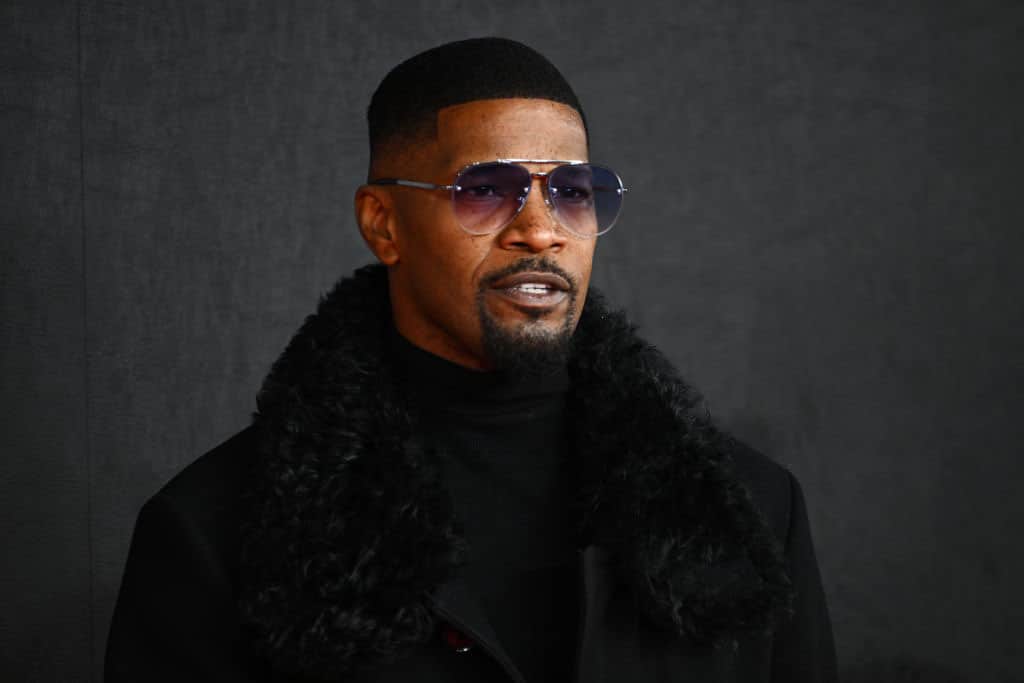
Actor Jamie Foxx issued an apology on August 5 for a social media post that stated in part that “they killed this dude named Jesus.”

The full post had read: “They killed this dude name Jesus…what do you think they’ll do to you???! #fakefriends #fakelove.” Foxx then faced accusations that the post was antisemitic, as critics argued that the “they” referred to Jews, as the allegations that the Jews killed Jesus is a blood libel. In his apology, Foxx said that the “they” was referring to “a fake friend” that betrayed him. “I only have love in my heart for everyone,” he said. “I love and support the Jewish community.  My deepest apologies to anyone who was offended.”

Anti-Defamation League CEO Jonathan Greenblatt tweeted, “We welcome @iamjamiefoxx’s apology and thank him for his clarification. Furthermore, we wish him well as he recovers from his prior hospitalization.” He added in a follow-up tweet: “Truly appreciate @iamjamiefoxx
reaching out and confirming privately what he also said publicly. His message of love for the Jewish community is crucial in this time of rising hate. We are stronger together.”

The American Jewish Committee similarly tweeted, “The deicide charge, falsely implicating Jews in Jesus’ death, has fueled antisemitic hatred for centuries. Jamie Foxx did the right thing by apologizing for this statement. It is important for everyone, including Foxx’s millions of followers, to know why his post was harmful.”

Stop Antisemitism tweeted, “Words matter. And those with massive audiences on social media have a responsibility to be careful with their content to not incite more hatred than already exists.”

Actress Jennifer Aniston also came under fire after A Wider Frame, a Jewish world newsletter, shared a screenshot that appeared to show Aniston liking Foxx’s “they killed this dude named Jesus” post. In a since-expired Instagram Story, Aniston denied liking the post. “This really makes me sick,” the “Friends” star said. “I did not ‘like’ this post on purpose or by accident. And more importantly, I want to be clear to my friends and anyone hurt by this showing up in their feed − I do NOT support any type of antisemitism. And I truly don’t tolerate HATE of any kind. Period.”

USA Today noted that one social media user argued that Foxx was using “a common black colloquialism to describe betrayal by those close to you. There’s not a single black person thinking about disrespecting an ethnic group or religion when we use that term. It’s about the behavior of backstabbers like Judas.”

The New York Post’s Page Six quote another social media user who argued, “Jamie Foxx could be talking about friends who betrayed him, but the accusation of deicide is one that has led to the torment and persecution of Jews for centuries and this is why this comment is dangerous. Some of the comments on it have been repugnant to say the least.”

Jamie Foxx Apologizes for “They Killed This Dude Named Jesus” Social Media Post Read More »

A Post-Pandemic Reset for Jewish Educators – Fostering Resilience

The COVID-19 pandemic thrust our world into an era of uncertainty, challenging every aspect of our lives, from health to education. As we strive to rebuild and move forward, one critical question emerges: How can we equip our children with the resilience needed to thrive in this new reality? Educators, parents, and community leaders alike must take on this challenge. At a time of seemingly endless instability, it’s imperative that educational institutions do not shy away from the challenge. And Jewish educators, with their unique blend of values-based instruction and centuries of wisdom to source from, stand as beacons of hope in cultivating resilient young minds for the challenges of the post-pandemic world.

As the head of a Jewish high school, I don’t want to imply that our task ahead will be easy. Thankfully, the worst of the pandemic is behind us, but our work is just beginning. To fully prepare the next generation of Jewish leaders, in this coming school year, educators must recommit to the following three principles:

1. Chesed

Chesed, or kindness, is mentioned in the Tanakh at least 200 times. As the sages have taught us, no word in our sacred writings is used superfluously; so, when a word is ubiquitous, its importance and power are clear. Today, on the news, on social media, and even within our community, we’re operating from a chesed deficit. From the stress involved in academic achievement and college acceptance, to the social pressures of belonging, the unique challenges of being an American teenager can often be overwhelming. 

To plant the seeds of resilience and stem the tide of the well-documented youth mental health crisis and the potential harms of social media, we must be the leaders our students deserve and embody the three characteristics most important to Jewish character as outlined by the sages – modesty, compassion and kindness. We must not minimize the challenges of our students, but rather meet them where they are, letting them know that they are fully seen and heard. Our sages based the concept of chesed on the acts of God Himself. And Rav Simlai taught in Sotah 14a that God engaged in chesed, as the Torah begins with an act of kindness and ends with an act of kindness. I call upon educators to begin and end their school days with an act of chesed. Prioritizing kindness in school sets the expectation that even in the face of a complicated, often worrisome world, students can show up to school and be greeted with compassion and kindness from their educational mentors.

2. Inculcate an inclusive community

Like many words in our current culture, “inclusivity” has been laced with political undertones. This is unfortunate. Prioritizing inclusivity within education is vital to building a robust, supportive, and connected community. And to empower a culture of resiliency, young adults must feel confident that they are welcome to show up as they are. 

To practice true “inclusivity” requires humility, generosity, and a commitment to listen before speaking. In today’s world, young adults face immense cultural pressure to be “correct” or risk ostracization. To combat this, Jewish educators must remember and remind students that everyone is made B’tzelem Elohim, in G-d’s image. That means young adults can take solace in knowing there’s no one single “correct” way to think, feel, or be. Our culture continues to impart rigidity around political views, personal choices, or individual beliefs – often painting concepts as dangerous or verboten. This has a chilling effect on the younger generations’ willingness to think critically and on their ability to seek social and personal connections without fear. 

Jewish high schools, while religiously homogenous, are diverse melting pots of varying identities. Seeing each other for who we are and treating everyone with dignity and respect, not regardless of, but because of, their unique beliefs, identifications, orientations, diverse backgrounds, opinions, and perspectives, make the Jewish community richer and more enduring. As Aristotle said, “It is the mark of an educated mind to be able to entertain a thought without accepting it.”

3. Don’t solve students’ problems, help them celebrate the “challenge”

Much has been written about “helicopter parents” and “snowplow parents.” The simple truth? Raising children is hard. And parents with the best of intentions can unintentionally instill poor habits and unrealistic expectations in their children. As educators, we have an important role to play. We must empower students, not solve their problems. While problem-solving is undoubtedly a crucial skill, it is one not for us, as mentors, teachers, and educators to undertake. By recognizing and understanding students’ challenges, teachers, principals, and counselors can have transformative effects on individual growth — helping students foster empathy, resilience, and deeper connections with others. 

The pressure to constantly solve problems can create a culture of haste, where the focus on outcomes overshadows the process and emotions involved. In a world with many unknowns, complexity, and turmoil, it’s vital to communicate to students that accepting “gray” can be more liberating than hunting for a “black” or “white.” As educators, when we rush to a solutions-oriented mindset, we risk neglecting the emotional and psychological toll that challenges can have on students. But when students feel heard and understood, they are more likely to develop the emotional tools necessary to cope with difficulties and chart their own individualized paths towards success.

These principles are aspirational; they will take work and individual accountability. But when educators lead the way, students will follow.

These principles are aspirational; they will take work and individual accountability. But when educators lead the way, students will follow. As we head into a new school year, and look toward an increasingly complex and uncertain future, the value of instilling resilience is paramount. Educators possess a unique ability to reach, connect, and mold young adults daily. By cultivating resilience through kindness, inclusivity, and embracing challenges, Jewish educators can help lead a generation of empowered young leaders who will confidently face a complex world, adapt to change, and thrive.


Mark Shpall, MA.Ed, J.D. is Head of School of de Toledo High school.

A Post-Pandemic Reset for Jewish Educators – Fostering Resilience Read More »

Finding Common Ground at the Abrahamic Family House

“You want to be a rabbi, huh.” 

Rabbi Benjamin Joseph de Toledo remembers confidently standing on the bima during his bar mitzvah, in front of all his friends and family, and his rabbi saying to him, “You want to be a Rabbi, huh.” 

From an early age, de Toledo knew he wanted to devote his life to uplifting Jewish communities. Originally from Los Angeles, he attended de Toledo High School and spent summers at Camp Alonim. The Jewish experience he had in California, particularly the guidance from de Toledo High School teachers and staff, was extremely impactful. “Through the encouragement of the really phenomenal teachers and mentors in Los Angeles I was privileged to build a relationship with, I slowly gravitated towards a more traditionally observant lifestyle,” he said. 

He studied sociology at Columbia University and received a degree in Jewish history from the Jewish Theological Seminary of America. After finishing rabbinical school, de Toledo and his wife, Yael, made Aliyah to Israel. 

He told his rosh kollel at Ohr Torah Stone’s Straus Rabbinical Seminary he wanted to stay in Israel for the rest of his life. “We wanted to take part in the greatest project in the Jewish world: Israel,” he said.  But life took him in a different direction.  

Coexistence in the UAE 

The United Arab Emirates made history in 2019 when, as part of Sheikh Mohammed bin Zayed Al Nahyan’s “Year of Tolerance,” it became the first Gulf state to welcome Pope Francis on an official papal visit.  

Francis and Sheikh Ahmed al-Tayeb, the grand imam of Al-Azhar and one of Sunni Islam’s foremost leaders, created “The Document on Human Fraternity for World Peace and Living Together,” which outlined the principles of tolerance and respect for the various religious communities and more than 200 nationalities that live in the UAE. 

The UAE’s embrace of faith leaders from around the world came at the same time as a major shift in its foreign policy orientation. Just one year later, in 2020, the UAE joined Bahrain in signing the Abraham Accords, which normalized its relations with Israel. The historic agreement opened — for the first time in decades — investment, travel, and cultural exchange between the two countries.

Amid greater cooperation with the Jewish state, the Emirati government founded the Abrahamic Family House, an institution that consists of a mosque, church, and synagogue on Abu Dhabi’s Saadiyat Island. The Abrahamic Family House, according to Emirati officials, seeks to build a foundation of tolerance between the three Abrahamic faiths. 

De Toledo received a call that he had been selected to join the Moses Ben Maimon Synagogue at The Abrahamic Family House. At first, he was shocked. He had just established a life in Israel, and moving to Abu Dhabi seemed daunting, he said. 

But there was a voice in the back of his head: “Everyone wants community. They want to connect.” De Toledo began to view the diplomacy that was happening in the UAE as profoundly innovative, and two months later, he and Yael moved to Abu Dhabi. 

Upon arriving in the UAE, de Toledo was confronted with a great challenge — how does one uplift a Jewish community in the Arabian gulf? 

Welcome to the Neighborhood 

Currently, there are only 300 Jews living in Abu Dhabi and about 2,000 living in the UAE. The community de Toledo leads is small, but the tourist population is not. 

De Toledo serves as an educator to the hundreds of tourists that come to the Abrahamic Family House every week. “There is a significant interfaith component, serving as Jewish educators and consultants for a first-of-its-kind multifaith complex in an Arab country and translating Jewish culture, practice and values.” Tourists are not only respectful of the synagogue, he said but also curious about Jewish life. Many visitors are not Jewish. Some have never met a Jew before. 

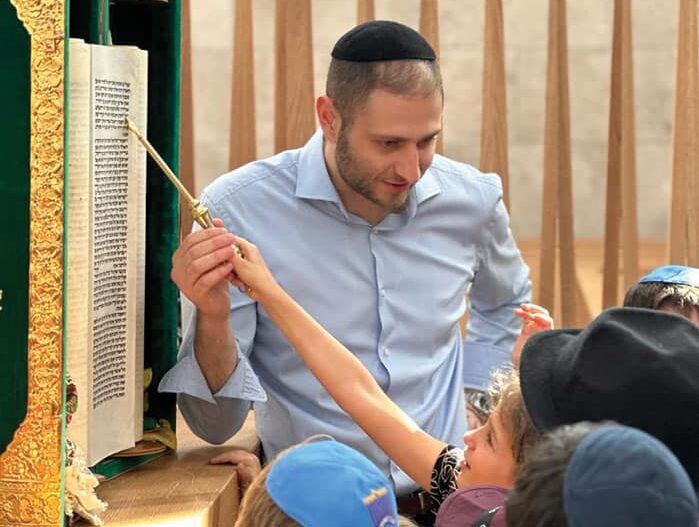
Many non-Jewish people in the Middle East cannot visit synagogues. But at the Moses Ben Maimon Synagogue, visitors can view a Torah scroll and spend time learning about Jewish life. 

“Just last week, an Indian woman who had just graduated from university knocked on my door with a list of 15 thoughtful questions on Judaism,” said de Toledo. “She had never met anyone she could discuss them with before.”

De Toledo admits that the government, which pays for all activities at the synagogue, was surprised by the large food bill that came from the synagogue. “We had to explain the centrality of food in Jewish life,” he said. 

De Toledo admits that the government, which pays for all activities at the synagogue, was surprised by the large food bill that came from the synagogue. “We had to explain the centrality of food in Jewish life,” he said. 

The synagogue has adapted a pluralistic view. De Toledo and Chief Rabbi Yehuda Sarna are both Orthodox, but the synagogue welcomes all branches of the Jewish faith. The Emirati government, wanting to create a synagogue for all Jews, simply calls  Moses Ben Maimon a “Jewish” synagogue. 

De Toledo said he finds ways to make the synagogue follow intrafaith concepts. It reminds him of the model of pluralism he saw used at de Toledo High School by his mentor and prior head of school, Dr. Bruce Powell, he said. 

Teaching Tolerance 

Behind de Toledo’s passion is his drive to support the UAE’s Jewish community. “I want the community to grow, not just in size, but in Jewish education and commitment.” The fight for global Jewish tolerance is long, and de Toledo does not see this project as fundamentally changing current geopolitical problems, but it certainly might help.  

“The goal is, first and foremost, to be a world-class multifaith institution that houses three distinct living, breathing houses of worship,” said de Toledo. “But of course, in doing that, it is fundamentally changing the narrative of what Jewish life, or really, religious life more broadly, looks like in this part of the world — specifically, of course, between the Jewish and Muslim worlds.” 

He sees the synagogue as part of a historic movement. “I do believe what is happening in the Arabian Gulf is one of the most consequential and impactful Jewish frontiers in the world today — not just with the tremendous potential to positively affect the security and prosperity of the state of Israel, but really the entire Jewish world.”.  

The synagogue has an impact on both UAE Jewish citizens and Jewish visitors. “There is something about the confluence of being in an Arab country, in this remarkable multifaith complex, seeing how the synagogue is respected, the beauty with which it was crafted, it totally overwhelms them … They want to put on a kippah, a Tallit prayer shawl, kiss the Torah, or say Tehillim with me,” he said. “It is powerful.”

Finding Common Ground at the Abrahamic Family House Read More »

Self-Help Author Troy Farkas To Gen Z: This is How You Get To The Mountaintop

Troy Farkas thinks Tom Cruise is lying.

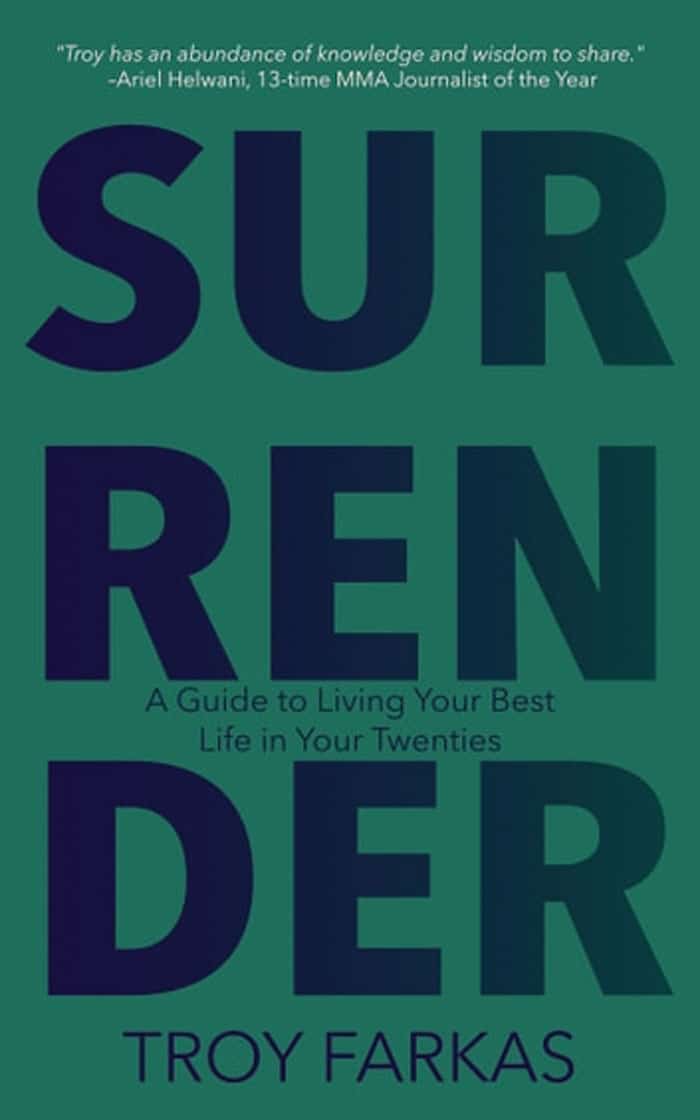
Well, at least his character in “Jerry Maguire,” who tells Rene Zellweger’s character: “You complete me.” Not true, according to Farkas, the author of the inspiring and practical self-help book, “Surrender: A Guide To Living Your Best Life In Your Twenties.” 

“When you hear other people say it, it’s phrased as a sweet thing,” Farkas said. “It’s implying you are not whole by yourself. As someone who is single, I take pride in knowing I don’t need to get into a relationship for the sake of being in one. Some people do it because they don’t want to be alone. You should only get in a relationship when you feel like you’re ready for it. It’s not for someone else to fix you.” Farkas, 27, has been in relationships, including one with a woman who taught him “Dayenu,” but he eventually had enough of her.

Growing up, he dreamed of being on air on ESPN, but when he landed a job at ESPN radio there were overnight hours, where producers were told they would not get a chance to be on air. When ESPN got the rights to UFC, Farkas was sent to work with Ariel Helwani. Helwani, who is Jewish, has an uncanny ability to blend humor, knowledge of the fight game and a charismatic personality. The result is that the host of “The MMA Hour” has done riveting interviews with everyone from former UFC champ Conor McGregor to WWE legend Hulk Hogan, an a fairly recent humorous interview with UFC middleweight Paulo Costa, who is slated to fight undefeated Khamzat Chimaev on October 21. 

Farkas said he has great gratitude for Helwani’s tutelage. “Developing a working relationship with him, it’s given me everything,” Farkas said. “Working with him has given me the ability to transform my life. He has this ethos that that whoever grinds for him, he’s going to give it back to them so he’s helped me every step of the way and that’s why I want to do to help others in my life. It’s definitely a good model to live by.”

Farkas said former UFC champ Conor McGregor is an interesting case study of someone who heroically manifested a great race to the top, but then struggled after he got there. “In the book I write that people always worry about how to get to the top, but don’t worry as much about what to do once you get there,” Farkas said. “I think Conor McGregor is a great example. He worked like hell to be great, and he got to the top and he deserves a lot of respect for being able to do that. But he’s gone downhill since then, with some questionable things. It makes me wonder should we try to be the best in our field because there could be a cost that comes with that?”

Asked if he would be the same nice guy if he earned $100 million, Farkas said he thinks he would, although he calls himself a minimalist. “Your possessions don’t say a thing about you, it’s what’s inside,” he said. “You can buy cars or yachts that give you a quick jolt, but that doesn’t change what’s inside you. I’d give money to charity and spend it on other people.”

Farkas worked producing major podcasts, including one with the host of ESPN’s “Baseball Tonight,”  Buster Olney, and another with two of ESPN’s  NBA Insiders, Brian Windhorst and Adrian Wojnarowski. He had the honor of working with Jewish sports journalist Jeremy Schaap as well as former WWE 24/7 Champion Peter Rosenberg. He also spent time at Spotify’s sports podcast, The Ringer.

Asked about The Nelk Boys, whose “Full Send” Podcast has taken the Internet by storm, and includes a Jewish podcaster named Steiny, Farkas said they have developed a great fan base. “They have a large following of people who just want them to be themselves, relate to them and think they’re cool, Farkas said. “They don’t know have to always ask the most journalistic questions, because that’s not why people are watching. They’re watching to see these guys be themselves with cool guests and you can see it’s working.”

The book has a number of inspiring messages, including not to waste time complaining about things that can’t be changed. “A big mistake people make is they surround themselves with negative people and it can become toxic,” he said. “If people aren’t making your life better, you have to cut them out. People are sometimes afraid and think they’re being mean, but you really have to think about doing the right thing for yourself.”

Farkas comes from a family of journalists and said that’s likely why he has a passionate curiosity about a number of topics. 

Farkas comes from a family of journalists and said that’s likely why he has a passionate curiosity about a number of topics. Farkas, who gets up at 5:30 a.m. and tries to go to sleep at around 9:30 p.m. says there is a myth that if they work crazy hours, it’s something to brag about. Farkas believes this means people are often starting at their computer working too slowly or being distracted and they’d be better off resting and working productively when they’re on top of their game. “What kind of quality stuff are you doing late in the day or the night?” he asked.

“Our addictions are so bad,” Farkas said. He writes in his book that he sees men texting at the urinal. “We can’t do our thing for 15 seconds without having to text and be on the phone.” Farkas’ good friend was killed by a distracted driver and the book is dedicated to her. “We’re so distracted jumping from thing to thing,” he said. 

Farkas said his book is for a specific target audience. “This book is written for Gen Z,” he added. “The lesson could apply to anyone but right now, but when you’re 18-30, your brain is developing, you’re not stuck in your ways, so I want to inculcate people with good habits of exercise and the importance of friendship. If at age 50, you suddenly decide you want to start working out, it’s going to be very hard. So much of what we do is reactive, I’m trying to be preventative.” He said with the frequency of texting and social media, some in Gen Z are reluctant to approach people and talk to them. He recently got on a plane and struck up a three-hour conversation with a stranger. “I talk to people on the street, and I wonder what their story is,” he said. “I want young people to get off the phones and talk to people.” 

He’s lived in Honolulu, Denver, London and Glasgow, but what matters is sharing the things you love with the people you love. “Real life is not TikTok,” he writes in the book.  “Everyone wants to be big and go viral overnight,” he said. “It can happen for some people. But if you’re not authentic, it won’t be as fulfilling.” We all have the power to achieve, Farkas said, adding there are some people who have a killer instinct and some who don’t. “It’s an excuse that some people make if they say they don’t have the killer instinct,” he said. “The mind is an extremely powerful tool and weapon. What happens in the real world starts with your thoughts. How you frame things in your mind affects you.”

He writes about the problem of obesity and suggests people get into the habit of walking and doing exercise every day, as even if it is hard at first, there can be lifelong results, both physically and mentally.  “We are wired to do what is comfortable,” he said. “Our ancestors were running from bears. Now, we are safe. If we’re inside, watching something, your brain is telling you you’re safe. I don’t need to stretch or work. Exercise was a part of staying alive. People ran to get food. The question now is how much do you care about your health?” People will have a smoother life if they set goals to pursue things that they love, he said. If people hate their jobs, they should quit them and find jobs they feel are meaningful to them.

“People sometime underestimate their ability to adapt and fear change,” he said. “It’s all about what makes you feel like your best authentic self.”

 “Surrender” is available for pre-order and will be published August 18.  

Self-Help Author Troy Farkas To Gen Z: This is How You Get To The Mountaintop Read More »

It’s Been One Year Since Salman Rushdie Was Attacked. Does Anyone Still Care?

On February 14, 1989, while many in the West were receiving Valentine’s Day cards, author Salman Rushdie learned that Iranian Supreme Leader Ayatollah Ruhollah Khomeini had issued a fatwa against him, and described his 1988 novel, “The Satanic Verses” as “blasphemous.” That adjective was nearly all it took for Khomeini to order Rushdie’s murder, complete with a bounty of $3 million. The Iran-based 15 Khordad Foundation, which the United States has labeled as a Specially Designated Global Terrorist, offered to pay that bounty to anyone worldwide who would complete the task. 

Rushdie was forced to live in hiding in London for the next 10 years, under constant protection. On July 3, 1991, Ettore Capriolo, the Italian translator of “The Satanic Verses,” was stabbed multiple times in Milan. He survived, but nine days later, Hitoshi Igarashi, the book’s Japanese translator, was stabbed to death in his office at the University of Tsukuba in Japan. In 1993, Turkey’s Aziz Nessin, who had published excerpts of “The Satanic Verses,” survived an attack when a mob of over 1,000 Islamic fundamentalists attacked the hotel where he was speaking and set it on fire, killing more than 30 people.

In Berkeley, California, two bookstores that carried “The Satanic Verses” were bombed. In New York, The Riverdale Press was firebombed after publishing an editorial that criticized bookstores for pulling the book from their shelves. The paper also argued that everyone had a right to read the book. The attack all but destroyed The Riverdale Press office. In England, there were too many bookstore bombings to mention here. 

In 2000, Rushdie moved to New York City and decided he would no longer capitulate to feeling terrorized by the Iranian regime and its henchmen abroad. The matter of being attacked by a fanatic lone wolf, however, was one that would prove much harder to dismiss.

Thirteen years after Khomeini issued that fatwa, American journalist David Remnick met with then-Iranian hardline president Mahmoud Ahmadinejad and a small group of reporters at the 2012 United Nations General Assembly. Remnick asked Ahmadinejad if the fatwa against Rushdie had been rescinded. “Ahmadinejad smiled with a glint of malice,” Remnick recalled in The New Yorker in February 2023. The Iranian president then asked Remnick, “Salman Rushdie, where is he now? There is no news of him. Is he in the United States? If he is in the U.S., you shouldn’t broadcast that, for his own safety.”

Thirty-three years after Khomeini ordered Muslims to assassinate Rushdie, the author arrived at the idyllic Chautauqua Institution in southwestern New York State. After three decades, he had every reason to believe that he had dodged a literal bullet. The serenity of the lake bordering the Chautauqua Institution was dreamlike, but Rushdie told Remnick that a few nights before his scheduled talk, he had a nightmare in which someone, “like a gladiator,” was attacking him with “a sharp object.”

One August 12, 2022, a 24-year-old Lebanese-American man, Hadi Matar, inspired by Khomeini’s decree (though he was born nine years after it was issued), rushed the stage at the Chautauqua Institution and repeatedly stabbed Rushdie, and also injured interviewer Henry Reese. Matar, who lived in New Jersey, later confessed that he had only read a few pages of “The Satanic Verses.”

For me, the heinous attack against Rushdie ran counter to the American dream itself, because America is the place where one is supposed to finally be able to escape their oppressive past.

As news broke that Rushdie had been gravely wounded, many worldwide connected the dots of religious fanaticism that spanned 33 years. For me, the heinous attack against Rushdie ran counter to the American dream itself, because America is the place where one is supposed to finally be able to escape their oppressive past. Perhaps Rushdie’s past would have caught up with him if he had stayed in Mumbai or even London, but America was supposed to be different. A lakeside event in Chautauqua, in fact, was supposed to represent the ultimate promise that in America, things are different. 

And then, there was the unimaginable irony: Seconds before he was stabbed, Rushdie was set to speak about the safety and freedom that the United States offered exiled writers.

As a result of the attack, Rushdie suffered wounds to his stomach, neck, right eye, chest and thigh. In the past year, he has admitted suffering from nightmares and writer’s block. He has said that he doesn’t want to be pitied, and he doesn’t blame security personnel at the Chautauqua Institution—only Matar himself. In Iran, state-sponsored media celebrated the murder attempt. 

Two months after the attack, the world learned that Rushdie had lost the use of one hand (because the nerves in his arms were cut), and he had lost use of his right eye. One of the world’s greatest authors now had use of one eye, one hand and trauma for the remainder of his life. As for his attacker, Matar spoke to the New York Post from prison shortly after the attack and expressed surprise that Rushdie was still alive. He has pleaded not guilty to charges of assault and attempted murder.

Just days after Rushdie was attacked, some American writers and activists sounded alarm bells and asked if such an attack on free speech was a portent of things to come. Amazingly, they completely ignored the threat of violent Islamists and instead, made the stabbing of Salman Rushdie a partisan issue by predicting that right-wing American leaders sought the same type of silencing that Matar sought when he stabbed Rushdie, including 15 blows to his chest. 

I am tempted to bet that most Americans have completely forgotten that exactly one year ago, Salman Rushdie was attacked on American soil (if they knew about the attack at all). I’m also willing to bet that most people worldwide, including Americans, still don’t know that in January 2023, a terrorist linked to The Jamaat-ul-Ahrar (a faction of the Tehrik-e Taliban Pakistan)\ killed 84 people in a suicide bombing at a mosque in Peshawar, Pakistan, or that in May, Islamic terrorists attacked two Christian villages in Nigeria and killed 41 people, most of them women and children.

I also wonder if most Americans know that in June, terrorists linked to the Islamic State killed nearly 40 Christian students in an attack on the Lhubiriha secondary school in Mpondwe, Uganda, setting the dormitories on fire. Out of 60 students, 37 were killed. Twenty pupils were hacked to death with machetes and 17 were burned to death. 

What does all of this have to do with the attack against Salman Rushdie on August 12, 2022? I believe that back in 1989, neither he, nor even Ayatollah Khomeini, could have imagined what fanaticized young males who have learned to weaponize Islam would be capable of perpetrating in the decades to come. 

Khomeini is no longer alive and, in a few years, Rushdie will turn 80, but each man still remains an inspiration to millions of young followers worldwide. Whether those followers choose the path of a powerful Shiite cleric who sought to annihilate non-believers, or an exiled author who is still obsessed with free speech, is a thought that keeps me up at night. And I can’t help but wonder if a semblance of this thought keeps Salman Rushdie up late as well.


Tabby Refael is an award-winning writer, speaker and weekly columnist for The Jewish Journal of Greater Los Angeles. Follow her on Twitter and Instagram @TabbyRefael

It’s Been One Year Since Salman Rushdie Was Attacked. Does Anyone Still Care? Read More »