fbpx

June 28, 2023

How O.J. Simpson’s Slow-Speed Chase Helped Me Make it to Shabbat Before Sundown

Twenty-eight years ago, on June 17, I was living in the Venice canals area and waiting for my friend Ken to pick me up to go to Chabad Westwood for Shabbat. Like most of the country on that day, I was riveted to the television, watching the news that O.J. Simpson was a fugitive and was involved in a slow-speed chase of 20 police cars following him. The chase was along the 405 Freeway from Orange county going north toward West Los Angeles. This news was so massive that game five of the NBA championship finals was interrupted and stopped. The media showed that the freeway was mostly empty because everyone had pulled over to the side to watch this slow speed chase.

When my friend Ken finally arrived to my house, we were a little bit behind schedule in trying to make it to Shabbat services before sundown. Normally we would take surface streets all the way from Venice to Westwood because of Friday rush hour traffic. Ken originally thought that was the way we would go, but he was not aware of the side benefit of this national spectacle that was playing out on the 405 and national TV.

I told Ken that we were not going to take surface streets, that instead we would take the 10 West to the 405 North. He said, “Are you crazy? That will make us very late because there’s bumper to bumper traffic going that direction on both of those highways normally.” But these weren’t normal times. I knew because I was watching television and what the newscasters were saying, that the freeways were wide open. There was no traffic at all.

Sure enough, the 10 was completely empty, and as soon as we transitioned to the 405 north, we saw the spectators that were on the sideline of the freeway. It was absolutely surreal because people were on the sidelines watching a famous fugitive on a slow-speed chase, just like football fans used to watch from the sidelines as Simpson ran with a football into the end zone for a touchdown.

As soon as we got on to the 405 North I told Ken that we were way ahead of schedule, and to keep moving but very slowly in the right lane. As chance and great timing had it, the slow-speed chase was approaching us from behind. What we witnessed was incredible. With the sun coming down, and the sirens blasting away, and the lights from the police cars flashing about, they rolled right by us. I only wish I had a camera to memorialize that moment.

Fortunately, I was able to source a screenshot of a CNN video of the chase in which our vehicle appears. It was easy to spot our vehicle because Ken had an old post office Jeep that he had painted army green. It’s hard to make out on the screenshot, but it’s definitely us because this portion of the video is between the 10 freeway and the Sunset exit, exactly where we were.

As soon as the chase caravan passed us, they took the Sunset exit. As for us, we exited Wilshire to get to Chabad of Westwood to make it in plenty of time before sundown. We had a great story to tell at the Shabbat table that evening.

Sometimes, HaShem sometimes works in mysterious ways. If He can part the Red Sea, he can certainly part LA traffic.

How O.J. Simpson’s Slow-Speed Chase Helped Me Make it to Shabbat Before Sundown Read More »

The Gift and Possibility of Joy

“This is the day that the Holy One has made, let us exult and rejoice in it.”

What a puzzling scriptural mandate. Generally you don’t have to remind people to have a good time; celebrating is a response that just comes naturally.

But in these trying times we do need a reminder and a nudge. These days have been so challenging for the world at large, for those who love Torah and the Jewish people, not to mention for those who care about human dignity and inclusion: those who yearn for a world of compassion and welcome, a world that honors the planet on which we live, a world that lifts the marginalized, celebrates multiple opinions through open conversation and persistent engagement in curiosity rather than silencing. In so many areas of society and life, we still haven’t recovered from the burden and isolation of COVID and from the years of forced separation from each other. It is not good to live apart. We are still paying a price.

So, in this year buffeted by anxiety, depression and isolation, I take heart in the fact that we are commanded to rejoice. Sometimes joy is an act of resistance. To those who would smother our divergent humanity, to those who insist we must march in lock step or get out of the way, we respond like King David, dancing with abandon when some think we’re not supposed to. Our joy is a choreography in the values that feed our courage, strength and resilience. “Serve God with joy!” the Psalmist says.

This imperative to rejoice is especially important because there are many lurking people who seek to shut down our happiness. It was H.L. Mencken who wrote years ago that the definition of puritanism is “the haunting fear that someone somewhere may be happy.” The Jewish tradition responds in the words of Rabbi Nachman of Bratslav, “it is a great mitzvah to rejoice.” Rebbe Nachman personally knew the work and focus it takes to rejoice; he was a man who suffered repeated depressive bouts and he understood that joy is worth fighting for. We don’t fight for joy with our fists, we don’t fight for happiness by marginalizing other people. Instead, true joy emerges when we double down on what makes us happy, on whomakes us happy, on where makes us happy.

The tale is told, from some 2500 years ago, of when the Jews had first been exiled and were banished to the waters of Babylon. Seventy years into their exile, a hearty band were allowed to return to our homeland, the Land of Israel and they came back to a Jerusalem that had been left in ruins. Little was left of its former glory, and so they launched the patient and tireless work of rebuilding the holy city their grandparents remembered.

On their first Rosh Hashanah back in Jerusalem, the very first Rosh Hashanah celebrated back in the land of Israel, Ezra ana Nechemia gathered the entire people as one. They erected a balcony, raised Torah scrolls, (the first time in the Tanakh we’re told they read from a book called the Torah). They unfurled the scroll of the entire Torah and started to read aloud the whole text, from start to finish. (I can imagine the look of panic on your faces! Our generations have been inured to the practice of long Torah readings, but for these pioneering people, the concept of sharing the message of Torah was fresh and new!) Ezra read and read, and when he finished reminding them of the laws they were supposed to have maintained, the people burst out in tears. Nehemiah the Governor, Ezra the priest and scribe, and the Levites who were explaining to the people said to everyone, “This day is holy to the Lord your God: you must not mourn or weep,” (Nehemiah 8:9), for all the people were weeping as they listened to the words of the teaching.

How astonishing that their first response to bathing in words of the Torah is sorrow, fear and recrimination. What was intended as a gift, an inspiration and a heritage was taken to be condemnation and blame. How often do religious voices pervert a message of loving redemption into the peddling of guilt?

You see even Jews can be Puritanical. There are people in our number as well who would turn our religion into a cudgel of fear. And they would use their suspicion that somewhere someone is having a good time, to distract from the truth that maybe, God forbid, Judaism is meant to be a source of human thriving and celebration. Perhaps Judaism can remind us that we were a slave people brought out to freedom by the most powerful force of love in the world and that our mission is to be a dancing people of liberation.

There are those would-be authorities who hate that vision and its possibilities, who recognize that the message of Torah is destructive of everything, and an attempt at repression and marginalization. The controls might be loosened. People might realize they are God’s children, each and every one of them, all made in God’s image. We are often taught this message of fear and despair by authoritative representatives of power, and so the Jewish people, when they hear this Torat Hesed (Torah of Love) for the first time, respond by sobbing because there’s an inner child that thinks we deserve to be silenced and put down. I love the Bible’s authoritative response to this infantilizing urge: go eat choice foods, drink sweet drinks, send portions to whoever has nothing, for this day as holy to our God, don’t be sad.

And then Ezra offers truly inspired words: “for rejoicing in the Lord is your strength” (8:10).

It bears repeating: Rejoicing is our strength. To those who would put us down, we dance. To those who say we don’t have the right to stand in the sunlight, to breathe our own air, to be able to determine our own futures, with our brothers and sisters, the rest of humanity, to be able to exult in our Jewish quirkiness even as our neighbors teach us about and celebrate their own uniqueness, to those people who would silence us and beat us back into fear, I say, rejoicing in God is what keeps us strong.

So I want to remind you of this open invitation to great joy, a joy that is no mere possession; it is an expanding web of relationships.

Give yourself the gift of diving deep into those relationships. Lean into being with the people we love and the people we like, the people we are curious about. Give ourselves to those relationships.

Joy is not a thing to be contained and possessed, it is a series of activities of what we do. We have to do joyous to be joyous, so give ourselves time: We don’t need an excuse to do something that makes us smile or giggle or dance as though no one’s looking. Just do it. Shakespeare writes, “Things won are done, joy’s soul lies in the doing.” Do joy, do it often, do it raucously.

Joy isn’t something we fossilize, hold on to, and place high on a shelf to examine cold and lifeless. Joy is what we share with each other. It’s what we give away, and in the giving the joy comes back to us. William Blake writes, “One who binds to themself a joy does the winged life destroy, but one who kisses the joy as it flies lives in eternity’s sunrise.” Kiss your joys and let them fly, because the more we do the more will come to us all.

For a moment, may I invite you, dear reader, to close your eyes and think of those who have loved us, who are not with us right now, some no longer in this realm, some simply not in our room. Can we give ourself the gift of thinking of them? They are very much with us in this moment, can we feel their hug, see their smile? See their nod? They’re saying, “I knew you could do this, I knew you could be this.”

Helen Keller writes, “As selfishness and complaint pervert the mind, so love with its joy clears and sharpens the vision.”

See how hard you have worked to become yourself, and rejoice: the hours we have put in, the sacrifices we have made to be able to stand in in the sunlight becoming sources of light and warmth for people who are cold and lonely and need us. Think back and recall all your teachers throughout life, those in the classroom and those not in the classroom, who have invited you to be yourself.

Our tradition quotes Rebbe Meir as saying that your rebbe need not be someone from whom you learned most of your Torah. Your rebbe can be someone who taught you as much as a single letter of the alphabet. The world has been peopled by rebbes for each of us and we have experienced hundreds of them. Let them come to mind right now, and let them sit on our hearts and carry us at this moment.


Rabbi Dr Bradley Shavit Artson is a Contributing Writer for the Jewish Journal of Greater Los Angeles (www.bradartson.com). He holds the Abner and Roslyn Goldstine Dean’s Chair of the Ziegler School of Rabbinic Studies and is Vice President of American Jewish University in Los Angeles.

The Gift and Possibility of Joy Read More »

Dodgers Off Base in Ignoring LA’s Jewish Community

Nothing can unite communities like sports teams.

As writer George Plimpton noted in the landmark documentary “Baseball” by Ken Burns: “You know, there’s a theologian named Michael Novack who’s quoted as saying that ‘a community is better off losing its opera house, or its museum, or its church’—here’s a theologian speaking—than its ball team.” Or in the words of Annie Savoy in “Bull Durham”: “The only church that truly feeds the soul, day in, day out, is the Church of Baseball.”

Especially in a metropolitan area as incredibly diverse as Los Angeles County and Southern California, the Dodgers are, in many ways, the glue that holds the region together. People of different backgrounds, who might otherwise have little to say to each other, are connected through and by their love of the Dodgers. Dodger hats, in ever increasing colors and styles, are worn by fans of all ages in every diverse neighborhood of Los Angeles. When searching for connection, we can always break the ice with another Angeleno by talking about Dodger baseball.

The Dodgers seem to understand the value of diversity and their role as a unifying force within the community. Integral to the success of the Dodgers on the field has been its willingness to break barriers—from Jackie Robinson to Fernando Valenzuela to Hideo Nomo. Off the field, the Dodgers have celebrated our diversity by highlighting the individual flavors that make up our “salad bowl” region.

This year, the Dodgers are hosting a Mexican Heritage Night, a Black Heritage Night, an LGBTQ+ Pride Night, a Japanese Heritage Night, a Filipino Heritage Night, a Korean Heritage Night, a Salvadoran Heritage Night, a Native American Heritage Night, a Guatemalan Heritage Night, as well as a Christian Faith Day.

As lifelong Dodger fans who bleed blue, we are both disappointed and saddened by the Dodgers’ omission of LA’s Jewish Community in their Heritage Night schedule.

It wasn’t always this way. Pre-pandemic, Jewish Heritage Nights (or Community Days) were a regular feature of the Dodger promotional schedule. Jewish Dodger fans could purchase a special ticket package that included a Jewish-themed Dodger item such as a cap or t-shirt with “Dodgers” spelled out in Hebrew, in addition to enjoying pre-game, Jewish-themed activities.

Of course, the Jewish connection with the Dodgers goes back to the team’s roots in Brooklyn, with its large Jewish population and Dodger fandom overlapping. History professor Bill Simons wrote: “Arguably, no baseball team ever forged a closer relationship with Jewish fans than did the Dodgers during their Brooklyn years.”

That relationship continued when the Dodgers moved to Los Angeles in 1958, to the region that would ultimately become home to the second largest Jewish community in the United States.

Jewish Hall of Famer Sandy Koufax, who started his career with the Brooklyn Dodgers, is one of only two players to have his statue at Dodger Stadium. The other player is Jackie Robinson.  Koufax’s refusal to pitch on Yom Kippur remains to this day one of the most inspiring, meaningful gestures by a Jewish professional athlete to highlight the importance of our traditions, our culture, our religion and, yes, our shared Jewish heritage.

Baseball and the Dodgers have been a constant for both of us personally in defining our identities as Americans, for one of us as a refugee from the antisemitic regime in Iran, and for the other as an emigrant to Europe.

Other baseball teams understand the importance of including the Jewish community in their community relations efforts. For example, on June 27, the Oakland A’s are hosting Jewish Heritage night, featuring an A’s branded Jewish Heritage hat, with partial proceeds of ticket sales going to Jewish nonprofits.

Dodger division rival, the San Diego Padres, are hosting Jewish Community Day on June 25.  Even worse, the hated San Francisco Giants are honoring the San Francisco Jewish community with their own Jewish Heritage Night this August 15, when fans can get a themed orange and black scarf with “Giants” written in Hebrew, and with partial proceeds of the ticket sales going to the Jewish Community Federation and Chabad of San Francisco.

Considering the Dodgers’ own history, the organization’s proactive attempts to promote inclusivity, and the Jewish heritage events of rival baseball teams within the state, the Dodgers’ decision to exclude the Jewish Community from its roster of heritage nights feels like we have been abandoned by an organization that has always been a source of comfort and pride (and sometimes frustration) to us. It feels like our Jewish identity is being ignored by a team that has been such an important part of our own identities as Americans as baseball fans and as Jews.

With antisemitism on the rise in Southern California and the entire nation, we need and expect our Dodgers to go to bat for us, just the way they are doing for so many other Southern California communities.

It’s still not too late for this season. The Dodgers could still add a Jewish Heritage Night with a Jewish-themed jersey for later in the season. In fact, there is even a preliminary webpage for “Jewish Community Day” on the Dodger site with a note to “check back soon.” We encourage the team to turn the webpage into more than a placeholder and to make Jewish Heritage Night 2023 a reality.

We would be among the very first to purchase our special event tickets and to proudly wear a Jewish-themed Dodgers jersey, standing next to our Mexican, Black, LGBTQ+, Japanese, Filipino, Korean, Salvadoran, Native American, Guatemalan and Christian friends, our fellow Dodger faithful.

In addition to shoring up the starting rotation and the bullpen, it’s time for the Dodgers to correct the omission of the Jewish community and to recognize its importance to the team, to baseball and to the larger Southern California community.

Let’s go, Dodgers!


Sam Yebri is an experienced lawyer and prominent Jewish non-profit leader. John Mirisch was elected to the Beverly Hills City Council in 2009, and has served three terms as mayor. He is currently a garden-variety councilmember. Both Sam and John are looking forward to the next Dodgers World Series victory parade, whenever that may be.

Dodgers Off Base in Ignoring LA’s Jewish Community Read More »

Why You’ll Go Gaga For Bad (and Good) Jewish Romance Novels on This Podcast

Take out tuna is never sexy.

But in “I’ll Be Home for Hanukkah,” by KK Hendin, when Shayna Adler a Jewish woman who keeps kosher, has to travel to rural Alaska, a place where it’s tough to find a kosher restaurant, finds it’s time for fish. The book is one of several Jewish romance novels mothers Raizel and Malya discuss on their funny and informative podcast, “Hanukkah Erotica Book Club.” In this novel, the characters never touch, because they are “shomer negiyah” and won’t touch members of the opposite sex before marriage.

Despite the name, the podcast is not inappropriate. Raizel and Malya are stepsisters who shared their dating stories with each in their 20’s on the Upper West Side of Manhattan. They’re now 38 and have married the men of their dreams. New Jersey-based Raizel has two children, while Malya, who lives in Brooklyn, has four.

While the pair mostly talk about novels, they will make an exception for a movie or dating reality show. Hulu’s “Hanukkah In The Middle” stars Jonah Platt as Ben, a Jewish man attracted to an old flame who tries to help her family save their bakery by raising $40,000. His strong performance in the light-hearted comedy was a catalyst for them to review the film and to their delight, Platt agreed to come on the show at the last minute and was a mensch, they said.

On the podcast, Platt explained that the latkes they ate were cold by the time characters got to them and the rugelach was from a supermarket. Levin asked Platt how he pronounces rugelach and does so with the “ch” sound while some characters in the film pronounced the word as if it ending in an “ah” sound. Platt also said his wife, who converted to Judaism, is like “Martha Jewart” because she loves to decorate around Hanukkah time.

They conducted an interesting interview with Aleeza Ben Shalom of Netflix’s “Jewish Matchmaking.” Ben Shalom revealed backstage tidbits, such as the fact that she didn’t have total control over which daters would appear on the show. Both said Ben Shalom was generous with how much she shared about her experience making the Netflix show.

In a fun interview with Dani Bergman, a  young woman, who appeared on the show and now lives in Miami, she sent in an application not thinking anything would come from it. She also explained what the deal was with David Behar, a guy she dated who had the chutzpah to ask if she wanted to make out, after she told him their relationship was over. It was clear Bergman, who got a bachelor’s degree in psychology from UC Santa Barbara, can see the light a little more clearly than some others on the show.

They interviewed Felicia Berliner, author of “Shmutz: A Novel” about an Orthodox woman who has an exploration where she challenges what she has been taught. The experience of college puts people in a position where “you have to look at your own expectations and assumptions,” Berliner told Raizel and Mayla, as the protagonist in her book wants to be devout but also a sexual being

Raizel cited Amy Schumer and Jerry Seinfeld as two dream guests they would love to have on.

With 17 episodes under their belt, the hosts have a seamless chemistry that makes for a great listen.

“I think we make a lot of people laugh,” Mintz told the Journal.” People who I haven’t been on touch within a long time send me texts.”

One can enjoy the podcast without reading the books they cover, they stress.

Mintz said she’s always been a fan of romantic comedies and is someone who has had big feelings and big crushes. “I would love hard and feel deeply,” Mintz said. I like the romance genre in general, so I already listen to podcasts about romance.”

On their most recent podcast, for Pride month they discussed Dahlia Adler’s “Going Bicoastal” about a young woman who has to choose between possible romances in New York or Los Angeles.

As for advice for those Jewish singles out there, Mayla said she used to embrace the trope. “Once you’re fully evolved, then you can connect with somebody and have a real relationship,” but she doesn’t any more. “I actually feel like that’s a little naïve. We’re all messed up and flawed. You’re not going to get to some mountaintop where you’re like, “I’ve healed myself and now I’m ready!’ We’re all works in progress…It’s more about finding joy where we are in a lighthearted way. I think that’s what we’re trying to be on the podcast. It’s a lighthearted approach to the genre … it’s enjoying and consuming works of art, talking about them and laughing, while reflecting on our own experiences.”

Why You’ll Go Gaga For Bad (and Good) Jewish Romance Novels on This Podcast Read More »

Sarah Silverman Mocks Hitler, Talks About Jewish Bathroom Problems and Antisemitism

Comedians find humor in different places, and while Mel Brooks mocked Adolf Hitler in “The Producers” Sarah Silverman has taken aim in a way few have thought of in “Someone You Love,” her comedy special on Max. “Is there a more Jewish sounding book than Hitler’s actual book?” she asks. “Should I call this special ‘My Struggle?” She notes that if she did, and if it was viewed in Germany, “some people who would but it would be in for a really big surprise.”

Silverman stayed at a hotel where a sign by the swimming pool said anyone who had diarrhea in the last 14 days weren’t allowed to use it. “It’s like the pool is saying, ‘no Jews allowed,” she observed, then asks a Jewish audience member  “Have you ever gone 14 days with zero diarrhea? That would be absurd. That would considered a miracle in our religion, right? I mean, what’s the big miracle, Hanukkah? You know what that miracle is? A lamp worked. Longer than expected. This blows that out of the water. We light this candle to celebrate Kim Martin Epstein, who despite only having enough Imodium A.D. for two nights, lasted 14 nights…”

“I don’t know why people hate Jews so much,” she says. “You know, I get a little. So much? There’s barely any of us. Jews make up 1/5th of 1% of the world. If you round down there are zero of us. (Expletive) Relax. Jews, will not replace you Tyler. We can barely replace ourselves.”

Even technology is showing signs of antisemitism, she jokes. She asks Siri how many Jews there were in the world. The response? “Too many.”

Silverman reminds the audience that her sister is a rabbi and she commonly includes a number of jokes related to Judaism. The only real miss is a song that was taped after her set that appears at the end. While it’s cool she hired a choir, the subject of the song is too simple and a person of her talent can too far better. Perhaps next time she can make a song mocking antisemites.

She notes that Jews often opt not to buy German cars due to the Holocaust. “I just bought a German car, but only because they’re so good,” she says. “You know, plus I feel like all the original Nazis are dead. Sure there are new Nazis but, you know, they don’t know how to make a car.”

The special gets his title from the comic posting the idea of going to a stranger and telling them “Someone You Love” who has passed away told them something the person had done is not their fault, which could hopefully unburden them of some guilt.

Humor is definitely needed in the times we live in, and Silverman’s special provides some laughs but is a bit too short. I’m sure she has another 30 minutes of solid material.  I can’t believe there wasn’t a single joke about George Santos! Nothing about former President Donald trump or President Joe Biden? Maybe she’s saving it for her next special.

Sarah Silverman Mocks Hitler, Talks About Jewish Bathroom Problems and Antisemitism Read More »

Jewish Lessons from Netflix’s “Black Mirror” Episode, “Joan Is Awful.”

Pirkei Avot teaches: “Who is rich? The one of is happy with his lot.”

With people curating their social media to embellish their lives, and many jealous scrollers hoping for the downfall of those who are more attractive or have more money, society, to an extent has become a world of haters. Netflix’s fantastic series “Black Mirror” is a  21st Century version of “The Twilight Zone” that focuses on man’s battle with technology.

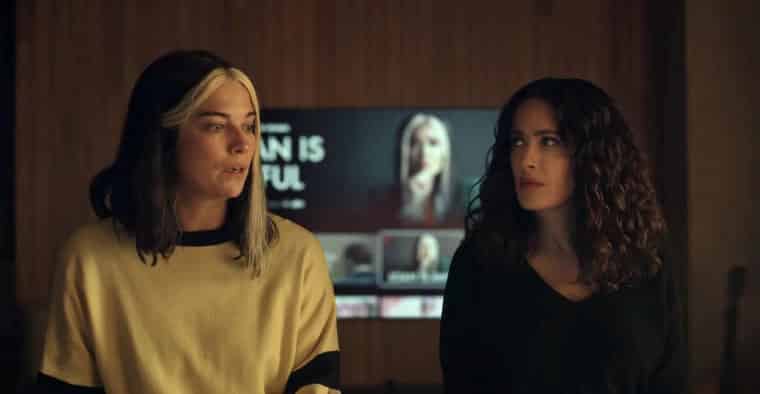
The first episode of Season 6, “Joan is Awful,” is a story of surveillance capitalism run amok. The episode opens with Joan, a middle-manager at Sonicle, a tech company. She clumsily fires a member of her team, talks to her therapist about the lack of passion she feels for her fiance, and arranges a meeting with an ex. When she comes home and settles in with her fiancé for a night of TV, the first show that comes up in their “Streamberry” feed is something called “Joan is Awful.”

That show, which stars Salma Hayek as “Joan,” mirrors the real Joan’s life; Hayek’s hair even has the same blonde streaks as Joan. Joan is horrified; her friends, family and coworkers also watched the show.

She decides to sue Streamberry; they can’t just use her life, she complains to a lawyer. Unfortunately, she’s told, they can. It’s included in the “terms and conditions” she agreed to when she joined Streamberry.  And through AI and other technology, Streamberry can almost immediately take her life and turn it into a show. It’s not even the real Salma Hayek playing “Joan,” it’s Hayek’s face and voice added by CGI.  To get Hayek’s attention, Joan interrupts a church wedding in perhaps the most disgusting way you can imagine.

Is “Black Mirror” creator Charlie Brooker saying that with advances in technology, that those who believe in a higher power are forgetting that God sees everything we do?

Perhaps.

The episode plays on the fear people have about how their data is being used. How it’s possible that when they have a conversation with someone on their phone about a movie or a product, an ad for that movie pops up on their social media feed. That corporations have powers over individuals is also something the episode taps into, as well as the fear of people being overtaken by. And it’s even more poignant with the idea held by some (or perhaps as a bargaining bluff) that A.I. scripted shows could rival the real writers who are currently on strike.

Joan, played by Annie Murphy of “Schitt’s Creek” fame, tries to figure out a solution to her predicament. She feels like she is going through the motions and lying to others and herself. “I feel like I’m not the main character in my own life story,” she tells her therapist.

What’s so special about Joan?

 “Absolutely nothing,” a woman in content creation at Streamberry tells her. Why only show the parts of her life that make her look bad? Negativity drives engagement.

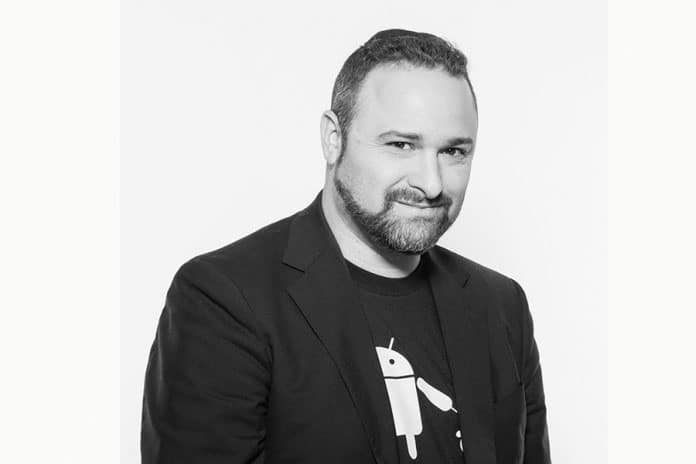
Israel’s tech and marketing guru, Hillel Fuld, says he understands why the episode has frightened people, but we should remember that people adapt to technology.

Hillel Fuld, a commentator who focuses on start-ups and the Israeli high-tech industry, told the Journal he watched the episode. “I am not surprised that the episode scared people because as technology gets stronger, and specifically AI, people are getting very worried,” he said. “But that’s the thing, whenever a new technology comes out, people are worried. Think about the tractor and how scared farmer must have been. So, Yes, AI is getting smarter, our devices more sophisticated, but in my opinion, like with most new innovations, the good far exceeds the bad.”

In the episode’s final twist, we find out that Streamberry is planning to create shows taken from other peoples’ lives, where everybody will be the central character of their own show, called  [blank] “Is Awful.”

“As for the assumption that people are bad, ‘bad’ isn’t the right word,” Fuld said. “People are human, Humans make mistakes constantly, some deliberate and some not. If any human being was given a mirror to view their life, they’d be embarrassed. This is what we know to expect after 120 years. So the goal is to do more good than bad in this world, so when we view our lives in Shamayim (heaven) we feel minimal shame.”

The episode may make you think twice about your own behavior. “The show definitely leaves you thinking about your life choices and what it’s like to have someone, God view your every move and monitor your every decision,” Fuld said.

R. Becker, an attorney and author of the “Annabelle and Aiden” children’s book series, said he is a fan of the episode for its complexity. “I don’t really fear the power of AI,” Becker said. “I analogize this to the advent of the automobile or any new technology. There is always fear at first but eventually, we learn to harness it to our needs.’

Will the show make people feel introspective and try to be better people, or make them feel paranoid and perhaps not tell the truth to their therapists?

At the time of the High Holy Days, Jews are supposed to apologize to those we have wronged, and think about our good and bad deeds on a scale as God is judging whether or not we will live for the next year, but many are jaded and don’t really take this to heart.

Pirkei Avot also teaches: “Who is the wise person? The one who learns from everyone.”

What do we learn from Joan? That’s a complex question for many reasons. One thing is that there is a Jewish concept of giving people the benefit of the doubt, known as “Dan l’chaf zechut” or “Judge people on their merits.” In real life, people are much more inclined to click on a story that is negative or watch a reality show where people claw at each other as opposed to a positive story or a show where people have cake and tell each other they are wonderful.

Whether one believes in God or not, the show gives of a feeling that humans should do the right thing not for some reward but due to the power of kindness.

Perhaps before we call someone “awful” we should think about how we would like to be judged.  Or maybe, judging someone as awful in some cases, might be correct.

Jewish Lessons from Netflix’s “Black Mirror” Episode, “Joan Is Awful.” Read More »

Biden Admin Reinstates Ban of Taxpayer Research Funding to Israeli Settlements

The Biden administration has reinstated a ban from the Obama administration barring taxpayer funding toward research and development and scientific cooperation projects with Israeli settlements in the West Bank, East Jerusalem and Golan Heights.

Axios reported on June 25 that the administration informed the Israeli government about the reinstatement of the ban a couple weeks prior; a spokesperson from the administration told Axios that they staunchly believe in and will continue “scientific and technological cooperation” with Israel and that the ban reflects “the longstanding U.S. position … that the ultimate disposition of the geographic areas which came under the administration of Israel after June 5, 1967 is a final status matter and that we are working towards a negotiated two-state solution in which Israel lives in peace and security alongside a viable Palestinian state.” The Trump administration had rescinded the Obama administration ban in October 2020; the Biden administration quickly put the ban back into place shortly after President Joe Biden was sworn into office, but didn’t implement the ban until recently, per Axios. The policy now mirrors the European Union’s policy on the matter, according to Jewish News Syndicate (JNS).

Israeli Foreign Minister Eli Cohen criticized the ban’s reinstatement, telling reporters: “I object to the decision and think it is wrong. In similar cases in the past, the Israeli government fully reimbursed parties damaged by such decisions.” Despite the ban’s reinstatement, the State Department is not reinstating their pre-2020 policy that Israeli settlements in the West Bank are illegal under international law, the Jerusalem Post reported.

Senator Ted Cruz (R-TX) lambasted the Biden administration’s reinstatement of the Obama-era ban. “Joe Biden and Biden administration officials are pathologically obsessed with undermining Israel,” Cruz said in a statement. “Since day one of their administration they have launched campaigns against our Israeli allies that are granular, whole of government, and done in secret. This new boycott of Israeli Jews is yet another example. The State Department is telling the entire U.S. government not to cooperate with Jews in Judea and Samaria. And of course it was sent to Congress in secret, and only revealed because reporters found out.”

Cruz added: “The Biden administration defends funding scientific research in Wuhan with the Chinese Communist Party, but they’re discriminating against and banning cooperation with Jews based on where they live. I will do everything possible to reverse this decision and prohibit such antisemitic discrimination by the U.S. government in the future.”

Zionist Organization of America (ZOA) National President Morton A. Klein thanked Cruz for his statement and noted that the reinstatement of the ban came just as “a research request by Ariel University in [Samaria] was turned down.” “Almost 20% of Ariel University’s students are Arabs, so this boycott targeting Jews will end up also hurting local Arabs; hurt the cause of peaceful co-existence; politicize science; and set back scientific advancements that could have benefited the U.S., the Middle East and the whole world,” Klein said in a statement, although JNS had the number of Arab students at Ariel University at closer to 10%. “It may also inspire more Palestinian Arab terrorism giving the anti-Israel extremists and terrorists an ugly victory. The ZOA has often pointed out that boycotts of Jewish businesses harm Arab workers as well as Jewish workers. Similarly, this Biden/[Secretary of State Antony] Blinken boycott aimed at Jews will do widespread harm beyond its Jewish target.”

Founded in 1982, Ariel University is located in the West Bank settlement of Ariel. Bobby Brown, the university’s senior vice president, told JNS that the university had scored three significant grants from the Trump administration shortly after they reversed the ban in 2020, although a United States diplomatic source had told the Post that no Israeli institutions in the West Bank, East Jerusalem and Golan Heights had received grant money after the Trump administration nixed the ban. Brown also told JNS that the university recently applied for grant money that would have provided funding for on-campus healthcare for Palestinian students. “There should be no political limitations on research that benefits society and the health, safety and wellbeing of the world’s population,” he said. “The State Department has revised this disgusting and anti-Jewish practice, which in effect reinstates BDS [Boycott, Divestment and Sanctions] and racism.”

Republican Jewish Coalition National Chairman Senator Norm Coleman and CEO Matt Brooks similarly said in a statement, “By returning to the Obama-era policy, with its prejudice against Israeli control of Judea and Samaria, Biden is clumsily re-politicizing an issue that never should have been politicized to begin with. This move will negatively impact millions of Jews and Arabs who rely on access to services that provide healthcare, education, and living wages.” They called the ban “another example of Biden’s adherence to Obama’s anti-Israel Mideast policy.” “Whether it is pleading with the terrorists in Tehran for a bad nuclear deal, ceding diplomatic ground in the Middle East to China, or releasing an antisemitism policy that undermines efforts to codify a clear and comprehensive definition of antisemitism, the Biden administration continues to be a delight for far-left radicals and a deep disappointment to mainstream pro-Israel supporters,” Coleman and Brooks added.

By contrast, J Street said in a statement that they “strongly” support the Biden administration’s reinstatement of the ban, arguing that “Prime Minister Netanyahu has himself agreed to cooperation agreements with other countries that expressly do not apply to the settlements. There is no reason why a different standard should apply to Israel’s greatest ally, requiring US taxpayers to fund projects in illegal settlements. Accusations that declining to finance such settlement projects is somehow antisemitic are not only made in plainly bad faith, but are insulting to those who have suffered from the very real evil of antisemitism.” They added that “clarifying and enforcing this position is particularly important given the current Netanyahu government’s all-out effort to expand settlements, annex territory and deepen occupation throughout the West Bank, entrenching the one-state nightmare that is destructive for both Israelis and Palestinians. The government’s moves not only violate commitments to the United States and the rule of law, but take a sledgehammer to the shared democratic values and aspirations of the US-Israel relationship.”

J Street said that they support “US funding for joint US-Israel scientific cooperation – and believes it is crucial that such funding go to research conducted in Israel and not in illegal settlements in the occupied Palestinian territory” and lobbied for the Biden administration to “revoke the ‘Pompeo Doctrine,’ which stated that the US does not consider settlements to be illegal under international law; and restore the bipartisan customs guidance on accurate labeling of West Bank goods.”

Biden Admin Reinstates Ban of Taxpayer Research Funding to Israeli Settlements Read More »

Try These Recipes at Your 4th of July Barbecue

Want a burst of flavor to go with your fireworks? Try these delicious entrees for your 4th of July barbecue.

Danny Corsun’s Veggie Burgers take a bit of effort, but, according to Corsun, are totally worth it. 

“The key is to remove much of the moisture from the roasted veggies and tofu to gain a burger-like consistency once they are processed,” Corsun, founder of Culinary Judaics Academy,  told the Journal. “Your vegetarian/vegan July 4th guests will thank you.”

CJA’s Heart Healthy Veggie Burgers

1/2 lb sliced baby portobello or cremini mushrooms
1 large vidalia onion, finely diced
1/2 cup sundried tomatoes
2 cloves of garlic, finely diced
(or substitute garlic powder)
1 16 oz can of drained kidney beans
1 16 oz can of drained chickpeas
2 tablespoons tomato paste
1 cup of grated parmesan cheese (can omit if going dairy-free)
1/4 cup of your favorite teriyaki sauce (or substitute ketchup)
1 egg
1/2 cup of breadcrumbs (panko works)
1 tsp dry basil
1 tsp dry oregano
1/2 tsp cajun/blackening seasoning
salt and pepper to taste
4 Tbsp of olive oil
4 ounces extra-firm tofu, drained and cubed
1/2 cup cooked and seasoned couscous or brown rice
2 scallions

Heat oven to 425°F.
Cube tofu and pat dry with a paper towel. Arrange on one half of a rimmed baking sheet; brush both sides with oil. Spread mushrooms on the other half of the baking sheet; toss with two tablespoons oil and salt and pepper. Transfer to the oven. Roast mushrooms and tofu until golden and most of the liquid has evaporated, about 25 minutes.
On a second rimmed baking sheet, toss beans and onions with two tablespoons of oil, basil, oregano and blackening seasoning with salt and pepper to taste. Then spread the mixture into one layer. Transfer the baking sheet to the oven. Roast bean mixture, tossing occasionally, until beans begin to split and onions are tender, about 12 minutes.
Let everything cool.
Place cooled bean and onion mixture in a food processor and pulse until coarsely ground. Add cooled mushrooms and tofu, as well as sundried tomatoes, and pulse until combined. Remove from the processor into a large bowl.
Mix in panko, cheese, eggs, scallions, garlic, tomato paste, ketchup/teriyaki sauce and 3/4 teaspoon of salt and pepper. Then add in couscous or rice. Combine.
Let chill in the refrigerator for at least 30 min to 2 hours; can store for up to 5 days.
When you are ready to make the burgers, divide the mixture into six equal portions; form into patties about 1 inch thick. Return to the fridge until just before grilling. They grill better when they start out cold.
Heat the grill. Cook the burgers over a low fire until they are charred on both sides and firm when you very lightly press on them, 4 to 6 minutes per side. If they start to burn before they firm up, move them to the sides of the grill to finish cooking over indirect heat.

Tip: If you find that the consistency of your burgers can’t stand up to direct grilling, you can also cook these on the grill on a sheet pan (spray with non-stick spray first), or in your kitchen on a grill pan/skillet over medium heat. Serve with a toasted bun along with the usual ketchup, mustard, relish/pickles and fries. Enjoy!


Lemon-Pepper Salmon Burgers
Photo by Dish on Fish

Rima Kleiner, MS, RD and blogger at Dish on Fish, says she and her family love her Lemon-Pepper Salmon Burgers because they are “super-easy to whip up” when using pouched or canned salmon. 

“Plus, salmon is loaded with heart-healthy omega-3’s, which you miss out on with beef burgers,” Kleiner told the Journal.

Lemon-Pepper Salmon Burgers

Time: 30 minutes; 4 servings

4 (2.5 oz) pouches lemon-pepper salmon
2 tsp dijon mustard
1 tsp olive oil mayonnaise
1 egg
½ cup panko plus 1 tbsp panko (use gluten-free panko for GF salmon burgers)
Juice and zest of ½ lemon
1 tsp dried dill weed
Dash of cayenne pepper
Salt and ground black pepper to taste
Olive oil for sautéing

1. Mix all ingredients – except for the one tablespoon panko and the olive oil – in a medium bowl until well combined. Form mixture into 4 equal-sized salmon burger patties and place patties on a plate lined with parchment paper. Top the patties with half of the reserved panko (1/2 tbsp.), cover them with foil and refrigerate for at least 15 minutes.
2. Heat olive oil in a sauté pan over medium heat. Place salmon burger patties, panko side down in the pan. Sprinkle the remaining ½ tbsp of reserved panko evenly over patties. Sauté patties for about 4-5 minutes on each side, until they’re golden.


TukTuk Kebab
Courtesy of Branja

For a unique Asian-inspired kebab with a Middle Eastern twist, try “MasterChef Israel” winner Tom Aviv’s TukTuk Kebab, which he serves at his Miami’s restaurant, Branja. 

Aviv combines Thai flavors, such as ginger, cilantro and lemongrass, with an Egyptian du’ah spice mix made with freshly roasted sesame seeds, cumin, coriander, anise and peppercorns. These spices are then mixed with coarsely minced beef. 

“The kebabs are structured around a lemongrass skewer and coated with a sweet tamarind glaze before they are grilled to perfection,” Chef Aviv told the Journal. 

TukTuk Kebab

Serves 1-2

1lb coarsely minced beef
1 tsp sesame seeds
1 tsp cumin
1 tsp coriander
1 tsp anise seeds
1/2 tsp ground black pepper
2 oz fresh ginger, peeled and minced
2 oz lemongrass, minced
2 oz cilantro, minced
1 tsp salt or to taste

Add all the ingredients to the minced beef and mix well by hand.
Form long kebabs and stick a wooden or a metal skewer through the middle.
Cook on an open-fire grill, flat top or in the oven at 350˚ F for around 10-15 minutes, until cooked through.

Sauce
4 oz tamarind paste
4 oz vegetable stock
2 oz sugar

Place in a pot and bring to a boil over medium-high heat. Boil until a glaze texture is achieved, 3-5 minutes.


“Living in Southern California, grilling is year round in our household. When it is hot and I don’t want to turn on the oven, this delicious recipe is a no-brainer.”
– Debbie Kornberg

“Living in Southern California, grilling is year round in our household,” Debbie Kornberg, chef, owner of SPICE + LEAF and cooking teacher, told the Journal. 

Her Barbequed Kebab Spiced Chicken recipe is quick and easy, whether you are making it for the 4th of July or any summer day. 

“When it is hot and I don’t want to turn on the oven, this delicious recipe is a no-brainer,” she said. 

Kebab Spiced Barbequed Chicken By Debbie Kornberg

Serves 4

4 pieces of chicken (you can use either a boneless breast of your favorite cut
of chicken on the bone; either with or without skin)
2 Tbsp olive oil (recommend SPICE + LEAF Galili Olive Oil)
2 Tbsp SPICE + LEAF Kebab Blend
Cooking spray
BBQ Sauce (use your favorite.)

Preheat BBQ to 450°F.
Place chicken in a bowl and completely coat with olive oil and Kebab Blend.
Once the grill is hot, carefully spray it with cooking oil so the chicken will not stick to the grill.
Place chicken skin side down. Grill for 5 – 7 minutes and then flip to the other side. After flipping chicken, baste chicken with BBQ sauce. Cook for another 7 – 10 minutes.
Baste chicken again with BBQ sauce. Continue cooking, flipping chicken and basting it until the chicken has an internal temperature of 165 degrees.
It is recommended to use a digital meat thermometer that will give you an instant read. This will help ensure the chicken is cooked all the way through.
Once chicken is cooked all the way through and not pink on the inside, it is ready to be served.

Happy 4th of July!

Try These Recipes at Your 4th of July Barbecue Read More »

Israel’s Best Drama, ‘The Lesson’ Takes on a Hot Button Issue

Words can come back to haunt you.

That’s a message from “The Lesson,” one of the best shows to ever come out of Israel. The series has a no-nonsense attitude, with blistering acting that makes clear a classroom can be a battlefield where surrender doesn’t come easy, if at all.  

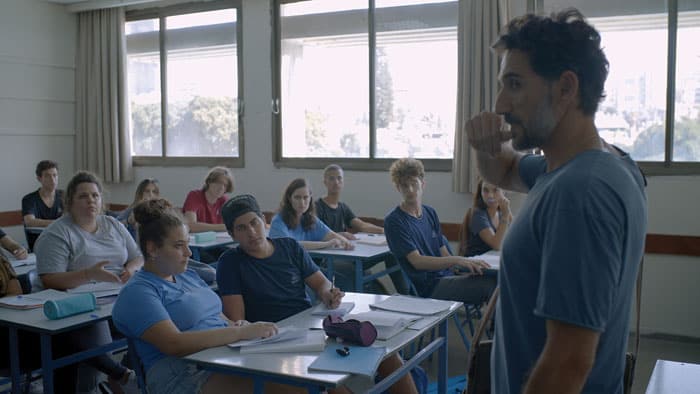
The series, which premiered in Israel in 2022 and is now streaming on ChaiFlicks, is a showcase for the powerhouse performances of Doron Ben-David and Maya Landsman. Ben-David plays Amir, a  divorced and financially struggling 43-year-old civics teacher. Landsman is Lian, a high school senior with low self-esteem.

The six-episode series follows what happens after a Amir and Lian have a heated argument in class over racism, which becomes a scandal after a recording of Amir heatedly lecturing the class goes viral.

Deakla Keydar, who created and wrote the show, was inspired by several instances where teachers in Israel were disciplined due to politics in the classroom. 

Deakla Keydar, who created and wrote the show, was inspired by several instances where teachers in Israel were disciplined due to politics in the classroom. She said she thought it was a hot button issue but wasn’t sure the show would gain steam.

“I know five teachers that found themselves out of the education system because of the content of what they taught in class,” Keydar told the Journal. “The idea is of a mini-drama with a fight that snowballs into a big fire. It’s not a feel-good idea, so we thought it might go under the radar, but many people were moved by it.”

“The Lesson” won the Award for Best Drama Series at the Israeli Television Academy Awards, Best Drama Screenplay and Landsman won for Best Actress in a Drama. The show and Landsman also won at the 2022 Cannes series.

Ben-David, known for his role of Steve on “Fauda,” said it was unforgettable to see his show get international recognition, as it centers on what a teacher can or can’t say to students. “It’s a big issue, but a small show,” Ben-David told the Journal. “I didn’t imagine that six episodes of one season would be such a big hit. Landsman said winning was nearly an out-of-body experience. “When I heard my name, I thought it was in my imagination,” Landsman told the Journal. “When I stood up from my chair, I thought that I’m a crazy woman that imagined I need to get a prize. Then I realized it was reality. We were so happy to win. It’s not just us believing in us, it’s all the world … for our show about a very specific situation in our problematic, complicated and amazing country.”

Landsman feels “very connected to Lianne … I was a problematic student, very messy. I wanted to push the limits. From the political side, when I first started high school, I remember the principal was fanatical about saying ‘you need to understand you will be going to the Army.’ It was weird. But the same principal [later became] left-wing. It was interesting for me as a student to see a principal, an older man, change his opinion and to see this change was interesting.”

But she does not identify with the part of her character that said hateful things about Arabs. “I think she got so much power from this situation,” Landsman said. “She understood she can be kind of a leader. She had so many problems with her parents, and this helped her confidence and she played with limits and talked about things she knows nothing about.”

Landsman gives a finely nuanced performance as a young woman who lashes out without knowing where it will lead; Ben-David is perfect as a man who wants to be a good teacher and do the right thing, but repeatedly puts his foot in his mouth. 

Director Eitan Zur gives the show a sense of realism. 

What teacher can and cannot say to class is a hot button issue. “I prefer my kids to study with a teacher that says their (political) thoughts,” Ben-David said. “We need to teach our kids to sit and listen to people and accept their thoughts, even if they don’t agree.” Landsman worried that students could be brainwashed by only being privy to part of the puzzle. “I think the teachers have a responsibility to bring in a lot of opinions, facts, and sides of history,” she said. “

Keydar, who has two teenage daughters, said while some don’t give much credit to teachers, it’s an important and complex profession. She said the series’ penultimate scene, which showed whether or not Amir would keep his job, was difficult to write.

Keydar doesn’t think Israeli high school students are tougher than their counterparts across the world because they serve in the IDF after graduation. “They go to the Army at the age of 18, and they don’t know anything about life,” she said. “I think we’re all the same. It’s just that the situation in Israel is that people are more nervous, under stress, it’s very hot, and there is an intense political climate.” Keydar’s lean and intense script is brilliant. But there won’t be a second season, she insists.

“The Lesson” joins an impressive roster of shows on ChaiFlicks, such as “Checkout,” a comedy that features Landsman, the crime drama “Asylum City” which co-stars Ben-David and the “The New Black,” a show about four religious friends in yeshiva.

Israel’s Best Drama, ‘The Lesson’ Takes on a Hot Button Issue Read More »

How Do You Feel About G-d?

As a long-time college faculty member and administrator, I have heard, and given, quite a few commencement addresses.  

It might seem like a high stakes talk based on the size of the audience and the grandeur of the event, but I have always found it comforting, and indeed humbling, to realize that few alumni remember who spoke at their commencement ceremonies, much less what they said.

That isn’t all that surprising. Family members are focused on celebrating the accomplishments of their loved ones; graduates are focused on quandaries such as which side of their caps they should place their tassels (hint: Nobody knows; nobody cares).

Still, on occasion, a speaker says something truly memorable. Here are some of my favorites.

At Northwestern in 2011, Stephen Colbert talked about when you should give up your old dreams for new ones.  “If we’d all stuck with our first dream, the world would be overrun with cowboys and princesses.” People change and so should their aspirations. Richard Serra, who redefined the nature of sculpture, spoke at Williams in 2008 about not being limited by social and other conventions as you discover your own voice. “Rules are overrated. They need to be changed by every generation. That is your most important mandate: If it’s not broken, break it.”  

But the speech I think about the most was from Steve Sample, who, between 1991 and 2010, served as the 10th president of the University of Southern California.  His leadership helped turn a good regional university into a research powerhouse that is among the most selective and diverse schools in the nation.  Now I suspect that some readers — shout-out to my Bruin friends — will point out that USC has attracted more than its share of negative attention since Steve passed away in 2016.  But there is no denying that few, if any, still refer to USC as either the “University of Second Choice” or the “University of Spoiled Children.”

Steve was a mentor and friend, who played an instrumental role in my professional career, appointing me as a dean and vice president.  His wife Kathryn once told me that one of the reasons he was so supportive of me was that as a devout Christian, Steve had great respect for Judaism, and appreciated the pride I openly displayed in my faith.

His final address as president, at USC’s commencement in 2010, was titled “Three Questions,” and his premise was that young people should ask themselves three specific questions, and that their answers should help guide their life choices.  The first was “How do you feel about money?”  The second was “How do you feel about children?”  Great questions, but what made the deepest impression on me was the third one, “How do you feel about G-d?”

Steve joked that his audience must be wondering why anyone would bring up faith at a secular commencement ceremony.  But his concern was that many of us are too scared to wrestle honestly with this ultimate question guiding our lives.  

He saw millions of people attending religious services on autopilot, without “the foggiest idea of how they feel about G-d, or what kind of relationship they have with their G-d, or what they expect of him, or what they believe he expects of them.”  He also noted that there are millions of agnostics who shrug off questions about G-d, “and yet who find it impossible to fully suppress their concerns for the spiritual and transcendent aspects of their own existence.”  Steve was careful not to be proscriptive, but as a person of faith, he believed in his heart that it was highly desirable to come to grips with your personal relationship with G-d.

Steve would often end a speech, as he did that commencement address, with the words “G-d bless you.”  For him, it wasn’t a throwaway line.  It was a prayer.

Steve would often end a speech, as he did that commencement address, with the words “G-d bless you.”  For him, it wasn’t a throwaway line.  It was a prayer.

I can’t promise that everyone in the audience that day can recall what Steve talked about, or even remember that he was the speaker.  But I sure do.

As Steve would say, may G-d bless us all.


Morton Schapiro was vice president and dean at USC before serving as president of Williams College and then Northwestern University.  His most recent book (with Gary Saul Morson) is “Minds Wide Shut:  How the New Fundamentalisms Divide Us.”

How Do You Feel About G-d? Read More »