fbpx

March 3, 2023

VBS Fusion Attracting a Younger Generation

Since the aging process is unstoppable, successful synagogues such as Valley Beth Shalom in Encino find themselves constantly in search of creative forms of recruiting.

With about 1,600 member families, the 73-year-old Conservative community known as VBS boasts of being the largest in the Valley. Starting in 1970, VBS benefitted from and shared the spotlight with its national celebrity rabbi, the late Harold Schulweis, one of the first rabbis to marry gay and lesbian Jews.

In Los Angeles, many families and singles seem to be in constant motion, challenging synagogues to attract and retain their commitments. In a broad-based attempt to lure a fresh crop of imaginative, ambitious young professionals in their 20s and 30s to Valley Beth Shalom’s stately red brick home on Ventura Boulevard, a recruitment program called Fusion was born last year. Fusion is defined by The New Oxford American Dictionary as “the process or result of joining two or more things together to form a single entity,” as in new members who will check out VBS and decide to participate.

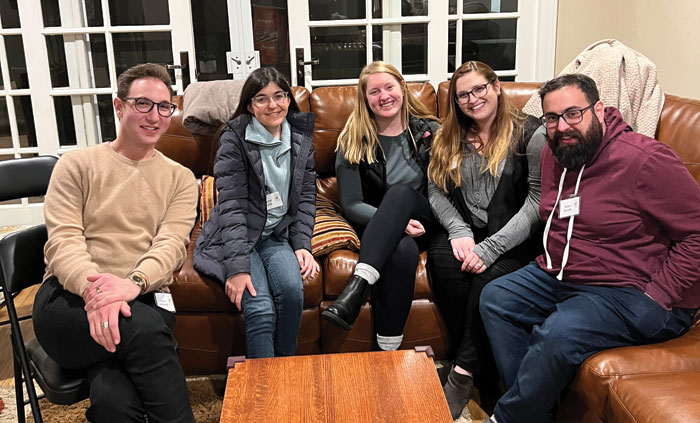
This is not a mission for old timers. As Jaclyn Singer, assistant director of membership, explained: “We have a small Fusion board of Fusion-aged folks (20s and 30s only).” At Clergy Fusion, its most recent event, a couple dozen single/married men and women met at a private home with Rabbi Nolan Lebovitz and Cantor Jacqueline Rafii – both of whom joined VBS within the past year. 

They were comfortable meeting their fellow newcomers because the cantor is Fusion-age, while the rabbi is not far. “People in every generation connect differently,” Singer said. “They have different philosophies on religion, on belonging. Our challenge is figuring out how to maintain the values we have had, going on 70-plus years, while carving out opportunities for people to connect in those different ways.”

Lebovitz explained that the Fusion program is a VBS priority “because it engages a new generation of young professionals with our values of community and Jewish life. Cantor Rafii and I enjoy participating in the events and bringing together a sense of fun and tradition.”

While some participants in the first three Fusion events already are VBS members, most are not.  Adina Winnett, VBS’s director of marketing and communications, was an enthusiastic participant in Clergy Fusion. She described the evening as casual. “People arrived within the first half hour; they grabbed dinner and began schmoozing with one another.” Meanwhile, Rabbi Lebovitz and Cantor Rafii roamed about, separately, introducing themselves as they went.  

After an hour, the rabbi took charge, introducing himself to the crowd and explaining the Fusion program. Hoping to stimulate interest, he talked about the Super Bowl program, the VBS Gala (value pricing for Fusion members) and a special Purim event at the synagogue that, Winnett said, “would be good for Fusion-aged adults.” After Rafii followed with a quick introduction of herself, both the rabbi and cantor made sure they greeted every attendee. 

The 30-year-old Winnett described the crowd as “a nice mix of those who knew one another and some who didn’t. So the topics ranged from friendly icebreakers to catching up with friends over more meaningful conversations.” For Lebovitz, “the program is a great success and so was the evening. The home was packed with 20’s and 30’s. They want to build Jewish community with their peers.” He called the Fusion events “an investment in the future of Valley Beth Shalom.”

He also is realistic.

“We don’t expect these young professionals to begin attending Shabbat services on a regular basis,” the rabbi said. “We are trying to introduce them to our clergy and to our professional staff to bring awareness to what VBS and what synagogue life have to offer.”

Peering years ahead, Lebovitz believes that “one day, they will reach a stage of life in which they need to join a community like ours … We offer an Early Childhood Center, a day school, a religious school, and senior Hazak programming. We want them to feel comfortable walking through our doors. We want them to know VBS will be there for them throughout their lives. So we would like to build relationships with them as early as possible.”

Rafii, who arrived last year from Shomrei Torah Synagogue in the West Valley, performs in annual concerts. “One of the many ways we build connection and community is through music,” she said, emphasizing that she meant “the music that speaks deeply to each generation, the music that is timeless. We welcome all Jews in their 20s and 30s to be part of this exciting new initiative … VBS is at the forefront of engaging our next generation. Rabbi Lebovitz and I are passionate about connecting with Fusion, and with VBS’s 20’s and 30’s Jewish social group.”

She described the participants as “diverse, eclectic and dynamic. [They are] our future.”

Singer was speaking for the entirety of Valley Beth Shalom leadership when she said, “hopefully this is more than a social networking opportunity – a pipeline to future membership.”

With Purim arriving in a few days, VBS’s next Fusion event is on Saturday night, March 4, at 8 p.m. at Mr. Furley’s Bar, 14649 Ventura Blvd., Sherman Oaks. $20 admission includes one drink ticket and appetizers. Costumes welcome. https://www.vbs.org/event/vbs-fusion-purim-celebration-2023.htm

VBS Fusion Attracting a Younger Generation Read More »
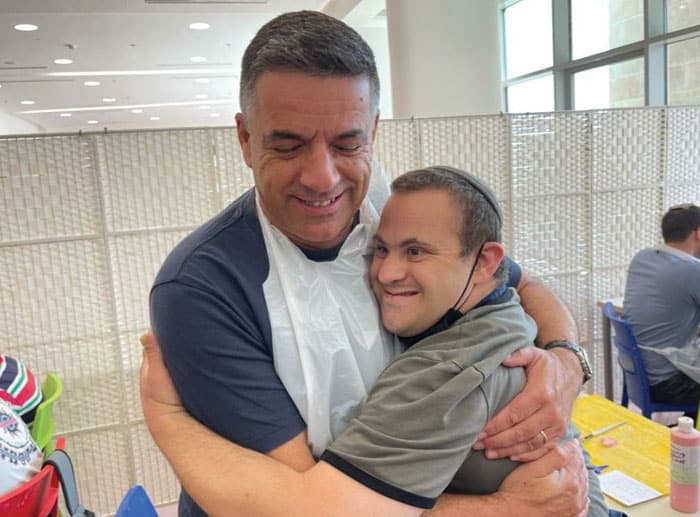
Israeli Pilots Visit Special Needs Center, L.A. Federation Receives “Groundbreaking” Grant

Last month, in honor of Jewish Disability Awareness, Acceptance and Inclusion Month (JDAIM), Israeli Air Force pilots visited the Shalva National Center in Jerusalem to work with children with disabilities.

“Our pilots were deeply touched, and they connected on a profound level to the children through their shared activities,” Israeli Major General (res.) Amikam Norkin, one of the pilots who visited the center, said. “At the end of the visit, we invited all the children to visit us on Palmachim Airbase where they met with the military personnel.”

Shalva, the Israel Association for the Care and Inclusion of Persons with Disabilities, is one of Israel’s largest centers for people with disabilities. Kalman and Malkie Samuels founded the non-profit in 1990. Their belief is that families of children with disabilities require a multilayered support system and warm community to help them cope with the challenges. 

Upon its inception, the organization operated out of a modest Jerusalem rental apartment. Today, Shalva is housed in a large, multifaceted facility and offers a broad range of services for thousands of people, from infants to adults, with disabilities. 

Coinciding with Jewish Disability Awareness Month, Israeli air force pilots spent a heartwarming day at the Shalva National Center in Jerusalem and enjoyed a range of fun, team-building activities. Courtesy of Shalva National Center

During its annual gala dinner in New York on March 2, Shalva spotlighted Norkin, whose younger brother identifies as having a disability. 

His brother’s connection with the disability community “is definitely part of what fortified my awareness, understanding and resolve regarding the national need to help and strengthen families struggling with challenges that are difficult for us to fathom,” the Israeli air force pilot said. “As a leader, it was so important to me to inculcate those under my command with the values of humanity, compassion, and genuinely connecting to the people that we’re protecting — and this includes all the people whose lives we’re safeguarding.”


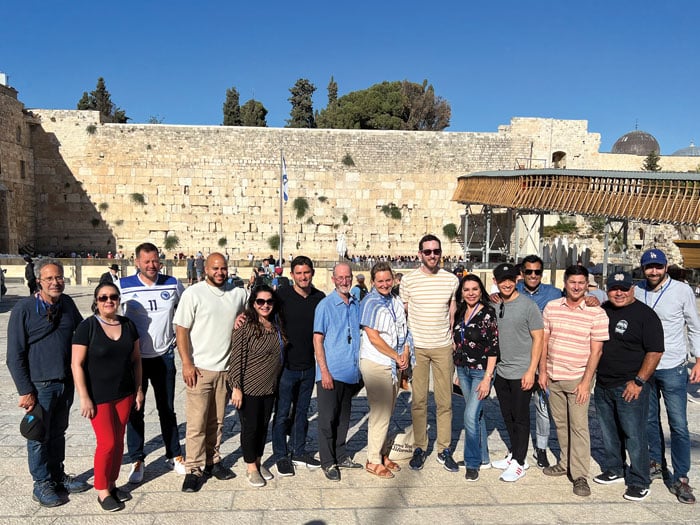
Jewish Federation of Greater Los Angeles missions bring elected officials, including members of the California Legislative Jewish Caucus, to Israel. Courtesy of the Jewish Federation of Greater Los Angeles

The Jewish Federation of Greater Los Angeles has entered into the largest philanthropic partnership in its history by securing a nearly $4 million grant over the next three years from the Diane and Guilford Glazer Foundation.

According to the Federation, “the scale and depth of this partnership emerged after months of close work together to explore ways for The Glazer Foundation and the Federation to jointly strengthen the place of the Jewish community in the broader civic community of Los Angeles.”

“Our partnership with The Glazer Foundation is groundbreaking,” L.A. Federation President and CEO Rabbi Noah Farkas said. “This grant represents a new moment for Jewish philanthropy in Los Angeles that we believe will inspire other Los Angeles foundations and philanthropists to join in our trailblazing effort.”

The Federation described the grant as “the most comprehensive and far-reaching collaboration the Federation has ever entered into with a funding partner.” 

Joanna Mendelson, senior vice president of community engagement at the Federation, said it will “greatly impact” the work of the Federation’s Engaging our Community initiative, one of the Federation’s three core pillars.

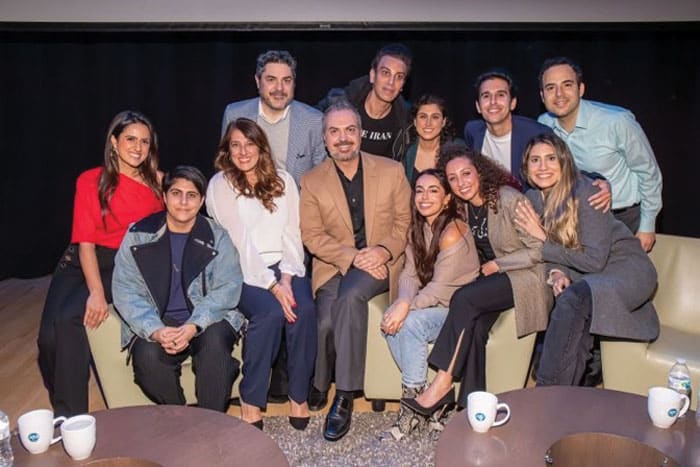
Recent Jewish Federation supported programs include “Baraye Iran,” an-in-person panel discussion that elevated the international concerns facing Iranian women. Courtesy of the Jewish Federation of Greater Los Angeles

The funds, according to Federation leadership, will support Federation’s young adults programming, specifically it NuRoots program; strengthen its Jewish community relations efforts; and provide homecare assistance for the rapidly aging Holocaust survivors population in Los Angeles.

“This is work we have not done to this level, and the work we are about to embark on is so critical to helping transform our current landscape,” Mendelson said. 

Jeffrey Neiman, vice president and general counsel at the Glazer Foundation, said the multiyear, multimillion-dollar grant aligned with the foundation’s mission of supporting the vitality and enrichment of Jewish communities in Israel, Los Angeles and throughout the world.

“We are excited by this new partnership with the Federation,” Neiman said. “Ensuring that the core institutions of the Jewish community can support the needs of its constituencies are of critical importance. We feel confident that this partnership will not only produce that outcome, but also build on the vision we share with the Federation — that the Los Angeles Jewish community remains a vibrant, interconnected community within the broader social fabric of Los Angeles.”

Israeli Pilots Visit Special Needs Center, L.A. Federation Receives “Groundbreaking” Grant Read More »

Ticketmaster Criticism Intensifies After Ignoring Calls to Deplatform Farrakhan Event

Ticketmaster is starting to come under further criticism after the company seemingly ignored requests to deplatform tickets for Nation of Islam (NOI) leader Louis Farrakhan’s February 26 speech.

Farrakhan gave the keynote address to the NOI’s Saviours’ Day conference in Chicago; prior to the event, Creative Community for Peace (CCFP) had sent a letter to Ticketmaster CEO Michael Rapino urging Ticketmaster to reconsider allowing tickets to be sold for the event. The letter was signed by more than 120 entertainment industry leaders including Haim Saban and Sherry Lansing but did not receive a reply from the company. Farrakhan’s speech, according to the Anti-Defamation League (ADL), was “a relentless stream of antisemitic commentary accusing Jews of controlling world governments, the media, and financial institutions,” according to the ADL. Farrakhan also seemed to suggest that the Jews were going to face another Holocaust. “A Jewish man said to me, ‘You know, we say never again. Never again will we be in the oven. Never again,’” Farrakhan said, per the ADL. “I said, ‘Hold it.’ You can say that to men, but you can’t say that to God. Because the Bible says, behold the day cometh that shall burn — as a what? —as an oven. And those who do wickedly, He will slay them and leave them neither root nor branch…The War of Armageddon is to decide who will live on this earth.”

Additionally, Farrakhan defended rapper Kanye West as “a very great brother” and “young God.”

The Washington Free Beacon reported on March 2 that while most members of Congress have been silent on Ticketmaster allowing its platform to be used for the Farrakhan, they did find a couple willing to speak out. “It is extremely concerning that Ticketmaster is choosing to use its platform to elevate and promote a well-known antisemite,” Senator Marsha Blackburn (R-TN) told the conservative news site. “The targeting of the Jewish people has gone on far too long and must stop.”

“Antisemitism has no place in America,” Representative Cathy McMorris Rodgers (R-WA) also told the Free Beacon. “Ticketmaster should be completely transparent on why it chose to profit off of Farrakhan’s abhorrent history of hatred and violent threats of genocide against the Jewish people.”

Jewish groups also criticized Ticketmaster, per The Algemeiner.

“Four decades of non-stop vicious Jew-hatred from Louis Farrakhan has born poison fruit in the mainstream of our society,” Simon Wiesenthal Center Associate Dean and Director of Global Social Action Agenda Rabbi Abraham Cooper said in a March 1 statement. “Words lead to action and his toxic hatred has been absorbed by many including Kanye West. We urge all our neighbors to reject his hate and we must commit to strengthen our relationships for the betterment of all Americans whatever their color creed or orientation.”

He added: “We have tracked and denounced Farrakhan and his trail of Jew-hatred and anti-Semitic incitement for four decades. Yet, the godfather of hate has rarely been publicly criticized. Indeed, access to this year’s speech was handled by Ticketmaster, at a time when American Jewry is reeling from violent anti-Semitic hate crimes. Farrakhan has rarely been held accountable for his serial Jew-hatred and in 2023, Ticketmaster and others have monetized his hate and expanded the reach of his hatred.”

CCFP tweeted on February 28, “@Ticketmaster would rightly refuse to sell tickets to a KKK rally, but to our deep disappointment, they knowingly enabled Farrakhan’s dangerous #antisemitic hate.”

Stop Antisemitism said in a statement to the Journal, “Ticketmaster has completely lost its moral compass by profiting off the hate of someone like Louis Farrakhan.”

ADL Midwest Regional Director David Goldenberg told the Journal that they haven’t been focusing on Ticketmaster; their focus has been on the Metropolitan Pier and Exposition Authority (MPEA). The MPEA has a public-private partnership with Wintrust Arena, where the Farrakhan event was held. On February 13, the ADL Midwest had sent a letter to the MPEA in conjunction with the Chicago Jewish Community Relations Council and the LGTBQ+ advocacy organization Equality Illinois expressing concern over Farrakhan’s rhetoric; since the event took place, ADL Midwest has been urging the MPEA to condemn Farrakhan’s speech.

“We recognize that there may be contractual obligations, but we also felt that they have the right––a protected right––to speak out against that type of hate speech when it occurs underneath their roof,” Goldenberg said. “We have since shared excerpts from his remarks. We’ve engaged with board members and other public officials about this to express concern that… anything that has some type of public entity gave Farrakhan such a platform to espouse hate and bigotry and antisemitism.”

Ticketmaster did not respond to the Journal’s requests for comment.

Ticketmaster Criticism Intensifies After Ignoring Calls to Deplatform Farrakhan Event Read More »

White Nationalist Nick Fuentes Kicked Out of CPAC

Nick Fuentes, who has been designated as a white supremacist by the Department of Justice, was kicked out of the Conservative Political Action Conference (CPAC) on March 3.

American Conservative Union (ACU) Chairman Matt Schlapp said in a statement posted to social media, “We removed Nick Fuentes from his attempt to attend our conference. His hateful racist rhetoric and actions are not consistent with the mission of CPAC. We are pleased that our conference welcomes a wide array of conservative perspectives from people of different backgrounds, but we are concerned about the rise in antisemitic rhetoric (or Jew hatred) in our country and around the globe, whether it be in the corridors of power and academia or through the online rantings of bigots like Fuentes.”

According to the Anti-Defamation League (ADL), Fuentes has claimed that the official six million Holocaust figure is overexaggerated, drawing a comparison with cookies in ovens; Fuentes has claimed he was kidding but wouldn’t retract the statement. Additionally, the ADL noted that Fuentes called for Republicans to tackle “Jewish Power” and that he said he doesn’t “see Jews as Europeans and I don’t see them as part of Western civilization.” Fuentes garnered national attention in November after he and rapper Kanye West met with former President Donald Trump in Mar-a-Lago; Trump later said that he didn’t know who Fuentes was and that he met West and that he agreed to the dinner to give West “advice” and that West “has been very good to me,” but also called the rapper “a seriously troubled man.”

CPAC is being held from March 1-4 in Washington D.C.; Trump will address the conference on March 4.

White Nationalist Nick Fuentes Kicked Out of CPAC Read More »

L'dor V'dor with shanni and david Podcast

Is There a Secret to Happiness?

Shanni and David discuss this week’s JJ cover story on happiness, and veer off into other subjects like Jewish identity, living a life of purpose, the fun of the ad business, and the merits of diversity, among many others.
Topic List:
  • Happiness and how to achieve it
  • Suissa Miller and the ad industry
  • Diversity hiring and meritocracies
  • This week’s Jewish Journal print issue

Is There a Secret to Happiness? Read More »

Living With Uncertainty

Purim is a perennial holiday. The Encyclopedia Judaica lists nearly 100 different local holidays called Purim Sheni, (Second Purim,) that celebrate the miraculous rescue of that community’s Jews. Purim was observed well beyond the 14th and 15th of Adar; and one gets the impression that in the diaspora, Jews saw their entire lives from the perspective of Purim.

Cairo’s Jews held a Purim Sheni in commemoration of events that took place in 1524, when the local governor, Ahmad Shaitan Pasha, rebelled against the Sultan Solemain. The head of the mint, Abraham Kastro, was a Jew; he refused to mint currency in Ahmad Shaitan’s name. Imprisonments of Jews followed, and Ahmad put in place a plan to massacre the Jewish community and plunder their belongings. Just in time, Shaitan was attacked in the bathhouse by his own officers, and after fleeing, was caught and executed. The community embraced this as their own Purim story, and the Megillat Purim Mitzraim declares:

The Jews, therefore, who dwell in Cairo ordained and took upon themselves, and upon their children, and upon all who join themselves to them, to fast on the twenty-seventh day of the month of Adar, and to read this scroll on the twenty-eighth day of it, and to make it a day of feasting and rejoicing.

A similar Purim Sheni was held in Frankfurt. It was called called “Purim Vinz,” named after the villain, Vincenz Fettmilch, a grocer who led a local uprising. On August 22, 1614, Fettmilch incited a mob to attack and loot the Jewish Quarter; two Jews were murdered. The entire Jewish community, nearly 2,000 people, was expelled from Frankfurt. On February 28, 1616, the Emperor of the Holy Roman Empire, Matthias, arrested Fettmilch and executed him; on the same day, the exiled Jews were led back into Frankfurt by imperial soldiers. Yoseph Norlingen, the Rabbi of the community and the author of  Yoseph Ometz, decreed that the 20th of Adar would be a local Purim, and like Purim, be preceded by a fast day on the 19th of Adar.

Not everyone agreed with the practice of local Purims. Rabbi Hezekiah da Silva, the 17th-century author of the Pri Chadash, opposed the practice of local Purims and maintained that the ability to declare new holidays stopped after the destruction of the Temple. But the consensus opinion was to meticulously observe these fast days and holidays. Rabbi Moshe Sofer, who was raised in Frankfurt, writes that he, and his teacher Rabbi Nathan Adler, would continue to observe Purim Vinz well after they moved away from Frankfurt.

The proliferation of local Purims raises a question: why were they called Purim? Why weren’t these holidays given a new name? Yosef Hayim Yerushalmi in Zakhor: Jewish History and Jewish Memory theorizes it is driven by “a resistance to novelty in history”; for medieval Jews, the present was a repetition of the past, and both were one and the same. Calling a local miracle “Purim” was a way for Jewish communities to connect their current events to sacred history.

However, the insistence that these local Purims include a “Fast of Esther” and a reading of the Megillah, essentially a full recreation of the Purim ritual, tells us something about their view of Purim as well. Yes, they believed that history repeats itself, over and over. But they didn’t make second Passovers or Second Hanukahs. They believed that Purim uniquely reflected their experience in the diaspora more than any other historical event.

Purim is an incomplete holiday. There is no Hallel on Purim; the Talmud explains that this is because “we are still the slaves of Ahasuerus.” (Megillah 14a) Rav Amram Gaon ruled to recite the Tachanun prayer, which is ordinarily omitted on other holidays, on Purim. This would seem to indicate that Purim is not a full holiday.

Rabbi Joseph Ber Soloveitchik explains that this is because “what happened on Purim was not of a permanent nature. They were saved, of course. However, no one could guarantee that the next day the same story would not repeat itself. That is why there is no Hallel.” In another essay, he points out that the very name Purim, lots, is based on Haman’s lottery to choose a date for the annihilation of the Jews; and he sees this choice of name as emphasizing the random nature of history. He explains “thus, the name Purim expresses the erratic capriciousness of events. It alerts the Jew to the sudden turns of fortune, lurking dangers, the fickleness of life, even as the lot itself seems to operate through blind chance.” To Rabbi Solovetchik, Purim has tragic undertones; the triumph of Purim is incomplete. Another Haman can arise at any time; and not in every generation does a miracle occur.

Rabbi Solovetichik is correct in pointing out how Purim is incomplete; but I would argue that is not unfortunate.  In fact, the very incompleteness of the Purim redemption is what makes it so important, and what inspires so many Purim Shenis.

There is a strange passage in the Talmud (Megillah 7b)  “A person is obligated to become intoxicated on Purim until the point that they do not know the difference between ‘cursed is Haman’ and ‘blessed is Mordecai’.” Leaving aside whether this should be one’s practice on Purim, (many rabbinic authorities strongly condemn the practice of excessive drinking,) the text itself is paradoxical: it says one should celebrate to the point that they forget why they are celebrating! Amnesia is the very goal of the Purim celebration.

But forgetfulness has its virtues. Purim teaches us that we can’t rely on the successes of the past; we will need to confront Haman and Amalek once again, the very next day. We must leave behind today’s celebration and confront tomorrow’s challenges.

Purim is an etch-a-sketch redemption; we see its beauty, only to watch it disappear. Another crisis arises, and we must draw up another solution. There was one Purim in Persia; but there will be other Purims everywhere, and in every era.

Humans abhor uncertainty; we are constantly in search of stability. Purim reminds us that no matter what, life remains a lottery. And just like there was a crisis yesterday, there will be a crisis today, and there will be another crisis tomorrow. Instead of hiding away in an imaginary palace, we need to take control of our destiny.

We must accept, and even embrace, the uncertain life. This is not a tragedy; it is reality. The very purpose of Purim is to encourage others to follow in the footsteps of Mordechai and Esther, and show courage and determination in the face of uncertainty.

This is a forgotten skill. When life is comfortable, courage gets lost. Even the smallest threat can send ten of thousands into a panic, taking cover from a worry that their great-grandparents would have laughed at.

A few years ago, I shared a dinner with Yiftach Reicher Atir, a retired Israeli General who had participated in Operation Entebbe; at the time he was a young officer in a Sayeret Matkal unit. There were many memorable anecdotes shared that evening, but one, in particular, stands out. During the dinner, someone asked him: “what happened the day after you got back?” The expectation was that these soldiers must have had a celebration, a whirlwind of receptions in their honor. But that wasn’t what happened. Atir explained that all the soldiers came back to the base the next morning, and they “had another commander, and another mission.”

“Another commander, another mission.” There is no time to relax because the task is not yet complete.

This is the very lesson of Purim. No triumph is final. Uncertainty is the only thing in life you can truly count on. Every single day, we have a new challenge; and we must always undertake that new mission with courage and determination.

And if we continue to do so, we will have the opportunity to celebrate many a Purim in the future.


Rabbi Chaim Steinmetz is the Senior Rabbi of Congregation Kehilath Jeshurun in New York.

Living With Uncertainty Read More »