fbpx

November 18, 2022

At ADL Summit, David Schwimmer, Michael Eric Dyson and Others Talk About Combating Hate

David Schwimmer, the famed “Friends” actor, told a crowd of more than 2,000 at the Anti-Defamation League’s summit on Antisemitism and Hate on Thursday that he’s hoping for better relations between Jewish and Black communities.

As part of the event titled “Never Is Now” he spoke with author, radio host and minister Michael Eric Dyson and ADL CEO Jonathan Greenblatt. Schwimmer said he grew up hearing about Jewish civil rights workers Michael Schwerer and Andrew Goodman, who were pulled over with James Chaney, who was Black and not Jewish. In 1964, the three were executed by men who were members of the Ku Klux Klan and the bodies weren’t found until more than 40 days later. This story would be the basis of the film “Mississippi Burning” starring Gene Hackman and Willem Dafoe.

“I never forgot the idea that it could have been me, it could have been my dad,” Schwimmer said. “I think as a young Jewish kid, I realized quite early that I wasn’t safe in my own country and that just a couple of states away, my life would be at risk just because I was born Jewish. And I also realized or had the real belief and experience that the Jewish community and the black community were strong allies. A strong alliance had been forged during the civil rights movement.”

Schwimmer said that “silence is complicity” and said he was encouraged by seeing John Legend act as an ally to the Jewish people. Schwimmer called for a cross-section of dialogue of different communities.

Schwimmer added that if Kanye West had used his “energies, immense talent and genius” to spread love rather than divisiveness, it would have been “unbelievable.”

Dyson noted the “intimate links between people who have been similarly oppressed” and added that “we might be at different parts of the boat but we on the same ship and we gotta stay together.”

He said the two communities should work in harmony.

“If Black folk and Jewish folk could leverage our authority, presence and our moral vision for this community, we could transform this culture,” Dyson said.

“This Is A State of Emergency,” Greenblatt Says

In introductory comments earlier in the day, Greenblatt outlined troubling events.

“We have entertainers with Messiah complexes spewing anti-Jewish hate,” Greenblatt said. He continued: “We have trending movies on our main streaming platforms that are little more than propaganda that (Joseph) Goebbels would love.”

He noted the rise in antisemitic incidents and violent attacks in Pittsburgh, Poway, Jersey City and Monsey.

“But today, the time of cries and please, it’s over,” Greenblatt said. “That moment has passed … This is no longer is a situation of concern. This is a state of emergency.”

Kanye West, now known as Ye, said that he could say antisemitic things and Adidas wouldn’t drop him. Greenblatt said after the rapper unraveled, he called the chairman of Adidas and said the he would work with the company and praise them if they did the right thing, but let him know that until that point the ADL would “hammer you as hard as we can.” Adidas cut ties with the rapper at a loss of as much as $650 million, according to some reported estimates.

FBI Director Christopher Wray said agents are monitoring and working against threats.
Photo by Perry Bindelglass

FBI Director Christopher Wray said they are taking on the charge to protect the innocent.

“We must aggressively counter antisemitic violence everywhere it appears,” Wray said.

The crowd clapped when Wray announced that the murderer of those in Poway will not get out of jail. He said the “tragic reality” is that “the Jewish community uniquely ends up on the receiving end of hate fueled attacks from all sides.”

He said the FBI is hitting back with “full force.”

Students Speak of Jew Hatred on Campus

Several college students spoke to The Journal about what is happening on their campuses.

Jasmine Beroukhim, a senior at UCLA, President of Bruins for Israel and Chair of Hillel International: Israel Leadership Network, said things have gotten tough.

“There is an outpouring of Jewish hatred we’ve never seen before,” she said. “Kanye and Irving are seen as Gods and students see this as justification to being against Jews. It’s a terrible time but I want Jewish students to know they are not alone. We will prevail.”

Owen Krauss, President of Aggies for Israel at University of California, Davis, said due to protests and what was said to be a security risk, their event featuring a soldier who served in the IDF had to be moved off campus.

Shachar-Lee-Yaakobovitz, who now works for Hillel at Penn State University, said when she attended UC Davis, many “refused to listen to Jewish voices.” Originally from Raanana, Israel, she said she didn’t expect hate when she moved to the United States.

Kaylee Werner, a sophomore at Indiana University Bloomington, said it was unfortunate to see some disturbing things on campus.

“People burned mezuzahs on campus and drew swastikas on famous buildings on campus,”  Werner said, adding that the administration worked quickly to wipe off the vandalism of hate.

How The Rabbi Defeated The Terrorist

In January, Rabbi Charlie Cytron-Walker’s spread across the nation. He wanted to spread love when he invited a man in for tea, who soon turned a gun on him and held the rabbi and two others hostage. The rabbi heroically threw a chair at Malik Faisal Akram, and the three were able to escape Congregation Beth Elohim in Texas, unscathed.

Rabbi Charlie Cyntron Walker told The Journal his training helped him act against the man who held him and others hostage at the Texas synagogue.
Photo by Perry Bindelglass

How was he not paralyzed by fear in the 11 hours he was held hostage? The ADL advisor and rabbi of Temple Emanuel in Winston-Salen North Carolina, said the training by the FBI and ADL helped.

“Near the end, as things were getting frayed and not going well, it’s not like I was calm and collected the entire time,” Cytron-Walker told The Journal. “The training encourages you to stay vigilant and look for opportunities. That was very helpful.”
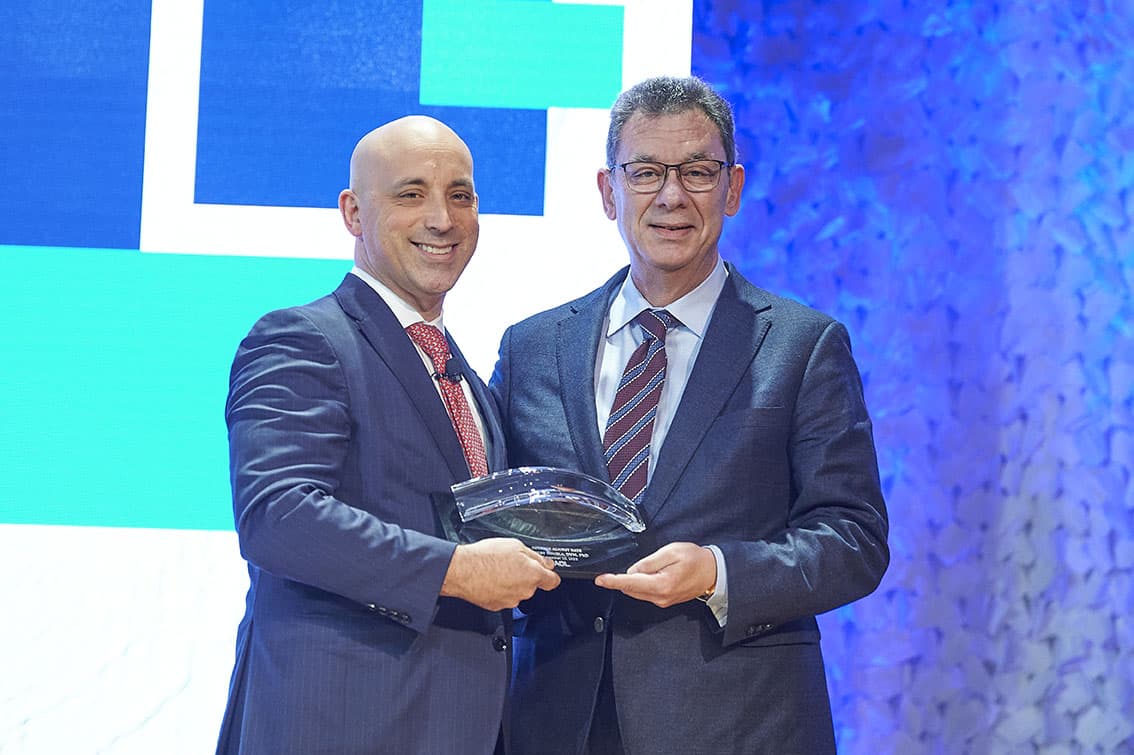
ADL CEO Jonathan Greenblatt presents the Courage Against Hate Award To Pfizer CEO Albert Bourla
Photo by Perry Bindelglass

Albert Boula, the CEO of Pfizer, told the crowd his mother was nearly murdered by a Nazi. He said he was sad to see the ongoing hatred of Jews, with high profile people using slurs. He added that it disturbing to see flyers that promoted a conspiracy theory that the vaccine was part of a plot to form a “global Jew- government.” He said the spread of online hate was one of many difficult things to deal with.

“You are at the forefront of some of the greatest challenges of our time,” Boula said.

An Imam Issues a Public Apology and Praises The Abraham Accords

The event included a number of breakout sessions with panels on hot topics. In one on the Abaraham Accords, Jason Greenblatt, former White House envoy to the Middle East in the Trump administration, said he was encouraged that the Arab negotiators wanted to get down to business or, has he said, talk “tachlis.” Greenblatt, who worked closely with ambassador David Friedman and Jared Kushner said the media had been against it the from the get-go, questioning what three Orthodox Jews knew about the Arab world. Greenblatt noted the absurd nature of coming back home to New Jersey recently from a trip to Dubai, to see threats against synagogues and to speak with his wife about whether they should go or stay home.

Imam Abdullah Antepli, associate professor apologized for first being against the Abraham Accords and former special White House envoy Jason Greenblatt said he, ambassador David Friedman and Jared Kushner were doubted by many in the media.
Photo by Perry Bindelglass

Imam Abullah Antepli, associate professor in the Sanford School of Public Policy and the first Muslim chaplain at Duke University, apologized for having spoken against the possibility of success of The Abraham Accords, saying he and others were blinded by anger toward President Trump or Israeli Prime Minister Benjamin Netanyahu. He praised the agreement.

“Something cracked open, and the light is shining through,” Antepli said.

He told those who gathered that people shouldn’t give up hope on those with radical views, because he once had them.

“I was a hater,” he said. “I spent early teenage years of my life believing, convinced that Jews as people, Judaism, as a religion, Israel as a country, is irredeemable evil. I don’t know how many Israeli flags I burned in my teenage years.”

Liz Cheney, a former Republican Congresswoman representing Wyoming, said “we need to recognize the clear and specific danger of antisemitism.”

Former Wyoming Congressowman Liz Cheney told a heartfelt story about how a Holocaust survivor interacted with her daughter.
Photo by Perry Bindelglass

She recalled going with her father, former vice-president Dick Cheney, to visit Auschwitz, as well as her daughter. She said a survivor asked her daughter how old she was, and she replied that she was ten years old. The survivor promptly took out a picture of little children wearing uniforms in death camps, pointed to a girl in the picture, and said, “That’s me when I was ten,” Cheney recounted her as saying.

Outside The Javits Center, a handful of protestors could be seen. A few members of Neturei Karta, a fringe Hasidic group that believes no Jewish government should control Israel in pre-messiah times, held signs against Zionism, while a protestor in a keffiyeh held a sign that read “The ADL trains Racist Police.”

A block to the left, a group of about a dozen Black Hebrew Israelites screamed. One member could be heard saying “F-ck the Jewish Jacob Javits Center!”

Some time before, those inside were able to see a video message from President Joe Biden, specifically made for the attendees. He said there was a joint responsibility regarding the hatred against Jews that has been seen.

“It’s wrong, it’s outrageous, it’s up to all of to stop it,” Biden said.

At ADL Summit, David Schwimmer, Michael Eric Dyson and Others Talk About Combating Hate Read More »
Shots Fired at German Rabbi’s Home

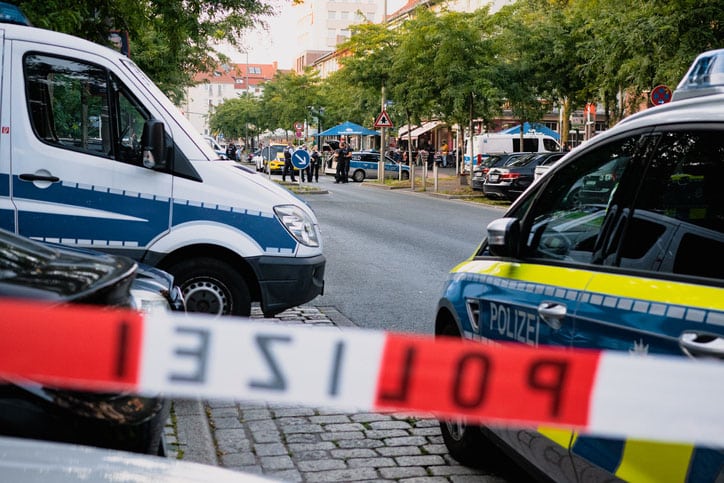
Four gunshots were fired at a German rabbi’s home in city of Essen on November 18.

The bullet holes could be found on the outside of the rabbi’s home and two windows were pierced, but no one was injured. The rabbi belongs to the next-door Old Synagogue. The gunman is still at large.

German Justice Minister Marco Bushmann express shock the “latest on attack Jewish life” in a tweet. “Antisemitism must have no place,” he wrote. “It is our duty to protect Jewish life.”

The American Jewish Committee thanked the German police for investigating the matter and increasing security for the Jewish community. “Antisemitism should have no place in Germany,” the Jewish group tweeted.

Former Israeli Knesset Member Michal Cotler-Wunsh tweeted that the targeting of the rabbi doesn’t just threaten the Jewish community but also the “foundations of ALL democracies, [including] Germany.” Cotler-Wunsh added that it’s “imperative to comprehensively identify & combat ‘traditional’ Jew hate & its ‘modern’ mutation Zionophobia.”

Shots Fired at German Rabbi’s Home Read More »

Antisemitic Assault at UMich

An antisemitic assault occurred at the University of Michigan on November 10.

WDIV-TV reported that the assault was reported to the police on November 12. The victim, an unidentified student at the university, alleged that a male student grabbed her arm and then lobbed antisemitic comments at her. The assailant is described as being a 5’10” white male with brown hair and was wearing a university baseball cap. The University of Michigan Police Department concluded that the assault was “ethnic intimidation.”

A friend of the victim’s told WDIV that the incident was “upsetting” to the victim but she’s trying to take it “in stride.” “Unfortunately things like this still happen here,” the friend said, saying that the victim has heard hateful comments on campus before.

A spokesperson for the university told the Journal, “Antisemitism, ethnic intimidation or hateful speech of any kind have no place at the University of Michigan. These types of attacks are in direct conflict with our deeply held values as a university.” The spokesperson also told the Journal “that no one yet has been able to identify the person who made the assault.”

Jewish groups condemned the assault.

“Our hearts go out to the student and the family during this stressful time,” Anti-Defamation League (ADL) Michigan Regional Director Carolyn Nomandin said in a statement to the Journal. “ADL Michigan is working closely with law enforcement, Hillel and other university staff in an attempt to find the suspect and bring this matter to a satisfactory conclusion. We would like to thank the University of Michigan Police Department, the students and the staff for their support and we encourage anyone with information about this incident to contact authorities. Because hate crimes tend to follow trends in societal antisemitic and racially charged rhetoric, it’s important for all of us to be vigilant and call out hate speech when it happens.”

StandWithUs CEO and Co-Founder Roz Rothstein similarly said in a statement to the Journal, “StandWithUs condemns this horrifying antisemitic assault. No one deserves to be physically or verbally attacked for their ethnic identity, or for any reason. With the clear rise of antisemitism, the time to address it in all its forms, is now. We strongly suggest that universities like University of Michigan educate their campus communities by adopting the International Holocaust Remembrance Alliance (IHRA) Definition of Antisemitism, which will help to define antisemitism and may prevent future attacks like this one. We call on the administration to firmly condemn this attack and to act swiftly to address antisemitism on its campus. We thank UMPD for taking this incident seriously and hope that the perpetrator is apprehended and held accountable.”

Stop Antisemitism Executive Director Liora Rez also said in a statement to the Journal, “It’s frightening to see antisemitic incidents like these increasing at schools like the University of Michigan, which has generally been a safe haven for Jewish students. This tide of antisemitism we’re seeing at Universities across the country––perpetrated by both the free Palestine movement and white supremacy groups––have one goal: to stoke fear in Jewish communities everywhere.”

Jewish on Campus tweeted, “All Jewish students have to do is exist to be a target of antisemitic violence. Jewish students deserve safety. We hope the student is okay and that the assailant is caught.”

Antisemitic Assault at UMich Read More »

Why the Misuse of the Word “Fascist” is a Dangerous Thing

In recent years, the term “fascist” has been thrown out with reckless abandon. It’s become so fashionable and popular, in fact, that it’s worth a brief look at its true roots.

In October of 1922, one hundred years ago last month, Benito Mussolini and his fascists marched on Rome and muscled their way to power, just a few years after the end of World War I. Like many in Europe at the end of the war and beyond, Italians longed for national unity and real leadership. And Mussolini, the former socialist and journalist who founded the Milan newspaper Il Popolo d’Italia, said that fascism was the answer. Fascism would be the great uniter of the people.

Indeed, the term “fascism”—coming from the Italian word “fascio,” or “bundle” in English—sprang directly from the mind of Mussolini in 1919 and took shape in his movement to unite the people, many of whom also feared the spread of Communism after the Russian Revolution of 1917. Mussolini’s movement promoted (often violently) a forcibly monolithic nation controlled by an autocratic ruler, a nation in which class would, in theory, cease to matter under the weight, importance and worship of the nation. The nation was prized above all else, which meant that anything or anyone that threatened national unity was an enemy to be destroyed. Individual interests were repressed in favor of upholding and uplifting the sanctity of the state.

These days, many people think little of Mussolini when they hear about fascists, opting instead to reference Donald Trump and the GOP. Sure, when we talk about fascists most people also think about Nazism, which built on Mussolini’s fascism to create a special brand of barbarity. But in the U.S. it’s become standard to hear the term “fascist” used to describe certain if not all members of the Republican party. The most popular “fascists” of our time are those who voted for Trump.

And why shouldn’t people feel this way? I’ve lost count of left-leaning media outlets and political players who have recklessly deployed the term “fascist” to characterize nearly half of the country. But the left does not have a monopoly on using the term recklessly. In 2020, with the election looming, Trump warned his followers that Democrats would replace American freedoms with “left-wing fascism.” And in 2008, conservative Jonah Goldberg published his bestselling “Liberal Fascism: The Secret History of the American Left, from Mussolini to the Politics of Meaning.”

In other words, we’re all fascists whether we’re on the left or the right. Just ask the other side.

As a result, like other words these days (“Holocaust” and “racist” especially), “fascist” and “fascism”—words that should be heavy with meaning and significance—cease to mean much at all. A fascist is simply someone with whom we disagree. And recent American elections prove the point. Both the left and right envision themselves as the upholders of democracy, while everyone else is helping to usher in contemporary fascism.

Both the left and right envision themselves as the upholders of democracy, while everyone else is helping to usher in contemporary fascism.

There’s a lot of hand-wringing on both sides over the so-called rise of fascism. But real fascism is a terrifying proposition. It’s not just about lying politicians and differing points of view. It’s not just a term we use when we’re angry that the other side is winning and we’re too lazy to think about exactly why that might be. And it’s worth looking at the way we talk about it now in relation to what it really is.

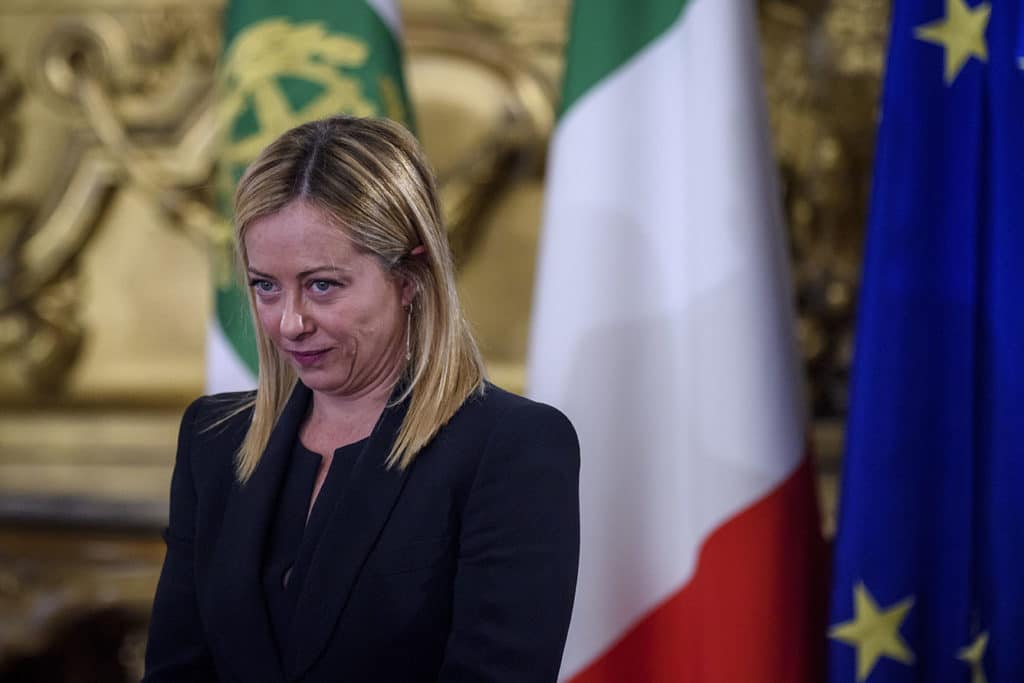
Recently in Italy, where I live, a change in government leadership has brought the term “fascism” front and center with the election of Italy’s first female prime minister, Giorgia Meloni. Americans especially have been eager to frame Italian politics through a contemporary American understanding of fascism. Yes, there are Italian individuals and media outlets who see Meloni as a fascist, but it’s not the word on everyone’s lips here in Italy. The U.S., on the other hand, is a different story. The day after Meloni was elected, my husband and I were flooded with texts and emails from American friends, many of whom suddenly feared for our safety now that “Italy has descended into fascism once again.”

We found ourselves in an interesting position. Headlines from respectable American publications like The Atlantic were sounding the alarm with phrases like “The Return of Fascism,” and most mainstream publications used the terms “fascism” and “fascist” more times than one could count in every piece about Meloni and Italy’s new government. “What will you guys do?” texted one friend. “Will you leave now?” Another emailed: “Thinking of you guys. Must be very scary. What happens now?” Other messaged lamented that fascists were now in power all over the world.

We felt like we were in the Twilight Zone.

Right before the election at the end of September we were out to dinner with Italian friends and I committed the grave Italian sin of bringing up politics at a meal. I couldn’t help myself. I wanted to know what my friends—real Italians and not outsiders living on the inside like me—who I would describe as liberal, thought of Meloni, who was at the time the election front-runner. I was shocked to learn that they intended to vote conservative this time. They were rooting for Meloni.

It turned out that many of our Italian friends here (and we live in Tuscany, which has always had a strong communist, anti-fascist sensibility—the “red region”) voted for Meloni and have good reasons for doing so. On one hand I was surprised because some of her platforms are deeply problematic (particularly her insistence that LGBT people cannot adopt children as well as her hard-line stance on migrants and immigration), but initial American media reports about her were hysterical and misleading, and some of them are starting to own up to it. “Current foreign coverage of Meloni and her party,” writes Alexander Stille for The New Republic, “creates the impression of her as the heir of Mussolini, born, like Athena, from the head of Zeus, rather than the product of a much longer genealogy, three generations removed from fascism, that she actually is.”

Meloni is no fascist. If there are questionable connections to fascism in her past, she has worked hard to overcome them and to ensure Italians that she is closer to the center, that she is a moderate. Nor does she support Putin despite past comments that suggest otherwise. She recently rebuked her right-wing coalition ally Silvio Berlusconi for complimenting Putin, and has denounced Russia’s attack of Ukraine. She has pushed to convince the EU that she, and Italy, are part of the team. She has denounced antisemitism and the racial laws of 1938 as “the lowest point of Italian history, a shame that will taint our people forever.”

But Americans watching from afar don’t always do the deeper dive necessary to understand what is really going on. It’s not unlike how we understand what’s going on in the U.S. We’re not big fans of nuance. Headlines are all we need to know, and that’s especially true when it comes to what’s going outside the U.S. And, anyway, who has time to read beyond the surface or to talk with people on the other side?

Many Italians I know, like many liberal Americans I know, are so sick and tired of the left not dealing with real problems faced by average people—issues like illegal immigration, rising violent crime (which many say correlates with the rise in illegal immigration), unemployment, soaring energy costs—that they are willing to take a risk and vote outside of their comfort zones. Here in Italy, some people on the left are taking a hard turn right because they don’t see their concerns being taken seriously by their own party.

Here in Italy, some people on the left are taking a hard turn right because they don’t see their concerns being taken seriously by their own party.

If you’re an American, maybe this sounds familiar.

This is the downfall of the left. Rather than looking at why they are losing people, why their numbers are dwindling as people defect to the right, and trying to re-strategize in order to meet the people’s needs, they hurl insults and accusations of fascism (and racism, of course). And suddenly everyone who no longer trusts the left, anyone who votes conservative, is a fascist. It’s intellectually dishonest. It’s lazy. But more than anything—and I say this as a long-time liberal—it’s deeply disappointing. It’s deeply disappointing to watch the left spin out of control when people express different viewpoints. And it’s deeply disappointing to watch the left leave the working class in the dust while they focus on pronouns and Palestinians, while they ask Americans who are suffering economically to sacrifice for Ukraine.

I’m not saying these things don’t matter. They do. But to the average American they don’t matter as much as gas and energy prices. They don’t matter as much as employment and inflation. And they don’t matter as much as rising violence and rampant homelessness in certain communities.

If you’re a liberal American and you really think that Meloni is a fascist, that Italy has descended back into its fascist pit, I have one suggestion for you: Consider why this so-called turn has happened and why it might be a foreshadowing of what’s around the corner for Americans as well. My prediction is that people who historically have identified as liberals will be so fed up with the left’s focus on woke sensibilities at the expense of legitimate issues like violent crimes, the economy, and immigration that they will be willing to try anything in order to escape the current predicament. And that “anything” might be another round with Trump. The American left needs to start listening to what people are really concerned about. Italy and Europe are showing us that woke sensibilities have a shelf-life. The question is what comes after the expiration.


Monica Osborne is a former professor of literature, critical theory, and Jewish studies. She is Editor-at-Large at The Jewish Journal and is author of “The Midrashic Impulse.” Twitter @DrMonicaOsborne

Why the Misuse of the Word “Fascist” is a Dangerous Thing Read More »

The Power of Words

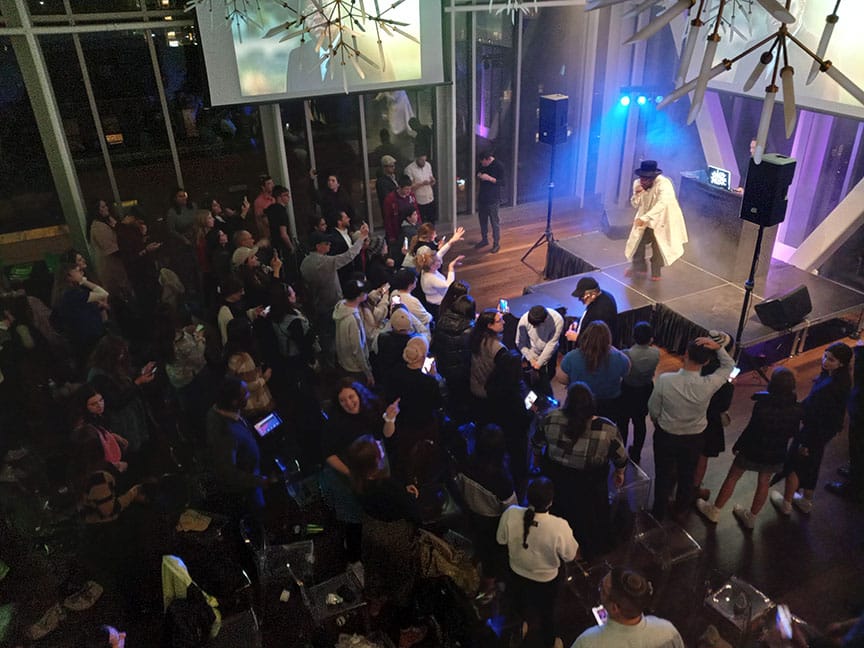
“Life revolves around words,” rap legend Nissim Black said at New York City’s Safra Center on Nov. 8th. “We take for granted how much speech has an effect on a person’s mind, soul, entire being.”

“One unhealthy person says something, and then what started off as words will lead to actions,” said Nissim, in the midst of a tsunami of hate-filled monologues that have already led to hate-filled actions. “It’s not new, but it’s definitely increasing.”

“It’s very important to fight it the way it comes in,” he continued. To take something that’s “debased and turn it around for kedushah (holiness). To use our words to elevate.”

He then proceeded to give a concert — singing favorites like “Higher,” “The Hava Song,” and “HaShem Melech ” — that clearly uplifted the 150 mostly teens in attendance.

The concert was part of the “Clean Speech” campaign in New York City. Led by Aish NY and 20 other organizations, the campaign, launched in 2019 in Denver, is intended to be a “transformational challenge” to learn about and incorporate positive, “mindful” speech  (“Think before you speak,” you’re repeatedly advised), based on timeless Jewish wisdom.

“The collective trauma of the pandemic has made people less tolerant and more unkind,” Aish NY explained in an email.. “The way we speak is both the problem and the solution.”

The campaign, which runs through the month of November,  includes 30 animated daily videos, offering both lessons and moral dilemmas. Rabbi Elliot Mathias, executive director of Aish NY, began Day 1: “It’s not just about what we say. It’s about who we are. Words more than any other human faculty define us. What we say and how we say it is who we are.”

“Judaism teaches that the words we choose determine how we experience life,” he continued. “By taking hold of our power of speech, we take hold of life itself.”

In some ways, the campaign is geared toward the wrong audience. As even Dave Chappelle would have to admit, Jews don’t exactly dominate the hate speech business. But the campaign is not just about hate speech. It’s also focused on lashon hara — negative speech. Insults, denigration, gossip.

Social media and hyper-partisanship have vastly magnified the problem. In the past, negative thoughts may have stayed in our heads, now they’re blasted 24/7: Digital lashon hara. The level of discourse often feels like we’re all back in kindergarten.

“Bullying has become a major problem in schools and online,” Rabbi Mathias wrote, introducing the program. “Studies have shown that those who are bullied are at increased risk for mental health problems and long-term damage to self-esteem. Children and adolescents who are bullies themselves are at increased risk for drug use, academic problems, and violence to others later in life.

At the same time, “[w]ords of encouragement from a parent, teacher, coach, colleague, or friend can instill confidence that lasts a lifetime. Giving a compliment to a co-worker positively impacts their emotional state that affects their interactions, creating a ripple effect of positivity.”

Words are holy in Judaism. G-d rested on Shabbat; he didn’t speak. Some of the lessons of the daily videos include: Words create reality. Transform our speech, transform our lives. Words can’t be retracted. How to disagree graciously, to be tolerant of differences of opinion.

One of the more poignant videos focused on learning how to process negative thoughts without speaking them. To re-learn how to control our words, we have to re-learn how to control our emotions.

We also need to relearn when to be silent. Nissim talked about negative YouTube comments and how they can impact an artist and his work. I know I speak for many writers when I say: people don’t realize how hurtful their comments can be. Much of my career was pre-Internet. All we had to deal with was the occasional nasty letter to the editor — which would never get published. Now we have to deal with incessant commentary on our pieces.

I found the daily videos both useful and refreshing, but for me, listening to musicians like Nissim can be even more effective. The power of words meets the power of music — it’s truly a spiritual experience. Nissim’s lyrics are life-affirming: G-d is with us, within us. We’re never alone. And if G-d is within us, would He really want us to talk like that?

“Each person is a menorah,” Nissim told the crowd. “Your words can uplift the world.”


Karen Lehrman Bloch is editor in chief of White Rose Magazine.

The Power of Words Read More »