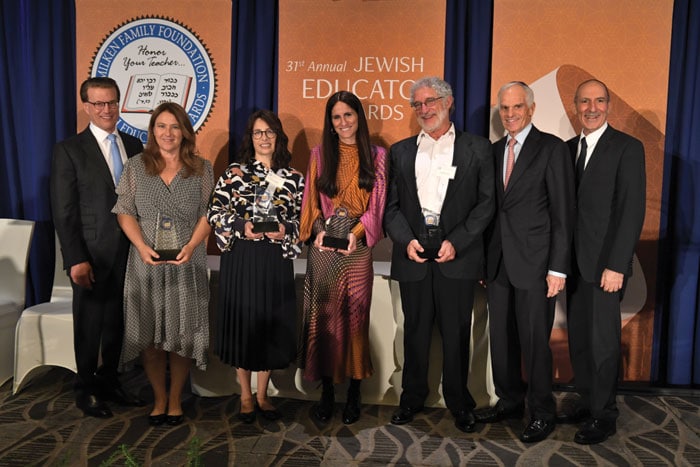
On May 23, the Milken Family Foundation (MFF) and Builders of Jewish Education (BJE) held the 31st annual Jewish Educator Awards (JEA) luncheon at the Luxe Sunset Boulevard Hotel.
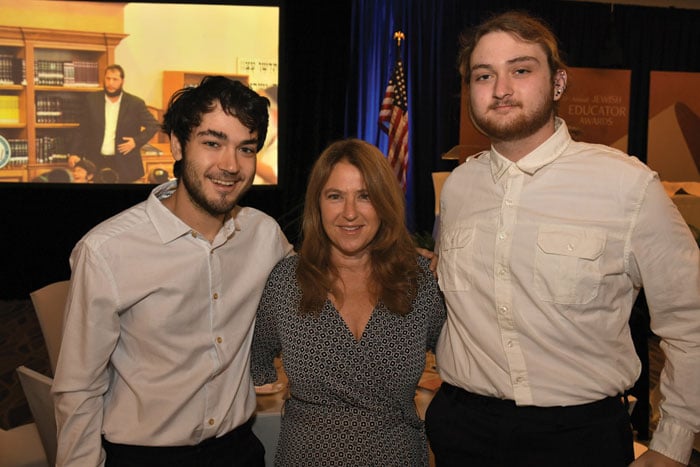
2021 JEA recipient Cherie Friedman shared the special honor with her sons. Courtesy of the Milken Family Foundation
BJE Executive Director Gil Graff and MFF Vice President Richard Sandler welcomed the 2021 JEA recipients to the luncheon, which drew educators, community leaders and the families and friends of the 2021 JEA winners.
The JEA honorees were Natalie Williams, principal at YULA High Schools girls’ division; Chana Zauderer, principal general studies at Yeshiva Rav Isacsohn; Cherie Friedman, associate director, K-8, and elementary school general studies at Kadima Day School; and Yoav Ben-Horin, director of global Jewish education at de Toledo High School.
2021 Jewish Educator Award recipient Natalie Williams (third from left) celebrates with her family. Courtesy of the Milken Family Foundation
The annual JEA luncheon is an inclusive event that brings together leaders across Los Angeles’ Jewish community, from the most secular to the most Orthodox. It is held in celebration of the annual JEA recipients.
The JEA recognizes excellence in the teaching profession at BJE-affiliated schools. A committee of educators, professional and lay leaders from the Jewish community select winners based on several criteria. Honorees are surprised with $15,000 awards.
Additional attendees at the luncheon included MFF Chairman and Co-Founder Lowell Milken, Consul General of Israel in Los Angeles Hillel Newman and YULA High School Head of School Rabbi Arye Sufrin.
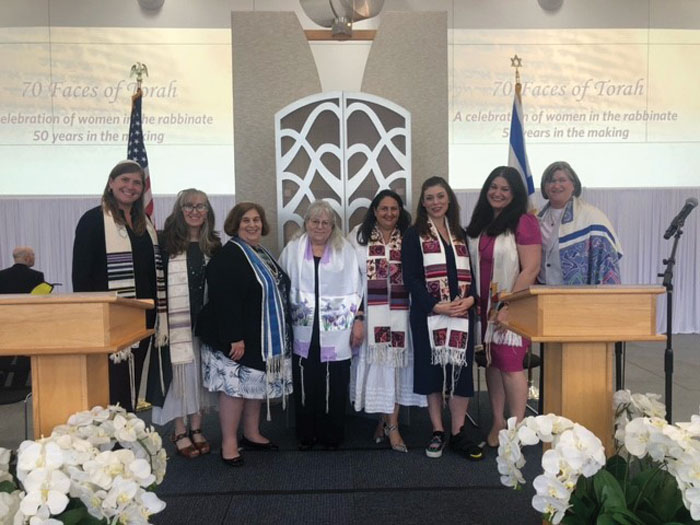
Women clergy from across Los Angeles gathered at Stephen Wise Temple for “70 Faces of Torah,” honoring 50 years since the 1972 ordination of the first woman rabbi. Courtesy of Stephen Wise Temple
On June 3, a Shabbat service at Stephen Wise Temple was held in celebration of women rabbis.
In honor of the 50th anniversary of the historic ordination of Rabbi Sally Priesand, the first woman in the world ordained by a rabbinical seminary, women rabbis from across Los Angeles came together for “70 Faces of Torah,” an evening of music, meaning, and learning at the Bel Air synagogue’s Katz Family Pavilion.
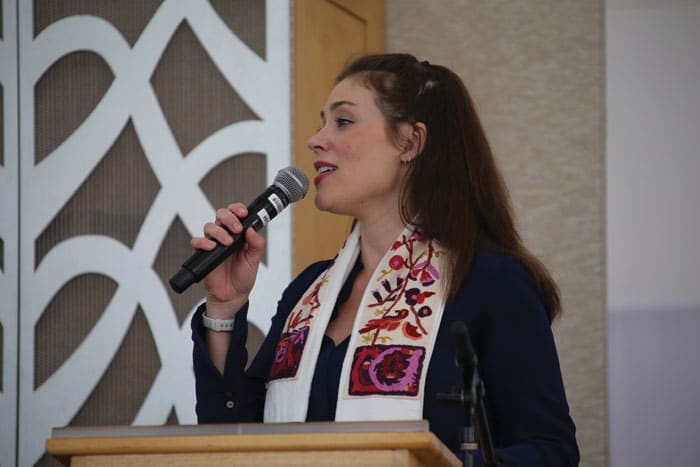
Participants at “70 Faces of Torah” included Stephen Wise Temple Senior Cantor Emma Lutz. Courtesy of Stephen Wise Temple
Participating clergy included Stephen Wise Temple’s Rabbi Sari Laufer, Senior Cantor Emma Lutz and Rabbi Karen Strok; Temple Isaiah Rabbi Jaclyn Cohen; Congregation Kol Ami Rabbi Denise Eger; Rabbi Heather Miller of Keeping It Sacred; Rabbi Leah Kroll, who spent decades at Wise; Rabbi Michele Lenke; and Hebrew Union College-Jewish Institute of Religion rabbinical student Jessica Jacobs, all paying tribute to Priesand.
Lutz added a layer of meaning to the service’s accompaniment, with the Stephen Wise Temple band playing music composed and arranged by women.
In addition to honoring Priesand’s legacy, Cohen, Miller, Kroll, and Lenke each spoke of their deep connection to the Wise community in which they were raised.
In a stirring and emotional tribute video produced by Rabbi Laufer, the clergy offered testimonials on the impact Priesand has had on their lives.
From left: Rabbi Marvin Hier, U.S. Secretary of Homeland Security Alejandro Mayorkas and Rabbi Abraham Cooper. Hier and Cooper present Mayorkas with a replica of the Mauthausen flag. Courtesy of Simon Wiesenthal Center
During a special naturalization ceremony at the Museum of Tolerance, U.S. Secretary of Homeland Security Alejandro Mayorkas administered the Oath of Allegiance and provided congratulatory remarks to 50 new citizens.
According to the Simon Wiesenthal Center, the citizens originated from 25 countries including Argentina, Iran, Iraq, Lebanon, Turkey and Ukraine.
SWC Associate Dean Rabbi Abraham Cooper provided welcoming remarks at the June 8 program.
“This morning’s ceremony has profound meaning for each of us at the Simon Wiesenthal Center, starting with our founder and dean Rabbi Marvin Hier, whose father escaped persecution after World War I to arrive on these shores,” Cooper said.
Rabbis Cooper and Hier then presented Mayorkas with a replica of the Mauthausen flag, secretly sewn by inmates of the Mauthausen concentration camp in anticipation of their liberation by US forces.
On Tuesday, a bipartisan group of Senators introduced the Commission of Inquiry (COI) Elimination Act, seeking to abolish the United Nations Human Rights Council’s (UNHRC) latest commission “investigating” Israel (which just reported its findings for the first time this week) and to combat systemic anti-Israel bias at the UN.
The bill, a companion to the bipartisan COI Elimination Act in introduced in the House in March, comes just months after 68 Senators and 48 House Members sent separate letters to President Biden noting the Commission’s antisemitic bias and urging him to take action against it. Passing the bill would represent an important step in combatting antisemitism at the UN, a necessary move that both parties should immediately and enthusiastically endorse.
It is legitimate for the United Nations to criticize Israel, which should be held accountable like every other country. But it is also clear that Israel faces systemic bias at the UN: Not one but two UN Secretary Generals have admitted it, and frankly the numbers don’t lie. At the UNHRC alone roughly half of all resolutions for the entire globe condemn the State of Israel. Israel has been the subject of more commissions of inquiry (9) than any other country (2); more special sessions (9) than any other country (5); and it is the only country in the world that has a permanent agenda item dedicated to focus on its alleged wrongdoings. This is so glaringly apparent that in 2018 the last administration voluntarily terminated its membership in protest. Even when the Biden administration rejoined last year, Ambassador Linda Thomas-Greenfield promised that the U.S. “will oppose the Council’s disproportionate attention on Israel.”
It is time to pass the COI Elimination Act and do just that, because the impunity with which the UNHRC has operated until now has only emboldened it to keep pushing the envelope—and the Overton curve—when it comes to spreading lies and hate about the Jewish state. They no longer even care to pretend to be fair.
In this latest commission, the UNHRC ignored the basic rules of international investigations by appointing openly biased commissioners who announced their “conclusions” in advance of their appointment. International fact-finding is a quasi-judicial process, and international law requires fact-finders to be impartial. Each of the three commissioners has demonstrated extraordinary bias against Israel on dozens of occasions—including on issues specifically related to this very inquiry. The commission was formed to examine Israel’s action after Operation Guardian of the Walls, the May 2021 campaign to defend innocent Israelis and Palestinians against the thousands of deadly rockets indiscriminately launched at the civilian population by the U.S. designated terror organization Hamas. Just weeks after the conflict ended, lead Commissioner Navi Pillay publicly declared Israel guilty of war crimes in the matter, and “determined” that the conflict was Israel’s fault. The Council literally appointed a commissioner to head an inquiry after she had already shared her findings, but before she had done any research. The NGO UN Watch filed an official request for her recusal in February, but to date there has been no response.
In the past, the UN’s anti-Israel commissions have always lied about the big things, and in that regard the new report did not disappoint or deviate (see here, and here and here for some responses to the usual false allegations and unimaginatively recycled one-sided accusations contained in the “findings”). But this time, the commissioners were apparently so unconcerned about the truth that they even lied about the (relatively) “small” things, including demonstrably false statements about procedural matters that did not fit their preferred narrative.
In the past, the UN’s anti-Israel commissions have always lied about the big things, and in that regard the new report did not disappoint or deviate…
Pillay wrote that “the Commission has received several thousand written submissions,” which is categorically false. The Commission actually received at least 4,890,902 individual pro-Israel submissions, all which were carefully logged and time-stamped. These submissions came from a network of numerous NGOs, including the Touro Institute on Human Rights and the Holocaust, Human Rights Voices, and Palestinian Media Watch in an effort facilitated by the eminent international lawyer Anne Bayefsky. Not only did none of the information in any of those submissions make it into the report, but also Pillay denied receiving them in time to even examine. She told the Council that all such submissions came in “after our report was finalized.” That statement is unequivocally false from the verifiable records of the senders.
Pillay also claimed that “Since the finalisation of this report, we have sadly received reports of continued violations of individual and collective rights—including excessive use of force—sometimes lethal, by Israeli security forces against Palestinians, including women and children and journalists.” Maybe. But what Pillay chose not to mention was that since the finalization of the report she had also received from those same pro-Israel sources at least 28,313 separate reports of lethal force by Palestinians and other Arabs directed against Israelis.
In the report Pillay actually blamed Israel for causing the Palestinians to abuse human rights (including those of their own citizens). Perhaps, in some kind of twisted logic, she counted reports of Palestinian violence as more instances of Israeli violations. Regardless, Pillay’s presentation of the report to the Council this week did exactly what it was supposed to do: It gave UNHRC members another platform to accuse Israel of everything from apartheid to Zionistic genocide, with no evidence offered or requested.
Discriminatory commissions that blame Israel for all the world’s problems, or scapegoat the Jewish State the same way that antisemites have always scapegoated the Jewish people, are simply not acceptable. All the COI Elimination Act does is restrict U.S. taxpayer dollars from funding antisemitic activity, following a model used in existing U.S. law to oppose other U.N. bodies that engage in discriminatory disparate treatment. For lawmakers on both sides of the aisle, this should be an easy decision.
Dr. Mark Goldfeder, Esq. is an international lawyer and Director of the National Jewish Advocacy Center.
If you have never been on an African Safari, choosing an area or place to stay is not that easy. (This post is about Safari Experiences in East Africa. Find info about safaris, sun soaked beaches and fine wine experiences in Southern Africa HERE.) There are so many options, each more awe inspiring than the last, which is why working with a safari specialist is very important in that process. East and Southern Africa have very different landscapes. There are some similar but also very different experiences to enjoy for the safari enthusiast, so I suggest making a list of your priorities. What is your goal for your African Safari trip? Are you adventurous or do you want to disconnect, go for a few game drives, and lie by the pool? Do you want to have a luxe experience with brick-and-mortar lodges, swimming pools and hot tubs, or track animals on foot and sleep beneath the stars? Maybe both! Who you travel with, and the purpose of the trip is of course important as is the size of the group.
Some lodges can only accommodate a certain number of guests and some don’t accommodate kids under the age of 6. Your budget and how much time you have, will also be a factor. If you and your partner both love Africa and want to get married there, look for my post on safari weddings in Africa HERE. It will be an unforgettable and mind blowing adventure and an unforgettable way to start your life together. If you are going all the way to Africa, you should spend at least ten days to two weeks to get the full experience.
East Africa and the Migration.
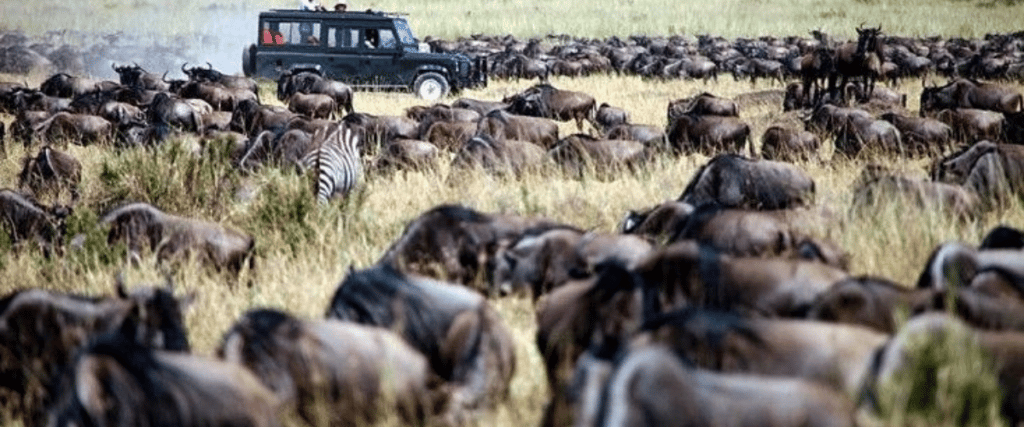
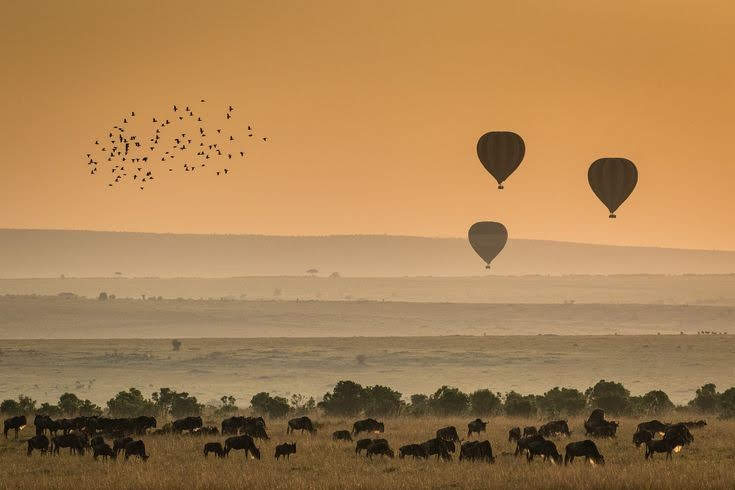
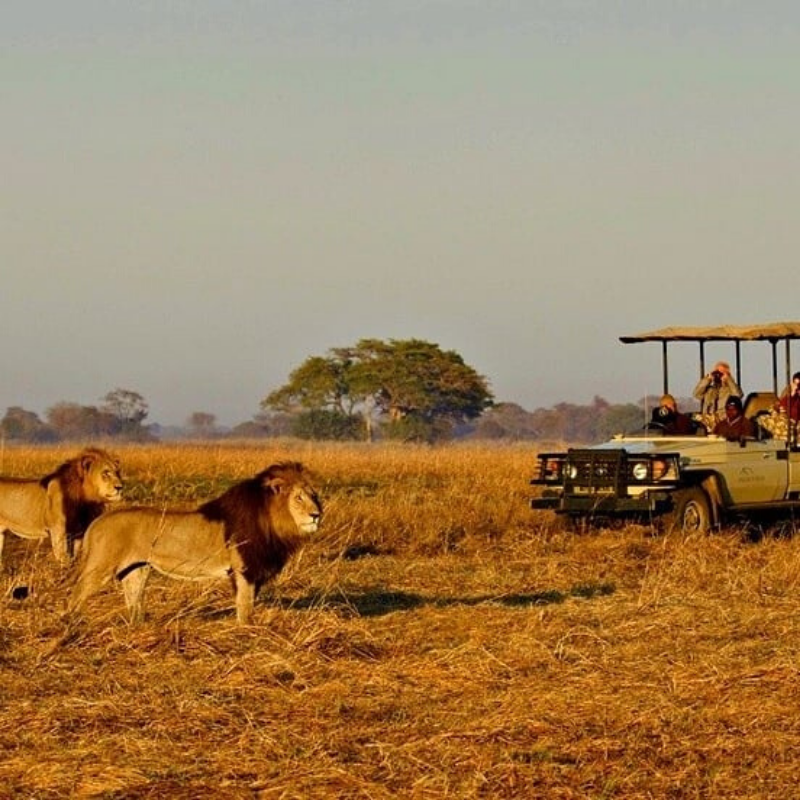
A deciding factor for your safari will be the time of the year you would like to go as that will determine which areas/Countries are the best to visit. However, if that is not an issue for you, I recommend June/July – November. One of the most breathtaking experiences you will ever have in East Africa, is being a witness to the massive migration of animals. This is peak season so you would have to secure your accommodation well in advance. The Great Migration cannot be compared to any other experience in this lifetime. Well over a million animals migrate during the dry season from the southern expanse of the Serengeti plains and Ngorongoro Crater, over the border of Kenya to Maasai Mara National Reserve, and back down to the southern Serengeti again in search of food and water and to raise their young during the seasonal change. The movement is dependent upon the rain and grazing, and the animals are unpredictable themselves. Huge herds have stood on the banks of the rivers for a day or two before crossing as this is a major obstacle and they are aware of the dangers waiting for them in the river, so timing is everything. There are various options to experience this migration; you could take a hot air balloon ride over the Mara, follow along in an open land rover or go on a walking safari. Please be sure to have a professional, experienced, and responsible guide with you at all times.
A Kenya – Tanzania Overland Safari.
If the migration is not really of interest to you, there is the hauntingly beautiful Serengeti in Tanzania known for its geographic wonders and vast wilderness areas. The plains of Serengeti National Park, known as the land of the “Big Five” is absolutely a “must see.” Kilimanjaro National Park claims Africa’s highest mountain and vistas of truly impossible beauty. You could explore both these Countries on an overland Kenya/Tanzania safari, witnessing wildebeest, zebra, and a host of other wildlife. One could start this adventure in Nairobi, and then travel to the Mount Kenya region, which is an extinct volcano, the highest mountain in Kenya, and the second highest in Africa, after Kilimanjaro. Abundant wildlife and over 130 bird species will have you enthralled and in safari “heaven.” Crowds of flamingos famously line the shores of several lakes and are often joined by other larger wildlife attracted to the cooling breezes of the lakes.
To the east is the Indian Ocean, including the tropical islands of Zanzibar. Starting your trip with a safari and ending it with a few days on an exotic island is the ultimate “best of both worlds” experience. This actually is the perfect option for couples thinking about having an African Safari destination wedding. You could have the wedding while on safari and the honeymoon on an exotic island, or the other way around.
A Rwanda/Uganda Gorilla Trekking Experience.
Rwanda and/or Uganda is a must visit for an amazing gorilla trekking experience, and for many this is the ultimate wildlife adventure. These gentle giants can be found in the area known as the Virunga Mountains and live in Bwindi Impenetrable National Park and Mgahinga Gorilla National Park in Uganda, Volcanoes National Park in Rwanda, and the Virunga National Park in the Democratic Republic of the Congo. The mountain gorillas can be reached after a trek of several hours up and through the rain forest, which you should only attempt if you are in good health and able to sustain a slow mountain climbing pace. However, it is totally worth it! Trackers will let your ranger know where to find the gorillas, and then lead you to them. Seeing these incredible animals up close is nothing short of magical! Note that you will need permits at least three months prior to your visit. Children under 15 are not permitted to participate in gorilla trekking unless special permission is obtained.
A Kid-Friendly Experience.
If you are a family with young kids, it might be prudent to book a lodge where you and the kiddos can experience the wildlife in a safe-for-kids environment such as Giraffe Manor in Kenya. This unique Manor is famous for its resident herd of Rothschild giraffe that casually wander around the spectacular grounds. Expect to have “visitors” for breakfast as you will probably share a delicious meal with a friendly giraffe poking his head through the window in search of a treat. Many of these lodges will provide a nanny service for those with young kids.
Accommodation.
There are many beautiful options for lodging, and the right one for you will again depend on your priorities, your budget and what you would like to experience. However, we do recommend Eden Nairobi especially for your first night after landing, Sanctuary Retreats, Andbyond Lodges, White Sands Villas in Zanzibar, The Safari Collection, and Volcanoes Safaris. You could stay in a luxury lodge, or experience an African Safari with a backpack and tent, or experience both, as I have done many times… it is all up to you. I have also stayed in tented camps that are as luxurious as a five-star hotel, which will give you the safari experience without giving up any of the comforts.
Last but not least, it is not a question of “should I go on an African safari?” but rather “Why haven’t I gone yet?” Safaris are a once-in-a-lifetime experience and an adventure that everyone should have! Whether you are a first-timer or seasoned safari enthusiast, Africa’s spectacular wildlife legacy never fails to set the heart pumping and the cameras clicking.
The most important aspect of your trip is a professional and reliable DMC and there are two companies in Africa that I put my complete trust in to fulfill every detail of a client’s trip without fail. Meet Bernard of Nziza Hospitality and Sandra Lee of Ruby Travel. Both have many years of experience in the travel industry and will provide you with a once in a lifetime opportunity to experience Africa at its best. These two professionals are true gems in the industry and will work with you to create an unforgettable experience.
Follow us HERE for more adventures in Africa, wine tours all over the world, cruises, river cruises, wedding and honeymoon destinations and much more. If you have any questions about safaris or travel in general, please contact us HERE.
Partisanship is hardwired in human beings. We love to cheer, we need to cheer, for our groups and our teams. I’m such a diehard Lakers fan I enjoy cheering against our nemesis the Boston Celtics.
Politically, I’m surrounded by partisans. My Democrat friends will never be caught dead saying anything that might help those dreaded Republicans; while my Republican friends feel the same way in reverse.
Can you recall ever hearing a Democrat or Republican say something like, “You know, in all fairness, we must give credit to the other side on these issues?” That just doesn’t come up, because what counts, above all, is to make the strongest possible case for your side.
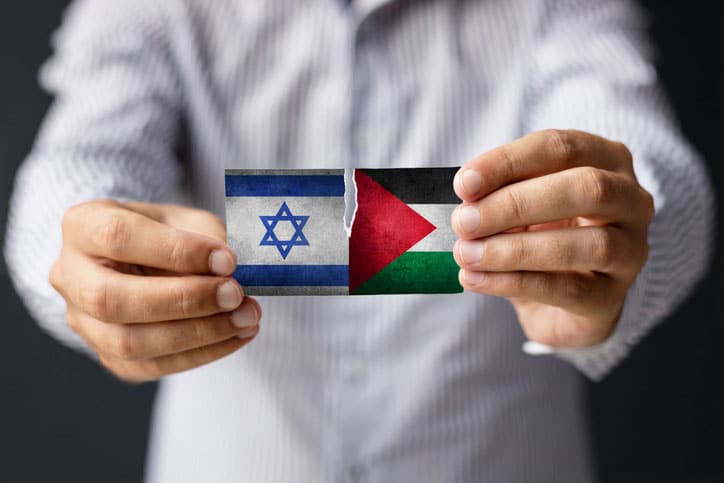
I can think of one notable exception to this hard-rock principle— liberal Zionists who feel compelled to make the case for Palestinians. These Israel supporters have decided that when it comes to the Israel-Palestinian conflict, they can ditch their partisan reflexes in favor of something more enlightened and even-handed. For their beloved Israel, in other words, it’s not enough just to make the case for Israel; they must make the case for the other side, as well.
It’s hard to question that approach because it sounds so reasonable. After all, who can be against fairness and balance? In that framing, anyone making the case exclusively for Israel ends up looking like a blind, heartless partisan.
But if even-handedness is so valued, why won’t Zionist Democrats treat Republicans the way they treat Palestinians? Why won’t they go out of their way to see things from the point of view of the Republican side, as they do with Palestinians?
One answer is that politics is about power, and in the game of power, your side must win at all cost.
The Israel-Palestinian conflict, on the other hand, is more of a distant geopolitical issue where there’s little risk in making the case for the “other side.” If anything, when liberal-Zionist-Democrats bend over backward to show compassion for Palestinians, that makes them more popular in their Democratic circles.
When liberal-Zionist-Democrats bend over backward to show compassion for Palestinians, that makes them more popular in their Democratic circles.
So, where does that leave devoted Israel supporters who don’t really care about being popular in any circle? Are they allowed to make a strong case for Israel without being accused of being a biased supporter of the Zionist state?
This is a serious question. Anyone making the case for Israel today is up against the most beloved victims in human history—the Palestinians. After decades of nurturing the world’s sympathy, the Palestinians are sitting on top of the victim food chain. The genius of Palestinian leaders, their primary occupation, is to maintain that supreme victim status.
This presents a paradox. On the one hand, the fact that most of the world already takes the side of the Palestinians would suggest that Israel supporters ought to double down on making the strongest possible case for Israel.
On the other hand, the fact that the Palestinian cause has become so popular within mainstream society offers obvious temptations for anyone seduced by such popularity.
The choice, then, is messy: Defending Palestinians and going with the mainstream means piling on to what much of the world is already doing; while defending Israel means you’re on a lonely island where you’re accused of being one-sided.
I once asked a relative of a renowned humanitarian who was also a passionate Zionist how he felt about the plight of Palestinians. This was the gist of the response: “Most of the world supports the Palestinians. Do I really need to add my two cents?”
He could have added: The condemnation of Israel in international bodies like the United Nations is so wildly out of proportion, does the world need another Israel basher or a course correction?
The bottom line is this: Israel supporters need not apologize for making the strongest possible case for their side.
Of course, if you’re a historian, an academic, a journalist or a diplomatic peacemaker, you have an obligation to see and understand both sides. But most Israel supporters don’t fall in those categories. They can show tough love and criticize their side, but that doesn’t mean they should make the case for the other side.
What’s more, Israel supporters are constantly confronted by the hostile, antisemitic forces of the BDS movement and a Palestinian leadership that glorifies terrorism and is sworn to Israel’s destruction. Why should they make the case for those who want to destroy them?
If the notion of balance means anything, what the world could use right now is a course correction with a lot more Israel supporters. God knows there are more than enough fans on the other side.
The FBI is keeping tabs on the “Mapping Project” that targets Jewish institutions, The Boston Herald reported.
BDS [Boycott, Divestment and Sanctions] Boston tweeted on June 3 that their “friends at the Mapping Project” had released an interactive map and articles that “illustrate how local support for the colonization of Palestine is structurally tied to policing, evictions, and privatization locally, and to US imperialist projects worldwide.” Various elected officials and Jewish groups have denounced the map as being antisemitic since it lists Jewish institutions as well as “local governments, police departments, universities and corporations,” per the Herald.
FBI Boston Special Agent in Charge Joseph Bonavolonta said on June 14 that they are “tracking the Mapping Project website, and are working to identify additional information regarding this website.” However, Bonavolonta said that they have yet to see “any direct threats of violence in open sources related to this map as of its publication.”
The Anti-Defamation League (ADL) tweeted on June 15 that they have “been working to get the #antisemitic BDS Boston-promoted ‘Mapping Project’ site taken down.” “We appreciate that the current hosting company agreed it’s a violation of their doxing rules,” the ADL added. “We will pursue this with any company irresponsible enough to host this dangerous threat.”
We’ve been working to get the #antisemitic BDS Boston-promoted "Mapping Project" site taken down. We appreciate that the current hosting company agreed it's a violation of their doxing rules. We will pursue this with any company irresponsible enough to host this dangerous threat.
ADL New England Regional Director Robert Trestan told CBS News that the Mapping Project amounted to “a Jewish hit list” and that they’re spreading “a conspiracy theory that at the center of all ills are the Jewish institutions of Boston.”
BDS Boston continues to double down on their support for the Mapping Project, including a June 14 Twitter thread stating that “imperialism, racism, militarism & Zionism are systemically connected in our communities.”
The Mapping Project visualizes elements of Massachusetts’ imperialist landscape.
Explore to see how imperialism, racism, militarism & Zionism are systemically connected in our communities: https://t.co/T6CmSHZjte
Trestan told CBS that the people behind the Mapping Project are hiding behind “proxy servers”; consequently, it is not known who is behind the project. It’s also unknown who is behind BDS Boston either. Regardless, the project has “achieved something unusual – uniting politicians of both parties and a broad array of institutions in disgust and horror,” CBS reported.