fbpx

May 27, 2022

America’s Response to War Crimes In Ukraine—Then And Now

“Terrorizing, torturing and killing civilians” … “a sadistic days-long killing spree” … “victims buried in mass graves” … “pillaging and destruction of homes.”

These are among the descriptions of war crimes committed near Kyiv that appear in the Ukrainian government’s recent indictment of eight Russian soldiers and mercenaries. But they just as easily could have been taken from the reports about anti-Jewish atrocities, in the very same region, that reached America 80 years ago this week.

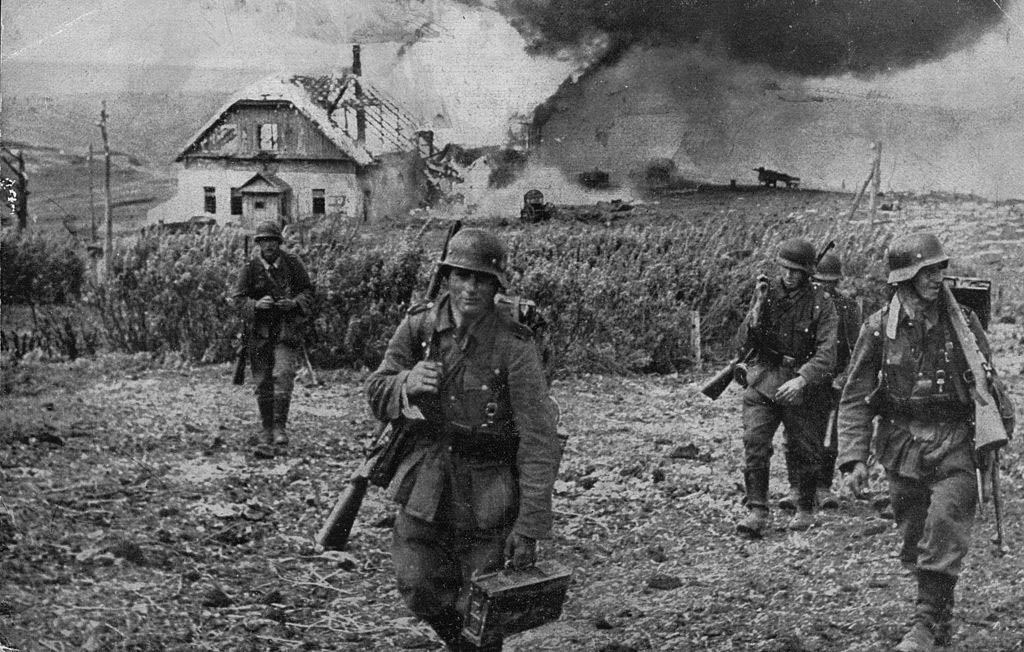
Nazi death squads, known as the Einsatzgruppen, accompanied the German army as it advanced through Soviet Ukraine in the summer of 1941, terrorizing, torturing and killing Jews in town after town. Today that first phase of the Nazi genocide, involving the slaughter of an estimated one million Jews, is known as the “Holocaust by bullets.”

Unlike today, when images of atrocities in Ukraine are broadcast around the world almost in real time, news of the German massacres emerged only gradually. The first fragmentary reports about the mass killings were published by the Jewish Telegraphic Agency in early October 1941, and in The New York Times later that month. Similar reports appeared sporadically in the months to follow, including news of the slaughter of 52,000 Jews in the Babi Yar ravine, on the edge of Kyiv (then commonly spelled “Kiev”).

However, such news was difficult to confirm and sounded to many Americans like the usual travails of war. The turning point came in late May 1942—eighty years ago this week—when a courier from the Jewish Socialist Bund of Poland reached England with a shocking report. It began: “From the day the Russo-German war broke out, the Germans embarked on the physical extermination of the Jewish population on Polish soil.”

The Bund Report described how in villages throughout Poland, Ukraine, and Lithuania, German troops marched the Jewish residents to nearby forests or ravines and machine-gunned them into giant pits. The report stressed that the killings were not isolated outbursts, but part of a systematic plan to “annihilate all the Jews in Europe,” town by town, country by country. The Bund also detailed the killing of Jews in the Chelmno camp in mobile death vans—trucks whose exhaust fumes were pumped back into the passenger cabin. Some 700,000 Jews had already been murdered, the Bund Report calculated. (The actual total was about two million by then.)

The response of the American press left much to be desired. The Chicago Tribune, for example, relegated the news to eleven lines on page six, reporting vaguely that the Jews had perished as a result of “ill treatment” by the Germans. The Los Angeles Times gave it two paragraphs on page three.

The coverage in the New York Times was particularly important because many other newspapers looked to the Times, as they still do, to decide if a particular story deserves attention. On June 27, the Times buried the Bund’s report at the end of a column of short news items from Europe. The following week, the Times published a news analysis claiming that the Germans “treat the Jews according to whether they are productive or nonproductive,” and that the high mortality rate among “nonproductive” Jews was due to “starvation and ill treatment” rather than mass executions. The article also claimed that some reports of mass graves “appear to have been based on hearsay.”

The article also claimed that some reports of mass graves “appear to have been based on hearsay.”

New York Times publisher Arthur Hays Sulzberger, who was Jewish, feared that giving prominence to Jewish-related news would provoke antisemites to accuse the Times of promoting Jewish interests. The content and placement of articles related to Nazi atrocities against Jews reflected Sulzberger’s mindset.

The Roosevelt administration, for its part, actively tried to suppress news of the mass murder. A few weeks after the Bund Report arrived, officials of the U.S. Office of War Information decided to withhold reports about Nazi massacres of Jews, on the grounds that the news would lead to “hatred of all members of the races guilty of such actions” or provoke German retaliation against American POWs.

Roosevelt administration officials were worried that publicity about the slaughter would lead to demands that they do something about it. If the news got out, “the way will then be open for further pressure from interested groups for action which might affect the war effort,” R. Borden Reams, head of Jewish affairs in the State Department’s European Division, confided to his colleagues. “The plight of the unhappy peoples of Europe including the Jews can be alleviated only by winning the war,” he insisted.

Undersecretary of State Sumner Welles claimed that Jewish organizations’ calls for rescue actually were sponsored by “the German propaganda machine,” which was “using the misery” of the refugees in order to “create confusion and doubt within the United Nations [as the Allies were then known].”

Another senior State Department official in 1943 derided Jewish rescue activists as “emotionalists.” And when refugee advocate James G. McDonald complained to President Roosevelt about the suffering of European Jews who were trying to escape from the Nazis, the president dismissed it as “sob stuff.”

Fortunately, much has changed since the 1940s. Although there are still some isolationists who think that atrocities in Ukraine are none of America’s business, such thinking is to be found only among a small minority of the public. Today’s news media, unlike their predecessors during the Holocaust, have kept the American public informed about Russian war crimes. And, most important, the U.S. government has so far responded much more forcefully to Russian savagery in Ukraine than when atrocities were committed there by another aggressor 80 years ago.


Dr. Medoff is founding director of The David S. Wyman Institute for Holocaust Studies and author of more than 20 books about Jewish history and the Holocaust. His latest is America and the Holocaust: A Documentary History, published by the Jewish Publication Society & University of Nebraska Press.

America’s Response to War Crimes In Ukraine—Then And Now Read More »

Nashuva Anniversary Marks 18 Years of Holy Encounters

For Rabbi Naomi Levy, following her intuition has always seemed to serve her well.

Nearly 20 years ago, when looking to start a new congregation, one that would attract unaffiliated Jews – the Jews Judaism had lost to secularism, Buddhism, new-age faith communities, even Scientology—she cold-called a church to ask how the its leaders would feel about a bunch of Jews holding Shabbat services there. As luck would have it, the church’s reverend answered the phone, and when the rabbi explained why she was calling, the reverend embraced the idea.

Reverend Kirsten Linford had one question though: Was Levy calling because she knew that Linford was married to a Jewish man? No, the rabbi explained. She had driven by the church on Westwood boulevard a number of times when driving her daughter to appointments and always had a special feeling of calm whenever driving by it.

“I know it’s a fairly significant statement for a rabbi to make that the site of a church makes her feel calm,” Linford, senior minister at Westwood Hills Congregational Church, told the Journal.

This June marks the 18th anniversary since Rabbi Levy founded her congregation, Nashuva, Hebrew for “We will return.” Levy started Nashuva in June 2004, with its first Friday night service held at the church in Westwood.

Since its inception, Nashuva has never had a permanent home, and the community, although it has outgrown the Westwood church, continues to meet in a Christian worship space: On the first Friday of each month, Nashuva holds monthly kabbalat Shabbat services at the Brentwood Presbyterian Church on San Vicente Boulevard. Hundreds turn up to the monthly services while thousands of viewers across the world tune in to watch Nashuva services online.

The community, not affiliated with any denomination, owes much of its success to the sincerity of its founder and leader, Levy, who was ordained through the Conservative moment at Jewish Theological Seminary (JTS) in New York as part of the seminary’s inaugural class of women.

After Levy graduated from JTS, she immediately took a pulpit position as the rabbi of Mishkon Tephilo, a Conservative congregation in Santa Monica, becoming one of the first female rabbis to lead a Conservative congregation on the West Coast.

The young rabbi’s seven years at Mishkon were formative, shaping a philosophy about community building that was about engaging the previously unengaged. Because of the Mishkon synagogue’s beach-adjacent location, unaffiliated Jews not belonging to a temple drifted into the shul on Saturdays, seeking a spiritual connection. But Levy found that her services were geared toward the regulars, not those popping in. She realized it was as important to uplift the “window-shoppers,” as she called them, as it was those regularly filling the pews.

“I always felt there was a need to create a service that would welcome outsiders in, and over time, that became more and more pressing to me,” Levy told the Journal.

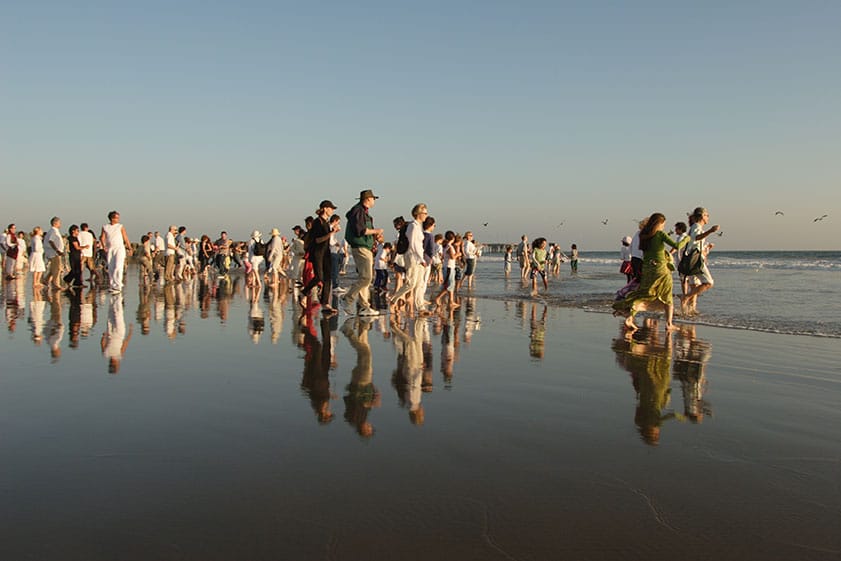
On the High Holy Days, Nashuva members gather at Venice Beach for tashlich services. Courtesy of Nashuva.

Conversations with likeminded people reinforced her belief that there was a need for a community that would attract the unaffiliated, she said. It was these people who, after her time at Mishkon concluded, gave her the confidence she needed to start her own community.

“It was eight people around my dining room who all had that same feeling that we needed to reach out to the Jews who are reachable but who didn’t know that Judaism could be the home for their spiritual life,” Levy said. “It was a couple months before we put our first service together.”

During its first Friday night service at Westwood Hills Congregational Church, Nashuva drew far more people than expected—she asked for four rows of prayer books to be put out, but by the time Shabbat began, the place was packed with wall-to-wall people.

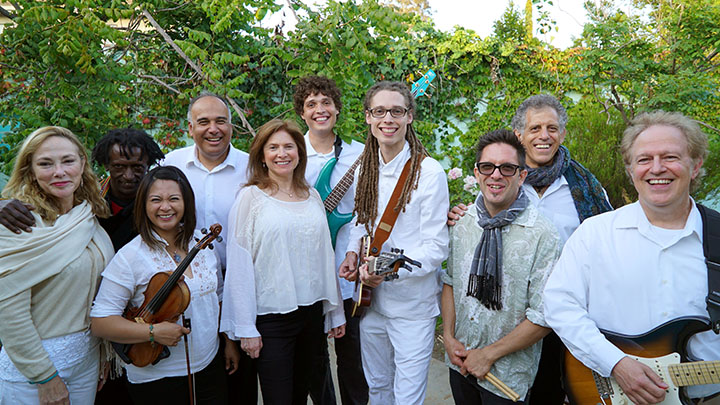
Though Nashuva would only “nest” at the Westwood church for a few years before moving to its current home in Brentwood, the interfaith relationship would live on: two members of the Westwood church band joined Nashuva Band, a multi-ethnic, interfaith 10-piece ensemble that performs Hebrew prayers at Nashuva services to the sounds of diverse musical genres, including African music, klezmer, folk and rock-and-roll.

From the time of its inception, Nashuva has been embodying values of diversity, equity and inclusion, as the band counts Ashkenazi Jews, Jews of color and non-Jews as its members, bandleader Jared Stein explained.

From the time of its inception, Nashuva has been embodying values of diversity, equity and inclusion, as the band counts Ashkenazi Jews, Jews of color and non-Jews as its members, bandleader Jared Stein explained.

“We bring a diverse Jewish perspective and a diverse musical perspective to the mix,” said Stein, the son of a cantor and an African-American mother. “The diversity in the people and also in the perspectives in the band are good to have.”

Stein, 36, has grown up at Nashuva. When Nashuva was formed, he was an 18-year-old college student in Santa Barbara. On Fridays, he would drive down to Los Angeles, navigating a traffic-heavy commute to get to Nashuva on time. On the road, he might question why he was going through so much trouble to play at Shabbat services, but once he reached his destination and began jamming in rehearsal with his band mates – including his brother and bass player Justin – his doubts vanished.

“I would look around and be like, ‘Oh yeah, this is why I am doing this,’” the vocalist who also plays guitar, violin and mandolin said. “There is a sense of peace there, of belonging. People in the band, people who show up, they don’t show up just because it’s a gig or because they feel like they have to go to synagogue. People want to come.”

In 2018, the Nashuva Band achieved a professional milestone when it collaborated with Grammy-winning record producer Don Was on the recording of an album of Jewish liturgy.

As for the band’s musical process, the ideas begin with Levy then take shape with the group’s skilled members.


“Justin and I always joke being bandleaders, we are still sort of trying to do our best to translate Naomi’s musical ideas into something that is functional and works,” Stein said.

The Nashuva Band. From left: Andrea Kay, Alula Tzadik, Bernadette Mauban, Ed Lemus, Rabbi Naomi Levy, Justin Stein, Jared Stein, Avi Sills, Jamie Papish and Fino Roverato. Courtesy of Nashuva Band

Linford said the music of the Nashuva Band has tapped into something really rare. When people participate in a Nashuva service, they feel like they are having an encounter with God, she said.

“I think the thing about Naomi, she does not entirely know how compelling she is,” Linford said. “Even now, I think she doesn’t totally get how moving she is to people. She has tapped into the holy in this incredibly deep and mysterious, beautiful kind of way and makes that unbelievably accessible to people in ways they never had imagined.”

“It’s a fully integrative experience of Judaism and of prayer, and people need that,” Linford added. “I think that’s what is compelling to people.”

Alex Banayan, 29, author of the bestselling book, “The Third Door,” is one of the approximately 3,000 people who have fallen under Nashuva’s spell. Banyan was wrestling with the death of his father when his mother discovered Nashuva’s online Kol Nidre service.

After watching the High Holy Days services, Banayan’s mother knew she had to find out more about Nashuva, including where the community met in person.

“Sure enough, it was five miles away,” Banayan said. “We started going and, little by little, the grief and the pain my family was carrying on our backs began to be unloaded thanks to Levy’s sermons and the energy of the community.”

On June 3, Nashuva is celebrating its 18th anniversary during Friday night services at the Brentwood Presbyterian Church. People can RSVP for “18th Chai Birthday Shabbat” at Nashuva.com. As with all Nashuva services, neither tickets nor temple membership is required, but Levy encourages donations.

Correction: The Nashuva Celebration will NOT take place at Brentwood, it will be outdoors on the lawn at Vista Del Mar, but people must first register to attend at Nashuva.com

 “It’s going to just be a celebration of 18 years and all we have achieved, how far we have come, and how much we have tried to give to the community and to one another,” Levy said ahead of the service.

Asked how the community has evolved since she started it nearly two decades ago, Levy said the goals have largely remained the same: “I am a Conservative rabbi, but Nashuva is for anyone,” she said. “That’s always been the case. We didn’t declare denomination. We see ourselves primarily as an outreach organization, not necessarily a synagogue.

“We travel light,” she continued. “Our goal isn’t to eventually have a building. Our goal is to bring Judaism out there to where the people are.”

Nashuva Anniversary Marks 18 Years of Holy Encounters Read More »

Counting

From the second night of Passover until the day before the holiday of Shavuot, Jews engage in the mitzvah of counting the omer (Sefirat HaOmer). This period of time is meant to be one of spiritual growth: We Jews are looking inward, evaluating our actions and thoughts, and determining what can we do better.

I confess I have not personally counted the omer in many years, but my father, children and grandchildren do, so I often hear “time to count the omer,” and “did you count the omer today?” I also receive several daily reminders in my inbox of what day of the omer it is.

So even though I don’t personally count the omer, I can’t ignore that we are in that reflective time period. And I have been reflecting—specifically about that word “count.”

This year, something about that word has been nagging at me. When something nibbles at my brain, I get curious. So as I often do, I looked up the word “count” in the dictionary even though of course I know the definition.

It turns out that there are several definitions: The noun “count” refers to a European nobleman. As a verb, the word means “to take into account or include; be significant.” Aha! I thought. This is what has been nibbling at my brain.

“To take into account; to be significant; include.”

As a woman who is disabled, I often find it difficult to feel “counted” according to these three definitions. In truth I often feel that I don’t count. When websites are not accessible to me, when people direct questions about me to my companion instead of to me, when conversations about diversity don’t include disability, and when I see meetings webinars, panels etc. about disability issues that don’t invite disabled people and their voices of lived experience to the table—that is when I feel that I don’t count.

That is when I feel not included, that my life experience isn’t significant.

As a demographic, the disabled community is the largest minority. Our numbers do count—significantly.  We count. And we want to be counted where it matters—at the tables of power and influence, in conversations about diversity, equity and inclusion. We want to count when employers are making hiring considerations. We want to be included as the significant members of the community that we are.

As a demographic, the disabled community is the largest minority. Our numbers do count—significantly.  We count.

If we are really committed to creating communities that are diverse, equitable, just, and inclusive, then disabled people must be taken into account. Our voices must be considered significant and necessary—not just to understand the issues and problems, but also to find solutions that work for everyone.

To accomplish this requires a shift in mindset; it requires us to address our implied biases about people with disabilities. It requires us to think of access not only in terms of physical access to spaces, but also regarding websites and other means of communication. People with disabilities need to feel invited, welcomed, included. Diverse, just communities require not just that people with disabilities be counted, but also that we are made to feel that our voices, opinions, and lived experience matter. We count.

How can we accomplish this? Wherever and whenever there are conversations about disability issues, policies, and programs, disabled voices need to be heard and counted. This must happen in every sector of the community, in every space, in every area of human interaction.

Counting the omer is a time of reflection and introspection as individuals and as a community. My call to action is that we all look inward and reflect on ways to make sure that disabled people count, are taken into account, included and considered significant contributing members of a welcoming, diverse society.

Looking inward in this way will enable us all to move outward and forward—toward a diverse and inclusive community that benefits all of us.


Michelle Friedman is the board chair of Keshet in Chicago, a member of Disability Lead, author, speaker and disability rights advocate.


Counting Read More »

Israeli Judge Overturns Controversial Ruling on Temple Mount Status Quo

For more articles from The Media Line, click here.

The Jerusalem District Court late on Wednesday overturned a lower court ruling that reignited hostilities over the Temple Mount, known to Muslims as Haram al-Sharif, after appearing to permit non-Muslim worship at the site in violation of the status quo.

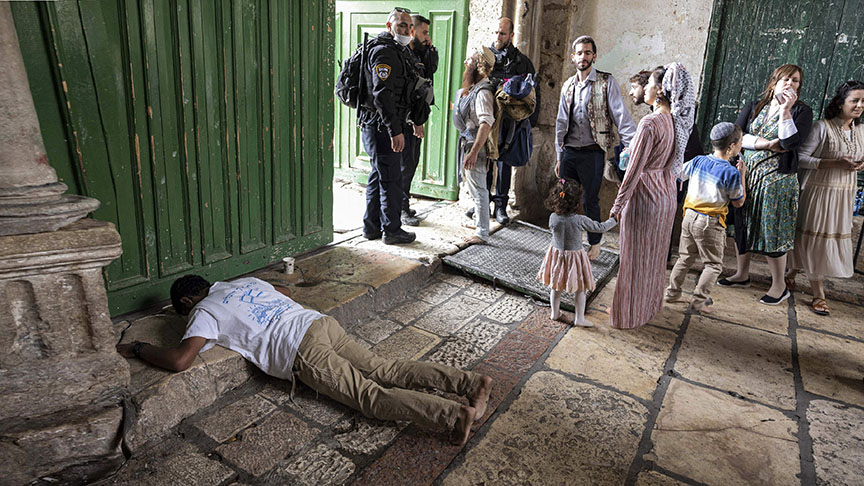
Hostilities escalated after a ruling of the Jerusalem Magistrates’ Court on Sunday overturned a police order barring three Jewish minors from the capital’s Old City for praying on the Temple Mount.

The teenagers, who were visiting the Temple Mount, prostrated themselves and recited the Shema prayer, in violation of the “status quo,” which does not permit non-Muslims to pray at the site. In turn, a police order banned the minors from the Old City for 15 days on the grounds that they had disturbed the peace and behaved provocatively.

Judge Zion Saharay on Sunday argued that the boys had not “raise[d] worry of harm befalling national security, public safety, or individual security.”

This provoked a strong backlash from the Palestinian Authority and Jordan, whose religious trust, the Islamic Waqf, acts as custodian of the site.

PA President Mahmoud Abbas condemned the Magistrates’ Court decision as “a grave assault against the historic status quo … and a flagrant challenge to international law.”

Now, the original police ban has been reinforced by the appeals court, with Judge Einat Avman-Muller ruling in favor of the minors’ ban. “The special sensitivity of the Temple Mount cannot be overstated,” she said.

The judge decreed that security concerns should be of paramount importance and that Jewish worship “should be superseded by other interests, among them the safeguarding of public order.”

The status quo arrangement refers to several implicit and explicit historical agreements, one of which can be traced to the aftermath of the 1967 war, when the Israeli government entrusted the guardianship of the site to the Islamic Waqf religious authorities.

While Israel retains jurisdiction over security concerns, the Waqf prohibits Jews from praying at the site.

Rashid Khalidi, editor of the Journal of Palestine Studies and Edward Said Professor of Modern Arab Studies at Columbia University, told The Media Line the Magistrates’ Court ruling was a violation of the status quo.

“Under the status quo, as established under the Ottomans, and as consecrated by the League of Nations Mandate for Palestine and the 1947 partition resolution, UNGA 181, the entire Haram al-Sharif is a Muslim shrine,” he said.

Khalidi pointed to the language of UN General Assembly Resolution 181 as demonstrating the explicit and binding nature of the resolution with respect to Muslim religious sovereignty over the site. According to the resolution, “Existing rights in respect of Holy Places and religious buildings or sites shall not be denied or impaired.”

As such, Khalidi argues that permitting Jewish worship at the site is a violation of international law.

“Any violation of this status quo is a violation of international law, whatever an Israeli domestic court may say.”

He added that the “status quo” unilaterally established by Israeli Defense Minister Moshe Dayan in 1967 “does not have the force of law.”

Yuval Shany, a professor of public international law at the Hebrew University of Jerusalem and is a former chair of the UN Human Rights Committee, a panel of scholars who review compliance of member states with the International Covenant on Civil and Political Rights, suggested that the situation is rather more ambiguous.

The Magistrates’ Court ruling was a very specific measure, pertaining exclusively to the three minors in question, he said.

“It’s a specific ruling, by a specific judge, in a specific case,” he explained. “As long as it was not endorsed by higher courts, it’s not a precedent.”

The ruling was not endorsed by higher courts, and it was overturned on Wednesday.

In any case, Shany posited that the Magistrates’ Court ruling may have been too particular to constitute a violation of international law.

“One could say that international law doesn’t regulate an issue of that specificity, because under international law you could say everyone has a right to worship, so the right to worship is a universal right.”

Prime Minister Naftali Bennett’s office had publicly stated that the ruling would be appealed to the District Court.

In a statement on Sunday, Bennett declared that “there is no change, nor is any change planned, on the status quo of the Temple Mount.”

However, many have argued that the concerns of Palestinians are not unfounded. According to Peace Now, an Israeli NGO that promotes a two-state solution, the number of visits by non-Muslims has increased incrementally over the past two decades.

“Until 2000, it was limited to groups of five or fewer; starting in 2003, the group size was increased to 10 people; in 2010, it was increased to 20 people; in 2011, it was increased to groups of 50 people at a time,” Peace Now said.

Moreover, whereas prior to 2003, the Waqf controlled non-Muslim visitors’ access to the site, the disintegration of Israeli-Waqf relations means that Israel now largely controls all aspects of it.

Shany explained why the Magistrates’ Court ruling has raised concerns.

“The judge basically said that he cannot conceive that exercising the right to pray on the Temple Mount would be deemed as a breach of the peace, and he noted that the police chief himself basically said that Israelis were committed to preserving the right to practice religion, to worship, for all, on the Temple Mount. And he construed this as an indication that this also applies to Jews,” the professor said.

Moreover, those organizations collectively known as the Temple movements have in recent years increased attempts to undermine the status quo and reassert Jewish sovereignty over the Temple Mount. While some only want to reclaim the right to Jewish prayer at the site, others envision the building of the Third Temple, and concurrent destruction of Haram al-Sharif.

As Shany explained to The Media Line that the issue has become so explosive because, “look, this is happening against the context of certain Jewish organizations that are basically trying to challenge the status quo, and this is part of that challenge.”

“The fact that the judge implicitly was sympathetic [to the Jewish worshippers], is for them an achievement, but it’s a very small achievement after a very long time,” he added.

The District Court ruling comes as a relief to many Jerusalemites after Israel Police chief Kobi Shabtai announced on Monday that the annual Jerusalem Day Flag March would go ahead as planned, and follow its traditional route, part of which goes through predominantly Palestinian areas, including the Old City’s Damascus Gate and Muslim Quarter.

“The Israel Police will maintain the freedom of worship, protest, and expression, for everyone. This is the role of the police in a country that values freedom and democracy,” Shabtai said.

In response, Hamas leader Ismail Haniyeh threatened the marchers.

“I want to clearly warn the enemy against committing these crimes and these steps. The Palestinian people, led by the resistance – especially those in the West Bank and Jerusalem – will not permit this Jewish, Talmudic rubbish to go unanswered,” he said.

Israeli authorities subsequently announced that the number of marchers following the traditional route through Damascus Gate and the Muslim Quarter to the Western Wall Plaza will be limited to 8,000. An equal number will be permitted to reach the Western Wall via Jaffa Gate.

Other participants are to celebrate Jerusalem Day outside the wall of the Old City, near Jaffa Gate.


Aron Rosenthal is a student at the University of Edinburgh and an intern in The Media Line’s Press and Policy Student Program.

Israeli Judge Overturns Controversial Ruling on Temple Mount Status Quo Read More »

Twenty-One Worlds

When our Torah imagines the circumstances that might have led to the world’s first murder—Cain killing his brother Abel—it tells us that God says to Cain: “What have you done? Your brother’s blood cries out to Me [d’mei achicha tzoakeem eilai] from the ground!” (Genesis 4:10). The rabbis of the Mishnah noticed that the word “blood” here is used in the plural. This teaches us that Cain didn’t just murder Abel; he murdered all the descendants Abel might have had. The Mishnah concludes: “Anyone who destroys a single soul, it is as if he destroys the entire world” (Sanhedrin 4:5).

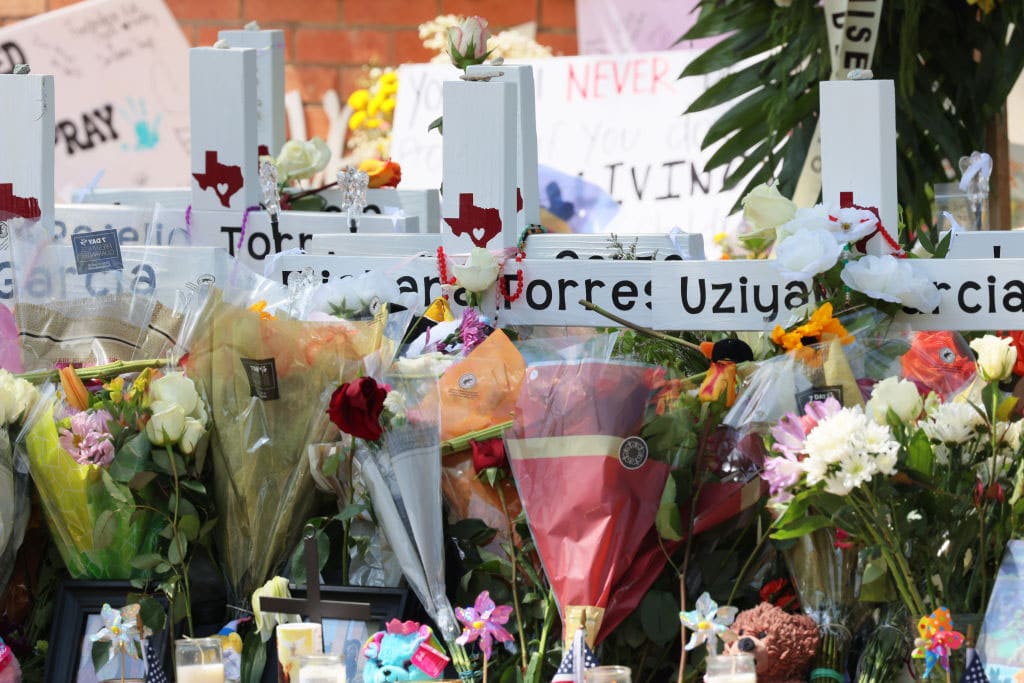
On Tuesday, in Uvalde, Texas, 21 worlds were destroyed.

We are fed up with the violence, frustrated by the failure on the part of our leaders to protect our children and our neighbors. It is easy, even amid this heartbreak and outrage, to feel helpless and, yes, even numb because of how sadly routine these tragedies have become. It is easy to forget that each of these lives represents an entire world, each face a family broken.

One day after the shooting, we welcomed incoming kindergarten families to our Wise School family at the home of a congregant. Afterwards, as I walked across the street, I heard “Hey! Rabbi Yoshi!” from the window of a passing car.

As the car pulled over and the doors opened, out stepped three high schoolers—all young men whose bar mitzvahs I had had the privilege of officiating.

We spent a few minutes catching up. I asked about their siblings and families. We talked a bit about school and the poker game they had just enjoyed with some other friends. I gave them each a hug and wished them well as they walked back to their car and as they drove away, one of them called out, “We love you, Rabbi Yoshi.” It’s hard to describe how grateful I felt for that moment.

The blood of our children is crying out to us from the ground. When and how will we respond?

The following morning, I spent time reading about the two teachers and 19 children who were murdered on Tuesday. In the profiles of the teachers—Irma Garcia and Eva Mireles—I saw the faces of the many devoted educators I have worked with over the years, including many members of our faculty at Wise School. In the profiles of the students, I saw the faces of those young men from the previous evening, each of whom I came to know when they were in our elementary school.

What gives me strength and offers me hope is the continuation of the Mishnah above: “Anyone who destroys a single soul, it is as if he destroys the entire world. But, conversely, anyone who sustains a single soul, it is as if he sustained the entire world.”

As dark as the situation is (there are more guns than people in this country), it is not entirely hopeless. Nicholas Kristoff, in a recent column, lays out practical, achievable ways that we could save thousands of lives each year.

The blood of our children is crying out to us from the ground. When and how will we respond?


Rabbi Yoshi Zweiback is the Senior Rabbi of Stephen Wise Temple in Los Angeles, California.

Twenty-One Worlds Read More »

After the Curses: Bechukotai 2022

How to read the Torah section of the tochacha, the curses, in the synagogue, has always been a delicate matter. The Torah discusses the consequences of God’s covenant with the Jews twice; there are blessings for fulfilling the covenant, and curses for violating it. The Mishnah rules that the tochacha is meant to be read as a single unit, during one aliyah; why is a matter of debate. Rav Asi’s opinion is that dividing the tochacha would show a lack of respect. He bases his view on the verse in Mishlei, “Do not reject the discipline of the Lord, my son, and do not abhor His rebuke.” The curses offer a rebuke and a lesson of personal change, and we read this section uninterrupted in respect for its important message.

A very different view of the Mishnah’s rule is offered by Resih Lakish. He says we don’t divide the tochachainto two aliyot because it would be inappropriate to make a blessing on the Torah in middle of the curses. He explains “one doesn’t make a blessing on calamities.” We don’t welcome curses and bless their arrival; curses are meant to be avoided like the plagues they enumerate.

This view became particularly influential in the medieval period, and the tochacha aliyah is actually treated as being cursed—so much so, that some communities skipped the Torah reading for this parsha! In most communities, the custom is to read this section quickly, and in a low voice; this is based on a passage in the Talmud that talks about “mumbling” while reading the tochacha.

There are many other customs regarding this aliyah. In some places they called an ignorant, undistinguished person for the curses, because their Torah blessing was less likely to influence the divine realm, while in other places they specifically called the rabbi, who would be unafraid to read this section. But in many locales, this section was avoided by the entire community. Rabbi Moshe Isserles records that the custom of Ashkenazi communities was to call out in synagogue before the tochacha aliyah, “Anyone who wants can read.” This created a problem, because no one wanted to take the aliyah; and in responsa literature, there are reports of communities waiting for hours for someone to approach for the aliyah.

Some enterprising communities dealt with this problem by hiring a poor person to take this aliyah. (The 14th century Rabbi Yaakov ben Moshe Levi Moelin so disliked this custom, he once remarked angrily to a poor man who took this aliyah, “Why do you need more pain?”) Some individuals became “specialists” who would be paid to take the tochacha aliyah in several synagogues. There is a joke about the time when the man employed to take the tochacha aliyah came exceptionally late. Annoyed with the delay, the head of the synagogue asked him why he didn’t come on time. The man explained he was late because he had taken the tochacha aliya at several other synagogues as well, because “you can’t make a living from just one set of curses.”

For hundreds of years, Jewish communities have embraced Reish Lakish’s view: We do not want to listen to these curses, or be entangled in them. Perhaps the fire and brimstone of the tochacha might motivate people to improve themselves; but even so, we would prefer to accept neither its honey nor its sting, and avoid it entirely.

For hundreds of years, Jewish communities have embraced Reish Lakish’s view: We do not want to listen to these curses, or be entangled in them.

On a Shabbat morning in 1952, one rabbi went a step further, and completely ignored the tochacha. The Klausenberger Rebbe, Rabbi Yekusiel Yehudah Halberstam, was a Holocaust survivor, whose wife and 11 children had been murdered by the Nazis. After the war, he had relocated to Brooklyn. On that Shabbat morning, Rabbi Shlomo Riskin, then a 12-year-old, had come to visit the Rebbe’s synagogue, and this is how Rabbi Riskin describes that remarkable Torah reading:

“In accordance with the custom, the Torah reader began to chant the Tochacha in a whisper. And unexpectedly, almost inaudibly but unmistakably, the Yiddish word ‘hecher’ (louder) came from the direction of the lectern upon which the rebbe was leaning at the eastern wall of the shul.

The Torah reader stopped reading for a few moments; the congregants looked up from their Bibles in questioning silence. Could they have heard their rebbe correctly? Was he ordering the Torah reader to go against time-honored custom and chant the Tochacha out loud? The Torah reader continued to read in a whisper, apparently concluding that he had not heard what he thought he heard. And then the rebbe banged on his lectern, turned to face the stunned congregation and cried out in Yiddish, with a pained expression on his face, and fire blazing in his eyes: ‘I said louder! Read these verses out loud! We have nothing to fear. We’ve already experienced the curses. Let the Master of the Universe hear them. Let Him know that the curses have already befallen us, and let Him know that it’s time for Him to send the blessings!’”

The Klausenberger Rebbe was a man who had seen all these curses, and worse, up close; and that Shabbat morning he was demanding from God that there be no more curses. In doing so, the Rebbe redefined what these curses mean. But at the same time, he also redefined what blessings are as well. At the end of services the Rebbe rose to speak. Rabbi Riskin writes: “His words were again short and to the point, but this time his eyes were warm with love, leaving an indelible expression on my mind and soul. ‘My beloved brothers and sisters,’ he said, ‘Pack up your belongings. We must make one more move. God promises that the blessings which must follow the curses will now come. They will come – but not from America. The blessings will only come from Israel. It is time for us to go home.’”

The Rebbe’s words are profoundly inspiring. But they are actually a great deal more than that; they represent a dramatic shift in the Rebbe’s philosophy. Before the war, he was an anti-Zionist. He felt that a Jewish State could only be created by the Messiah, and a state built by secular Zionists would fall very short of the authentic Messianic utopia. But after the war, he became far more pragmatic. He explained his change of heart by referencing a debate between two Hasidic rabbis during the Napoleonic wars, as the invasion of Russia had aroused speculation that the Messiah might be coming. The Klausenberger Rebbe wrote:

“The Rabbi (Menachem Mendel) of Rimanov declared that he would agree to them proceeding from Lviv to Rawa, ankle-deep in Jewish blood, so long as the Messiah would come, while the Rabbi of Ropshitz insisted that ‘we will not hear of a third or a quarter—i.e., if even a third or a quarter of a Jew would be missing, we do not want to hear of redemption.’ When I was a child, I asked my revered father and teacher, may his memory protect us: Was Rabbi Menachem Mendel not correct?”

When the Klausenberger Rebbe got older, he came to the opinion that protecting people from suffering was more important than building a messianic utopia. When you have seen the worst the world has to offer, what matters are small blessings, not grand visions. And the Klausenberger Rebbe saw Israel as a blessing one must grab hold of. After that Shabbat morning, he began building a neighborhood in Netanya, and in December 1959, moved to Israel with 51 of his followers.

The Klausenberger Rebbe consistently searched for a way to improve the lives of his fellow Jews. In response to his own wartime experiences of suffering, he built the Laniado Hospital in Netanya, a rather unusual undertaking for a Hasidic Rebbe. And he appreciated the State of Israel for the safety and protection that it brought to so many Jews. The Klausenberger Rebbe met and maintained a regular correspondence with Prime Minister David Ben Gurion, and was vilified by many of his colleagues for doing so. For him, this represented a profound shift, not just away from anti-Zionism. It was a change of perspective, recognizing that even if it isn’t a utopia, the State of Israel was a blessing that made the lives of Jews better.

When they met, Ben Gurion asked the Klausenberger Rebbe for his expectations for a Jewish state. The rabbi answered he has maximum and minimum expectations. “What are they?” “The minimum is that I will be able to go out on a Shabbos morning wearing my shtreimel and bekeshe and no one will bother me,” he said. And the maximum? “You, (Ben Gurion), will wear a shtreimel as well.”

The Rebbe still savored the utopian vision of a State of Torah; but he now embraced the “minimum expectation” as an incredible blessing as well.

I am currently in Israel with nearly 500 Ramaz students and teachers. It is truly inspiring to be a part of this mission, and to tour Israel with the students. Israel is not a utopia; but at a minimum, it is a miracle of which previous generations could only dream. And at a time when too many American Jews mumble their support for Israel, it means a great deal that our school and our community is ready to offer its support for Israel, louder and louder.


Rabbi Chaim Steinmetz is the Senior Rabbi of Congregation Kehilath Jeshurun in New York.

After the Curses: Bechukotai 2022 Read More »

Orange County GOP Congressional Candidates Apologizes for Saying Jews “Control a Lot of the Politicians”

Greg Raths, a GOP congressional candidate in Orange County, issued an apology in a statement to the Journal for saying that Jews “control a lot of the politicians” in the United States.

The Washington Free Beacon reported that Raths made these comments during an Orange County Islamic Foundation candidate forum on May 20. Raths lamented that the Palestinians don’t have the same “clout” that the pro-Israel community does in Washington, D.C. “These politicians go where the money is, unfortunately,” the congressional candidate said. “The Jewish community is very well organized in the United States and they control a lot of politicians. That’s why the foreign aid is so large going to Israel.” Raths proceeded to brag that “the Jewish community has never given me one dime, so I’m not beholden to them at all.”

Jewish groups criticized Raths’ remarks as being antisemitic. Republican Jewish Coalition National Political Director Sam Markstein told the Free Beacon that Rath’s comments were “appalling” and similar to Representative Ilhan Omar’s “it’s all about the Benjamins” tweet in 2019. The Simon Wiesenthal Center also tweeted that Raths’ remarks were “antisemitic pandering.”

Raths, who is also the former mayor of Mission Viejo, began his statement to the Journal by saying that he is “pro-Israel and always has been. I trained side by side with the Israeli AF and respect Israel tremendously. I served 3 combat tours in the Middle East; Desert Storm, Restore Hope, and Southern Watch flying the F/A-18 Hornet (75 combat sorties).” Raths is a retired Marine Corps colonel. 

He then said that his comments at the forum were in response to a question asking “why the Israel lobby is so strong.” “I was referencing how politically engaged the American Jewish community is in Washington, D.C.,” Raths said. “My words came out wrong and I apologize if I offended the Jewish community. I was just saying that organization is very important to get the ears of politicians in Washington, D.C., many politicians may deny that, but it’s a fact (I spent 5 years in Washington during my military service).” Raths also sent the Journal his policy papers on Israel, which include expressing his opposition to the Boycott, Divestment and Sanctions movement and the 2015 Iran nuclear deal and support for continuing military aid to Israel.

Ron Demeter, a former journalist, tweeted that Rath’s explanation over his comments was “very silly” and “problematic.” “The ‘Israel Lobby’ strength doesn’t come from 2% of the U.S population (US Jews) advocating in DC,” he wrote. “It comes from broad popular support across the political spectrum. [Raths] is perpetuating harmful myths.”

Raths also told The New York Post that he’s “totally not antisemitic” because his “brother is Jewish.” “I didn’t mean control as in ‘do as I say because we give you all this money. No they don’t control, maybe some do. That wasn’t what I was trying to say.”

Siamak Kordestani, West Coast Director of the European Leadership Network, noted in a tweet that in a 2020 race in a nearby congressional district, Raths had received 46.5% of the vote.

Raths is one of three candidates currently vying to unseat incumbent Representative Young Kim (R-CA) in the 40th congressional district. According to The Orange County Register, the district––which was recently subjected to redistricting––“covers eastern Orange County plus small portions of western San Bernardino and Riverside counties.” California’s primary is on June 7.

Orange County GOP Congressional Candidates Apologizes for Saying Jews “Control a Lot of the Politicians” Read More »

What takes our breath away

Life is measured not by the breaths we take
but by the moments that take breath away,
and as long as we’re awake

we should appreciate them, night and day.

Some think Solomon equated all
the breaths we take with hevel, vanity,
before we vanish with a dying fall,

expressing thus the value of humanity.

Do not regard life in this way. Each breath
we take provides us with an opportunity
to put off what is quite inevitable, death,

when on its die-by-date we lose immunity.

George Carlin said: “Life is not measured by the number of breaths we take, but by the moments that take our breath away.”

Gershon Hepner is a poet who has written over 25,000 poems on subjects ranging from music to literature, politics to Torah. He grew up in England and moved to Los Angeles in 1976. Using his varied interests and experiences, he has authored dozens of papers in medical and academic journals, and authored “Legal Friction: Law, Narrative, and Identity Politics in Biblical Israel.” He can be reached at gershonhepner@gmail.com.

What takes our breath away Read More »

Invited to Life

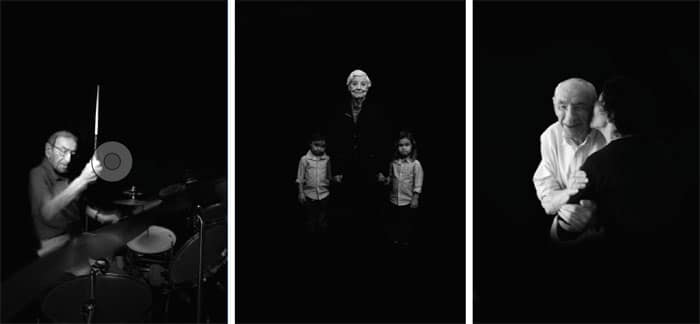
In 2016, B.A. Van Sise was working as a photographer at The Village Voice. The topic of refugees dominated the national conversation, and B.A. wanted to do a short series on Holocaust survivors who had built lives in America — “to show what happens in the lives of refugees when given that opportunity,” he told me. A week later, “I had a hard time seeing these survivors as anything other than children who never got to have childhoods. I really absorbed it and it turned me upside down.”

The Village Voice shuttered its doors while he was working on the series; a year-and-a-half later the pandemic hit. “My mind kept revolving back to the survivors I’d met, the strength I’d seen in them, and I couldn’t help but think about what happens when a group goes through a certain sort of class trauma, and what that looks like on the other side: what it looks like rebuilding, when the worst is behind you.”

So the short series turned into a four-year project, working with museums all over the country to locate survivors. “As a general rule, I’d sit down with any survivors who’d be willing to, which was near all of them. Changing the way I thought about the project changed the way I felt in doing it: thinking of them not as sufferers, but as survivors. Realizing that these are people whose foundational element had not been growth but survival, and that they’d thrived after being invited to life.”

Van Sise photographed the portraits of 140 survivors. “My stories start in 1946. With Holocaust survivors, most people want to talk about their worst days; I wanted to talk about what they did, instead, with their best.”

Van Sise photographed the portraits of 140 survivors. “Most of the sessions were similar. I’d photograph them at home or nearby, sit and interview them (usually about an hour, but sometimes more) in a way that I think most weren’t used to: my first question was always: ‘how did you come to live in America?’  My stories start in 1946. With Holocaust survivors, most people want to talk about their worst days; I wanted to talk about what they did, instead, with their best.”

The photographs always came last. “They were usually built off of visual cues gleaned from our conversation. Whenever I could get away with it, I’d also try and photograph them with a grandchild, a great-grandchild.” This was a challenge during the pandemic. “But when it worked it really worked,” says Van Sise. 

About a third of the survivors are based in Los Angeles. One is Lea Radziner. “I thought I had the cleverest idea for her picture, but when her granddaughter showed up for the shoot it turned out she and her grandmother, due to the pandemic, hadn’t touched in two years. They both started bawling the second their hands touched, that shock from the release of their skin hunger. That’s the picture. Whatever else I planned, the real story was something better.”

The project turned into a major exhibition, “Invited to Life: Holocaust Survivors in America,” which opened at New York’s Center for Jewish History last week. Walking around the space, I was struck not just by the exquisite beauty of each portrait, but by the kindness in the eyes of each survivor. 

“It’s the thing that surprised all of my assistants,” says Van Sise. “Holocaust survivors are about the most joyous people you’ll ever meet. Every day is the best day for them. It’s hard to overstate the ebullience, the joie de vivre. Part of it is, of course, the evolution of coping mechanisms — everybody’s friendly, everybody’s funny. But there’s also a very real thing there: the knowledge that every day is a gift. That never wears off.”

“When every single one of these survivors enters our world, the man who wanted them dead is dead and they’re alive,” says Van Sise.  

Van Sise says that the exhibition is already garnering interest from institutions that are not Jewish — or Holocaust-oriented. And a book, “Invited to Life: After the Holocaust” (Schiffer) with essays by Neil Gaiman, Dr. Mayim Bialik, and Sabrina Orah Mark, will follow on August 28. 

“The book is more poetic than a museum exhibition allows for and covers a much wider breadth of experience as well. The lives these people created are as diverse as the people they were: there are politicians and paupers, opera singers and scrap dealers, gay folks and straight folks, families of all kinds and all colors; there’s rabbis, there’s a criminal. 

“There’s a little sadness, a lot of hope, and actually a great deal of myself. I left my own voice in, where appropriate, since so much of this experience was about the experience — I wanted the reader to sit in with us, hear their accents, hear how we spoke.”

I asked Van Sise what surprised him the most during the four-year project. “I cared a tremendous amount about COVID protocols; I was petrified that I might unknowingly pass it on. Most of the Holocaust survivors didn’t give a shit. I can’t tell you how many times somebody said, ‘I survived Hitler, this is nothing.’”


Karen Lehrman Bloch is editor in chief of White Rose Magazine. 

Invited to Life Read More »

Breathing New Life Into Works By Composers Who Suffered Oppression

An upcoming opera concert featuring a collection of works by composers who were suppressed by fascist regimes of the 20th Century will be performed at The Broad Stage in Santa Monica. The concert, “Journey Out of Darkness,” is part of the Numi Opera season. 

There will be performances of songs by Erich Korngold, Franz Schrecker, Erwin Schulhoff, Viktor Ullmann, Kurt Weill and Alexander Zemlinsky — who all had first-hand experience with the terror of the Nazis. The tagline for the show is “breathing new life into works by composers who suffered oppression.” Most of the works being performed were composed during tumultuous times. 

Numi Opera Theater Founder Gail Gordon organized the show as a way to expose the art and emotion of these performers with the memory of her mother. 

“There’s a bunch of composers [who] represent what I feel,” Gordon told The Journal. “My story is through my mom.” 

Gordon’s mother was a refugee who came to the United States from Eastern Poland in 1938, just before the invasion. Her mother told her stories about her upbringing and her family’s struggle to survive the Nazi invasion. Her mother was the daughter of a cantor and a singer.

The show has an even more special meaning to Gordon, since it is being performed on the heels of the invasion of the Ukraine. Her mother was born 50 kilometers outside of Lviv, a hub of Jewish life. 

“With all of this stuff going on when the show’s being created, Ukraine is always in the back of my mind, because that’s where my family is from,” she said.

 “Journey Out of Darkness” will be Numi Opera’s first performance since its founding in 2019. Even as the world opened up little by little in 2020 and 2021, opera shows went dark due to local regulations.

“Opera was not allowed for the first year because of the compression of air that comes out when you’re a singer,” Gordon said. 

There was extra concern about opera audiences being vulnerable because the performers are the instruments — and they are mighty powerful at unleashing the talent inside them. For indoor opera performances, the singers are rarely mic’d up. 

Gordon started producing opera over 20 years ago. She spent many years teaching vocal performance before starting Santa Monica College’s opera program in 2008. When the program moved to the Broad, Gordon began to focus on making music that honored her mother’s story.

 “It was sort of a marriage of my mom’s story and these composers [who] either were killed in Auschwitz or had to stop writing because the Nazis came in.” – Gail Gordon

“I became familiar with these composers who were suppressed by the Nazi regime,” she said. “So it was sort of a marriage of my mom’s story and these composers [who] either were killed in Auschwitz or had to stop writing because the Nazis came in.”

The recital’s program will include opera, string quartets and piano. Although the program notes have harrowing back stories of each piece performed, Gordon encourages the audience to read the program notes only after witnessing the show. 

“I think it’s more important just to hear the music, hear what the composer is doing with the music and [see] what type of emotional relationship you have with it,” Gordon said. 

One of the sopranos performing in “Journey Out of Darkness,” Shana Blake Hill, likened rehearsing and performing the music to doing an archaeological dig of Holocaust history through music. Hill told the Journal she hopes there will be a greater appreciation for the resurrection of musical pieces that could have easily been lost forever.

“I hope that you’ll just give it a little room in your consciousness that this exists not just with Strauss and Wagner and Puccini and Mozart,” Hill said. “There are many other voices that complete the picture of this human experience and of this tonality.” 

“Journey Out of Darkness” is being performed for one night only on Sunday, May 29 at 7:00 p.m. The Broad Stage in Santa Monica. Tickets are now on sale at NUMIOPERA.org.

Breathing New Life Into Works By Composers Who Suffered Oppression Read More »