
Print Issue: How Do We Bring Synagogues Back to Life? | Apr. 22, 2022
Print Issue: How Do We Bring Synagogues Back to Life? | Apr. 22, 2022 Read More »

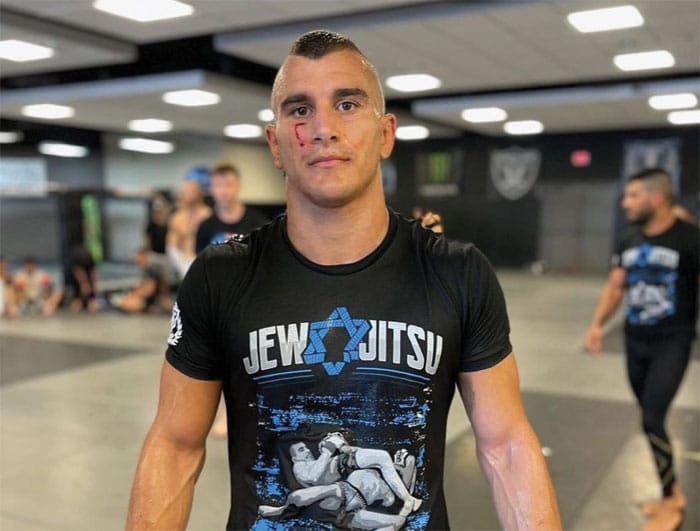
Israeli fighter Natan Levy is about to embark on his eighth professional fight on April 30th in Las Vegas. As ferocious a fighter as he is, he centers his mind on the day of his fights by rewatching one of his favorite childhood “comfort films.”
“I always watch a Harry Potter movie before a fight,” Levy told the Journal. “Every fight, I watch the next one.” So in the hours before he takes on Mike Breeden in the UFC octagon, he will be in a hotel room with his wife Dana watching the eighth and final film in the series, “Harry Potter and the Deathly Hallows — Part 2.”
At that point, Levy knows he has done all the training he can in preparation for his fight. When he enters the UFC Apex facility, six miles southwest of The Strip, Levy’s mind will be on getting his first victory after sustaining his only loss (by decision) in November 2021 against Rafa Garcia. Leading up to that fight, Levy had a 6-0 start to his professional fighting career.
Looking back, Levy can trace his origins to a career in mixed martial arts to his youngest years. At the age of five, Levy with his mother and two older brothers relocated from his birthplace of France to Herzliya, Israel. Even now, at age 30, he still has traces of the French accent. Back in the school yard, he’d get into scuffles with classmates who made fun of his accent. And after his older brothers “toughened him up,” Levy was able to take care of his own fights.
When he wasn’t reading Harry Potter books, as a teenager Levy started to get into martial arts, but without discipline. He wasn’t consistent. But then at age 15, it all changed, as he started training in karate.
“That’s where I really found myself and started training every day very seriously,” he said. At 16, Levy made his first trip to the birthplace of karate, Okinawa, Japan, where he would spend a few months at training camps that would change his life — training with the grandmasters of his style.
Coming from Israel, he didn’t know anyone in Japan or speak any Japanese. But he found the people of Okinawa to be very welcoming.
“The first time when I was looking for the dojo, I only had an address in Japanese and I got off at the wrong bus station,” Levy said. “I thought I was probably close by. I was just looking around to see where [the dojo] was, and I showed the address to some lady. She was just walking around, took me to her house nearby and told me to get in her car. She drove me for 30 minutes to the dojo. She was so nice without even being able to exchange words other than ‘thank you.’”
The worldliness of mixed martial arts became apparent to Levy right away. When he returned to Israel, he continued his training and became a big UFC fan. His favorite fighter was heavyweight Mirko Cro Cop from Croatia, as well as Canadian George St. Pierre and Brazilian Lyoto Machida.
His enthusiasm for UFC skyrocketed when he watched the three widely-hyped superfights between Chuck “The Iceman” Liddell and “The Huntington Beach Bad Boy” Tito Ortiz in 2004 and 2006. At the time, their second match up was the biggest pay-per-view event in UFC history.
Levy would return to Okinawa at age 18. There, he’d earn his black belt — today, he’s a third-degree black belt. Back in Israel, he began teaching in his coach’s gym, and within a few years, opened up his own mixed martial arts school. Despite the success of his own business, at age of 22, Levy had a burning desire to compete in UFC. But the people in his orbit cautioned him against hastily relocating.
“A lot of people told me, ‘well, you should first train in Israel and maybe become national champion and then maybe go to the U.S.,’” Levy said. “I had no ground game because all I did was karate, so many people told me ‘you should first train in Israel for a few years in Jiu-Jitsu, get at least a brown belt, if not a black belt. And then only should you try MMA.”
But Levy thought it was a “now or never” situation. During this time, Levy met his wife Dana while doing karate training.
“When we started dating, I told her, ‘look, I want you to know that a year from now, I’m planning to live in the U.S. because I want to be in the UFC. And if you want us to be together, you need to know that I’m not sticking around [Israel],’” Levy recalled saying. Dana agreed to relocate to Las Vegas with him.
Levy looks back at the advice cautioning him against leaving Israel and knows that he made the right choice.
“If I would’ve listened to them, I would still be in Israel waiting for that brown belt in Jiu-Jitsu,” Levy said, “I might as well go learn everything from the source, from where it’s the purest. So I closed my businesses and flew to Vegas, the fight capital of the world. Again, without knowing anybody.” He and Dana have been residing in Las Vegas for eight years.
There he would meet coach John Wood, owner and trainer at Syndicate Athletics. Levy would go on to learn and master the fundamentals of mixed martial arts, particularly grappling on the ground.
“He tries not to change us or train us all with the same mold,” Levy said of Wood. “For him, it’s more about using what’s special about you, what you’re good at, not trying to change it too much. Try to sharpen the tools, but keep you special.”
After competing in four amateur fights in 2016 and 2017, Levy had his first professional fight in 2018 — a victory by submission. He would win his second fight four months later, winning by submission using a guillotine choke — this time, in only 29 seconds in the first round. Levy went the distance (three rounds, five minutes each) in his next three fights. Levy won by submission in his sixth fight in November 2020, but with only two day’s notice due to a fighter scrubbing out from COVID-19. It was then that Levy was offered a contract by UFC President Dana White.
White’s words for Levy were brief but encouraging. Although Levy went the distance in his first fight under a UFC contract in November 2021, he lost by decision, leaving his current record at 6-1.
Hardly discouraged, Levy kept up his training regimen, waking up early and training three times a day. He watches some film of his previous fights, but doesn’t obsess over it. He’s received acclaim in the media since then, too.
On his Instagram, if he’s not wearing a Syndicate Athletics shirt, he’s wearing a “Cobra Kai” shirt, or a customized shirt that reads “Jew-Jitsu” with a Star of David on it (or he’s shirtless altogether). He grew up watching “The Karate Kid” films, and said with a sincere laugh that he would love to have an on-screen fight in the “Cobra Kai” series one day, showcasing his karate roots.
However, the fame and glamor are not what are on Levy’s mind at all. To Levy, being on the UFC roster is all business. At the same time, he does recognize the specialness to being the only current UFC fighter out of Israel.
“If a Jewish kid writes to me that I inspire him to stand up for himself, to learn boxing or to get fit, that means the world to me.” – Natan Levy
“For the future UFC fighters out of Israel, I think I’ve made a path,” Levy said. “For me showing that it’s possible, but not only for UFC fighters — everybody’s got their own fight. I think for Jewish people, Jewish teenagers, if a fighter says I inspired him, that’s great. But if a Jewish kid writes to me that I inspire him to stand up for himself, to learn boxing or to get fit, that means the world to me.”
As his next fight approaches, Levy’s observance of Passover doesn’t affect his training at all. He’s already watching his carbohydrate intake so he can be sure to make weight to compete as a lightweight (between 146-155 pounds). He always competes with an Israeli flag printed on his trunks.
Levy has come a long way since his days as a teenager learning karate in Israel. His next fight will be just down the road from the MGM Garden Arena where the Liddell-Ortiz superfight was. Although his extended family in Israel will be watching his next fight on TV, he will have Coach Wood and the team from Syndicate Athletics in his corner. And of course, the two Dana’s in his life will be close by too: Dana, his wife of three years, and UFC President Dana White—both watching from ringside.
“They’re both my boss,” Levy said.
Israeli UFC Fighter Natan Levy and His Life in Mixed Martial Arts Read More »
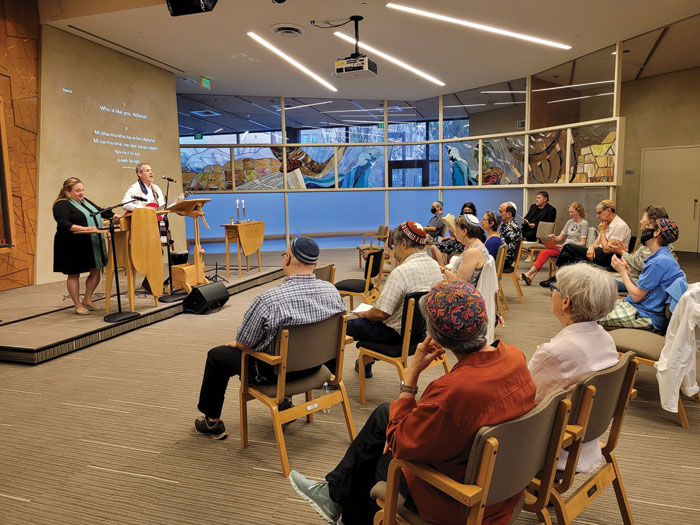
In the early 1970s, there was no synagogue that members of the LGBTQ community could call home. There was a church, however. It was the Metropolitan Community Church, and it did outreach to the LGBTQ community. Even though they weren’t Christian, LGBTQ Jews would gather there to connect with one another and to their faith.
But because they didn’t want to convert to Christianity, they never became members and didn’t have a say when it came to church matters. They asked the leader of the church, Reverend Troy Perry, what to do, and he encouraged them to form a temple on their own.
They took his advice, and on June 9, 1972, the first services were held in a member’s home, with 15 people in attendance. Beth Chayim Chadashim (BCC), the world’s first LGBTQ synagogue, had officially opened.
BCC started as that gay and lesbian refuge, but evolved into a celebratory, brave space for all.” – Rabbi Jillian Cameron
“BCC started as that gay and lesbian refuge, but evolved into a celebratory, brave space for all … for everyone on the diverse spectrum of sexuality and gender as well as everyone who wants a Jewish home with a wonderful chosen family,” said BCC’s Rabbi Jillian Cameron. “We prioritize the blending of LGBTQIA+ identity with Jewish identity.”
 Beth Chayim Chadashim is a Metropolitan Community Temple located in the Pico-Robertson neighborhood. Now, the clergy and members are celebrating 50 years in existence and looking back at all the uplifting moments and challenges the synagogue has faced over time.
In 1983, BCC hired Rabbi Janet Ross Marder to lead the congregation, at a time when the AIDS crisis was in full swing and members of the LGBTQ community – including those at BCC – were dying in droves from the disease. About 30 congregants passed away from AIDS-related causes, before any treatments became available, according to Larry Nathenson, long-time BCC member and former vice president.
The synagogue responded by forming an HIV+ support group and sponsoring monthly Persons with AIDS dinners. Marder and BCC member Dr. Les Zendle also founded Nechama (comfort), a Jewish response to AIDS.
“Our congregation buried dozens of beloved members,” BCC’s Rabbi Emerita Lisa Edwards, who served the synagogue for 25 years, wrote in Lez Spread the Word magazine. “We grieved together and our grief brought challenges to our congregation, as well as a deep familial bonding that has held us up ever since. We remember the relief and joy when our weekly kaddish list (the names of people who have died) contained no new names for a whole year.”
The BCC community also faced setbacks in 2008, when Prop 8 passed in California and gay marriages were halted. BCC mourned with neighboring faith communities after the Pulse nightclub shooting in 2016 and then, in 2020, like all other synagogues, they had to find a way to adapt to the pandemic.
“We have had to adjust and learn how to keep connected in new ways,” said Cameron. “We created a variety of Zoom-based opportunities for our members to connect, to celebrate Shabbat and holidays, to learn and just be together. It has been difficult, but we have found ways to comfort one another, to check in on those who feel isolated and to live our values when they were needed the most.”
The community has celebrated together over the past five decades, including when they purchased a building on West Pico Boulevard in 2011, founded their religious school, Ohr Chayim, hired Juval Porat, the first cantor ordained in Germany since WW II and when gay marriage became legal.
“Our Friday night Shabbat services were flush with wedding blessings for the many BCC couples marrying each weekend,” wrote Edwards. “After services, we danced.”
So much has changed in the world when it comes to LGBTQ issues. BCC was founded three years after the Stonewall Riots. Back then, sex-same acts were illegal and homosexuality was considered a mental illness.
“It was important for the LGBT community to have a sacred space of its own because true spirituality requires honesty and integrity,” said Nathenson. “One cannot achieve this while in the closet, in a place where one cannot be true to all parts of one’s identity. Mainstream synagogues at the time were not likely to be accepting of LGBT congregants unless they kept their identities secret.”
Now, gay marriage is legal and the LGBTQ community is gaining acceptance. Plus, much of the Jewish community has embraced LGBTQ people. More LGBTQ synagogues have been established and LGBTQ rabbis have been ordained.
“What I think BCC represents for so many of its members is that it’s a chosen family,” said Porat. “In finding this acceptance and support within BCC, the healing that occurs for so many who’ve faced rejection because of their sexual orientation or gender identity, is a power I feel to this day when I witness the community of BCC come together in times of great joy or sorrow.”
Cameron, who started at the synagogue just recently in the summer of 2020, is hopeful about what’s next for her community as it continues to evolve and grow.
“We look to the future with the same passion we had at the very beginning 50 years ago, hoping to care for our members as their needs evolve, and welcome in new individuals and families looking for a warm and joyful queer space, to joyfully combine our Jewish identity with all of our other identities,” she said. “Moving into our next 50 years, we will continue to be a brave space for all, a Jewish and LGBTQIA+ community, always striving to be at the forefront of creativity, learning and inclusion.”
World’s First LGBTQ Synagogue, Beth Chayim Chadashim, Turns 50 Read More »
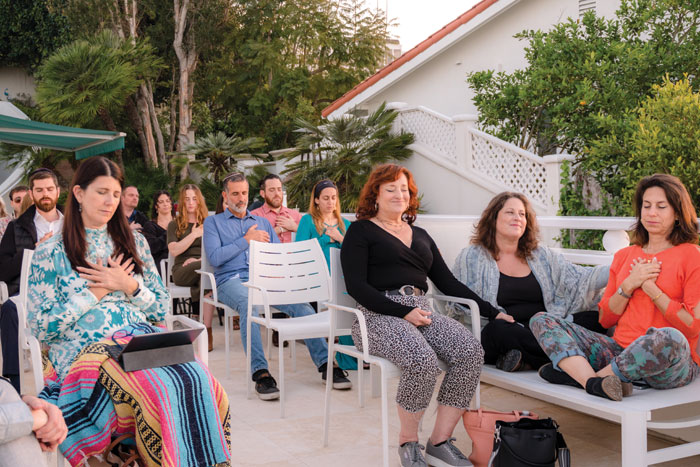
It could have been any yoga, mindfulness or spiritual gathering, but this crowd of young Jewish seekers came to hear the Millennial Rabbi, Daniel Bortz, and have him take them on a spiritual journey.
The springtime setting sun cast a golden glow across the gathering of women and men, most in their early twenties. This was not an ordinary gathering for the privileged set. Tonight’s event centered around the experiential meaning of freedom, a meditative Passover preparation for the soul led by Rabbi Bortz.
When I contemplate the spiritual moments that inspire me most, it’s those that touch my soul and are felt in the body.
When I contemplate the spiritual moments that inspire me most, it’s those that touch my soul and are felt in the body. Unlike most of my friends who were born Jewish, I converted in my late 30s, drawn to Judaism for personal reasons. In the years since my conversion, I’ve created many Jewish memories around the holidays and celebrations, the baking of challah, lighting shabbat candles, living in Israel, and instilling a Jewish identity in my children. Where I’ve struggled is in connecting spiritually in the synagogue setting, and like many Jews, have stopped attending services except for the high holidays or milestones such as bar or bat mitzvahs.
Through song, meditation, breath work, chanting and personal contemplation, he makes Judaism relatable to members of all ages, and particularly that cohort of millennials who identify as “spiritual” but have wandered away from their Jewish roots.
That is where Rabbi Bortz is making a difference with spiritual seekers. With his Soul X (short for Soul Experience), he’s creating the kind of experiential Jewish gatherings that bridge the intellect of Judaism with the yearnings of our hearts and souls to find a deeper meaning in our faith and teachings. Through song, meditation, breath work, chanting and personal contemplation, he makes Judaism relatable to members of all ages, and particularly that cohort of millennials who identify as “spiritual” but have wandered away from their Jewish roots.
I’ve attended several of his evening retreats in the San Diego area, his hub and childhood home, (through Soul X, Rabbi Bortz hosts events in New York, Miami, Los Angeles and San Diego). Each time I’m moved to see so many young people emotionally engaged.
The other night was no exception. The evening started with breathwork led by Joshua Church, a Jewish healer who led a guided session while the sun set. Breathing is a tool and technique to connect our mind, body and spirit, and yet for most of us, breathing is automatic without focus or intent. Rabbi Daniel explained that in Egypt the Israelites were said to have “shortness of breath” indicating their enslavement.
The evening also featured performances from the “spirit folk” band Cedars of Lebanon as well as a guided sound healing meditation, elevated with incense and essential oils based on the Biblical incense.
This all set the framework for the focus of the evening: exploring our personal journeys out of our inner Egypt, particularly “the doubts and negative self-talk” that keep us trapped in the past, “enslaved by our past actions and anxiety over the future” according to Rabbi Daniel.
This is where Rabbi Daniel truly shines, for he has a remarkable ability to relate the teachings of Torah and our history to the intentionality of mindfulness practices. Weaving stories about the Hebrew calendar and the sacredness of time, taking a pause from the busy-ness of daily living in spaces that allow for more soulful connections, he’s creating the sacred space for seekers to find the soul in their Judaism.
By marrying intentionality with Jewish intellect and prayer, he is showing us the way to touch the souls of those who seek a connection to the divine Jewishly, beyond the structure of traditional Judaism today.
Rabbi Daniel himself is a seeker. He came to be an observant Jew on his own at age 16. He became an ordained rabbi at age 23 and began focusing his efforts on teens and young adults. He understands that to make Judaism accessible and powerfully relatable he must meet young people where they’re at on social media with the intent to gather in person. Beyond his powerful videos and podcasts, he is most impactful through his Soul X experiences.
Tina Bernard converted to Judaism in 2009, and is a former staff writer for the San Diego Jewish Journal. This is her first piece in five years.
Soul Experience with Rabbi Bortz Releases Us from our Personal Egypt Read More »
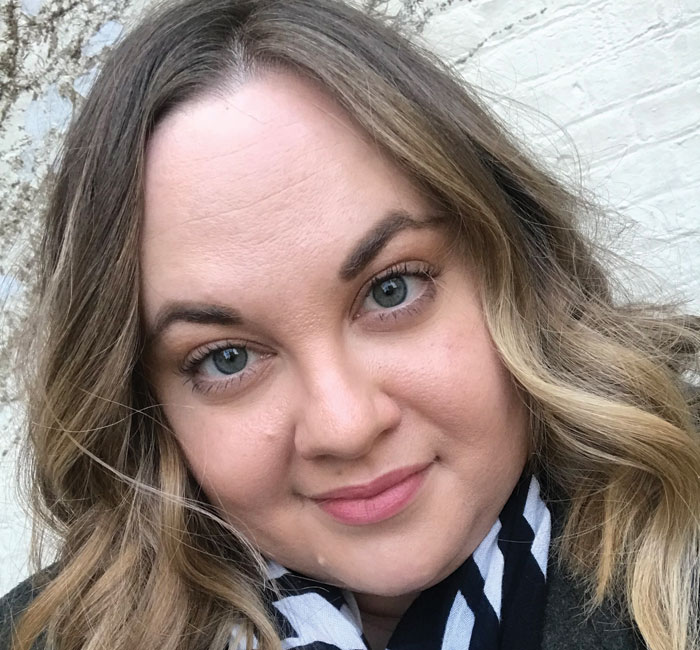
Rabbi Jillian Cameron of Beth Chayim Chadashim had been involved in her Jewish community since she was a child. Growing up in New Jersey, her family belonged to the Barnert Temple, the oldest synagogue in the state. It was there that she met Rabbi Elyse Frishman, who inspired her to take a rabbinical path.
“I always loved the community,” Cameron said. “Right after my bat mitzvah, my community got a new rabbi, Elyse Frishman, and she was amazing and really revolutionized our synagogue. I loved watching her do her job and how much she loved Judaism.”
When Cameron saw this, she realized that she wanted to be like Frishman.
“Why not devote your life to what you’re passionate about if it makes the world a little bit better?” she said. “You can create deep relationships with people, learn and teach and make change in the world.”
Cameron majored in Jewish Studies at Trinity College in Hartford, Connecticut, and went on to receive ordination from Hebrew Union College – Jewish Institute of Religion in 2012. After working at the Central Conference of American Rabbis and different synagogues on the East Coast, she wanted to find a more permanent position. So in July of 2020, she moved to LA and started her position as rabbi of BCC, the world’s first LGBTQ synagogue.
“I hadn’t been a synagogue rabbi for a few years, and I was looking to get back into a community,” Cameron said. “I really missed the idea of belonging to a community and building long-term relationships. I was looking for the right place where I could be, maybe, for the rest of my career. I wanted to plant some roots.”
The rabbi also wanted to be part of something where she could combine her Jewish and queer identities.
“At BCC, there is a sense of belonging, acceptance and celebration of the many different pieces of our identities,” she said. “You can explore all those pieces and get a deep understanding of Judaism.”
To cultivate community, Cameron, along with her colleagues and congregants, hold events like a monthly lunch and learn, local outings, Shabbat and holiday celebrations and groups for people of all various ages and stages of life.
“We really want to find LGBT and Jewish experiences,” she said. “We try to have a balance between those two pieces so we are well-rounded in who we are.”
The Jewish teaching that inspires Cameron is “We are created in the image of God,” which she said is one of the most basic tenants of Judaism.
“There’s a reason why it’s so basic and important and comes at the beginning of Genesis. We have to really see another person, even if they’re of a different religion or culture or have different politics, because every person was made in the image of something greater.”
Connecting with people, no matter where they came from, is what Cameron enjoys the most about her job.
“It doesn’t matter how beautiful your building is or how many songs you know or how great your sermons are. It’s the people that make Judaism come to life. Meeting people is the joy of being a rabbi.” – Rabbi Jillian Cameron
“There is such an incredible tapestry of humans in the world,” she said. “I’m honored and privileged to meet different kinds of people and help them celebrate or deal with what life is throwing at them. Without human beings, there is no Jewish community. It doesn’t matter how beautiful your building is or how many songs you know or how great your sermons are. It’s the people that make Judaism come to life. Meeting people is the joy of being a rabbi.”
Jewish Journal: What’s your favorite Jewish food?
Jillian Cameron: I love a good matzah ball. Slightly dense, not super fluffy. I like a little chew.
JJ: What would you do if you weren’t a rabbi?
JC: I’ve always wanted to do several things, like perform on Broadway or be a writer or detective. I like crime TV shows and I think I’d be really good at it.
JJ: What kind of dog is your pup, Yasha?
JC: He’s a Dachshund rescue mix. I’m not sure what he’s mixed with. He’s 25 pounds of pure joy, and the sweetest, friendliest companion a girl could have.
JJ: What do you do on your day off?
JC: I’ll do something fun like go to the ocean, take a drive through the hills or have dinner with a friend – something fun that allows me to be a person in addition to being a rabbi.
For Rabbi Jillian Cameron, It’s All About Community Read More »