For those readers with no attention span who enjoy spoilers taken completely out of context: I’m going to have another major surgery soon. I have an infected toe. And I was diagnosed with COVID. You can now choose to either stop reading here, and completely misunderstand major parts of the story, or you can enjoy my latest health update. As my favorite childhood book series used to demand: choose your own adventure.
It’s been over two weeks without a health update, did you miss me? Like a TV recap, let me remind you of where we left off…Exceptionally successful L4/L5 disc replacement, but the day after my hospital discharge, I returned to my own Saint John’s for a bladder issue (RESOLVED), but the ER completely ignored the crippling pain in my back as I stood with my walker, or sat to the best of my ability, and was given absolutely no back support for SEVEN LONG HOURS. Over the next few days, a bunch of rest, steroids and tests later, I was diagnosed with a brand-new cervical disc herniation and compression, caused by the ER visit. The pain was mostly gone, but I was left with circulatory problems of numbness and tingling down my arms and legs. That’s where I left off, and even had an article written about it in the Jewish Journal linked here, if you’re interested in more than these few lines of catchup.
Regarding last month’s back surgery, the recovery has continued to be phenomenal. I’m now able to walk for about fifteen minutes without the use of any cane or walker. I’m blown away by how well it went and how much I can move already. Everyone told me how phenomenal my doctor Brian Gantwerker is (half the doctors I’ve spoken with have had family members or their own surgeries done by him, a true vote of confidence), but between how well I’m moving and his bedside manner, he’s really lived up to the hype. Following my precautions, I still am not allowed to BLT – Bend, Lift, Twist – but walking around the house is mostly easy. Admittedly Adi still must do literally everything for me, since I’m not allowed to carry things over 5 pounds, and thanks to the new cervical injury with numbness and tingling, I can’t drive for a while longer. So, it’s time to discuss the new injury…
After my new cervical diagnosis, I continued taking muscle relaxants and anti-inflammatory meds, and I had 2 weeks of home-visits from PT. Unfortunately, it did not improve any of my new circulatory problems, if anything it stimulated them each and every time with no positive effect.
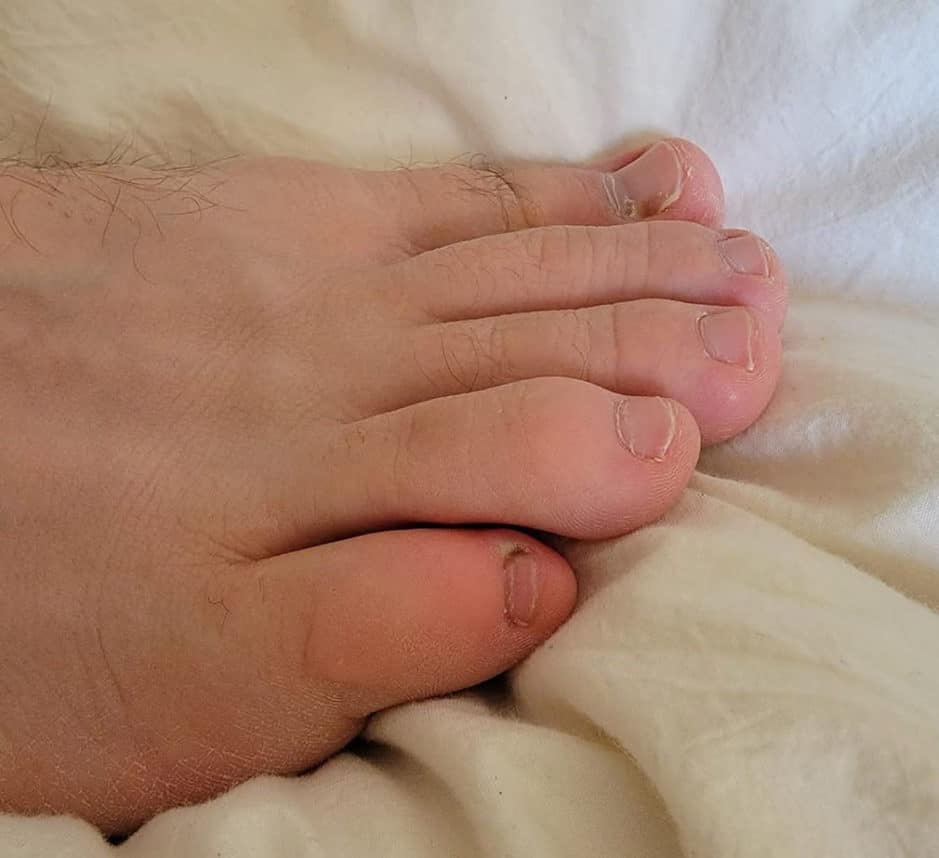
Then last week, something alarming happened. My right foot went cold, but otherwise felt normal, and stayed that way for a few days. I spoke to the surgeon who did the vascular part of my surgery, and thankfully it was not an emergency, since I was able to move the foot and walk on it without any issue. And go figure, he also said it made sense given the cervical injury. But crisis averted. Then that Sunday night I woke up constantly in massive pain in my right pinky toe. I looked at it and the toe was clearly infected with an ingrown nail. What else could go wrong?!
Photo of my ingrown/infected pinky that I sent to doctors before being treated by Michael Levi
Fortunately, I have superb personal doctors, colleagues and friends. Early the next morning I was texting ugly photos of my pinky to Rachel Bak, my dermatologist who’s also been a dear friend since college. At the same time, I was texting with my friend and coworker Romina Vincenti, a podiatrist who isn’t in my insurance plan. Both were helpfully giving their informed recommendations. My podiatrist Michael Levi is so good, that he’s actually the doctor for the LA Clippers, working on the many foot issues that basketball players encounter – an article in the LA Times about his great work is linked here. He was able to fit me in me that morning and was baffled by how someone could get an ingrown nail when they aren’t even wearing shoes for the past month?! But nonetheless, he took care of it, and I’m soaking my toe in warm water and Betadine as I type. Also, the busy doctor has found the time to call me every day this week to see how I’m doing. Great care team!
Over the past few weeks I’ve had a totally normal MRI of my brain, MRI of my thoracic spine, and even a CT of my lumbar spine which shows that the surgery was totally successful and none of my nerve issues that I’m experiencing are from that region (or the surgery). This seals the deal of this being entirely due to the new cervical diagnosis. Dr. Gantwerker, Adi and I had a consultation, and thus decided that it was time to move forward with fixing the issue, with a C6/C7 disc replacement. Unlike the lumbar disc which was plastic and titanium, this one is actually ceramic and titanium. And most importantly, just like my lumbar surgery, should allow me to recover completely without limitations at the end of the road, later this year. And unlike the lumbar surgery, this is a much shorter ninety-minute operation, which should help prevent some of the effects the anesthesia had on my body. But to be safe, we will involve my urologist and GI and pain specialist in advance, so we are ready. And he’s promised I’ll wake up with a catheter so I won’t have to go through the experience of getting one inserted again, and after one or two nights in the hospital, I should be able to go home without wearing any contraptions, hooray!
Am I scared? Sure, I wouldn’t be human if I wasn’t. But I am also completely confident that this is the right course of action for me and my family, and that there’s nobody I would feel more comfortable doing my surgery than my medical team.
But now it’s time to take a sharp left turn and tell you the weirdest thing to happen to me in a very long time. In the middle of all of this craziness of the last few weeks, I caught COVID. But I didn’t. Wait, did I? Okay, here is the story…Natalia got some sort of cold, we knew it wasn’t COVID after a million negative antigen and PCR tests, so great, just a cold. But then a few days later I caught her cold, but needed to be sure it was the same thing – which obviously it would be, but had to be sure, right? So, I did a few home and lab tests over the next few days, and everything was negative, great, moving on with life. Except, then this phone call happened:
THEM – Hi this is the LA Department of Public Health calling for Boaz Hepner.
(I then verified that it was really them and not the start of some scam phone call)
ME – So how can I help you?
THEM – We just wanted to see how you’re feeling.
ME – My…back? I’m confused
THEM – No, with your…. COVID.
ME – HUH? I don’t have COVID, what are you talking about?
THEM – We were notified last night that you tested positive on…. March 3rd with a PCR. Did nobody notify you?
ME – Seriously? NO! I was told everything was negative and I never got contacted about the PCR actually. This is really not cool, that test was over FIVE DAYS AGO!
THEM – Yes, this is really awkward because we’re not supposed to notify people about it, we’re just supposed to follow up and offer guidance or assistance and help contact trace if necessary.
Me immediately after LADPH phone call, taking the first of many negative tests
I went on to explain how annoyed I was about finding out this way, way too late, and now I had to notify everyone I was with the past five days; and honestly it didn’t make sense to me given that I never got the test result. So, here’s what I did: I emailed the lab itself demanding the test result, and got my entire family tested in the meantime. The rapid tests were all negative, cool-cool. Then I got the email back from the lab with the test results, and sure enough it showed it was positive. So, what did I do next? I emailed back irritated saying, “WHY DID NOBODY AT THE LAB NOTIFY ME OF THIS?”, and to their credit, they actually replied to me with the following, verbatim, “Hi Boaz, a system error occurred in our laboratory a few days ago. We sincerely apologize for any inconvenience this has caused. Rest assured that we will do everything possible to ensure that this does not happen again in the future.”
Natalia getting tested as a result of this LADPH phone call, and as always, finding the “nose tickle” tests hilarious
This didn’t satisfy me at all, because if there’s a lab error, how do I know if the result was affected, and accurate? I then pushed for that answer but got no further response. The next day, my PCR was negative, which all but confirmed what I had started to suspect – it was a false positive, due to the lab error. How do I know this? First of all, PCR tests usually stay positive for weeks at a time, well past the point where they are relevant. Secondly, I had earlier PCR tests that were all negative thanks to my procedures. And lastly, the lab literally confirmed they had some sort of error, albeit without clarifying what that entailed. I confirmed this with my infectious disease contact, who agreed this was a lab error. So here I am, vaccine educator for my hospital, one of the main points of contact for people with questions about this stuff in the LA community – frequently telling others that false negatives are common but false positives are quite rare – and I get an extremely unusual false positive PCR due to a lab error. I’m sorry Alanis, but that is actually an example of ironic.
To wrap this all up, what is the biggest reason I am relieved? Two-fold: I was going to have to miss my nephew’s Bar Mitzvah during our isolation, and my surgery is coming up, and if I have a positive PCR test prior to surgery, it will be canceled. For a day I strongly feared that my recovery would be delayed much further; but once again I get to finish on a positive note, as I just enjoyed a wonderful weekend with my family for the Bar Mitzvah, and this next surgery is set for the 28th. I am scared, but mostly I’m looking forward to getting one huge leap closer to my full recovery.
At the end of the Bar Mitzvah weekend with some of the visiting east coast family members
Dramatic as it may sound, I am writing with sadness and fear to warn you that, more than ever before, you are likely to face attempts to weaponize your Jewish identity in efforts to harm and endanger the Jewish future. And while those that pursue these efforts will be speaking the language of human rights, justice and anti-oppression, the binary they will present to you—the false choice between being a Jew and a Zionist, or being a supporter of human rights for all peoples—is a lie.
Last week, I attended an event at the Women’s National Democratic Club in Washington, DC (which has no formal relationship with the Democratic Party), in which the Executive Director of Amnesty USA, Paul O’Brien, presented Amnesty’s recent report accusing Israel, the world’s only Jewish state, of the vile crime of apartheid.
There is no question that there is an urgent need for an elevated, human rights-oriented conversation about the future of the Palestinian people and the pervasive Israeli policies that contribute to Palestinian indignity and suffering. Amnesty and the global human rights community have every right, and even a mandate, to investigate human rights violations perpetrated and suffered by both Israelis and Palestinians, against their own people and each other—the same way they investigate human rights violations everywhere else
But as you may have heard by now, the event—like much of the work of the global human rights community vis-a-vis the Jewish state—focused far more on undermining Israel’s legitimate existence as a sovereign Jewish state than it did on advancing the human rights of Palestinians.
There were many parts of the presentation and dialogue that stunned, including Mr. O’Brien’s comments, first, that Amnesty takes “no position on Israel’s right to survive,” and later, that “Israel should not exist as a Jewish state.” But, frankly, what may have been most shocking was how comfortable he was publicly stating that Amnesty’s goal with the apartheid report is to “move the Overton window” on the conversation about the territory “from the Jordan River to the Mediterranean Sea”—i.e., the existence of Israel in any part of the Jewish people’s ancestral homeland—and that the organization’s strategy is to “start [the conversation] first and foremost with the Jewish community.” Essentially, Amnesty aims to tokenize progressive Jews to be the face of the campaign, believing we can be “convinced over time” that Israel should not exist as a Jewish state.
As a progressive Jew myself, one who considers the progressive movement my ideological home and the space that most reflects my values as a woman and an American, I felt horrified knowing that well-intentioned, justice-oriented Jews would be exploited by supporters of such a renowned organization to carry the flag for explicit, outright antisemitism cloaked in the language of human rights.
Knowing full well, from my own experiences, the identity crisis that can be provoked when approached—especially by other Jews—with the expectations that we turn against our people’s survival in order to be welcomed in the “community of the good,” I wanted to help my fellow progressive Jews (and anyone else who could benefit) with some questions you can ask those who are carrying this message:
Do you know that the Jews are not just a religious group, but a people, and that Zionism is simply the national self-determination movement of the Jewish people?
Do you know that almost every state in the world has an ethnic and/or religious majority, and that the majority’s needs are central to the laws and governing of those states?
Do you know how many Muslim-majority and Christian-majority nations there are, and how many of them are nationally defined and recognized as Muslim or Christian states?
Do you deny the actual, legitimate existence or right to exist of any other country, or deny its membership in the community of nations, based on its [real or perceived] human rights record?
Do you know what the “Palestinian right of return” is, and what it would mean for the existence of the world’s only Jewish state?
Do you know anything about the history of the Jewish people, or our cultural, spiritual, historical and emotional ties to the land of Israel?
Do you know that the Jewish people’s return to our indigenous homeland, and our expulsion of the British imperial forces from the land in 1947, was one of the most inspiring and successful decolonization movements in history?
Do you know anything about the reestablishment of the Jewish state of Israel in the 1940s, or the decades of global organizing that preceded it, or the brutal wars that threatened its survival from its first moments and throughout its life?
Do you know anything about the 850,000 Jews from the Middle East and North Africa who were ethnically cleansed and fled their homes throughout the 20th century, with nowhere to go except Israel? Do you fight for their—and their descendants’—“right to return”?
Do you know that the Israeli-Palestinian conflict is not about race, and that there are no distinguishing racial characteristics of Jewish and Palestinian people? Do you know that apartheid is a specific type of atrocity based entirely on “racial domination”?
Do you know anything about the historical precedent of apartheid? How would you explain its appropriate application to a country where Arabs sit on the Supreme Court, in the governing coalition, in the parliament, and in the leadership levels of business, academia, law, and technology? Do you know that the Arab leaders at the highest levels of Israeli government have outright rejected Amnesty’s apartheid libel?
Do you see a connection between the apartheid accusation and classical antisemitic tropes of Jewish evil, Jewish power and global domination, Jewish money and/or Jewish bloodlust?
Do you worry that applying the explosive term “apartheid” to a country like Israel—imperfect, institutionally discriminatory, chronically sectarian, riddled with inequities and inequalities, like all other countries—cheapens the term “apartheid” and harms the global human rights community’s ability to accurately identify, document and ultimately seek prosecution for real crimes against humanity?
Are there any other Americans, with any other ethnic heritage, that you ask to be the face of a campaign accusing foreign governments of human rights abuses? Would you ever ask Chinese Americans to lead the charge against Chinese sovereignty because of China’s occupation of Tibet, or its imprisonment of a million Muslim Uyghurs?
Do you know about the UN Human Rights Council’s “Agenda Item 7”? Do you think that an obsessive, disproportionate focus on Israel among the human rights community might have some relationship to institutionalized antisemitism?
Are you aware that, after Amnesty’s UK chapter did a 100-page report on Islamophobia, they rejected doing a report on antisemitism because, as they said, “unfortunately, we can’t campaign on everything”?
And finally: Do you think it is appropriate to attempt to weaponize my Jewish identity against my Jewish community, or convince me to participate in the delegitimization of the world’s only Jewish state, especially if you don’t have expansive answers to each of the above questions?
I also want to remind my fellow progressive Jews that standing up for yourself and your people does not mean you must be silent on the plight of the Palestinians. We can—we must—fight for their sovereignty and self-determination with the same fervor that we fight for our own. This is not a binary—except to the extent that organizations like Amnesty work so hard to try to make it one.
For 2000 years pre-1948, Jews were violently denied self-determination everywhere we lived. Jews, and the international community, supported Israel as a Jewish democracy knowing that, in the context of a world order defined by nation-states, it was the only way to ensure Jewish self-determination. Without Israel, without sovereignty, Jews would be plunged back into a state of total systemic powerlessness, our self-determination and our communal security ripped away. Mr. O’Brien and Amnesty need to know that despite their self-declared conviction in “Jewish self-determination,” that without supporting the sovereign existence of the Jewish state, this phrase is nothing more than an empty platitude.
So to my fellow progressive Jews who have felt this squeeze before, and to those who will feel it in the future, please know: Your Jewish community stands with you. Truth, righteousness and liberation for all are not and cannot be exclusive to any people, but they are core values of your people. You can believe in, and fight for, the Jewish future without abandoning your dreams of the same free, sovereign, self-determined future for the Palestinian people. In fact, recognizing the humanity and the inalienable rights of both peoples is the only way for progress to ever occur. And anyone who tells you otherwise is perpetuating anti-Jewish blind spots, biases and bigotries that will harm us all.
Amanda Berman, Esq. is the founder and executive director of Zioness.
From ayatollahs wishing to destroy the Jewish state, good Lord give us deliverance.
According to my sober judgment, there’s between them not an adlayada of a difference.
To Putin I don’t think that I’m a meanie
by comparing him to Mussolini.
He should not be compared to Adolph Hitler,
because he’s than this horrid monster littler.
Unfavorably comparing, too, to Tito,
he should be banned as they did not Benito,
a faux savant who was not savvier
than was the president of Yugoslavia,
whose house of calling cards collapsed soon after
he died, just like supporters of the dafter
elected president electors dumped,
the Don who by democracy was trumped.
To the Jew Zelensky, I say: “Please
dump Putin, make no efforts to appease
the man like those that Biden may well make,
appeasing ayatollahs who give fake
assurances which he should be disputin’,
as dangerous, incredible as Putin,
by Biden trusted just as Trump once trusted
the man for whom he like fair lasses lusted.
It’s wrong of good men to rely on MAD
while giving nuclear power to the bad,
who are more dangerous than mothers against drivers who love drinking,
on whom we also can’t rely, because they’re MADD, I’m—adlaya-dad!— thinking.
David Suissa writes in the Jewish Journal, 3/13/22:
.
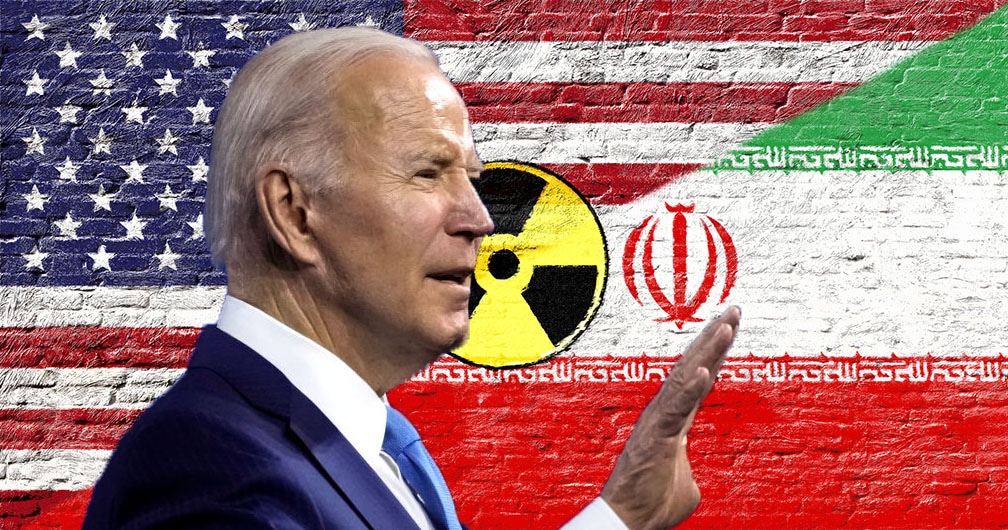
As the Biden administration rallies the free world to sanction and isolate Russia in the wake of its horrific invasion of Ukraine, it is rushing headlong to revive a nuclear deal with Iran, the world’s #1 sponsor of terror.
How eager is President Biden to make a deal with the mullahs? Let us count the ways.
A year ago, Biden and his team assured us they’d settle for nothing less than a deal that was “longer and stronger” than the flawed original. Now, with an overeager Rob Malley heading the U.S. delegation in Vienna, it looks like they’ll be settling for something even worse than the original.
As Ilan Berman, senior vice president of the American Foreign Policy Council, writes in The Wall Street Journal, the likeliest outcome is “a compromise pact far less comprehensive and robust than the original. Experts have warned against the dangers of such a ‘less for more’ deal, which would impose fewer restrictions on Iran’s stubborn nuclear effort while providing Tehran with more-lavish concessions and sanctions relief than before.”
This caving in by the world’s most powerful country is a dark development for the future of the Middle East, and will bring the opposite of peace and stability.
In “How to Deal With the Unappeasable Putin,” WSJ, 3/10/22, Walter Russell Mead writes:
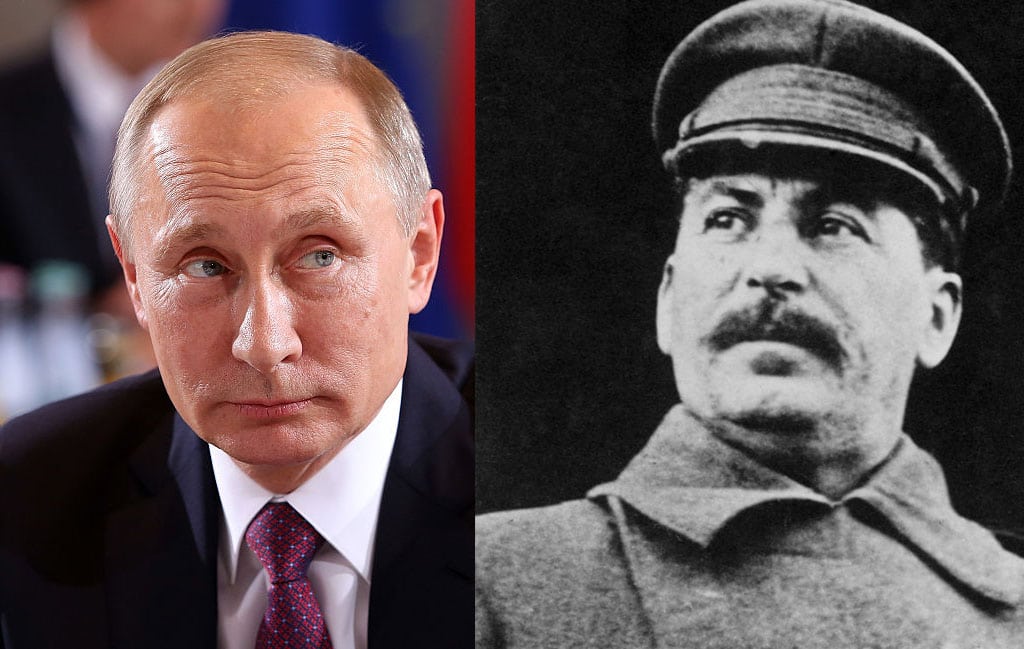
Like Mussolini, Mr. Putin was fortunate to face an ungifted generation of Western leaders. Nobody will be expanding Mount Rushmore with sculptures memorializing any of America’s post-Cold War presidents, and the generation of European leaders that included figures like Gerhard Schröder and François Hollande will not long be remembered. Playing a weak hand aggressively, Mr. Putin managed to divide and confuse this motley crew long enough to threaten the Western order in Europe and reassert Russia’s place among the great powers.
Mussolini was unable to build an Italian economy that could support his ambitions or a military capable of rivaling the great powers like Germany and Britain. This is where the limits of Mr. Putin’s achievements also seem to lie. After 20 years in power, he has failed to equip Russia with either the economy or the military that a great power needs. And because his power rests on such narrow and unsatisfactory foundations, his foreign policy remains one of brinkmanship and adventurism that is always vulnerable should his adversaries call his bluff—or if he miscalculates and bites off more than he can chew….
There are two mistakes we can make about figures like Mr. Putin. One is to underestimate their talent for troublemaking if they don’t get what they want. The other is to believe that by giving in to their demands we can quiet them down. The West has made both mistakes with Mr. Putin in the past. We must try to do better now.
Adlayada is a word derived from the rabbinic saying in the Talmud that one should revel on Purim by drinking “until one no longer knows” (adeloyada in, Aramaic: עַד דְּלָא יָדַע) the difference between “blessed be Mordecai” and “cursed be Haman.”
Mutual assured destruction (MAD) is a doctrine of military strategy and national security policy in which a full-scale use of nuclear weapons by two or more opposing sides would cause the complete annihilation of both the attacker and the defender (see pre-emptive nuclear strike and second strike).
Gershon Hepner is a poet who has written over 25,000 poems on subjects ranging from music to literature, politics to Torah. He grew up in England and moved to Los Angeles in 1976. Using his varied interests and experiences, he has authored dozens of papers in medical and academic journals, and authored “Legal Friction: Law, Narrative, and Identity Politics in Biblical Israel.” He can be reached at gershonhepner@gmail.com.
In September, 2021 we published our so-called manifestoir “Never Alone: Prison, Politics and My People”—part manifesto, part memoir. The book recounted Natan Sharansky’s nine years in a gulag, nine years in Israeli politics, and nine years in the Jewish Agency, to tell a broader story about our shared commitment to embracing identity and freedom, and rejecting the false choice between nationalism and liberalism.
Putin’s War has reinforced many of the arguments we made two years ago.
Today, with Joe Biden in, Donald Trump out, Bibi Netanyahu out, an eight-party Israeli coalition with a mini majority in, and Vladimir Putin invading Ukraine, the book may seem out-of-date. In fact, Putin’s War has reinforced many of the arguments we made two years ago. But before we share our “five lessons,” some relevant background from Natan:
Never Alone by Natan Sharansky and Gill Troy
The book “Never Alone” begins in Donetsk, Ukraine in 1948, when I (Natan) was born—back when the town was called “Stalino.” Most of the kids in the class were Russian or Ukrainian. Being Russian in the Soviet Union, no matter where you lived, in the 1950s, meant belonging to the most progressive nation. Russia united us all on the way to Communism, and it was the great Russian soldiers who defeated Hitler in the Great Patriotic War. But Ukrainians had strong identities too. True, cosmopolitan Communism at its purest considered nationality irrelevant; but during World War II Stalin had realized that national pride was a useful motivator.
Being Ukrainian meant having local pride and being the Russians’ closest brothers, eternal partners for three centuries already in what we learned was a voluntary partnership, which we were in the midst of toasting constantly. If someone had said that in sixty years a brutal war would hit my own hometown, I would have replied that a clash between Earth and Mars was more likely than one between Russia and Ukraine.
And yet, the two of us, Gil and Natan, and the world, find ourselves today in the midst of that war. Here, then, are our five lessons from “Never Alone” that American Jews could learn and that Putin’s War confirmed.
1. Dictators can’t be trusted. They thrive by warring on their own people and warring against others—with the war from within and the war from without reinforcing one another.
Totalitarian regimes have two main weapons for suppressing their subjects and maintaining their grip on power. A security apparatus unleashed against their own people tries curbing any impulses of independent thinking. Then, by picking the right enemy—real or imagined—dictatorships keep the country permanently mobilized.
The dictators’ dual weapons of repression and aggression are like scissors’ two blades, sharpening one another and cutting down anyone in the regime’s way. As with all bullies, dictators’ aggressiveness reflects their inner weakness. But that is what makes it so hard for doubters—doublethinkers playing the regime’s game but thinking independently—to cross the line into public dissent. When your society is on red alert against enemies, dissenting both jeopardizes the life you know and forces you to have to defy an inflamed public opinion. You risk being called a traitor—to the nation, not just the regime.
From the Bolshevik Revolution until it collapsed in 1991, the Soviet Union tried making all its people totally dependent on the regime. By confiscating all property, becoming the only vehicle for paying people, liquidating the independence of all organizations and institutions, from factories to trade unions, the Soviets reduced almost everyone economically to serfs. By crushing any political independence and wiping out any possible opposition, they reduced everyone politically to pawns.
Soviet society was permanently mobilized for a never-ending ideological war of classes for a world Communist revolution. Whether there would be a full military conflict depended on changing interests and calculations of strengths. But in such a red-alert world, you could switch into full scale war-mode immediately.
Similarly, from very start of the 1993 Oslo Accords, Israelis and the West miscalculated, failing to understand what dictators do—and need. The central assumption of Yitzhak Rabin and his people was that Yasir Arafat would be “our” dictator, able to impose peace on his people without being encumbered by populist pushback. But to maintain power, Arafat needed Israel as an enemy. So this absurd situation emerged, whereby Israel and the West propped up Yasir Arafat as the leader of the Palestinian Authority, as he bashed Israel and used whatever tools he could to control his people.
He could not hermetically seal Palestinian borders as the Soviets did. But Arafat did his best. He destroyed any early stirrings of a Palestinian civil society that sprouted in the years before he arrived. He closed down or harassed any independent newspapers, turning the Palestinian media into his mouthpiece—and a constant source of incitement against Israel. He broke any business people who tried operating outside his orbit. And, rather than improving his people’s living conditions, he kept many living in misery in refugee camps, resenting Israel.
While speaking in English to Bill Clinton and the rest of the West, [Arafat] talked peace. But when he spoke in Arabic to his people, he talked total war against the Zionist enemy.
In short, Arafat centralized control over Palestinian lives, economically, culturally and politically. As the Soviet leaders did, he knew he had to keep his people mobilized for war. He broadcast two different messages in two different languages. While speaking in English to Bill Clinton and the rest of the West, he talked peace. But when he spoke in Arabic to his people, he talked total war against the Zionist enemy.
Arafat created an educational system that still teaches three-year-olds to kill Jews, a corrupt economic system that runs protection rackets to boost the Palestinian Authority’s cronies, and a military intelligence machine with a dual purpose: to quash the Palestinian people while attacking Israel whenever convenient.
Putin has followed the playbook of Dictatorship 101, using his external war against Ukraine to super-accelerate his internal war against any Russian doubters or dissent.
Vladimir Putin has played a slightly different, but still deadly similar game. He is not simply lashing out at Ukraine because he needs a convenient enemy; he genuinely believes he is a modern Peter the Great righting an historic wrong. He is undoing the 1991 disaster when the Soviet Union collapsed and countries like Ukraine regained their independence. But he has followed the playbook of Dictatorship 101, using his external war against Ukraine to super-accelerate his internal war against any Russian doubters or dissent.
People protesting against the ongoing war in Ukraine gather on March 13, 2022 in Frankfurt, Germany. Photo by Thomas Lohnes/Getty Images
We will never know what comes first, Putin’s desire to restore the Russian empire or his craving for full control. But he has once again proved that in autocracies, the wars from within and without reinforce one another. It is no coincidence that as he unleashes his soldiers on their neighbors, he imposes his police officers to control his subjects.
It is remarkable. Within days, the informational iron curtain lifted three decades ago has fallen once again. Putin has disconnected ordinary Russians from the media sources and digital tools they enjoyed just last month. In a flash, he cut off the TV stations he could not control, every unofficial website that might criticize him, and even media-tech giants like Facebook.
In orchestrating what the average Russians read, Putin has returned them to the days of Josef Stalin — even Leonid Brezhnev’s heavy-handed propaganda from the 1970s seems milder. A new law passed on March 4 decreed that spreading “false news” about the army can earn you 15 years’ imprisonment. The definition of “fake news” is terrifyingly broad. Those who demonstrate to stop the war or even priests condemning the war in church risk long sentences. Russians cannot criticize this war against Ukraine because they cannot even say there is a war; the actions in Ukraine are merely “special military operations.” Old dissident friends report that Putin’s slow-acting coup has finally delivered its knockout blow. This shredding of any vestiges of democracy has been in the making for years — but the ultimate assault took place virtually overnight.
Lesson Two flows logically from this sobering analysis.
2. Take what dictators say seriously; we cannot afford to dismiss threats from Putin, from Iran, from any autocrat.
“First,” Begin replied, “if an enemy of our people says he seeks to destroy us, believe him. Don’t doubt him for a moment.”
In May, 1981, a visiting American Jewish leader asked Israel’s prime minister, Menachem Begin, what he thought were the lessons of the Holocaust. “First,” Begin replied, “if an enemy of our people says he seeks to destroy us, believe him. Don’t doubt him for a moment. Don’t make light of it. Do all in your power to deny him the means of carrying out his satanic intent.” One month later, Begin defied most world leaders by destroying the Iraqi nuclear reactor in Osirak — then lived long enough to have many of his most heated critics at that moment eventually thank him.
Alas, the world, including the United States, has lacked leaders with Begin’s moral clarity. In the United States, the messages emboldening Putin have come from both parties for more than a decade. The first major retreat came in 2012, when President Barack Obama declared that if the Syrian dictator Bashar-al-Assad used chemical weapons against his own people, that would cross a “red line” requiring a severe response. In 2013, Assad’s forces used chemical weapons to slaughter hundreds of civilians in the rebel-controlled suburbs of Damascus. Obama blinked. The President did little, and Putin noticed.
A year later in 2014, Putin invaded Crimea and started his under-the-radar war of reconquest of Ukraine, and most Americans and Westerners chose to barely react. In 2015, Putin established a military base in Khmeimim, Syria. Those moves not only tested the West but also complicated Israel’s military situation, giving the keys to Israel’s northern airspace to Putin. That daily threat forced Israel to handle Putin directly, but carefully.
Barack Obama seemed much more concerned with delivering an Iran deal than protecting either Ukraine or Israel. Beyond our skepticism that Obama’s JCPOA (Joint Comprehensive Plan of Action) helped slow Iran’s rush to go nuclear, we both saw clearly how the deal weakened Israel and delighted Putin. Almost immediately, the United States transferred 25 to 50 billion dollars in long-frozen funds back to Iran, with no linkage to the regime’s aggressive promotion of terrorism throughout the Middle East. That red-white-and-blue goody bag included $1.7 billion flown in pallets of untraceable, non-U.S. currency to Tehran. Some of that money flowed quickly to Hezbollah in Southern Lebanon. As that guerilla group committed to Israel’s destruction started to become a standing army, Israel’s military leaders worried—while Western leaders continued to dither.
President Donald Trump similarly showed minimal interest in promoting human rights or democratic values abroad. He even fell for the dictator’s classic con, naively trusting Putin, for whom he had “a very good feeling,” while claiming that North Koreans “love” their dictator Kim Jong Un with great fervor. More substantively, Trump’s withdrawal of American Special Forces from Syria in 2019 continued this double-downward spiral, diminishing America’s strategic position and moral standing simultaneously. One European official, watching the Trump retreat, admitted to an Atlantic reporter, that it left Europeans with less “confidence that in a time of crisis or challenge we will have the backing of our American allies.”
We have to recognize that the already-dangerous world becomes even more dangerous when you trust the dictators to do what they please but cannot trust the West to do what it must.
Last summer’s Afghanistan abandonment was simply the latest in a long line of American debacles. Pictures of helpless, desperate Afghanis and Americans were a green light to Putin, suggesting that this was the right time to start phase two of his Reconquista. We in the West not only have to learn to take what dictators say seriously, be it about expanding Russia, destroying Israel, or overrunning Taiwan. We also have to recognize that the already-dangerous world becomes even more dangerous when you trust the dictators to do what they please but cannot trust the West to do what it must.
We are optimists. All is not lost. In addition to mobilizing even more intensely against Putin’s invasion, starting with imposing a no-fly-zone over Ukraine, the Biden administration should toughen its Iran strategy. Washington’s negotiators should disrupt the current nuclear talks with Iran and let the Mullahs know that America now has peripheral vision: it is not just focusing on Iran’s nuclear program; it is looking more broadly. American must no longer tolerate Tehran’s regional aggressions and manipulations. Another option would be to continue to place financial pressure on Iran, until the theocrats take verifiable steps to protect human rights within Iran and stop fomenting terrorism from without. That’s what moral clarity could look like, even at this late stage.
3. Renewed faith in liberal democracy begins at home—with occasionally criticizing the leaders you love while occasionally complimenting the ones you hate.
Since February 24, when Russia renewed and intensified its assault on Ukraine, we keep hearing pundits and people talk about the renewed Western alliance and restored faith in American democracy. Yet we see how hard it is for people to choose unity, to mute their partisan attacks, to practice what they preach. Too many of our Democratic friends refuse to recognize the way Obama and Biden telegraphed moral and military weakness, simply yelling “what about Trump?” Similarly, too many of our Republican friends refuse to acknowledge how toxic a threat Trump posed, and continues to pose, to America’s democratic legitimacy and world standing.
Looking at the American Jewish community, we continue to criticize pro-Israel liberals who could not thank Donald Trump for moving the U.S. embassy to Jerusalem, recognizing Israel’s sovereignty over the Golan Heights, and negotiating the Abraham Accords. There is a striking contrast between the excitement the breakthrough with the UAE, Bahrain, and Morocco has generated in our neighborhood in Jerusalem, and the continued skepticism among many of our closest friends in the United States, who simply cannot stomach such an impressive achievement signed by Donald Trump and Benjamin Netanyahu.
Similarly, we are shocked at conservative friends who deny the violence of the January 6th Capitol Hill riots and keep feeding Trump’s delusion that the presidential election was stolen from him. Even as we praise many of President’s Trump’s moves in the Middle East, we criticize his demagoguery moving many in the Midwest, the South and the rest of “red America.”
We understand that in a liberal-democracy, sometimes you have to live with grays; it is not all black and white or blue-versus-red. No president is perfect, or perfectly awful. Acknowledging complexity is a first step toward the occasional compromises so essential to keeping the nation going or democracy growing.
4. Stop judging others so harshly and yourselves too kindly.
Both of us have criticized our current Israeli government for lacking the moral clarity we have long demanded from the West. We understand that Putin’s aggression threatens the entire free world, and Israel cannot pretend to be a bystander. As the cruel bombing sorties terrorizing and murdering Ukraine’s civilians continues, we regret that our technology is not being mobilized to help them. We want Western aircraft and Israeli anti-aircraft Iron Dome missiles protecting the Ukrainian skies.
Yet even as we patriotically criticize our government, we acknowledge the delicacy of Israel’s situation. It is not just that America’s abdication put Putin’s Russia right on Israel’s northern border by dominating Syria. It is also that Israel is caught between its eternal mission to be a Jewish State and its day-to-day struggle to survive as a regional power in a dangerous neighborhood.
Ultimately, as we call on Israel to remember its founding principles and embrace Ukraine, we call on our American Jewish friends to criticize Israel with a little more empathy. We have noticed on many Zoom calls and in many interviews how quick liberal American Jews are to take Israel to task morally — even as they resist any critique of their own political heroes’ role in this mess.
Even more disappointing, not enough American Jewish Democrats are willing to challenge the Biden administration to be much, much tougher in dealing with the dictators oppressing Iran and threatening “Big Satan” (America) and “Little Satan” (Israel). We need one united front against the world’s most threatening autocrats, starting with Vladimir Putin and the Mullahs.
We understand that people often like to lower the bar when criticizing others and raise the bar before actually criticizing their own. We suggest, both when it comes to assessing your own representatives and your own country-of-residence, to intensify the self-criticism and modulate the broader criticism, just a bit. The humility, and lowered volume, could do us all a world of good.
Finally, we end on a reassuring note. Celebrating the great unity we have experienced in much of the Jewish world, as religious and non-religious, right-wingers and left-wingers, reach out to help all Ukrainians, but especially Ukrainian Jews.
5. Remember what our lives have taught us — you are Never Alone.
Back in May, 1981, Menachem Begin offered another lesson all Jews should learn from the Holocaust. Beyond responding proactively to all genocidal threats, he said, “when a Jew anywhere is threatened, or under attack, do all in your power to come to his aid. Never pause to wonder what the world will think or say.”
This notion, that a Jew is never alone because the extended Jewish family will always protect us, has guided both our lives as Zionists.
This notion, that a Jew is never alone because the extended Jewish family will always protect us, has guided both our lives as Zionists. It’s why I (Gil), joined the Young Judaea Zionist movement and became an activist for Soviet Jewry, disappearing from the final weeks of preparing for my graduate orals in 1985 to visit Soviet Jewish Refuseniks over Passover. And, far more profoundly, it is why I (Natan), understood, throughout nine years in the Gulag, that I was not forgotten, I was not abandoned, and I was never alone.
As the world now knows, the town where I (Natan) was born, Donetsk, did not fare well in the post-Communist years. Back in the 1950s, it symbolized the deep friendship between Russians and Ukrainians. Alas, Donetsk ended up in the middle of the prolonged war between Russia and the Ukraine, years ago. When I grew up there, we lived among many nations and nationalities. There were people who had “Russian,” “Ukrainian,” “Georgian,” or “Kozaki” written on their identity cards. It was not particularly important—there was no major difference among these nations—unless you were saddled with one particular label.
If your identity card said “Jew” on the “fifth (nationality) line, it meant only one thing: You were singled out as belonging to the one outcast nation in the Soviet Union. It was a disease without a cure, a sentence to a life without hope, an invitation to be pitied because there was no one to help us.
We knew nothing about Judaism; there was nothing significant in our Jewish identity other than antisemitism and hatred toward us. So we just knew how the world worked. No one tried replacing the word “Russian” with the word “Ukrainian” on his ID card, for example, to be accepted to university, because it did not matter. But if your card said “Jew” and you could change it, you tried. It was obvious: Your chances of escaping this nightmare of oppression and of being accepted to university suddenly became greater.
Now think of the contrast today. Night after night, we see heartbreaking images of thousands of people standing at the borders, trying to flee the Putin-imposed Ukrainian tragedy. They stand there day and night, in the bitter cold, with the few possessions they could carry.
But, now, there is one magic word that can help them escape from that nightmare: “Jew.” If you are Jewish, there are Jews out there who will take care of you, there is someone on the other side of the border who is looking for you, and your chances of leaving suddenly jump.
The world has turned upside down. When I was a child, “Jew” was shorthand for evil, for loser. No one envied us. Today on the Ukrainian border, the same word “Jew” is shorthand for “lucky”; it’s a passport to freedom, and it describes people who have a place to go.
The world has turned upside down. When I was a child, “Jew” was shorthand for evil, for loser. No one envied us. Today on the Ukrainian border, the same word “Jew” is shorthand for “lucky”; it’s a passport to freedom, and it describes people who have a place to go and know that there is an entire people who are their family, waiting for them outside. Most Jews today are still used to living in a world where one feels exceptionally unlucky to be Jewish rather than exceptionally lucky. But that shift in perception should remind us of the big boost we’ve all gotten from the Zionist Revolution and the State of Israel.
We hope that no Jew will need to undergo the trauma Ukrainian Jews are currently enduring to understand that we are blessed.
That is why, for all the stress of this moment, we can also view today in historic perspective, in Jewish time and not just CNN time. And that triggers a more optimistic stance. We note the West stirring, refusing to be bullied. And we appreciate our good fortune to be living in Jerusalem, protected by the Israeli army, and to be watching a European conflict where the Jews are no longer in the crosshairs, but where the Jews also refuse to sit on the sidelines. We hope that no Jew will need to undergo the trauma Ukrainian Jews are currently enduring to understand that we are blessed. Although some worry that the global community won’t ever leave us alone, we Jews have an extra insurance policy—and an extra expressway to meaning, to identity, to community—because we are never alone.
Natan Sharansky is a former political prisoner of the Soviet Union and served in four Israeli cabinets. Today he is chairman of ISGAP, the Institute for the Study of Global Antisemitism and Policy.
Gil Troy is a distinguished scholar of North American History at McGill University and the author of 10 books on the U.S.presidency.
I’ve long felt that Joe Biden passed the “kishkes” test when it came to his support for Israel. Since meeting Golda Meir as a junior senator in 1973, the man has met every Israeli prime minister. Like many others in our community, I took for granted that he’d always have Israel’s back, in a world obsessed with maligning the world’s only Jewish state.
I wish I still felt that way.
Whether Biden realizes it or not, the terrible deal he’s about to make with the terror regime in Iran endangers Israel and the rest of the region.
It’s widely accepted by now that in his zeal to get Iran to sign a nuclear deal—any nuclear deal, apparently–Biden has squandered America’s enormous leverage and caved to virtually every Iranian demand.
I’ve read countless analyses from experts across the political spectrum, and they’re pretty consistent with this conclusion from a former intelligence officer specializing on Iranian terrorism, Michael Pregent, writing in Newsweek:
“If the Biden administration jumps back into the Iran nuclear deal without addressing undeclared sites, sunset clauses, ballistic missiles, regional behavior, terrorism and human rights, then it will have entered a worse deal than even the one in 2015.”
ADL head Jonathan Greenblatt, who can hardly be called an extremist, also cautioned that Biden’s deal is “far from adequate to confront the full range of threats generated by this regime.”
What kind of regime? Greenblatt spells it out: “The largest state sponsor of antisemitism on the planet, constantly churning out genocidal memes and disseminating hostile propaganda against Jews,” one whose “stated desire to annihilate the Jewish state must be taken seriously.”
Beyond this genocidal threat to Israel, Greenblatt adds the broader “danger that Iran poses to the region and the world through its support of proxy militias and employment of terror as statecraft,” with “activities [that] span nearly every continent [as] they have left death and debris in their wake in countries such as Argentina, Lebanon, Turkey, Bulgaria and even in the U.S.”
Biden’s own Central Command General Kenneth McKenzie has called Iran’s 3,000 ballistic missiles “the greatest threat to the region’s security.” Nothing in the deal addresses that threat.
Biden’s own Central Command General Kenneth McKenzie has called Iran’s 3,000 ballistic missiles “the greatest threat to the region’s security.” Nothing in the deal addresses that threat.
It’s perplexing why Biden would think that freeing up billions in sanctions relief to such a terror regime in return for dubious promises from a cheating and deceitful country would be such a good idea.
I’ve heard several explanations: He views the deal as upholding his and Obama’s legacy; he wants to undo anything Trump did; he’s desperate for any kind of “win” after the disastrous exit from Afghanistan; he needs to lower gas prices to boost his approval numbers, and removing the sanctions against oil-wealthy Iran will help do that; he’s just following the advice of his overeager negotiators in Vienna (which would mean, of course, ignoring the three members of his Iran team who quit last month because Biden was being too soft.)
The truth, however, is that it doesn’t really matter why Biden has caved to Iran. What matters is that he seems determined to push a deal through no matter what, and the Jewish world must not remain silent.
It doesn’t really matter why Biden has caved to Iran. What matters is that he seems determined to push a deal through no matter what, and the Jewish world must not remain silent.
Should we be grateful that the Russians, reeling from global sanctions, have introduced last-minute demands that may scuttle the deal? Not necessarily. Just like we saw with his former boss Obama, when the most powerful man in the world decides he wants a deal—and that intention has been conveyed loud and clear to the wily Mullahs in Tehran—he gets his way, regardless of the obstacles, and regardless of how lousy the final deal is.
From what I hear from sources, the real stumbling block is the Iranian insistence (not unreasonable, I may add) that a future administration won’t just cancel the deal, as the Trump administration did. Because it’s so hard to offer such guarantees, if anything kills the deal, that will be it.
But because Iran desperately needs the sanctions lifted, some kind of compromise is likely. The perverted irony is that the most hated country on the planet right now, Russia, may be asked to play a role to overcome that final hurdle.
As the final hour approaches, the Jewish world must not wait until the deal is sealed to express its outrage. President Biden has every right to sign a deal that may well endanger Israel and the region, and we have every right to let him know that we feel betrayed by a friend.
On 1 March 1953, as Jews around the world celebrated Purim, Soviet dictator Joseph Stalin suffered a debilitating stroke that resulted in his death four days later. His sudden demise came at the height of what some historians called “the black years of Soviet Jewry,” when the USSR launched a series of antisemitic campaigns immediately after the Holocaust directed at its own citizens. This culminated in the so-called “Doctors’ Plot,” a conspiracy invented by the government that accused a group of primarily Jewish doctors of plotting to murder Soviet leaders. Stalin’s death soon brought an end to the persecution of the doctors, as well as the most egregious elements of the government’s antisemitic practices.
Having just repelled and defeated the Nazis and their fascist allies, the Soviet government justified these antisemitic campaigns by using a tool it had employed since the 1930s to justify arresting, deporting and murdering millions of its own innocent citizens: accusing them of being fascist agents. During Stalin’s nearly nonstop cavalcade of purges over the previous decades, never had the charge been leveled at a more unlikely group of Soviet citizens. Soviet Jews made up nearly half of the victims of the Holocaust, and those who survived had all lost family and friends to the Nazis and their collaborators. They also served with distinction in the Red Army; though they were the seventh largest ethnic minority in the USSR, they were fourth in terms of total military honors awarded by the government during the war.
During Stalin’s nearly nonstop cavalcade of purges over the previous decades, never had the charge been leveled at a more unlikely group of Soviet citizens.
Not only were many of the USSR’s Jews accused of being fascist agents after the war, but they were also found guilty of these charges in Soviet courts. Perhaps the most shocking victim of this farcical application of Soviet justice was the Jewish Anti-Fascist Committee (JAC), a group of Soviet Jewish intellectuals and artists assembled by the regime to solicit money and support abroad for the Soviet war effort. After the war, its chairman Solomon Mikhoels, the director of the Moscow State Jewish Theatre, was murdered by state security agents in Minsk in what was meant to look like a car accident. Other members of the committee were soon arrested and executed, culminating in the “Night of the Murdered Poets” in 1952, when thirteen Yiddish writers and other former members of the JAC were executed in a single night in Moscow’s infamous Lubyanka Prison. Both in their trials and in the press, they were accused of being “Zionist” and “fascist” agents. The Soviets were the first to make this oxymoronic link in their propaganda campaigns, which spread to Soviet sympathizers and allies in the western and third worlds until it became a standard calumny directed at Israel by people usually ignorant of its origins as Stalinist antisemitic propaganda.
This Purim, nearly seventy years after Stalin’s death put a temporary halt to the USSR’s arrest and murder of its Jews under the nonsensical guise of fighting fascism, another tyrant in the Kremlin is using the same, equally preposterous accusation to justify his invasion of a neighboring country, murder its civilians, and overthrow the government of its democratically elected Jewish President. Vladimir Putin, who has done his best to rehabilitate Stalin’s murderous legacy during his reign, borrows directly from the Soviet dictator’s playbook in accusing Ukrainian President Volodymyr Zelensky’s government of being a “band of drug addicts and neo-Nazis.” For Jews from the lands of the former USSR, this refrain conjures horrifying memories of life under Stalin during his final years in power, when many lost their jobs and loved ones to officially sanctioned antisemitism emanating from the highest echelons of state power. Coming in the wake of the Holocaust and the mass deportations of other ethnic minorities in the USSR, many Soviet Jews even feared their own collective deportation in cattle cars to the frozen tundra and deserts of Siberia and the empire’s far east. Zelensky is the grandson of Holocaust survivors who would have experienced this fear firsthand.
Putin, a former KGB agent who spent the Soviet years terrorizing and spying on his fellow citizens, is implementing many of the lessons he learned during those formative decades in his war on Ukraine. In 1939, when the USSR divided Poland with its ally Nazi Germany during the Molotov–Ribbentrop Pact, it forced its newly colonized subjects to take part in bogus referendums supporting their integration into the Soviet Union. We have already seen Putin employ the same strategy in Crimea and Donbas, and there have been indications that he will try the same in the Ukrainian cities newly occupied during the current invasion. A student of history, Putin’s strategy for territorial expansion also borrows from the Nazi and Russian empires. He has employed the policy of “Russkiy Mir” (Russian World) calling for the “protection” of Russians abroad to justify his invasions of neighboring countries, as the Nazis did with the Volksdeutsche and the Czars under the flag of Pan-Slavism before him. Like them, Putin has expanded his borders slowly and methodically, testing global resistance to his actions and growing bolder in his campaigns after encountering none.
As we celebrate Purim this year, let us recall another nearly seven decades ago that saw the death of a modern Haman who threatened the lives of several million Soviet Jews.
As we celebrate Purim this year, let us recall another nearly seven decades ago that saw the death of a modern Haman who threatened the lives of several million Soviet Jews. Now, his geopolitical heir threatens the lives of some 40 million Ukrainians (including 300,000 Jews) using the same preposterous justifications as part of an effort to rebuild Stalin’s blood-soaked empire. It took a Purim miracle to stop Stalin. Barring another one, it will take far greater resolve and commitment on the part of the free world than it has shown to this point to stop Putin. Like Soviet Jews under Stalin, Ukrainians do not know exactly what he has planned for them, but many fear the worst.
One of the victims of the Sushi Fumi attack in May 2021 filed a lawsuit on March 15, alleging that they were the victim of a hate crime.
The lawsuit, filed by Glaser Weil LLP, The Law Office of Arash Khorsandi, and Avenue Law APC, per a press release, stated that the victim was eating dinner in front of the Beverly Grove restaurant when a caravan with “megaphones and loudspeakers” that were “waving Palestinian flags” drove by and started shouting, “F— the Jews,” “Death to Jews,” “Dirty Jews,” and “Who is Jewish?” The people in the caravan hurled “glass objects” at the plaintiff and the Jewish diners and then exited their vehicles and started attacking them.
“The first target of the attack was one of [Plaintiff’s] friends who was rushed at by the [Defendants] and thrown to the floor,” the lawsuit stated. “[Defendants] kicked [Plaintiff’s] friend in the head and on his body. [Plaintiff] saw his defenseless friend being attacked and sprang into action to defend him from being viciously beaten. [Plaintiff] grabbed a nearby stanchion that had roped off Sushi Fumi’s outdoors dining area and used it fend off the attackers in self-defense and defense of his friends.” The lawsuit then alleges that four men began beating the plaintiff against a car and sprayed him with “an aerosol chemical irritant.”
“American Jews have suffered numerous high profile incidents of violent antisemitism in recent years,” Michael Yadegaran of Avenue Law APC said in a statement. “From Charlottesville to Pittsburgh to Poway to Colleyville—and now Los Angeles. The time to take action is now; a hate crime is a crime against all of us.”
“Antisemitic hate crimes are on the rise, and whether on college campuses, in houses of worship, at Jewish day schools, or out while dining, Jews are being targeted and terrorized at an increasing rate,” Julie Gerchik, Litigation Partner at Glaser Weil, also said in a statement. “Enough is enough.”
Two men have been arrested and charged with a hate crime in connection to the attack; they have been identified as Xavier Paybon, 30, and Samer Jayylusi, 36. Both Paybon and Jayylusi were listed as defendants in the lawsuit itself, a copy of which was obtained by the Journal.
One of the Jewish victims of the attack, who spoke to the Journal’s Tabby Refael under the pseudonym “Michael” a few days after the attack occurred, said: “There have been lots of conversations around our Shabbat tables this year about moving out of LA and about Jews feeling less safe in New York and elsewhere. It’s sad. It’s really sad. I’m an Iranian Jew. We were uprooted from our home of 2,700 years and moved to America. And within just one generation, the threat of Islamic persecution that our parents fled is now on our doorstep here in America. Wrap your head around that.”
Anti-Defamation League Los Angeles Regional Director Jeffrey I. Abrams said in a statement, “Perpetrators of hate must be held fully accountable, under both criminal and civil law. With the filing of a civil lawsuit, the assailants charged in the antisemitic Sushi Fumi attack last summer cannot avoid civil responsibility. The Los Angeles District Attorney’s office must ensure these defendants also receive the appropriate criminal sentence for these heinous crimes.”
Robert Wuhl and Mark’s friendship goes way back to their days starting out as stand-up comics in New York City. Robert is a consummate storyteller, a gifted comedian, actor, writer and director who’s had roles in phenomenal projects like Good Morning Vietnam, Tim Burton’s Batman, and Bull Durham. He lights up the room with every role he plays, which is no small feat considering he’s worked along side the likes of Robin Williams, Michael Keaton, Martin Landau and Robert DiNiro. Robert chats with Mark and Lowell among other things about getting his start in show business, his friendship with Rodney Dangerfield and some reflections on his classic series Arli$$ which everyone should binge on HBO Max.