fbpx

March 11, 2022

Young Ukrainian Jews on Masa Programs Meet with Israeli PM Bennett

Whether targeted directly or caught in the crossfire, Ukraine’s centuries-old Jewish community has survived an endless number of crises. While these risks are by no means novel for this community, the Jewish world is in a very different place than it was just one century ago when pogroms were an unavoidable aspect of Jewish life.

In 2022, unlike any other time in history, the Jews of Ukraine are not alone. Over the past century, Jews have rallied around the idea that the Jewish world is stronger together. These connections have already impacted the experiences of Jews from Ukraine, Russia, and Belarus amid Russia’s invasion of Ukraine. Just after the conflict began, Israeli Prime Minister Naftali Bennett met with a group of Ukrainian Jews participating in long-term educational programs in Israel through Masa Israel Journey, an organization founded by the government of Israel and the Jewish Agency with the express purpose of building connections between young diaspora Jews and Israel.

The emotional meeting demonstrated the importance of these connections. While they are largely unable to return to their homes in Ukraine, these Masa fellows were reminded by the Prime Minister that the Jewish state will always provide refuge.

“First and foremost, I want to tell you that you have a home here,” Prime Minister Bennett told the fellows. “Israel is your home, for you and your families, for any Jew in the world. Always. Now and always. That’s what Israel was established for, to begin with.”

Many current and potential Masa fellows from Ukraine and other FSU countries are taking advantage of Masa’s provision of financial and personal support to safely regroup and coordinate a safe departure for their families trapped in war-torn cities.

23-year-old Leonid Gershenzon, a Ukrainian Masa fellow who works in Ayanot, a youth village in central Israel, finds himself in this situation. He discussed his family’s precarious situation in Eastern Ukraine with Prime Minister Bennett.

“My sister, brother, father, my grandmother…they’re in Kharkiv in the east of the country,” Leonid said. “They can’t move … they can’t go away, they can’t go out.”

220 Ukrainian Masa fellows like Leonid and thousands of immigrants with family still in Ukraine watch in horror as the humanitarian crisis worsens in their country of origin.

220 Ukrainian Masa fellows like Leonid and thousands of immigrants with family still in Ukraine watch in horror as the humanitarian crisis worsens in their country of origin. Valeria Gusba, a 25-year-old Masa fellow from Ukraine, created a graphic novel about the difficulties her family members face as Russian artillery batters their homeland. Prime Minister Bennett read every page, urging her to share her story with others experiencing the same pain. Valeria now intends to make Aliyah after her program ends.

“My dream is for my family to unite in Israel,” Valeria said.

The existence of Israel alone is not the only resource Ukrainian Jews have in 2022. Their assets are connections—between Israel and the diaspora, and across Jewish communities around the world.

In Israel, hundreds of immigrants and temporary residents from Ukraine, Russia, and other FSU countries gather for meals, share living spaces, and join in the same Jewish traditions. Away from the conflict zone, they defy expectations and bring true meaning to the Jewish connections that have been developed over the past century.

Young Ukrainian Jews on Masa Programs Meet with Israeli PM Bennett Read More »

12 House Dems Say They Are “Highly Concerned” Over New Iran Deal

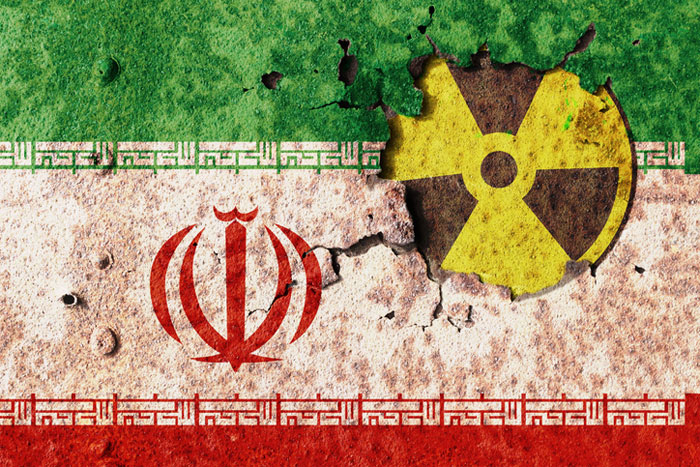
Twelve House Democrats said in a March 10 letter to President Joe Biden that they are “highly concerned” over what will reportedly be in a new Iran nuclear agreement.

The letter, which included signatures from Representative Josh Gottheimer (D-NJ) and Elaine Luria (D-VA) as well as nine Republicans, according to Jewish Insider (JI), stated they are particularly concerned that the new agreement would remove the terrorist designation from the Islamic Revolutionary Guard Corps (IRGC) as well as sanctions on members of Iranian Supreme Leader Ayatollah Ali Khamenei’s office. “Without adequately addressing Iran’s role as the world’s leading state-sponsor of terror––which was noticeably absent from the 2015 [nuclear deal]––and simultaneously providing billions of dollars in sanctions relief, the United States would be providing a clear path for Iranian proxies to continue fueling terrorism,” the letter stated.

The members of Congress added that “it is hard to envision supporting an agreement along the lines being publicly discussed” and proceeded to ask a series of questions, including what Iran’s estimated “breakout time” will be and what mechanisms will be in place should Iran violate the nuclear agreement. They also asked if Russia, which the Biden administration has been working with on the Iran deal negotiations, would “gain any economic benefit” from the new deal and if the deal would go to Congress for approval.

Luria elaborated her concerns on Twitter. “I am deeply concerned that the latest iteration of the failed JCPOA being negotiated by the Biden Administration will empower Iran, endanger Israel, and continue to threaten global security,” she wrote. “If this deal goes through, we must ensure Israel has the means to respond to the resulting threats, and I will continue to stand against any deal that does not permanently prevent a nuclear-capable Iran and does not make the Middle East and the world safer.”

The Simon Wiesenthal Center tweeted, “The more Americans learn about how the Iran nuke deal is being negotiated by Russia and how the deal does virtually nothing but empowering Iran and endanger US allies the more opposition is growing.”


Senator Ted Cruz (R-TX), who organized a March 9 press conference of Republican senators criticizing the Biden administration’s negotiations with Russia and Iran over the deal, told JI: “I don’t believe the ayatollah will ever stop pushing for nuclear weapons. I believe we should continue to ratchet sanctions up until the Iranian people rise up and achieve new leadership.”

12 House Dems Say They Are “Highly Concerned” Over New Iran Deal Read More »

Ukraine’s Patriotic War and the Legacy of Jewish Heroism

For the past two weeks, I’ve been going to bed with news of fighting in Ukraine and waking up with more news from Ukraine. The news is both devastating and inspiring—devastating because of the sheer brutality of Putin’s armies, inspiring because of the courage and resolve of Ukraine and her people. In the middle of the night, when I can’t sleep, I reach out for my smartphone and scroll through seething dispatches from Kharkiv, Odessa or Lviv. I read about the direction of Russian troops and the looming threat for Dnipro, one of Ukraine’s largest cities and a model for a post-Soviet renaissance of Jewish life in Eastern Europe. Then, exhausted yet wired, I think of walking the streets of Kyiv with my seven-year-old daughter Mira in October 2013—some five months prior to Crimea’s annexation by Russia. I think of the fighting getting closer to the ancestral homes of my grandfathers in Podolia. And then, in a manner of an insomniac’s incantation, I thank my parents and the state of Israel for getting me out of the former USSR when I was young enough to start a new immigrant life and old enough to remember my previous Soviet one in granular detail.

My heart bleeds for Ukraine and her people. As both a Russian Jew and a longtime student of the Shoah, I am particularly horrified by the rhetoric of “denazification” employed by Putin’s regime to justify the invasion. As I type these lines on the thirteenth day of the war in Ukraine, reports of a maternity hospital hit by Russia’s artillery are coming in from the besieged city of Mariupol. Like hundreds of thousands of immigrants from the former Soviet Union now dispersed across the world, I have a personal connection to the war in Ukraine and to the biggest refugee crisis Europe has seen since World War 2 and the Shoah. I cannot but react viscerally to the slaughter of Ukraine by Russia’s troops and to the suffering of Ukraine’s people. I feel both a personal solidarity with the victims of bloodshed and an ideological unity with those who resist Putin’s megalomaniacal plot. How else could it be? My family tree is rooted in Ukraine. I grew up as a refusenik in Moscow. I was of draft age during the disastrous Soviet war in Afghanistan. And I’ve even tasted the rancid milk of refugees’ daily sustenance. But there is more to the gamut of my thoughts and feelings about the war in Ukraine and the valor of her defenders.

If the history of Jews in Eastern Europe is bound to repeat itself, yet again, this time it will be not only as tragedy, and not at all as farse, but as a dance macabre. I cringe at this untimely thought, and yet I cannot wave it off like a gadfly. Especially so in the middle of the night, when insomnia’s special forces land in the fields of my own imaginary Ukraine, and a deluge of historical associations drowns out the last hope of sleep.

Have you seen photos of men in Ukrainian military uniform praying in a synagogue, tefillin on their heads and left arms? Have you also seen news coverage of veterans of the Israeli special forces arriving to fight in Ukraine? I presume most of them are Israelis of Ukrainian origin who have volunteered to go to Ukraine. These striking images and reports have a way of stirring up a mixture of Jewish pride and Jewish anxiety. Coming alive before our own eyes is the legacy of Jewish soldiers who during the 20th century served in the armies of Europe, of Jewish servicemen who fought to bring peace and stop murder and genocide. This complicated story is largely a record of heroism and dedication, but it comes with a tangled legacy.

During World War 1, the “war to end all wars,” scores of Jewish soldiers served in the armed forces of the Russian Empire, the country that legally discriminated against them and locked them in the Pale of Settlement. As part of Russia’s troops, Jewish soldiers went to battle for “czar and fatherland” and fought against the armies of the Austro-Hungarian Empire and Germany. Not only Jewish soldiers but also Jewish commissioned officers were present in significant numbers in the armies of the Triple Alliance. The case of unconverted Jews in the Russian army and navy was different. Yohanan Petrovsky-Shtern, a professor at Northwestern University and a historian of Jews in the former Russian Empire, commented: “There were no Jewish officers in the Russian army during World War 1. Russia’s public opinion considered those awarded with all three Crosses of St. George (plus a medal) as ad hoc officers, and there were dozens of those, but they were never formally promoted and allowed to take commission.” Specifically in Galicia, in the areas that are now part of the embattled Ukraine, Jews from the Austro-Hungarian troops and Jews from the Russian troops died for their respective countries with the cry “Shema, Israel” burning on their desiccated lips.

The creation of the Red Army led, for the first time in European history, to the rise of many senior Jewish field officers and top generals. Probably the most celebrated Jewish commander of the Red Army was the Bessarabian-born Iona Yakir, who distinguished himself while fighting White army troops at Odessa in 1919 and during the Polish-Soviet War of 1919-1920. (Yakir and other top generals would be purged in 1937, when Stalin beheaded the Red Army of some of its most senior commanders.) Another legendary Jewish general was Solomon Slepak, hero of the Civil War in Russia’s Far East. (As Jewish refuseniks in Moscow, my parents and I got to know Vladimir Slepak, Prisoner of Zion and a leading refusenik activist, who had inherited from his father the fearlessness of a Jewish zealot.) Most of the Jewish Red Army commanders came from the former Pale and grew up in traditional Jewish families; they remade themselves in the name of the Revolution and were prepared to die for it.

Another perspective, also bearing light on the outpouring of international support and military aid to Ukraine as she fights Russia’s invading armies, could be found in the Spanish Civil War, which was in some ways an abandoned rehearsal of World War 2. Significant numbers of Jews from the Soviet Union, France, Great Britain, and the United States fought with the Republican Army against General Franco. That was, perhaps, the last time in history that an international contingent of Jewish Communists and Socialists volunteered to fight against fascism. At the dawn of World War 2, tens of thousands of Jewish soldiers and field officers defended Poland against the Nazi invasion from the West as they also fought the Soviet invasion from the East. (Several thousand Jewish-Polish soldiers and officers would subsequently fight against the Nazis and their allies as part of General Anders’s army in 1943-1945.)

For as many as 350,000-500,000 Jews who served in the Red Army and Navy during World War 2, fighting the Nazis was, simultaneously, a Soviet patriotic war of liberation and a Jewish avenging war against the murderers of the Jewish people. In the words of Ilya Ehrenburg, spoken and published in August 1941, “Like all Russians, I am now defending my homeland. But the Hitlerites have reminded me of something else: my mother’s name was Hannah, I am a Jew. I say this with pride. Hitler hates us more than anything. And this adorns us” (tr. Joshua Rubenstein).

It’s still inspiring to revisit these lines today, but it’s also painful to read them at the time when Putin’s armies are committing war crimes and crimes against humanity in Ukraine. I also don’t like it when Jewish polemicists in the West refer to the land of my native language and culture as “Nazi Russia.” So many of the ex-Soviet Jews of my generation had grandparents who fought the Nazis first in the occupied Soviet territories—from the White Sea to the Volga plains, from the Neva to the Dnieper, from the forests of Belarus to the Caucasus mountains, and later in the countries of Eastern and Central Europe. My paternal grandfather Peysakh (Pyotr) Shrayer volunteered first during the “winter” Soviet-Finnish War of 1939-40 and then again in the summer of 1941, immediately following the Nazi invasion. The war took him from the Leningrad Front to Königsberg in East Prussia. He told stories about German women begging him, a young lieutenant commander, and other Soviet Jewish field officers, many of them native speakers of Yiddish, to protect them against the rage and sexual violence of Soviet soldiers in 1945. Jews from all over the vast Soviet Union—Ukraine, Belarus, European Russia, Siberia, Caucasus, Central Asia—battled the Nazis and their accomplices. But there were also some soldiers and officers with Jewish roots in the armies of the Third Reich; it would be dishonest to dismiss this opaque and uncomfortable page of history.

World War 2 may have been the last war in Europe, in which overwhelming numbers of Jews from many countries fought and died for a Jewish cause—on the Eastern Front, in Sicily, on the beaches of Normandy. I would also argue that all the subsequent wars after 1945, in which Jewish men and women fought for a Jewish cause, have been fought not in Europe but in the Near East—for the cause of Israel’s survival and security. Starting with the Israeli War of Independence, and subsequently during the Sinai War of 1956, the Six-Day War of 1967, and the Yom Kippur War of 1973, Jews in military uniform, among them veterans of World War 2 and their children, were fighting for a Jewish homeland rather than European countries that never fully made them feel at home.

Different sources put the number of Ukraine’s Jews between 50,000 and 100,000. How many of them can fight, and how many have taken up arms to defend their country and their homes?

All of this finally brings me back to the Jews who are fighting in Ukraine and for Ukraine today. Different sources put the number of Ukraine’s Jews between 50,000 and 100,000. How many of them can fight, and how many have taken up arms to defend their country and their homes? This kind of data is difficult to obtain, but there is no question that significant numbers of Ukraine’s Jewish citizens are fighting the Russian invasion as members of the regular military units and of the territorial defense forces. To complicate the picture even further, some sources suggest that there are already several hundred Israeli veterans and military advisers deployed in Ukraine, with more to join their ranks. (Given Israel’s official neutrality, this information is very difficult to obtain or corroborate.)

But what about Russia’s troops now massacring Ukraine? Are there Jewish soldiers and officers among their ranks? There is no data in my possession about Jews in the invading units of the Russian army. There is, however, plenty of data to suggest that Russia’s propaganda machine has insidiously tried to manipulate Jewish history in attempting to give Russia’s invasion a semblance of a noble cause that has its foundation in what in Soviet—and Russian—historiography is referred to as the Great Patriotic War. The much-debated Z painted on Russia’s tanks is not just Zapad (“West” in Russian) or za pobedu (“for victory”), nor is it only the first initial of Ukraine’s president Volodymyr Zelenskyy, who is Jewish and the stated target of Russia’s assassination squads. Z might also be interpreted as Zion, and in the language of the tireless conspiracy theorists of post-Soviet space, Russia’s war against Ukraine could also be envisioned as either fighting against a “Jewish takeover” or “liberating” Ukraine from Jew-murdering “Nazis.” Such rhetoric is an insult to Jewish memory.

Z might also be interpreted as Zion, and in the language of the tireless conspiracy theorists of post-Soviet space, Russia’s war against Ukraine could also be envisioned as either fighting against a “Jewish takeover” or “liberating” Ukraine from “Nazis.”

I hope and pray there are no Jews among the unlucky ones doomed by Putin and his henchmen to slaughter Ukrainian people and Ukrainian statehood. Russia is still home to some 150,000 Jews. There are, not surprisingly, Jewish chaplains in the Russian armed forces. However unlikely, a scenario of the Jewish defenders of Ukraine confronting Russia’s expeditionary forces that include Jewish conscripts or commissioned officers strikes me as particularly nightmarish. Jews dying for Ukraine and in Ukraine as she fights Russia’s invasion is the dance macabre to which I referred earlier, and this performance of death brings back the memories of Jewish soldiers rising with bayonets from the opposing trenches of World War 1. The war in Ukraine has thrown into the sharpest possible relief the historical predicament of Jews who have remained in Russia, Ukraine and Belarus, and the rapidly increased aliyah from the warring post-Soviet countries only makes this point more palpable.

Giving Ukraine’s patriotic war Jewish parameters or dragging Israel into this war strikes me as wrong and misguided. Ukraine and her people, Jewish Ukrainians among them, are fighting on their land for a just cause. But this is a Ukrainian cause, not a Jewish or Israeli cause. Those who fault Israel for its neutrality or pressure Israel into openly siding with Ukraine in this military conflict should be reminded of the fact that the founders of the Jewish state made a break with Europe and its history. I see not just pragmatism and diplomatic caution but also wisdom and strength in Naftali Bennett’s position on the war in Ukraine. Israel is saving lives for Israel and for the world, and it has already received thousands of refugees from Ukraine. I’m not just taking about Ukrainian Jews caught between the prospects of dying in Ukraine and surviving in Israel, but about Ukrainians who are not Jewish and are part of this horrendous refugee crisis.

Giving Ukraine’s patriotic war Jewish parameters or dragging Israel into this war therefore strikes me as wrong and misguided.

Let me conclude with a reflection on the heroism of Volodymyr Zelenskyy, who has refused to bow down to Putin’s murderous generals. The Soviet-born American journalist Vladislav Davidzon recently called Zelenskyy “the bravest Jew on earth.” Such statements are impossible to prove or disprove. Yet Davidzon, who reports from Ukraine and is intimately familiar with the texture of its post-Soviet society, may well be correct in his praise and assessment. The American writer Gal Beckerman, known for his book about the Soviet Jewry movement, recently spoke of Zelenskyy’s giving “the world a Jewish hero.” Whether intentionally or not, calling Zelenskyy a Jewish hero forces Jewish questions onto conversations about Ukraine’s patriotic war.

Let me conclude with a reflection on the heroism of Volodymyr Zelenskyy, who has refused to bow down to Putin’s murderous generals. The Soviet-born American journalist Vladislav Davidzon recently called Zelenskyy “the bravest Jew on earth.” Such statements are impossible to prove or disprove. Yet Davidzon, who reports from Ukraine and is intimately familiar with the texture of the county’s post-Soviet society, may well be correct in his praise and assessment. The American writer Gal Beckerman, known for his book about the Soviet Jewry movement, recently spoke of Zelenskyy’s giving “the world a Jewish hero.” Whether intentionally or not, calling Zelenskyy a Jewish hero forces Jewish questions onto conversations about Ukraine’s patriotic war.

The situation in Ukraine is indeed remarkable. Has a European nation ever had a democratically elected president of Jewish origin? I’m deliberately discounting both Yakov Sverdlov, nominally the first president of Soviet Russia, and Mátyás Rákosi, Hungary’s Stalinist dictator, both of whom were born to Jewish families. When was the last time, since Leon Trotsky, that a European country at war had a Jew as a defense minister? Volodymyr Zelenskyy, a Jew born and raised in an educated Russian-speaking family in central Ukraine, is not only Ukraine’s president but also the country’s commander-in-chief. Add to the mix Oleksii Reznikov, Ukraine’s defense minister, who is also of Jewish origin (the Slavic reznik refers to shochet, the Jewish ritual slaughter of animals). Now you start to wonder if the river of postwar Jewish history hasn’t reversed its course. I so admire the great courage and strength of President Zelenskyy, who met his destiny when the enemy stood at Ukraine’s gates. What I’m less comfortable with is the symbolic ghettoization of Zelenskyy’s heroism.

Those who fault Israel for its neutrality or pressure Israel into openly entering this military conflict should be reminded of the fact that the founders of the Jewish state made a break with Europe and its history.

As I was finishing this piece, I decided to turn for guidance to a Ukrainian friend whom I have known for over a decade. Her name is Nika Naliota, and she has given me written permission to use her name and to quote her comments. Nika Naliota lives in Odessa. Her origins are Polish and Catholic. She is a writer, advanced practitioner of yoga, and an ardent Ukrainian patriot. When we first met, Nika used to write about books for mainstream Russian publications. I loved her book reviews because they were distinguished by Odessan wit and verbal vibrancy. Nika subsequently stopped writing for Russian publications. As I typed these lines, she was in Bulgaria, where she had taken her daughter to stay with a friend. As member of the territorial defense, Nika was about to make her way back home to Odessa in anticipation of fighting the Russian troops. She was bringing back a cargo of medical supplies and equipment.

The questions I asked Nika may strike some of the readers as naïve or simplistic. But I deliberately phrased them both simply and starkly so as to get to heart of the matter. I asked Nika as we communicated via Messenger: “I keep thinking of what would have happened if, G-d forbid, if I had still still been living in Moscow today … So how do they feel about Zelenskyy? As a hero of Ukraine? As a Jewish hero?” Nika fired back a long answer. Please read it carefully, for every word here carries multiple significance: “That he [Zelenskyy] is a Jew they no longer remember. And he has been forgiven much, even though there are things one could recall … but not now. Strange as it may seem, he has shown himself to be a much better commander-in-chief than Porokh [Ukraine’s previous president Petro Poroshenko], even though everybody was afraid that it would be the other way around. People think of [Zelenskyy] as a hero of Ukraine, exactly that. We’re a multinational country, a large Jewish diaspora, Bulgarians, Moldovans, Tatars, Russians of course, Poles like myself, Germans, Gagauzes, Magyars and so many others you can find here … So Zelenskyy is now first and foremost the president of this country.”

I agree with my brave and outspoken Odessan friend, she in whose literary veins flows the tradition of Isaac Babel, that great chronicler of Jewish heroism and Jewish death in Ukraine. In these days of war and carnage, Ukraine’s darker episodes of history have all but vanished into the background, while the country’s best aspirations of tolerance and diversity have finally been realized as Ukraine and her defenders stand in the path of Putin’s aggression. The fighters for Ukraine are of many origins, and they are united by a hope larger than themselves and their individual destinies.

Let us not claim Ukrainian heroes. Let Ukraine have her own new heroes, be they of Ukrainian, Russian, Polish or Jewish origin. Ukraine needs them, these soldiers and martyrs, now more than ever.


Maxim D. Shrayer is an author and a professor at Boston College. His recent books include “Voices of Jewish-Russian Literature” and “A Russian Immigrant: Three Novellas.” Shrayer’s newest book is “Of Politics and Pandemics.”

Ukraine’s Patriotic War and the Legacy of Jewish Heroism Read More »

Aish LA Gets Support from Wiener Family

On an unusually hot and sunny Sunday in February, about 50 members of the Jewish community gathered under shade sails in the back lot of the Aish LA on Pico Boulevard to honor 95-year-old local businessman and Holocaust survivor David Wiener, who had just made a donation to dedicate Aish LA’s interior hall. Sunday’s event was the official unveiling of the dedication on the building’s front. In large letters, under “The Boxenbaum Family Aish Outreach Center,” the dark grey building now includes the names of Mr. Wiener’s parents, Moshe Chaim and Chana Wiener, who perished along with seven of Weiner’s eight siblings in the Holocaust.

Mr. Wiener, dressed in a navy sport coat, white shirt and black baseball cap, sat on a folding chair in the sun, along with the assembled guests. Aish LA COO  Azriel Aharon and Aish LA Executive Director Rabbi Aryeh Markman talked about the donation. Then Mr. Wiener took the mic. In a steady, low, accented voice he shared some details about his childhood in Lodz, Poland. When German officers rolled into town in 1939, destroying the synagogue across the street from his family’s one-room apartment, he decided, at age 13, it was time to leave.

He talked about his journey to Warsaw, then later, to a labor camp near Deblin, then Birkenau, and through multiple near-death moments and repeated escapes. (The Jewish Journal wrote about his ordeals on April 27, 2016.) He faltered, tearing up as he recounted family members who died, and one cousin he saved.

LA on a sunny Sunday feels so far from Nazi-era Germany, yet Mr. Wiener spoke about his childhood and his family with an immediacy that conveyed the urgent link between our shared past and our future. The connection between Jewish history and continuity also animates the mission of Aish LA. As Mr. Aharon put it, this makes Mr. Wiener’s gift and pledge of continued involvement particularly meaningful. “The donation is to help us further our programming, send more kids to Israel, send more kids to Poland, and connect more kids and adults to Judaism and their heritage. That’s what David is about and what we’re about,” Mr. Aharon said.

Aish LA is a local nonprofit with a 40-plus year history in LA, affiliated with Aish HaTorah worldwide. It is dedicated to revitalizing the Jewish people through educational and experiential programs, including heavily subsidized trips to Israel for young professionals, moms and dads, most of whom have never been to Israel before. It also offers one-on-one learning, group classes, and social events.

After his speech, Mr. Wiener met with members of the Aish community.  Then he sat down in the shade with Rabbi Markman. “I work with different organizations. You name it, I’m there,” he said. “This one, a friend of mine told me about it. Then I met this guy here.” He nodded toward Rabbi Markman, sitting to his left. “He twisted my arm. He educated me, step by step. I’m happy. I’m happy. Rabbi, are you happy with me?”

“I’m so happy,” Rabbi Markman said.

A successful businessman who has lived in Los Angeles for decades, Mr. Wiener wrote a memoir about his childhood, his family and his experience surviving the Holocaust, called Nothing to Lose But My Life, which was published privately in 2007.


Wendy Paris is an author and ghostwriter living in Santa Monica. She is currently finishing a Master’s degree in Social Work.

Aish LA Gets Support from Wiener Family Read More »

What Will Happen if Women Don’t Come Back?

In a recent article in Tradition: A Journal of Orthodox Jewish Thought entitled “Where Are All the Women?,” Dr. Erica Brown relates the following:

 “When I was 18 and in seminary in Jerusalem, I went to morning minyan in a large local Israeli yeshiva. Having attended a co-ed Jewish day school with a daily minyan requirement, this seemed normative enough. The few men populating the cavernous women’s section in this yeshiva, however, huffed when I appeared. My presence was an obvious inconvenience to their communal prayer experience. After a few weeks, I was called into the Rosh Yeshiva’s office, where he asked me in Hebrew if I had my eye on a yeshiva bochur. “No,” I replied. “I come here to daven.”

The insensitivity of the men to Erica’s spiritual interests is upsetting; the Rosh Yeshiva’s condescension is disturbing. But at the same time, her presence at minyan was an anomaly. Women have no obligation to pray with a minyan, and in many synagogues, women generally don’t attend daily services.

 But women everywhere do come to synagogue on Shabbat. And throughout history, there were many communities where groups of women came to daily services. They did so, despite being exempt from communal prayer. And the question is: Why did women choose to come to the synagogue?

The answer begins with a passage in the Talmud. Our Torah reading discusses the ritual of semichah, of laying one’s hands on the sacrifice that is being offered. Semichah is a meaningful ritual that conveys how this sacrifice stands as a proxy for the owner, who is symbolically offering themself to God. Women were exempted from doing semichah on their sacrifices. The Talmud records a debate whether women can voluntarily choose to perform semichah. Rav Yosi and Rav Shimon ruled that they may do so, and Rav Yosi recounts that “Abba Elazar related to me the following incident: On one occasion, we had a calf for a peace-offering, and we brought it to the Women’s Courtyard, and women placed their hands on it… in order to give contentment to the women.” This ruling goes beyond semichah; it is stands as a precedent, one that authorizes women to take part in time-bound commandments such as Shofar, Sukkah, and Lulav, as well as other commandments from which they are exempt, such as Torah study and praying with a minyan.

Women embraced the opportunity to perform these mitzvot. Rabbi Eliezer ben Nathan, or the Raavan, an early 12th century rabbi from Germany, writes that “one should not protest” when women perform commandments from which they are exempt and make a blessing. The implication of his words is clear: without even asking, women took the initiative to do these mitzvot on their own.

Women have always had a particular devotion to the synagogue. The Torah tells us that in the first sanctuary in the desert, the Mishkan, a large group of women would assemble daily at the entrance. Rabbeinu Bachya explains that they came to pray and study. The prayer of Chanah at the Mishkan in Shiloh is studied carefully by the Talmud and is the foundation of many of the rules of prayer. In medieval Europe, women were very committed to synagogue life. Avraham Grossman cites multiple references of women attending services. Yemima Hovav, in her analysis of the epitaphs on Jewish tombstones, found that women were praised for their regular synagogue attendance as often as men. In addition, there are multiple records of medieval women leaving money in their wills to the upkeep of the local synagogue.

All this involvement in synagogue life took place against the background of a medieval custom that women did not enter a synagogue while they were menstruating. Despite this obstacle, their passion for synagogue attendance remained undiminished. As Elisheva Baumgarten points out, “On the contrary, the imposition of physical distance may have elevated women’s awareness of synagogue activities and their longing to return.”

A moving example of women’s devotion is found in the eulogy offered by the Rokeach, Rabbi Eliezer of Worms, for his wife Dulcea, who, along with her two young daughters was murdered during a home invasion. In a eulogy of heartbroken poetry, based on the words of “Eshet Chayil,” the Rokeach says:

Her lamp will not go out in the night,
because she makes wicks for the miniature Temple (synagogue) and the house of study,
and she says Psalms,
She sings hymns and prayers, she recites petitions,
Daily (she says) the viduy confession …
She says pittum haktoret and the Ten Commandments,
In all the towns she taught women (so that they) can chant songs
She knows the order of the morning and evening prayers
And she comes early to synagogue and stays late,
She stands throughout Yom Kippur, and sings…

Dulcea was a woman of prayer.

Despite being exempt from praying with a minyan, women were dedicated to synagogue life. One passage in the Talmud sums it up best: “There was a widow in whose neighborhood there was a synagogue, yet every day went to pray in the study hall of Rabbi Yoḥanan. Rabbi Yoḥanan said to her: My daughter, is there not a synagogue in your neighborhood? She said to him: My teacher, don’t I attain a reward for all the steps I take while walking to pray in the distant study hall?” This widow literally went the extra mile to find an inspiring synagogue. It is from her example that we learn the importance of sechar pesiyot, the value of making an extra effort to go to the synagogue. And this passage is a metaphor for women’s devotion to synagogue life; they have always been ready to go the extra mile, no matter what the obstacles were.

But recently, things have changed.

Dr. Brown begins her article with a recent conversation she had in synagogue.

“One recent Shabbat in shul, a friend ….whispered in my ear, “Where are all the women?” The men’s side was brimming with religious activity. The women’s side looked as if we were still practicing rigorous social distancing… even in our wonderful synagogue with a generally high female turnout.”

For some reason, in many modern Orthodox congregations, women have not returned since the coronavirus. Brown explains:

“Let’s be honest. Not every woman who is not going to shul on Shabbat is raising a young family or caring for someone elderly. Not every woman who has stopped attending minyan is struggling with feminism’s discomfort with Orthodox prayer space and gender disparity.” One could, and should, discuss issues related to feminism and Judaism. However, that isn’t the reason why women haven’t returned to synagogue since Covid.

At the conclusion of the article, she makes an impassioned case for women to return to synagogue, offering 10 different arguments. (The article it is available at https://traditiononline.org/where-are-all-the-women/)

But this is not just a women’s issue. Whether or not women return to the synagogue matters to the entire community; what’s at stake is a unique spiritual legacy. When reading about the history of women and prayer this past week, I was struck by how generations of women were absolutely determined to pray in synagogue no matter what the impediments were. In the women’s section, the knowledgeable women would teach the others the prayers and parsha; there would be books of tkhines, prayers in Yiddish, so that even those with limited educational backgrounds could find the words with which to approach God. In the corners of synagogues, women came to pray, to speak to God, and pour out their hearts. They had many reasons to stay home, many barriers to overcome. But they still went to the synagogue to pray.

Without a doubt, these women influenced their communities, their friends, their husbands, their children. Many rabbis learned the beauty of prayer on their mothers’ laps, and would say so to their students. Women’s prayer is the foundation of Jewish prayer.

What will happen if women don’t come back to synagogue?


Rabbi Chaim Steinmetz is the Senior Rabbi of Congregation Kehilath Jeshurun in New York.

What Will Happen if Women Don’t Come Back? Read More »

Amnesty USA Head Criticized for Saying Israel “Shouldn’t Exist As a Jewish State”

Amnesty International USA Executive Director Paul O’Brien is currently under fire for saying during a March 9 event that Israel “shouldn’t exist as a Jewish state.”

Jewish Insider (JI) reported that O’Brien was speaking at a lunch event hosted by the Women’s National Democratic Club when he made those remarks. O’Brien was arguing that he didn’t believe a 2020 poll finding that 80% of Jewish Americans consider themselves to be supporters of the Jewish State. “My gut tells me that what Jewish people in this country want is to know that there’s a sanctuary that is a safe and sustainable place that the Jews, the Jewish people can call home,” O’Brien said, per JI. He added that Amnesty holds no opinion on political matters, which includes “the right of the State of Israel to survive.” “We are opposed to the idea…that Israel should be preserved as a state for the Jewish people,” O’Brien said.

Since the JI report was published, O’Brien and Amnesty have been met with a firestorm of criticism on social media. Anti-Defamation League (ADL) CEO Jonathan Greenblatt argued in a tweet that O’Brien “shamelessly and bizarrely tries to explain why most Jews don’t really feel attached to Israel and argues Israel shouldn’t be a Jewish state.” “Thanks but no thanks, @dpaulobrien,” he added. “We don’t need you to [J]ew-splain what our community should think or feel, even as you dismiss thousands of years of history. You & @AmnestyUSA ignore clear evidence of overwhelming support among Jews for #Zionism & the democratic & Jewish state. Your obsessive, relentless focus on Israel, and the erasure of the Jewish right to self-determination illustrates a dangerous degree of bias. Both @amnesty and @dpaulobrien owe the Jewish community an apology.”

Representative Ritchie Torres (D-NY), a progressive congressman who supports Israel, also joined in on the criticism of O’Brien, tweeting that O’Brien’s comments show that he is “a crusader against Israel’s very existence as a Jewish state. Thank you for sparing us all the pretense that the Amnesty report is anything other than an ideological hit job.” In February, Amnesty International UK released a report accusing Israel of apartheid.

Lior Haiat, spokesperson of the Israeli Ministry of Foreign Affairs, also tweeted that O’Brien’s comments exposed “the true face of the organization, calling for the elimination of the nation state of the Jewish people. The truth’s out in the open along with Amnesty’s obsession & hate for the only country with a Jewish majority. There’s a name for this hate…”

Rabbi Abraham Cooper, Associate Dean and Global Social Action Director of the Simon Wiesenthal Center, called for Amnesty to “be listed as a hate group.” “At a time when one sovereign nation is being crushed, its US director wants to eliminate the one Jewish state, a democracy with over 9 million citizens, and a safe haven for endangered Jews,” Cooper said in a statement. “They are dedicated to the same goal as Hamas.”

Social Lite Creative CEO Emily Schrader, who also co-hosts the “Headlines with the Haddads” podcast, tweeted: “Who the f*** is Amnesty to tell us that ‘Israel shouldn’t exist as a Jewish state?!’ Perhaps they missed the memo that Jews rejected the white European colonialist model a long time ago. We fought to have a free, Jewish AND democratic state of Israel.”

British journalist David Collier tweeted, “Finally Amnesty has admitted it is antisemitic. @amnesty actually want[s] to destroy the only Jewish state in the world. Not the many Islamic ones, nor the Christian ones. Just the one tiny Jewish state. Amnesty = antisemitic.”

NGO Monitor Founder Professor Gerald Steinberg noted in a tweet that the founder of Amnesty International, Peter Benenson, “was a Zionist” and that “his mother Flora Solomon was a major force in the Zionist movement (Jewish self determination). Now the head of @amnestyusa @dpaulobriensells anti-Zionist #antisemitic hate, like many in this morally corrupt NGO.”

Human rights lawyer Arsen Ostrovsky, who heads the International Legal Forum, tweeted: “So @dpaulobrien of @amnestyusa now thinks he knows better? O’Brien: ‘American Jews do not want Israel to be a Jewish state.’ Do you even hear how patronizing and racist you are?”

Amnesty International USA did not immediately return the Journal’s request for comment.


Amnesty USA Head Criticized for Saying Israel “Shouldn’t Exist As a Jewish State” Read More »

david suissa shanni suissa podcast

Nir Barkat Has Some Big Ideas

Listen to the full episode on any of your favorite podcast platforms!

He was mayor of Jerusalem for 10 years and is now a leading Knesset member of the Likud party. How to deal with Iranian and Russian aggression? With the intractable Palestinian conflict? With the flood of Ukranian refugees? Former high tech entrepreneur Nir Barkat shares his big ideas on these and other big issues.

Follow David Suissa on Facebook, Twitter and Instagram & Shanni Suissa on Instagram, Twitter and TikTok.

You can check out Shanni’s new show here!

example one
example two
example two

Nir Barkat Has Some Big Ideas Read More »

Ukraine Crisis Puts Divided Jewish World to the Test

For the first time in decades, a nation with a thriving diasporic Jewish community has become a warzone, and Jewish lives are at risk. Jews in Ukraine are now relying on humanitarian and Jewish organizations capable of responding to the urgent threats they face.

An expansive system of Jewish organizations now faces its greatest challenge in decades—and an opportunity to showcase unity and competency. Coming at a time when internal divisions—political, religious, and ideological—are seen as threats to a prosperous Jewish future, the response to this crisis is a test of Jewish connectedness.

Leading the way is the Jewish Agency, a longtime facilitator for Jewish immigration to Israel and the largest Jewish nonprofit organization in the world. The Agency has been at the center of the response to the crisis, ramping up efforts to ensure safe passage of Ukrainian Jews immigrating to Israel. Emissaries on the ground in Ukraine and on phonelines around the world are providing guidance and information regarding the Aliyah process, as well as general assistance for the Jewish community in Ukraine.

The topic of Aliyah was a considerable source of tension between the chief rabbis of Ukraine and Israel and their supporters leading up to the invasion, but both sides have since rallied under a shared goal: to save Jewish lives by any means necessary. This reconciliation has been seen across countless Jewish organizations that have sidelined their usual disagreements to pursue this crucial Jewish priority.

Indeed, many Jewish organizations whose missions seemingly have little to do with saving lives in Ukraine are getting involved as well. Masa Israel Journey, a project of the Jewish Agency and the government of Israel, brings young Jews in the diaspora to Israel for immersive, long-term programs. When Russia invaded Ukraine and put thousands of Jewish lives at risk, Masa quickly pivoted to meet the 200% surge in applications from Ukraine, Russia, and Belarus, as potential Masa fellows seek refuge in Israel.

Jewish organizations around the world have adapted their strategies to meet an unprecedented need for support.

What was once one of many diasporic communities in Masa’s scope has become a focal point of their work. With consideration to the growing refugee crisis, the Jewish Agency has boosted Masa’s funding to bolster its capacity to support current and potential fellows from FSU countries. Masa is allowing eligible fellows to join any program at any time through a fast-tracked, fully funded process with the support of an on-the-ground team in Ukraine and a global network of staff to help navigate safe passage to Israel.

“Our priority is to bring them to Israel as quickly as possible while offering support as they transition to life here,” Masa CEO Ofer Gutman said.

This reprioritization can be seen across the Jewish world. Hillel International has managed to support Jewish Ukrainians while remaining true to its student-focused mission by providing emergency relief to Hillel staff and the students they serve. The World Zionist Organization is carving out space in Israel’s rural areas to provide portable housing for 1,000 Ukrainians Jews. Chabad-Lubavitch is staying on the ground and leading the humanitarian front within Ukraine while also arranging safe passage to Israel.

In short, Jewish organizations around the world have adapted their strategies to meet an unprecedented need for support. Divisions have not been completely resolved, but world Jewry is, thus far, united and coordinated in responding to one of the most trying crises facing a Jewish community in decades. Let’s hope this spirit of solidarity continues even after the crisis is behind us.


Benjamin Raziel is a journalist based in Tel Aviv.

Ukraine Crisis Puts Divided Jewish World to the Test Read More »

Antisemites Hit New Low by Likening Israel to Putin

The unprovoked and horrific attack on Ukraine has reminded me, once again, how lucky I am that my family, who came here as refugees, immigrated to America. It troubles me to know that, on the other side of the world, thousands of children are stuck where I once was: trying to escape the clutches of a madman who upended life for an entire country. Having escaped a repressive regime myself, I understand what these children and families are enduring. They need our support.

Last week, Russia’s dictator Vladimir Putin kicked off a ruthless invasion of Ukraine, potentially displacing millions of innocent people. Fleeing a historic degree of destruction and havoc, many Ukrainian men, women, and children have fled, heading for Ukraine’s borders with Moldova, Romania, Slovakia, Hungary and Poland.

At the same time, other Ukrainians—both men and women—have stayed behind to defend their homeland. For many of the refugees and displaced people, contact with loved ones who remain in Ukraine is uncertain, particularly as the Russian regime increases its brutality in the face of unexpected resistance. Sadly, I know this feeling all too well. As a mother, seeing images of Ukrainian children being ripped from their parents’ arms breaks my heart.

I was born shortly before the Islamic revolution steamrolled Iran, the historic land formerly called Persia, where my family lived for generations. When I was six years old, my family and I were trapped by the Ayatollah’s government and not allowed to leave. During the Iran-Iraq war, I too saw the images of missiles flying through the air and heard the sounds of sirens in the middle of the night. We would sit by the window and watch them while our parents pointed them out as fireworks. A bomb landed two blocks from our home one evening, and we knew we had to go. My family and I had to be smuggled out of the country by crossing the Pakistani border in a grain cart.

The images of Ukrainian mothers and their children have awakened many painful memories. The year 1979 was a different time, yet I will never forget how the world turned its back on the Iranian people during the Iranian Revolution. Thankfully, the international community is stepping up to give Ukrainian children and families the assistance that is possible, and to give their people the support and supplies they need to carry on their struggle in the face of vastly superior numbers of invaders.

We felt helpless when my family was stuck in Iran during this tumultuous period. It seemed like nobody was coming to save us. Many Persian Jews, including my family, immigrated to the United States while others fled to Israel. Thankfully, Israel is joining the international community by bringing aid to the Ukrainian people. I was inspired to hear that a delegation of Israeli medics landed in Moldova to serve families whose lives have been disrupted by the conflict. The Jewish state did not stop there; Israel sent 100 tons of humanitarian aid to Ukraine. Despite having spent years establishing a collegial relationship with post-Soviet Russia, which maintains a large military presence in Israel’s neighbor Syria, Israel has stood by Ukraine, voting in favor of the United Nations resolution condemning Putin’s invasion.

As Putin wages his illegal war on Ukraine and its innocent people, the anti-Israel mob has been hard at work, appropriating the conflict to attack Israel and Jews.

As Putin wages his illegal war on Ukraine and its innocent people, the anti-Israel mob has been hard at work, appropriating the conflict to attack Israel and Jews. Just this week, supermodel Gigi Hadid hijacked the conflict in Ukraine and inaccurately compared it to Palestine, saying, “I am pledging to donate my earnings from the Fall 2022 shows to aid those suffering from the war in Ukraine, as well as continuing to support those experiencing the same in Palestine.” Other vocal activists used the tragedy unfolding in Ukraine to promote their anti-Israel propaganda, including Irish lawmaker Richard Boyd Barrett, who told parliament, “You’re happy to correctly use the most strong and robust language to describe the crimes against humanity of Vladimir Putin but you will not use the same strength of language when it comes to describing Israel’s treatment of the Palestinians.” Allowing these false comparisons to go unchecked has resulted in a flood of social media posts equating Ukraine to Palestine. They have wasted no time perpetuating a false dichotomy between Putin’s war crimes and Israel’s self-defense. Shame on them. In these trying times, they have shown their true colors as immoral hypocrites who will stop at nothing to advance their agenda.

Judaism teaches us that it’s never okay to benefit from other peoples’ suffering. Rather, we are commanded to do all we can to lift up the downtrodden and work together to make this a better world for everyone. If there ever was a time for the anti-Israel mob to keep quiet, it is right now.

When I reflect on my family’s escape from Iran, I recognize that we could not have made it out alone. So many brave people gave my family a second chance at life, even though defiance against the Ayatollah’s regime can be punishable by death. At the very least, Ukrainians deserve just that: a lifeline and a second chance. That is why so many brave Ukrainians have placed their lives on hold to fight for their country, while others are providing cover for their neighbors and children to safely flee Russian aggression. Putin’s war crimes have caused a human tragedy not seen on the European continent in decades. As people of values and conscience, Westerners cannot sit on the sidelines as we watch this human tragedy unfold. Because of one man’s madness, greed and bloodlust, God’s children are in peril. This cannot stand today or ever.


Dr. Sheila Nazarian is a Los Angeles physician, star of the Emmy-nominated Netflix series “Skin Decision: Before and After,” and a pro-Israel activist. 


Antisemites Hit New Low by Likening Israel to Putin Read More »

Report: Biden Admin Stalling Indictments of Iranian Men Behind Plot to Assassinate John Bolton

The Biden administration is refusing to file prosecution charges against two men connected to the Iranian government allegedly planning to assassinate John Bolton due to concerns that doing so could cause the Iran nuclear deal talks to collapse.

The Washington Examiner first reported on the assassination plot on March 7, stating that the Department of Justice (DOJ) has “indictable evidence against the Iranians but that Biden administration officials are resisting publicly indicting the men for fear that it could derail their drive for a nuclear deal with Iran, currently nearing completion in negotiations in Vienna, Austria.” Citing a DOJ source, the Examiner report stated that the two men appear to be connected to the Quds Force, an arm of Islamic Revolutionary Guard Corps (IRGC) that was designated as a terror organization in 2019 by the Trump administration. The Iranian government has been pushing for the Biden administration to rescind the IRGC’s terror designation as part of a new Iran deal; consequently, “Biden administration officials appear to fear that indicting Quds Force officers for assassination plots in the U.S. would complicate their diplomatic efforts,” the report stated. 

Additionally, the DOJ source also told the Examiner that Bolton, as well as former Secretary of State Mike Pompeo, were both “asked to sign nondisclosure agreements in return for their being briefed on classified intelligence related to the threats against them” and that “prosecutors, FBI agents, and intelligence community personnel involved in disrupting the plot against Bolton are frustrated and angry that there have been no indictments and suspect political foot-dragging.” The Examiner report added that sealed indictments against the two men are “possible but unlikely,” noting that “the seriousness of the conspiracy and the evidence warranted public indictment without delay.”

A DOJ official denied that they were slow-walking the indictments due to the Iran deal, telling the Examiner: “It would be categorically false to claim that these kinds of policy considerations would drive such a charging decision.” A DOJ spokesperson also told the outlet that the DOJ does “not confirm or deny non-public law enforcement activity. In every case, the Department’s decision whether to charge would be made based on the facts and law and in accordance with the principles of federal prosecution.”

Two Republican members of Congress criticized the Biden administration over the matter. 

“The Iran Nuclear Deal has always been a disaster & bad for America,” Senator Rick Scott (R-FL) tweeted. “The President of the United States ignoring a plot to kill Americans so he can make a deal with terrorists must be investigated. Joe Biden must answer for this NOW!”

Representative Claudia Tenney (R-NY), who sits on the House Foreign Affairs Committee, also tweeted: “Members of Iran’s Revolutionary Guard are plotting the assassination of a former National Security Advisor, and the Biden Administration still wants to strike a [Joint Comprehensive Plan of Action] deal with them. These talks should be halted immediately!”

The Simon Wiesenthal Center tweeted, “Is this how America says ‘thank you for your service’ to public servants?”

Conservative radio host Hugh Hewitt tweeted, “No foreign government can be allowed to do this,” pointing to how then-President Bill Clinton struck Iraq’s intelligence headquarters in Baghdad in 1993 after a plot to assassinate former President George H.W. Bush was thwarted. “Team @JoeBiden has to prosecute and also provide security for Bolton, others threatened by Iran as they themselves will be protected by [the 47th president],” Hewitt wrote.

Former federal prosecutor Andrew McCarthy wrote in the conservative publication National Review that the new Iran deal would “lift sanctions on Iran and its components, such as the IRGC, for activities such as terrorism promotion, ballistic-missile development, regional aggression, and human-rights abuses that were not covered in the 2015 Obama/Biden administration’s Iran nuclear deal.” “Now, we have a purported plot to kill a prominent American security official,” he added. “So, why wouldn’t we want to help the Iranians with a program that will yield nuclear weapons in short order, and in the interim help them by lifting sanctions on their anti-American terrorism so they can subsidize more anti-American terrorism — all with the help of our other negotiating partner, Vladimir Putin?”

Report: Biden Admin Stalling Indictments of Iranian Men Behind Plot to Assassinate John Bolton Read More »