fbpx

March 1, 2022

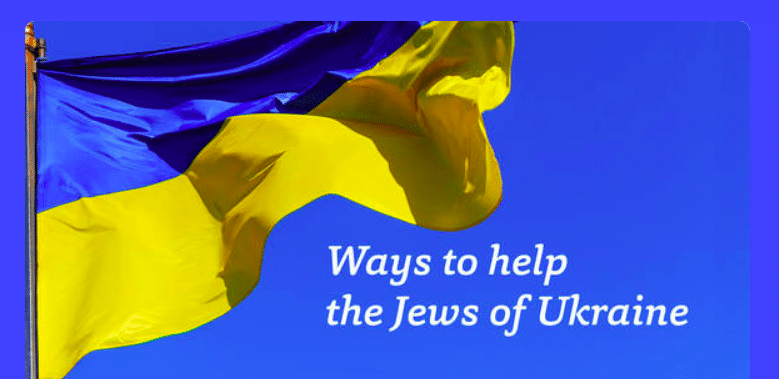
Ways to Help the Ukraine from Rabbi Yoshi Zweiback and Stephen Wise Temple

From Rabbi Yoshi Zweiback and Stephen Wise Temple:

Like many of our congregants, the Wise temple and school staff watched in horror as Russian forces invaded the sovereign nation of Ukraine last week.

For many, it brought back echoes of 1938, when Adolf Hitler annexed the Sudetenland under a similar pretense; as well, many of us remembered our own family members fleeing the region amidst fear and terror.

Many of you have reached out wondering what we can do. We have created a resource page for those in our community looking to help our fellow Jews and others in Ukraine, for those looking to learn more about the crisis, and for parents who want to find the right way to discuss these events with their children. If you have family currently in the region, we hope you will reach out to our clergy for pastoral and other support; we keep them in our prayers for peace and safety.

 In addition, Rabbi Yoshi will be facilitating two upcoming webinars with experts in international relations and the Russia-Ukraine relationship. Participants will have the opportunity to submit questions.

Conversations About Ukraine: Special Wise Webinars Rabbi Yoshi will be facilitating two upcoming webinars with experts in international relations and the Russia-Ukraine relationship.

WEBINAR: Conversations About Ukraine: Rabbi Yoshi Zweiback and the Honorable Ambassador Gary Grappo Thursday, March 3 at 6 p.m. | Register Former Ambassador Gary Grappo served as the Deputy Chief of Mission and Minister Counselor of the United States Mission in Riyadh, Saudi Arabia, before a posting as the United States Ambassador to Oman. He is currently the Vice President in Charge of External Relations Vice Presidency Unit for the Global Bank Disaster Risk Reduction and Reconstruction Fund, and is an adjunct faculty member at the Josef Korbel School of International Studies at the University of Denver.

WEBINAR: Conversations About Ukraine: Rabbi Yoshi Zweiback and Professor Kathryn Stoner, Ph.D. Wednesday, March 9 at 5:30 p.m. | Register A senior fellow at the Stanford University’s Freeman Spogli Institute for International Studies. Kathryn Stoner is also the Mosbacher Director of Stanford’s Center on Democracy, Development, and the Rule of Law. With a long history of published scholarship on both Soviet and post-Soviet Russia, she has served on the faculty of Princeton and Columbia. Her books include “Resisting the State: Reform and Retrenchment in Post-Soviet Russia” (2006) and “Russia Resurrected: Its Power and Purpose in a New Global Order” (2017). For those of you with family in the region, please reach out to us at letsconnect@wisela.org if we can be of pastoral or other support.
Read Rabbi Yoshi Zweiback‘s article in The Forward: Jewish history is repeating itself in Ukraine. This time, we must fight Putin back

Ways to help

IsraAID Emergency Response Team

IsraAID is an international non-governmental humanitarian aid organization based in Israel. It is deploying an emergency team to Moldova, which saw more than 15,800 Ukrainian refugees crossing the countries’ shared border within the first 24 hours after the Russian invasion. IsraAID’s team will provide urgent relief, psychological first aid, and conduct ongoing assessments to prepare for additional responses as the situation evolves.

IsraAID has extensive experience working with refugees all around the globe. extensively with refugees and displaced populations, working in emergency and long-term development settings in more than 50 countries around the globe since it was founded in 2001.

Any funds not utilized as part of this response will be used as part of IsraAID’s Emergency Response Fund. DONATE TO ISRAAID

Assisting Refugees

HIAS, which is the oldest refugee resettlement organization in the United States, is accepting emergency donations that can be made as either one-time or recurring gifts. HIAS is responding to the crisis with emergency humanitarian assistance to the thousands displaced by the Russian invasion.

DONATE TO HIAS

JCC Krakow

The Jewish Community Center of Krakow is actively housing Ukrainians fleeing the war. JCC Krakow is also providing food, clothing, medicine, sanitary products, psychological counseling, and legal aid to those escaping to Poland.

FRIENDS OF JCC KRAKOW

Resources for Learners

Our Wise community includes not just our temple families, but our students, as well as the teens in our youth programs. On this page, you will find helpful resources on how to talk to your children about war and conflict, and about what is happening in Ukraine.

How to Talk With Students About the Russia-Ukraine War

How to Talk To Your Kids About the Russia-Ukraine Crisis

Resources for Educators, Families to Discuss the Invasion of Ukraine with Students

Kids Britannica – All About Ukraine

Kids Briannica – All About Russia

Promoting Compassion and Acceptance in Crisis

Ways to Help the Ukraine from Rabbi Yoshi Zweiback and Stephen Wise Temple Read More »

Shalhevet Student Danielle Finn Proudly Displays Her Judaism on “American Idol”

Danielle Finn has been singing ever since she was a little girl. She had her first singing lesson was she was 7-years-old and was in the choir at Harkham Hillel Hebrew Academy and Shalhevet High School. Now, the 17-year-old has made her television debut, appearing as a contestant on “American Idol” on Sunday, February 27.

“I’ve been watching ‘American Idol’ my entire life, and I always wanted to be on the show,” said Finn, who is currently a senior at Shalhevet. “My grandpa said I should go on the show, and my mom’s friend signed me up to audition.”

Finn had only performed live twice before she auditioned on Zoom and passed that round. She then went in front of the celebrity judges, Katy Perry, Lionel Richie and Luke Bryan, in person this past October, singing a soulful rendition of “Mirror” by Madison Ryann Ward. While Bryan initially voted “no,” Perry enjoyed Finn’s audition so much that she convinced him to give Finn another try after she sang the song half an octave higher.

“I’ve been watching ‘American Idol’ my entire life and I always wanted to be on the show.” – Danielle Finn

“I was super nervous,” said Finn. “I didn’t practice it that way. But the second time, I did a lot better.”

After the second rendition, Bryan, along with Perry and Richie, voted yes. Finn was granted a golden ticket to move on. Since her audition aired, Finn has gained thousands of followers on her Instagram and TikTok accounts. She has nearly 30,000 followers on TikTok alone, where she posts videos of herself singing covers of songs from artists like Billy Joel, Britney Spears, Beyonce and Rihanna.

What Finn learned from the experience is that while there was a lot of competition, and she found herself getting in her head, “everyone has such a unique voice, and I should never compare myself to someone else. I have something different to give.”

From here, Finn is releasing her own song called, “Brace Yourself.” She also would love to go on tour. If something happens with “American Idol,” she’ll follow her passion for music, but so far, her plans are to go to Midreshet Torat Chessed in Netanya, Israel for the year.

Finn, who wore a chai necklace throughout the entire audition process, said that aside from music, Judaism is the biggest part of her life. She discussed her Jewish day school experience on the show, told producers she kept kosher and requested not to film on Shabbat.

“They were very accommodating,” she said. “They were so accepting. All the contestants were very interested in my Judaism and how much I practice, which was comforting to be around.”

In an email to the Shalhevet community titled “Kiddush Hashem on ‘American Idol,’” Head of School Rabbi David Block wrote that Finn is “demonstrating that there’s value to observance generally, [and] to committing oneself to a code and lifestyle that asks her to acknowledge a Higher Being. To walk with God with humility and dedication. To commit herself to a mesorah (tradition), to a way of life that is bigger than herself. What a rarity that is 2022.”

While Finn said it was a little uncomfortable asking for all the accommodations because of her beliefs, she said she learned from her experience to stick to her religion.

“It’s something I really love. I should never be ashamed. I think I’m definitely a role model for the Jewish community and all religious people. They shouldn’t be nervous or have any hesitation to practice their religion openly. It makes the world more beautiful.”

Shalhevet Student Danielle Finn Proudly Displays Her Judaism on “American Idol” Read More »

Satirical Semite: Misinformation Nation

We are living in The Age of Misinformation, and newspapers never include the words “fact checked” below an article, because the assumption is that it is true at the time of writing. However, in the interest of staying in sync with the trending fashion, here is some unverified and verified fake news for real Jews (and anyone else who is reading).

The recent Winter Olympics took place at a beautiful, picturesque, luxury ski resort (false) on the dry barren Xiahaituo Mountain near an industrial estate where all of the snow was manufactured (true). China was dedicated to winning some gold medals (true) and their most-prized gold medal winner, the freestyle ski star Eileen Gu, was born and raised in Beijing (false). Gu is a beautiful model, known in China as Gu Ailing. She was born in San Francisco and trained at California’s stunning Lake Tahoe ski slopes. On being interviewed in last year’s South China Morning Post, she said “I’m fully American … nobody can deny I’m American. When I go to China, nobody can deny I’m Chinese” (true). Her dual citizenship allows her to compete in the country where her mother was born. Come on Eileen! Just remember that mixing politics and skiing can be a very slippery slope.      

Nancy Pelosi, Speaker of the United States House of Representatives, asked Team USA athletes to overlook the First Amendment of the American constitution and not speak out against the cruel oppressive regime that hosted the Winter Olympics, just in case they get into trouble because she “fear[ed] for their safety if they do.” Presumably this travel advice also goes for any other American tourist visiting China (true). How can we disagree when the House speaker speaks out about not speaking? Let’s not allow a pesky little constitutional amendment to get in the way of making new friends while visiting the People’s Republic of China that is graciously hosted by the benevolent Chinese Communist Party. Unfortunately, Pelosi was probably correct in warning athletes to protect their personal safety by not mentioning China’s repeated and ongoing human rights violations of the Uyghur people that include alleged prison camps, slave labor, rape and forced sterilization. The Uyghur situation is horrific (true).

Just remember that mixing politics and skiing can be a very slippery slope.

In 2020 there was vocal criticism of Israel when it defended itself from the 4,360 rockets and mortars that were fired from Palestinians groups. Every one of those human rights campaigners stayed true to impartial and unbiased form, and turned their attention to criticize China’s human rights abuses (false). A typical campaigner’s defense might be “I like Jews, it’s just Israel I have trouble with,” or even “some of my best friends are Jewish.”  

On a lighter note, British politicians have put the “party” back into the Conservative Party. News emerged that during the pandemic lockdowns, when the government insisted that everyone stay at home and threatened monetary fines if people traveled more than five miles to socialize in other peoples’ homes, politicians were busy holding wine and cheese soirees under the guise of them being work meetings (true). The opposition Labour Party is calling for the blood of Prime Minister Boris Johnson, but since many Labour politicians supported the antisemitic leader Jeremy Corbyn, this is a case of “better the devil you know.” At least Johnson is a jovial chap and records nice festive messages for the Jewish community, and took a good punt at speaking Hebrew in a Rosh Hashanah message when he quoted “Avenue Malkeinu” (true, true and true).

Meanwhile, British tabloids fill their pages excoriating Prince Harry and Meghan, who has been nicknamed “Me Again” (true). There are widespread concerns about the release of Prince Harry’s forthcoming tell-all biography that is likely to criticize his family. His book will be released later this year while his 95-year-old grandmother, currently recovering from COVID, is celebrating her Diamond Jubilee as the UK’s longest-serving monarch with an unparalleled 70 years of service to her country on the British throne (true again!).

The Winter Olympics were controversial but they are now over. One way to celebrate the wins and losses is to head over to Lake Tahoe, buy an American beer from a bar at the ski resort, and say whatever you want out here in the Land of The Free (neither true nor false).


Marcus J Freed is an actor, writer and marketing consultant: www.marcusjfreed.com and on social @marcusjfreed.

Satirical Semite: Misinformation Nation Read More »

Khojaly: 30 Years Later, Yet Never Again 

This year marks the 30th anniversary of the most tragic and transformational experience of my life, an event that ended the lives of so many, and altered life for everyone I knew. 

This year also marks my 50th birthday, which is a true milestone, and it feels existentially profound to share this anniversary alongside the 30th memorial of the night of February 25/26, 1992, when I was captured by foreign invaders, imprisoned and tortured for 8 days.

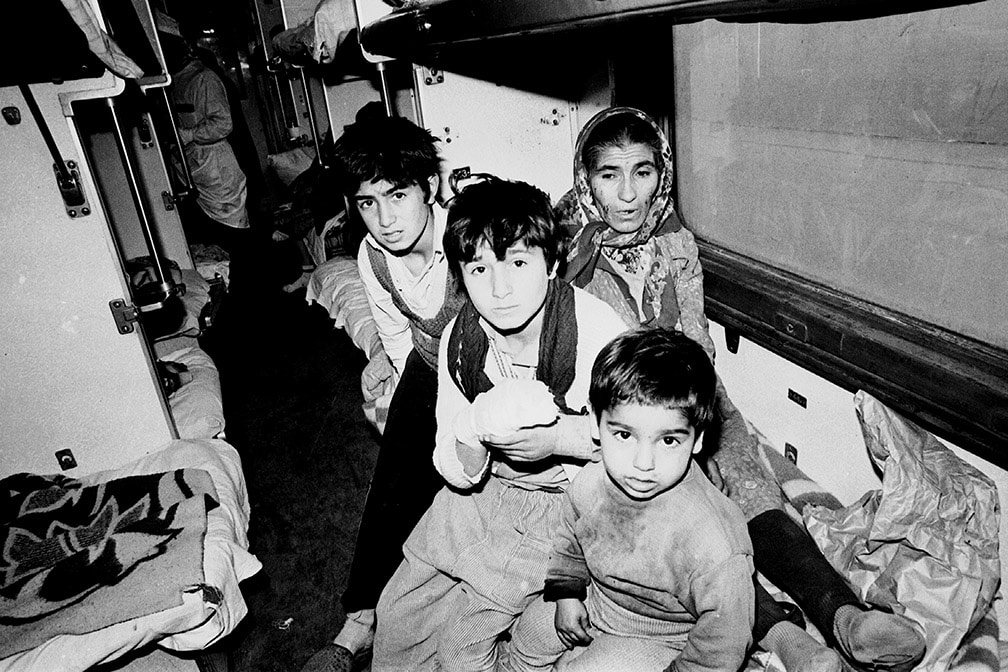
30 years ago, my extended family huddled in the foyer, flinching at the terrible, unfamiliar noises that kept getting closer, as we braced ourselves in prayer before fleeing our home, bullets ripping through the night, the smoky air smothered in screams. 30 years ago, my life went from normal to terrifying. 

30 years ago, my hometown of Khojaly in Azerbaijan’s Karabakh region was invaded by Armenian troops, who intentionally targeted civilians – men, women, children, and the elderly, brutally slaughtering 613 Azerbaijanis. I was 20 when it happened, painstakingly innocent, hopeful and completely sheltered from the monstrousness of indiscriminate war. 

Throughout the nearly 30 years after that horrendous night, Armenia remained as a violent occupier of not only my once idyllic hometown of Khojaly, but the entire Karabakh and East Zangezur regions of Azerbaijan, which account for approximately 20% of Azerbaijan’s sovereign territory. As a result of this horrific invasion, about 800,000 Azerbaijanis, like myself, were forcibly displaced from our homelands. The violent invasion killed 20,000 Azerbaijanis and wounded 100,000. As if that was not enough, Armenian lobby groups in the United States have spent tens of millions annually in attempts to manipulate the American polity and public, to support Armenia’s unlawful war, despite widespread international condemnation by the United Nations, Amnesty International, Human Rights Watch and the European Court of Human Rights, to name a few. 

Israeli President Reuven Rivlin recalled Khojaly in his 2015 address to the U.N. General Assembly on International Holocaust Commemoration Day, asking if the international community has been effective enough in preventing genocides that happened since the Shoah, like “the killing of Azerbaijanis in Khojaly”. 

President Rivlin recognized Khojaly for the atrocity it was. 

In the 30 years since the massacre I have required spine surgeries to address the damage of torture, married a true and loving partner, and together we raised a gorgeous daughter. 

Before I endured 8 days of the most violent, violating and damaging brutality in the Armenian torture camps and then released from captivity in exchange for cigarettes and gasoline, I had spent 20 beautiful years of my life in Khojaly. I had a beautiful view from my bedroom window in Khojaly, a view I may never see again, and even so, it would be unrecognizable. 

My life today, 30 years since the Khojaly Genocide and 50 years since I was born, is a miracle, because that night, those soldiers murdered 106 women in Khojaly. That night, Armenian armed forces murdered 63 children – some of them babies. That night, 70 eldery men and women were gunned down in the streets, or in the fields en route to the coverage of the forest, if they managed to make it that far. That night, eight entire families were utterly extinguished from the world; their lives and their lineage. 150 children’s fathers or mothers were murdered, and 25 children were completely orphaned. One night, 30 years ago! 

Of the 30 years since Khojaly, the last decade has been especially transformational; I traveled the world, sharing my story with other survivors and champions of human rights, working with organizations and world leaders to face the truth of this war so that the ugliness that enabled it and the people that propagated it, can never take power or repeat such cruelty and inhumanity again. I have flown several times to Los Angeles for memorials for the Khojaly Genocide. Los Angeles synagogues and Jewish organizations like Simon Wiesenthal Center hosted events honoring Khojaly victims and survivors, a transcendental act of solidarity and compassion

And I have witnessed the nation of my birth strive forward despite the unimaginable burden of criminal invasion, war and three decades of hostile occupation, and did not react retributionally even in long awaited victory, when in 2020, Azerbaijan liberated its lands from the occupation and Armenia was compelled to withdraw its troops. But they only withdrew; nobody has apologized or admitted their crimes, instead retreating Armenian forces dropped countless landmines in the course of their exit, and perhaps most painful, still refuse to explain to the families of the 150 missing Azerbaijanis from Khojaly and 3740 other missing Azerbaijanis from that war, what fate befell their loved ones. 

Now, as I balance the weight of this memorial alongside the sense of fulfillment I feel in the milestone of my 50th year, I am overwhelmed with a sense of hope. I stand with the most strength and assuredness I’ve ever known in myself, to go forward in the light of truth, to continue sharing my story so that I can help make sure what happened to me will never be repeated. I stand for my daughter, I stand for the daughters that were never born, for the mothers and grandmothers who mourn and are mourned, and for the families that have yet to mourn those who remain missing. I will remain standing, for the next 30, hopefully 50 years, and I believe in my lifetime, peace will be known to the world that truly makes what happened in Khojaly impossible to be repeated, ever again.  

Khojaly: 30 Years Later, Yet Never Again  Read More »

Movers & Shakers: Yossi Klein Halevi, Azerbaijan Helping Chabad and NDF’s New Executive Director

Modern Orthodox community Westwood Kehilla’s 2022 Visionary Awards honored Israeli author and journalist Yossi Klein Halevi. 

“A crucial source of Jewish power is the ability to maintain at least minimal unity within the Jewish people,” Halevi said during the Feb. 6 virtual program, delivering a keynote address called “The Jewish Moment.”

Westwood Kehilla President Greg Smith led the gathering. Participants included Westwood Kehilla Rabbi Avi Stewart and Jewish Journal Editor-in-Chief David Suissa. The live-streamed event also recognized Westwood Kehilla members Wendy and Clark Gross. 

Suissa congratulated Halevi for being honored, saying, “The expression, ‘This man needs no introduction,’ I think was invented for Yossi…the greatness of his writing is something that is rooted in a tremendous amount of holy struggle.”

During his half-hour remarks, Halevi highlighted the threat Iran poses to Israel as well as the hope offered by the Abraham Accords, which resulted in formal diplomatic relations between Israel and several Middle Eastern nations.

The Abraham Accords, Halevi said, “never received the true recognition they deserved.”

The honoree also spoke about the delegitimization of Israel in some American progressive spaces, including college campuses, and the danger of the Boycott, Divestment and Sanctions (BDS) movement. 

“What BDS is doing is restoring conditionality to American Jewish life,” Halevi said. 

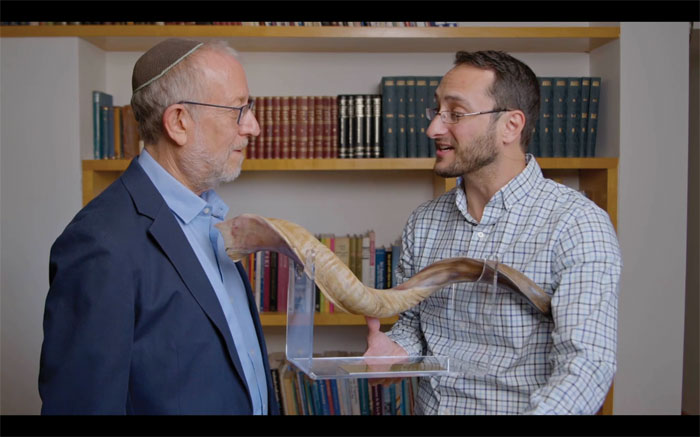
Joining Halevi in Israel, Smith’s son, Micah, gave the honoree a plaque affixed to a shofar.

“Your words are always a clarion call, like the shofar blast, to the Jewish people,” Micah said, presenting Halevi with an award engraved, “Thinker, seeker, mensch.”


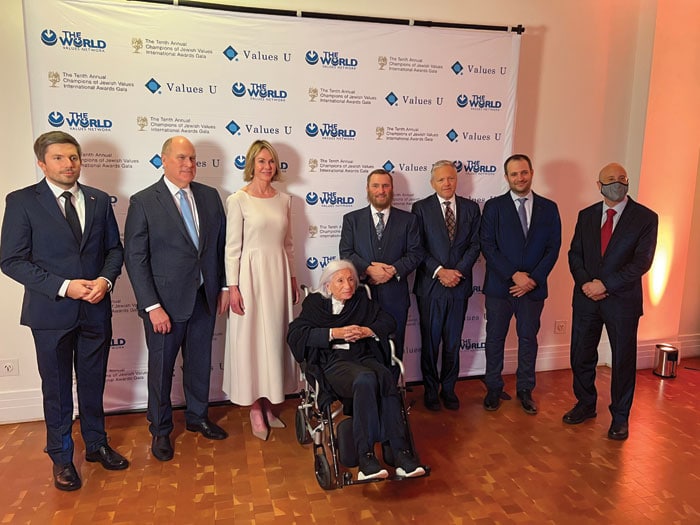
Attendees of the World Values Network gala included Marion Wiesel (seated, fourth from left) and Rabbi Shmuley Boteach (fifth from left). Courtesy of the World Values Network

The World Values Network’s tenth annual “Champion of Jewish Values International Awards Gala” was held at Carnegie Hall in New York.

The Jan. 20 gathering honored global philanthropist Miriam Adelson with the Light of the Jewish People Award on behalf of her late husband, Sheldon Adelson, whose yahrzeit fell shortly before the gala.

Several high-profile community leaders turned out, including Marion Wiesel, co-founder of the Elie Wiesel Foundation for Humanity, along with her son Elisha; former United States Ambassador to the United Nations Kelly Craft; television personality Mehmet Oz; Consul General of the Republic of Poland in New York Adrian Kubicki; IsraAid CEO Yotam Polizer; and Tom Rose, a former advisor to Vice President Mike Pence. 

Pfizer CEO Albert Bourla appeared virtually. 

The gala marked the 80th anniversary of the Wannsee Conference, a meeting among high-ranking Nazi officials that coordinated the “final solution” to the “Jewish question.” Evening honorees and speakers spoke of the significance of this event and discussed best practices for preventing future genocide. They also examined recent spikes in global anti-Semitism, evidenced by the recent hostage crisis at a Texas synagogue on Shabbat. 

“The Jewish Values International Awards Gala is a time where we can recognize the best practices pioneered by leaders from around the world to combat hate, and appreciate how they can make a difference at a global scale,” Rabbi Shmuley Boteach, founder and executive director of the World Values Network, said. “We must also highlight the key role these leaders have played in championing social cohesion and peace building efforts. The World Values Network affirms that we are all entitled to justice, inclusion at all levels of society, and access to equal opportunities. The Jewish community is of critical importance in establishing a true values-based global society.”                        

The World Values Network, a nonprofit, aims to impact the world globally with the power of universal Jewish values. Its message, based on Boteach’s teachings, is communicated through high-profile events, speeches and public debates.


Geoffrey Gee, executive director of the Neuromuscular Disease Foundation. Courtesy of the Neuromuscular Disease Foundation

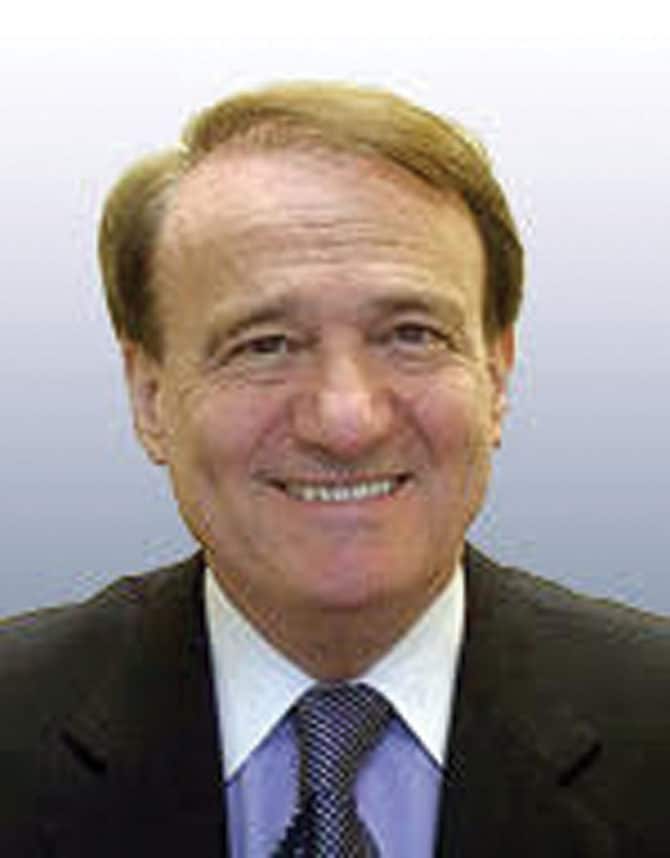
The Neuromuscular Disease Foundation (NDF) has appointed Geoffrey Gee as its new executive director. Gee succeeds Lalé Welsh, who previously announced her decision to retire from her longtime role as chief executive officer. 

Gee has been involved with a number of Jewish organizations, including American Technion Society, the Jewish Federation of Greater Los Angeles and University Synagogue, now part of Wilshire Boulevard Temple.

“Our board conducted a comprehensive search for an executive director candidate with Geoffrey’s expertise, know-how and ability to strengthen strategic relationships and manage donor relations,” NDF Board Co-Chair Ralph Loren said in a statement. “With his exceptional track record of leading programs to broaden organizational reach, unite and galvanize communities, support large-scope initiatives, and take organizations to the next level, we believe Geoffrey is the ideal executive director to lead the Neuromuscular Disease Foundation in its next stage of growth and achievement.”

The Beverly Hills-based organization is close to the Jewish community since GNE Myopathy, also known as Hereditary Inclusion Body Myopathy, is a rare genetic disease that primarily affects Middle Eastern Jews. 


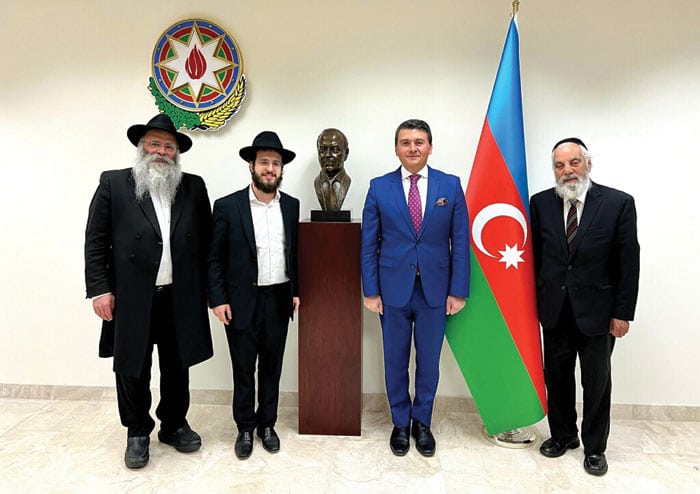
From left: Rabbi Kalman Weinfeld; Chabad House-Almaden Valley Rabbi Mendel Weinfeld; Consul General of Azerbaijan in Los Angeles Nasimi Aghayev; and David Taban. Courtesy of Rabbi Mendel Weinfeld

A Northern California Chabad rabbi met with Consul General of Azerbaijan in Los Angeles Nasimi Aghayev on Feb. 10 to discuss the Azerbaijani consulate’s support for rebuilding his Chabad, which was destroyed last December in a fire.

“I truly believe that people of different faiths should always help each other in times of trouble,” Aghayev said when asked why the Azerbaijani consulate was supporting the synagogue. “That’s how a sustainably harmonious society can be built for the benefit of all.“

Those in attendance at the consulate’s Los Angeles office included Chabad Rabbi Mendel Weinfeld, who leads the Chabad House in Almaden Valley, a neighborhood of South San Jose; Aghayev, a longtime ally of the Los Angeles Jewish community; David Taban, a philanthropist on the Chabad building committee; and Rabbi Kalman Weinfeld, a member of the executive rabbinical council at OK Kosher.

“To see the Azerbaijan people be there for the Jewish people is the most incredible thing,” Rabbi Mendel Weinfeld said in a phone interview.

Movers & Shakers: Yossi Klein Halevi, Azerbaijan Helping Chabad and NDF’s New Executive Director Read More »

Ukraine Holocaust Memorial Hit in Russian Airstrike

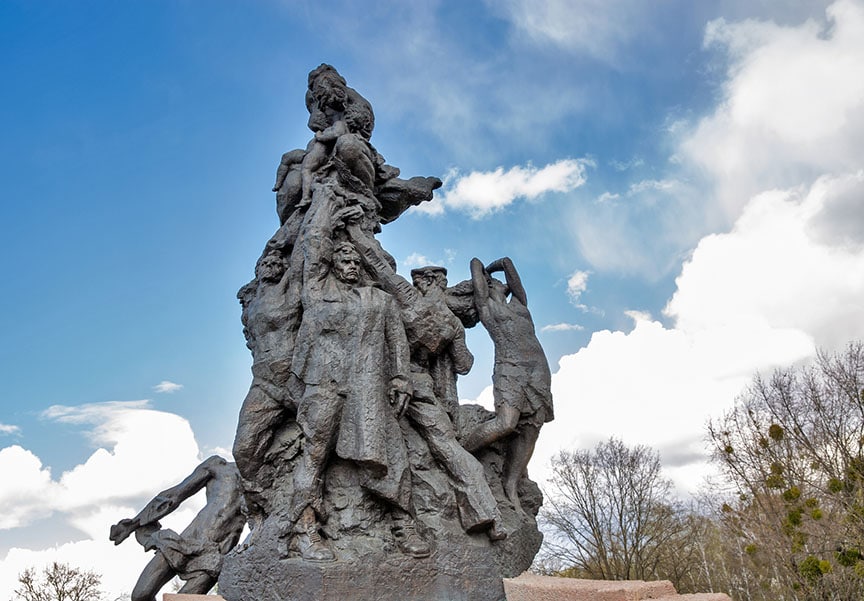
A Ukrainian Holocaust memorial was hit by a Russian airstrike targeting a nearby television tower on March 1, drawing international condemnation.

The Babi Yar Memorial, where nearly 34,000 Jews were slaughtered by the Nazis, was damaged after the Russians launched a missile against the nearby Kyiv TV Tower, the capital’s main television tower. At least five people died in the airstrike and five others were wounded.

Ukrainian President Volodomyr Zelensky tweeted, “What is the point of saying «never again» for 80 years, if the world stays silent when a bomb drops on the same site of Babyn Yar? At least 5 killed. History repeating…” Ukrainian Foreign Minister Dmytro Kuleba similarly tweeted, “On September 29-30, 1941, Nazis killed over 33 thousand Jews here. 80 years later, Russian Nazis strike this same land to exterminate Ukrainians. Evil and barbaric.”

Israeli Foreign Minister Yair Lapid condemned the strike in a statement, though he didn’t mention Russia. “We call to respect the site…We express our sorrow at the loss of human life.” Israel has offered to provide aid in fixing the damage to the site.

Natan Sharansky, who serves as the Advisory Board Chair for the memorial site, said in a statement, “[Russian President Vladimir] Putin seeks to distort and manipulate the Holocaust to justify an illegal invasion of a sovereign democratic country is utterly abhorrent. It is symbolic that he starts attacking Kyiv by bombing the site of Babyn Yar, the biggest of Nazi massacre[s].” He added: “We must not allow the truth to – once again – become the victim of war.” Putin had claimed that he was invading Ukraine to engage in the “denazification” of the country.

Jewish groups also denounced the striking of the Babi Yar site.

“This is the reality of Russia’s illegal invasion of Ukraine,” the American Jewish Committee tweeted. “Bombs are falling on the Babyn Yar Memorial, the site of one of the worst massacres of Jews during WWII. Putin follows in the steps of his Soviet predecessors in desecrating the memory of the Holocaust.”

The Simon Wiesenthal Center also tweeted that the “USSR built its TV station for Ukraine adjacent to the #BabiYar killing field. Now Vladimir #Putin-dispatched Russian bombs that hit tower also damaging the Shoah Memorial to the tens of thousands of Jews mass murdered there. Stop the madness!”

The European Leadership Network (ELNET) tweeted that they were “deeply concerned” about the strike, adding that it was “outrageous and unconscionable.”

StandWithUs Israel Executive Director Michael Dickson tweeted, “Bloody murder once again at the site of a heinous massacre.”


Ukraine Holocaust Memorial Hit in Russian Airstrike Read More »

The Antidote to Erasing Jewish Identity: Making it Concrete

Why is it that certain crises have trouble gaining traction? When a Jew gets attacked on the street, or a swastika is discovered on a synagogue wall, the Jewish community goes on Defcon 5. It’s all we can talk about.

But when someone brings up an equally important subject, such as the “erasure of Jewish identity,” many people politely yawn. Perhaps it feels a little too abstract.

This thought occurred to me the other day when I participated in a terrific virtual seminar on “Jewish-Israel Erasure in the Progressive Discourse,” sponsored and organized by the Reut Institute. I sat on a panel titled, “The Role of Emerging Communities.”

Before I shared what I believe Sephardic Jewry can bring to the Jewish conversation, I reflected on the difficulty of getting problems like “the erasure of identity” on the communal radar. Clearly, the notion of identity doesn’t feel as urgent as, say, the gold standard of Jewish concerns: antisemitism. An expression of Jew-hatred, whether on a leaflet or on social media or through a violent act, is visible and has no ambiguity.

The erasing of identity, on the other hand, is subtle and feels less immediate. Also, not only is “identity” hard to see and feel, it can even be associated with positive things like “becoming American.” For Jews for whom a Jewish identity is not that big a deal, replacing “Jewish” with “American” doesn’t feel like the end of the world.

The challenge becomes: How can we make Jewish identity something more concrete and enticing that people can experience and feel good about?

The challenge becomes: How can we make Jewish identity something more concrete and enticing that people can experience and feel good about?

I answered that question on my panel by taking as broad and positive a view as possible of the Jewish experience. I explained that growing up in Casablanca, I learned the “Judaism of the sun,” a Judaism of dreams and optimism, of beauty and aesthetics, of tight-knit neighborhoods and continuous Jewish holidays, and, perhaps above all, of faith in God.

After we moved to Canada when I was 8, I felt guilty that I had never heard of the most horrific trauma ever inflicted on Jews, the Holocaust. Over the years, as I joined in the commemoration of this singular tragedy and the imperative to never forget, I saw that my “Judaism of the sun” hadn’t  left me. It was still in me. It helped that I befriended a Holocaust survivor, the late Eva Brown, who would always tell me that her best revenge against the Nazis what to love life and live it fully.

On my panel, I tried to connect these two dots—the abstract notion of identity with the palpable Judaism I picked up in my Jewish neighborhood of Casablanca. So much of my Jewish identity was wrapped up in things I could see and feel: the community oven where my mother would bring her dafina (Sephardic cholent); the hustle and bustle and scents of Jewish holidays; the magical night of Mimouna; the melodic chanting in synagogues; the gathering around Shabbat tables; the visits to the desert graves of holy men; and so on.

These were the “identity seeds” that were planted inside me, and that grew with time. And as they grew, it never escaped me that I could not separate my Jewish identity from the multiple Jewish acts that filled my life.

Just as a violent act against a Jew is visible and palpable, so is a visit to cheer up a lonely bubbe or zeyde.

The flip side of concrete darkness can be equally concrete. Just as a violent act against a Jew is visible and palpable, so is a visit to cheer up a lonely bubbe or zeyde. Just as an antisemitic flyer is concrete and easy to hate, a beautiful Shabbat table is concrete and easy to love.

Perhaps the best way, then, to fight the erasing of Jewish identity, from wherever it originates, is to nurture a Jewish identity “of the sun” that is both tangible and inspiring. That kind of identity, no one can erase.

The Antidote to Erasing Jewish Identity: Making it Concrete Read More »

you-dont-know-schiff

Paul Reiser

Mark’s good friend Paul Reiser is on the podcast today!  Mark and Paul came up together as comedians in NYC in the 70’s and have been friends ever since.  Today Paul discusses, among other things, his start in comedy, his passion (and if we may say so, his gift) for playing piano, landing the role in Diner which launched his acting career, his friendship with Yoko Ono and memories of walking to the Dakota with Mark the night John Lennon was killed.

And Paul Reiser is back on stage doing standup!  Be sure to see him live at Hilarities in Cleveland on March 4 and March 5, 2022.  Tickets and all things Paul Reiser are available on his website:
http://paulreiser.com/

Follow him on Instagram & Twitter:
https://www.instagram.com/paulreiserofficial/
https://twitter.com/PaulReiser

Your hosts:
Mark Schiff
https://markschiff.com
https://twitter.com/markschiff
https://instagram.com/markschiff1

Lowell Benjamin
https://twitter.com/lowellcbenjamin
https://instagram.com/lowellcbenjamin

Check out Mark’s book
“I Killed: True Stories of the Road from America’s Top Comics”
https://www.amazon.com/Killed-True-Stories-Americas-Comics-ebook/dp/B0024NP5DI


Paul Reiser Read More »