fbpx

January 21, 2022

Engraved Freedom – Thoughts on Torah Portion Yitro

 

Engraved Freedom – Thoughts on Torah Portion Yitro 

We read in the Torah that the 10 Commandments were engraved on stone tablets. There is a well known rabbinic word play on the word “engraved.”  The Hebrew word for “engraved” in Exodus 32:15 is “charut” (rhymes with “root”).  The exact same Hebrew letters with different vowels, however, spell out the Hebrew word “cheirut,” which means “freedom.”


The word play was irresistible to the ancient Rabbis. “Torah charut al ha-luchot” means “the Torah is engraved on the Tablets,” while “Torah – cheirut al haluchot” means “Torah is freedom on the tablets.”  You need two more pieces of information to really understand this wordplay. In biblical Hebrew, the word “luchot” (slabs, or tablets) also refers metaphorically to the heart. The “tablets of the heart” refer metaphorically to the mind and passions of the ego self that form our lives.  Therefore, if you say “cheirut” on the “luchot,” you have the idea that Torah is “freedom on the heart.”  How can law be freedom?


The usual answer, a pretty good one, is that, spiritually speaking, only with law can we be free. Free from what?  Free from the “yetzer hara,” the shaping toward destructiveness that resides in the hidden recesses of the ego self, the secret chambers of the heart.


Law that brings us freedom means something like the moral law and paths of virtue: patterns of thought, speech and behavior that lead, immediately or eventually, to well-being, for ourselves and for others. We need law because all of us, in some dimension of our being, rebel against the moral code, the code of virtue and wisdom. The yetzer hara makes us stray from the path of truth.


We need law, we need commandments, because there are lines that we should not cross. Conscience should be our guide, but the strength of the Yetzer HaRa pushes up against the conscience, destabilizes us, disregulates us. The moral code, as law, can function as a buttress against the waywardness of the Yetzer HaRa.


So far so good. Now apply this to our interpersonal lives. Those who have been anywhere near me in the last number of years when I talk about virtue in relationships, know my view – that criticism and complaint, conflict and senseless arguing gnaw away at the goodness that close relationships should bring. Criticism and complaint are always rooted in some kind of personal law, some standard, some regulation that a given person feels that the other person must obey. We unconsciously demand that other people be compliant. The yetzer hara has us impose our law on others. Not the moral code, but our own law.


In every counseling session regarding interpersonal relationships, the back and forth tension is often between power and freedom. Each one wants the power to enforce “the law” on the other, and each one demands freedom from the unreasonable “law” of the other. (I gratefully credit the famed psychologist William Glasser for the “power/freedom” idea.)


Law as virtue gives us the freedom to grow. The law of virtue helps us be free from the urge to control others. Law as virtue allows us to govern ourselves with an eye toward what is good, not that which gives us control over others. Law as virtue also helps us to not act in defiance or resentment – pushing back does not necessarily make us free. Freedom is found in creating beauty, balanced between the need for order and the need for liberty.


Where do we start in order to find the balance? I think of Proverbs 31, “Eshet Chayil,” “A Woman of Valor,” as a way to guide our thinking.  The Kabbalists taught that this “woman” is the Shekhina, the feminine immanence of the Divine, who enters the home especially on the Sabbath. In Proverbs 31:26 we read, “She opens her mouth with wisdom; the Torah of loving kindness is on her tongue.”  This verse is an aspiration for all of us.


Perhaps the first commandment of our “Torah of virtue” is dual, “wisdom and loving kindness.” In wisdom and loving kindness, each with its own urging on the conscience, a Torah of authentic humanity can be found. In our liturgy, we ask “sim shalom, tovah, uvrakhah; chen, ve-chesed ve-rachamim,” “establish peace, goodness, blessing; grace, loving kindness and compassion.”  On this Sabbath of the 10 Commandments, let’s engrave this prayer on the tablets of our inner lives and find freedom in its law, and welcome the Immanence of the Divine into our homes and our hearts.

Engraved Freedom – Thoughts on Torah Portion Yitro Read More »

As Long as Jews Succeed, They Will Attract Hate

The initial denial of an anti-Jewish motive in last Saturday’s synagogue attack in Texas has dominated the Jewish conversation this week. When an FBI agent uttered the fateful words, “He was singularly focused on one issue, and it was not specifically related to the Jewish community,” that guaranteed at least 100 outraged op-eds, and for good reason. Eventually, of course, sanity prevailed and the antisemitic act was widely recognized for what it was.

But the more interesting question, for me, has never been whether some people hate Jews but rather why they do. After all, this is a hatred devoid of human logic. If you showed up from Mars one day and were asked to pick one group of humans not to hate, can’t you make a strong case for the Jews?

If you showed up from Mars one day and were asked to pick one group of humans not to hate, can’t you make a strong case for the Jews?

Seriously, has any group contributed more to humanity’s well- being relative to its size than this ancient tribe? Who could hate the people behind “Seinfeld” and “Curb Your Enthusiasm,” not to mention behind and in front of virtually every social cause in this country, not to mention the famous writers and Nobel Prize winners and religious thinkers and community leaders and brilliant doctors and on and on?

Whether we want to admit it or not, the stereotype of “success” relative to Jews has merit. Yes, I know, we’re supposed to hate stereotypes and generalizations, but the evidence is pretty clear that Jews generally strive for success. This is not a judgement or a boast; and this is not to deny exceptions. It’s simply true, and few serious people would disagree.

But there is a fine line between success and power. When analysts try to explain Jew hatred, the idea of power often comes up. In his astute essay this week in The New York Times, Bret Stephens reviews the many mutations of Jew hatred throughout history, and concludes that “The common denominator in each of these mutations is an idea, based in fantasy and conspiracy, about Jewish power. The old-fashioned religious antisemite believed Jews had the power to kill Christ. The 19th-century antisemites who were the forerunners to the Nazis believed Jews had the power to start wars, manipulate kings and swindle native people of their patrimony.”

The multi-faceted uniqueness of the Jew— a people, a nation, a religion, a culture, a civilization— ends up facilitating all these mutations. But behind them all lurks the threatening notion of “too much power.”

It’s possible, however, that even without this nefarious view of the all-powerful Jew, there is enough in “Jewish success” to fuel the corrosive sentiment of envy.

“Envy often leads us to become depressed, anxious and angry,” Dr Robert L. Leahy writes in Psychology Today. “And we ruminate about what has happened… We dwell on the unfairness or our sense of futility. We avoid seeing the other person, because it reminds us that we are falling behind…We may even give up competing altogether, because we think that it just reminds us of our sense of failure or our belief that we can’t stand the unfairness.”

It breaks my heart to write this, because I was raised by my parents to emulate success, not resent it. Maybe that is what the Jews did in America. Liberated from the shackles of oppression and persecution, they met a country where success was the dominant ethos. Instead of feeling envy, they decided to emulate it.

Jew haters have no intention of emulating Jews. Perhaps when they demonize Jews with extravagant conspiracy theories, they’re trying to suppress the deep pain of envy.

Jew haters have no intention of emulating Jews. Perhaps when they demonize Jews and Israel with extravagant conspiracy theories, they’re trying to suppress the deep pain of envy. They must know, deep down, that success is a cool idea and that envy is not. Poisoning Jews and the Jewish state lets them off the hook and numbs their pain.

Seen through that lens, Jew hatred becomes a nasty price Jews must pay for striving for success. At a time when “success” in woke America has become associated with “white privilege,” we shouldn’t be surprised at the recent rise in anti-Jewish resentment. For many of us, however, if being hated by an envious segment of the population is the price we must pay for success, it’s a deal we’ll make all day long.

Here’s the ultimate irony: For Jew hatred to end, Jew haters must emulate the Jewish habit of emulating.

Shabbat shalom.

As Long as Jews Succeed, They Will Attract Hate Read More »

Local Jewish Women Organize Brianna Kupfer Memorial

On January 13, 24-year-old Brianna Kupfer was stabbed to death while working alone at Croft House on La Brea Avenue in Hancock Park. Allegedly, Shawn Laval Smith brutally murdered Kupfer, a UCLA student. A customer found her body 15 minutes after the random attack. Smith, who was arrested many times for crimes that happened out of the state, was arrested for the killing on January 19 in Pasadena and is being held on a $2 million bail.

Upon hearing about the tragedy, Yael Koppel reached out to her friend Sheila Meyer about doing something to honor Kupfer.

“We both thought it was strange that people were going about their business while something so tragic happened in our neighborhood,” said Meyer, who owns A Time for Dance at 7269 Beverly Blvd. “I feel like the whole neighborhood was shaken by the news that this happened. I couldn’t stop thinking about the senseless murder of this young girl.”

Koppel and Meyer started planning a vigil for Kupfer. They held it on January 20 and drew dozens of attendees, including local leaders like Los Angeles City Attorney Mike Feuer, Former Los Angeles City Council Member Zev Yaroslavsky and Sam Yebri and Katy Young Yaroslavsky, who are both running for Los Angeles City Council in the 5th district.

“Brianna could have been any of our loved ones,” Yebri told the Journal. “In the Jewish tradition, we comfort mourners by saying ‘May her memory be a blessing.’ For those words to have meaning after Brianna’s senseless murder, we must all come together as Angelenos and fight to improve our city’s approach to mental health and public safety.”

Katy Young Yaroslavsky said, “One of the things I heard over and over at Brianna’s memorial was that she could have been any of our daughters. When I was Brianna’s age, I lived just around the corner from Croft House. The randomness of her killing and that it was utterly preventable make it all the more tragic. By demanding more from our leaders and committing to creating truly safe communities together, we can make sure this doesn’t happen again.” 

“It was beautiful to see everyone come together to honor this young woman with a bright future whose life was tragically cut short.”

The team at Croft House and Kupfer’s friends and neighbors showed up and shared their fond memories of her.

In his speech, Croft House’s Co-Founder and Director of Business Development Alex Segal said, “Bri was the brightest part of anyone’s day who got to interact with her. She was smart, capable, intelligent, kind and friendly, and just an incredibly driven person.”

Meyer was touched that so many people, including those closest to Brianna, attended the vigil. “It was beautiful to see everyone come together to honor this young woman with a bright future whose life was tragically cut short. I hope it brought some solace to her friends and comfort to the family that they are not mourning alone.”

Over the past two years, homicides have risen 94% in Los Angeles County, according to Sheriff Alex Villanueva. “I think throughout the entire United States, it’s probably one of the biggest jumps ever,” he said in a news conference on January 19.

The same day that Kupfer was killed, a homeless man attacked 70-year-old nurse Sandra Shells at Union Station. She died from her injuries just three days later.

“I feel that many of us are scared,” said Meyer. “[We’re] not feeling comfortable when we go out and [we’re] scared to allow our children to walk in the neighborhood alone. While the murderer was caught, this incident reminds us that there are many others out there who could do the same thing.”

She hopes that Kupfer’s murder is a huge wakeup call for everyone in this city. “This is yet another crime that should not have happened,” she said. “We need to hold our politicians accountable for these senseless crimes. We need to demand that they restore safety to our neighborhoods.”

Local Jewish Women Organize Brianna Kupfer Memorial Read More »

Sundance Film Festival Press Welcome

Yesterday morning I had the privilege of virtually attending the 2022 Sundance Film Festival Press Welcome, and it did not disappoint.  Sundance runs virtually this year from 1/20/22 to 1/30/22.

The press conference was led by the intelligent and impressive Tabitha Jackson, the Festival Director.  She addressed the recent move to go to a virtual only festival after they had been planning a combination in person and online festival for nearly a year.

I very much applaud their decision, as covid is still among us after all these months; having contacted a mild case myself after going to an out-of-town sporting event recently.   It must not have been easy to give up their plans just a few weeks before the festival started, but I believe they made a good and wise decision.

Ms. Jackson mentioned that since they already had the apparatus set up for a partially virtual festival, they were able to convert Sundance to an entirely online festival.  They also have seven satellite screens where you can watch films in person in various places throughout the US.

Apparently, the pandemic has not dampened talented independent filmmakers’ output in the least.  They had a very healthy number of submissions this year, with themes often focusing on the environment, climate, Latin American and indigenous populations issues, reproductive rights, etc.  The team discussed how the artists are creatively adapting to the restrictions of the pandemic, using 3D technology, virtual reality, and other innovations to carry out their creative visions.

In addition, the Sundance team discussed the very exciting New Frontier Spaceship, a virtual reality invention where festival goers can enter a virtual reality and experience films, parties, events, talks, etc. almost as if they were there in person.  It had me rushing out the Best Buy to get the latest VR headset. I can’t wait to play around in this new dimension!

Ms. Jackson mentioned that ticket sales are “brisk and healthy,” and she also emphasized the importance of a film festival celebrating the freedom of expression, joy, and talent of independent filmmakers of all stripes.  “This is the moment,” she said, where as a culture, we all share a look at what is going on in the independent filmmaking milieu.  The innovation and uniqueness of this culturally iconic film festival cannot be overstated.

Sundance runs from 1/20/22 to 1/30/22, and tickets are still available.  Visit sundance.org for more information and tickets.  They have short films, feature film premieres, documentaries, workshops, parties, the virtual reality opportunities, and many other activities.  It can be overwhelming but pace yourself and pick your events and films carefully.  Unfortunately, we can all only be at one place, virtual reality or no, at one time.  I just wish I could experience everything Sundance has to offer.

It should be noted that there is also a terrific Sundance Institute You Tube channel where you can watch countless videos about the festival and the history of Sundance itself.  Visit youtube.com/sundancefilmfestival/videos to explore what they have to offer.

You can also find several interviews online with the original founder of Sundance, Robert Redford.  That is a fascinating story in and of itself.  Mr. Redford turned his earnings from his earlier film career into protecting this beautiful area of Utah.  He also developed the film festival from an early tiny festival with one theatre, into the world-wide influence it enjoys today.  If you ever doubt the difference one individual can make, it’s people like Mr. Redford that will renew your faith in humanity’s power and purpose.  He has made a major impact on our culture, raised awareness for environment issues, and had a huge influence in the film industry, in addition to his long and highly successful acting and directing career.  Bravo, Mr. Redford!

I will be covering more Sundance events and films here; stay tuned.  Now I’ve got to go learn to use my new virtual reality headset!

Sundance Film Festival Press Welcome Read More »

Campus Double Standards and the Need to Protect Jewish and Zionist Students

After months of mounting pressure from numerous Jewish organizations and leaders, the University of Southern California has announced measures to help combat the alarming antisemitism that has created a hostile environment for many Jewish and pro-Israel students on its campus.

USC’s announcement comes on the heels of an uproar over the university’s failure to adequately respond to virulently antisemitic and threatening tweets from a USC graduate student, which included, “I want to kill every mother f—king Zionist,” “Zionists are going to f—king pay” and “yel3an el yahood [curse the Jews].” This was just the most recent example of the anti-Zionist motivated harassment of Jewish and pro-Israel students. In 2020, a pro-Israel Jewish student government vice president felt compelled to resign her position following a relentless social media campaign to oust her from office, which included such comments as “impeach her Zionist a–” and it “warms my heart to see all the Zionists from USC … getting relentlessly cyberbullied [smiling emoji].”

The Jewish community deserves kudos for getting President Carol Folt and the USC Board of Trustees to commit to addressing the problem, including through the establishment of an Advisory Committee on Jewish Life and ensuring Jewish representation in DEI efforts. These are hopeful first steps. However, to make significant and lasting change, there is more to be done. Most importantly, the university must acknowledge and address the underlying nature of the problem: the unacceptable double standard when it comes to the university’s response to the harassment of Jewish and pro-Israel students.

This double standard was summed up nicely by Rabbi Abraham Cooper of the Simon Wiesenthal Center, when he posed the question many in the Jewish community have been wondering: “If [similar social media] comments were made about Black students, what would the school’s response be?” Almost no one doubts USC’s response would be fast and furious, and not necessitate months of mounting pressure.

By now, this double standard is well known on campuses across the country. The anti-Zionist motivated verbal harassment of Jewish and pro-Israel students is generally treated as free speech and ignored or downplayed by school administrators, while similarly harassing speech directed at other minority groups is addressed promptly and vigorously, with the harassers duly disciplined.

What is less well known is that this egregiously unfair double standard finds its source in campus harassment policies.

What is less well known is that this egregiously unfair double standard finds its source in campus harassment policies.

Take USC, for example. Its Policy on Prohibited Discrimination, Harassment, and Retaliation opens with, “University of Southern California believes all members of the university community should pursue their work, education, and engagement in University programs and activities in a safe environment, free from discrimination and harassment.” So far, so good—just what every USC parent wants and expects to hear.

But if parents were to read just a tad further, many would become rightly alarmed. For while the university professes that all students should be free from harmful behaviors that threaten their safety or deny them opportunities to fully participate in their college experience, the school’s policy only affords protection to victims of “discrimination and harassment based on protected characteristics.”

What this means is students who don’t fit into certain identity groups cannot rely on any of the policy’s protections, even if they fall victim to behavior that exceeds the policy’s threshold for “hostile environment harassment.”

Granted, the list of protected identity groups is quite long, and many students will easily find their niche. But for Jewish students experiencing anti-Zionist motivated harassment, it’s not so simple. And not just at USC.

While all school harassment policies include “religion” as a prohibited characteristic, and most, such as USC’s, also include “ethnic origin” or “ethnicity,” Jewish students who fall victim to harassment motivated by their support for Israel are often not covered by these policies, since many administrators do not consider support for Israel an expression of a Jewish student’s religious beliefs or ethnicity. And despite recent efforts by Jewish students and communal organizations to get schools to adopt the International Holocaust Remembrance Alliance (IHRA) definition of antisemitism, which includes examples identifying anti-Zionist rhetoric as antisemitic, most administrators are hesitant to do so, fearing growing pushback from anti-Zionist students and faculty.

To make matters worse, the unequal treatment of pro-Israel students is compounded when it comes to freedom of speech and academic freedom.

Although most universities proudly advertise their firm commitment to protecting their students’ freedom of expression, these same schools carve out an exception for the verbal harassment of protected groups, which is not considered free speech and will be subject to punishment. USC, too, makes a free-speech exception for protected-class verbal harassment, but it is one of the few schools to offer a reasonable justification for it, suggesting that harassing conduct is itself a suppression of expression: “[W]hen harassment is committed against students … it threatens their academic freedom.”

Well, of course it does! The Supreme Court’s definition of harassment, which USC and almost all schools incorporate into their harassment policies—calling it “verbal, physical, written, electronic, or other conduct … [that] is sufficiently severe, persistent, or pervasive that it unreasonably interferes with, limits, or denies that individual’s ability  to  participate in or benefit from the University’s educational program or activity”—makes it crystal clear that such conduct does indeed deprive its victims of freedom of expression. So, kudos to USC for pointing out the obvious, that a student’s right to express him or herself should be vigorously protected unless that expression tramples on another student’s freedom of expression.

Except that’s not how it works at USC or on most other campuses for students who aren’t members of a protected identity group. Their right to be protected from verbal harassment does not outweigh their harasser’s right to free speech. This is a double whammy for pro-Israel students: not only are their harassers afforded free speech protection that is, in effect, license to continue verbally harassing them, but their own freedom of speech and academic freedom are diminished by the harassment.

This is a double whammy for pro-Israel students: not only are their harassers afforded free speech protection that is, in effect, license to continue verbally harassing them, but their own freedom of speech and academic freedom are diminished by the harassment.

Which brings us back to USC and its newly announced efforts to address campus antisemitism.

In order for these efforts to succeed, they must include an acknowledgment of the elephant in the room, namely, the gaping inequality between “protected” and “unprotected” students in USC’s harassment policy and its profound impact on student safety and freedom of expression. They must also commit to expanding the school’s policy or establishing a new one that will apply the same stringent standard of protection from harassment prescribed by federal and state law to all students at the University, not just some.

Once USC can guarantee that all students are equally protected from the harassing behavior that threatens their safety, squashes their self-expression and prevents them from fully participating in campus life, they will have gone a long way to creating a welcoming and healthy campus climate not just for Jewish and pro-Israel students, but for all students.


Tammi Rossman-Benjamin is the director of AMCHA Initiative, a nonpartisan, nonprofit organization dedicated to combating anti-Semitism at colleges and universities in the United States. She was a faculty member at the University of California for 20 years.


Campus Double Standards and the Need to Protect Jewish and Zionist Students Read More »

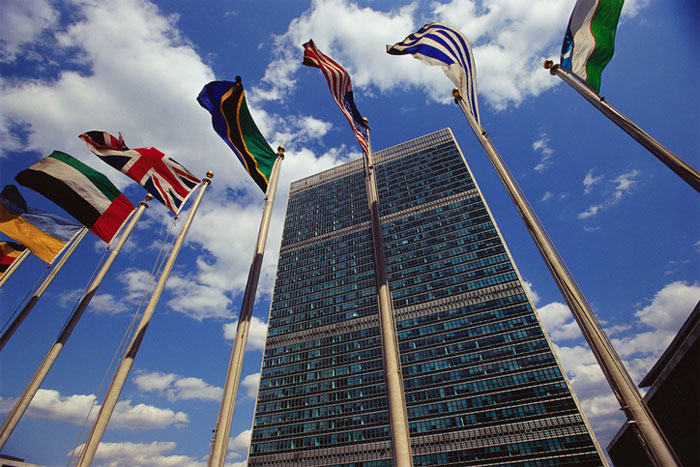
UN Passes Israel-Sponsored Resolution Condemning Holocaust Denial

The United Nations General Assembly (UNGA) passed a resolution sponsored by Israel on January 20 denouncing Holocaust denial.

The resolution defined Holocaust denial in part as “intentional efforts to excuse or minimize the impact of the Holocaust or its principal elements” and urged UN members to rebuff “any denial or distortion of the Holocaust as a historical event.” The resolution also calls on countries to adopt “educational programmes that will inculcate future generations with the lessons of the Holocaust to prevent further acts of genocide,” suggesting the use of the International Holocaust Remembrance Alliance (IHRA) definition of antisemitism. Additionally, the resolution urges social media companies to curb the spread of antisemitism and Holocaust denial on their platforms. 

The resolution was co-sponsored by 114 countries; Iran was the only country to oppose it. Iran was not eligible to vote on the resolution because they did not pay their UN dues, according to The Times of Israel.

“This is a huge victory over Holocaust deniers like Iran & its leaders for Jews, for Israel, & for our ancestors!” Israeli Ambassador to the UN Gilad Erdan tweeted. “I will always protect the memory of the Holocaust & fight antisemitism.”

Jewish groups also lauded the passage of the resolution. The Anti-Defamation League (ADL) tweeted that the resolution was “an important declaration against Holocaust denial & distortion” and noted that it was passed on it was “passed on the 80th anniversary of the infamous Nazi Wannsee laying out the Final Solution.”

Simon Wiesenthal Center Associate Dean and Global Social Action Director Rabbi Abraham Cooper and UN Relations and Strategic Partnership Director Rabbi Eric Greenberg similarly said in a statement, “We hail the passage of this historic resolution, which sends a strong and unambiguous message condemning the growing scourge of Holocaust denial and distortion online and by certain governments like Iran – the only country to oppose the resolution. Denying and distorting the Holocaust is anti-Semitism.”

They added that it’s “particularly fitting” that it was passed on the 80th anniversary of Wannsee, calling the resolution “a significant contribution to keeping the memories of Holocaust victims alive.”

United States Holocaust Memorial Museum Director Sara J. Bloomfield said in a statement that the resolution “is especially important as violent antisemitism is on the rise. History shows us that mass communications and the propaganda they facilitate have the potential for good or ill. Social media can reach billions in seconds and enable communities of hate to develop. Hitler once said, ‘Propaganda is a truly terrible weapon in the hands of an expert.’ With social media, anyone can be an expert. The UN resolution is an important step, but addressing antisemitism will require efforts from governments, companies, organizations, and individuals worldwide, and we hope this resolution will spark further action.”

The American Jewish Committee tweeted that they “appreciate the world body sending this strong message of support to Jewish communities across the globe.”

UN Watch Executive Director Hillel Neuer tweeted that while the passage of the resolution is good, “the U.N. must also end its demonization of Israel, which is targeted by more resolutions than Iran, Syria & North Korea put together. This is a major contributor to the hatred of Jews worldwide.”

UN Passes Israel-Sponsored Resolution Condemning Holocaust Denial Read More »

Fleeing Arab Lands

The story of Jews forced to flee Arab lands is not widely known. Before the State of Israel was declared, and especially afterward, with each succeeding war, life became increasingly unbearable for Jews in Arab lands where they had lived for centuries and even millennia.

The story of one of them, Naim Kattan of Iraq, is emblematic. His memoir, “Adieu Babylone” (translated as “Farewell Babylon”), is more revealing than any historical account or recitation of numbers.

Kattan was born in Baghdad in 1928 and spent his formative years in Iraq. He left Iraq for Paris in 1947 and later Montreal in 1954, where he established himself as a writer and worked for the Canada Council for the Arts. He died in 2021 at the age of 92 and is buried in Montreal.

The main character in the memoir is never named, to illustrate that all of the things that Kattan observed and suffered were not just about himself but about a whole generation of Jews. The narrative is personal and detailed, but serves as an example beyond his own experience.

It is important to understand that Kattan never sees himself as anything but an Iraqi nationalist. He is proud of the Arabic language and Iraqi culture. That makes his story all the more tragic because he is rejected by the nation that he loves.

It is important to understand that Kattan never sees himself as anything but an Iraqi nationalist. He is proud of the Arabic language and Iraqi culture.

He chooses to tell the story about the time when he is an adolescent on the threshold of adulthood, just as his nation is at a critical point in its history, transitioning from a colony to an independent state. Both he and his country will be changed forever.

The central event and focus of the memoir is the Farhoud (pogrom). After the Second World War, there was a brief vacuum of power as the Germans left and before the British arrived. It lasted two days and gave proof to the Jews that, after two thousand years in Babylon/Iraq, they were strangers in their own land.

The poignancy of the memoir lies in the details of the Farhoud. It has an eerie resemblance to what we know of pogroms in eastern Europe. The fear, sense of loss, and pain are palpable.

Jews in Iraq had understood and accepted their status as second-class citizens—Jews had access to jobs only when there were no qualified Muslims. The word “frontière” (border) appears repeatedly to indicate the invisible line between Jews and Muslims, the separation and subservience of Iraq’s Jewish citizens. However, nothing could have prepared them for the ferocity of the Farhoud.

The memoir is most effective in conveying a sense of betrayal. As a young man, Kattan believed that the end of the German occupation and the struggle for independence from the new ruler, the British, would bring about a period when Jews and Muslims would be partners in building a new society. That illusion was dashed. He felt not only robbed of his homeland, his language and his culture, but also of his youthful enthusiasm and idealism. His dream of a new social order in which all faiths would live in harmony ended in a nightmare:

“All it took was one night for thirteen centuries of lives lived together as good neighbours to crumble like scaffolding of mud and sand.” The looting, rape and murder were savage.

He recalls the effect it had on the Jewish community: “For centuries and centuries, their feelings remained buried in the infinity of their desert, but from the depths they arose and overwhelmed us. It had only been a long truce that had reached its end. Nothing would ever belong to us anymore, including our lives” (my translations).

Kattan devotes a portion of the memoir to the status of women as a parallel to the Jews, in order to illustrate that power, other than in the hands of the male, Muslim elites, was an illusion. The point Kattan makes is that the integrity of society is undermined not just by its treatment of Jews, but also by its treatment of women. The greater fundamental issue of social justice is at the heart of Kattan’s critique of his country.

Although the memoir was published in 1975, it is an important reminder for Jews, Christians and Muslims today that dislocation and suffering were not only an eastern European or a Palestinian experience, but directly impacted Sephardim. According to the Israel Ministry of Foreign Affairs, 850,000 Jews were forced out of Arab nations and Iran. Jews in the West were unaware of this disaster but, as Aldous Huxley wrote, “facts do not cease to exist because they are ignored.” We have a duty to include them in the historical account and never to abandon them again.


Dr. Paul Socken is Distinguished Professor Emeritus and founder of the Jewish Studies Program at the University of Waterloo.

Fleeing Arab Lands Read More »