fbpx

October 6, 2021

Rabbis of LA | Rabbi Nicole Guzik: Integrating Spiritual and Mental Health

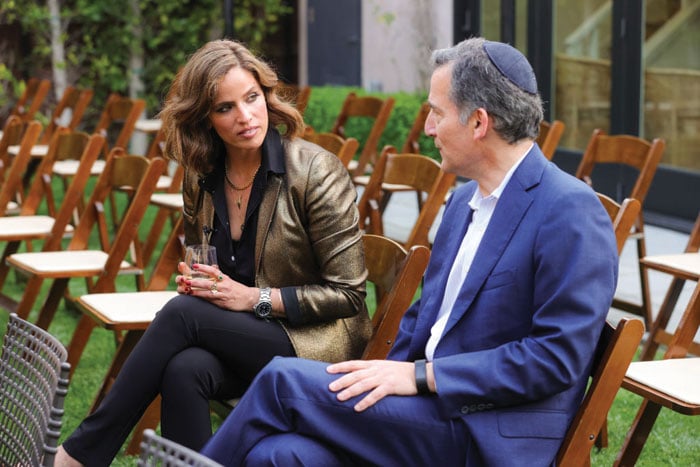
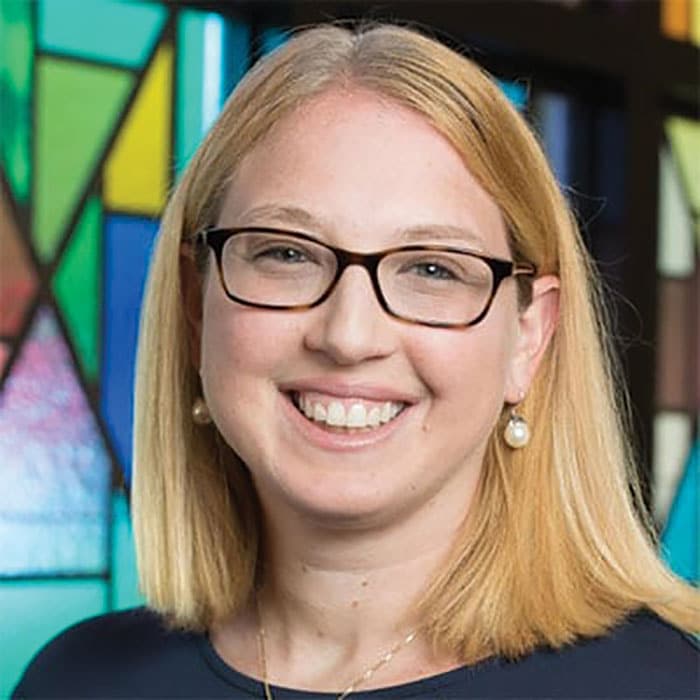
The first question I asked Nicole Guzik elicited what is probably one of the most un-Jewish answers in the history of our people. 

“I’m feeling happy,” Guzik, 40, declared. 

The question was “Ayekha (where are you)?” and I was hoping to get a sense of where she is in the trajectory of her rabbinic journey. 

She said it again. “I feel happy.”

I wondered, did she not understand the question?

This is not the response I expected from the Sinai Temple rabbi who recently launched the Sinai Temple Mental Health Center, an unprecedented new initiative underwritten by the Frederic D. Rosen and Nadine Schiff-Rosen Family Foundation at the congregation Guzik has served for the past 16 years, since she was an intern. 

“But I’m also in therapy,” she clarified. “We don’t have to be in crisis to be in therapy.”

Guzik’s happiness is the result of finding a specific focus within her rabbinate for the first time; one that allows her to stretch beyond the traditional routines of Jewish life and into a realm that offers a more holistic approach to spiritual well being: She’s studying to become a therapist. 

“One of my mentors in rabbinical school said, ‘You should really find a niche in your rabbinate where you can go deeper,’” Guzik told me. “And I never really understood what that would look like. I never had that area of depth.” 

Along came the pandemic to throw into stark relief something Guzik had always known, but accepted as a condition of life: human beings tend to suffer. As a rabbi, whom people bare their souls to on a daily basis, she wanted better tools for approaching pastoral counseling.

“I felt like an imposter,” Guzik said. “Congregants would come into my office — I have a blue couch, very Freudian — and they would almost lie down and spill their stories. And I was very aware that the person they are on the other side of my door, whatever story they were presenting to the community, that story would take an entirely different shape as soon as they sat on the couch.”

Often people would burst into tears. Or share intimate, painful details about their lives — from broken marriages to physical or emotional abuse, issues with children or depression.

“After a while, I got sick of giving that answer. I thought, ‘Just go become a therapist.’”

“And I would have to say, ‘I am not a therapist. I can’t counsel you.’ Because my job is to guide people on their Jewish journey and journey of faith,” Guzik said. “But I always felt something was missing from the conversation. And after a while, I got sick of giving that answer. I thought, ‘Just go become a therapist.’”

Guzik’s first encounter with therapy occurred while she was a rabbinical student at the Jewish Theological Seminary in New York. Then in her 20s, she had just ended what she described as a traumatic relationship and had also recently experienced the tragic death of a close friend. JTS offered confidential counseling, which Guzik said many students used, though few of them discussed it. “Looking back on it now, I realize how incredible it was that JTS offered something like that 20 years ago,” Guzik said.

In 2019, Guzik enrolled in an online degree program for a Master’s in Marriage and Family Counseling (MFT) through Touro University. She worried she’d never be able to complete the program with her demanding schedule as a full- time pulpit rabbi, wife and mother of three — but her husband Erez (also a rabbi at Sinai Temple) insisted they could make it work. To their surprise, the pandemic work-from-home model made it more manageable and Guzik has since completed her studies. She is now in the middle of fulfilling the 500-hour direct counseling requirement.

Though the boundaries between rabbi and therapist were always a little blurry, her entry into therapy has made the differences more clear. “As a therapist, I do not divulge anything about myself; I’m a blank slate,” Guzik said. “But as a rabbi, my congregants know me.” 

Still, she said she now has a more meaningful framework through which to engage congregants seeking her support. “I have a different sense of what question may need to be asked,” she said, “Or I’ll be able to hear parts of a congregant’s story that weren’t as evident before. I may see someone [who is] described as a sad or angry person and realize that no one’s ever asked them what led to that part of their story.”

Guzik will also be able to refer congregants to the synagogue’s new mental health center, which will offer once a month programming around various mental health issues as well as limited individual and group counseling sessions led by the center’s director, Carolyn Hoffman, a licensed clinical social worker. 

Guzik hopes to foster an environment that will de-stigmatize mental health issues within the congregation but also encourage people to learn healthier behavioral responses in their own relationships.

“The word that comes to mind is ‘pause,’’’ Guzik said, describing the benefit of therapy. “It allows you to live life in a proactive rather than reactive way.”

Guzik is also working on a book about self-love through a Jewish lens, utilizing traditional and contemporary sources. 

“So I guess that’s what I mean by happy,” she said, almost embarrassed by her emotional good fortune. “I feel very professionally fulfilled, but I’m also still growing; I’m happy because I know there’s so much more.”

And although she’s adding an additional role to her rabbinate, she still prefers her original vocation. “I get to be a rabbi to all,” she said. “And I love that. Which is why I want to be a rabbi first.”

Fast Takes with Rabbi Nicole Guzik

Danielle Berrin: What’s currently on your night table?

Nicole Guzik: A picture of my almost 10-year-old daughter, Annie, when she was a newborn; moisturizer; and the Gehart and Tuttle book, Theory-Based Treatment Planning for Marriage and Family Therapists. 

DB: Last show you binge-watched?

NG: Cobra-Kai

DB: Your day off looks like…

NG: I have no day off because Mondays are now my therapy day so I see clients back-to-back. 

DB: Favorite thing to do in Israel?

NG: I like to visit this spot, Rehov Chabad, overlooking the Kotel. It’s the space where Erez proposed that we always go back to to contemplate how things have changed and how nothing has changed.

DB: Something about you most people don’t know?

NG: I went to public school in Orange County. 

DB: Most essential Torah verse?

NG: Leviticus 19:14, You shall not insult the deaf, nor place a stumbling block before the blind. But not for the literal meaning; to me it [suggests that] a lot of us set each other up for failure, and I love thinking about how different this world would be if we set each other up for success.

DB: Biggest challenge facing the Jewish world?

NG: Political polarization. The question we often ask as rabbis now is ‘Who will this offend?’ versus ‘How will this make an impact or create meaning?’

DB: Guilty pleasure?

NG: Drinking black coffee to golden oldies.

DB: Favorite Jewish food?

NG: I like both to eat and make brisket, especially for Rosh Hashana. I love to feed people. 

DB: If you weren’t a rabbi you’d be…

NG: I always wanted to go into journalism. I probably would end up writing for the Jewish Journal. 

Rabbis of LA | Rabbi Nicole Guzik: Integrating Spiritual and Mental Health Read More »

One Dove’s Pluck

After the horrendous interventions of warning, flood, ark, and saving remnant,
God’s work depends on one little bird’s pluck.
How is it that we never talk about the miracles she dares?

Her entire world was destroyed.
Human violence launched the world’s unraveling
which was quickly swept away by the flood.
Torrential water, fatal currents, drenching downpour.
Everyone she ever knew was drowned.
And everything she had ever known was submerged, forever gone.

Yet she musters the courage to leave her haven, the ark
to reclaim the memory of how to fly, and
to skim over new and endless seas,
cooing that her pounding heart is, at least, still alive,
and that life’s fragile heritage
requires bold selflessness.
She risks all. She ventures out.

If she had only flown out to seek her own new home,
it would be easy to forgive that focus.
After all, her life was sunk into the dark depths,
no one remained — no family, no friends, no community.
She could have decided to focus on herself
and we would compress our lips,
to show our seriousness, our understanding,
our struggling not to judge.

But she doesn’t fly away. Her second decision of greatness is
to return,
olive branch in her beak.
There is life for all of us!
We can all make it together!

If we have the courage to fly past the constraining shelters
that keep us alive, but remove us from the world.
And if we remember that life is bigger than any one of us.
The olive branch,
like our compassion,
belongs to us all.


Rabbi Bradley Shavit Artson is the Abner & Roslyn Goldstine Dean’s Chair and professor of philosophy at the Ziegler School of Rabbinic Studies.

One Dove’s Pluck Read More »

Bendichas Manos: Baking Boyos

Becky Sheff has Bendichas Manos, blessed hands in Ladino. In the world of Judeo-Spanish speakers, this is the ultimate compliment to bestow on a cook. Becky, Rachel’s mother in law, is part of a Rhodesli sisterhood that faithfully bakes burekas, boyos, biscochos and other beloved Sephardic delicacies of the former Ottoman Empire. Incredibly, she only started baking at the age of 50, so there’s hope for all of us. 

Becky’s parents met and married in Seattle in 1920: Nissim Pascal Elie was from a Bulgarian family and had studied agriculture in Palestine before he came to America; Victoria Benatar was born in Rhodes and emigrated to the United States with a sister in law. (When Italy surrendered to the Allies in World War II, the Nazis invaded the picturesque island of Rhodes and deported the ancient Sephardic community to Auschwitz, where the majority perished. Victoria’s sister, brother in law and niece were among the martyrs. Becky, their only child, was born in San Francisco and grew up in the close-knit Rhodesli community of Los Angeles. She met and married Sam Sheff in 1959. Sam built them a beautiful home in the Brentwood Hills, where they survived the notorious Bel-Air fire of 1961. But in 1962, tragedy struck when Sam suffered a heart attack, leaving Becky a young widow with 8 month old baby Neil. Becky was forced to return to her old job with the Army Corps of Engineers in the Los Angeles Federal Building. 

While Becky‘s mother was an expert baker, Becky never had the time to learn because she worked such long hours. When she retired, she made up for lost time and mastered the art of making boyos, burekas, biscochos and roskas with great flair. 

Rachel’s Turn: When I married Neil, I learned about the Sephardic desayuno, the Shabbat breakfast that is eaten in the communities of the former Ottoman Empire. The menu includes boyos, burekas, feta cheese, kashkeval cheese, kalamata olives, watermelon, roskas, a sweet challah bread and reshas, homemade crackers. It wouldn’t be Shabbat without huevos haminados, literally eggs from the hamin (Shabbat stew) but usually boiled or baked overnight with onion skins, oil and pepper to achieve a golden brown color and wonderfully smoky flavor. 

But I never learned to bake burekas or boyos, leaving that to my talented mother in law. Every couple of weeks she would give me bags of burekas or boyos to put in the freezer. They were the stars of our Shabbat lunches and my kids could never get enough.

Years of typing at her IBM Selectric typewriter for her job left Becky with arthritic fingers, making it more and more difficult for her to finesse the dough. So about ten years ago, I started baking burekas. When my daughter Rebekah was 12 years old, Becky gave her a lesson in making burekas. I still have the detailed notes Rebekah wrote in my little cooking journal.

Boyos are savory treats made from thin, flaky coiled dough stuffed with spinach and cheese, then sprinkled with finely grated Romano cheese.

But that left boyos off the table. Boyos are savory treats made from thin, flaky coiled dough stuffed with spinach and cheese, then sprinkled with finely grated Romano cheese. Sometimes they are filled with potato, eggplant or meat. They are delicious. 

Four years ago, I went to Becky’s home and she patiently taught me how to make her delicious boyos. My cousin through marriage, the beautiful Patricia, taught me to add feta cheese to up the flavor.

I always thought it amusing that whenever Becky’s friends would bake, they would announce the quantity of burekas and boyos that they had produced. But once I started, I understood. It’s super hard, labor intensive work, so every gorgeous boyo and bureka is precious. 

My husband Neil is very fond of boyos (and very particular about how they taste) so now he helps me by washing and chopping the spinach. After the boyos are formed, he brushes them with the egg wash and sprinkles the cheese on top.

Recently, my son Sam and my daughter in law Estrella stood with me in the kitchen and we made over 200 boyos. 

I am so excited that the next generation is taking an interest and learning to make these centuries-old recipes. 

SPINACH BOYOS 

Filling
2 1/2 pounds spinach, finely chopped
1 cup crumbled feta cheese
1/2 cup finely grated Romano or parmesan cheese
3 tablespoons flour
Combine all the ingredients.

Dough
1 cup warm water
1 teaspoon yeast
1 teaspoon sugar
1 tablespoon vegetable or avocado oil
1 teaspoon salt
All purpose flour
1 egg beaten for egg wash

  • Preheat oven to 400°F.
  • In a large bowl, combine the water, yeast and sugar and let proof for 10 minutes.
  • Combine the oil with the salt and add to the yeast mixture.
  • Using a standing mixer with a dough hook or by hand, start incorporating the flour, one cup at a time. Dough should come together and be just a bit sticky.
  • Pour oil into a baking sheet until it reaches half way up the sides.
  • Roll the dough into golf ball-sized pieces, then place on the baking sheet and leave covered with towel for an hour.
  • Using a small rolling pin, roll out the dough as thinly as possible, then sprinkle with Parmesan cheese.
  • Add a little of the filling and roll the dough like a jelly roll.
  • Coil the roll into a snail and place on a baking sheet. Repeat to make all the boys.
  • Brush with egg wash and sprinkle with grated cheese.
  • Place in the oven and bake until the boyos are a golden brown, about 15 minutes.Recipe Note: Triple the recipe and freeze in tightly sealed containers.

Rachel Sheff and Sharon Gomperts have been friends since high school. They love cooking and sharing recipes. They have collaborated on Sephardic Educational Center projects and community cooking classes. Find recipe video clips and recipes on Instagram SEPHARDIC SPICE GIRLS and Facebook SEPHARDIC SPICE SEC FOOD.

Bendichas Manos: Baking Boyos Read More »

Table for Five: Noach

One verse, five voices. Edited by Salvador Litvak, the Accidental Talmudist

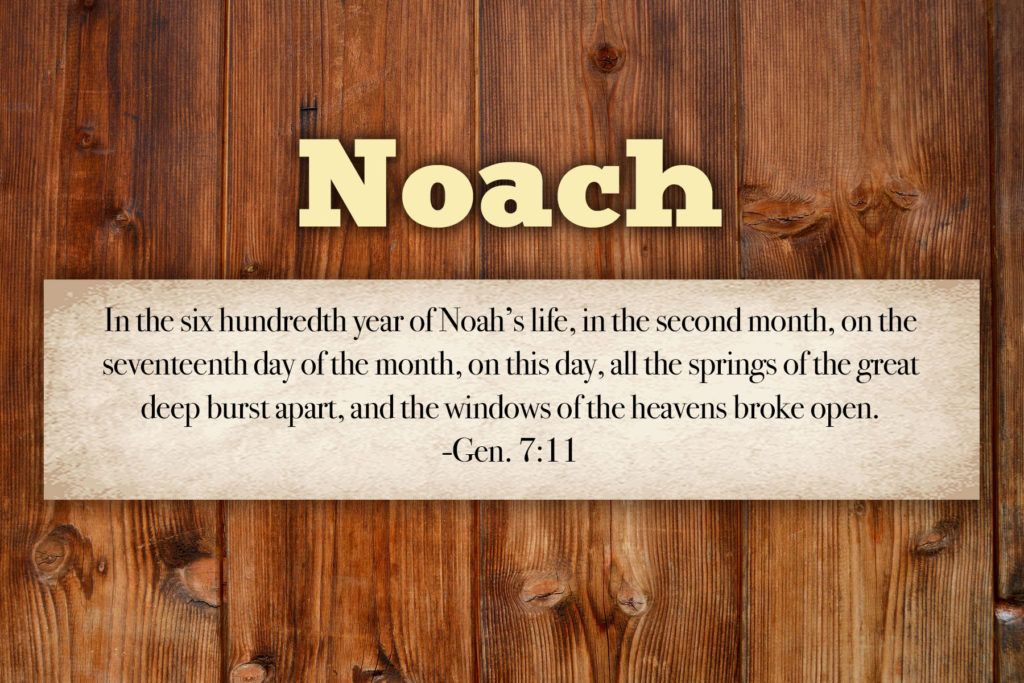
In the six hundredth year of Noah’s life, in the second month, on the seventeenth day of the month, on this day, all the springs of the great deep burst apart, and the windows of the heavens broke open.

-Gen. 7:11


Nili Isenberg
Pressman Academy Judaics Faculty

The story of the flood is the story of devastating trauma. Despite Noah’s silence and obedience throughout the narrative, his state of mind is evoked by a phrase in our verse, “Bayom Hazeh” – “On this day.” Completely superfluous, coming after three other very specific indicators of time, this phrase emphasizes how a single day can be seared into one’s memory. Whereas the more common phrase “Bayom Hahu” (“On THAT day”) would indicate an event in the past or future, our phrase hints at an event of eternal and haunting presence. It’s the day that we remember like it was yesterday, the day that continues to live in our stories like it is still happening today. This is the day when the floor falls out from under us and the roof collapses above. “Bayom Hazeh” – on this day. 

While Noah was a physical survivor of the flood, it is clear from the text that he was far from unscathed in this experience. God tries to show Noah the way forward. Again and again, repeated no less than seven times, God points to the “covenant” that he establishes with Noah, his descendants, and every living thing after the flood, and as we know, we are commanded to follow in God’s ways. We must also embrace our relationships with others if we are to overcome trauma. While Noah seems to have failed to learn this lesson, may we never forget our family, friends, and neighbors in this world who love and need us.


Rabbi Benjamin Blech
Professor of Talmud, Yeshiva University

It is a beautiful – as well as a Biblical – metaphor, G-d “opens up the windows of heaven.” Who wouldn’t want to be the recipient of such divine grace? Indeed, the prophet Malachi identifies it with supernatural favor, “Prove me now herewith, saith the LORD of hosts, if I will not open you the windows of heaven, and pour you out a blessing, that there shall not be room enough to receive it.” (3:10) Yet when we first come across this very phrase in the story of Noah it is an introduction to a universal catastrophe that almost destroyed the world. The open windows of heaven brought such a deluge of water that the resulting flood almost caused the end of the Lord’s human experiment. How to explain the seeming contradiction? It is the secret of the difference between having too little or too much, between a heavenly gift or a godly punishment. It is meant to illustrate the vast gulf between two words – success and excess. 

The generation of the flood sinned mightily because they desired too much. They wanted what was not legally theirs. They were people of violence who filled their lives with the quest for the possessions of others. They epitomized Gore Vidal’s maxim, “It is not enough that I succeed; others must fail.” The windows of heaven opened with the divine message of the curse of “too much.” Water is blessing – but anything to excess brings a flood of death and destruction. This is the powerful flip-side of Malachi’s blessing, meant to make us ever mindful of the Torah ideal of moderation.


Rabbi Michael Barclay
Spiritual Leader, Temple Ner Simcha

Michael Meade, James Hillman, and Robert Bly were fond of discussing how change can happen in society:  either through “ascending symbolism” or “descending symbolism”.  Descending symbolism occurs when the leaders create dictates that are passed down to the people, and ascending symbolism is when the people cause the change. 

While temporary shifts can happen from either direction, lasting change only occurs when both are in play:  the leaders and the people are moving simultaneously towards a new paradigm.  We see God’s manifestation of this in this verse, where a reconfiguration of the physical world happens with water coming from both the heavens and the earth.  The great flood comes from both directions, and the world is forever changed. 

This teaching is valuable not only in society, but in our Jewish institutions.  Rabbis often work in an “echo chamber”, where they hear compliments from those who like what they say, but those who disagree just leave the synagogue without telling the Rabbi why, becoming disenfranchised and unaffiliated.  In this process, many Jews are falling through the cracks.  And this must change if we are to keep Jews involved in Judaism. 

Congregants have a responsibility to give honest feedback to Rabbis and Boards, especially when they are unhappy.  Rabbis have to stop having bully pulpits, and forcing their own beliefs on their community.  We need to stick to our job: teaching Judaism and guiding Jews to a deeper awareness of God through Jewish practices and Torah. 

May we all hear each other, and revitalize Judaism in these challenging times. 


Judy Gruen
Author, “The Skeptic and the Rabbi: Falling in Love with Faith”

When the moral corruption and degradation of society became too much for God, He performed an intervention by sending the flood. The precise date given proves that this was no freak weather system—God warned it was coming if society refused to mend its ways. The Zohar interpreted this date as a prophecy that “in the six hundredth year of the sixth [millennium, i.e., around the year 1840], the gates of supernal wisdom and the wellsprings of earthly wisdom will open up. This will prepare the world to be elevated in the seventh [millennium, i.e., the messianic era].” 

In fact, the mid-19th-century did see a “flood” of new knowledge both in the scientific world as well as revealed Torah wisdom. Used properly, modern science and technology advance not only our physical lives but our spiritual consciousness as well. Torah knowledge is spread through technology. Scientific discoveries continue to build the case for a divine Creator of the universe. The prediction that when Mashiach comes the entire world will know in an instant was incomprehensible until the days of modern, instantaneous communication. 

At the beginning of this parsha, God’s name is Elo-kim—the name connected with His attribute of strict justice. Now, before the deluge, God’s name is Y-K-V-K—the name connected with His attribute of mercy. The forty days of flood waters suggest the forty days needed to form a human fetus. The floodgates opening now not only wash away the forces of corruption but invite a new beginning.


Nina Litvak
AccidentalTalmudist.org

The idea that God punishes the wicked and rewards the righteous is a foundational principle of Judaism, but it’s a concept that many of us are uncomfortable with. It’s far from difficult to find good people who suffer and bad ones who prosper. But the vivid blessings and curses promised in the Torah are indeed based on our behavior. The Torah makes it clear that reward and punishment are a key part of God’s plan – if not in this world, then in the next. 

How can we reconcile our belief in a God who loves us unconditionally with the Torah’s grim warnings of horrific punishment if we do not follow the laws given on Mount Sinai? A clue can be found in the Torah’s description of the flood, a colossal punishment on the world which spared only one righteous family. “The windows of the heavens were opened” and water poured through on its path of destruction. Scary! But compare this verse to Psalm 78:23-24: “He… opened the doors of heaven, and rained upon them manna to eat.” As it says in the Talmud (Sanhedrin 100b), “To mete out punishment, God opened only windows, which are considerably smaller openings than doors, indicating that the attribute of reward is greater.” 

God creates openings through which to send us blessings or curses, depending on our own choices. It’s comforting to know that God throws open the door to shower us with blessings – while curses need to sneak in through the window.

Table for Five: Noach Read More »

Noa Tishby: From Hollywood to Israel

A lot has happened since the last time the Journal spoke with Noa Tishby in May of this year. Back then, she had just released her debut book, “Israel: A Simple Guide to the Most Misunderstood Country on Earth.” The Journal described the book as “the much needed schooling/scolding for all sides of the conflict.”

Now six months since its release, her book still ranks in the top 10 books in three Amazon categories: no. 3 in Historical Middle East Biographies, no. 5 in Israel and Palestine History Books and no. 8 in Middle Eastern Politics. It has garnered praise across the political spectrum, from Bill Maher to Ben Shapiro. 

And then there was an uptick in rockets being fired at Israel. Pundits and politicos turned to Tishby for answers to explain what was going on. 

Tishby said that the pace in which her life has picked up has been nothing short of “dizzying.” The last half year has included multiple appearances on national and international television, including “The View’’ and Fox News. She made public rebukes of John Oliver’s omissions in explaining the Israel and Palestinian crisis to his HBO audience. She’s put her acting career entirely on hold to pursue her mission of correcting the misconceptions about Israel to the public. She’s creating new allies, meeting new trolls and is represented by a new agent. Not a day goes by where she isn’t sharing an Instagram story of praise about the book from a new fan. 

But Tishby’s daily hustle has remained firm. She’s still up every day at 5:30 a.m. at her home in Los Angeles. She still recharges her internal batteries with yoga and meditation to get ready for a day of keeping up with that dizzying pace of being a prominent Israel advocate, and of course, her top priority: being a mom to her five-year-old son Ari.

“I like waking up before the sun and I like waking up before my son!” she quipped. 

The early hours not only give her time to communicate with people back in Israel during their work day hours, but it’s also just the way she has been wired to start her day since she became an actress. 

“I’ve been ‘trained’ since I was young, working in the entertainment industry, getting picked up sometimes at three or four in the morning, and it created a connection for me to wake up before sunrise,” she said.

Before publishing “Israel: A Simple Guide” earlier this year, Tishby was primarily known as an actress and producer. She was in her first commercial at age eight in Israel, and received her first drama scholarship at age 14. She served two years in the Israel Defense Forces, and moved to the United States to take her acting career to the next level. By the time Tishby was in her early 30s, she became the first producer to bring an original Israeli television show to the U.S.: the multiple Emmy-nominated HBO show “In Treatment.”

Now at age 44, she has spent slightly more than half of her life in the U.S.

‘As soon as I got the book deal and sat down to write the book, I had such an ‘aha’ moment: it became very clear to me that this is what I was meant to do.’

“As soon as I got the book deal and sat down to write the book, I had such an ‘aha’ moment: it became very clear to me that this is what I was meant to do,” she said of the new trajectory of her work as a full-time Israel advocate. “Everything I’ve been through in the past 20-30 years culminating with this—my life’s work.” 

That work is correcting misunderstandings about her homeland. Tishby said that her close community of friends and colleagues had been noticing over the past decade that a “tsunami of awful” was brewing in the public’s view of Israel. Indeed the world is awash in that tsunami these days: The recent rise in antisemitism throughout the U.S., prominent voices making detrimental claims in jest and the BDS movement flourishing on college campuses all fuel Tishby’s daily determination to set the record straight on Israel.

Now that her book’s success has made her one of the go-to people for Israel commentary, Tishby said she sees some hope in these times.

“People are willing to listen and willing to do what they need to do in their communities to change this because we’ve all realized the risk we’re facing if we don’t.”

“It feels like for the first time in many years that people are willing to listen,” she said. 

Her anecdotal explanation of how she sees the general population is this: Eight out of 10 people who are faced with questions about Israel, Tishby said, are open-minded. “If you have 10 people, two are completely brainwashed. You can’t reach them [if] they have fully have eaten up the anti-Israel, anti-Jewish propaganda. We shouldn’t try to engage them, and we shouldn’t try to convince them. But out of those 10, eight are on the fence, they’re either pro or completely neutral, they don’t know enough, or they don’t care enough. Those are the people that I’m talking to.”

Noa Tishby with Rabbi David Wolpe. Photo by Rich Fury/Getty Images for Wolman Wealth Management

Tishby has written off the Twitter trolls, the BDS leaders on college campuses and the U.S. Representatives Ilan Omar and Rashida Tlaib, whom Tishby calls out by name. And the people who are spewing antisemitic tropes and lies on social media feeds, she said, are two out of 10.

The one particular thing that keeps her more determined than ever is the complacency about Israel and antisemitism among Jews in the U.S. and Canada.

“We thought antisemitism isn’t a thing anymore. If there is one good thing that has happened throughout the past few months [it’s] that we have woken up.”

“We have been lucky as the Jewish community in America to be able to be complacent,” she said. “We’ve been lucky to think that our problems are over, to be living in America and to experience those freedoms. But we took them for granted—the security, the safety, the bipartisanship, legitimization of Israel as the nation. We thought antisemitism isn’t a thing anymore. If there is one good thing that has happened throughout the past few months [it’s] that we have woken up.”

Tishby has many friends who describe themselves as “culturally Jewish.” This past spring, as conflict erupted in Israel and antisemitic violence dramatically increased in America, they were the most frightened by what was going on—many to an unprecedented degree. She said that a lot of those liberal-minded culturally Jewish friends went about their lives thinking that taking a stand wasn’t necessary. One by one, they reached out to Tishby, and some even read her book. The result of that was that most of these friends have become completely united and engaged.

“We said ‘never again,’ [and] we thought it’s a done deal,” she said. “But now it’s ‘never again!’ with an exclamation point. It’s a call to action all of us have to take, traditional and secular Jews. We need to take ownership of this.”

Photo by Rich Fury/Getty Images for Wolman Wealth Management

Two names in Hollywood that Tishby said “have not helped” with the spread of misinformation about Israel this year are comedians Seth Rogen and Sarah Silverman.

Earlier this year, Silverman said, “It’s not antisemitism to criticize a government. I’m fine with BDS as long as it’s clear that you’re boycotting a government, and not a people. When that line gets muddy, that’s when it’s a little scary as a Jew.”

Tishby characterized Silverman as a “bright person with a proud Jewish background (and a sister who is a rabbi),” but still finds her viewpoints problematic. 

A common refrain in Tishby’s life in the spotlight over these last few months has been stating and restating that BDS is not about boycotting a government and it’s not about settlements. It’s about being anti-Israel, no matter who is in power. 

Tishby said she attempted to have a conversation with Silverman, but received no response from her representatives. (It’s worth noting that recently, Silverman denounced the Squad over their Iron Dome position and said: “Do not defund the Iron Dome. My family lives there. It just seems to prove the point that I didn’t think existed — people really only like Jews if they’re suffering.”)

Rogen is one of Tishby’s common examples of how a safe Jewish community in the U.S. and Canada has enabled many Jews to become complacent and no longer see the threats Jews face worldwide and at home. Rogen commented this year that he was “fed a huge amount of lies” about Israel while growing up Jewish in Vancouver. 

Tishby said that she’s “all for comedy,” but even those words used in jest are eventually used against Jews in “a messy kind of way.”

When asked for what a solution could be, Tishby said the top priority is that Jewish education needs to be transformed. 

“We are sending our kids to Jewish day school and high school and putting great Jewish values in them, but we are shying away from difficult conversations,” she said. “Then they are showing up on campuses and they are shocked by [the lies about Israel] that they hear for the first time: apartheid, genocide [and] ethnic cleansing. So we have to be able to start the conversation in middle school and address the problematic issues honestly with the kids. Because then they get left out on college campuses completely exposed, and then they think as Seth Rogen said, that they were fed lies [while growing up]. But the moral justification of the existence of the Jewish state does not require us to hide the truth.”

She said that she was raised liberal in Israel, and still considers herself a liberal. But she’s not above praising the Trump administration’s work with the Abraham Accords. 

“It’s frustrating to me for people who are liberals to not praise the Abraham Accords,” Tishby said. “Fine, they were done by Trump, and you don’t like Trump, but still acknowledge that they were a brilliant move. BDS is against the Abraham Accords.” 

Another big step that Tishby said the Jewish community needs to take is to support the liberal voices in the Muslim world. 

“By not criticizing, for example, Sharia law as the earthly state-sponsored manifestation of rape culture, by not saying this out loud as liberals, we are leaving women in the Muslim world, and liberals in the Muslim world that are trying to transform their countries from within, we’re abandoning them,” she said.

Over the last few months, Tishby has been inspired by the plethora of phone calls from her non-Jewish friends who were shocked by what was happening. And it sounded like this: “I don’t know about the region, and I’m pretty sure Israel is not an apartheid state, and it’s not a genocide state, so what am I seeing on my social media right now?” 

Clearly, the hate and aggression towards Israel surprised a lot of people, not just inside the Jewish community.

Now, Tishby plans to be doing even more in the coming months. And it has gone beyond just a simple book tour.

“It’s always been the path, the thing I’ve been most passionate about. And now I’m lucky to have a book and a platform to be able to do that.”

“What would be more important, more exciting, more valuable, than doing this work?” she said. “Nothing! Nothing is more interesting to me. It’s always been the path, the thing I’ve been most passionate about. And now I’m lucky to have a book and a platform to be able to do that. And I’m very supported by the community. People are willing to listen and willing to do what they need to do in their communities to change this because we’ve all realized the risk we’re facing if we don’t.”

Noa Tishby: From Hollywood to Israel Read More »

This Isn’t About Kamala, It’s About America

The story is becoming old. Every story from more than two to three days ago is old. And yet, it is important to keep thinking about it, and not necessarily for the reasons most people do. 

It is the story about Vice President Kamala Harris and her non-response to a student who accused Israel of committing genocide. During a discussion with students about National Voter Registration Day at George Mason University in Virginia, a student, who identified herself as part-Yemeni, part-Iranian and “not an American” made the following comment: “You brought up how the power of the people and demonstrations and organizing is very valuable in America. But I see that over the summer there have been protests and demonstrations in astronomical numbers standing with Palestine. But then just a few days ago, there were funds allocated to continue backing Israel, which hurts my heart because it’s ethnic genocide and displacement of people, the same that happened in America, and I’m sure you’re aware of this.”

Is Harris aware of this? She did not say. What she did say is this: “Your voice, your perspective, your experience, your truth cannot be suppressed, and it must be heard.” That’s it. A student hurled an untrue accusation—the most horrible accusation—against Israel and the VP thought it was important to hear this alternative truth. 

Naturally, the response in Israel was puzzlement and some fury. Why didn’t she stand for us? Some Israelis and Americans saw the incident as proof that Harris is an unreliable ally. Is it not obvious? Many observers who care about Israel and about U.S.-Israel relations responded to the incident angrily. I was not angry. I was sad. And no, I wasn’t sad about Harris’s supposed enmity. I looked at the video and knew without doubt that the VP is still supportive of Israel as she always has been. I looked at the video and knew that in a day or two she will make sure to clarify that fact. I looked at the video and was instantly bored by the anticipated back and forth (“she is anti-Israel,” “she is pro-Israel,” blah, blah). 

I was not sad because of Israel; I was sad because of America. I was sad to see a strong, successful, opinionated politician behave like a scared rabbit caught in the limelight. 

She was scared. She was scared to confront the student, because in today’s America confronting a student who pretends to speak for an oppressed minority could ruin the career of a Democratic politician. She was scared to talk back to the student lest she be accused of denying her a safe space or denying her a right to tell her own version of the story. The Vice President of the great United States of America was afraid to tell a young agitator to save her juvenile provocations for her juvenile friends and not waste the precious time of the Vice President of a superpower. 

I live in a much smaller country. No superpower. Still, in my country, when a student bothers a leader with a dumb provocation, the leader is not afraid to talk back, and tell the student to get lost. You might say: oh, here’s another proof that Israel is not truly democratic. You can’t even say what’s on your mind. But the opposite is true: in my country you can say what’s on your mind—and the leader of the party or the country can also say what’s on her mind. Just imagine such a situation: a student in Israel takes the microphone in an event with, say, Foreign Minister Yair Lapid and accuses America of being immoral because of—and this is just an example—the “displacement of people” from Texas back to Haiti. How do you think the Foreign Minister is going to respond? Will he say, “Your truth cannot be suppressed, and it must be heard” or will he say, “America, like every other democracy, must balance the quest to guard human rights with a solid immigration policy”? 

Foreign Minister Lapid is not as powerful as Harris, but he is not afraid of juvenile students. Prime Minister Bennett is not as powerful as Harris, but he is not afraid of juvenile students. Transportation Minister Meirav Michaeli is not as powerful as Harris, but she is not afraid of juvenile students. In fact, not one leader in Israel is as powerful as Harris, and yet not one leader in Israel is as afraid of juvenile students as she is.  

Not one leader in Israel is as powerful as Harris, and yet not one leader in Israel is as afraid of juvenile students as she is.

And that’s why I was sad to hear about Kamala Harris and the student incident. Not because I’m worried about the support for Israel, but because I’m worried about the state of America. You see, it is essential for Israel to have America’s backing, but that’s true only if America is strong, and its backing has real import. If America is a country whose most powerful leaders can be cowered by juvenile students—well, in such case its support for Israel is not as meaningful and reassuring as Israel needs it to be.

Something I wrote in Hebrew

The growing violence in the Arab sector is making headlines in Israel. Here is something I wrote about the accessibility of weapons among Arabs and its consequences:

“One of the characteristics and causes of the crime phenomenon in Arab society is the presence and availability of weapons of various kinds among Arab society on an immeasurably larger scale than in Jewish society,” reads a government report. What is “Large scale”? There is no answer. “Estimates speak of tens or hundreds of thousands of illegal weapons,” the report said. If it was not sad it would be funny. Tens or hundreds of thousands is any number from twenty thousand to nine hundred and ninety-nine thousand. About half of the Arabs (49%) told pollsters that the problem of illegal weapons was widespread in their community. When you look at Arab citizens and wonder if, or why, their cooperation with the police is not high, that too should be taken into account. Anyone who assumes his neighbors have a rifle or a grenade in the closet, will be reluctant to call the police and complain about them. 

A Week’s Numbers

Who supports the reform in Kashrut certificates that the Religious Affairs Minister plans to pass with the budget? Mostly Israelis who do not care much about Kosher certificates. 

A Reader’s Response

Ariel Alon commented on my last week’s cover story on 100 days of Bennett, and I think the point he makes is important (if indeed I failed):

“While your story on the new government was fair, it did not communicate how much Israelis that were fed up and desperate because of Netanyahu suddenly feel that they can breathe.”

This Isn’t About Kamala, It’s About America Read More »

You’re Too Thin

“The Truth is our friend even if it’s difficult.”—Dennis Prager

Once you’ve lost a significant amount of weight, some people will compliment you and others will start saying disturbing things to you. The latter group think they are being helpful, and they may want to be helpful but they’re not. They will come at you like pelicans dive-bombing for fish. I call some of them the “you’re too thin brigade.” 

In the beginning of your weight loss journey, you’re fragile. You need to stay strong, and most of all, you need encouragement. Don’t, and I repeat, don’t let these people drive you bonkers. Don’t listen when they say: You’re too thin; you’ve lost enough weight; stop it already; it’s not healthy; you need to put some meat back on those bones; and, you’re starting to look sickly.

Granted there are people that lose too much weight and do make themselves sick. Those people need medical and psychological help. But that’s not what I am talking about. I’m talking about people who just want to get down to the weight that’s right for their body. There are no fat animals in nature. No fat squirrels. No fat deer. There can be naturally fat people, but you are probably not one of them. We can make ourselves fat and we can make ourselves flat. 

Also, where was the “you’re too thin brigade” when I was overweight, sickly and dying?  Yes, dying. My blood pressure, the number one killer, was sky high. My cholesterol was high. Not a word when I was splitting my clothes at the seam or when I wore ties with pictures of cake on them. The “brigades” excuse was they didn’t say anything because they didn’t want to hurt my feelings. Thank you, but worrying about hurting feelings could very easily be the end of a person. How many people wish they said what they wanted to say but one day, it was too late? People need to hear the truth, especially from close friends and family who only want what’s best for them. And they need to hear that truth in a kind and loving manner. And if you can’t say it in a kind and loving manner, well, maybe say it anyway. But get their attention. After that, let it go. 

That’s what happened to me. I had a real “aha” moment when someone didn’t worry about my feelings. I was at The Laugh Factory, a comedy club on Sunset Blvd in Los Angeles. I was being introduced to the crowd. As I was walking to the stage, sneaking up behind me was my old pal, comedian Dom Irrera. He whispered in my ear, “Schiff, you’re so fat.” Not a second later, I hear, “Please put your hands together for Mark Schiff.” I turned and looked at Dom and then raced up on stage. 

My shirt was hanging out. No matter how many times I would tuck it in, it would untuck on its own. I could not button my shirt at the neck, and my face was Pillsbury doughboy puffy. My belt was pinned on the first belt hole. I didn’t feel good. I didn’t look good. Little did Dom know that he had just changed my life by telling me the painful truth. For some reason, his words went deep into my innermost self and shook me at my core. I’ve not been the same since. I can still hear and feel him standing behind me. I’ve told Dom more than once that I owe him for helping me lose the weight. He startled me up.  

By the way, last time I saw Dom he had packed it on. Hey Dom, I love you, but…you know. I say that in a kind and loving manner.

When the truth hits you in the face, grab on to it and start walking on the new road that was paved just for you.

When the truth hits you in the face, grab on to it and start walking on the new road that was paved just for you. Remember there is no question that doesn’t have an answer. Your job, if that’s what you want, is to never quit looking for that answer. n


Mark Schiff is a comedian, actor and writer.

You’re Too Thin Read More »

Why Governor Newsom Must Veto AB 101, For Good

The LA Times has appropriately urged Governor Gavin Newsom to veto AB 101, the ethnic studies graduation requirement bill, on the grounds that despite the bill’s “supposed guardrails … there is too much leeway for unapproved curriculum to be taught.” While the LA Times editorial board is 100 percent correct to oppose AB 101 on these grounds, they underestimate the danger it poses to California kids and naively believe “a few relatively small but key changes” will make it ready for the Governor’s signature next year.

The editorial notes that two previous iterations of the ethnic studies bill failed to get the Governor’s signature because the state-approved Ethnic Studies Model Curriculum (ESMC) that the bill recommended be used in the required classes had not yet been finalized, and extant drafts of the curriculum were highly objectionable. The first draft in particular, which contained overtly antisemitic lessons, was met with widespread condemnation and outrage from tens of thousands of members of the Jewish community, the Legislative Jewish Caucus and Governor Newsom, who called the draft “offensive in so many ways, particularly to the Jewish community,” and vowed the draft “would never see the light of day.”

A final, far less objectionable draft of the ESMC was approved by the State Board of Education in March, just in time for the legislature’s consideration of AB 101. However, as the editorial also points out, while state education officials were busy revising the ESMC, the authors of the roundly rejected first draft were busy creating a new organization, Liberated Ethnic Studies Model Curriculum Institute (LESMC), to peddle as an alternative to the state’s model curriculum an even more explicitly anti-Jewish and anti-Zionist version of the first draft. According to the LESMC’s website, their alternative curriculum includes lessons that use classic antisemitic tropes of Jewish wealth and power to vilify pro-Israel Jews and Jewish organizations, smear Israel with false charges of “settler colonialism” and “apartheid,” promote the work of anti-Zionist organizations that call for dismantling the Jewish state, and offer advice on “how to start your own BDS campaigns.”

The Editorial Board is rightly concerned that guardrails intended to ensure that school districts will adopt and use the state-approved model curriculum will do no good because they are only advisory, not compulsory. By law, the state cannot mandate what curriculum individual school districts adopt, and nothing in the current bill will prevent districts from adopting the rejected first draft of the ESMC, or its even more extreme “Liberated” cousin. The editorial’s solution? A re-do of the bill with yet another guardrail—requiring districts that opt to use a curriculum other than the state-approved ESMC to submit it to the California Department of Education for review and approval.

Unfortunately, this guardrail, too, would be as useless as the bill’s current ones in preventing antisemitic curricula from entering California’s ethnic studies classrooms. To understand why, consider the case of San Diego Unified School District, the second largest district in the state.

Unfortunately, this guardrail, too, would be as useless as the bill’s current ones in preventing antisemitic curricula from entering California’s ethnic studies classrooms.

Earlier this year, SDUSD’s Superintendent and School Board members signed a petition launched by the ESMC first-drafters, urging state education officials to adopt their rejected curriculum rather than the “watered-down” final draft. The petition was also signed by the SDUSD Ethnic Studies Advisory Committee (ESAC), which oversees the implementation of Ethnic Studies in the district’s TK-12 classrooms, as well as by all three Lead Ethnic Studies Teachers hired by the SDUSD school board last year.

ESAC chair Tricia Gallagher-Guersten describes herself as an “activist scholar” and “Lead Author for the Liberated Ethnic Studies Model Curriculum Coalition.” And the committee’s Vice Chair, Guillermo Gomez, who also serves as one of the district’s Lead Ethnic Studies Teachers, is a member of the Liberated group’s “Leadership Team” and had previously worked for the California Department of Education as a lead writer of the first draft of the model curriculum.

In June, following a flare-up of hostilities between Israel and Hamas, an Ethnic Studies newsletter sent to all SDUSD ethnic studies teachers contained a section entitled “Palestinian-Israeli Conflict through an Ethnic Studies Lens” that offered “guiding questions and a list of resources” to help students “silence ideological critics and support students’ critical thinking” about the conflict. While the “guiding” questions provided in the newsletter—Who has the right to self-determination? What gives someone the right to exercise social power over another person? What constitutes apartheid? What constitutes genocide?—give the impression that students will be encouraged to come to their own conclusions after careful consideration of all sides of the complex conflict, the resources linked to the newsletter suggest otherwise. Heavily weighted with anti-Zionist sources that are not simply critical of Israel but also challenge Israel’s very existence and demonize its supporters, the resource list presents students with a set of foregone, highly politicized conclusions that leave no doubt about how the “guiding” questions will be answered in SDUSD ethnic studies classrooms.

Given the district’s support for the first draft of the state-mandated model curriculum and the ties of its Ethnic Studies leadership to the LESMC and that group’s even more overtly anti-Jewish and anti-Zionist “Liberated” curriculum, it is clear that no legislative “guardrails” will change the antisemitic course of ethnic studies instruction in San Diego classrooms.

And SDUSD is not the only district unlikely to feel compelled to adopt the state-mandated model curriculum or deterred from adopting the “Liberated” one because of AB 101’s current or proposed “guardrails.” Twenty school districts in the state signed the petition in support of the rejected first draft of the ESMC, and several of them have either committed to using the “Liberated” curriculum or the consulting services of LESMC members, including HaywardSanta CruzJefferson and Salinas.

Nor is support for these antisemitic curricula limited to individual school districts. The two largest teachers’ unions in the state—the California Teachers Association and United Teachers Los Angeles—both signed the petition in support of the rejected first draft ESMC, and so, too, did ethnic studies departments on every Cal State campus and most University of California campuses. The CTA and UTLA have also enthusiastically supported the work of the LESMC and their “Liberated” curriculum, as have ethnic studies faculty on CSU and UC campuses.

In light of the support from teachers’ unions and the higher education community as well as the LESMC’s growing success in creating pathways for teacher training and professional development using their “Liberated” curriculum, if AB 101 becomes law most of the more than 1,000 school districts in the state are likely to adopt one of these antisemitic curricula—undeterred by the bill’s “guardrails.”

Last month, in an Ethnic Studies Briefing hosted by three large California-based Jewish communal organizations soon after the state legislature had passed AB 101, Assemblymember Jesse Gabriel, chair of the Legislative Jewish Caucus, attempted to quell the fears of several hundred participants who were deeply concerned about the bill’s antisemitic impact for Jewish students. He explained that the Jewish caucus had amended to the bill seven different “guardrails” to ensure that antisemitism would be kept out of ethnic studies classrooms.

The fact that no less than seven “guardrails” were deemed necessary for preventing AB 101 from facilitating the widespread promotion of antisemitism is itself a stunning indictment of the bill and the dangers it poses for Jewish students and the Jewish community.

Rather than quell participants’ fears, however, Gabriel’s remarks raised new ones. The fact that no less than seven “guardrails” were deemed necessary for preventing AB 101 from facilitating the widespread promotion of antisemitism is itself a stunning indictment of the bill and the dangers it poses for Jewish students and the Jewish community. Even more frightening is the fact that these “guardrails” will do nothing to stop the torrent of anti-Jewish and anti-Zionist sentiment this bill will unleash if the Governor signs it into law.

The LA Times Editorial Board believes AB 101 is flawed but can be rehabilitated. It cannot. Governor Newsom must veto this bill, for good.


Tammi Rossman-Benjamin is the director of AMCHA Initiative, a nonpartisan, nonprofit organization dedicated to combating anti-Semitism at colleges and universities in the United States. She was a faculty member at the University of California for 20 years.

Why Governor Newsom Must Veto AB 101, For Good Read More »

Jewish German Singer Says German Hotel Workers Told Him to Cover Star of David Necklace Before Checking In

Gil Ofarim, a German Jewish rock musician, alleged in a video posted to social media that two staffers at a German hotel told him he had to cover his Star of David Necklace before he could check into his room.

The alleged incident took place at the Westin hotel in Leipzig, a city in eastern Germany; Marriott is Westin’s parent company. Ofarim explained that there was a lengthy line to check in to the Westin because the hotel’s computers had crashed. “I’m standing here with my chain. That’s my right, I’ve been doing it my whole life. And one person after another is taken ahead of me in line. And I don’t understand why.”

Ofarim then asked one of the hotel staffers why he was being bypassed, to which the staffer replied that they were simply trying to “break up the line.” Ofarim claims to have heard someone say, “Put away your Star [of David]!” The staffer, who Ofarim simply referred to as “Mr. W,” then said the same thing. The hotel manager told Ofarim that he could check in only if he put away the necklace, the singer alleged.

“Really?” an emotional Ofarim said. “Germany 2021.”

Andreas Hachmeister, a spokeswoman for Marriott International, told CNN that they have suspended the two hotel staffers and are investigating the matter. “We are worried about this report and take the incident very seriously. Our goal is to integrate, support and respect all our guests and employees no matter which religion they believe in.”

German prosecutors are also investigating Ofarim’s allegations, according to Agence France-Presse (AFP). 

AFP also reported that one of the hotel staffers is pushing back against Ofarim’s allegations and filed a defamation claim against the singer. Ofarim is standing by his allegations, telling Spiegel Online: “I find it shameful and sad that I still have to justify and explain myself after such an incident.”

Jewish groups have condemned the alleged incident.

“Some might dismiss it as a small incident, but in reality, this is a stark reminder of the everyday, ugly #antisemitism that remains a persistent part of daily life for Jewish people in Germany, across Europe and regrettably in much of the world,” Anti-Defamation League CEO Jonathan Greenblatt tweeted.

The American Jewish Committee (AJC) has launched a petition urging Marriott to formally issue an apology to Ofarim.

“This blatantly antisemitic incident is sickening and unacceptable everywhere, but especially in Germany,” AJC Berlin Director Remko Leemhuis said in a statement. “It reminds us that antisemitism is a problem in all parts of society, not only in the extreme fringes. Marriott should take all necessary steps to ensure that something like this will never happen again. AJC stands ready to help with our expertise and knowledge.”

Ellie Cohanim, former Deputy Special Envoy to Monitor and Combat Antisemitism, also tweeted to Marriott and Westin: “I would like to offer your employees training on #Antisemitism so that this hateful & discriminatory conduct never occurs again.”

Around 600 people demonstrated in front of the hotel on the evening of October 5 to show support for Ofarim, The Algemeiner reported.

Jewish German Singer Says German Hotel Workers Told Him to Cover Star of David Necklace Before Checking In Read More »

The Art of Creating a Newsletter that Drives Engagement

Content marketing is incomplete without newsletter email campaigns. They can be a significant source of engagement and traffic for your ecommerce store, increasing sales, retaining customers, and establishing brand image, but only if done right.

As simple as email marketing might sound, setting up a campaign that gets results is actually pretty challenging. Most novice marketers aren’t even familiar with the use of newsletters because they are unaware of the effective way to approach marketing with it.

But we are here to tell you that this tactic works. Here are five tried-and-tested tips for creating a relevant and eye-catching newsletter with well-researched strategies:

5 Tips For Creating An Engaging Newsletter

Many marketers consider email obsolete, at least for marketing purposes. However, research shows that 83 percent of B2B companies send out newsletters to their existing and prospective customers and garner some impressive results.

However, just sending out a newsletter isn’t enough – you need to make it engaging and good-looking – give your leads what they are looking for, and they’ll reciprocate in kind.

So, here are a few tips that you can use if you are wondering how to create a newsletter.

It Should Be About More Than Just Sales

The mistake that marketers usually do is make their newsletters too sales. Since their purpose to send out the newsletter is to increase their sales, they think that might be the best way to do that. However, when the recipients receive that kind of email, they instantly decide not to open or act on it.

Even if you aim to drive engagement or sales on your ecommerce store with the newsletter, it shouldn’t be too obvious. You need to create a newsletter that feels valuable to your customers. It should evoke positive feelings in the customer about your brand. Include information that may interest your subscribers.

A Strong Design

Would you want to read a page full of text boxes and overcrowded with clumsy animations and graphics or a neatly organized one with enough white space and exciting animation? Most of us will choose the latter for sure. If you don’t want to read it, there’s no reason to expect the subscribers to read it.

A well-thought-out design gives clarity and direction to the reader, and a crowded newsletter can make things confusing and frustrating for them. So, regardless of what you’re selling, you need to focus on creating a design that is easy to comprehend. Keep the text to image to white space ratio balanced. If you are out of ideas, you can search for newsletter templates online.

Create An Impactful Subject Line

Subject lines play a huge role in enhancing the open rate of emails. If the first impression of your email doesn’t strike the subscribers, they won’t open it. So, you need to make your subject line interesting enough to intrigue your subscribers – keep it concise and relevant.

You can personalize it by including the name of the recipients in the subject line. Email that has the recipient’s name in the subject line has an 18% open rate. You can also include active words to hook your subscribers’ attention.

Offer Incentives

Offering freebies, discounts, and downloadables is a great way to increase engagement in your newsletter. You can include these incentives based on the interests of your subscribers.

You can even use the abandoned cart or behavioral data to know which products have caught your subscribers’ eye. Then, please encourage them to browse further and maybe even purchase using the discount code you emailed them.

This will spark your subscribers’ interest more in your brand and eventually increase subscribers’ engagement rate. However, you can only ace this strategy effectively if you do proper research on your targeted audience.

Include Valuable Content

It is hard to guess what your customers might be interested in if you don’t know them. So, you need data analytics to understand what content can be valuable for a particular segment of your subscribers.

You need to know what the subscribers expect from your business. Then, curate the content for your newsletter, keeping their interests and needs in mind. These interests could either be in your companies’ values, general FAQs, a new product, CSR activities, products of their interest, etc. This will boost their engagement with your brand, and they will visit your ecommerce store more often.

Conclusion

Now that you are familiar with and have applied some email marketing tactics to create more engagement in your newsletter, you need to be patient. It will take time to understand what exactly works the most for your subscribers finally, but it will happen. Then, you can tweak your strategy according to the behavioral data of your subscribers.

Following a data-based strategy to create your newsletter can ensure your success. You will score more engagement, build authority, and drive sales.

The Art of Creating a Newsletter that Drives Engagement Read More »