fbpx

September 2, 2021

ADL Webinar With Law Enforcement Discusses State of Hate Crimes

Anti-Defamation League (ADL) Los Angeles hosted a webinar with various law enforcement officials on August 26 providing an overview of antisemitism in the country and law enforcement’s role in handling such matters.

ADL Los Angeles Regional Director Jeffrey Abrams began the webinar noting that there was a 40% increase in antisemitic incidents from 2016-2020 in California; more recently, there was a 115% increase in antisemitic incidents across the country from May 11-31 following the escalation between Israel and Hamas over that timeframe.

“When tensions flare in the Middle East, Jews around the world are blamed,” Abrams said. He urged social media companies and “every lever of government” to do their part in combating antisemitism.

Acting U.S. Attorney Tracy L. Wilkison and FBI Los Angeles Field Office Assistant Director Kristi Johnson then spoke, touting their respective offices’ partnership with the ADL and efforts to counteract hate crimes, such as the establishment of a Hate Crimes Task Force that includes the Los Angeles Police Department (LAPD), FBI and prosecutors. Wilkison pointed to the recent conviction of a man who attempted to bomb a 2019 white nationalist rally in Long Beach and also intended to target members of the Jewish community as an example of her office’s recent actions in “responding to [a] hate-motivated trend across the country.” “Antisemitic and hate crimes are unacceptable to me and we will fight them with every tool that we have,” she said.

Emily Kaufman, an investigative researcher for the ADL, later presented an overview of antisemitic incidents since 2020. California has one of the highest incident rates of antisemitism in the country; while the number of incidents have declined slightly since 2020, it’s still part of an “increasing trend,” Kaufman said. As examples, she pointed to the May antisemitic attack at the Sushi Fumi restaurant in the Beverly Grove by individuals in a Palestinian caravan, as well as an incident at a synagogue in Redondo Beach, where a note that read, “Die f—ing Jew” was received later that month.

Since May, 60% of American Jews have personally witnessed antisemitism online or in-person; by comparison 63% said that they had seen antisemitism online or in-person over the past five years. “This is particularly striking given that the timeline was three weeks,” Kaufman said. 

She also referenced instances of antisemitism from white nationalists, pointing to the man at the January 6 riot who wore a hoodie sweatshirt that read “Camp Auschwitz” and the white supremacists who blamed “Jewish mercenaries” for the deaths that occurred that day.

‘[The] pain, frustration and fear that the Jewish community has been feeling is real.’
— Emily Kaufman

“[The] pain, frustration and fear that the Jewish community has been feeling is real,” Kaufman said. “If Jews don’t feel safe then it’s not possible for anyone to feel safe.”

Orlando Martinez, the LAPD Hate Crimes Coordinator, said that they have recorded 59 antisemitic crimes thus far in 2021, an uptick from 39 the year prior, and pointed to Miracle Mile and West Los Angeles as “hotspots” for antisemitic hate crimes.  He also argued that hate crimes are being underreported because some crimes are simply considered to be “aggravated assaults” instead of hate crimes. FBI Special Agent Matt Grimes concurred that hate crimes are being underreported to the FBI because “there are a lot of communities out there that just don’t trust law enforcement” and have concerns about “language barriers” while others may be concerned about their immigration status.

Prosecutor Mack Jenkins said that successfully prosecuting hate crimes as civil rights cases are “exceedingly difficult” because prosecutors have to prove the “but for” motive, meaning that absent a defendant’s prejudice, the crime wouldn’t have occurred. Assistant United States Attorney Veronica Dragalin said that out of the 271 hate crime cases in 2015-2020, 79% resulted in a guilty plea while 21% went to trial. She argued that it was important for people to report on incidents so the FBI can stop escalating behavior, pointing to how the Chabad of Poway shooter committed arson against a mosque in 2019, a month before the shooting.

Other speakers during the webinar included Chief of the Civil Rights Section, Civil Division of the U.S. Attorney’s Office Karen Ruckert and LAPD Deputy Chief Blake Chow.

ADL Webinar With Law Enforcement Discusses State of Hate Crimes Read More »
Author Raising Funds to Evacuate At-Risk Afghans

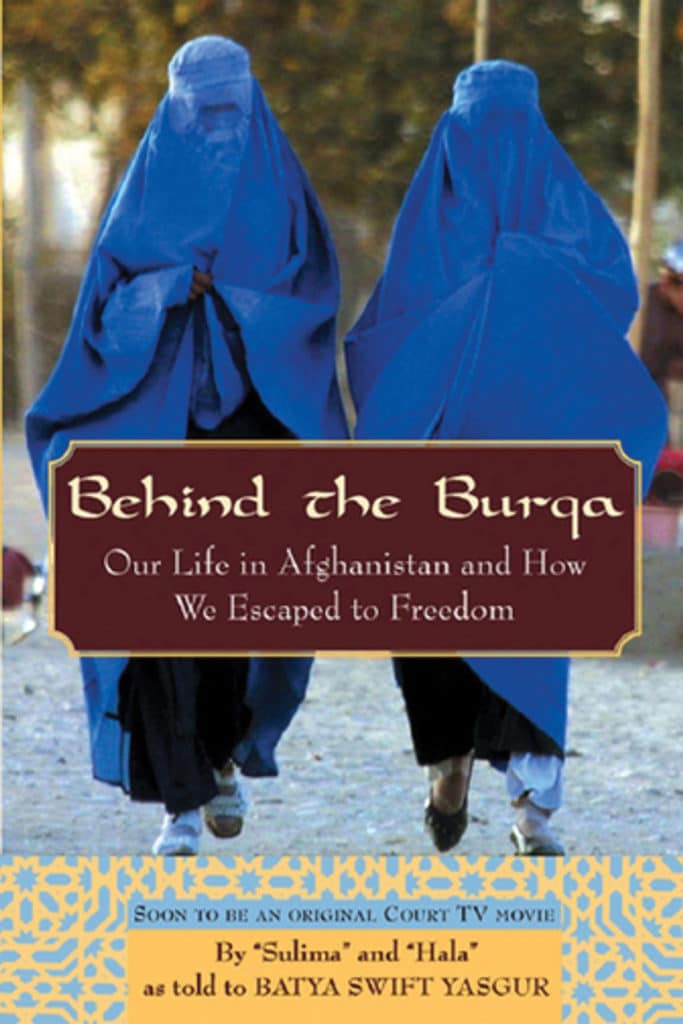
In 2002, author Batya Yasgur put out a memoir, “Behind the Burqa,” about two Afghan sisters who fled their country 20 years apart to avoid persecution. During the process of writing the book, she became close to an Afghan women’s rights activist who was also the director of the Afghan Women’s Fund, a non-profit organization that advocates for the rights of women in Afghanistan and establishes vocational and educational programs for them. They build schools for girls and provide medical clinics, school supplies to students and irrigation systems and wells to villages. 

Now, with the Taliban taking over, the lives of teachers and the volunteers in AWF are in danger. One member was killed, several have been attacked, the sister-in-law of a volunteer was shot and is now in a coma and many others have fled and are in hiding. Yasgur and the AWF are raising funds to evacuate 50 women and men who are at risk and bring them to the U.S.

“The Taliban penalize everyone for the ‘offenses’ of one family member,” said Yasgur, who is on the board of the AWF and the organization’s corresponding secretary. “The 50 people [we] are seeking to bring over are not just volunteers but also their spouses and children who are in danger.”

Each petition to transport these individuals to the U.S. costs either $535 or $575, depending on the category the applicant is in. Yasgur and the AWF are hoping to raise $30,000 for the members, some of whom have family in the U.S. According to Yasgur, they’re trying to find homes for the Afghans through their U.S. volunteers and supporters, as well as through family members already in the U.S. 

So far, the group has not been successful with evacuating anyone. “[The] challenges are finding sponsors and raising money for the applications,” said Yasgur. “We will also need to have money available for airfare (assuming they are approved) and to resettle them.”

She added, “There is great danger at the airport itself and in the surrounding area.”

Yasgur is passionate when it comes to writing about Afghan women and helping the individuals who are now in danger because of her own family history. 

“My mother fled Nazi Germany in 1936, together with her parents and brothers,” she said. “Perhaps it is because of her history as a refugee that I have always had an affinity with people seeking asylum from persecution.”

Along with working with the AWF, Yasgur also offered to volunteer her services as a social worker and writer for a human rights organization called Equality Now, which advocates for the human rights of women and girls around the world.

According to Yasgur, it’s important that people support the AWF in bringing their members to the U.S. for a number of reasons.

“Our government has in part contributed to the chaos and problems besetting the Afghan people now, and I believe that it is our responsibility as Americans to do whatever we can to remedy the situation.”

“Our government has in part contributed to the chaos and problems besetting the Afghan people now, and I believe that it is our responsibility as Americans to do whatever we can to remedy the situation,” she said. “As Jews, we know all too well what it means to be persecuted and I believe that we have the responsibility to help other persecuted people. And as human beings, I believe we all have a responsibility to other human beings to open our hearts, doors and wallets to bring as many people as possible to safety.”

You can make a tax-deductible donation to the Afghan Women’s Fund on their website.

Author Raising Funds to Evacuate At-Risk Afghans Read More »

A Moment in Time: God, are You listening? Zach, are YOU???

Dear all,

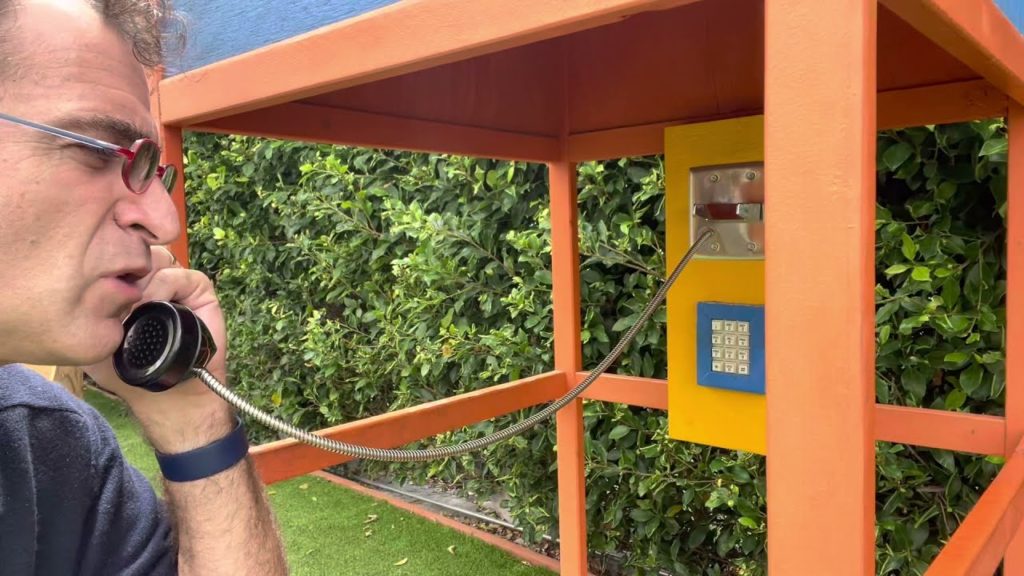
I had a chance to call God today. With the Holy Days approaching, I had a number of pressing questions:

”Why do bad things happen to good people?”
”Do you hear me when I pray?”

There were many more. I would imagine many who are reading have had similar questions.

And while I am eager to hear the answers, I know that come Rosh Hashanah and Yom Kippur, God will be calling out to me: “Zach, are YOU listening?”

The Jewish New Year gives us a collective moment in time to stop, really stop, and listen!

Are we ready to hear the call?

Ron, Maya, Eli, and I wish you and all you love a healthy, happy, and meaningful New Year!

Shana Tova!

Rabbi Zach Shapiro

A Moment in Time: God, are You listening? Zach, are YOU??? Read More »

After 44 Years, Al Brooks and His Newstand Are Still Going Strong

On South Beverly Drive in Beverly Hills, Al’s Newsstand is open for business each weekday at 6:30 A.M. The owner, Al Brooks, has been in the newsstand business for 44 years. He opened his first store on Fairfax Avenue across the street from Canter’s Deli, and at one point, he had locations on the Third Street Promenade and in San Francisco. He’s been at the Beverly Drive location since 1984.

“This is one of the last newsstands in the city,” Brooks told the Journal. “The whole industry has drastically changed. It’s tough with the advent of the internet. Everybody does things on a tablet or on a phone.” 

Brooks recalled the times he was at his busiest. Most recently, it was the morning of January 27, 2020, the day after Kobe Bryant died. Mourners and collectors came in droves to pick up copies of the Los Angeles Times with the front page obituary headline, “He was a talent like no other.” Brooks sold over 1,000 copies that day. 

On an ominous note, the bottom left corner of that front page was an eerie pre-pandemic headline: “State sees first two cases of new virus.” 

The largest sale of a magazine Brooks ever experienced was the September 2005 Vanity Fair issue featuring Jennifer Aniston breaking her silence about her divorce from Brad Pitt. He also remembers exceptionally heavy business in the wake of Michael Jackson’s sudden passing in 2009.

‘People can get the magazines online, but to tactically hold something, that’s what they want to remember and hold on to.’ — Al Brooks

“People can get the magazines online, but to tactically hold something, that’s what they want to remember and hold on to,” Brooks said. 

Last fall had another surge, as locals and collectors flocked to get newspapers at Al’s following the crowning of the NBA Champion Lakers and World Series Champion Dodgers. 

While there is the spike in sales around historic times, Al’s Newsstand has its daily shoppers that Brooks and his staff have come to know by name. One time, sportscaster Al Michaels showed up. Both Als are graduates of Hamilton High School. 

The newsstand also sells an impressive collection of magazines and newspapers of historic importance. While one side of Brooks’ newsstand has publications from the present day, the other side features an eclectic history of news from the past 60 years, such as a LIFE Magazine with a cover story on President Richard Nixon, a Newsweek with a cover on Jacqueline Kennedy Onassis and the final issue of The Los Angeles Herald Examiner. There’s an array of old comic book and sports trading cards that Brooks likes to show to the younger customers. 

 The sight of the historic headlines is a reminder of how different the world of news publications is today. With declining reader interest in paying for news, many prominent publications are promoting subscription deals that seem almost too good to be true. TIME is selling an annual subscription for $24.95 per year. Sports Illustrated is selling a print subscription for $20 for one year, or $30 for two. 

As the print news revenue margins get thinner, and some publications eliminate print altogether, print still carries a certain dignity and reverence that digital doesn’t. After all, people are willing to pay hundreds (and sometimes thousands) of dollars to place a loved one’s obituary in print. 

Brooks says that there has been a resurgence in demand for fashion, home decoration and art magazines. 

“The photos don’t show as vividly on a laptop or tablet as they do in print,” he said.

Brooks, who is 80, has degenerating eyesight, so the larger print features on smartphones and tablets are alluring. But that still doesn’t stop him from selling his part of the 20 million-plus print newspapers that America will read today. And tomorrow, Brooks expects another visit from the regulars who start their morning reading ritual with a physical newspaper. 

Why do they do it? 

“People get into a habit,” Brooks said. “And old habits are hard to break.”

After 44 Years, Al Brooks and His Newstand Are Still Going Strong Read More »

Federation Hosts Virtual Rosh Hashanah Gathering With Leaders

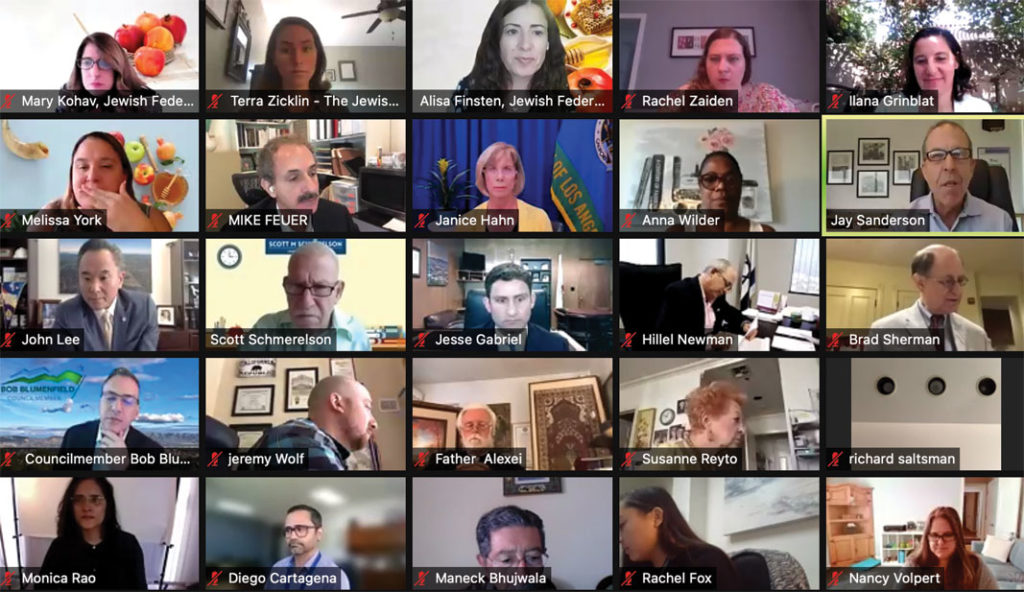
Twenty civic leaders representing city, county, state and federal government participated in The Jewish Federation of Greater Los Angeles’ annual Rosh Hashanah gathering titled “Hear Our Voices: Reflections and Visions for the New Year A Rosh Hashanah Celebration With Civic Leaders” on Monday, Aug. 30. About 105 people tuned in on Zoom. 

Moderated by Rabbi Ilana Grinblat of the Board of Rabbis of Southern California, the virtual Zoom meeting started with remarks by President and CEO of The Federation Jay Sanderson. “This is a bittersweet experience for me because as you know this will be the last time speaking to you at this wonderful event as president and CEO of The Jewish Federation of Greater Los Angeles,” Sanderson said, referring to his leaving the post at the end of the year. “For almost 12 years I have had the honor to serve the Jewish community and community at large and working with such valued partners. I want to thank all for all you have done for the Jewish community.” 

Rabbi Grinblat then offered a brief overview of the weekly Torah portion, noting how Moses speaks to the Children of Israel, telling them that God has set before them two paths: the path of life and blessing and the path of death and cursing. Moses tells them to choose the path of life and blessing, and if they want, they can achieve it. 

It was an appropriate introduction to the many local, state and federal community and civic leaders who each spoke for about two minutes, offering recaps of the critical issues facing the communities they serve as well as the country as a whole. At the same time, each presentation struck an optimistic tone that the coming new year will bring solutions to the most pressing issues and challenges the entire community faces. 

Los Angeles Mayor Eric Garcetti reminded all participants and observers that, “Last year at this time we were locked out of our sanctuaries. This year finds us somewhere in-between together and apart,” Garcetti said. “We have seen a tremendous effort to meet the demands of an uncertain moment. The blast of the shofar will reawaken the strength in all of us to tikkun olam (repair the world).”

Speakers included Congressman Brad Sherman; State Senators Bob Hertzberg and Henry Stern; Assemblymembers Jesse Gabriel, Richard Bloom, Laura Friedman; Rep. Ted Lieu; Supervisor Janice Hahn; City Attorney Mike Feuer, City Controller Ron Galperin, City Councilmembers Bob Blumenthal, Paul Krekorian, John Lee, Mitch O’Farrell, Mark Ridley-Thomas; and Los Angeles Unified School District members Scott Schmerelson, Nick Melvoin and Tanya Ortiz Franklin.

Consul General of Israel to the Pacific Southwest Dr. Hillel Newman offered greetings from the State of Israel. “In Israel, at the start of the Jewish new year, on the radio they summarize the past year. We have seen a year of challenges and hardship with the pandemic, the rise of antisemitism on the streets of LA, radicalism and attacks from Hamas,” he said. “But we must also look at the past with inspiration. We have seen tremendous ingenuity with the development of vaccines and innovations coming out of Israel.  The Abraham Accords and so much more.  As we look forward to the new year, let us strengthen our ties to one another and especially Israel with the U.S.”

The event culminated with Grinblat reciting the blessings on the apple dipped in honey, signifying a sweet new year, followed by blasts of the shofar by Rabbi Joel Nickerson of Wilshire Boulevard Temple. 

Federation Hosts Virtual Rosh Hashanah Gathering With Leaders Read More »

Israeli Consulate Co-Sponsors Anti-Hate Koreatown Mural

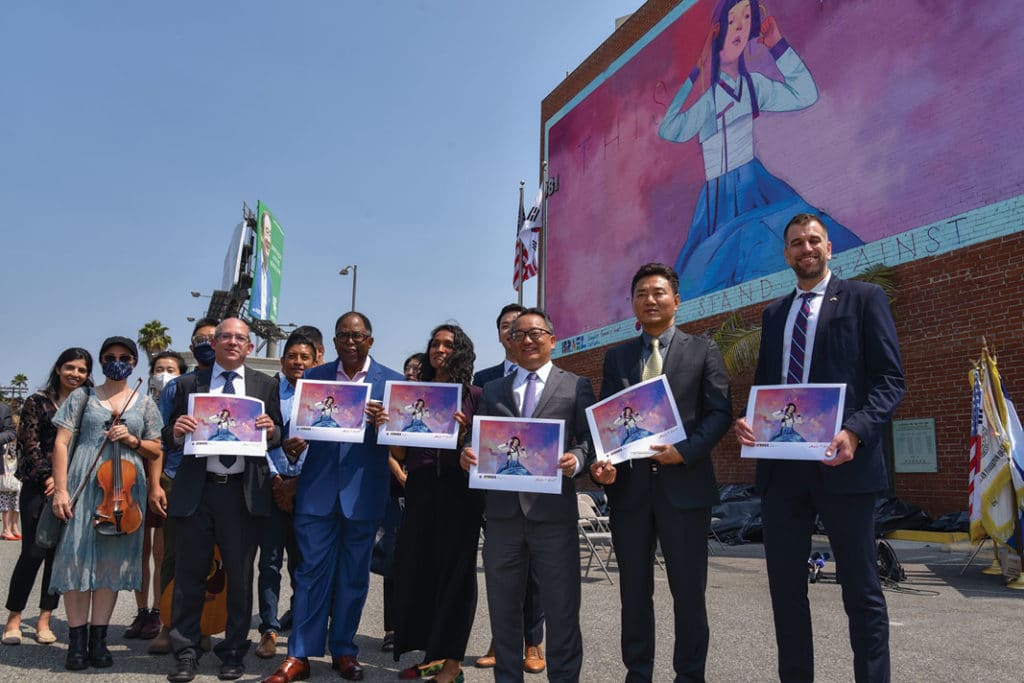
It was neither accidental nor incidental that the Consulate General of Israel in Los Angeles co-sponsored a 20-foot by 50-foot mural unveiled last month in Koreatown that portrayed a Korean young woman.

Since the pandemic began, in the United States, more than 9,000 hate crimes have been reported against Asian Americans – two-thirds of them women – supposedly faulting them for COVID-19.

The Aug. 24 ceremony took place at the Korean American Federation of Los Angeles, and the mural dedication “was born out of the fact we wanted to express our solidarity with the Asian community after the spa shooting in Atlanta last March,” said Consul General Dr. Hillel Newman. “We decided to do the mural because of the rise in hate crimes against Asian Americans.”  

Following the Atlanta massacre, where Asian women were six of the eight victims, “we approached the Asian community, and out of the talks, this event was born,” said Cambodian-born Andrew Hem of Artists 4 Israel.

Hem said he grew up in an area “where I was one of only three Asians. I never felt I belonged.” His mural shows a young Korean woman wearing a traditional Korean garb, the hanbok. The backdrop displays storm clouds below, rising to a clearer beautiful sky.  

Israel and South Korea have a special relationship, Newman said, because, “We understand their plight. They are surrounded by radicals and extremists from North Korea. We (Israelis) also are surrounded by radicals and extremists. Therefore, it is so important that we stand together.”

James An, president of the Korean American Federation, set the scene for his community.

“Since the onset of COVID, we have seen a rise in crime against Asians,” he told the Journal. “The crimes are not a foreign thing. They increased exponentially during the pandemic… something along the lines of ‘Asians brought COVID to the United States.’ The ‘China virus’ rhetoric did not help at all.

On the question of whether LA is safer for Asian Americans than other urban areas, An was unequivocal. “It is dangerous everywhere you go these days,” he said. “Northern California was experiencing a large increase in crimes against Asian Americans. Remember, these crimes are continuing to happen. They’re not going away. 

“We (leaders) are advocating hard for the community, trying to raise awareness. We are encouraging people to report these crimes because, you know, many Asian Americans don’t report crimes. They go home and they cry themselves to sleep. They pretend like everything is going to be okay.”

An said their passive approach “might be a cultural thing.

“But we are telling people, ‘you have to report these crimes so the criminals can be brought to justice. If it happens to another person because you didn’t report the crime against you, that doesn’t help the community at all.”

An recalled a conversation with Newman last March after the Atlanta murders.

‘We are with you, and we would like to help.’ -Hillel Newman, Israeli Consul General

“Hey, we are with you, and we would like to help,” Newman told An. 

“How about if we put up a mural that signifies unity and solidarity?” An asked. “Then we reached out to Hem – he’s a world-renowned muralist — and got this partnership going.”

Asian Americans are not the only beneficiaries of Israeli Consulate generosity. 

Newman’s office also oversaw the distribution of more than 100 computers in South Central to African American and Latino students who were unable to attend in-person classes because of the pandemic. 

Newman said, “We were approached by African American pastors and leaders. They said the children didn’t have computers to link to the schools. They were afraid this would escalate to crime if they didn’t study and get to participate in classes.”


Israeli Consulate Co-Sponsors Anti-Hate Koreatown Mural Read More »

Joseph Meszler

Rabbi Joseph Meszler: A Special Rosh Hashana Episode

Rabbi Joseph B. Meszler is the spiritual leader of Temple Sinai in Sharon, MA. He is a congregational rabbi, an educator, a progressive Zionist, and a human rights activist.

Follow Shmuel Rosner on Twitter.

Rabbi Joseph Meszler: A Special Rosh Hashana Episode Read More »

Jewish Schools Continue to Plan With COVID Protocols in Place

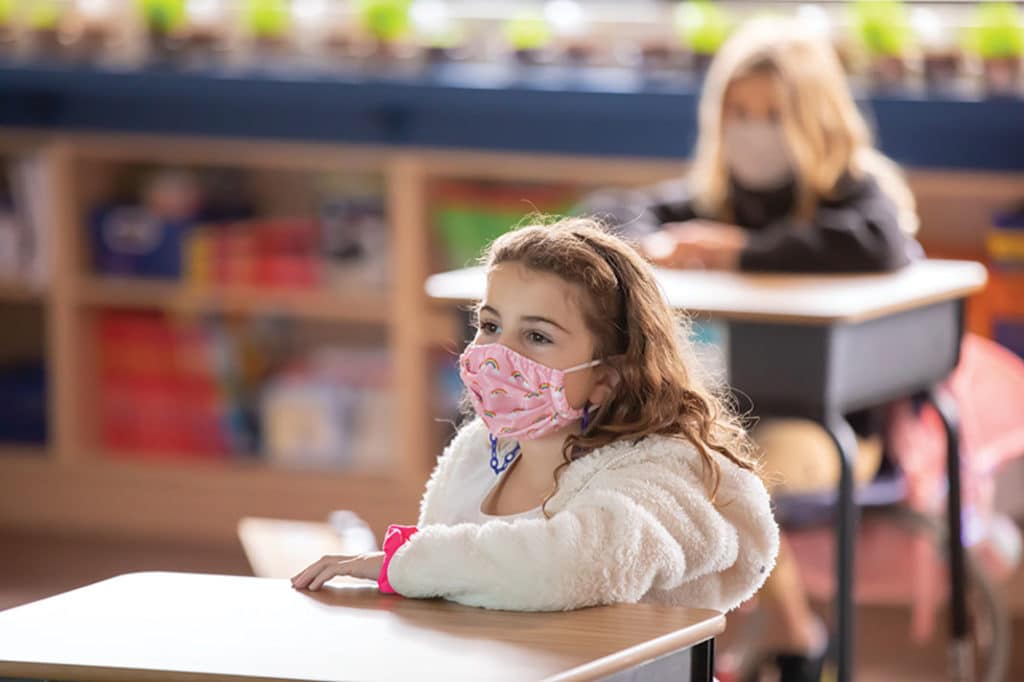
Hoping to prevent any outbreaks of COVID-19 while keeping students and staff on campus this year, Jewish schools around Los Angeles are being vigilant about health and safety protocols. 

The heads of school at three Los Angeles Jewish schools, Milken Community School, Kadima Day School and Heschel Day School, all emphasized the importance of in-person learning. 

“Our school is built on connections: connection to our curriculum, students’ connections to their teachers and students’ connections to one another,” said Larry Kligman, head of school at Abraham Joshua Heschel Day School in Northridge. “The best way we can foster connection is being together.”

Heschel had been partially open since October of 2020, though cohorts were a lot smaller – there were 12 or fewer students in each one. This year, the number of students in a cohort is not as restrictive. The staff must be vaccinated, and the school is discussing whether or not eligible students will need to get vaccinated, too. 

Over at Milken Community School in Bel-Air, which is for students in grades six through 12, all students who are 12+ and faculty and staff must be vaccinated.

“We have always taken the lead from our local experts, along with our own COVID-19 task force, and this year is no different,” said Head of School Dr. Sarah Shulkind. 

Just like Milken and Heschel, Kadima Day School, located in West Hills, is requiring students to wear masks. Kadima, which was the first school in Los Angeles County to be granted a waiver for in-person learning last year, is requiring vaccinations for teachers and strongly encouraging them for students who are qualified. According to Head of School Dr. Steven Lorch, they are also maintaining a 6-foot physical distancing in classrooms and holding as many events as possible on Zoom and outdoors. 

“In our experience, for 95% of students, they learn better in person, even in masks, than they learned in little ‘Hollywood Squares’ squares,” said Lorch. “There are lots of mental health considerations having to do with kids being isolated and not being able to interact with friends.”

Even though guidelines are strict to get students and teachers back into the classroom, all three heads of school reported that enrollment is up.

Even though guidelines are strict to get students and teachers back into the classroom, all three heads of school reported that enrollment is up. Part of the reason why, Lorch said, is because parents don’t want to risk public schools closing down, but the main factor is the community connection.

“They say, ‘I want my child to be well-educated but also have a connection to their Judaism,’” he said. “It’s important to them, and they want it to be just as important to their children.”

The demand at Milken is so high that Shulkind said they were still enrolling students right as the school year was starting. “Some of our grades are completely full, but we are working hard to get the right fit families into Milken. We anticipated that we might see a drop off in enrollment given that LAUSD returning to full-time in-person teaching and learning, but families have been reaching out to us nonetheless.”

Each of the schools is hosting programs this year to excite students and bring families together. Milken is launching a Finance and Entrepreneurship and Milken Storytellers program, Kadima is holding special outdoors events for Sukkot and tashlich, and Heschel is planning Shabbat hikes and encouraging families to have Sukkot meals together, even if it’s over Zoom.

Since COVID news seems to be fluctuating from day to day, Kligman acknowledged that some policies could change.

“We understand the situation is fluid and we are prepared to pivot as needed,” he said.

However, even if his school’s policies have to change, Kligman said he knows it’ll be for a good cause.

“Everything we do and all the decisions we make are to ensure the best health and safety for our community. This is not just for the students, but for the staff as well.”


Kylie Ora Lobell is a writer for the Jewish Journal of Los Angeles, The Forward, Tablet Magazine, Aish, and Chabad.org and the author of the first children’s book for the children of Jewish converts, “Jewish Just Like You.”

Jewish Schools Continue to Plan With COVID Protocols in Place Read More »

The Wonder of a Persian Rosh Hashanah Seder

“Why is there a fish head on the table?” asked my mother when my sister, who was born in Tehran, and her husband, whose customs hail from Tunisia, hosted their first Rosh Hashanah seder in Los Angeles.

Indeed, none of us knew what to say at the sight of a giant, cooked trout head next to a cup of wine. My brother-in-law explained that it was a North African custom symbolizing a hope to be at the metaphoric head, rather than the tail, of the year. He then added, “Now, pass the fish around the table and whoever wants to can poke it in the eye.”

I’ve seen many interesting delicacies, the most memorable of all being my grandmother’s famous brain soup (yes, brain soup) back in Iran, which consisted of cloudy chunks of cow brain floating in a clear broth. My grandmother insisted the soup would make me smarter, but I’ve yet to see the results.

Brain in a bowl is one thing, but poking a dead fish in the eye is far more interesting.

Brain in a bowl is one thing, but poking a dead fish in the eye (some lick their finger afterward as the ultimate connection with being at the head) is far more interesting. In truth, I was relieved to see a huge bowl of cow tongue at that Rosh Hashanah seder (Iranians serve tongue as another symbol of being at the head of the year).

I thought Persian Rosh Hashanah simanim, or signs, were unique, until I learned about the rich diversity of Tunisian customs. And then I attended my first Ashkenazi Rosh Hashanah dinner, where the lovely host treated guests to challah, apples and honey, and then served dinner. Where were the other simanim? I was so traumatized that I went home and devoured an entire pomegranate, aril by aril (there were over 600 arils total).

The Rosh Hashanah seder traces its roots to the Babylonian Talmud (circa 300 CE). For years, I believed that all Jews enjoyed as much simanim as Persians (many Ashkenazim also have other simanim, such as leeks, carrots and pomegranates). In most Iranian families, Rosh Hashanah simanim include the following foods, which are all preceded by a prayer beginning with Yehi Ratzon (“May it be Your will”), as each siman represents a different hope for the new year:

Cooked beets: These are a symbol of moving past our transgressions, and removing enemies from our midst. My mother boils chopped beets with a few teaspoons of sugar for a delicious sweetness.

Dates: These represent the demise of our enemies, though in America, my family still hasn’t found dates that compare with those in the Middle East.

Raw leeks: Iranians enjoy a paper-thin allium called “tareh” (broad leaf leek), and most bite it in half and throw the uneaten pieces over their shoulders to symbolize cutting off their enemies. Each year, my father forgets this practice and eats his enemies whole.

Sautéed or roasted squash: We ask that any evil decrees against us be ripped apart, and that our good deeds be “read” and recognized by God.

Pomegranate: This represents everything from fertility to performing numerous mitzvot throughout the year.

Apples and honey: These famous simanim symbolize a sweet new year.

Black-eyed peas: This dish represents fortune, fullness and abundance in the year ahead, especially for our merits.

Cow tongue: The tongue is cut into chunks because no one wants to stare at a whole, slumping bovine tongue served on a platter. It’s also often cooked with black-eyed peas, resulting in a mouth-watering dish that nevertheless makes children cringe.

Cow lung or anything “light and airy”: Cow lung can seldom be found in America, so many substitute it with popcorn to symbolize the hope for a light and carefree year.

If you’ve noticed, the dominant theme among the nine simanim focuses on defeating our enemies (or, at least, keeping them at bay). But in recent years, some Jews (especially those across different political aisles in America) have come to view one other as enemies.

Perhaps this year, we might consider our precious unity by not breaking those leeks, but rather, eating them whole and swallowing our pride.


Tabby Refael is a Los Angeles-based writer, speaker and civic action activist. Follow her on Twitter @RefaelTabby


The Wonder of a Persian Rosh Hashanah Seder Read More »

Nearly 75% of College Students, Recent Grads View Antisemitism on Campus As “a Very Serious Problem,” Survey Says

Nearly 75% college students and recent college graduates view antisemitism as “a very serious problem on campus,” according to a recently released survey.

Alums for Campus Fairness (ACF) published the survey on August 30 after interviewing 312 students and 194 alumni from March 25-June 14. The survey found that 94% of respondents viewed campus antisemitism as a problem today and in recent years and 74% of those viewed it as “a very serious problem.” Only 19% viewed it as “somewhat of a problem” and 5% as “not much of a problem.” 

When asked if antisemitism is or was a problem on their campuses, 95% answered in the affirmative; 50% of those viewed it as a “minor problem” while 45% viewed it as a “major problem.” Forty-eight percent of current students viewed antisemitism as a major problem on their campus while 47% viewed it as a minor problem; among recent graduates, those numbers were 39% and 57%, respectively. Forty-seven percent of current students said that the problem was worsening on their respective campuses.

Regarding antisemitic incidents themselves, 33% said they had been subjected to antisemitic comments in person; another 33% said they knew of someone who was subjected to antisemitic comments  and 13% said they both experienced antisemitic comments and knew of someone else who was subjected to antisemitic comments. Those numbers were 20%, 40% and 9%, respectively, when it came to faculty members making antisemitic comments and 14%, 27% and 3%, respectively, on being threatened with antisemitic violence.

Eighty percent of students and recent graduates said they usually or always felt safe identifying as Jewish on campus––especially when they attended Jewish events––but 69% said they sometimes or always avoided certain places or situations on campus out of concern for their safety. Fifty-five percent of students who go to private schools felt like antisemitism was getting worse on their campus; that number was 45% for those going to public universities.

Some examples of antisemitic incidents highlighted in the report included a female student at a northeast school being called a “k— b—-” and a female graduate from UC Berkeley who said that she had a professor who “began asking me antisemitic questions related to economic libel and the Rothschild conspiracy theory” since Rothschild is her last name.

“These findings illuminate the troubling reality on U.S. campuses—antisemitism is increasingly a pernicious threat, with Jewish students under siege,” ACF Executive Director Avi D. Gordon said in a statement. “Today’s universities take great pains to embrace and protect students from all races, religions, and backgrounds. But Jewish students are often left to fend for themselves against discrimination. Administrators must take immediate steps to remedy this situation, and alumni should work with administrators, students, and allies alike to rid their alma maters of hate.”

Jewish on Campus tweeted, “We now have cold, hard, statistical evidence that antisemitism is rising on college campuses and becoming a major issue for Jewish students. Of course, we’ve been saying this for a long time, but maybe now you won’t ignore us.”

Nearly 75% of College Students, Recent Grads View Antisemitism on Campus As “a Very Serious Problem,” Survey Says Read More »