fbpx

June 8, 2021

The Time For Negotiating With Iran Is Over, Israeli Analysts Warn

(The Media Line) As Iran continues to press ahead with its nuclear program and the United States pushes for a return to compliance with a 2015 nuclear deal, some are warning that the time for negotiations is over.

US Secretary of State Antony Blinken on Monday said that it “remains unclear” whether Tehran is ready to comply with the nuclear agreement signed with the world powers. Speaking at a hearing of the House Foreign Affairs Committee, Blinken also said that the breakout time for Iran to assemble a nuclear weapon could go down to just a few weeks if it continues to violate the terms of the pact.

The US and Iran began indirect talks in Vienna in April in order to reach an agreement and resume compliance with the nuclear accord that was reached in 2015, and which the Trump administration left in 2018.

On the heels of Blinken’s comments, regional analysts say that a different approach is now necessary.

Dr. Soli Shahvar, founding director of the Ezri Center for Iran and Persian Gulf Studies at the University of Haifa, told The Media Line that the Western policy of “appeasement” has proved fruitless.

“I don’t see any reason to continue trying to return to the Joint Comprehensive Plan of Action (JCPOA) or in conducting negotiations,” Shahvar said, using the official name for the nuclear agreement. “The logical thing to do would be to continue the sanctions and take even more aggressive steps against Iran. … If I were an advisor, I would recommend hardening the policy.”

Shahvar, an Iranian-born scholar who currently resides in the northern Israeli port city of Haifa, said that stricter measures do not have to be limited to the economic arena, but could also include supporting human rights groups in Iran and adding more individuals connected to the regime to a terrorist watchlist.

There is no possibility of successfully negotiating with Tehran because of its religious extremism and ongoing human rights abuses, Shahvar says. From the Middle Eastern point of view, insisting on talks is viewed as a form of weakness and only serves to encourage the Islamic Republic’s leaders to continue down the path they have taken.

“It’s a crazy regime that creates only terror, violence and death, so how can you come to terms with it? How come [Western powers] don’t help their natural allies, the people of Iran?” Shahvar asked.

“We know that Iran is in a very dangerous situation economically,” he said. “You have to create the circumstances so that the people themselves can arise against their own regime, which they despise.”

China and Russia’s growing influence in the region complicates matters even further. China recently signed a $400 billion, 25-year trade deal with the Islamic Republic, which will see China invest in Iranian infrastructure. For its part, Russia has repeatedly supported Iran on several key issues and views Tehran as a regional ally.

Avi Melamed, president and founder of Inside the Middle East: Intelligence Perspectives, told The Media Line that Iran has presented the international community with a multi-pronged challenge.

The nuclear program is one of several issues, he said, along with Iran’s missile program and its use of militias or proxy groups throughout the Middle East.

The JCPOA, Melamed noted, has done little to curb those aggressions.

“Some within the international community still insist on turning a blind eye to the severe and complex challenge that the Iranian regime presents,” Melamed said. “We are facing a growing, severe Iranian threat in the region. The alarm bells should have gone off a long time ago in Western capitals. Unfortunately, Western leaders either failed to or did not want to deal with that challenge and it will just get worse.”

Aside from Israel, other major players in the Middle East also view Tehran’s nuclear aspirations as a major threat, such as Saudi Arabia, the United Arab Emirates and Egypt.

The logical thing to do would be to continue the sanctions and take even more aggressive steps against Iran.

Like Shahvar, Melamed believes that the US and western Europe need to adopt a much more uncompromising approach to the issue.

“It seems that there is a disturbing gap between the rhetoric and the statements, and what is happening on the ground,” he said.

Israel’s new government could also shift elements of the equation on Iran’s nuclear program in new and unexpected ways. Led by Yamina’s Naftali Bennett, the coalition – which spans Israel’s political spectrum from left to right and even includes an Islamist party – appears poised to be sworn in to the Knesset on Sunday.

While Melamed does not expect Bennett’s approach to Iran to be different from that of his predecessor, Binyamin Netanyahu, the change could pave the path to a more productive dialogue with Western allies.

“This is an interesting aspect because it’s very clear that Mr. Netanyahu for different reasons was generating some sort of resentment within western European governments and the Biden administration,” Melamed said. “In that context, we could expect a smoother dialogue between the new government and the Biden administration.”

The Time For Negotiating With Iran Is Over, Israeli Analysts Warn Read More »

Ilhan Omar Says US, Israel, Hamas, Taliban Have Committed “Unthinkable Atrocities”

Representative Ilhan Omar (D-MN) is being criticized on Twitter for stating that the United States, Israel, Hamas and the Taliban have all committed “unthinkable atrocities.”

Omar tweeted, “We must have the same level of accountability and justice for all victims of crimes against humanity. We have seen unthinkable atrocities committed by the U.S., Hamas, Israel, Afghanistan, and the Taliban.” The tweet contained a video of her asking Secretary of State Antony Blinken where victims of alleged war crimes are supposed to go for justice given the U.S.’s opposition to the International Criminal Court (ICC). Blinken responded that while he was “profoundly moved” at the loss of life during the most recent conflict between Israel and Hamas, the administration doesn’t believe that the ICC has jurisdiction over the Israeli-Palestinian conflict. He added that “whether it is the United States or Israel, we both have the mechanisms to make sure that there is accountability in any situations where there are concerns about the use of force and human rights.”

Several people on Twitter–including some of Omar’s colleagues in the House of Representatives–accused Omar of drawing a moral equivalency between the United States and Israel and terror organizations.

“Grouping the U.S. & Israel with the actions of Hamas & the Taliban is disgusting,” Representative Andy Biggs (R-AZ) tweeted. “@Ilhan does not deserve to represent America with these vile & completely false comparisons.”

Representative Virginia Foxx similarly tweeted, “Congress needs condemn these distortions and alignments of Israel and the United States, and it should start with Rep. Omar’s own party. Will @HouseDemocrats take a stand and speak out against Rep. Omar’s rhetoric? Or will they sit back and do nothing?”


Jewish groups also denounced her. The Simon Wiesenthal Center called for Omar to “be stripped of her committee assignments for accusing the U.S. of crimes against humanity.”


Stop Antisemitism also tweeted, “Wow – a sitting U.S. Congresswoman is unable to differentiate between democratic countries and terror organizations.”


Former New York Democratic Assemblyman Dov Hikind, who also heads Americans Against Antisemitism, tweeted, “This vile hater has the audacity to enjoy American freedom while using her position to demonize America by lumping it with Hamas and the Taliban! No mention of Iran, Turkey, Syria, China, or Russia. Odd… Unless you’re anti-American, then it makes total sense!”

Electronic Intifada co-founder Ali Abunimah also expressed outrage over Omar’s tweet, but for a vastly different reason. “Outrageous and offensive for @IlhanMN to compare Palestinians resisting US-backed apartheid in the same category as the US empire which has killed millions, and Israel’s illegitimate terrorist colonial regime. Omar must stop pandering to Zionists with anti-Palestinian attacks.”

Ilhan Omar Says US, Israel, Hamas, Taliban Have Committed “Unthinkable Atrocities” Read More »

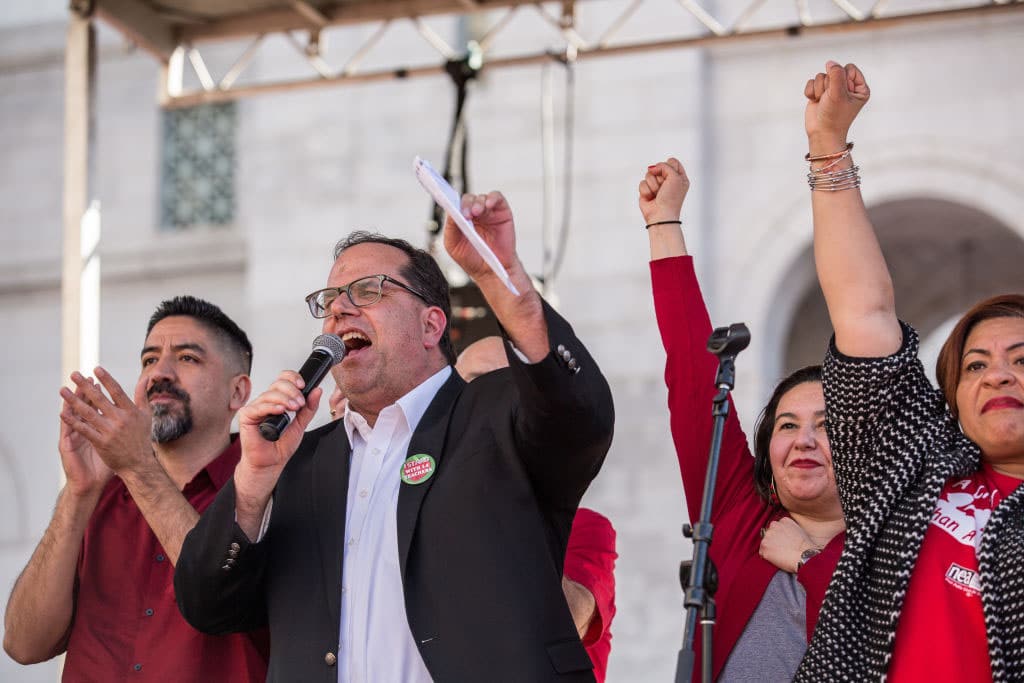
LAUSD Teacher Resigns from Union Over Pro-BDS Motion: “I Feel Unsafe As a Jew”

A teacher at the Los Angeles Unified School District (LAUSD) has resigned from the United Teachers Los Angeles (UTLA) union as a result of the union taking up a motion supporting the Boycott, Divestment and Sanctions (BDS) movement.

The motion, which was passed during UTLA’s North Area (northeast Los Angeles) and Harbor Area (which includes Carson and San Pedro) meetings on May 20, expressed “our solidarity with the Palestinian people and call for Israel to end bombardment of Gaza and stop displacement at Sheikh Jarrah” and endorsed “the international campaign for boycotts, divestment, and sanctions against apartheid in Israel.” UTLA said in a statement that the motion would be taken up for a vote by the UTLA House of Representatives in September and that motions passed in Area meetings don’t reflect the opinion of UTLA leadership.

Lindsey Kohn, a sixth-grade math and science teacher at James Madison Middle School in North Hollywood, wrote in her letter of resignation that “I feel unsafe as a Jew in this UTLA” with the motion being brought to a vote. “As an educated person, I cannot understand how the union can stand by a terrorist organization and a country that bombs Israel, hurts their children and wants to kill every Jew. The Palestinians use children and civilians as human shields and then blame Israel for their death. This political battle has NOTHING to do with the education of my students.”

Additionally, Kohn chided UTLA for supporting the Black Lives Matter (BLM) movement, accusing the union of putting “many lives in danger by taking away our school safety officers. This organization is racist, anti-semitic [sic] and clearly extremely ignorant.”

Kohn told the Journal that the union “was very nonchalant about” the motion, telling her that they were just going to wait and see what happens with the upcoming vote. Kohn felt like she needed to resign from the union because “the only way to have my voice heard is to take my money away from them”; she had been in the union for 11 years.

“I think the union at this point needs to be broken down,” Kohn said. “Every other Jewish teacher I speak to–except the Palestinian sympathizer ones, which unfortunately there are many–they’re angry too. So hopefully we will get a backlash and people will start walking out.”

A spokesperson for UTLA did not respond to the Journal’s request for comment. A spokesperson for LAUSD declined to comment to the Journal.

Various local Jewish groups have criticized the motion. Anti-Defamation League Regional Director Jeffrey I. Abrams wrote in a May 28 letter to UTLA that the motion is “extremely one-sided” and “makes problematic claims and biased assumptions, including blaming the recent outbreak of violence solely on Israel.” The Jewish Federation of Greater Los Angeles similarly said in a June 7 statement, “In the wake of numerous attacks against the Jewish community, this motion adds fuel to the fire of antisemitism and does nothing to achieve a just resolution to the Palestinian-Israeli conflict. Instead, it dehumanizes and demonizes Jews and Israelis, all while delegitimizing Israel’s right to exist. At best, it white-washes Israelis and Jews, erasing the diverse history of ‘Mizrahi’ (Eastern and Middle Eastern) Jews and the persecution, discrimination, and bigotry all Jews have faced as minorities wherever they have lived, throughout every era in history. We cannot allow any teachers or students to feel that their teachers’ union is collectively poised against them.”

On the other hand, Venice High School history teacher Soni Lloyd, a UTLA chapter chair, told The Los Angeles Times that voting on the motion is necessary because “labor unions are inherently anti-imperialist, which is why they are “speaking up for the Palestinians.” “This is not about singling out a specific demographic, it’s about opposing colonization, war crimes and injustice, which are all things that harm the cause of labor.”

A spokesperson for the Palestinian Youth Movement also told the Times, “The second-largest teachers union in the country is on the path towards making a clear, decisive moral stance against Israel’s ethnic cleansing of the Palestinian people…. In doing so, UTLA members add their voices to the growing tide of public support for Palestinian liberation.”

LAUSD Teacher Resigns from Union Over Pro-BDS Motion: “I Feel Unsafe As a Jew” Read More »

“Zionist Pigz” Graffiti Found on SF Jewish-Owned Café

Graffiti stating “Racist Pigz” and “Zionist Pigz” was found spray-painted on a Jewish-owned café in San Francisco on June 6.

The café, Manny’s, is owned by Manny Yekutiel, who has written about how his father sought refuge from Afghanistan in Israel; Yekutiel has also written that he supports Israel’s right to exist but disagrees with the actions of the Israeli government.

Jewish groups and leaders condemned the vandalism.

“Scapegoating, targeting & vandalizing Jewish-owned businesses or community institutions is not legitimate protest or peaceful activism,” Anti-Defamation League San Francisco tweeted. “It is #Antisemitism.”

American Jewish Committee Director of Combating Antisemitism Holly Huffnagle similarly tweeted, “Vandalizing stores with anti-Israel graffiti simply because the owner is Jewish is a clear and disturbing example of antisemitism masked as anti-Zionism. This cannot stand.”

She added in a subsequent tweet that Yekutiel “is a leader on so many pressing societal issues and to see anti-Jewish racism targeting him is a disservice to all fighting for a more just society.”


State Senator Scott Wiener (D-San Francisco) tweeted that Manny’s has been targeted on multiple occasions. “Targeting Jewish businesses is straight up antisemitic. We must speak out & condemn this hate.”


Alex Ryvchin, writer and co-CEO of the Executive Council of Australian Jewry, also tweeted, “Merely writing ‘Zionist’ in place of ‘Jew’ doesn’t make this less antisemitic. It would be like claiming that an attack on a Black church isn’t racist, it’s merely a commentary on the ideology of the Black congregants.”


Yekutiel said in a statement posted to the Manny’s Twitter account, “Thanks to everyone who has reached out following the recent vandalism at Manny’s. We’re stronger together and love our community.”

“Zionist Pigz” Graffiti Found on SF Jewish-Owned Café Read More »

Do Blue Squares Matter?

The recent wave of antisemitism sweeping across the country has captured the attention of the American Jewish community in a new way. Antisemitism isn’t new, but for some it feels like it is, and many are looking for a way to respond. On May 21 the #BlueOutFriday campaign was launched on Instagram.

Given the current cultural moment, it seemed reasonable to hope that the effort would both offer a platform for pride and solidarity, and help make antisemitism as socially toxic as any other form of bigotry in America. The nation seemed primed to focus its outrage on the victimization of one of its smallest minority groups, statistically targeted for hate crimes more than any other in the country.

Did it work?

“It felt good to see the flood of support on my feed that day,” said Charlotte M., a Jewish artist in her 40s whose Instagram followers of all faiths responded positively to her post. But she felt much less optimistic about the larger national response (or lack thereof) from corporate America, politicians and the masses.

“It was obvious,” she said, “that we weren’t getting a widespread show of support on the scale of what other communities have experienced. My daughter’s school always has a lot to say about diversity and inclusion but was eerily silent on this issue. I didn’t get open letters from shopping websites like I did last summer pledging to listen and to do more. It took our Jewish senator more than a week to speak up.”

Perhaps that lackluster response teaches us a sobering lesson. Social capital around support for Jews is thin at best. The national mood didn’t demand statements from CEOs and sports stars, so many didn’t issue them. Those who did speak out are appreciated and admired, precisely because they are in the minority.

Perhaps that lackluster response teaches us a sobering lesson. Social capital around support for Jews is thin at best.

Of course not all Jews participated in the campaign, and for a variety of reasons. “It just felt like we were coopting another movement’s idea,” explained one non-poster. Another told me that he didn’t post because it felt like another empty social media moment.

This form of shoulder-shrugging should make us think about the lack of inspirational creativity in our communal responses to moments of crisis. It should also make us question the wisdom of institutions that busily fight antisemitism together with all other forms of “hate.” Perhaps we have so thoroughly convinced a generation of American Jews that there is nothing particular about antisemitism, nothing that distinguishes it from other forms of prejudice, that we have taken away the special responsibility Jews have to fight it. If you had a black square on your feed last year, perhaps a blue one this year seemed redundant.

Hate is hate, right?

Orit M., who sits on the boards of several Jewish and pro-Israel organizations, didn’t post a blue square either, but for a very different reason. “Turning your square blue and then sleepwalking to the polls every November isn’t helping,” she said. Her objection wasn’t to the virtue signaling, but to the cover it provides those who then take no further responsibility for the cause. They, like so many unaccountable politicians, check their Jewish community boxes by posting blue ones, even while downplaying antisemitic tweets by Ilhan Omar.

What, then, is the point?

It’s possible that the greatest pushback against #BlueOutFriday centered around mixed messaging. “Many of my friends were confused as to whether this was about supporting Israel or speaking out against antisemitism,” said Jake T., a 37-year-old entrepreneur. His circle doesn’t countenance bloodied Jews in the streets, and had this wave of attacks started with anything other than a headline about Gaza, perhaps he and his friends would have gotten on board. But media coverage of recent anti-Jewish hate crimes has relied primarily on such headlines, and that tells us something depressingly important. The campaign to delegitimize Israel has been successful among Jews and non-Jews alike. It has created moral confusion so deep that decency and reason cannot prevail against it.

Never mind that this conflict was started by Hamas, a corrupt, Iranian-backed, terrorist organization with no regard for innocent life, Israeli or Palestinian. It’s a detail that has been conspicuously absent from mainstream coverage of the conflict. We have so lost the narrative that this fact either didn’t make it through or wouldn’t make a difference if it did.

The saddest outcome is that Jews themselves have fallen victim to this narrative. Inject the word “Israel” into the conversation and many dive for cover first and ask questions later. Calls to kill Jews and rape their daughters on the streets of London and Los Angeles were somehow successfully framed as reactions to a political event, rather than the displays of naked Jew-hatred that they were. Jews with neurotic aversions to standing up for themselves wouldn’t speak up because, Israel.

The saddest outcome is that Jews themselves have fallen victim to this narrative.

Inside the Jewish community, pro-Israel advocates have been trying for more than a decade now to remind everyone that Israel is a liberal cause. It is. Every classic liberal value from freedom of religion, to respect for human life, to women’s rights is alive and well in the Jewish State. But it is not an effective argument at a time when the definitions of Left and Right in America are changing so rapidly. That gay men march in Pride parades in Tel Aviv and are thrown off roofs in Gaza has often been cited. Has it changed public opinion or even Jewish support for Israel?

The anti-Israel agenda has little to do with the politics, human rights issues, or the property disputes about which liberal Jews feel defensive. It is rooted in antisemitism. Jews who cannot answer these attacks with a healthy dose of Jewish values will not likely win the debate by pointing to Ra’am’s inclusion in the next Israeli government. We need more Jews with moral self-confidence. That we haven’t cultivated enough of them to decry antisemitism in our streets is something to remedy.

If some people gained a sense of purpose and motivation from posting their blue-squares on May 21 then it was probably worth doing. If the Jewish community learns from the experience for the next moment of crisis, which is sure to come, then it will have been of great value. It isn’t clear that #BlueOutFriday created a movement in our direction so much as it unmasked the depth of the movement against us. But there is value in that reality-check too.


Rebecca Sugar is a freelance writer and philanthropic consultant living in New York. Her work has been published in The Wall Street Journal, USA Today, The Spectator, The Christian Post and JNS.org.

Do Blue Squares Matter? Read More »

Israeli Ambassador Tells AP Hamas Was Using Building to “Jam the Iron Dome”

Israeli Ambassador to the United States Gilad Erdan told executives at the Associated Press (AP) headquarters in New York City on June 7 that Hamas was using their building in the Gaza Strip as part of their efforts to “jam the Iron Dome.”

Erdan announced his visit to the AP in a June 8 Twitter thread, stating that “that the building housing their Gaza operation was being used by Hamas terrorists trying to jam the Iron Dome – that is why it was prioritize by the IDF [Israel Defense Force] during last month’s operation.” He added that the AP likely didn’t know that Hamas was utilizing the building to sabotage the Iron Dome.

“Israel did everything to ensure no employees or civilians were hurt during this operation,” Erdan tweeted. “In contrast, Hamas is a genocidal terrorist organization that purposely places its terror machine in civilian areas, including in buildings being used by international media outlets.”

He concluded the thread by stressing the importance of press freedom and that the Israeli government “is willing to assist AP in rebuilding its offices and operations in Gaza.”

Creative Community for Peace Director Ari Ingel tweeted that Erdan’s announcement confirms what Tommy Vietor, former National Security Council staffer during the Obama administration, had reported at the time and that a former AP reporter had written in 2014 that Hamas tended to threaten staffers inside the AP’s Gaza bureau.

Washington Free Beacon contributor Noah Pollak tweeted, “The idea that the IDF bombed the Gaza building housing AP and Al Jazeera offices for no reason whatsoever was always ludicrous. The AP CEO owes Israel an apology — and he owes his readers an explanation.”

Jerusalem Post Editor-In-Chief Yaakov Katz tweeted, “Why couldn’t the @IDFSpokesperson have put out this information immediately after the attack? Israel needs to learn from this example. The information battle is part of the war. You can’t leave a vacuum for three weeks and think everything will be okay.”

Israeli Ambassador Tells AP Hamas Was Using Building to “Jam the Iron Dome” Read More »

Azerbaijan’s Unbreakable Solidarity with Jewish Communities Across the World

My heart has been pounding with ache for the stress and worry my Jewish brothers and sisters have endured – from New York City to London, Tel Aviv and Los Angeles –  a place I have visited several times for programs hosted by synagogues such as Nessah Synagogue and Sinai Temple, or organizations such as AJC and Simon Wiesenthal Center, and so many others, which have honored me and other survivors of the Khojaly Massacre. As a friend to many Jewish communities, particularly in Los Angeles, I am profoundly offended and disturbed by the recent attacks on Jews on the streets of Los Angeles, by literal gangs of antisemites, as if this were taking place in another time and another place.

I am aware of the great pressures and threats Israel and the Jewish people face, throughout all of time and alarmingly, today. In contrast to many other places in our region and beyond, the Jewish experience in Azerbaijan has been nothing but positive, whether relating to our Mountain Jewish population that has resided securely in Azerbaijan for over 2,000 years, representing today a significant component of our approximately 30,000 Jewish citizens; or our history of standing out as a safe haven to Jews fleeing the worst of Europe’s atrocities – the pogroms and the Holocaust, with Azerbaijan proudly harboring over 10,000 Jews that had escaped Hitler’s certain death. Over 400,000 Azerbaijani men and women gave their lives fighting against the Nazis, and this is something every Azerbaijani grade school student learns, with immense pride. In 2016, Azerbaijan was the only Muslim nation in the world to host the Simon Wiesenthal Center’s renowned exhibition “People, Book, Land: The 3,500 Year Relationship of the Jewish People with The Holy Land”. Our nation may be unique in our support for Israel and Jewish people, but we have always stood out as a beacon against prejudice, and basic history and simple values have made the equation simple for our nation and our culture. And of course, we have an active Jewish community here, with Jewish men and women holding positions in Parliament, in our judicial system and across government, industry, academia, culture and other spheres as important and cherished as any other citizen of Azerbaijan. 

So I am further disturbed by the social media waves that have flooded the world with hatred and lies about Israel and the Jewish people, a trope I am familiar with because unfortunately, it exists in our part of the world too. As a 95% majority-Muslim nation with unbreakable ties to Israel, an alliance that exceedinly grows and flourishes, we face particular challenges and prejudices in a region shared by Armenia, Iran and Russia. During Armenia’s 30-year-long, internationally condemned occupation of 20 percent of Azerbaijan’s sovereign territory, Israel has stood by us with unparalleled support and resources, and Armenia has seized that as an opportunity to revisit their long-lasting obsession with antisemitism. Months prior to the recent attacks by Hamas, Armenian lobby was already protesting outside the Israeli consulate in Los Angeles, chanting antisemitic slogans, while Armenia’s Prime Minister publicly declared Israel “joined forces with the devil”. Rewind about 80 years and the same radical Armenian groups in the United States were publicly praising Hitler and Holocaust, due to their own historical obsession with racial purity and Nazi-like ideology. Just a few years ago, an obscenely large statue was erected in the center of Armenia’s capital city of Yerevan. The statue is of General Garegin Nzhdeh, who is considered Armenia’s national hero. He was also a Nazi collaborator and let the infamous Armenian Legion of Wehrmacht. A Holocaust memorial in Yerevan was repeatedly vandalized with antisemitic graffiti. And today, among others, Armenian American groups are at the helm of the anti-Israeli protests in Los Angeles and other major US cities.

But despite the loud voices and social media rhetoric, the friends Israel and the Jewish people had before this new crisis are with you today more than ever before, and our solidarity is based not only on our correct understanding of history and of the weighty role antisemitism plays, but also in the transcendence of the values we share in common, of loving and celebrating life, and building and repairing toward a world of peace. In my heart I cannot believe that we will not overcome this madness, even if it seems insurmountable at times, even if it looks to be everywhere. Certainly here in our small corner of the world, your community is in our hearts, and in our mosques, synagogues and churches, where we pray for your protection and perseverance. 

Those of us in the world that are fully committed to life, progress and peace must stay close in these trying times, and I only wish I could reach across the world from my home in Baku to my dear friends across Los Angeles and beyond, to share my sorrow at what is happening and to offer whatever strength and support possible. Because you are not alone; like many others in the world, I and countless others throughout Azerbaijan are watching, praying and will continue to stand up and fight for the values we have shared together over centuries and most importantly, today. For now, I send my hope and prayers for your safety and strength, from my heart in Baku to the Jewish people of Los Angeles, and the world.

Azerbaijan’s Unbreakable Solidarity with Jewish Communities Across the World Read More »

Our Love Is Stronger Than Our Opinions

As a pulpit rabbi in Orange County, I am exposed to many congregants who are painfully estranged from family members due to different perspectives on many social issues, but most recently, the COVID-19 vaccine. My family is not exempt from these challenges and we have struggled deeply with the criticism and lack of contact with family members around our desire to respect CDC guidelines around masks, social distancing and vaccinations.

After over a year of not being in contact, a family member sent me a video of a doctor speaking about the dangers of the COVID-19 vaccines, the hospitals’ over-inflated numbers of COVID-19 cases and deaths, and the government’s role in spreading false information about the pandemic. I assume she sent this video to me because it’s very important to her that I understand and even come to agree with her point-of-view, which is different from mine.

I began my response to her by affirming that she was reaching out to me because the information to which she is exposed and the sources of authority that she trusts believe that our country’s handling of this pandemic, and even our very government, is dangerous and needs to be fought. I briefly shared that based on the sources of authority that I trust, I see vaccinations as the solution to bringing our country out of this pandemic.

Instead of launching into my perspective on the pandemic and justifying my position, I tried to share what has been in my mind and heart regarding these kinds of discussions, and the divisions they create among people we love. I shared that we live in a country that is more divided than I have ever experienced in my lifetime, and maybe since the Civil War. I believe that this division is due to people living in an information bubble with their own news sources and social media feeds in our internet-based world.

We don’t have regular BBQs with our neighbors who hold diverse perspectives, giving us different ways to think about issues. Instead, we are connected virtually to like-minded people who all reinforce our perspectives. This is true on the left and the right.

And all of the news sources and social media feeds that we watch have one agenda—to make money. And they do that by keeping us watching. They keep us watching by getting us riled up. No matter what happens around the world—whether with COVID, vaccines, Israel, or something else—each source will present it in ways that make it a moral issue to which there is only one appropriate response. And anyone who has a different response is presumed to be an idiot, morally bankrupt, or part of the problem.

And what is so painful is that we have even begun to view our beloved family members as being on “the other side” if they don’t share our information and opinions. I have seen this tear apart members of my congregation, and I’m seeing it in our own family.

Truth is a slippery thing. In our separate media and social bubbles, there are entirely different sets of facts about what is true. Who do you trust? Each one of us can say,“Of course, it’s obvious, my set of facts is correct and the rest is just manipulated fake news.” But based on what? It’s important for all of us to reflect on why we put our authority in certain places and not in others.

Truth is a slippery thing. In our separate media and social bubbles, there are entirely different sets of facts about what is true.

Our sages have had some fascinating discussions and teachings in the Talmud about the tension between truth and peace. When interpreting Torah, they can interpret a pasuk (a verse) in an infinite number of ways, creating countless midrashim or interpretations. Which interpretation is the “true” one? Many opposing and different interpretations are given validity on the same page of the Gemara. We need to listen to them. But in the countless arguments between Hillel and Shammai, the halacha always sides with Hillel. Why? Because Hillel always stated the opinion of Shammai before his own. Because Hillel allowed his students to eat with Shammai’s, even though they disagreed about Kashrut. Because Hillel’s interpretations increased connection, love, and peace regardless of whether they were what the Holy One intended when the Torah was given.

But in the countless arguments between Hillel and Shammai, the halacha always sides with Hillel.

So while I do my best to get as much information from as many perspectives as possible, both in news and relationships, and I have to make decisions and choices based on my best analytics of the information I have, I am aware that none of the “facts” can lead me to “the truth.” Instead, I’m more interested in how to interpret the information that surrounds me in ways that increase more connection and peace with the people I love and with whom I’m connected.

I’m sick and tired of these issues getting in the way of expressing our love for each other in all the beautiful ways we know how to do. I believe that it is vitally important that we learn the art of listening and sharing with each other about issues around which we have deep differences. Our sages knew how to do this. They knew how to stay connected with each other and have arguments l’shem shamayim—for the sake of heaven. And I am committed to helping my congregation learn this art of dialogue. But while we are learning this art, my hope is that we can prioritize and focus our conversations with the people we love on what gives us meaning, joy, connection, inspiration, or how we are dealing with sadness and isolation—the real stuff. And through the strengthening of our connections, I believe we will find ways to understand each other.


K’vod Wieder is the rabbi of Temple Beth El of South Orange County where he initiated the successful program, “Can We Talk?!: How To Build Relationships Through Disagreement.” He is working on an upcoming book, “The Torah of Relationships.”

Our Love Is Stronger Than Our Opinions Read More »

What I’m Learning About Almost Dying… And Trying To Live

Two weeks ago, I was in a very serious car accident that required emergency brain surgery. As I am writing this I have 32 staples in my skull and partial paralysis on the left side of my face. I was 25 minutes away from dying, they said, but let’s start with the good news!

As a standup comic, that’s what I’m supposed to do, anyway. Some people think that it’s way too early to reflect on what I’m going through, but it’s such a unique time, so why not seize it? I can also finally stare at a screen without getting a big headache so I might as well take advantage. But when I considered writing this piece, most people around me said, simply and kindly, “whenever you are ready.” But I’m not sure if anyone is ever really ready, so there’s no time like the present.

The good news: I can walk, I can see, and my recovery speed has been described as “rare” in terms of balance, dizziness, and other benchmarks. I try to exercise regularly, and so I have to admit I was proud when, once I was conscious enough to answer, the nurses took my vitals and kept asking, “Do you run or something?” Once I was standing, I was able to do regular walking laps around the hallways of the hospital. The nurses could not have been nicer when it came to helping me.

Emotionally there have been some positive experiences I would have never anticipated. I have no memory of getting hit by the truck, but as I woke up from the surgery, I remember seeing my parents walking in, along with my friend Rachel, who was on the phone and telling a nurse, “Yes, I’m his sister,” although she’s not. But Rachel is tough as nails and clearly wasn’t going to put up with rules about visitors.

I was in agony when they arrived since I had a tube down my throat and had started to throw up. The ICU nurse, Kate, fought to get the tube taken out. She succeeded in getting it removed, but would still have to insert a tube down my nose and into my stomach. She said it would hurt, and that I should grab Rachel’s hand and squeeze. I did just that and made it through.

My sister (my actual sister who is a nurse) flew in from Massachusetts and my brother from LA. They both said to me, “You’re aware there are a ton of people worried about you and inquiring?” I honestly wasn’t, but after realizing that people were concerned about me, I felt hopeful. I was touched. It mattered to me more than anything that people reached out. Most texted because they didn’t want to “bother” me, but my head hurt, and so reading messages on a screen was more difficult.  But my siblings were champs—they helped me read through the messages because I felt determined to answer everyone and thank them for reaching out.

My sister’s strength is her calm demeanor and level head (no pun intended with the head reference), and I distinctly remember grabbing her hand when she came in, thinking to myself, “Thank God.” My brother’s strength is his intensity, and when it came to gathering records, making sure the necessary medication was being prescribed, and connecting with doctors I would need when I was released, he took charge so I didn’t have to. My parents of course were a whole other level of caring that I can’t really describe, so I won’t.

The friends and others they allowed in, some of whom posed as clergy to gain entrance (which I found hilarious), were immensely helpful. My friend Max, who is also my neighbor in LA, showed up out of nowhere. I still have no idea how he got in, but I felt immediate relief upon seeing him and he went above and beyond by arranging a Hatzolah Air flight back to Houston for my family and me on a donated jet that included staff to check my vitals. They even offered to lower the altitude if the pressure on my ear and head was too much.

Every step of the way, even as I was reeling from physical and emotional pain, I was amazed by how much people care for me.

Every step of the way, even as I was reeling from physical and emotional pain, I was amazed by how much people care for me.

As a religious Jew, suddenly religious ceremonies took on a special importance to me. As Friday night approached, I worried. Visitors were not allowed after 8pm and the Sabbath was rolling in right about that time. How was I going to recite or listen to the Kiddush, the blessing over the grape juice? Before I knew it, out of nowhere, two young Chabad Chasidic Jews walked into my room and took over.

“How did you guys even get in here?” I asked. “We’re officially clergy! We’re on the list and Rabbi Klein at the synagogue in Aventura arranged it!” When they started reciting various blessings I tried to join in but broke down. I could barely get through it.

When a Chabad Chasid named Mendy Goren passed away a couple of years ago, I wrote an article about how much he and his family in Miami meant to me. It’s no surprise that this same family was instrumental in connecting my family to the hospital and letting others know where I was. His image popped into my head when they started the service, as if he was telling me, “Did you really think I’d let you go without this? I have you taken care of, even from this world!” I even successfully took a small sip of the grape juice and felt like the Sabbath mattered more than ever.

Another friend, also named Avi, came to do Havdalah with me even though no one had asked him to. I also had a great visit from my friend Achicam, who was hurt in the accident with me. Although he broke a few ribs, thank God he did not require hospitalization and is on the full mend. When he came to visit we basically collapsed into each other’s arms, happy that we are both alive. His choice to drive a Volvo basically saved my life and I’ll forever be grateful.

While this giant pile of feelings may sound inspirational, what I really learned is that not all emotional moments and interactions are going to be inspiring. Returning home to Houston was the beginning of this realization.

Back in Houston with my parents and brother, I broke down again, but this time it wasn’t a giant pile of hugs and good feelings. This time, I was angry and depressed. Did I even have a right to feel that way? After all, I had already bucked some pretty good odds, right? Numerous people said I was lucky to be alive and walking. Were my anger and depression rational?

I don’t remember exactly what triggered my breakdown, but it was a general discussion of treatments and expected time of recovery for my facial paralysis that was the tipping point. I began to walk around the house, screaming, “This isn’t me! I’m supposed to make people smile and now I can’t even do it myself! This isn’t me! I’m not some kind of pity case! I don’t want to be a professional victim! I’m the guy who bucks the odds, not the other way around!”

I got so angry when my family wouldn’t agree that I could beat the odds at an absurdly fast rate that I picked up a half-full bottle of water and threw it on the ground so hard that I hurt my arm. I know they were just trying to calibrate my disappointment, but I was furious and couldn’t calm down.

I got so angry when my family wouldn’t agree that I could beat the odds at an absurdly fast rate that I picked up a half-full bottle of water and threw it on the ground so hard that I hurt my arm.

When I finally did relax, my father was also crying, but not because he was sad. He said he was grateful I was still alive. To him, that his son was still here was a gift, and he was relieved that I had finally broken down emotionally. It showed that I was human.

The next day, two close friends who are comics, Dan and Ray, called me and said they had seen comics who have had strokes go on stage, address it briefly and then move on. You only become a victim on stage if you present yourself that way, they said, so don’t. In other words, the way I present myself is my choice alone.

Years ago, I was fortunate to do some shows in Iraq and Afghanistan where I met some elite soldiers with whom I’ve kept in touch. My buddy Chris called me after my accident and reminded me that he has experienced three traumatic head injuries. He told me to take it easy, and advised that showing off my type A personality is not the best route to take.

It’s only been a short time, but what I have learned so far, even as I am right in the middle of it, is that I still have a lot to learn. Right now I’m now embarrassed that I feel shame, that I can’t even post a picture without the obvious facial struggles. Maybe that’s okay. Crying, feeling depressed, and constantly questioning scenarios in my life—maybe those things are also okay. To be brutally honest, I have a job to do, and aside from spreading joy, love, and positivity, I’ve realized that part of that job is being a human being with all of the accompanying faults.

I’m still learning. I haven’t come out on the other side yet. But one thing I’ve realized is just how much family, friends and even total strangers can get you through the hardest times. We will have our bad days, but in the end, we can do more than just survive. We can live. Let’s start there, and hopefully we can all learn as we go, and live better, struggles and all.


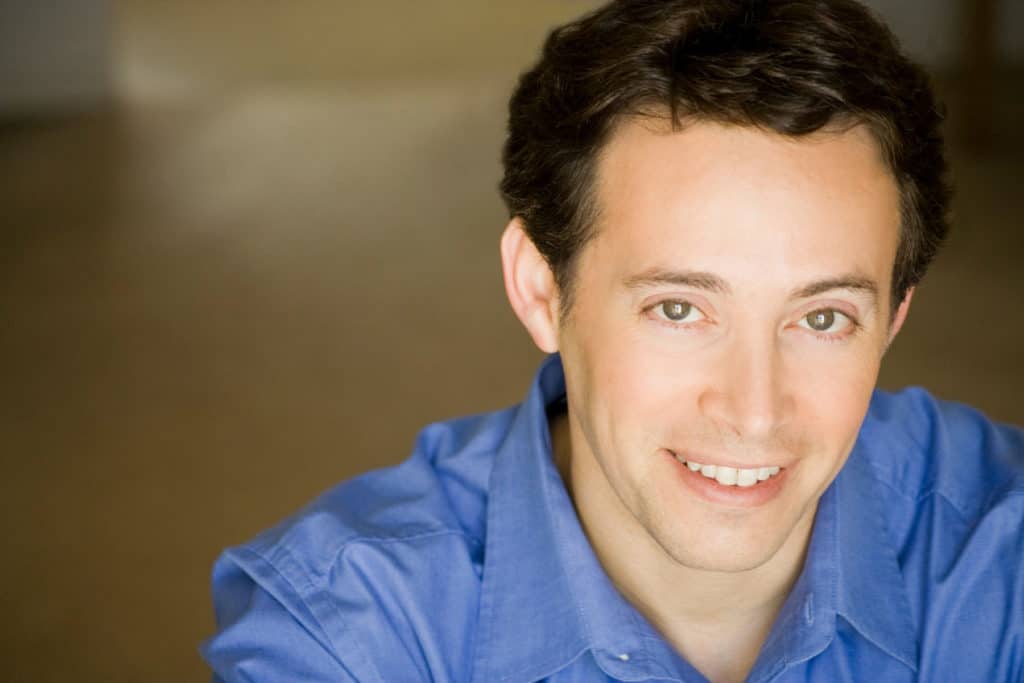
Avi Liberman is a standup comedian and screenwriter who has recently sold two films. He has arranged the Comedy For Koby Tour tour in Israel for well over a decade. He also has a documentary entitled “Land of Milk and Funny” about the tour. Follow him at avilibermancomedy on Instagram and his website www.aviliberman.com

What I’m Learning About Almost Dying… And Trying To Live Read More »

A Letter to Sinai Akiba Academy Class of 2021

“If I am not for myself, who will be for me?  If I am only for myself, what am I?  If not now, when?” (Pirke Avot 1:14)

Dear Sinai Akiba Academy Class of 2021-

We are so proud of you!

Most graduates face challenges along the way, but your middle school experience was uniquely arduous due to COVID-19. Middle school always requires some degree of flexibility, independence, and resilience; however, because of the circumstances of a global pandemic, you had to learn how to be even more flexible, even more independent, and even more resilient than ever is typically required. You all faced and overcame incredible personal, emotional, social, and academic challenges! Kol Hakavod!

At Sinai Akiba, we aim to instill a strong Jewish identity in each child and cultivate a sense of agency and responsibility to our community, Jewish people, Israel, and the world. You, the Class of 2021, are living examples of just that!

We value your adolescence as a formative time in your development, and we have a deep respect for the complexities and possibilities of these years. And you have risen to the challenges presented by your teachers to think, reason, question, and experiment.

During your last Kabbalat Shabbat, your thoughtful reflections of the past 9 or more years demonstrated that learning in our Middle School is active, joyful, and collaborative.

Many of you shared how moved you were by the 7th grade Holocaust Survivors program:

“One experience that continues to stand out to me is the time I met and had a deep conversation with a Holocaust survivor. She taught me the key ingredients to a prosperous and happy life, and the importance of respect. One lesson that she taught me was to never give up, because if she gave up during the Holocaust, she would not be here today. Additionally, she said to never be a bystander, especially because if there were no bystanders in Germany in 1941, the Holocaust would  have never happened to begin with. She also taught me to never lose my Jewish identity because her Jewish roots are what helped her persevere through the woods and away from danger as a teenager. What she taught me about respect reminded me of the Jewish value – V’ahavta L’reacha Kamocha- love your neighbor as yourself. From her teachings and Judaic Studies here at Sinai, I now know to never give up, respect everyone, and always stay true to my Jewish roots. What I have learned from the teachers and special guests at Sinai will guide and navigate me throughout high school, the next chapter in my life.”

A student who came to SAA in 6th grade shared that:

“Although I have not been at Sinai long, I have learned so many values and morals here. One of the most important ones to me is Tikkun Olam. Sinai has taught me so many important aspects of this moral, including helping the environment, helping the poor, and so much more. We learn how to better the world around us in almost every class, from Tanach to Science to English.”

One of you wrote beautifully about the school exchange program Sinai Akiba participates in with New Horizon School, a Muslim school in Pasadena:

“Out of all the experiences I’ve had throughout my many years at Sinai, the New Horizon exchange was particularly influential on my Jewish education and identity. This experience not only gave me new Muslim friends that I continue to contact and connect with, but also taught me the value of Kehilla (community). Due to the fact that I’ve gone to a private Jewish school nearly my entire life, I hadn’t been exposed to many other cultures and religions, and how lives outside of Jewish communities are lived. The exchange gave me an opportunity to connect with people that differ from who I’m usually surrounded by and to observe the customs of another religion. From this experience, I was taught the meaning and importance of community, and how the diversity of the world around us shouldn’t hold us back, but rather drive us to further learn, empathize, and experience how our peers live.”

We will all miss seeing your smiling faces in our hallways and classrooms! Your teachers will certainly miss you. Here is what some of your teachers remember about you:

“They are a group of passionate debaters. They care deeply about what is going on in the world.”

“You dazzled us with performances in the Talent Show!”

“You are resilient and motivated, able to adjust to various modes of learning; more importantly, you are well mannered and appreciative of your teachers!”

“Despite the year spent apart, I’ve honestly never seen such a tighter bunch of students.  They know each other so well!  They rile each other up like siblings but they also know how to calm each other down during moments of doubt or fear.”

Some of you excelled in robotics, collaborating on group projects that brought together cad-design, engineering, physics, and programming. Your student-led DIY passion projects included building a gyro-tourbillion (mechanism used in watches), building a 6-key backlit macro pad from scratch (think custom keyboard), and programming a video game using Microsoft’s Make Code Platform.

Your Robotics teacher says, proudly,

“Last year many of these students participated in our school’s Robotics Team and throughout their years at Sinai have produced some of the most innovative projects to come out of our J-STEAM iLab! It has been an honor to see these 8th grade students grow up invigorated and inspired by their passions and experiences they have been exposed to in our Innovation Lab! They made the best out of a bad situation, which really inspired me as an educator. I am thrilled that they are continuing to pursue these subjects of programming and robotics as they move into higher education and look forward to what these great minds will contribute to the world one day!”

Throughout your years at SAA, you have demonstrated our school’s focus on your intellectual, social, emotional, and spiritual growth. You have modeled derech eretz (kindness and respect) and applied your learning to real-world problems. You have been guided by our nurturing community and you have nurtured us in return!

Congratulations to Sinai Akiba’s Class of 2021!!

Geoff Agnor, Middle School Director

A Letter to Sinai Akiba Academy Class of 2021 Read More »