fbpx

May 24, 2021

1,000 People Rally in Westwood Against Recent Antisemitic Incidents

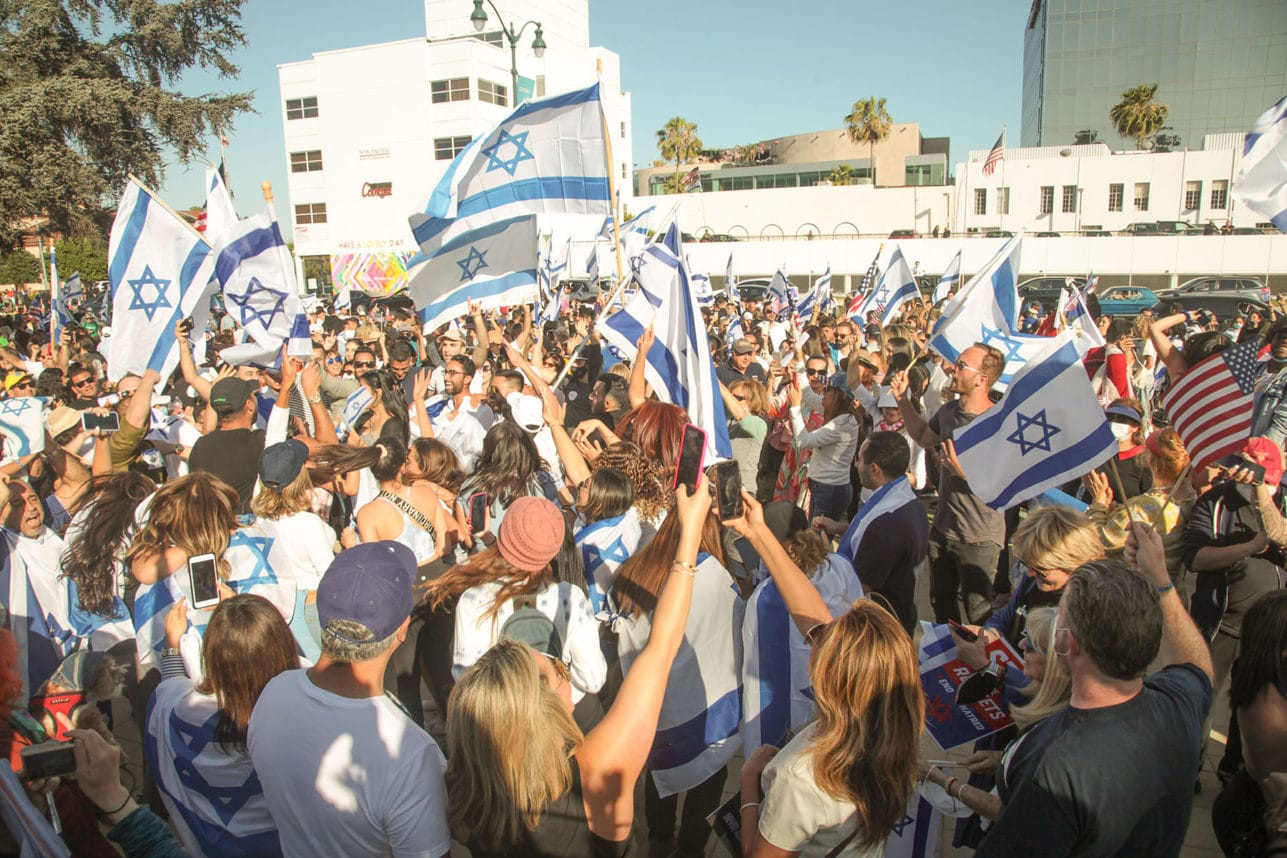
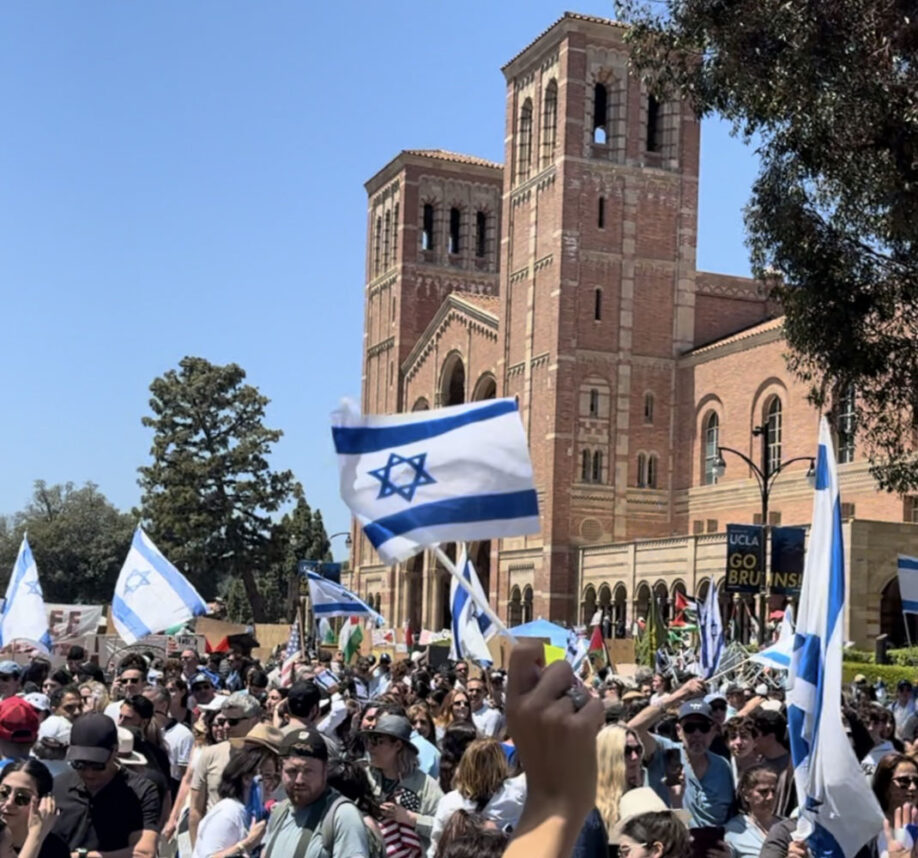
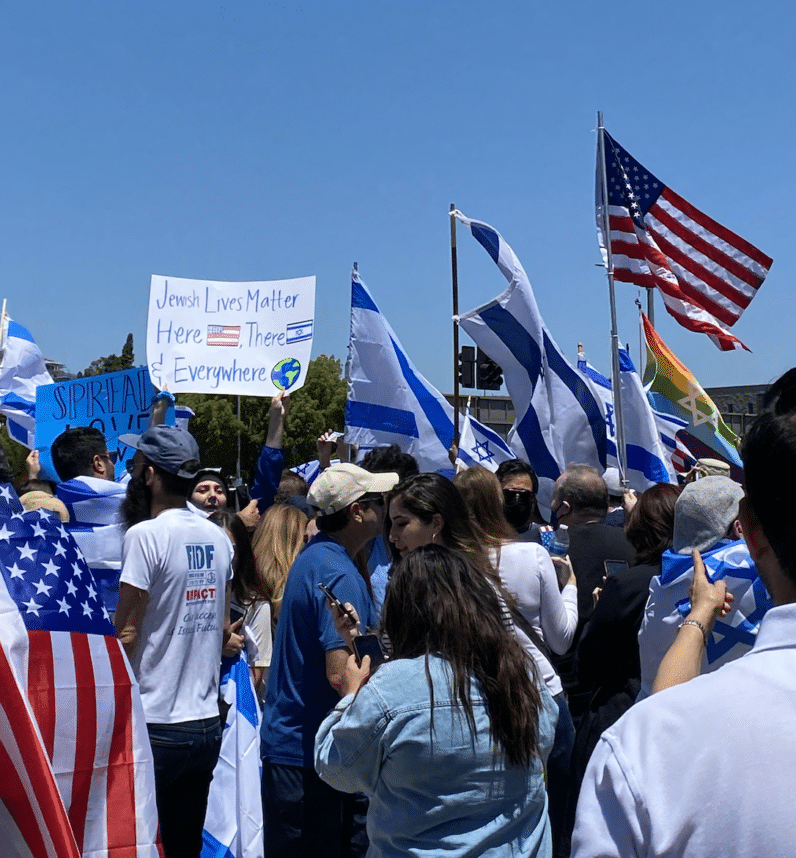
Around 1,000 people attended a rally in front of the Federal Building in Westwood to protest the recent spike in antisemitic incidents worldwide and show support for Israel.

Headlining the speakers at the rally was Elan Carr, the former Special Envoy to Monitor and Combat Antisemitism. Carr, who served during the Iraq War, explained that when a rocket is fired at you, you’ll be lucky to hear a warning siren before “the ground under your feet heaves with an explosion so terrific that the air is knocked out of your lungs and you realize at the moment that but for chance, that could have fallen a little bit closer to you.”

Carr pointed out that he was paid to serve in a war zone, whereas Israeli children are not. “They do not deserve to be subject to 3,000 instances of attempted murder. Anybody who refuses to stand unequivocally with the state of Israel is committing a moral outrage. This is not the time for relativism or equivocation or weakness.”

He added that the recent increase in antisemitic incidents proves that hatred of Israel equates to hatred of the Jewish people at large, saying that United States cities are turning into “the worst of Paris and Brussels.” Carr also said that antisemitism is a threat to everybody, not just Jews. “It undermines the very values that which the United States was built and it is at war with civilization itself. That’s why every antisemitic movement has left humanity in ruin.”

“So when we are here to fight antisemitism, we are fighting for America and we are fighting for decency and we are fighting for that better world that each of us seeks to give to our children.”

StandWithUs co-founder and CEO Roz Rothstein followed Carr, saying that her mother, a Holocaust survivor, would be displeased that Rothstein felt the need to “overdo” the security presence at the rally and that she needed her own private security guard at the rally. “This is not normal.” She argued that the “ignorant” are getting information from “Hamas supporters” and urged attendees to “raise the level of information.”

“Hamas has a mission statement, Hamas has a charter – they want to destroy the state of Israel,” Rothstein said. “Simplify your message everybody.”

Beverly Hills Vice Mayor Lilli Bosse also spoke at the rally, where she said that she “wouldn’t be here without Israel,” as her parents met in Israel after World War II to “find hope.” “I keep thinking of my mom, a Holocaust survivor, if she was alive today, what she would say if she saw what we’ve been seeing.” She added that friends of hers have said they want to remove their mezuzahs because they are afraid.

“I’m a proud Jew, and I will never have fear to be a proud Jew,” Bosse said, declaring that “the message is loud and clear: don’t mess with home, don’t mess with family, because hate will never win.”

American Jewish Committee Los Angeles Regional Director Richard S. Hirschhaut said at the rally that Israelis have to deal with rockets, while Los Angeles restaurant patrons have to deal with “projectiles and bottles” and that this “is unacceptable in Los Angeles.”

He lauded the fact that a suspect behind the May 19 assault of two Jewish men was arrested. “Not withstanding whatever our district attorney might believe otherwise, there will be hate crime prosecutions here in Los Angeles.”

California State Senator Henry Stern, a Democrat, was scheduled to speak at the rally but didn’t after being held up with some fires in his district. However, he did share his planned remarks to the Journal, explaining that the word “Shalom” means more than just “peace”; it means “living with diversity and doing work to actually build and integrate diversity.” “What Israel represents is commitment to integrated diversity and that’s something to never be ashamed of… the shame that people are pushing onto us right now, needs this kind of response, of just relentless positivity in a city as diverse as LA. We cannot be afraid to be Jews in LA.”

Stern lauded the “positive joyous feeling” at the rally in response to the recent antisemitic incidents. “There’s pride here today.”

Other speakers at the rally included Sinai Temple Rabbi David Wolpe and City Controller Ron Galperin.

1,000 People Rally in Westwood Against Recent Antisemitic Incidents Read More »

Welcome to Europe, American Jews

Jews of America. Meet the Jews of Europe. You have a lot to talk about. No longer are you just co-religionists. You are fast becoming co-statistics, your peoplehood assaulted on both sides of the Atlantic.

Violent Islamic hatred of Jews has come to your streets—yes, those same streets naively believed to be immune from ancient hatreds. Over the past week, with a war in Gaza that began with the first of thousands of rockets fired upon Israel, Jews in Los Angeles, New York City and Miami experienced an unfamiliar sensation of collateral damage.

Wouldn’t it be nice to have had an Iron Dome of their very own—one blanketing Beverly-Fairfax, Bal Harbour and the Diamond District?

At the same time, in capital cities throughout Europe, marauding bands of Muslim men, ostensibly protesting the loss of life in Gaza, shouted, “Death to Jews.”  Britain’s crime statistics showed a more than 400% increase in threats made against Jews since hostilities in the Middle East began. Synagogues in the United Kingdom, Germany and Spain were vandalized.

This is Europe—the crime scene of the Holocaust, where the Final Solution came close to achieving its aims, a mere 76 years ago.

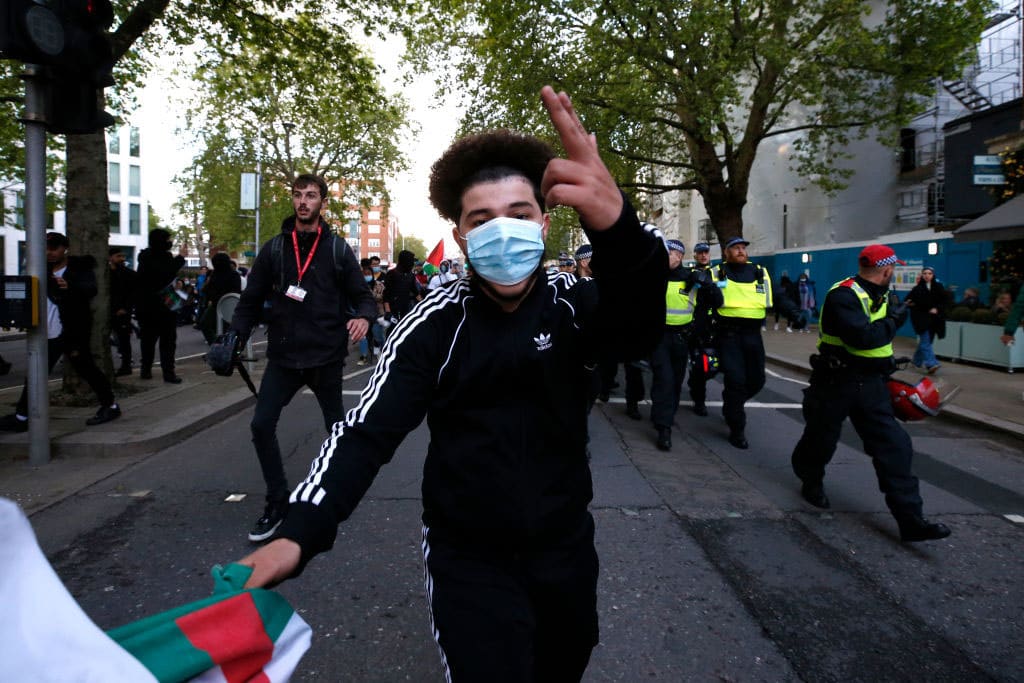
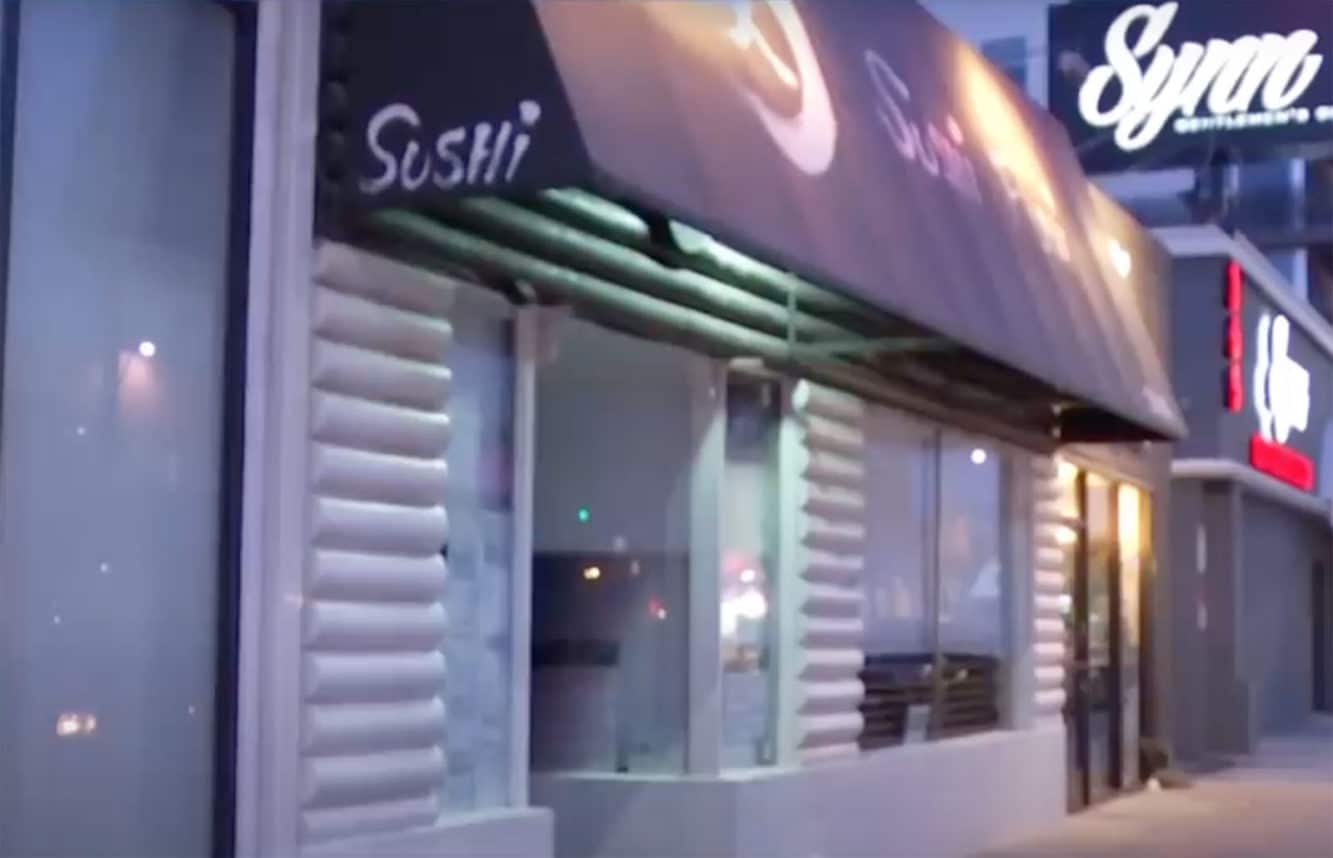
American Jews are receiving a bitter taste of what European Jewry has experienced for nearly two decades. A gang of masked pro-Palestinians attacked diners outside a sushi restaurant on La Cienega Boulevard in Los Angeles. The only pleasantry exchanged was, “Are you Jews?” Once that was settled, the chant “Death to Jews” quickly devolved into a rumble. An Orthodox Jew was chased down a street in Los Angeles by cars adorned with the Palestinian flag.

One kippah-wearing victim was beaten in New York’s Diamond District. Another was punched and pepper-sprayed near Times Square; a woman was lit on fire by a firecracker. In Miami, a car pulled over and threw trash on a Jewish family, and then talked trash: “Free Palestine” and “We’re going to rape your wife.”

Jews in Europe have grown accustomed to such assaults on body and human dignity.

Jews in Europe have grown accustomed to such assaults on body and human dignity.

It began in France with the torture and murder of Ilan Halimi in 2006. More recently, the murders of two Jewish women in their homes, Sarah Halimi, tossed from her balcony in 2017, and Mireille Knoll, stabbed and set aflame in 2018. In between saw the murders of a teacher and three students at a Jewish day school in Toulouse, in 2012. Four Jews were killed at a Parisian kosher market in 2015. Two hundred Jews were trapped inside a Paris synagogue while an outside mob chanted, “Hamas, Hamas, Jews to the Gas,” in 2014.

The rest of the continent was not much safer. The firebombing of a synagogue in Germany. Spray-painted swastikas on Jewish businesses in Rome. Four murdered at the Jewish Museum in Brussels. Norway’s Jewish Museum closed due to security concerns. An attack on a synagogue in Denmark, during a bat mitzvah, that left a Jewish security guard dead.

In each of these instances, the assailants were Muslim.

The Middle East conflict had gone mobile, its theater of war easily transferable to major European cities that had opened its borders to Muslims. A strict adherence to Sharia law was not a disqualifying question, nor whether they had any objection to liberal democracy or multiethnic societies. The “No-Go” zones of Paris, and murdering European Jews for events taking place in Israel, are prime examples of Muslims totally ignoring the memo about liberalism.

Of course there are Muslims on both sides of the Atlantic who accept the dictates of secular law and do not follow the Koran’s edicts on Jews, infidels, women and homosexuals. And surely they are not responsible for these crimes.

The irony, of course, is that progressives who champion social justice and who treat Islamists as members in good “intersectional” standing, fail to realize that Islamic fundamentalism’s hatred for homosexuals and lesbians, especially those who can read a book and drive a car, rivals their animosity toward Jews.

Most American Jews have been unaware of the precariousness of Jewish life across the Atlantic. Yes, there were the synagogue killings in Poway and Pittsburgh, in 2019 and 2018, respectively. But these were committed by lone, right-wing domestic terrorists. Jew-hatred on the hard-left is more widespread, and fashionable. The general consensus has been that while life on campus or at cocktail parties can be miserable for Jews with kind words about Israel, or who dare criticize Palestinian terrorism, Jewish lives have never been in jeopardy.
Does anyone still have that comforting thought?

The Jews of Europe stopped wearing Stars of David and yarmulkas years ago—even avoiding Jewish events and venues. The divine protection of mezuzahs didn’t seem to repel angry pro-Palestinians, so why advertise that the inhabitants of this home are Zionists who deserve to die, whether they care about Israel or not.

American Jews are now deciding whether to keep their religion anonymous. Baseball caps, preferably with the Fighting Irish of Notre Dame insignia, will soon become the Jewish head-covering of choice.

It would be a mistake to become complacent in the wake of the called ceasefire between Israel and Hamas. There is a long history of Muslim massacres of Jews—in Hebron in 1929, for example, where 69 Jews were slaughtered—that does not depend on the existence of a Jewish homeland. Israel did not declare its independence until 1948. There are always reasons to kill Jews, and open season on hunting down Jews, in the United States, has apparently begun.

It would be a mistake to become complacent in the wake of the called ceasefire between Israel and Hamas.

The Anti-Defamation League has monitored 17,000 recent tweets with variations of “Hitler was right.” One read: “GAS THE KIKES RACE WAR NOW.”

In response, Jewish leadership could not be more cowardly—or equivocal. Senators Chuck Schumer and Diane Feinstein, along with Congressmen Jerry Nadler and Adam Schiff, are terrified of angering the Squad, who could mount more progressive challengers in their next primary elections. None of them are generally lacking for swagger. Remember how visible they were during the impeachment of Donald Trump. Admittedly, Trump’s presidency was flawed, but his support for the Jewish state, recognition of Israel as ally, and honesty about Palestinian intentions, was second to none.

Before the pandemic, Hasidic Jews were assaulted in New York and New Jersey. During the summer of Black Lives Matter, several notable African-Americans traded in vile anti-Semitic tropes. No one paid much attention. Social justice doesn’t apply to “white-privileged” Jews; their activism on behalf of others goes unreciprocated.

For decades, the diaspora scoffed: “Who would want to live in Israel? Sure, the beaches are lovely. But all that fighting with the Arabs . . . .”


Thane Rosenbaum is a novelist, essayist, law professor and Distinguished University Professor at Touro College, where he directs the Forum on Life, Culture & Society. He is the legal analyst for CBS News Radio. His most recent book is titled “Saving Free Speech … From Itself.”

Welcome to Europe, American Jews Read More »

The Civil Riots in Israel Are a Warning to Prevent a Dark Future

Following Operation Guardian of the Walls and the gruesome fights between Arabs and Jews in our cities, the common wisdom in Israel today calls for heshbon nefesh, soul searching, in Hebrew. Indeed, our decision-makers should ask themselves some hard questions, first and foremost about the policy – or the lack thereof – regarding the critical issue of the Israeli-Palestinian conflict. They will have to explain why they turned their back to the Palestinian Authority, relegating to it the marginal role of keeping the West Bank quiet, while grooming the Hamas, in the false belief that they can always contain its ambitions.
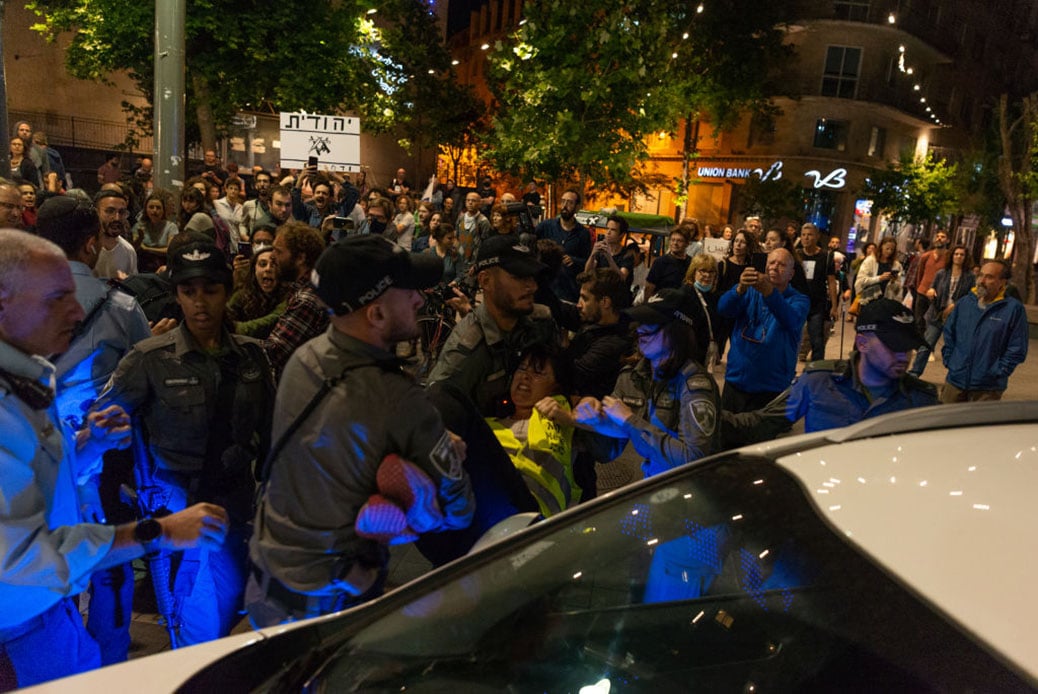
The violent clashes between Arab and Jewish Israelis must generate another heshbon nefesh. Our leaders should account for neglecting the Arab Israeli sector for so long, for turning a blind eye to the illegal firearms and crime which have been ruining the Arab towns, and for embracing the followers of Rabbi Kahane into the Knesset. Is it any wonder, then, that when these explosives meet a spark, a big fire results?

The most profound heshbon nefesh, though, should boil down to the most crucial question: How did we allow the Netanyahu governments to move us, eyes wide open, towards a one, bi-national state. How can a life-affirming people, which has managed to restore its sovereignty after 2000 years of exile, enable such a disastrous development, which might force our children and grandchildren to choose between a non-Jewish state or Apartheid.

The most profound heshbon nefesh, though, should boil down to the most crucial question: How did we allow the Netanyahu governments to move us, eyes wide open, towards a one, bi-national state.

Already three centuries ago, the Italian rabbi and philosopher Moshe Chaim Luzzato (1707-1746), known by the Hebrew acronym RaMCHaL, highlighted the importance of heshbon nefesh: “A man should peruse his deeds, making sure he doesn’t develop a bad habit or a wrong conduct,” he wrote in his ethical treatise Mesilat Yesharim (The Path of the Just). Realizing, however, that morality alone might not suffice to serve as a compass for frail humans, he suggested taking example from the big merchants, “who navigate their businesses carefully, so that they won’t founder.”

Since the moral question of ruling over millions of Palestinians doesn’t seem to bother many here today, we should apply RaMCHaL’s wise advice and point to the balance of gain and loss, something which the Israelis – who dread the word freier (sucker) most – would surely appreciate.

Imagine, then, a one, bi-national state between the Jordan River and the Mediterranean, with roughly the same numbers of Arabs and Jews, who are fiercely divided on most issues. Apart from the question of representation, which will determine whether that state would be democratic at all, adding two and a half million Palestinians with low socio-economic parameters to the already over-stretched Israeli welfare system would be a disaster. The Start-Up Nation would regress and become a third world country.

Yet, an even worse danger lies in the prospect of bloody, Balkan-like feuds, a taste of which we have just been treated to in Akko, Bat Yam, Yaffo and Tiberias. Let’s remember that those recent riots involved only an extreme minority of Israeli Arabs, with the majority living with us in tranquil coexistence. What would possibly happen when they are joined by millions of Palestinians who have nothing towards us but hostility forged by decades of occupation and indoctrination of Jew hatred? In that case, they would probably be met not by an extreme Jewish minority, like today, but with many more. And who will restore law and order then, the Israeli Police, who already found it difficult to do so last week? The IDF, who is supposed to defend us from external enemies?

An even worse danger lies in the prospect of bloody, Balkan-like feuds, a taste of which we have just been treated to in Akko, Bat Yam, Yaffo and Tiberias.

RaMCHaL understood that in order to carry out a real heshbon nefesh, one has to free oneself from misconceptions, because whoever is shackled by his vices, is like someone who “walks in the dark and his eyes can’t see the hurdles ahead.” But our eyes were opened last week, to see for a moment what a one, bi-national state might look like. Therefore, in the coming elections – and realistically they will come sooner rather than later – our politicians won’t be able anymore to dodge the following simple question: Are you for or against a one, bi-national state, and if not, what are you going to do about it?


Uri Dromi was the spokesman of the Rabin and Peres governments (1992-96).

The Civil Riots in Israel Are a Warning to Prevent a Dark Future Read More »

President Biden’s Wise Balancing Act

He took some heat along the way, but Joe Biden aced his first foreign policy test.

Depending on how you count such things, Biden is the most experienced person to be elected president since either Richard Nixon or Lyndon Johnson. For the last several decades, the years of preparation that Biden brings to the job has largely fallen out of favor, as American voters in the post-Watergate era have become enchanted with outsiders who promise to bring change to Washington.

Donald Trump was either the apogee or the nadir of this tendency, but he was less of an aberration than an intensification of an almost half-century trend. Trump’s most immediate predecessors, Barack Obama and George W. Bush, both accomplished significant achievements during their terms in office. But neither Bush’s six years as governor of deep-red Texas or Obama’s even shorter tenure as a state legislator and Senator from equally deep-blue Illinois adequately prepared them for the partisan maelstrom of Washington, D.C. Both men might have realized much greater successes if they had come to the presidency with a better understanding of how to work with disagreeable parties. And neither had much foreign policy background at all before becoming the leader of the most powerful country on earth.

Biden is still deciding whether he can and should work with congressional Republicans on domestic policy. But over the last two weeks, as the new president was forced to deal with his first international crisis, we received a welcome reminder of the benefits that such experience brings as the United States begins to re-establish itself in a changing and dangerous world.  For those of us who care about the safety and security of Israel — but who also do not see the perfect as the enemy of the good — the temporary cessation of large-scale violence between Israel and Hamas marked a notable success for Biden.
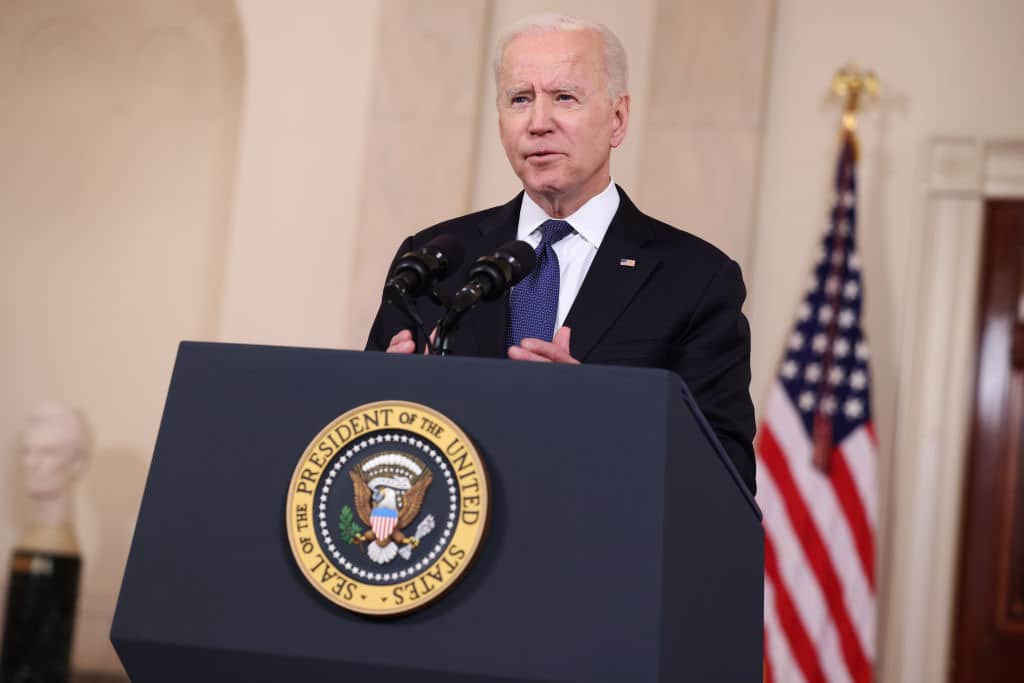
More importantly, Biden’s ability to guide the combatants to a ceasefire – quietly and respectfully with Israel and by remote control with Hamas — reestablished the U.S. as a critical leader in Middle Eastern geopolitics. In the process, he achieved the best possible short-term outcome for a 11-day outbreak that could have been much worse.

The strongest defenders of Israel will argue correctly that a great deal of Hamas’ weapons capability survived and will be used against innocent Israelis on another day. But Israeli security officials had been telling their American counterparts that they had accomplished most of their goals before Biden publicly began to publicly encourage Benjamin Netanyahu to step back. Only those who would have liked to have seen the Israeli military replace their “mow the grass” approach with a full-on paving of Gaza should be dissatisfied with the level of damage incurred on Hamas terrorists.

Biden did a number of smart things to get this result. Most importantly, he treated Netanyahu with respect. Unlike Obama, who had backed Netanyahu into a corner during the last Gaza War in 2014 by repeatedly calling for a ceasefire, Biden recognized that such a blustery approach would be counter-productive and simply prolong the conflict. By keeping the two leaders’ conversations private and by keeping his public statements measured, Biden created space for Netanyahu to agree to the ceasefire without looking as if it was a result of external pressure.

Unlike Obama, who had backed Netanyahu into a corner during the last Gaza War in 2014 by repeatedly calling for a ceasefire, Biden recognized that such a blustery approach would be counter-productive and simply prolong the conflict.

Biden also recognized how dramatically the political mood regarding Israel has shifted in this country in recent years, especially within his own Democratic Party. While he never compromised on the importance of Israel defending itself, Biden did first announce his “support” for a ceasefire (as opposed to more proactive advocacy) and then later let it publicly known that he had told Netanyahu that it was time to sign on as well (although within a day of when he knew Netanyahu would agree to a ceasefire anyway).

Although Biden did not speak out as forcefully or as quickly to end the violence as his party’s progressives wanted, he paid just enough attention to the Palestinian cause to prevent a full-fledged revolt from the left. Those who fault Biden for not standing even more closely with Israel must recognize that the Jewish community and our allies must do a better job of improving the political landscape on which this debate takes place. The last few weeks should tell us that we need to step up our game if we expect pro-Israel Democratic politicians to be as unequivocal in their support as we would like them to be. But that’s a column for another day.


Dan Schnur teaches political communications at UC Berkeley, USC and Pepperdine. He hosts the weekly webinar “Politics in the Time of Coronavirus” for the Los Angeles World Affairs Council & Town Hall.

President Biden’s Wise Balancing Act Read More »

Jewish Victim of Restaurant Attack in L.A.: “These Guys Were Looking to Hurt People”

On the evening of May 18, a pro-Palestinian mob attacked a group of diners at the Sushi Fumi restaurant on La Cienega Boulevard. Video footage showed the assailants shouting racial slurs and throwing glass bottles before physically assaulting several diners, three of whom were young Iranian American Jewish men; the fourth, a local photographer, was a young man who identifies as an Armenian-Lebanese Christian named Mher (who, in another interview, gave the Journal permission to use his first name). A witness told CBSLA that dozens of assailants stepped out of their vehicles and that one of them asked diners, “Are you Jewish?” On May 21, the police, with the help of the U.S. Marshal Service, arrested the primary suspect on suspicion of assault with a deadly weapon, and the LAPD is investigating the incident as a hate crime. The Journal spoke with one Jewish victim, a 32-year-old Los Angeles resident, who preferred to use the pseudonym, “Michael.” Born in Los Angeles, Michael’s family left Iran immediately before the 1979 Iranian Revolution.

Jewish Journal: Let’s start with the most important question: How are you feeling, physically and emotionally?

Michael: I still feel really locked out of my emotions. There are a lot of things I feel about the event, not least of which is anger. But in another sense, I recognize that some good is coming of it.

JJ: Some good?

M: Yes, because I’m seeing the recognition start to seep into the greater cultural awareness about how scared Jews are now and how insecure the community feels. With all of the other social issues this past year, Jews have been allies for so many other communities, but I haven’t seen other communities be our allies. Not in any real sense. I noticed this trend even before the social changes of the last year. Since college, especially during times of heightened conflict in Israel, I noticed that it became okay for people to engage in antisemitism, and it was just overlooked.

With all of the other social issues this past year, Jews have been allies for so many other communities, but I haven’t seen other communities be our allies.

When you tell your non-Jewish friends about antisemitism, they don’t get it. And some Jewish friends hide their Jewishness. There’s definitely some kind of double standard out there. I’m afraid that even those with the best hearts don’t know they’re doing it. It’s scary. During the last administration, a lot of Jews felt fear because of the extreme-right. It’s understandable. But I worried more about the foothold antisemitism has found on the left, because unlike the right, where it’s on the fringe and the political leadership denounces it, on the left, it’s political — the lines between anti-Zionism and antisemitism are repeatedly blurred. There’s political agency now with some newer members of Congress, and antisemitic and anti-Zionist rhetoric now is interchangeable. It’s a signal to that side of the political aisle that that sort of speech is okay. That worries me more. I’m also worried about elements within local Palestinian supporters that are all too willing to be violent. Young people on the left are now posting ignorant, antisemitic tropes under the guise of pro-Palestinian activism. They are, unintentionally perhaps, providing political cover for the violent extremists in the pro-Palestinian camp.

JJ: What happened the night of the attack?

M: There were four of us at the table. One of us is getting married and we were there to grab some sushi and talk about the wedding. I remember three separate tables of Jewish diners that night, including a table of girls with whom I’d attended Milken High School.

We saw the first car from the caravan, and a few people hanging out the windows, waving Palestinian flags, and we quickly realized it was a whole party of them. I thought they’d keep driving, but they slowed down next to us. One of them had a megaphone and was shouting, “Are you for Palestine? Are you down with Palestine? You’re either with us or against us.” It was clear that they weren’t going to leave. We told them to keep it moving. Things got heated, but eventually, they started to drive away slowly. We turned to sit back down and a bottle was thrown in our direction that shattered all over the sidewalk. Men in keffiyehs, some of them with their faces covered, and all of them dressed in black, jumped out of the cars. Mher speaks Arabic and started telling them to get out of there in Arabic. At least one of them asked, “Are you Jewish?” We said, “We are.”

JJ: Given the imminent danger, what compelled you to respond in the affirmative?

M: Should it be dangerous to say you’re Jewish? I was frustrated by their aggression. Maybe I felt that we had safety in numbers (until I actually saw how many of them there were). What are these guys actually going to do, I wondered. Yeah, I’m Jewish. Who cares? And who cares that you’re Palestinian? When Jews rally for Israel we don’t go around demanding random civilians take on our cause by threat of violence. I really didn’t expect it to turn into something physical. Alot of Jews have forgotten to be proud of Israel; they feel like they have to distance themselves from Israel’s actions. But I always keep a connection to Judaism, Israel and pride in our history. And in this one instance, we decided not to shy away from that truth.

JJ: Were you afraid?

M: Yes. But we all stood our ground. They came with aggression and were obviously looking for a confrontation. I wasn’t looking for a fight. But my internal dialogue said, “You know what? You’re gonna ask me if I’m Jewish? Yeah, I am Jewish. What are you gonna do about it?” This is our city. We’ve looked on in relative comfort while Jews in other cities like Paris and London and Brooklyn are repeatedly antagonized and attacked. L.A. cannot go down that same road. That Jews should have to watch their back for thugs out to make a political point should be a reality that never takes hold in L.A. So when they asked if we were Israeli, we said, “Yes.”

We’ve looked on in relative comfort while Jews in other cities like Paris and London and Brooklyn are repeatedly antagonized and attacked. L.A. cannot go down that same road.[/SPEAKER-MUTE]

JJ: Why?

M: I don’t know. I’m not Israeli. It might have been the heat of the moment. But maybe I can answer that question by sharing something that happened the morning after the attack: One of my friends at the Israeli Consulate asked if I would be willing to speak with Eitan Weiss [Deputy Chief of Mission] and Jonathan Bar-El [Consul for Public Diplomacy] on Zoom. I was honored. Weiss asked me if anyone from the local government had contacted me to see how I was doing. I told him that nobody had, and that I didn’t think anybody would. There’s too much going on for them to make this part of their day. I might not be Israeli, but because I’m Jewish, the Israeli government gives me agency when my own local government is too busy to notice. I wouldn’t have expected it of my government, let alone Israel, but it should tell all Jews the world over something that before my own local American representatives interceded — before they even heard of the incident — the Israelis were already on the case, trying to get in touch with me and offer me any support and assistance they knew to be diplomatically appropriate.

Given the last 12 months of social uprising, and the defacing of local synagogues and Jewish neighborhoods that has coincided with the riots in Los Angeles, the brazen robberies of diners in Beverly Hills, there have been lots of conversations around our Shabbat tables this year about moving out of LA and about Jews feeling less safe in New York and elsewhere. It’s sad. It’s really sad. I’m an Iranian Jew. We were uprooted from our home of 2,700 years and moved to America. And within just one generation, the threat of Islamic persecution that our parents fled is now on our doorstep here in America. Wrap your head around that.

JJ: What else happened during the attack?

M: When they got out of their cars and I saw their actual numbers, I froze and thought, “What did we just do?”

JJ: How many were part of the mob?

M: I don’t remember. I think about a dozen. Possibly more. We were outnumbered, and they were big guys. Mher ran ahead to stop them from getting to the rest of us. My cousin was on the same side of the table as him, and understood that Mher was outnumbered, so he went to pull him out of there. As soon as my cousin ran out, one of the guys assaulted him, knocked him down and proceeded to kick him. Mher did some quick thinking, grabbed a stanchion and chased them back to keep their attention on him and away from my cousin, who was on the ground. They all turned back and started pursuing him, so it worked. That’s why he grabbed the pole. There was a group of female diners behind us. Mher’s instincts told him to do the right thing. When all of the men then rushed him, there was nothing I could do to pull them off of him, and I focused on pulling my cousin off the ground and away from the repeated kicks he was taking. As soon as I stepped up to grab him, the guy stopped kicking him and began punching me. But it gave my cousin enough time to stand up and get away.

JJ: What stopped the attack?

M: The attackers knew the cops were probably coming, and their peers still parked in the cars were telling them to get out of there. I got punched in the jaw by one of the guys twice. He got me good. I was in a daze. The first punch did most of the damage. The second one was to keep me on the ground. They had the numbers; there was no way we were going to fend them off. But Mher was really the heart of all of it. He didn’t have to do what he did. None of us did. These guys were looking to hurt people. My cousin went to pull him out of there, and he got pushed and kicked in the head. I got really concerned when I saw that.

JJ: What happened when the Los Angeles Police Department arrived at the scene?

M: They collected a police report. I was very impressed with the way the police came and the questions they asked, and with the amount of compassion and the calm, supportive energy they had. They said, right at the scene, this likely needed to be investigated as a hate crime. The police didn’t need any prompting to look at it that way. I really respect the police who responded thoroughly.

JJ: The police, with the help of the U.S. Marshal Service, have arrested the primary suspect outside of Los Angeles, on suspicion of assault with a deadly weapon. How are you planning on moving forward?

M: I can’t say any more about the investigation, but I am happy that they found one guy. Hopefully his arrest and interrogation lead to the others. We have found fingerprints on the car against which the attackers teamed up on Mher. Investigators have decided not to run the prints and I can’t figure out why. Still, I trust that LAPD is making good progress. I’m just still a little dizzy.


Tabby Refael is a Los Angeles-based writer, speaker and activist. Follow her on Twitter @RefaelTabby

Jewish Victim of Restaurant Attack in L.A.: “These Guys Were Looking to Hurt People” Read More »

My Tea with Ali

In Jerusalem, a long time ago, I unwittingly drank tea with a maybe-terrorist.

The maybe-terrorist seemed nice.

His name was Ali and he spoke French-Arabic accented English.

His awkwardness, combined with his friendliness, made him seem as dangerous as a wool sweater.

Jerusalem was sweltering and packed with tourists and I had taken the bus from Tel-Aviv, where I was staying with cousins. They’d sent me off for the afternoon, saying, have fun, Sarale, enjoy it, but stay out of the Arab Quarter—it’s not safe.

And there I stood, a mere two hours later, squinting up in the August sun at this beanpole of a man, who for some reason wished to know if I spoke French. Oui, I nodded. I had studied it in high school.

–Allors, if you can find me some French-speaking tourists you will come along for free. As my guest. Je m’appelle Ali. What is your name?

–Sara. Pleasure to meet you.

He smiled. I relaxed because there was kindness there, crinkling in his coffee eyes and in his tobacco stained teeth.

As if on cue, a gaggle of French tourists appeared. So I asked if they wanted a tour, and they did, so the deal was done.

Ali clapped his hands, then rubbed them together hard as if trying to warm them up. He winked at me and the tour commenced.

Our group slapped along in our flip-flop shoes, down the winding steps,  past the huge bins of zatar, pistachio nuts, plastic cups of sliced watermelon and magnificent saturated orange-red fabrics with cold coins sewed on.

Soon there was no more Hebrew to be heard, only Arabic. I felt like Princess Jasmine, in Alladin, when she leaves the castle gates for the first time, looking at everything with huge, innocent doe-eyes. (Be gentle,  friends, I was eighteen, very naive, and sincerely thought in terms of Disney metaphors.)

A small group of children squealed when they saw us—you would have thought Ali was a pop star. They wrapped themselves around his legs and jumped up and down. He ruffled their hair, full of good nature, tweaked their noses, reached into his pockets to pass out hard candies.

When we passed a bakery I tried to purchase a piece of baklava. The baker pressed the pastry into my hand and refused to take my money.

–You are with Ali. If you are with Ali, you don’t pay.

I turned to look at Ali.

–Are you the mayor here or something?

But he just smiled.

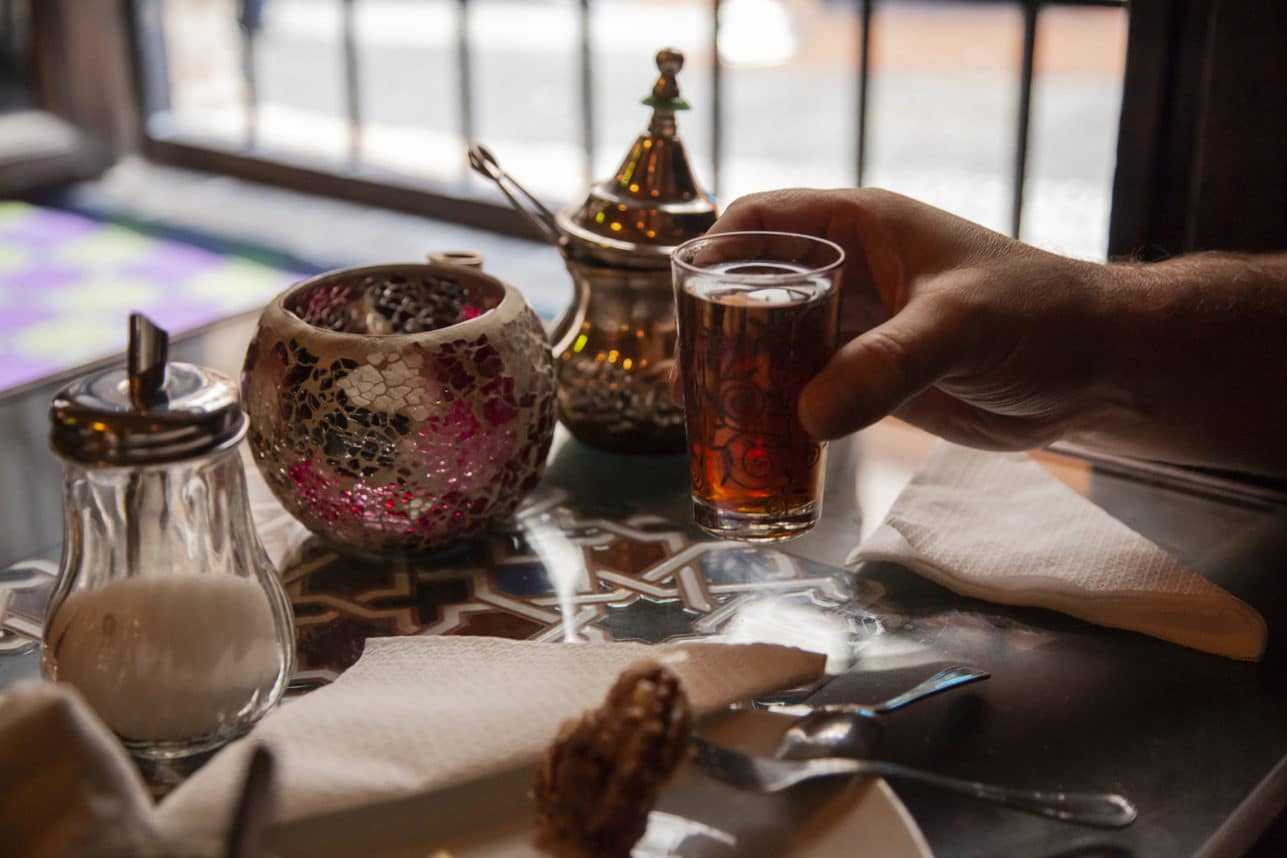
Next, he took us to his house. The house had a dirt floor, but we sat on his sofa and his wife served us tea in tiny silver cups like we were royalty. And then it came.

–J´etais tres actif avec le P.L.O. J’etais en prison pour beaucoup d’anees.

I’ve been very active with the P.L.O. I was in prison for many years.

I blinked. My French was OK but nowhere near perfect. Maybe I misunderstood. Maybe P.L.O meant something different in French.

My heart started to beat faster. I looked at the Frenchies who sat with calm faces, nodding and sipping the tea. They did not look scared.

I think I might be in a terrorists house, I remember thinking. What do I do? Should I run? Make up a reason? Pretend to be unwell?

But soon it was time for lunch and Ali was taking us all to a restaurant for an authentic Palestinian meal. I willed myself to be calm. Maybe the P.L.O is not a terrorist organization, I thought. Maybe it helps people. Maybe he was in prison for something not scary.

We sat at the wooden tables and ordered thick hot pita and hummus that was so delicious it made my eyes water. I tried to pay, but Ali said no.

–This was not part of the deal.

–I told you, you are my guest.

At the end of the meal I decided that P.L.O or no P.L.O, Ali was probably not going to harm us. I went to take the bus back to Tel-Aviv. He clicked his tongue no.

–No bus. You’ll be safer in a taxi.

I thanked him for everything, held his hands in my hands.

–My friend Sara. My American chavera. Be safe. Come back to visit us sometime. You always have a friend in Jerusalem with Ali.

I stepped into the taxi and watched him wave from the rear view window. My driver had a thick silver moustache. We listened to the Eagles, the Clash, and the Mamas and the Papas all the way to Ra’anana. For a brief, terrifying moment I thought what I a fool to get in that taxi with him, that something horrible could happen, that I might never be found again, that this was exactly what the cousins had warned me not to do.

But then he merrily pulled up outside my relatives house in Ra’anana and refused to take my money.

–But it was such a long ride! All the way from Jerusalem. Please. I have to pay you.

–You are a friend of Ali. I cannot take your money.

I never learned Ali’s last name.

To this day I wonder who he was.

Maybe just an ordinary holy-land angel, sent to help me understand how terrifyingly complex we are.

My Tea with Ali Read More »

Memorable Merguez Shakshuka

On Saturday nights, my parents, my brothers, my uncle and aunt and cousins would all pile into my uncle’s van and head to the kosher street vendor’s stand, where we would run into everyone from the synagogue and school. I still remember the hot air of Casablanca. The string lights that created an amber glow. The sounds of the loud, happy crowds and the sizzling grill. The heavenly smell of lamb and onions on the barbecue.

With long tongs and expert movements, the man would pluck the glistening, perfectly browned merguez and the translucent grilled onions from the grill, he would put them into a fresh toasty baguette and then he would add crispy French fries and a slather of spicy Dijon mustard. He would quickly wrap the whole thing in white paper and hand it to you. Then you would stuff your sandwich with all the colorful salads that were arrayed on the counter.

I still remember that perfectly delicious first bite. I am still perfectly surprised that I could eat such spicy food at the age of six and seven.

Merguez sausages have been a staple of Maghreb cuisine since the 12th century. Made with raw lamb stuffed into a lamb intestine casing, merguez are spiced with cumin, chili powder and harissa (and sometimes sumac and fennel) giving them a spicy, piquant flavor and a distinctive red color. The North African immigration to Israel, France and America has made merguez a popular staple in street food and barbecues.

This Memorial Day weekend we present you with Merguez Shakshuka, a healthyish option for brunch, lunch or dinner. We never get tired of Shakshuka. The caramelized onions, smoky peppers, tangy fresh tomatoes and spicy harissa all meld to create an unforgettably rich sauce. Adding fried merguez really ups the flavor quotient and makes this egg dish a truly hearty meal. Fresh baguette is required to mop up every drop of sauce.

Merguez Shakshuka

1/2 cup olive oil, divided
3-4 long merguez, cut in half
1 large yellow onion, diced
4 garlic cloves, finely chopped
1 red pepper, cut in thin slivers
1 orange pepper, cut in thin slivers
1 cup cherry tomatoes, chopped in half
2 teaspoons turmeric
2 teaspoons paprika
Salt and pepper to taste
2 cups canned diced tomatoes
1 teaspoon harissa
6 eggs
Italian parsley or cilantro, finely chopped for garnish

In an ovenproof skillet, heat olive oil and lightly fry the merguez, then set aside.

Over medium heat, warm olive oil.

Then add onions and sauté until soft and translucent.

Add garlic and peppers and sauté until the peppers are soft and glossy.

Add tomatoes, spices and seasoning and continue to sauté.

Add diced tomatoes and harissa and stir well.

Place merguez into the sauce.

Use a spoon to make nests in the sauce and gently place eggs in the skillet.

Lower heat, cover and cook for 6-10 minutes, until whites are cooked.

Garnish with greens and serve with fresh crusty bread.


Rachel Sheff and Sharon Gomperts have been friends since high school. They love cooking and sharing recipes. They have collaborated on Sephardic Educational Center projects and community cooking classes. Follow them on Instagram @sephardicspicegirls and on Facebook at Sephardic Spice SEC Food.

Memorable Merguez Shakshuka Read More »

Speeding Tree Growth with Fungi

Throughout human history, mushrooms have played an integral role in many early cultures around the world. Early Greek, Roman, and Chinese cultures all recognized their innate nutritional value and incorporated them into their own respective cuisines. Through our modern understanding of science today, we specifically know the reason why mushrooms were so revered.

Beyond the fact that they are absent of cholesterol and low in calories, carbohydrates, fat, and sodium, they are packed with many important nutrients that have been linked to providing many important health benefits. Selenium, potassium, riboflavin, niacin, vitamin D, various proteins, fiber, and the bioactive compounds within mushrooms effectively work to boost our immune systems and are used to help treat and prevent many infamous diseases and ailments like Alzheimer’s, Parkinson’s, cancer, and hypertension.

The benefits of edible mushrooms, however, are not solely limited to humans according to a new Israeli study, which found that trees grew faster when they were infected with certain kinds of edible mushrooms.

A Good Infection

The new study was conducted in collaboration with researchers from the JNF and MIGAL – the Galilee Research Institute. “The JNF is trying very hard to encourage the phenomenon of edible forests and wants to create forests with mycorrhizal edible mushrooms that are interesting to collect,” says Dr. Ofer Danay, director of mushrooms and truffle research at MIGAL and co-author of the new study.

“Certain species of pines, especially stone pine (Pinus pinea), do not survive in calcareous soils, which are the most common type of soil in Israel,” says Danay. “Therefore, attempts are now being made to ‘help’ the stone pine cope with these difficulties by infecting it with mycorrhizal fungi as a means of increasing its share in pine groves, mainly because it is less susceptible to pine pests whose larva harms trees and potentially cause medical problems for humans.”

Beyond that, increasing the amount of fungus in the soil may help also help in the fight against the climate crisis. “According to research by Dr. Tamir Klein of the Weizmann Institute, mycorrhizal fungi reduce the loss of carbon fixed in the soil and reduces the amount of carbon dioxide emitted into the atmosphere,” explains Danay.

With the spores of two popular edible fungi, Suillus collinitus and Lactarius deliciosus, the researchers infected about 120 sprouts from three different species of trees: stone pine (Pinus pinea), Calabrian Pine (Pinus brutia), and Jerusalem Pine—also commonly referred to as Aleppo Pine (Pinus halepensis). They examined how fungal infection affects the trees during the first two years of their lives before they are transferred to a field for planting.

“As early as the nursery stage, we found that the trees infected with mycorrhizal fungi developed better than the trees from the control group, which were not infected with the fungus,” says Danay. The results of the study showed the infected young trees of the three sampled pine species were taller and their stem (trunk) diameters were wider. The greatest effect was seen in the Jerusalem pine species, which were 180% larger than the control group. This was followed by Calabrian Pine, which showed a 160% improvement in height and diameter, and then stone pine, which exhibited a 124% growth increase. Stimulated growth to this degree bodes well for reforestation and afforestation efforts.

A Reciprocal Relationship

 So, why do fungus-infected trees grow better? The answer lies in the workings of symbiosis, or the mutual beneficial relationship between two organisms. In this case, the fungus, which densely envelops the tree’s roots, helps deliver water and essential nutrients like phosphorus, iron, and magnesium from the soil for the tree’s early development. In return, the fungus can absorb the nutrients and sugars it needs to build up its body, which the tree produces through photosynthesis.

Due to various fungi species’ presence in soil environments, tree roots become regularly and naturally entangled with mycorrhizal fungi. Through the use of molecular methods, Danay believes it’s worthwhile to identify which mycorrhizal fungi exist in the soil so as to better choose the species of trees that can best “host” them to ensure rapid development and survival of the forest trees. “This will also make it possible to preserve the mushrooms, some of which can be used for food and some of which are even in danger of extinction.”

It should be noted that despite the chance that trees may eventually become infected with the fungus “naturally,” there is a benefit in infecting the sprouts while they are in the nursery. “We anticipate that infected trees will reach a size that will allow them to start and yield multiplicative bodies of the edible mycorrhizal fungi earlier than the current situation,” he says.

Don’t Take Too Many

Beyond the pleasures of the foraging experience and the multiple flavor profiles many edible fungi mushrooms have, misidentifying one can have serious and potentially fatal consequences.

“Every year there are reports of poisoning due to incorrect identification and collection of fungi, which can even cause death,” says Danay. He emphasizes the importance of caution and diligence when collecting. “Whoever collects mushrooms should be completely familiar with the mushroom he or she is picking and be sure of its identification. There are no rules of thumb on the subject, so if there is any doubt, you should avoid picking and eating the mushroom altogether.”

Another important point is the need to avoid over-collecting mushrooms because this can impair their ability to recover and reproduce. “They need to be harvested in proportion—in small amounts—so that the fungi can continue to grow and spread themselves,” says Danay. “I sometimes get photos of people coming back from collecting with buckets full of mushrooms and leaving behind a bare ground. It’s a wrong, and it’s a problematic situation.”

Preserving the mycorrhizal edible mushrooms that grow in forests is especially important today because of the precarious situation we have placed our climate. “In recent years, there has been a decrease in the abundance and diversity of these fungi species in nature due to because of over-collection and the climate crisis,” says Danay. “It’s important to preserve the biodiversity of the fungus for the benefit of the forest’s health as well as our own,” he concludes.

ZAVIT – Science and the Environment News Agency

Speeding Tree Growth with Fungi Read More »

2,000 Activists Gather in Beverly Hills to Support Israel

Under the banner of United Against Antisemitism, about 2,000 activists gathered in the heart of Beverly Hills on Sunday May 23 to show support for Israel amid the recent war that saw upwards of 4,000 rockets fired from Gaza on Israeli cities and towns before a ceasefire was declared on May 20.

The boisterous, flag-waving crowd composed of Israelis, American Jews, Christians and non-Jews of various denominations, was addressed by community and political leaders, writers, activists, political commentators as well as a pro-Israel teenager and former Miss Iraq, Sarah Idan.

Leading the speakers was Dr. Hillel Newman, Consul General of Israel to the Pacific Southwest who said the recent anti-Semitic violence has now forged a special bond between Israel and Los Angeles.  “There now is a bond of blood and persecution that unites Israel and Los Angeles,” Newman said.  “Whether it is in Los Angeles or Hamas in Israel, they are two sides of the same coin.  The conflict in Israel with the Palestinians is not about territories, about water or the Temple Mount.  It’s about the very existence of the state of Israel.”

Lili Bosse, two-time mayor of Beverly Hills and daughter of Holocaust survivors, noted how the recent antisemitism hit home for her.  “We here in Beverly Hills stand side by side with Israel.  We stand against antisemitism.  We stand against Jew-hatred.  We stand against all hatred,” Bosse said.  “There have been many rallies in Beverly Hills, but this is the first one I am attending. I had to be here because this hits too close to home.”

Photo by Harvey Farr

Former Special Envoy for Monitoring and Combatting Antisemitism Elan Carr spoke of his time serving in Iraq.  “After more than 4,000 rockets, it’s easy to become inured to what it means to have a rocket fall on a town or city.  Let me tell you what it means,” Carr explained.  “I spent a year serving in Iraq.  You might hear a warning signal, then the ground beneath you shakes and if you’re lucky you can get to a shelter.  But we pay soldiers to take fire. The children of Israel deserve better than to be subject to attacks of mass murder.”

Another speaker was Jennifer Karlan, a 17-year old high school graduate who is taking a gap year to work for the pro-Israel teen group Club Z before she starts at Harvard next year.  “Never again will our lives and our safety be at the mercy of others,” Karlan said to the crowd. “Today in 2021 Jews are being attacked simply because they are Jewish.  The quest to hate the Jew never dies.  It just takes a different form.  It calls itself anti-Zionism but it is anti-Semitism.”

Rabbi David Wolpe, Max Webb senior rabbi at Sinai Temple, noted that he had just come from a brit (circumcision).  He mentioned it because he said he promised that child that the Jewish people would never stop fighting for peace and the land of Israel would be his forever. “Let the world know once and for all that not only the blood of Israel matters but that God’s eternal promise still lives and we will carry our flags in this country of freedom and goodness.”

“Let the world know once and for all that not only the blood of Israel matters but that God’s eternal promise still lives and we will carry our flags in this country of freedom and goodness.”

Former Miss Iraq Sarah Idan, who famously posted a selfie with Miss Israel at a 2017 beauty pageant and as a result received death threats, spoke of her Muslim heritage and how terror entities treat their people.  “I know the trauma of war.  It boils my blood that Hamas uses Palestinian kids to push their cause to eradicate Israel.  The world has no problem with Muslim countries from Asia to Africa to Europe,” Idan said.  “I am a Muslim who fights for Jewish rights.  Forced to leave Iraq for taking a selfie with Miss Israel.  In Iraq I never met a single Jew for 24 years until I came to America.  There is a reason for that.”

Sam Yebri, attorney and candidate for Los Angeles City Council District 5 said, “As a young child I was told what my parents experienced in Iran could never happen here.  Then after a week of marching, this Tuesday night all of our phones exploded.  My mother said ‘take down your mezuzahs, don’t wear your mogen David, it’s not safe out there.’  Today we say no!,” he said.  “In Los Angeles we are lucky to have elected officials, LAPD, Beverly Hills Police Department and the Sheriffs Department.  They have all condemned in the most unambiguous terms that antisemitism and Jew-hatred have no place in Los Angeles.”

Rounding out the slate of speakers was author, radio host and political commentator Dennis Prager. “College teaches its students that America is evil and therefore, Israel is evil.  There have only been three independent states in what was called Palestine.  Jewish one, Jewish two and Jewish three,” Prager said.  “That is not pro-Israel, that is true.  Somehow there is room for 22 Arab states but no room for one Jewish state the size of New Jersey?”

Among the attendees was African-American Emma Simmons, an analyst for a utility company, who was there with her church.  “I am here to stand against antisemitism,” Simmons said.  “I have friends who have witnessed antisemitism.  It’s crazy and has got to stop. “

The peaceful rally, despite a small gathering of pro-Palestinian demonstrators who were kept across the street by the Beverly Hills Police Department and private security, was sponsored by a large coalition of pro-Israel organizations including: The Lawfare Project, End Jew Hatred, Students Supporting Israel, Shield of David, Club Z  Zionist Youth Movement, Yad Yamin Los Angeles, Almost Jewish, Black Jewish Coalition, Stand With Us, Israel-American Civil Action network and the Israeli-American Council.


Harvey Farr is a local community reporter for the Jewish Journal.

2,000 Activists Gather in Beverly Hills to Support Israel Read More »