fbpx

May 3, 2021

At least 6 Americans, Including 3 Teenagers, Among Victims in Israeli Stampede

(New York Jewish Week via JTA) — Among the 45 people killed in the crush of bodies at a Lag b’Omer celebration in northern Israel were at least six Americans with ties to the New York area.

They included 19-year-old yeshiva students from northern New Jersey and Monsey, New York, as well as a 13-year-old boy who had moved to Israel with his family.

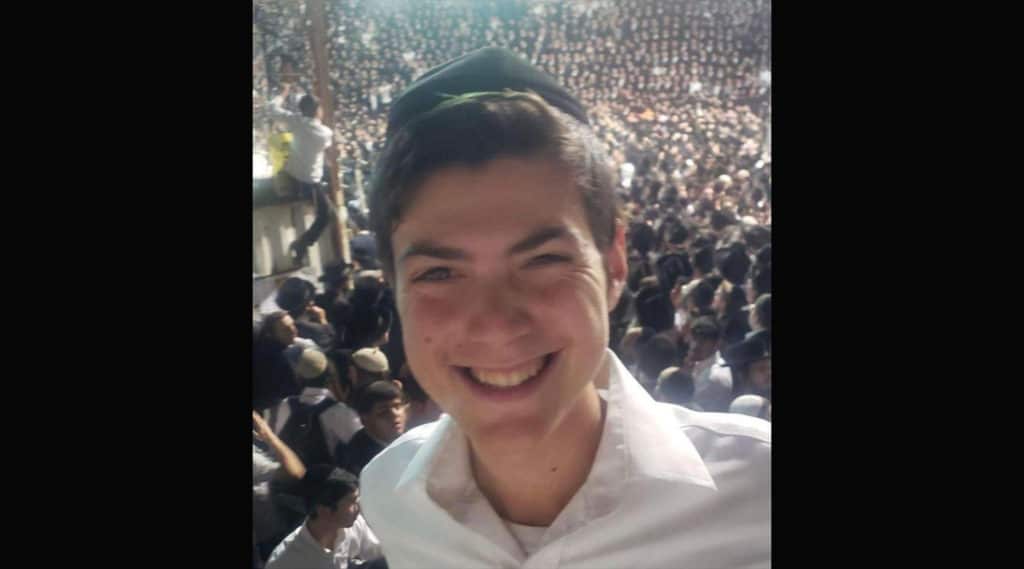
The New Jersey student, Nachman Doniel Morris, had flown to Israel in September to study at Yeshivat Shaalvim in central Israel, after the Israeli government made special provisions to allow yeshiva students to come to the country despite draconian restrictions on travel because of the pandemic.

Morris was in the crowd of tens of thousands that gathered at Mount Meron to mark the Lag B’Omer holiday Thursday night when a stampede on a crowded ramp led to the deadliest civilian disaster in Israel’s history.

“The Morris family are pillars of the Bergenfield-Teaneck community,” said a neighbor. “I have known [Nachman] since he was six. He was a rising star as a student in the Jewish world. He was a sweet boy. No one had anything negative to say about him.”

Morris was a graduate of the Marsha Stern Talmudic Academy in Washington Heights. The neighbor, who spoke on condition of anonymity, said the teenager has two younger siblings who live at home. Their father, Aryeh, is the comptroller for a local company.

Also killed was Yosef Amram Tauber, 19, of Monsey, a student at the Brisk yeshiva. A relative said that he left for Israel to attend the yeshiva “for the first time last week” — after the country again relaxed COVID-19 restrictions.

“His parents were nervous to send him away,” the relative said, adding that he had never before been to Israel.

Tauber had an older sister who a neighbor said is to be married in August. There are also several younger siblings. Tauber’s father, Zvi Tauber, is a rabbi of a congregation in Chester, New York.

The neighbor said that Tauber, who was known as “Yossi,” was always “full of spirit.”

“The family lived here a long time,” she said, adding that the teenager had attended a local boys yeshiva, Yeshivas Maor Yitzchak.

Another neighbor said that he had graduated recently and that “a big part of his class” had accompanied him to Israel to study at the yeshiva.

“All the kids here in the neighborhood are heartbroken, crying about the tragedy,” he said. “Nobody can believe what happened… This is a wonderful family and a really special boy — he always wanted to be learning.”

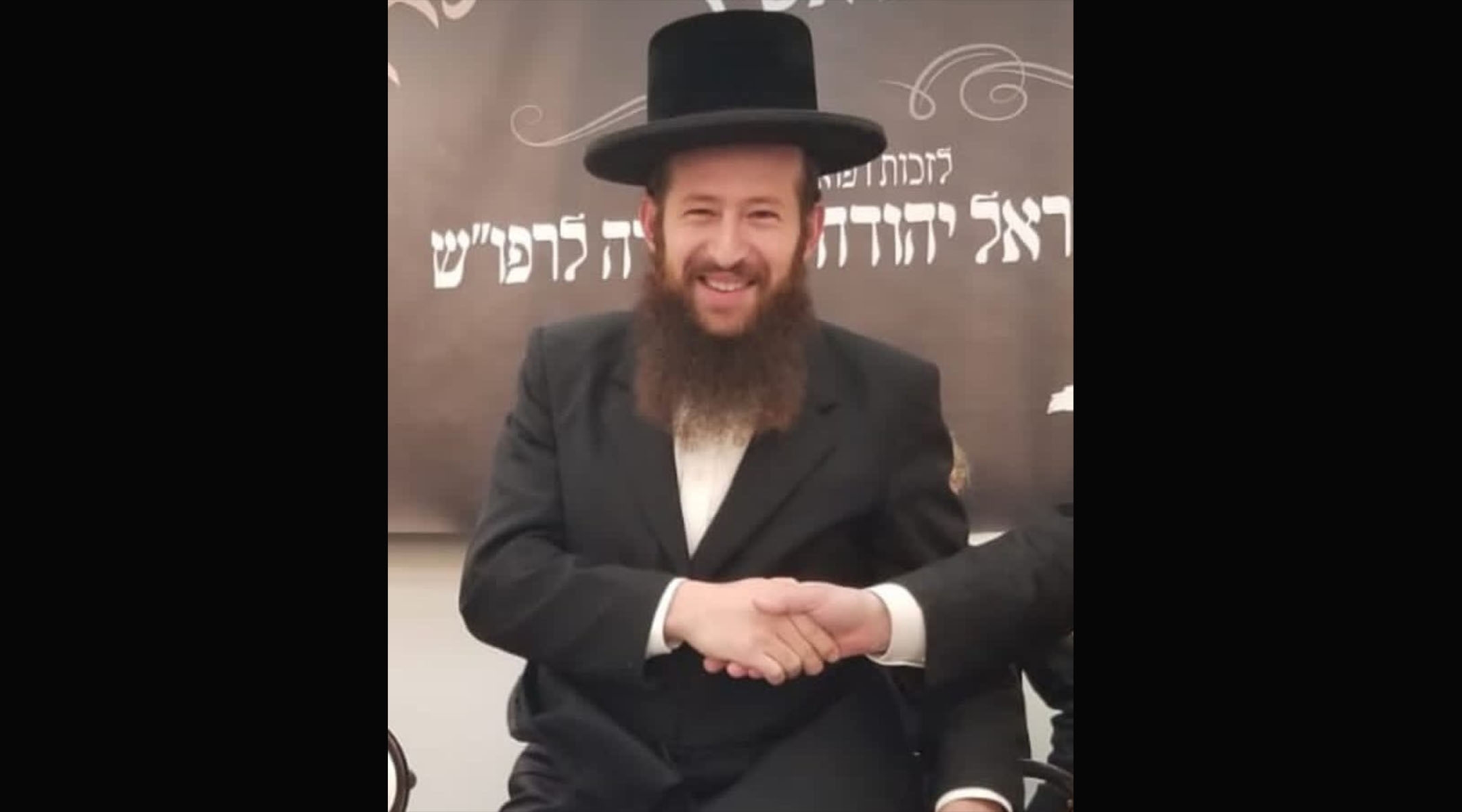
Also killed in the stampede was Shraga Gestetner, a 35-year-old singer from Monsey. Married and the father of five, he was in Israel visiting relatives. His mother, Shoshana, was reportedly raised in Bnei Brak.

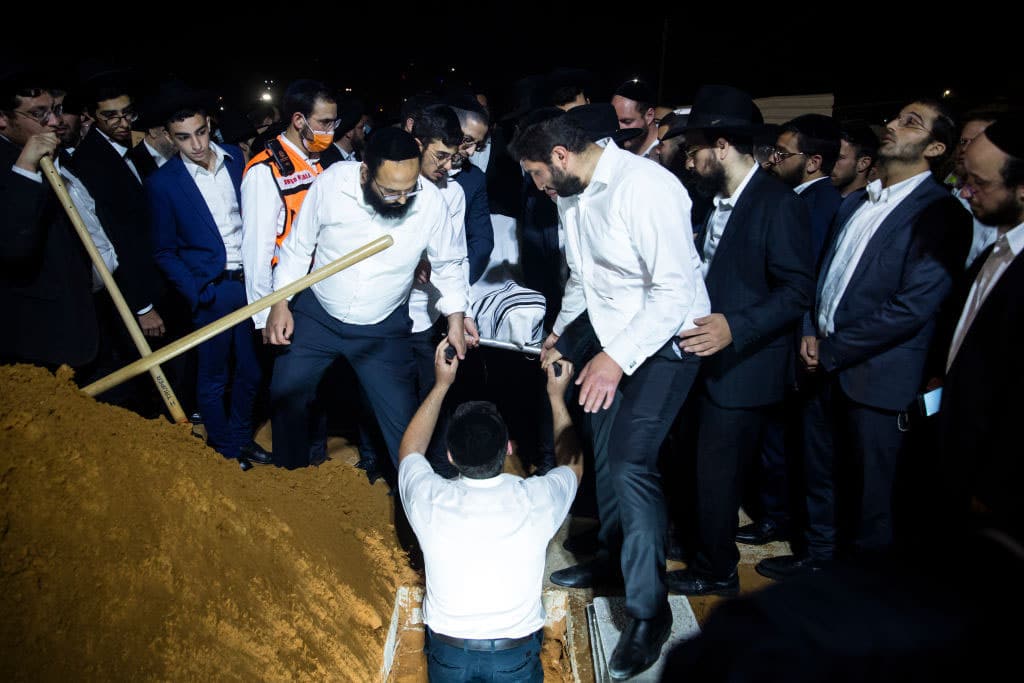
Born in Montreal, Gestetner in recent years gravitated from music to business. His was buried Friday afternoon on Jerusalem’s Har Hamenuchot after Israeli officials put out a call for locals to attend, because Gestetner’s family was all abroad.

Shraga Gestetner of Monsey, New York,is among those killed in the tragedy in Meron. (Twitter)

Other American victims who were identified include:

  • Menachem Knoblowitz, 22, of Borough Park, Brooklyn. He was engaged to a young woman from Lakewood, New Jersey, according to social media.
  • Rabbi Eliezer Tzvi Joseph, 26, of Kiryas Joel, New York. A Satmar Hasid, he was the father of four children.
  • Eliezer Yitzchok Koltai, 13, who had lived in Passaic, New Jersey, before moving to Jerusalem with his family.
  • Yossi Cohen, 21, of Cleveland, Ohio, who was a student at the Mir Yerushalayim yeshiva.

Misaskim, an Orthodox Jewish non-profit organization that provides services for the care of the dead and the needs of mourners, has established a hotline for Americans who have been trying to contact immediate family members in Israel and need assistance. Its phone number for immediate family only is (718) 854-4548. In addition, the organization is assisting those with flights to Israel.

A spokesman for the Israeli Consulate in New York said his office had contacted all of the families of those killed in the tragedy and had made “special arrangements for families wanting to travel to Israel. We have made it easier for them to go … without having to go through all of the COVID-19 procedures.”

Meanwhile, El Al is offering assistance to first-degree relatives (parents, siblings, children and spouses) of those killed if they live in the United States, England, France or any other country from which El Al offers direct flights to Israel. It is offering each family up to two free tickets, with the exception of the port tax.

Tickets will be provided to those who contact El Al’s service center and present a death certificate and a passport photo. Tickets can be booked for flights departing until May 4.

Scott Richman, regional director for the Anti-Defamation League in New York and New Jersey, said the organization was “distraught and saddened by the loss of life.”

At least 6 Americans, Including 3 Teenagers, Among Victims in Israeli Stampede Read More »

Stop Justifying the Deaths of the Meron 45


My daughter called me before the Sabbath in terrible pain. Beyond trying to process the deaths of 45 religious Jews at Mount Meron during Lag B’Omer celebrations, she was in an argument on a chat group with a woman who said that the deaths had a reason. This woman prophesized that God sent these 45 men to their deaths in order to teach the rest of us Jews a lesson. God hates the current divisions within the Jewish community and the political polarization in Israel. So he sent this tragedy as a wake-up call to the rest of us. I should mention that the woman in question — religious herself — wrote all this when the bodies had not yet been buried. My daughter told me the woman’s comments made her sick. I told her they made me want to puke as well.

That was only the beginning. Over the next few days, I witnessed countless media columnists analyze thedeaths of 45 Haredim in other ways. Some said that the Haredim had it coming, as they so often flaunt the police and the rules. Others said that this just proves that the Haredim, many of whom didn’t abide by all the rules of the coronavirus, have now learned that self-governance comes with a price. Left unsaid through all this stomach-turning justification was that these 45 completely innocent people were parents, husbands and children of many people who loved them.

It is true that Mount Meron was a turning point in Israeli history. Not because of how many people died. That was shocking and horrible beyond words, a truly unspeakable tragedy. Rather, what made it a turning point was that it was the first time I actually witnessed the Jewish community trivializing the deaths of fellow Jews with insensitive nonsense — without consequences.

Imagine if someone had written something similar about the Holocaust: “Sure, six million is a terrible price. But it serves them right. They should have known to be Zionists and emigrate to Palestine. Did two thousand years of European anti-Semitism teach them nothing?” Or, imagine if someone had written the same of the 11 Israeli athletes who were slaughtered in Munich: “Truly, a terrible tragedy. But what did they expect, returning to Germany just 25 years after the Holocaust?”

Let’s at least agree that any columnist writing such things would probably have experienced severe censure. But telling 45 ultra-Orthodox Jews that they should have known better somehow became acceptable, even as the grief-stricken families were scrambling just to bury their loved ones before the Sabbath.

Let me be absolutely clear: What happened in Meron was one of the worst tragedies to befall the Jewish people since the Holocaust. It is an unmitigated tragedy. There is no reason and no justification for their deaths. There is no good that came from their deaths. No lesson for the collective Jewish people. No celestial or cosmic redemption to be earned from their loss. They should be alive. We mourn, along with their families and the entire House of Israel. I am so sorry for their families. The pain must be beyond excruciating. May none of us ever know any such tragedy, God forbid.

The fact that there should have been greater police oversight? The fact that the Haredim need more civic rules to govern their gatherings? There will be time for all of those investigations and ruminations. They are, of course, necessary and essential. But not now. Not during the Shiva. Let the families grieve without our insensitive commentary.

Let the families grieve without our insensitive commentary.

Eleven years ago I visited Haiti with my daughter Mushki, just days after the earthquake that decimated the island and killed hundreds of thousands of people. We brought food and supplies with a Christian relief organization. I witnessed suffering beyond human imagination. The stench of death was quite literally all around us.

When I returned I spoke publicly of why a good God allows the innocent to suffer. I was amazed when an observant Jew approached me to say that the people of Haiti were not innocent, immersed as they are in idol worship.

“Surely you don’t mean to say that the morgue filled with the babies that I witnessed, the stench so bad that I was gagging, deserved to die? Or that the discarded bodies I saw being eaten by dogs, deserved their fate?” I asked.

I have always been puzzled why many religious people enjoy portraying God as executioner-in-chief and are always finding reasons to justify human suffering. The Holocaust, for example, produced two camps of Jews. One camp decided that the Jews had been punished for intermarriage and wanting to be secular. But the other camp had a much more Jewish response; they rejected any theological justification or self-blame and set to work even harder toward the creating a Jewish state where Jews would find refuge and build an army to prevent another genocide.

The appropriate response to death is always life. And the Jewish response to suffering is to demand that God put an end to it. The very name “Israel” translates as, “He who wrestles with God.” We argue with God over the loss of every innocent human life. We never justify suffering.

So many of us search for a reason why people die. They want to redeem tragedy by giving it meaning. Suffering ennobles the spirit, they say. It makes you more mature. It helps you focus on what’s important in life. But I argue that suffering has no purpose, no redeeming qualities, and any attempts to infuse it with rich significance are deeply immoral.

Of course, suffering can lead ultimately to positive outcomes. The rich man who had contempt for the poor and suddenly goes bankrupt can become more empathetic when he himself struggles. The arrogant executive who treats his subordinates poorly can soften when he is told that he, God forbid, has a challenging health issue.

But does it have to come about this way? Is suffering the only way to learn goodness?

Jewish values maintain that there is no good that comes from suffering that could not have come through a more blessed means. Some people win the lottery and are so humbled that they dedicate a huge portion to charity. A rock star like Bono becomes rich and famous and consecrates his celebrity to the relief of African poverty.

Yes, the Holocaust led directly to the creation of the State of Israel. But there are plenty of nations that came into existence without being preceded by gas chambers.

Here is another way that Jewish values strongly differ from other value systems. Many religions believe that suffering is redemptive. In Christianity, the suffering servant, the crucified Christ, brings atonement for the sins of humankind through his own torment. The message: No suffering, no redemption. Someone has to die so that the sins of mankind are erased.

But Judaism, which prophesizes a perfect Messianic future where there is no death or pain, ultimately rejects the suffering-is-redemptive narrative. Suffering isn’t a blessing, it’s a curse. Jews, therefore, are obligated to alleviate all human misery. Suffering leaves you bitter rather than blessed, scarred rather than humble. Few endure suffering without serious and lasting trauma. Suffering leads to a tortured spirit and a pessimistic outlook. It scars our psyches and creates a cynical consciousness, devoid and bereft of hope.

Suffering causes us to dig out the insincerity in the hearts of our fellows and envy other people’s happiness. If individuals become better people as a result of their suffering, it is despite the fact that they suffered, not because of it. Ennoblement of character comes through triumph over suffering rather than its endurance.

Speak to Holocaust survivors and ask them what they gathered from their suffering, aside from loneliness, heartbreak and outrage. Sure, they also learned the value of life and the sublime quality of human companionship. But these lessons could easily have been learned through life-affirming experiences that do not leave all of one’s relatives as ash.

I believe that my parents’ divorce drove me to a deeper appreciation of family and a greater embrace of religion. Yet I know people who have led completely privileged lives and have far deeper philosophies of life and are even more devoted to their religion than me. And they have the advantage of not being bitter, cynical or pessimistic the way children of divorce can sometimes be.

Whatever good individuals, or the world in general, receive from suffering can be brought about in a painless, joyful manner. And it behooves people of faiths to cease justifying the deaths of innocents and instead rush to comfort and aid the survivors.

The Meron 45 are deeply missed. May their memory be an unmitigated blessing.


Rabbi Shmuley Boteach, “America’s Rabbi,” is the best-selling author of 30 books and recipient of the American Jewish Press Association’s Highest Award for Excellence in Commentary. He has just published “Lust For Love” with the actress Pamela Anderson. Follow him on Twitter @RabbiShmuley.

Stop Justifying the Deaths of the Meron 45 Read More »

Suspect in NY Synagogue Vandalisms Released from Jail Due to Bail Reform

The suspected perpetrator behind the recent vandalism of New York synagogues was released from jail on May 2 as a result of the state’s bail reform law.

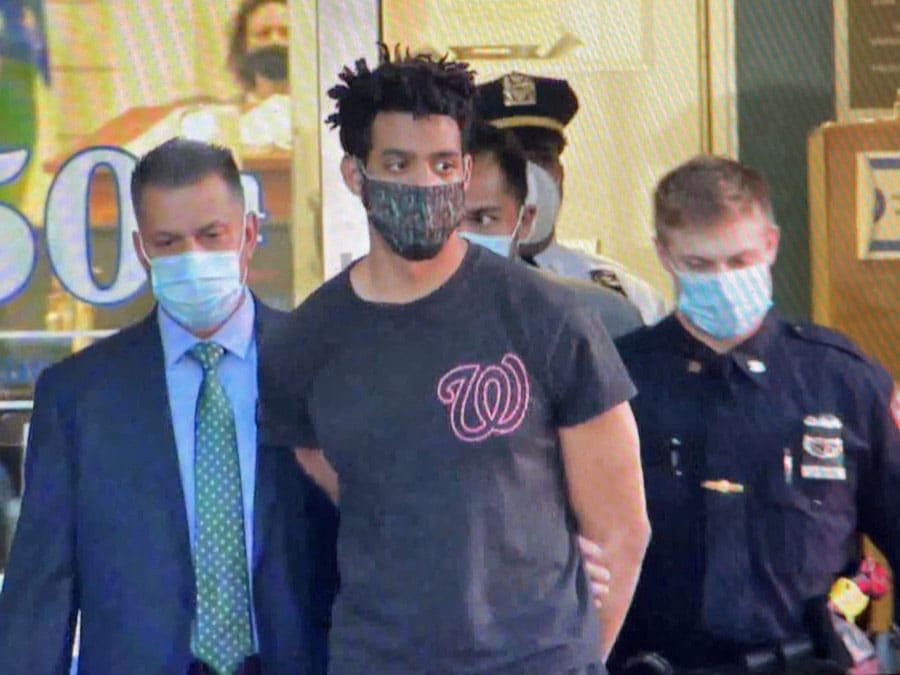
Jordan Burnette, 29, was arrested on May 1 for allegedly breaking the windows of synagogues in the Riverdale area and pouring hand sanitizer on prayer books and then throwing them into the woods. He faces 42 charges of hate-crime related offenses. But the prosecution didn’t seek bail for Burnette due to the state’s bail reform laws. Under the law, which was first implemented in January 2020 and amended in the following April, nonviolent offenses are not subjected to bail. The prosecution pointed out to the judge that before the law was implemented, they would have sought “substantial bail” for Burnette. However, since there aren’t any hate crime exemptions to the bail reform, the prosecution said they wouldn’t “violate the law.”

The judge, Louis Nock, did set $20,000 bail for Burnette after concluding that “shattering of glass” is a violent felony. Nock’s ruling was reversed by Judge Tara Collins, who granted Burnette supervised release.

New York City Mayor Bill de Blasio said in a statement, “I think this is an area that we definitely should look at again because hate crimes are such a profound challenge. But the important thing for us to do right now is to work within the law as intensely and effectively as possible to protect people.”

Jewish groups also denounced Burnette’s release. “This report about the perpetrator being released is beyond disappointing and really is a slap in the face to the #Jewish community that was impacted in #Riverdale,” Evan R. Bernstein, CEO and national director of the Community Security Service, tweeted.


Stop Antisemitism similarly tweeted that they “are horrified to learn that Jordan Burnette is back on the street.”


Former New York Democratic Assemblyman Dov Hikind, who heads Americans Against Antisemitism, released a video criticizing Collins and Bronx District Attorney Denise Clark for Burnette’s release. “Where the heck is the governor of the state of New York? What kind of message does this send… when you indulge in antisemitism, there are no consequences. You can commit all the crimes, you can cause havoc, you can cause fear, you get arrested and you will walk free. You will get out before the police officer leaves the precinct. Where’s the justice?”


Ellie Cohanim, former Deputy Special Envoy to Combat Antisemitism, also tweeted, “It’s time to change New York’s bail reform laws to exclude hate crimes! Let’s stop releasing #AntiSemitic criminals back on the streets!”

Anti-Defamation League New York / New Jersey Regional Director Scott Richman said in a statement to the Journal, “We are grateful to law enforcement that a suspect in the Riverdale vandalism that has damaged four synagogues and terrorized the community has now been arrested and charged. We hope that the conditions of Jordan Burnette’s supervised release will be stringent enough to prevent him from attacking any sites again, and ensure that he is available to stand trial.”

Burnette was arrested after riding a bicycle against traffic; the bicycle was allegedly stolen from one of the vandalized synagogues. Burnette told reporters after he was arrested, “Jesus is the real messiah. That’s all I know. I didn’t throw any rocks.” His next court appearance is scheduled for May 7.

Suspect in NY Synagogue Vandalisms Released from Jail Due to Bail Reform Read More »

Protecting the Right to Vote is a Jewish Value

President Biden began his recent speech before a joint session of Congress by level-setting with the American people about the three crises he inherited: the COVID-19 pandemic, the economic downturn and “the worst attack on our democracy since the Civil War.” He declared the January 6 insurrection “an existential crisis, and a test of whether our democracy could survive,” and noted that the central challenge of our time is ensuring that America’s democracy will endure.

As American Jews, we have an obligation to heed President Biden’s ominous warning to Congress that, “if we are to truly restore the soul of America — we need to protect the sacred right to vote.”

We must recognize that although our fragile democracy is clearly on the mend 100 days into President Biden’s term, it remains under threat by an ongoing Republican campaign of disinformation, delegitimization and disenfranchisement. In state legislatures across the country, we have seen Republicans cynically exploit Donald Trump’s Big Lie to engage in voter suppression. There is a path forward to protect our democracy and right to vote, but in order to navigate it, we must first understand how we got here.

Disinformation

As U.S. intelligence agencies have plainly documented, the disinformation campaign targeting our democracy began as foreign meddling during the 2016 election. That campaign became a widespread domestic threat during the Trump presidency, culminating with the 2020 election, which shockingly left two-thirds of Republicans believing Trump’s false allegations that the election was neither free nor fair. The disinformation regarding the 2020 election, which became known as Trump’s “Big Lie,” mostly came via tweets from the former president himself.

Delegitimization

Well before any ballots were cast, Donald Trump also led a sustained campaign to delegitimize the 2020 election results, with an emphasis on attacking the primary means of voting safely amid a pandemic, vote-by-mail. In the first presidential debate, Trump spewed a litany of lies about the alleged threat of voter fraud, especially with respect to absentee voting. Trump’s effort to delegitimize the election results continued after his election defeat by more than seven million votes. It led to more than 60 legal challenges alleging election fraud, all of which were found to be without merit or were dismissed by courts across the country, including the Supreme Court.

The result of this campaign was the “Stop the Steal” protest orchestrated by Donald Trump on January 6, which directly led to the seditious, violent and fatal storming of the U.S. Capitol.

Disenfranchisement

These campaigns continue to this day despite unequivocal findings, including from conservative institutions, that there was no voter fraud in the 2020 election. Alarmingly, this Republican-led effort has expanded into a dangerous new campaign — attempts to disenfranchise American voters through hundreds of proposed laws to restrict voting rights in 47 states. Even worse, these voter suppression laws, such as the bill that recently passed in Georgia, disproportionately target Black voters and communities of color, and go well beyond restricting vote-by-mail.

The Georgia voting law does precisely what Trump tried but failed to do in 2020 — reduce the size of the electorate by restricting absentee voting. It limits the number of ballot drop boxes and impedes access to them by eliminating 24-hour ballot drops. It imposes arduous ID requirements that make it harder to vote absentee. But it goes even further by limiting in-person voting as well — it shortens voting hours and criminalizes the provision of food and water to those standing in line to vote. It also gives local authorities discretion to ban voting on Sundays, when voting is most convenient for Black voters, many of whom have traditionally voted after attending church. While “discretion” may create a false sense that these policies are not intended to target any particular group, there is really no reason other than voter suppression to prevent voting on a day that’s especially convenient for Black voters.

There is really no reason other than voter suppression to prevent voting on a day that’s especially convenient for Black voters.

Unfortunately, this campaign isn’t limited to Georgia. Florida also recently passed a law that restricts access to ballot boxes and limits vote-by-mail by requiring voters to reapply for absentee ballots for each two-year election cycle. Like Georgia, the Florida Republican-controlled legislature also tried to outlaw the provision of food and water and disproportionately targeted Black voters. Florida Democratic State Rep. Omari Hardy had it right when he observed, “This bill is the revival of Jim Crow in this state, whether the sponsors admit it or not.”

While Republicans have feigned concern that providing food and water to voters in line may present opportunities for undue influence over voters, criminalizing this practice reveals the true intent of these bills. If the objective was actually to reduce the lines at the polls (and thus reduce opportunities for influencing voters waiting in line), Republicans could expand the number of polling places or voting hours. Instead, they’ve made handing out food and water a crime, causing voters inconvenience, discomfort and fear, all of which will ultimately reduce the overall number of voters.

In addition to Georgia and Florida, 45 other state legislatures have proposed or already considered similar voter suppression measures. These laws and, more recently, Republican-led gerrymandering efforts, are facing legal challenges led by esteemed voting rights lawyer Marc Elias, who has described his work as rooted in his Jewish values. In an interview earlier this year, Elias said, “My Jewish upbringing was about the importance of the law and justice.” Voting is the bedrock of our democracy, along with the pursuit of justice, and the denial of this right is fundamentally antithetical to Jewish values.

The battle for the soul of our nation may have started with neo-Nazis marching in the streets of Charlottesville, but it has now moved to every state legislature challenging our right to vote.

Amid these challenges, our Jewish values compel us to act, opposing ongoing Republican-led campaigns of disinformation, delegitimization and disenfranchisement. We should implore the Senate to pass the For the People Act, H.R.1, which would expand access to voting, reverse nearly all the voter suppression measures Republicans have proposed and ensure that congressional redistricting is conducted by nonpartisan commissions. It’s also critical to pass the John Lewis Voting Rights Act, which will protect our democracy from the racial injustices that have persisted far too long and ensure equal access to voting for all.

This is an uphill battle, especially with the Senate filibuster still in place, but it’s a battle worth fighting because the character of our nation, the future of our democracy and our values as American Jews are at stake. As Marc Elias suggested on Twitter, as he defeated each of Trump’s “Kraken” election lawsuits, the Kraken (a legendary sea monster resembling an octopus) proved to be nothing more than calamari. And let’s not forget — calamari isn’t kosher.


Halie Soifer is CEO of the Jewish Democratic Council of America (JDCA). She served as national security advisor to then-Senator Kamala Harris and as senior policy advisor in the Obama administration.

Protecting the Right to Vote is a Jewish Value Read More »

New Legislation Needed to Prevent Another Meron Tragedy, Experts Say

(The Media Line) New legislation requiring crowd management at mass gatherings could prevent a tragedy similar to the one at Mount Meron from recurring, crowd control experts say.

Some 45 people were killed and an additional 150 injured during a crowd crush at the annual Lag b’Omer celebrations at Mount Meron in northern Israel. More than 100,000 people attended the event, which typically includes bonfire-lighting ceremonies, dancing and prayers.

The event is the worst civilian disaster in Israel’s history and specialists in crowd safety say that it could have been prevented.

Ofer Grinboim Liron, founder and CEO of Crowd Solutions, has decades of experience in security, safety and crowd management at events in Israel and abroad. Based in the coastal town of Hofit, Crowd Solutions works with large-scale events, and will be responsible for crowd control at an upcoming music festival that will take place at Timna Park near Eilat in the fall.

According to Liron, following the Mount Meron disaster one of the main issues that needs to be addressed is the lack of proper national safety legislation.

“To this day there is no legislation regarding the management of mass-gathering events,” Liron told The Media Line. “At the moment we’re relying on police regulation, which is not law.”

What the country needs, he says, is a law that will require crowd management at large-scale events.

Israeli law currently allows for a maximum of 1 person per square meter, or about 10 square feet, at events. Anything more than 4.5 people per square meter is considered to be a safety risk.

Thursday night’s Lag b’Omer celebrations at Mount Meron went way beyond those limits.

“If you were inside the crowd at Mount Meron there were about 7 to 8 people per square meter,” Liron said. “You cannot see what’s happening around you; you just move with the crowd. It’s like a wave in the sea.”

In a crowd this dense, a person can be crushed while standing. Furthermore, if anyone slips – as was the case Thursday night – it can cause a domino effect that leads to a progressive crowd collapse. During such a phenomenon, people who already are pressed so closely to one another fall down one after another and get trampled or suffocate.

Even worse, once this occurs there is little chance of escape.

“It’s very, very dangerous,” Liron stressed. “If you’re already inside this crowd, I’m sorry to say but you just need to pray that nothing will happen. You need to flow with the crowd and take the nearest exit.”

You cannot see what’s happening around you; you just move with the crowd. It’s like a wave in the sea.

Similar tragedies to the one at Mount Meron have happened in Israel before. In 1995, a summer music festival in the desert town of Arad was oversold, causing a huge mass of people to gather at the event’s entrance passages. Three boys were trampled to death in the crush.

Another infamous example of such an event – and one that resulted in a much higher death count – was the Station nightclub fire in 2003 in Rhode Island in the United States. After a fire was sparked from a concert’s pyrotechnics, a mass of people rushed to the exit to escape the flames, resulting in a crowd collapse that claimed the lives of 100 people.

Closer to Israel, the annual Hajj pilgrimage to Mecca in Saudi Arabia has ended in tragedy on several occasions, most recently in 2015 when hundreds and perhaps even thousands – the final count is disputed – pilgrims perished from a crowd crush during the event.

Liron believes that two factors were at play in the Mount Meron disaster.

“Studies from around the world show that crowd crushes, some 90 percent of them, were the result of one of the following: poor site planning and a lack of crowd management. In my view, we’ll reach the same conclusions here,” he said.

Other crowd management experts agree with this assessment.

Guy Kedem, CEO of Guy Kedem, Safety Access Ltd, is a specialist in crowd science, risk analysis and event management. For the past eight years, he has provided crowd management services to InDNegev, an annual music festival that takes place in the Negev Desert.

Kedem is currently analyzing the Mount Meron disaster and will be writing a report about what led to the crush there. He told The Media Line that he was not surprised by what transpired on Thursday night.

“It’s unacceptable that there was no cap placed on the number of attendees,” Kedem said. “Every event in Israel and the world normally has a cap. When you enter an event there’s usually a big sign telling you what the capacity of a given place is.”

To prevent crowd crushes in the future, Israeli authorities must determine in advance what the attendance cap should be, he added. The bigger challenge, however, is to manage the crowd flow during the event itself.

“Someone needs to be put in charge and made responsible” for an event’s safety, he explained. “It has to be a body under a specific government ministry. Afterwards, one event manager with the right experience and training needs to be tasked with running the entire thing and being responsible for safety, security and crowd control.

It’s unacceptable that there was no cap placed on the number of attendees. Every event in Israel and the world normally has a cap. When you enter an event there’s usually a big sign telling you what the capacity of a given place is.

According to Kedem, the main point of failure at the Lag b’Omer ceremony was the exit ramp, which was too narrow for the number of people who were using it at the time. The overwhelming numbers created a dangerous bottleneck.

Kedem also says that a new law should be passed to prevent the same disaster from repeating itself.

“There needs to be a law to regulate the safety of mass-gathering events,” Kedem said. “This law needs to stipulate who is permitted to manage such an event, who must write the safety plan and what kind of training both the event manager and safety manager must undergo.”

New Legislation Needed to Prevent Another Meron Tragedy, Experts Say Read More »

Israeli Officials Likely on Damage Control Mission as Iran Nuclear Deal Revival Nears

(The Media Line) The round of meetings between Israeli security officials and high-ranking members of the Biden team continued Friday in Washington, DC, when Mossad intelligence agency head Yossi Cohen met US National Security Advisor Jake Sullivan. President Joe Biden was also present at the meeting, although it is unclear to what extent. Israeli media reported that the meeting was between Biden and Cohen, while the US National Security Council said the president “dropped by” to offer his condolences for the disaster on Mount Meron in Israel’s north, in which a deadly stampede left 45 people dead.

This follows a meeting between Sullivan and his Israeli counterpart, Meir Ben-Shabbat, on Tuesday, as well as a meeting between Secretary of State Antony Blinken and Cohen on Thursday.

While the meetings reportedly touched on a number of security concerns shared by the two close allies, a central topic was the mostly abandoned Iran Nuclear Deal with the world powers and the American attempt to revive it. The US and Iran have conducted ongoing indirect talks in Vienna in recent weeks to return both countries to compliance with the Joint Comprehensive Plan of Action (JCPOA) agreement signed under former President Barak Obama.

Signed in 2015, the JCPOA was intended to limit the Islamic Republic’s nuclear program and put it under international supervision. While the signatories, notably the Obama administration and its European allies, voiced their strong belief in the agreement, it faced staunch opposition from within the American political arena as well as from American allies in the Middle East, especially Israel and Saudi Arabia. Critics expressed deep disbelief in the agreement’s ability to deter Iran from realizing its nuclear aspirations, which Tehran denies.

Former President Donald Trump withdrew the US from the JCPOA in 2018 and reinstated economic sanctions on Tehran, which had been lifted as part of the agreement. Trump himself had been a strong detractor of the deal. Since then, Iran has made large strides toward a nuclear bomb, disregarding its obligations under the nuclear agreement. At the same time, the sanctions have put great pressure on Iran’s economy.

Some progress has been achieved in the recent Vienna talks and sources close to the matter have expressed careful optimism. Israeli officials have estimated that a revival of the agreement is imminent. Jerusalem repeatedly has voiced strong opposition to a return to the deal in its original form but its cries seem to have fallen on deaf ears, leading to the delegation of security officials sent to Washington by Israel last week.

It doesn’t end with a return to the agreement.

“It’s obvious to Israel that the administration is determined to return to the agreement,” said Col. (res.) Eldad Shavit, an expert on Middle East security and US-Israel relations at Tel Aviv University’s Institute for National Security Studies. “It’s possible that they are pointing out the negative consequences of returning to the agreement in these meetings,” he told The Media Line, adding that it appears more likely that Israel’s officials are now focused on the day after the return to the agreement, attempting to minimize the damage that a return to the deal may cause.

“It doesn’t end with a return to the agreement,” Shavit said. For example, it is of vital importance to Israel that the inspection of Iran’s nuclear sites under the agreement be carried out properly. Jerusalem also wants Iran to be pressured to halt its belligerent activities in the region, which include supporting the Houthi rebels in Yemen and Hizbullah in Lebanon, the latter a constant threat to Israel.

This second aspect of Iranian activity is not currently covered by the agreement, a cause for great concern both to Israel and to countries in the Gulf. Another issue is the short duration of the JCPOA, with many of its limiting clauses set to expire in 2030. US officials have stated their intention to make a return to the deal be a steppingstone to a wider agreement which covers regional security, and whose duration is longer. “In these talks, or in future talks, Israel should make sure that they [the Americans] persist with the intention of reaching a ‘longer and stronger’ agreement,” Shavit said.

The meeting also was important to open the lines of communication between Israel and the new administration in the White House.

“It’s important to Israel to be in dialogue with the American leadership, as a part of which it can relate its point of view, its ideas and try and exert some influence,” he said.

The US quickly nearing an agreement with Israel’s nemesis is reminiscent of the events of 2015. Then, tensions between Jerusalem and Washington reached new heights and, driven by a sense of urgency created by the potential of an Iranian nuclear threat, Israeli Prime Minister Binyamin Netanyahu addressed the US Congress in an attempt to block Obama from sealing the agreement with Iran. The move was controversial and was seen by some as an illegitimate intervention of a foreign leader in inner American politics.

Israel’s current close communications with Washington may be a sign that a lesson was learned, and it will go to great lengths to avoid butting heads with the new administration. “You can’t take the same path of action with the Biden administration – which is just starting on its way – that you took with Obama at the end of the road,” according to Shavit.

There must be some kind of dialogue but it must be behind closed doors and without publicizing – that immediately makes me suspect that it’s about public relations.

Professor Eytan Gilboa of the Begin-Sadat Center for Strategic Studies at Bar-Ilan University, whose fields of expertise include US policy in the Middle East and the American relationship with Israel, identifies the two central goals that Israel is trying to achieve with these talks. “Israel has two aims: there’s a short-term aim, and that’s influencing the current negotiations… and the second thing is preventing a bad agreement as an [ultimate] conclusion,” he told The Media Line. Gilboa explains that the delegation in Washington is trying to make sure that the US doesn’t lift its sanctions on Iran before Iran returns to compliance with the nuclear agreement.

“The sanctions are the Americans’ strongest card in the negotiations. The moment this is dismantled, the Iranians have succeeded,” he said. “They need to reach a wide agreement with Iran, a serious agreement, before lifting the sanctions. Because the moment they will lift the sanctions, Iran will ignore them, and there is fear in Israel that that is what they plan to do.”

Gilboa, however, is pessimistic about the Israelis being able to influence American policy on the matter, calling their chances “close to zero.” He said that “when consultations are serious, they don’t publicize them.” Widely publicized meetings are indicative of a PR stunt, rather than a true intention of the US to hear its Middle East allies, whether it be Israel or its southern neighbors in the Gulf, he says. The Biden administration wishes to avoid a public confrontation with Israel, Gilboa suspects, so it is conducting these meetings to create the illusion that it is taking its ally’s concerns into consideration.

“There must be some kind of dialogue,” Gilboa said, “but it must be behind closed doors and without publicizing – that immediately makes me suspect that it’s about public relations.”

Shavit has a significantly more positive view of the recent meetings, pointing out that the Americans are showing a “willingness” to communicate with Israel and “have invested time” in this effort. This close interaction and coordination, he believes, is the right approach for Israel.

Israeli Officials Likely on Damage Control Mission as Iran Nuclear Deal Revival Nears Read More »

Miscarriage and Loss During COVID-19

I realized if I didn’t tell anyone, no one would ever know.

I was three months pregnant when I started to miscarry. My pregnancy was too far along, and my symptoms were solely abdominal pain. Natural miscarriage was unlikely and not happening, so I needed to have a surgical D&C. I was relieved to hear the doctor say that because I was 12 weeks pregnant, this would be less psychologically traumatic for me.

This was not my first miscarriage. I had a surgical D&C at three months of pregnancy in my first pregnancy. Same situation, same sorrow and loss. And yet, this time is different. I have a wonderful, vibrant 21-month-old baby girl, whom my husband and I were blessed to have between these two miscarriages — Baruch HaShem — and, of course, a loving dog, Judy, whom we adopted right after my first miscarriage.

But this time was also different because I realized in the COVID/post-COVID limbo we are living in, if I didn’t tell anyone about my miscarriage, no one would find out. For those experiencing miscarriage, this is often the case because it is such an ambiguous loss, which can be painful, lonely and confusing. But somehow, the isolation felt even more heightened now.

With my first miscarriage and D&C, I chose to tell my entire congregation a week post-surgery —  from the bima while giving my Rosh Hashanah drasha. I did so because it was on my heart and soul, because I wanted my shul family to know and because I wanted to decrease the stigma. It was an excruciating time — vulnerable and heart-wrenching. I didn’t feel like myself for weeks. I didn’t want to go out or talk to anyone. But because I am pulpit clergy and it was the holiest time of the year, I decided to face my pain and try to humbly offer it up with love and hope. That’s part of our spiritual work at the Chagim.

Right now, though, we aren’t giving drashot. We aren’t even gathering as a full community. We are thrilled to be in the process of “reopening.” But even if I wasn’t clergy, even if I didn’t feel comfortable sharing with my whole shul, the intimate Shabbat meals, casual social gatherings and run-ins in the local grocery store are also not happening. If I don’t actively email, text, call and reach out at the exact moment when I am most inclined to curl up in a ball and hide, then my husband, small nuclear family and I will go at this largely alone.

For most of us this year, we have missed the natural human psychosocial cues we give each other, which are the building blocks of empathy and awareness beyond the self.

So, in what was an uncomfortable social move, I pushed myself to reach out. Why? Because  in addition to getting through the pandemic, I have several sick family members and have been juggling a lot as of late. So when I found out I was losing the pregnancy, I hit a point where I just couldn’t emotionally keep it together, responding “I’m great!” or even “Baruch Hashem” when others asked how I am. I realized that emotionally, spiritually and psychologically, what I needed was to be completely honest that I was in pain and not ok.

I realized that emotionally, spiritually and psychologically, what I needed was to be completely honest that I was in pain and not ok.

What surprised me was how good it felt to be held by friends, family, colleagues and community —- even virtually. Those I reached out to made sure we had food, childcare and felt seen and loved. One person sent me a long, moving set of miscarriage resources she gathered when she went through it (some of which she and I had exchanged before). When we could have been anonymous, invisible and alone, we weren’t — we aren’t. Our family, friends and shul community responded.

Now, I know this approach is not for everyone. I respect that we all cope differently, and that’s healthy. Some of us find comfort specifically in privacy. Even my husband and I deal with this event differently, which is significant because whatever I do impacts him. And I am immensely thankful to him for supporting me in my own response. I also recognize that given my position in a tight-knit Orthodox community in Los Angeles, I am uniquely blessed and seen in a way that is not a given for everyone. Having connected deeply with organizations like Yesh Tikva, Modern Loss and Mayyim Chayim before gave me an already open window.

But this experience has refreshed within me what community can be, why I am devoted to serving God and His people and why it’s imperative that we all reopen our communities with a wider eye toward inclusion.

If I’m being honest with myself, if I had not given that drasha about my first miscarriage three years ago at Rosh Hashanah, I don’t think I would have reached out this time, and I don’t think I would be writing about my recent miscarriage now. I wouldn’t have known who to turn to or that doing so would be helpful. I would have exclusively powered through, sobbed in intimate spaces and read articles and blog forums online (which certainly continues to be part of my mourning now). But my mourning probably would have been limited to that.

Not this time. This time (oh gosh, how I wish there wasn’t a “this time,”  but there is), I see my micro pain in the arena of macro pain. People who have experienced loss of all kinds —physical, psychological, temporal, as well as loss of expectations and normalcy — are with me in this. We’ve realized that if we don’t tell anyone, it’s a legitimate possibility no one will know… or, God forbid, ask… and respond.

I offer this vulnerable reflection as a prayer. We need community. And our definition of community as we continue reopening will demand that we be more vulnerable, more sensitive, more aware than ever. It comes from all sides — the one in need of comfort and the comforter. And one of the trickiest parts of this demand is that everyone will need something different, some private, some public, some verbal and some physical, some with space and some with closeness. Discerning and respecting the extent of what we each need is part of the endeavor.

When he mourned Sarah, Avraham focused on logistics (the burial Cave of Machpelah) and the future (Yitzhak marrying Rivka). When she was worried about her twins in her womb, Rivka cried out to God and shut out her family. When she was pained by her barrenness, Rachel needed to turn only to her most intimate partner (Yaakov) to share her anger, sorrow and hopelessness. When his sons died tragically, Aharon continued his Mishkan service and duties with his fellow kohanim but with a notable adjustment (not eating one of the offerings) and with silence. When he was heartbroken about not going into the Land of Israel, Moshe immediately worried about who would be our people’s future leader and how to empower that person, immersing himself in community and our future. Our ancestors dealt with struggle and loss in varied ways, as do we. To adapt the phrase “rising strong” from Brené Brown, applying this Torah wisdom to our present moment is part of “reopening strong.”

How? We pride ourselves on being inclusive, open, welcoming and committed to mitzvot, especially in seeing, responding and preempting the needs of the other and the stranger. And yet, this time in history is one in which it’s really hard and awkward to do so. For that reason, we genuinely have to ask the tough but holy questions about how we can do all of this informed by the lessons we lived, suffered through, lost in and sacrificed for this past year. We must foster what theologian Henri Nouwen termed a community of “wounded healers” — healing and connecting with the wisdom of our own woundedness.

For example, mental health awareness has consistently been a pillar of our shul mission (and my own personal spiritual work). And I am thrilled to see a commitment to it springing up across almost all Jewish and non-Jewish organizations, from gyms to clothing stores to billboards to shuls. It’s something everyone recognizes and even understands now. I am hopeful and elated to see what that awareness and decreasing of stigma create. But what will that look like six months from now, five years from now? Will we allow ourselves to be changed beyond our status quo? These are serious and honest questions that even the greatest mental health advocates among us (including myself) must ask.

As my husband and I stood in the check-in area in the surgical unit (which was his last physical stop with me because of COVID rules), we personally turned to each other, to God, to the future and to the soul of the baby we hope to one day bring back into this world. We sang Shalom Aleichem (as we did before our last D&C), singing each verse to our angel on this journey, wishing our baby’s soul shalom, the ability to come to us, blessing and a peaceful exit from this physical vessel. And we said Baruch Dayan HaEmet (thank you Rabbanit Leah Sarna for posting Peninei Halacha’s integration of this bracha into this moment!). And we held each other. This was all part of what we needed, and the process continues.

With any kind of loss, there is effort in how we care for ourselves and our loved ones, which necessitates that we think and feel in a broader way than we normally do — a way that is in tune with what will truly soothe ourselves and others.

I thank my family, friends, colleagues and B’nai David-Judea community. And I thank Hashem for giving me the strength to go against my instincts and hear my needs. I thank my husband for being the most generous and supportive partner I couldn’t even dream up in this life.

I write this because I don’t want you — in whatever your pain is — to be alone. And because I want our spiritual communities and beyond to recognize that our times call for a different, deeper, more vulnerable kind of community.

The truth is that much wisdom has been written by experts on the dynamics, psychology and theology of a vulnerable community as the antidote to disconnection. There’s a wealth of texts in our tradition and in others’ to support it.

Much more needs to be lived on it.


Rabbanit Alissa Thomas-Newborn is a member of the spiritual leadership at B’nai David-Judea Congregation in Los Angeles, and she is a Board Certified Chaplain with Neshama: Association of Jewish Chaplains.

Miscarriage and Loss During COVID-19 Read More »