Therefore, I said to the children of Israel: None of you shall eat blood Leviticus 17:12
Rest assured, God, Adonai, Holy One
Unseen Savior, Invisible to the point of
wondering what sounds You make
or bath salts You use, as a vegetarian
(and, I guess, by law as a Jew) no blood
will pass through these lips, as I view it
as sacred inside the, sometimes furry,
beings in which it is housed.
It’s not even an issue.
No man shall come near to any of his close relatives, to uncover [their] nakedness Leviticus 18:6
Also not an issue, Divine Kahuna
Hallowed Super Being, Creator and Dispeller
of all body itches, ever since the Garden
I’ve been collecting fig leaves in
the fashionable colors of our days –
Plus, I take my signature on the ketubah
seriously, and know exactly whose fig leaves
I’m allowed to pluck away.
And you shall not give any of your offspring to pass through for Molech Leviticus 18:21
I remember, once, standing outside a movie theater
with other people who held words as sacred as the ones
You, oh Revered Giver of scrolly text, put in our faces
by law and tradition every week, shouting Moloch
to each other, and innocent movie patrons, and the sky
where, we assume, You have a condo or a mansion or
a cloud-based tabernacle. We were just quoting a poem
from another nice Jewish boy, whose beard, like Herzl
and Moses before him, had long since entered the dust.
Never fear, oh Totem of DNA and long-gone dinosaurs –
We are the children of the children of the children
We know it has always been You.
A Los Angeles resident discovered graffiti stating “The Jew Is Guilty” on the sidewalk of the Abbott Kinney area of Venice Beach on April 20. The resident, Daniel Khalili, posted a video of himself on Instagram spray-painting over the graffiti.
Khalili told the Journal that he found at least three instances of the phrase on the sidewalk in the area. He decided to take matters into his own hands and cover up the graffiti with spray paint because he thinks the city has been too slow in prior circumstances. “I didn’t want whoever put that on there to think that this is something that can be put on and people can just walk by and look at it and be okay with it.”
He isn’t concerned about any legal repercussions from covering up the graffiti with spray-paint, which could be considered vandalism under the law. “I’ve seen in the last year a lot of destruction done in the name of social justice, and when I walk and I see blatant anti-Semitism right in front of me, right in my backyard on the floor, I was not worried about the repercussions that could be possible I could face upon doing this.” And if he does face any legal repercussions, “so be it. But I will always stand up for my people.”
Khalili added that he has received a lot of positive feedback on Instagram for crossing out the graffiti, and that he has even gotten messages from people in Europe who were surprised that such graffiti existed in Los Angeles. “They didn’t think that anti-Semitism reaches all the way to California.”
Jewish groups condemned the original graffiti. “We are concerned by a spate of blatantly antisemitic graffiti on Abbot Kinney Blvd. in Venice,” Anti-Defamation League (ADL) Los Angeles Regional Director Jeffrey Abrams said in a statement to the Journal. “We have notified LAPD [Los Angeles Police Department] about these incidents. Given the high levels of antisemitic incidents in CA, and around the country, we urge the community to report any and all suspected hate incidents to law enforcement and ADL.”
American Jewish Committee Los Angeles Regional Director Richard S. Hirschhaut similarly said in a statement to the Journal, “At first blush, it may seem refreshing to see someone with a spray can in hand out to ‘erase’ antisemitism when it appears on public property. Though such corrective action may be well-intentioned, we would recommend that the Department of Public Works be informed of such hateful graffiti. Ultimately, it is their job to remove it.”
StandWithUs CEO and co-founder Roz Rothstein also said in a statement to the Journal, “We are disappointed to learn about yet another act of antisemitic vandalism, this time in a popular shopping area of Los Angeles. When people cannot enjoy the city without running into these kinds of hateful messages scapegoating the Jewish people and polluting the minds of others with this kind of vitriol, it is a sad day in our society.
“We urge anyone with information about the perpetrator(s) to contact local law enforcement. And we encourage business owners in this area to consider countering these messages of hate by posting messages of unity and solidarity to make clear that antisemitism and other forms of hate will not win the day.”
(JNS) A Syrian surface-to-air missile (SAM) fired at an Israeli Air Force fighter jet that had been involved in airstrikes on targets in Syria exploded in Israel’s southern Negev region early on Thursday.
Warning sirens went off in the region of the Bedouin village of Abu Qrenat, in the northwest Negev, said the Israel Defense Forces. Residents in the south and in Jerusalem reported hearing a loud blast, according to a report by Mako.
Soon afterwards, the IAF “struck the battery from which the missile was launched and additional Syrian surface-to-air batteries in the area,” the IDF Spokesperson’s Unit said in a statement.
A Syrian military source told the Syrian Arab News Agency (SANA) that the IAF struck targets in the Damascus and Golan regions, adding that Syrian air-defense systems were activated. The source claimed that Syrian interceptor missiles were able to shoot down most of the Israeli missiles.
SANA said in its reports that four Syrian soldiers sustained injuries in an Israeli strike south of Damascus and that the attack caused damage.
According to the U.K.-based war monitor Syrian Observatory for Human Rights (SOHR), several air-defense batteries were destroyed in the strikes.
SOHR sources also reported hearing a loud explosion on Thursday morning, followed by several additional explosions, on the outskirts of the city of ar-Ruhayba in Eastern Qalamoun.
According to SOHR, the blasts occurred at ammunition depots belonging to the Syrian Army’s 3rd Division. Flames were seen rising from the ammunition depots for about three hours before the regime forces extinguished the fires. At least 10 members of regime forces were injured while trying to put out the fires and were evacuated to hospitals in Damascus. The source of the blast was unknown.
In 2017, a Syrian SAM heading toward the Jordan Valley triggered sirens before being intercepted by Israel’s Arrow missile-defense system. The incident was the first time the Arrow had been used operationally.
In 2019, what was believed to be an errant Syrian SAM landed in northern Cyprus.
I underestimate the value of silence. As a student, I used to think silence was a sign of weakness. If you don’t raise your hand, you clearly don’t know the answer. But years later I realize that just because you speak more or interrupt in a conversation, you are not necessarily any brighter than those that hold back. More and more, I admire those that are selectively silent.
Some examples:
-When a five-year-old asks a parent why people die, a rushed answer isn’t what the child needs. With any child, there is almost always a follow up question. But without the pause, the parent misses exactly what the child is trying to convey.
-Sitting in a heated conversation with multiple points of view. Showing that you are listening, present, and available for an open discussion gives a greater chance for your point to be heard. Silence can be your greatest tool.
-Listening to bereft friends and congregants share memories of their loved ones. No need to jump in and share your own examples of grief. Certain words are often detrimental. But allowing their stories to enrich your life, silence becomes a gift to the mourner and a gift to the comforter.
The Torah reminds us that when Aaron’s sons die a tragic death, Aaron cannot speak. Aaron is stunned. Completely silent. Our commentators wrestle with his response. Where’s the outrage? Where’s his anger? His sorrow? But we forget that silence is an active state. A choice. Perhaps Aaron’s silence gives him permission to begin an inward cycle of grief. A conscious silence that provides space for his heart to shatter and break.
Silence isn’t merely an absence of words. It is an extension of time freeing the mind to process, analyze and sometimes, rest and heal. Rumi reminds us, “The quieter you become, the more you are able to hear.”
Whether a brief pause, listening ear or stunned period of absolute stillness, silence is often the wisest choice.
In your silence, be open to what it is your heart needs to hear.
Shabbat Shalom
Rabbi Nicole Guzik is a rabbi at Sinai Temple. She can be reached at her Facebook page at Rabbi Nicole Guzik. For more writings, visit Rabbi Guzik’s blog section from Sinai Temple’s website.
The United Nations Economic and Social Council (ECOSOC) voted on April 21 to elect Iran to its Commission on the Status of Women. According to UN Watch, Iran received 43 votes (out of the 54 nations that are a part of the commission). The vote was conducted by secret ballot, but UN Watch believes that at least four Western democracies and members of the European Union voted to elect Iran to the commission. Iran will be serving on the commission from 2022-26.
UN Watch Executive Director Hillel Neuer condemned the vote, noting that Iran has imprisoned women’s rights activists, forces women to wear hijabs and requires them to ask their father’s permission to marry; additionally, the age of consent for a girl to marry is 13 in Iran.
“Today the UN sent a message that women’s rights can be sold out for backroom political deals, and it let down millions of female victims in Iran and worldwide who look to the world body for protection,” Neuer said in a statement. He also called on the Biden administration to condemn the U.N. over the matter.
Jewish groups also condemned the vote. “@UN never stops degrading and desecrating its original mandate to defend human dignity,” the Simon Wiesenthal Center tweeted. “This move enables tyrant #AyatollahKhamenei and his thuggish regime to hide behind UN fig leaf.”
>@UN never stops degrading and desecrating its original mandate to defend human dignity. This move enables tyrant #AyatollahKhamenei and his thuggish regime to hide behind UN fig leaf https://t.co/LEHMT865on
Bryan Leib, who heads Iranians for Liberty, similarly tweeted: “The United Nations has become an utter disgrace. Women are legally half of a man in Iran & if they aren’t wearing a #Hijab, the Mullahs throw them in jail. Shame on the United Nations.”
The United Nations has become an utter disgrace.
Women are legally half of a man in Iran & if they aren't wearing a #Hijab, the Mullahs throw them in jail.
Judea Pearl, chancellor professor of computer science at UCLA, National Academy of Sciences member and Daniel Pearl Foundation president, also tweeted, “We are eagerly waiting to hear the wisdom of leaders of the women’s rights movement, say Linda Sarsour or Congresswoman [Ilhan] Omar; they surely have something to say to women under the Ayatollahs and to women who still look up to the UN for protection of universal values.”
We are eagerly waiting to hear the wisdom of leaders of the women's rights movement, say Linda Sarsour or Congresswoman Ilahn Omar; they surely have something to say to women under the Ayatollahs and to women who still lookup to the UN for protection of universal values https://t.co/koV5i6IDbo
David Siegel, president of the Friends of the European Leadership Network (ELNET), said in a statement to the Journal, “Iran’s election to the UN’s Commission on the Status of Women is a mockery of global human rights. The regime routinely imprisons Iranian women for not complying with oppressive dress codes and bans women from a range of activities men are allowed to do. This is a travesty.”
Just in time for the 93rd Academy Awards this Sunday, The Ruderman Family Foundation announced it has approved a $1 million grant to the Academy of Motion Picture Arts and Sciences. The grant will help push new perspectives on filmmaking and film history as well as an accessible and equitable experience for audiences of all backgrounds, including those with disabilities.
This million-dollar grant is the latest in the foundation’s efforts to improve disability inclusion within the entertainment industry in America and Israel.
The grant will support three main avenues of diversity and inclusion across the Academy’s activities, programming and educational services. These include inclusion and accessibility initiatives at the new Academy Museum and support for an Academy Film Archive. The funding will also help Academy Gold Rising, an internship program for college-age students and emerging professionals from communities underrepresented in the film industry.
Jay Ruderman, president of the Ruderman Family Foundation, said in a statement he is proud to “spark progress” and create a more inclusive community in the entertainment industry.
“This ambitious partnership promises to move Hollywood a significant step closer to the day when authentic representation and ample opportunities for actors with disabilities are the industry norms,” Ruderman said.
“This ambitious partnership promises to move Hollywood a significant step closer to the day when authentic representation and ample opportunities for actors with disabilities are the industry norms.”
The money will also go toward content and accessibility services at the Academy Museum of Motion Pictures, scheduled to open in September. The content includes a regular film screening series and exhibitions of work made by and about people with disabilities that document and capture the realities and perspectives of individuals and/or communities with disabilities. The museum’s accessibility will ensure participation from visitors of all abilities, including an American Sign Language (ASL) tour on the museum app and increased accessibility for the museum’s website and mobile app.
Christine Simmons, Academy COO and to whom the Office of Representation, Inclusion and Equity reports, said, “The Ruderman Family Foundation’s generous support will help continue and expand important Academy initiatives aimed at increasing inclusion of people with disabilities throughout the filmmaking industry. By working together, we can create more opportunities to amplify the voices of people with disabilities, share their stories and increase inclusion both in front of and behind the camera.”
The Ruderman Family Foundation has made a push to make Hollywood more inclusive in recent years in film and television. In 2019, the foundation released a white paper report showing that half of U.S. households want accurate portrayals of characters with disabilities, despite only 22 percent of characters with disabilities are authentically portrayed on television.
The foundation, along with prominent members of the disability community, condemned the depiction of characters in Warner Bros remake of “The Witches” in November. In addition to garnering the support of major studios, a separate foundation-initiated pledge was signed by a host of actors and directors, which called on studio, production and network executives to pledge to create more opportunities for people with disabilities.
Among those who signed the pledge were Oscar winners George Clooney and Joaquin Phoenix, Oscar nominees Ed Norton, Bryan Cranston and Mark Ruffalo, actors Glenn Close and Eva Longoria, and Oscar-winning director Peter Farrelly and Bobby Farrelly. In July 2020, the foundation partnered with Academy Award-winning actress Octavia Spencer for a public service announcement calling on the entertainment industry again to increase the casting of people with disabilities and earlier this month honored Taraji P. Henson with its 2020 Morton E. Ruderman Award in Inclusion.
When Steven Spielberg recited the blessings over the Torah at his son Theo’s bar mitzvah, there was no need for the movie producer to audition a Baal Koreh (Torah reader) to perform the task flawlessly. Next to him stood Jay Braun, perhaps the most accomplished and talented Torah reader in the country and beyond.
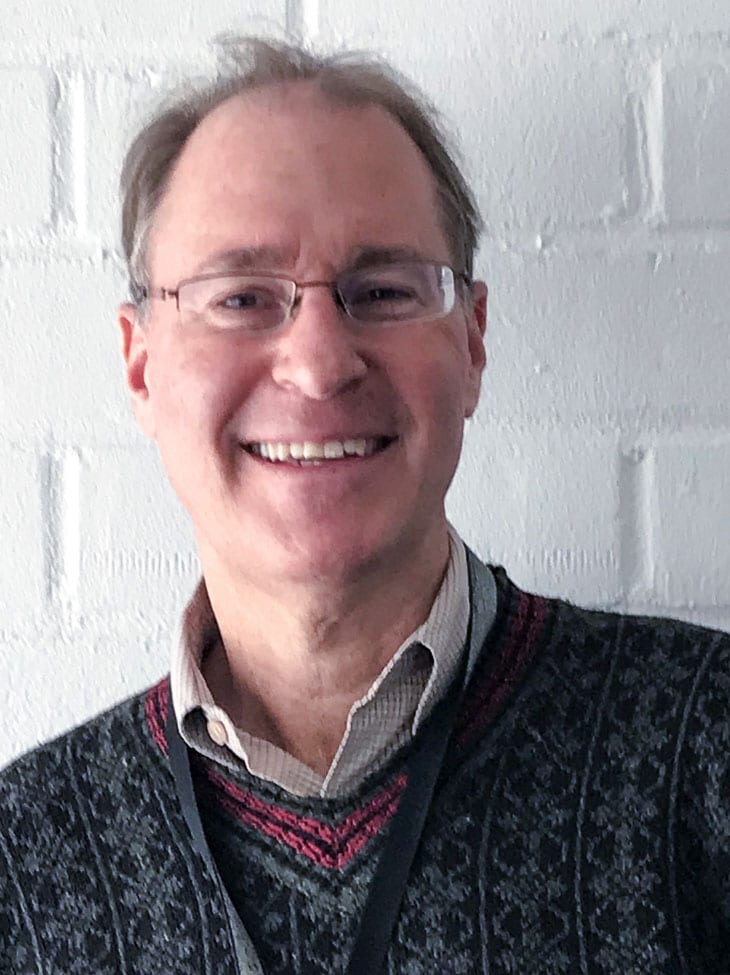
This week, Beth Jacob Congregation in Beverly Hills, where the Spielberg bar mitzvah took place, announced that Jay was stepping aside after 50 years as the synagogue’s official Torah reader to make room for the next generation of Torah readers. On Shabbat, April 24, Jay will read the Torah portion for the last time in his official capacity. “But don’t get me wrong,” Jay was quick to note to the Journal, “I will continue to be available when needed and look forward to mentoring the many other talented Torah readers the synagogue and city is blessed to have.”
Jay’s story is remarkable in that he honed his masterful Torah reading skills right here in Los Angeles, at a time when the Jewish community was much smaller and Jewish education was in its infancy. As a third grader, Jay and his family moved from Brooklyn and settled in Pico-Robertson, where he attended Harkham Hillel Hebrew Academy and then Rambam Torah Institute for high school (the precursor to YULA). With only three Orthodox synagogues in the area, it was fortuitous that they found themselves at Beth Jacob. “When I first walked in, I was awestruck to see a choir on stage,” Jay remembered. “They all wore beautiful blue robes and were led by synagogue Cantor Binyamin Glickman. I immediately knew I wanted to be on that stage, and before long, I was.”
Cantor Glickman encouraged Jay and a few other boys to develop Torah reading skills, which entailed learning the very precise — and rather difficult — Ashkenazi melodies that accompany every word in the Torah. “I just took to it and worked hard to assure that the inflection of every word and every melodic emphasis is done correctly.”
When it came time for Jay to prepare for his bar mitzvah, he taught himself his Torah reading. From then on, Jay served as one of the ad hoc Torah readers at Beth Jacob. Shortly thereafter, the board made it official.
At 21 Jay married his wife Esther, and soon thereafter they had a son Yoni. After receiving his MBA from UCLA, Jay landed a job at Jet Propulsion Laboratory (JPL,) where he continues to work as a software systems engineer. With a steady income, he decided he no longer needed the stipend the synagogue paid him. He offered his services pro bono, and has continued to do so ever since.
Over the 50 years, Jay estimates he has read about 2,400 Torah portions, in addition to renditions of the five annual megillot(scrolls), each receiving the preparation it requires and deserves. One would think that by now Jay would know every word and melodic nuance by heart, but he still prepares. “I review each portion at least four times during the week just to refresh my memory and minimize the possibility of any mistakes,” he said.
During his travels for work, Jay sometimes finds himself in a city with a synagogue in need of a Torah reader for that Shabbat. When that happens, Jay will often volunteer his services. He has read the Torah in synagogues in Washington, D.C., Kansas, Virginia and in the Chabad synagogue in Seoul, South Korea. “I guess that officially makes me a ‘Baal Korea’,” Jay quipped.
He has read the Torah in synagogues in Washington, D.C., Kansas, Virginia and in the Chabad synagogue in Seoul, South Korea.
Celebrities and renown Judaic luminaries have also experienced Jay’s Torah skills. “I was fortunate to read the Torah standing next to Chief Rabbi Lord Jonathan Sacks, as well as Elie Wiesel,” Jay recalled with some emotion. “Elie Wiesel recited the blessings with such heartfelt conviction that I myself became extremely emotional.”
“Words cannot express the profound gratitude we have to Jay for inspiring our kehilla (congregation) and raising the banner of Torah all these years.” Beth Jacob Senior Rabbi Kalman Topp said. “He is truly a Beth Jacob icon and has become synonymous with the Shul.”
In 2019 Jay began noticing some difficulties with his voice. He found himself straining to complete the weekly portion without hoarseness. “Reading the Torah correctly is necessary, but it also helps to have a pleasant and melodic voice,” Jay said. It was then he sought support from a professional voice coach who helped him get back on track. “The voice coach was great,” he said. “She helped a lot, and I was able to regain confidence in my vocal abilities.”
But then another challenge gradually crept in. With so many pronunciations and nuances to remember in each Torah reading, he found that he didn’t feel as sharp as he would have preferred. “While most people probably didn’t notice that I may have used the wrong melodic tone when chanting a word, I noticed,” Jay said. “It was then I made the difficult decision to step aside and let others experience the intrinsic reward of chanting from the Torah on a regular basis [as] I did virtually my entire life.”
While the synagogue has a number of dedicated Torah readers, will Beth Jacob seek a new official Torah reader for the main sanctuary? “Jay is irreplaceable, so we will not be ‘replacing’ Jay with a permanent Baal Koreh at this time,” Beth Jacob President Jonathan Stern said.
“Although I have spent thousands of hours preparing my Torah readings all these years, I don’t regret one minute,” Jay said. “Thankfully I am in good health, have a great career, a wonderful wife, son and grandchildren to keep me busy. I now will have the luxury to sit back and enjoy listening to others read from the Torah. I am looking forward to that.”
Harvey Farr is a local community reporter for the Jewish Journal.
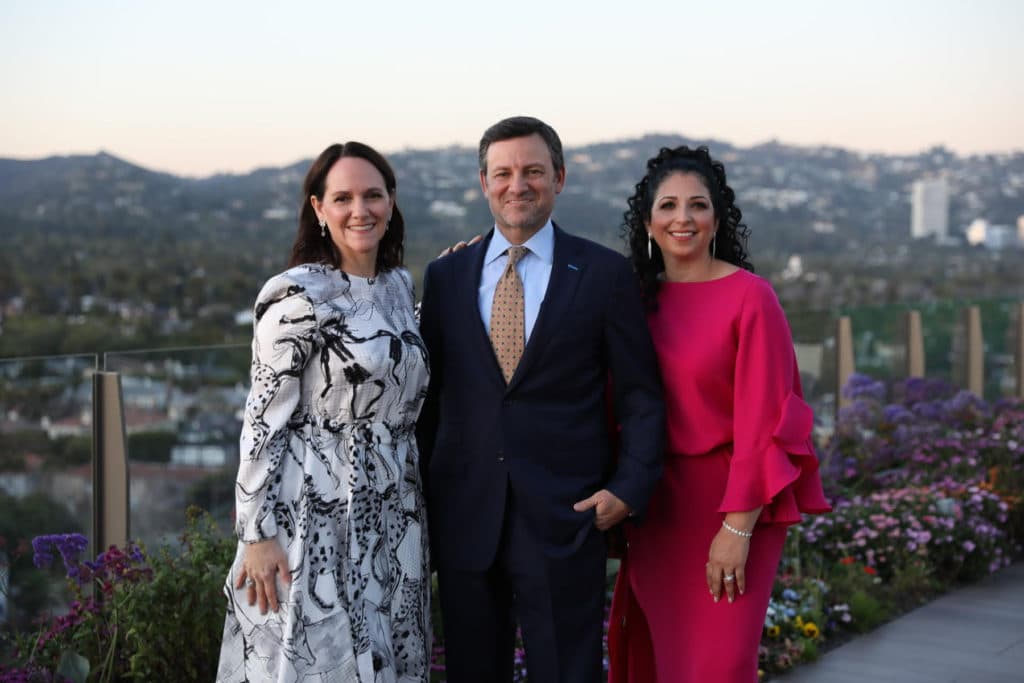
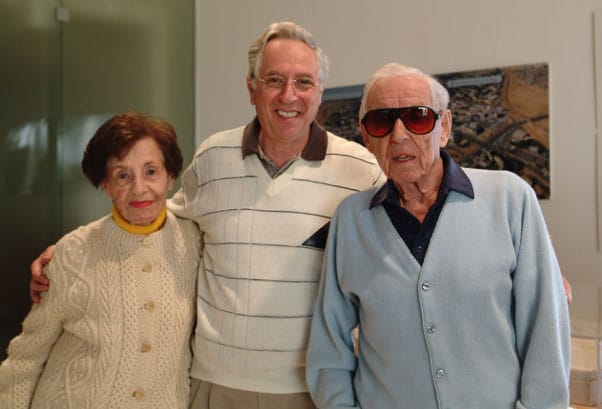
As the recently retired southwest regional director at American Associates, Ben-Gurion University (AABGU), Philip Gomperts facilitated what is widely believed to be the largest charitable gift in Israel’s history.
During his nearly three-decade career at AABGU, the United States-based fundraising arm of the Negev-based research university, Gomperts befriended Howard and Lottie Marcus, an unassuming couple from Great Neck, New York, who had the foresight to make a brilliant early investment.
Howard and Lottie fled Nazi-Germany for the United States in the 1930s, where they met and fell in love. The two lived a frugal life — Howard worked as a dentist—— and when the young couple was seeking an investment opportunity, they turned to a friend, Benjamin Graham, known as the “father of value investing.”
Graham introduced them to his promising student at Columbia Business School: Warren Buffett. The Marcuses invested in Buffett’s company, which became Berkshire Hathaway. At the time, the stock was trading at $12 per share. Over the course of their life, they continued buying shares of the company, never selling their stock. The price soared — today it trades at over $400,000 per share — and their investment eventually became worth millions of dollars.
When the couple retired, they relocated to a modest apartment in Southern California. In 1997, they met Gomperts, and he introduced them to the Ben-Gurion University’s research in desalination, water management and related areas. The Marcuses came to believe water played a critical role in bringing peace to the Middle East.
Meanwhile, few of those who knew the Marcus couple were aware of their wealth, including their daughter, Ellen. When Ellen learned of the money her parents had, she told her parents to leave her enough so that she and her daughter would never go hungry and to donate the rest of their estate to the cause Lottie and Howard had grown to care about.
By the time Lottie died at age 99 in 2015 — less than two years after Howard passed in 2014 at age 104 — the investment in Berkshire Hathaway was worth more than $400 million. They opted to leave their estate to the university.
“My parents were Holocaust survivors who met in New York, and they felt increasingly strongly as their lives went on it was important for the Jews to have safe refuge and the State of Israel was that place,” Ellen Marcus said in an interview. “That’s why they ultimately decided to leave almost all of their estate to BGU.”
The funds helped create an endowment that raises nearly $20 million annually in perpetuity for the university. “It makes a huge difference to the development of the university,” Gomperts said in an interview about the endowment.
The funds helped create an endowment that raises nearly $20 million annually in perpetuity for the university.
Ellen Marcus is the vice chair of the board of governors at BGU. In 2017, she received an honorary doctorate at BGU’s 47th Board of Governors meeting. A visit to the university for the naming of the Marcus Family Campus led her to developing a personal stake in its success.
“I began to become very excited about the university and quite impressed with the university, and my excitement and passion has continued to grow, and I was instrumental in my parents donating most of their estate to BGU, and when they did that, I made a decision I would do whatever I could do to help facilitate my parents’ money being used carefully and wisely, and that’s why I have continued to become increasingly involved in BGU,” she said.
She spoke to the Journal in advance of the AABGU April 25 event, “Celebrating the Remarkable,” which will be honoring Gomperts for his stewardship of the gift from the Marcus family. “I don’t need to be honored — I did it as a labor of love — but it feels nice to be recognized,” Gomperts told the Journal in a phone interview.
The upcoming virtual event is also recognizing AABGU immediate past president Toni Young and sex therapist and Shoah survivor Dr. Ruth Westheimer, who will receive her first honorary doctorate from an Israeli university. Israeli actress-producer Noa Tishby is emceeing the program.
In a Zoom interview from his home in Denver, AABGU CEO Doug Seserman joked the event was for anyone who “likes sex and loves Israel,” referring to the inclusion of Westheimer, known as “Dr. Ruth,” in the program.
As for Gomperts, Seserman said he set a standard for donor relationship management in the Jewish community. Like the expression, “Be like Mike,” a reference to NBA legend Michael Jordan, Jewish fundraisers who learn how successful Gomperts was will want to “Be like Philip,” Seserman said.
(The Media Line) Israeli Prime Minister Binyamin Netanyahu launched an unprecedented attack against fellow right-wing politician and former aide Naftali Bennett, accusing him of singlehandedly foiling a right-wing government and “sprinting toward a dangerous leftist coalition.”
“You’re spitting in the face of democracy, in the face of your pre-election promises. You’re only playing for time, you’ve already closed a deal with Lapid,” Netanyahu said Wednesday evening in a public statement to the press.
The harsh words underscored Netanyahu’s desperation.
With two weeks left before his mandate to form a government expires, the embattled prime minister seems to have realized that his path to a fifth consecutive term is blocked, and in the time remaining appears to be shifting focus to his secondary goal – thwarting any attempts by political rivals to establish alternative coalitions.
“A government headed by Bennett would be undemocratic, illegitimate. It’s the opposite of what the public wants,” he said.
Moments earlier, Bennett, who has in recent days has negotiated with Netanyahu, rejected the prime minister’s claims.
“I told him he has our support for a right-wing government. Netanyahu, go for it, we’re behind you!” Bennett said in a statement to the press ahead of Netanyahu. “But if he fails, I won’t allow a fifth election. Yes, I will try to create a unity government, a stable, functioning coalition where my principles and values will be maintained.”
Earlier this month, following Israel’s fourth election in two years, Netanyahu was once again tapped by President Reuven Rivlin to establish a government after receiving the most seats in the March contest.
As expected, his task turned out to be practically insurmountable.
After failing to secure a cohesive 61-seat majority in Israel’s 120-seat parliament, Netanyahu was forced to try and fuse his extreme right-wing allies with the United Arab List, an Islamist party that serves as the political wing of the Southern Branch of Israel’s Islamic movement.
The United Arab List has not ruled out joining Netanyahu’s bloc in return for favorable legislation and funds that would be directed toward the country’s Arab minority, suffering from skyrocketing crime and unemployment.
Yet these long-shot attempts have so far come up short, with the right-wing Religious Zionism party refusing to join Arab lawmakers, forcing the prime minister to propose desperate measures.
He’s forced to switch from someone who is forming a government to almost an opposition leader, putting speedbumps in the way of others’ attempts.
“The only solution for this political logjam is snap direct elections for the office of prime minister only, without dispersing parliament,” Netanyahu said on Wednesday, referring to a draft introduced in parliament by his allies earlier this week.
“It’s either that, or a leftist government headed by Lapid and Bennett, these are the only two options,” he said.
But Bennett in his statement swatted down the initiative.
“Netanyahu wants one thing, fifth elections, in the ruse of a ‘direct election.’ His thinking is: ‘If I can’t have a government, no one can,’” Bennett said, adding: “Israel will not be taken hostage by any politician.”
If Netanyahu fails to swear in a government in the remaining two weeks of his mandate, Rivlin can either hand another lawmaker, presumably Lapid or Bennett, a month of their own to try and present a government, or pass the decision on to parliament itself, essentially ensuring a fifth election cycle in two and half years.
“Netanyahu’s in a situation right now where he doesn’t have any other choice but to obstruct his opponents,” Aviv Bushinsky, a former adviser to Netanyahu in his first term as prime minister and chief of staff for Netanyahu when he served as finance minister, told The Media Line. “He’s forced to switch from someone who is forming a government to almost an opposition leader, putting speedbumps in the way of others’ attempts.”
The alternative, anti-Netanyahu coalition, consisting of Bennett’s Yamina and Lapid’s Yesh Atid parties, along with a handful of right-wing lawmakers and ex-Likud members and center-left and liberal parties, could theoretically swear in a government if given the chance, despite overwhelming ideological differences.
“It comes down to Bennett, he has to decide whether he is made of butter or steel,” Yossi Levy, another past consultant to Netanyahu, told The Media Line.
“Netanyahu’s rivals are finally starting to show the first signs of political competence. They have to understand they’re facing a man who will stop at nothing,” Levy said.
The bill calling for snap direct elections for the office of prime minister in 30 days’ time is unlikely to pass in parliament, where Netanyahu does not hold a majority.
“It’s mostly aimed at allowing him to control the news cycle, to show he’s still active, maintain his validity,” Bushinsky says of the maneuver. “It also helps him with the blame game, so he can accuse Bennett of preferring a ‘leftist’ government when Bennett opposes” the bill.
Netanyahu’s rivals are finally starting to show first signs of political competence. They have to understand they’re facing a man who will stop at nothing.
Other ploys, like Netanyahu being voted as Rivlin’s replacement when the president’s term ends in June, or Netanyahu stepping aside and appointing another Likud lawmaker as a puppet-prime minister, also reportedly have been discussed by the premier’s advisers.
“There is absolutely zero chance of those two happening,” Levy said. “He’s not going to voluntarily leave Balfour,” the prime minister’s official residence in Jerusalem.
“Once he’s out of there, he loses all power to affect his legal proceedings and prevent future investigations from cropping up,” he added.
Netanyahu is currently facing charges of bribery, fraud and breach of trust.
The precarious position of Israel’s longest-tenured prime minister was demonstrated on Monday, when he suffered a stinging defeat in parliament’s first vote since the March elections.
The bloc led by Lapid managed to wrest control of the legislature’s crucial Arrangements Committee, which temporarily governs parliament while no government exists.
“He’s definitely in a difficult position, but I wouldn’t draft any obituaries just yet,” Levy cautions. “He still has 13 days which is an eternity. In politics, things have a knack of getting done at the last second.”
“But there are definitely encouraging signs for his opponents. They must learn that you can’t beat a heavyweight boxing champion by playing by Wimbledon tennis rules,” he also said.
Added Bushinsky: “This is the worst position he’s been in since regaining the office in 2009. It’s still early, but last time when he lost [in the 1999 elections] he went away to rehabilitate his image with the intention of returning.”
“This time he won’t leave,” he said. “He’s hoping this ‘change’ government will be short-lived, because of all its conflicting elements. If that happens, his comeback campaign will have already been written for him – ‘I Told You So.’”
“How do you pronounce it?” my father asked my maternal uncle in Persian one spring morning during an international phone call. At the time, we were temporarily resettled in Italy after escaping Iran in the late 1980s.
“Beh-vehr-lee Heelz,” my uncle, who had already arrived in the United States, responded.
“I know what ‘Heelz’ means,” my father said, “but what’s ‘Beh-vehr-lee’?”
“I’ll be honest: I don’t even know. But it’s really beautiful here.”
“It sounds like baghali (lima beans),” my father chuckled. “If you say it’s a safe, clean place, and the schools are excellent, I’ll take your word for it, though we’ll take anywhere as long as we’re in America.”
And with that, my father gratefully asked HIAS, then known as the Hebrew Immigrant Aid Society, if we could be resettled in Beverly Hills once our refugee status in America was secured. That summer of 1989, we arrived in Beverly Hills with little money, even less English fluency (except for my father) and zero knowledge that we were about to rent an apartment in the city whose zip code (or more specifically, one of its zip codes) — 90210 — would become world-famous, thanks to a popular television show about attractive teenagers.
We live in a volatile time in the course of the American experience. There’s civil unrest and a unique threat of disorder both from the left and the right that has rendered many of us feeling hopeless and unprotected. There’s also never been a worst (and more unforgiving time) to say the wrong thing (even if you uttered the words when you were a foolish high schooler).
This column is a love letter to the city that redeemed and molded me. Is it tone-deaf to write a love letter to Beverly Hills at this time of unrest? Maybe. But that’s exactly why I was moved to do it.
Last year, following the death of George Floyd, inexcusable looting wreaked havoc all over the country, including Los Angeles. In Beverly Hills, businesses were also damaged and looted, including luxury stores on the famed Rodeo Drive. Last May, I saw a photo of graffiti scribbled near Beverly Hills City Hall that read “Eat the rich.” I can state with grateful conviction that as someone who grew up in Beverly Hills, I enjoyed kabob and rice more than heaping plates of the wealthy.
In preparation for the impending verdict in the Derek Chauvin trial, Beverly Hills, like so many other cities, took extra precautions to guard spaces from looting and rioting. The Beverly Hills Police Department was on “full alert,” according to a release last Friday. And in response to a bomb scare earlier this week near Beverly Hills City Hall, police cars closed Rexford Drive between Burton and Santa Monica. It was a strange sight indeed.
With resounding support for Americans who still suffer from racism and hateful violence (including Blacks, Asian American Pacific Islanders and, yes, Jews), I’m especially distraught when Beverly Hills comes under attack because I still feel protective of the city that took in my family and me, along with tens of thousands of fellow Iranian Jews, some of us survivors of the Iran-Iraq War.
I still feel protective of the city that took in my family and me, along with tens of thousands of fellow Iranian Jews, some of us survivors of the Iran-Iraq War.
Most Americans don’t know that Iranian Jews exist (Iran is 99% Muslim). They also don’t know that the vast number of Iranian Jews living in the United States reside in Beverly Hills (with other significant populations in cities like Great Neck, Baltimore, the Twin Cities and, surprisingly, Atlanta). But nearly twenty-five percent of Beverly Hills residents are Iranian Jews — an extraordinary number. That means that for every Bob, Ellen or Harrison, there’s a Kambiz or a Sanaz enjoying a cup of Persian tea with a side of avocado toast.
Why were so many Iranian Jews drawn to Beverly Hills after the 1979 Islamic Revolution? Because, as my uncle described, Beverly Hills is and was safe, beautiful and enriched by a great public school system. In fact, my parents were so desperate to enroll my sister and me in one of the local schools that they squealed with joy when they finally found an apartment approximately half a block from the Beverly Hills city limit. As long as we could prove we lived in the city, we could attend Horace Mann School, the most important and redeeming space I would ever know after my trauma in Iran.
On my first day of American school in September 1989, I saw children with blond hair, fair skin and blue eyes (a first for me). But I also saw hundreds of children who were also Iranian Jewish refugees. Some of them dressed like “Americans” and spoke English fluently. Others, like me, didn’t even know enough English to ask for the whereabouts of the bathroom.
I owe everything to the friends, teachers and administrators I met at Horace Mann. To me, the space is hallowed ground. As for Beverly Hills High School, it had its quirks.
Any fan of “Beverly Hills, 90210” who would have visited my alma mater, the actual Beverly Hills High School (the show was set at the fictitious West Beverly High) would have been bitterly disappointed. Instead of finding Tori Spelling, they would have found a bunch of mustached, 16-year-old Iranians (male and female) standing beneath what we lovingly called “The Persian Tree” on the front lawn. There were so many of us that the school didn’t even bother to open on Nowruz (Persian New Year), instead preferring to close for “Staff Development Day.” Try telling that story on “Beverly Hills, 90210.”
Even the 1995 hit, “Clueless,” featured a nod to Iranian students (complete with Persian-language cursing in the classroom and a tongue-in-cheek reference to the Persian [student] mafia). After 26 years, I continue to believe that no one outside of Beverly Hills has ever understood that reference to a bunch of teenagers who acted much grander than they were.
I soon learned that some of the American-born kids lived in large houses in North Beverly Hills. Others, including my family, lived in apartments in what some described as “the slums.” Nearly every refugee or immigrant I knew, whether Iranian, Israeli, Russian or Korean, resided in an apartment, and his or her family mostly lived month-to-month. That’s the thing about Beverly Hills: The exaggerated cultural references completely overshadow the non-stereotypical experiences that I and thousands of others had growing up in this beautiful, complicated city.
That’s not to say that many Iranian Jews didn’t enjoy large homes, complete with giant Doric columns and architecture that looked hilariously out of place next to smaller Spanish colonial or English Tudor-style structures. And in the 1980s and 1990s, those Iranians weren’t exactly a welcome addition to some neighborhoods when they suddenly built what many American neighbors pejoratively referred to as “Persian palaces.”
But over the decades, we also gave back to the city, adding to a robust economy, infusing our rich cultural traditions (both Iranian and Jewish), raising future generations there and even electing a few Iranian Jews (including Jimmy Delshad, the two-time mayor of Beverly Hills who left Iran as a teenager).
I don’t mean to wax nostalgic (actually, I do), but Beverly Hills in the early 1990s was a glorious place. The film “Pretty Woman” (1990) had just been released, and Rodeo Drive was a hub of mullet-haired men in puffy jackets who drove their yellow sports cars past my father’s Oldsmobile Lesabre as we toured the city. “What’s that thing?” my mother asked, pointing to the then-brown behemoth known as The Beverly Center. “I don’t know,” my father responded, “but look at all those escalators inside that tube.” When we later learned it was an indoor shopping complex, we imagined that people shopped and shopped until they died, riding the half dozen escalators to heaven. I miss all that brown paint; The Beverly Center was ugly, we reckoned, but at least it was ours (even though we couldn’t afford to shop there, and it was technically in Los Angeles).
Beverly Center from La Cienega looking up to the West Hollywood Hills. Photo by ChildofMidnight at English Wikipedia under the Creative Commons Attribution-Share Alike 3.0 Unported, 2.5 Generic, 2.0 Generic and 1.0 Generic license.
In fact, there were many wonderful places in Beverly Hills that we never entered back then because we worried they were too expensive: the Ed Debevic’s 1950s-style cafe on La Cienega Boulevard; The Broadway department store inside the Beverly Center; a restaurant on Wilshire Boulevard that was curiously named Nibblers (what did diners nibble on?); and any clothing store that wasn’t a Ross Dress for Less.
I spent many Friday afternoons in the mid-90s loitering around Roxbury Park, pretending I was a preteen gangster rapper, until my mother paged me to come home and help prepare Shabbat dinner. I was in charge of descaling the fish, and my older sister was tasked with making the gondi (chickpea flour and chicken meatballs).
Unable to afford summer camp, our parents dropped us off at what was then a mecca for refugee children in desperate need to learn English, and fast: the Beverly Hills Public Library, whose children’s section was one of the most charming and welcoming spaces I’d ever known. I spent many summers enjoying the free babysitting services of E.B. White, Nancy Drew and, for some reason as I got older, Niccolò Machiavelli. In the years that passed, the children’s section morphed (and moved upstairs), and at the dawn of the new century, a solemn 9/11 memorial was erected across from the library, reminding me that my world had completely changed, too.
I know many classmates from Beverly Hills who now are social justice warriors and dedicated activists for equity, championing causes such as Black Lives Matter. Maybe they’ll cringe if they read this column, accusing me of selective praise or being privileged (or outright blind). Maybe they try to distance themselves from their upbringing in Beverly Hills because they associate it with privilege (and yes, capitalism).
I used to disassociate from Beverly Hills, too, but only because I didn’t want to be stereotyped (or worse, seen as a fraud). In college, many peers asked from where I had moved. I usually responded that my family lived in Westwood or Century City. It was easier than trying to explain that my parents lived in a two-bedroom apartment on South Rexford Drive, half a block from where Beverly Hills ended.
Whoever heard of a Beverly Hills resident who wasn’t upper class? Still more disjointed from the dominant stereotype, whoever heard of a Beverly Hills resident named Heshmatollah who bargained with his apartment manager to lower rent costs, while trying to find ways to dissuade local children from bothering him and his wife for candy on the doorstep every Halloween? One winter during my freshman year of college, my father (coincidentally named Heshmatollah) bought me a knock-off Burberry scarf from downtown Los Angeles (price: $5); I vehemently refused it, cautioning, “If my roommates find out I’m from Beverly Hills and see this scarf, they’ll think I’m spoiled.” But my father was adamant: “Tell them you’re from ‘Baghali’ (lima bean) Hills,’” he joked, adding, “Just wrap the scarf around your head and sleep with it at night,” per an Iranian custom for warding off the common cold.
As I grew up (and we acquired a VCR), I realized how much Hollywood poked fun at Beverly Hills, including films like “Beverly Hills Cop” and “Troop Beverly Hills.” In the latter, a group of privileged young girls from a local Girl Scouts-esque troop finally discover their own strength and reclaim their identities, proudly chanting “Beverly Hills, what a thrill!”
Although I now live in Los Angeles, Beverly Hills is still a thrill, and I have my own special (and I like to think, secret) places where, before the pandemic at least, I could be alone with my thoughts (and my kabob).
In December 2018, when Nessah Synagogue was vandalized by an intruder who damaged property and threw Torah scrolls to the floor, I remembered why I continue to love Beverly Hills so much: The mayor and city council members quickly arrived at the scene with Beverly Hills Police and expressed an amazing message of solidarity with the Jewish community, particularly Iranian Jews. Last week, I showed a picture of Beverly Hills City Hall, lit up in blue and white for Israel’s Independence Day, to my father, only to have him respond, “God bless these people.”
No, the city isn’t perfect. And yes, many of its residents do fall in line with existing stereotypes. But I unabashedly love and appreciate Beverly Hills.
As it turns out, the city was named “Beverly Hills” after “Beverly Farms” in Beverly, MA, and once was mostly home to lima bean fields. My father had been right all along; we became (and now remain) eternally grateful residents of “Baghali Hills,” if only in our hearts.
Tabby Refael is a Los Angeles-based writer, speaker and activist. Follow her on Twitter @RefaelTabby


 Los Angeles poet Rick Lupert created the Poetry Super Highway (an online publication and resource for poets), and hosted the Cobalt Cafe weekly poetry reading for almost 21 years. He’s authored 25 collections of poetry, including “God Wrestler: A Poem for Every Torah Portion“, “I’m a Jew, Are You” (Jewish themed poems) and “Feeding Holy Cats” (Poetry written while a staff member on the first Birthright Israel trip), and most recently “The Tokyo-Van Nuys Express” (Poems written in Japan – Ain’t Got No Press, August 2020) and edited the anthologies “Ekphrastia Gone Wild”, “A Poet’s Haggadah”, and “The Night Goes on All Night.” He writes the daily web comic “Cat and Banana” with fellow Los Angeles poet Brendan Constantine. He’s widely published and reads his poetry wherever they let him.